Hi-Fi Audio
WiiM Pro Plus Review: A Streaming DAC Worth the Step Up
The WiiM Pro Plus rebuilds the analog stage of the WiiM Pro and lands close to streamers costing far more. Here is what changes, what does not, and who should buy it.
Introduction
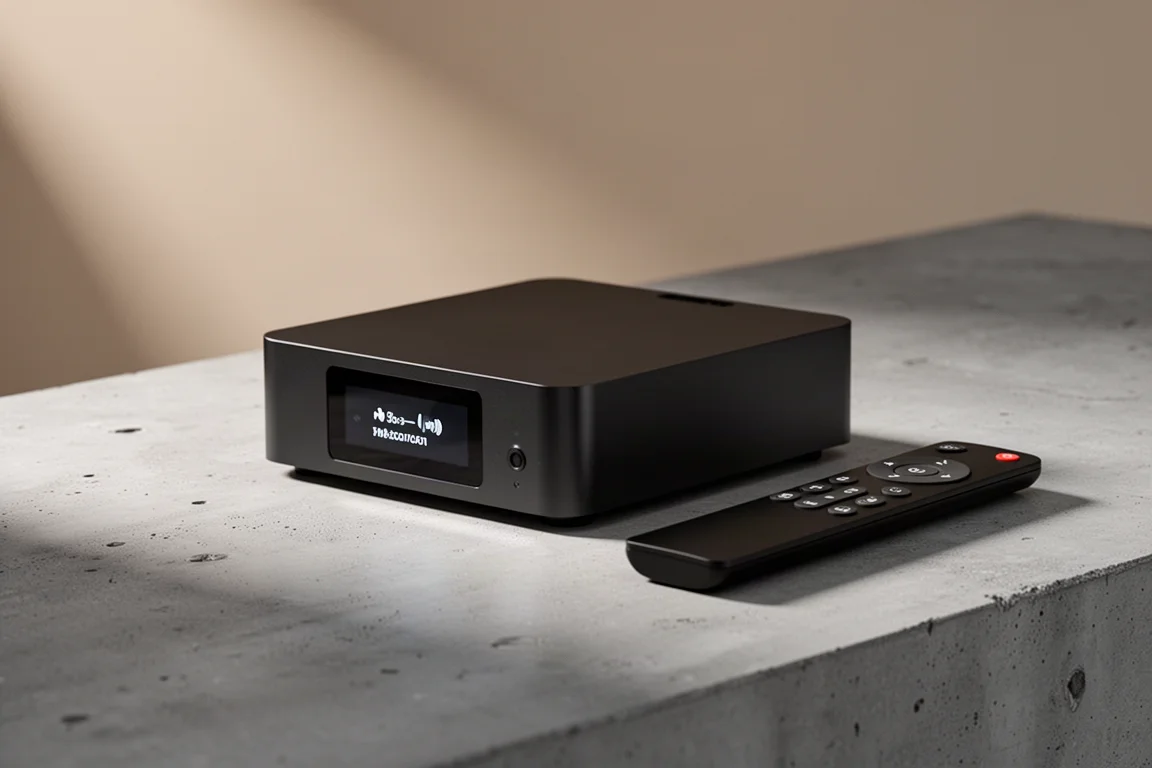
The WiiM Pro Plus is a network streamer with an onboard digital-to-analog converter, positioned as an all-in-one way to bring streaming into a hi-fi system. It is the newer sibling of the WiiM Pro, and both come from LinkPlay, a company with roots in China and headquarters in the United States.
At a glance the two boxes are indistinguishable. They run the same streaming platform, the same WiiM Home app, the same rear connectivity layout and the same touch-sensitive controls on the front panel. The differences sit inside the casework, and the most visible one is price. The WiiM Pro Plus sells for $219, while the WiiM Pro sells for $149.
LinkPlay accounts for the 100 g weight difference between the two with three changes. The Pro Plus uses a new DAC circuit, adds a new ADC circuit for the analog input on the back, and carries additional ballast inside the chassis so the unit feels more substantial in the hand.
For anyone weighing the two models, the real question is whether the redesigned analog stage justifies the extra money. On the evidence here, it does.
Who This Product Is For
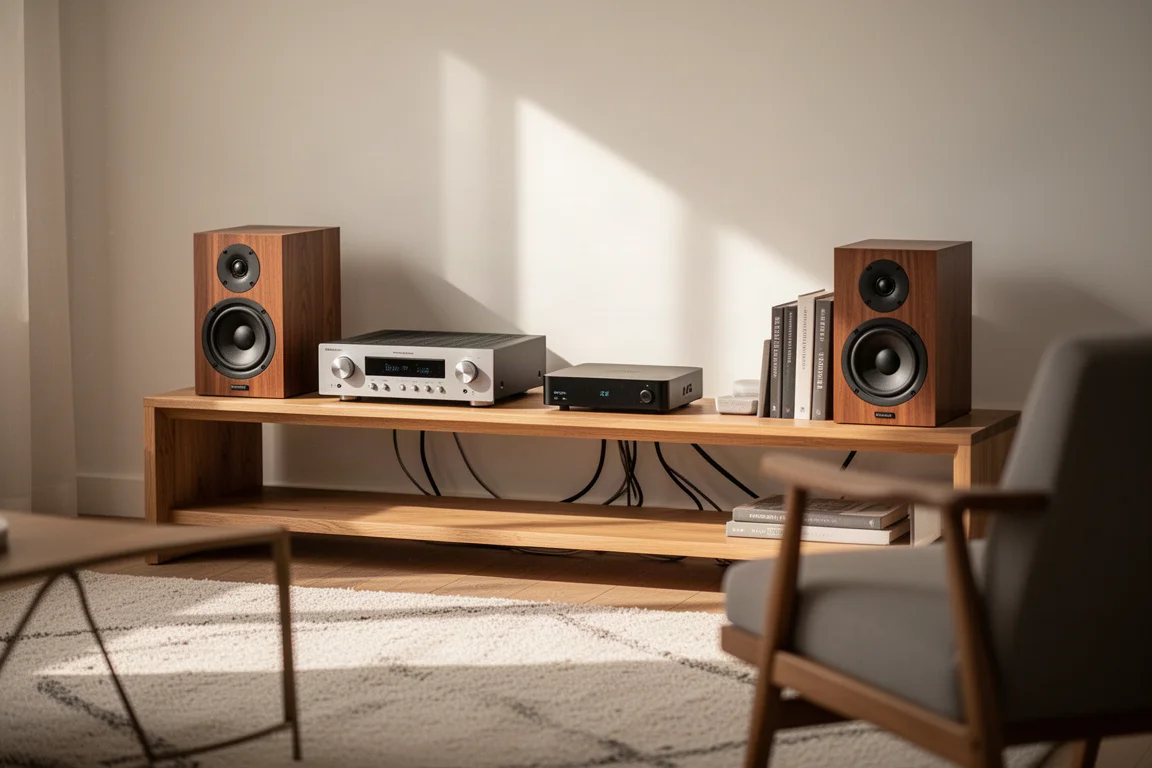
The WiiM Pro Plus suits listeners who want a single box that both pulls music from a network and converts it to analog, so no separate DAC is needed.
It also makes sense for anyone who wants to run television audio through a proper system. The rear panel includes an optical input, and the unit now auto-detects a signal on it, so the Pro Plus can serve as the converter for a TV. The latency issue that previously caused lip sync problems on that input has been corrected in firmware, so dialogue and picture now line up.
Because Chromecast is built in, Android users get a direct casting path from their phone to the hi-fi system, which is useful for long DJ mixes and similar material. AirPlay 2, Spotify Connect and Tidal Connect are all supported as well.
Listeners who already run a Squeezebox server or a Roon core also have a route into the Pro Plus, which is covered in more detail below.
Main Strengths
The headline change is the converter stage. The Pro Plus uses an AKM Velvet Sound DAC chip, supported by an improved clocking circuit and an improved power supply, along with a Texas Instruments op amp ahead of the analog outputs that differs from the part used in the WiiM Pro. LinkPlay quotes a total harmonic distortion figure of roughly minus 110 dB on that output.
The practical result is a substantial step forward. Against the WiiM Pro, the Pro Plus sounds noticeably more open, with better separation between layers and a cleaner top end. The WiiM Pro, by comparison, can come across as murky and rolled off, which makes the analog output of the Pro Plus the single strongest reason to choose it.
Streaming support is generous for the money. AirPlay 2, Spotify Connect and Tidal Connect are all on board, and Chromecast is built in. That last point is the clearest advantage over the Bluesound Node family, which does not offer Chromecast at all.
A firmware addition lets the Pro Plus behave as a virtual Squeezebox, so it can receive streams from a Logitech Squeezebox server. Since Roon will stream to anything that presents itself as a Squeezebox, that same input gives Roon users a working path to the unit. Official Roon certification has not been confirmed, but in the meantime Roon can reach the Pro Plus through the AirPlay input, or through the Chromecast input, which carries higher resolution and stays gapless on Roon even though Chromecast normally is not.
LinkPlay also has a track record of listening to feedback and shipping firmware quickly, adding features and fixing bugs. Recent additions include a parametric EQ in the app and automatic input detection on the optical input. The front panel uses touch-sensitive controls, and a remote wand is included in the box.
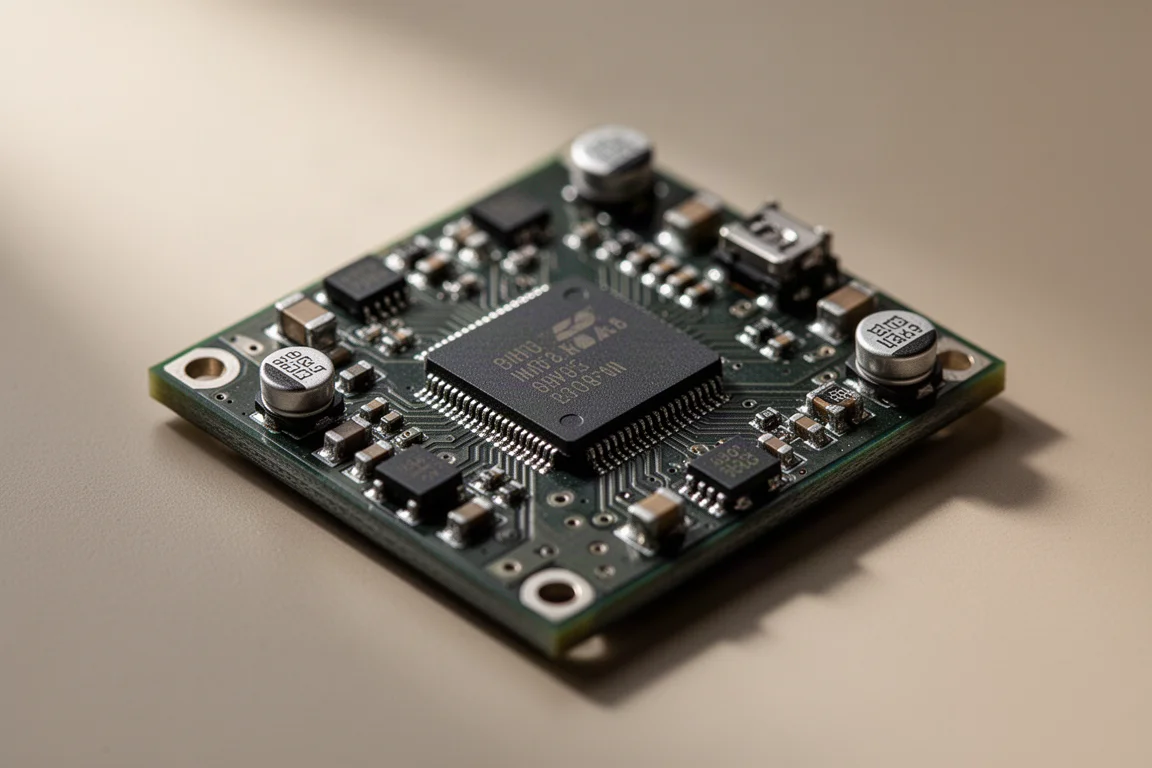
Taken together, the Pro Plus reads as a streaming DAC that has been taken seriously at every stage of the signal path rather than only at the feature list.
How the WiiM Pro Plus Compares With Other Streamers
The Bluesound Node X costs considerably more, and it holds a small edge in detail retrieval and top-end shimmer, while pushing a little harder in the low end. The margins are slim rather than dramatic, and the two are close enough that the Node X cannot be described as outclassing the WiiM. The Node X does bring features the WiiM lacks, namely HDMI eARC on the back and a subwoofer output with subwoofer management handled in the BluOS app.
The Sonos Port is a closer match on sound quality. Retail pricing in Germany sits around 449 euros, roughly double the WiiM Pro Plus, although refurbished units can be found nearer 329 euros. The two are voiced slightly differently. The WiiM leans a little more toward the upper midrange with a slightly taller soundstage, which suits dense electronic material, while the Port adds more body to the midrange of thinner sounding recordings. Functionally they diverge far more sharply. The Port has no optical input, no touch controls on the front and no infrared remote in the box, and it does not support Chromecast, though it does handle AirPlay 2, Spotify Connect and Tidal Connect. The Sonos app also integrates a wider range of streaming services than any rival platform.
The Logitech Squeezebox Touch, still in service in plenty of homes, lands very close on sound. The WiiM Pro Plus separates layers a little better and extends slightly further at the top, with a marginally leaner midrange. These are small differences rather than a clear win.
Adding a Chord Mojo 2 to the WiiM Pro Plus nudges performance past the Bluesound Node X on dynamic thrust and tonal colour, but the combination brings extra cabling and battery charging, so it stops being an all-in-one solution.
Things to Consider Before Buying
The Pro Plus is not a complete answer for every system, and a few limitations are worth knowing before you commit.
- There is no HDMI eARC and no subwoofer output or subwoofer management, so bass integration has to be handled elsewhere in the chain.
- Roon certification has not been confirmed.
- Chromecast is not gapless in normal use, though it is gapless on Roon.
- The app ecosystem is narrower than Sonos when it comes to streaming services built directly into the interface.
- The price gap over the WiiM Pro is real: $219 against $149. If you plan to feed an external DAC, the improved analog stage matters far less, and the cheaper model covers the same streaming platform, app and connectivity.
A parametric EQ is available in the app for anyone who wants to adjust the sound, and the optical input now works properly with a television, so the main trade-offs are about system features rather than core performance.
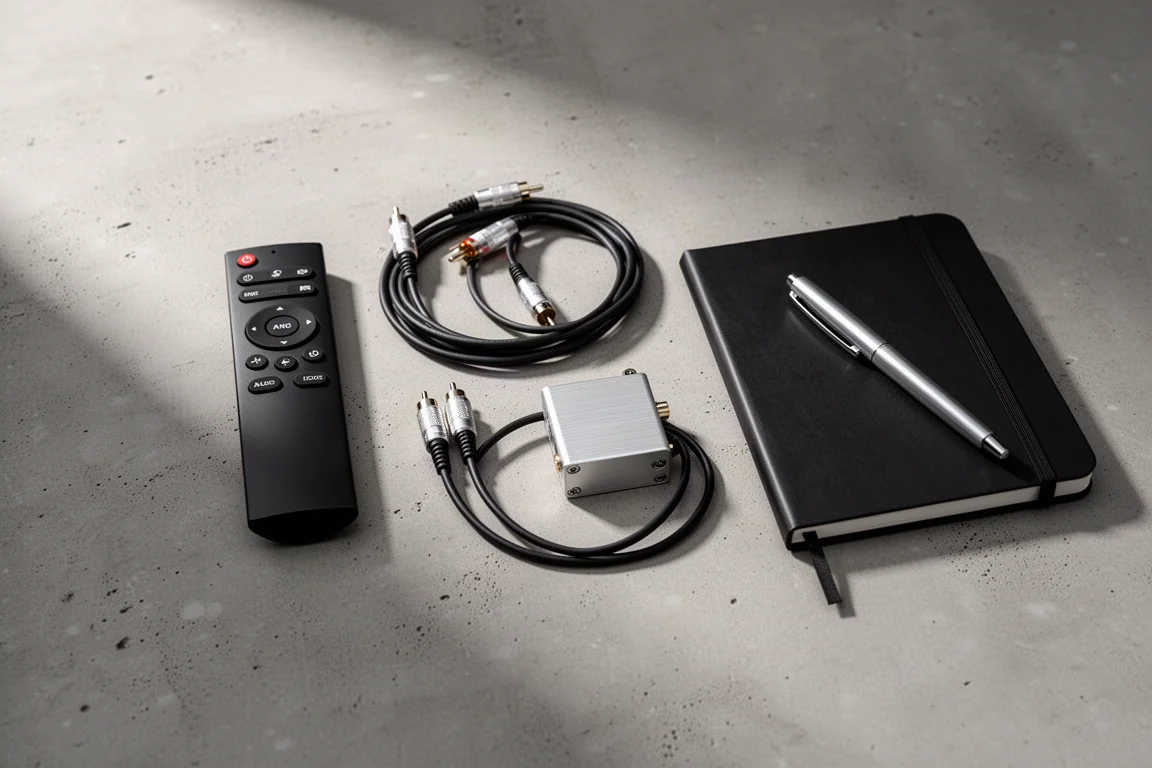
None of these points undermines the sound quality of the Pro Plus. They simply define the systems it fits best.
Buying Advice
Decide first what the box has to do. If the goal is a single unit that streams and drives an amplifier or active speakers from its analog outputs, the WiiM Pro Plus is the stronger of the two WiiM models, and its $219 price sits well below the Node X and the Sonos Port.
If the plan is to feed an external DAC, the analog stage matters far less and the $149 WiiM Pro covers the same streaming platform, the same app and the same connectivity suite.
If HDMI eARC or subwoofer management is essential, the Bluesound Node family is the direction to look. If deep in-app service integration matters most, Sonos has the edge. For listeners who want one compact box to handle both streaming and conversion, the Pro Plus is the more confident choice of the two WiiM streamers.
Conclusion
The WiiM Pro Plus addresses the main weakness of the WiiM Pro by rebuilding the analog output stage around an AKM converter, an improved clock and power supply, and a different op amp. The improvement is pronounced, and it moves the unit into the same conversation as streamers costing considerably more.
Its advantages are not limited to sound. Chromecast is built in, Squeezelite support opens the door to Squeezebox servers and Roon, the optical input now works correctly with a television, and LinkPlay continues to add features through firmware.
The compromises are equally clear: no HDMI eARC, no subwoofer output, and Roon certification still unconfirmed. For listeners who want one compact box to handle streaming and conversion, those are reasonable trade-offs to accept.
Product link
View more details for WiiM Pro Plus
This product is mentioned in the review. Check the specifications, options, and compatibility before buying.
View more details for WiiM Pro PlusFurther reading
Related Reviews
Hi-Fi Audio
Accuphase C-57 vs Allnic H-7000V: Two High-End Phono Stages Compared
A fully balanced solid-state phono stage with a pitch-black noise floor meets a tube design built for well-loved records. Here is how to choose between them.
Hi-Fi Audio
Active vs Passive Hi-Fi: Five Components for a Modern System
Five components that define modern active and passive hi-fi systems, with the strengths, trade-offs and setup details worth weighing before you buy.
Hi-Fi Audio
Advance Paris A10 Apex Review: A Hybrid Integrated Amplifier That Covers a Lot of Ground
A French hybrid integrated amplifier with a class A tube preamp stage, analogue power meters, and an internal DAC and phono stage good enough to make extra boxes unnecessary.