Music Streamers
WiiM Mini Review: The Budget Streamer That Keeps Getting Better
A compact, affordable network streamer with AirPlay 2, Bluetooth, Tidal Connect, Spotify Connect, a 10-band EQ, and a software platform that keeps improving.
Introduction
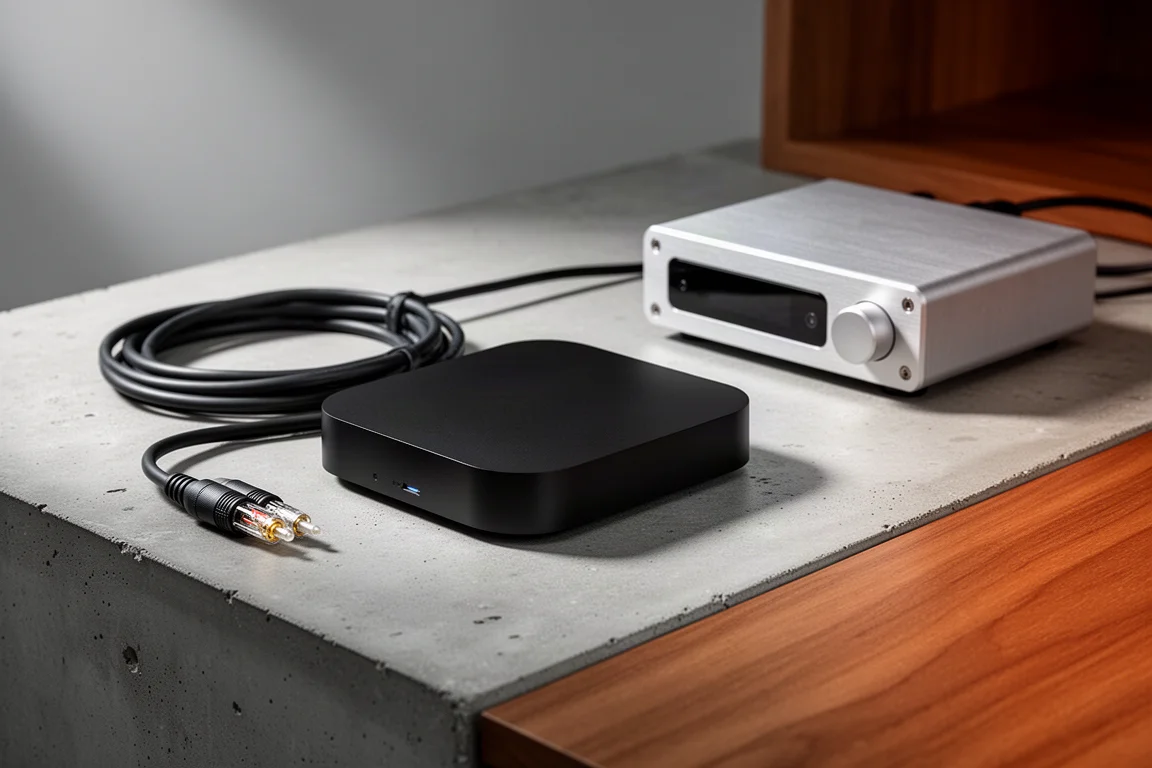
The WiiM Mini is a compact network streamer built to bring modern streaming features to an existing hi-fi system. It normally sells for around $90, with a list price close to $100 and promotions that occasionally push it nearer $80. In exchange for that modest outlay you get AirPlay 2, Bluetooth, a fully developed streaming platform of its own, plus Tidal Connect and Spotify Connect support.
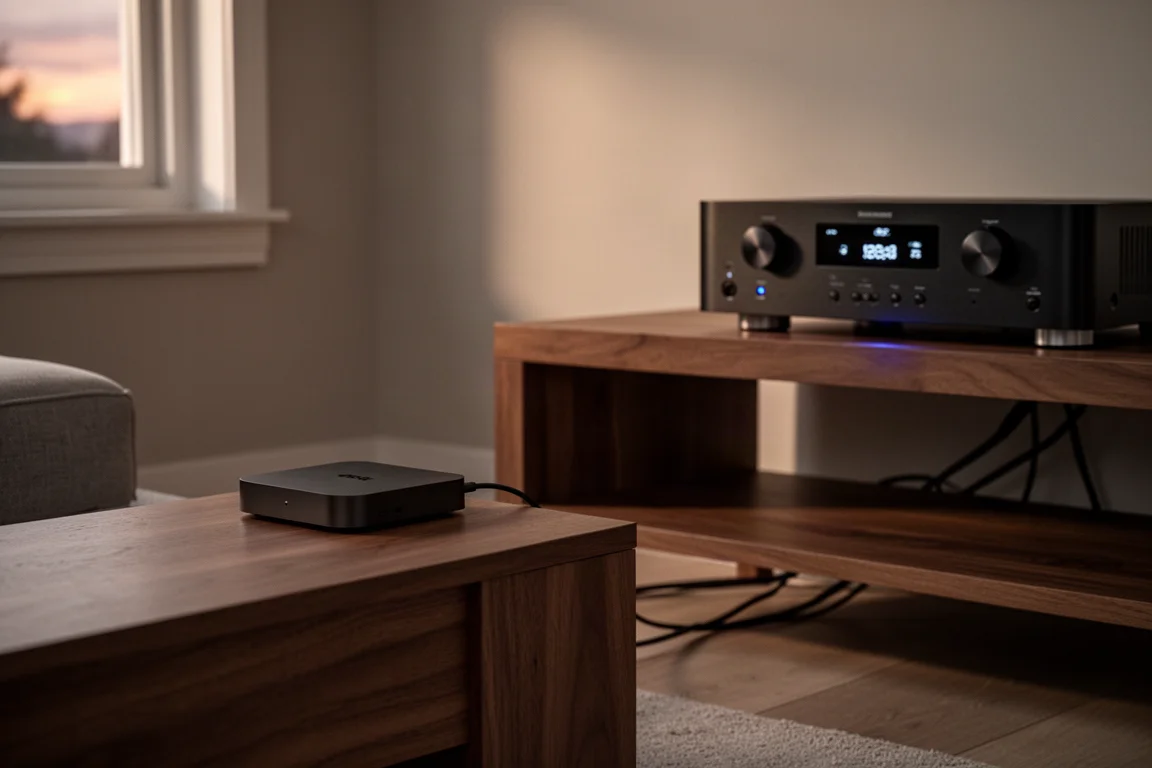
Because it is a streamer rather than an amplifier or a speaker, it does not attempt to do everything. Its role is to receive music over the network or over Bluetooth and hand it to a DAC or an integrated system through its optical output. That narrow, well-defined job is a large part of why it fits so easily into budget and secondary systems alike.
Who This Product Is For
The WiiM Mini makes the most sense for listeners who already own a DAC, an integrated amplifier, or a pair of powered speakers and simply want to add streaming to them. It is also a natural fit for anyone who wants AirPlay 2 without paying typical AirPlay 2 prices, since comparable devices often cost more on their own.
It suits Tidal and Spotify subscribers who prefer to stay inside those apps and use Connect rather than learning a new interface. It is equally useful for a second system in a bedroom, office, or workshop where a full-size streamer would be overkill.
It is less suited to listeners who need a subwoofer output, high-pass filtering for the main speakers, or a strong built-in DAC. Those features exist on considerably more expensive streamers, and buyers who need them should look further up the market.
Main Strengths
The first strength is straightforward value. At around $90 the WiiM Mini covers AirPlay 2, Bluetooth, Tidal Connect, and Spotify Connect, and it adds its own streaming platform on top. Very few devices at this price combine all of those options.
The second strength is software maturity. The platform is smooth and quick to navigate, and it receives updates at a pace that is unusual for budget audio hardware. Recent updates have raised optical output to 24-bit/192 kHz, enabled high-resolution playback in Tidal and Amazon Music, and restored gapless playback. Gapless works properly in Tidal, while Amazon Music shows the tiniest of pauses and clicks between tracks.
A third strength is the 10-band EQ. This is a fully adjustable equalizer with presets that can be modified and saved as custom settings, which is a rare inclusion at this price. Digital volume control from a phone is another practical bonus, so system volume can be adjusted remotely.
Connectivity is broad. AirPlay 2 and Bluetooth cover casual listening, Tidal Connect and Spotify Connect bypass the app entirely, and an aux input means the unit can double as a simple preamp.
Setup and Software Experience
Setup is about as simple as streaming hardware gets. After a factory reset, the device appears in the companion app almost immediately. Confirming the connection lets the unit share the Wi-Fi network the phone is already using, and the setup completes from there. A firmware update may follow and can take a couple of minutes, but the whole process is typically finished in under five minutes, after which the streamer is ready to play music.
Inside the app, useful settings are easy to reach. Output can be switched to the optical connection, resolution can be set to the highest available option of 24-bit/192 kHz, services such as Tidal and Amazon Music can be logged into, and a network attached storage library can be added.
The wider point is that software decides how often a streamer actually gets used. A device that sounds excellent but fights you at every step tends to stay switched off, while a device that simply works becomes part of the daily routine. The WiiM Mini leans firmly toward the second category, and the steady stream of updates suggests the platform will keep improving.
Connectivity and Outputs
The rear panel keeps things minimal. There is an optical output for a digital connection to an external DAC, a USB-C input for the 5V power supply, a 3.5 mm aux output, and a 3.5 mm aux input.
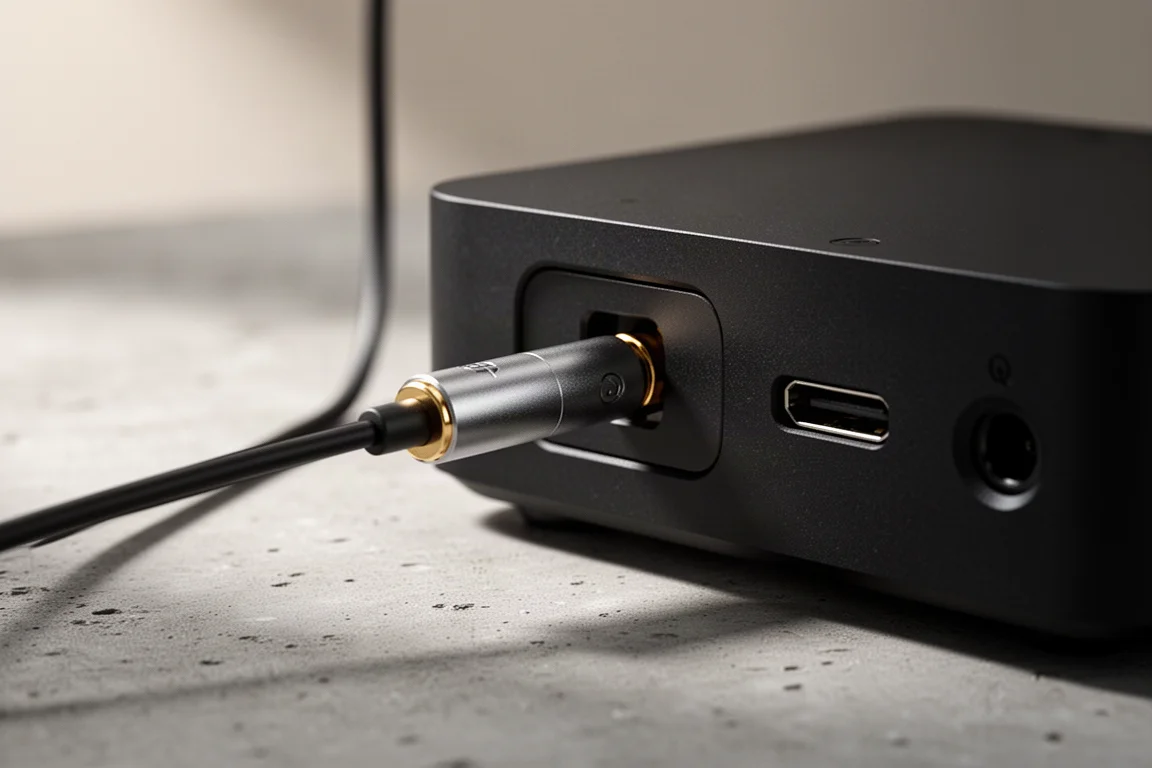
The optical output is the one to use. The built-in DAC is the weakest part of the package and performs far below what a dedicated outboard converter can deliver, so the aux output should be treated as a fallback rather than a first choice. Because the internal DAC is modest, the sensible approach is to pair the streamer with an affordable external DAC and let the WiiM Mini handle networking and control only.
Owners who want to reduce noise further can use a low-noise power supply in place of the standard 5V adapter, which is a common upgrade path for this kind of device.
Things to Consider Before Buying
There are real gaps compared with more expensive streamers. The WiiM Mini has no subwoofer output and no high-pass filtering for the main speakers, features that appear on models such as the Bluesound Node and the Amazon Link. Listeners who rely on a subwoofer and want bass management built into the streamer will need to look elsewhere or handle that in another part of the chain.
The internal DAC is another compromise. It is serviceable at best, and a separate converter is the better route for anyone serious about sound quality.
The physical design also has quirks. The chassis is very light, light enough to slide off a smooth shelf, so it benefits from being tucked away or secured with tape on the side of a rack. The touch controls on top offer no tactile feedback, which makes them difficult to use confidently. Many owners will simply set the unit up once and control everything from the app.
Buying Advice
For most buyers, the strongest configuration is the WiiM Mini connected by optical cable to an inexpensive external DAC. A budget converter plus the streamer can land around $210 all in, which is still well below the price of many full-size streamers while delivering better digital conversion than the built-in option.
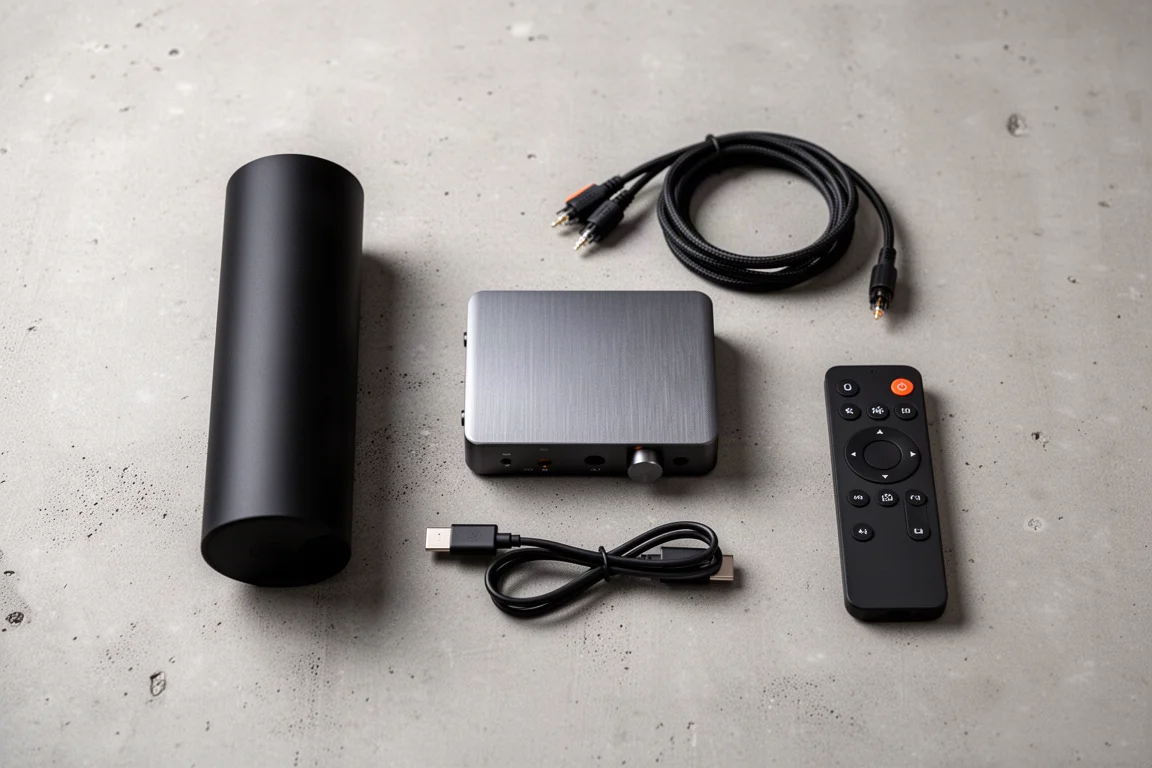
Before buying, decide which features matter. If AirPlay 2, Bluetooth, Tidal Connect, Spotify Connect, a 10-band EQ, and remote digital volume control cover your needs, the WiiM Mini delivers them for very little money. If you need a subwoofer output, high-pass filtering, or a high-quality internal DAC, budget for a different streamer or an extra converter.
Conclusion
The WiiM Mini earns its reputation by doing the important things well. Setup takes minutes, the software is smooth and regularly updated, and the feature list is far longer than the price suggests. Its weaknesses are genuine but predictable at this price point: a light chassis, a basic internal DAC, and no bass management.
For anyone adding streaming to an existing system, it remains one of the most sensible entry points available, particularly when paired with an affordable external DAC.
Product link
View more details for WiiM Mini
This product is mentioned in the review. Check the specifications, options, and compatibility before buying.
View more details for WiiM MiniFurther reading
Related Reviews
Music Streamers
Arylic S10 Plus vs WiiM Mini: Two Affordable Music Streamers Compared
A practical comparison of the Arylic S10 Plus and the WiiM Mini, covering connections, apps, tone controls, and how each internal DAC actually sounds.
Music Streamers
Auralic Aries G1.1 Review: A Streaming Transport That Lifts a Resolving System
A close look at the Auralic Aries G1.1 streaming transport, covering its twin-transformer power supply, Tesla G2 processing, Lightning DS app and the systems where it genuinely pays off.
Music Streamers
Bluesound Nano Review: A Compact Streamer That Keeps Things Simple
The Bluesound Nano is a stripped-down network streamer at $299, with a solid chassis, quick setup, and a clean, punchy sound. Here is what to know before buying.