Streaming Amplifiers
WiiM Amp Ultra Review: Streaming Amplifier Power and Software Depth
A compact streaming amplifier with a touchscreen, 100 W per channel, subwoofer delay management and RoomFit room correction, all at an entry-level price.
Introduction
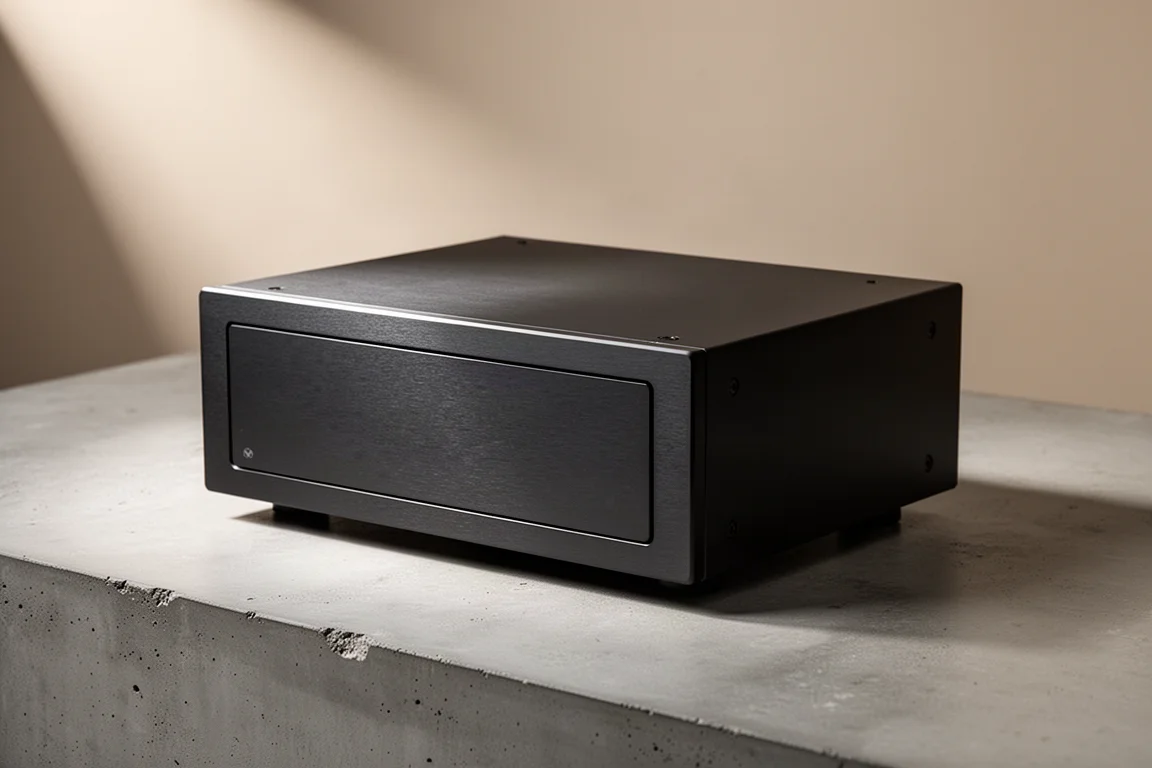
The WiiM Amp Ultra is the fourth integrated amplifier WiiM has launched in roughly 18 months, and it arrives with a clear proposition: streaming built in, a front-panel touchscreen, and a software feature set that reaches well beyond its price. At €599 or $529, it sits at the entry level of proper hi-fi separates.
Our listening setup was a 3 m x 4 m upstairs room with no acoustic treatment at all. Clapping hands in that space exposes a reverb time of about 750 milliseconds, and the listening seat sits 2 m from each speaker. That is a deliberately ordinary room, and it is close to the sort of space this amplifier is likely to end up in. The original WiiM Amp stayed on the sideboard alongside it for direct comparison.
Who the WiiM Amp Ultra Is For
This is an amplifier for listeners who want one box to handle streaming, amplification, subwoofer management and room correction, and who are willing to do that work through an app. It suits small and medium rooms with stand-mount speakers, and it suits people who would rather tune a system with software than with physical room treatments.
It is also a natural fit for anyone already using Google Cast, Spotify Connect, Tidal Connect or Qobuz Connect, and for Roon users, since the Amp Ultra carries Roon Ready certification. Buyers who depend on Apple AirPlay 2 should look elsewhere, because the Amp Ultra does not support it.
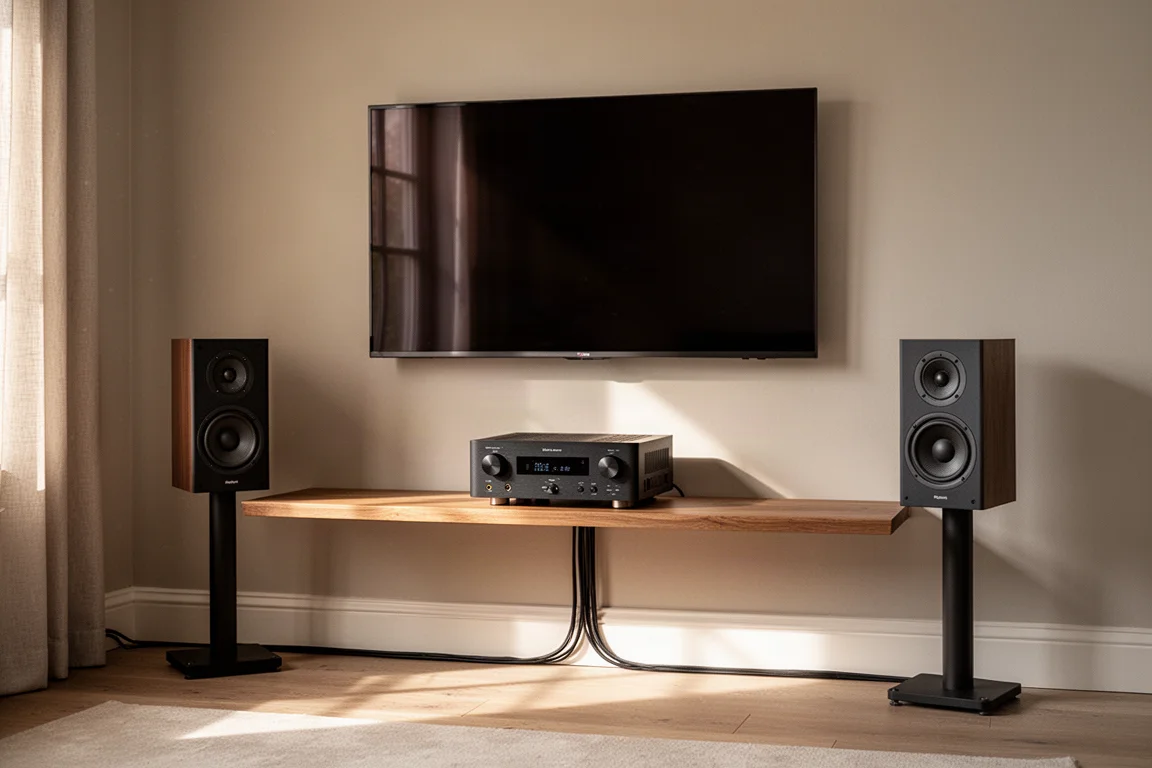
The trade-off is that the most capable parts of this amplifier are invisible. The touchscreen shows cover art and metadata, but the deeper work happens in the WiiM Home app, where crossover points, delay and parametric EQ are set. Anyone unwilling to spend a little time in that app will leave a good portion of the purchase unused.
Main Strengths
The Amp Ultra’s strongest arguments are not the ones you can see from across the room. They are the ones you configure once and then forget about.
Streaming and Software
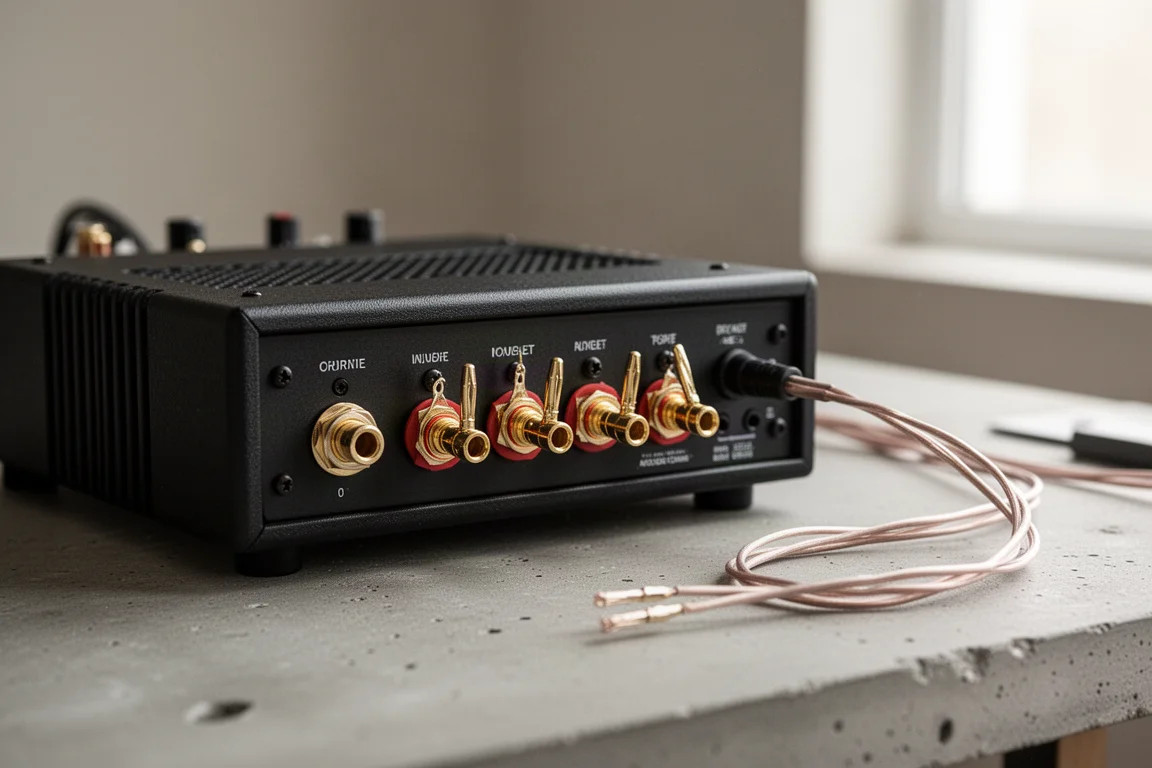
Rear connectivity matches the original WiiM Amp: line-level analogue, Toslink, HDMI ARC and a USB-A socket for directly connected storage devices. The Ultra adds a touchscreen to the front panel and removes the rear binding posts, with banana plugs supplied in the box. Build quality follows the same standard as the WiiM Amp and the Ultra DAC, and the fit and finish feels appropriate for the money. Setup over Wi-Fi is straightforward, and the packaging and onboarding both feel a step above the price.
The touchscreen displays cover art and metadata in a choice of layouts, or a VU meter if you prefer. It can switch outputs between loudspeakers, USB and Bluetooth, and it can select EQ presets. It cannot browse a streaming service library, so the phone app remains necessary for that. A Voice Remote 2 is included, and in practice it is the quickest way to play, pause, change volume or jump to a preset.
Streaming support is broad: Spotify Connect, Tidal Connect and Qobuz Connect are all on board, with Google Cast and Squeezelite support as well, and a long list of other services folded into the WiiM Home app. The software here is the most complete package WiiM has put together, and it is the part of the product that will matter most over the long term.
Amplifier Power and Sound Quality
Two Texas Instruments TPA3255 class D amplifier chips give the Amp Ultra a rated 100 W per channel into 8 ohms. That is 40 W per channel more than the single-chip implementations in the WiiM Amp and Amp Pro. The 4-ohm figure is not printed on the spec sheet, but WiiM confirms 200 W per channel, and the amplifier is said to be stable down to 2 ohms. It also inherits the post-filter feedback technology introduced on the Amp Pro.
Against the original WiiM Amp, the differences are audible. The Amp Ultra delivers more punch in the low end, a slightly more refined treble and higher mid-range clarity, and it remains the more tonally colourful of the two. On dense electronic material, that extra control pays off in cleaner separation between layered stabs and percussive detail. The comparison that matters most in Europe is the Marantz Stereo 70S, which sells for around €650 there and around $1,000 in the United States; its 75 W per channel of class AB power sounds richer and meatier, though not quite as transparent, and it is less strident in the upper mids with lo-fi recordings. On some material the WiiM can sound the leaner and greyer of the two. What the WiiM offers instead is greater computational power sitting in the same box as the volume control, and for a small room with a subwoofer, that turned out to matter more.
Subwoofer Integration and Room Correction
Subwoofer management on the Amp Ultra is more sophisticated than what the Marantz Stereo 70S offers, and room correction is something that amplifier does not do at all. Integration starts with the single subwoofer output and a crossover point set inside the WiiM Home app. The app also asks whether the loudspeakers should receive a high-pass filtered or full-range signal, and whether the subwoofer should receive a low-pass filtered or full-range signal. Filter slope choices are not offered, unlike Lyngdorf’s software, but the cheapest Lyngdorf amplifier sells for almost four times the price of the Amp Ultra.
Delay handling is equally practical. The app offers manual or automatic subwoofer delay, and the automatic wizard plays test tones that the smartphone microphone picks up and returns for analysis. Both iOS and Android are supported, though microphone types vary more across Android devices. In our room, the test reported a subwoofer sitting 50 cm in front of the loudspeaker plane running 2 milliseconds behind, and the app set a 2 millisecond loudspeaker delay to match. Confirming that by ear with the manual slider produced the same figure.
RoomFit follows a similar pattern. A wizard plays test tones at the listening position, the phone measures them, and the app calculates 10 points of parametric EQ, each of which can be adjusted afterwards by frequency, gain and Q if you want to. We left them alone. We did curtain the correction at 300 Hz, because room compensation cannot address reverb above that point; its real strength is taming bass resonances below 300 Hz. The app also lets you exclude the subwoofer from correction, choose whether to correct the left and right speakers individually or as a single stereo pair, and pick from three target curves, with Harman as the default.
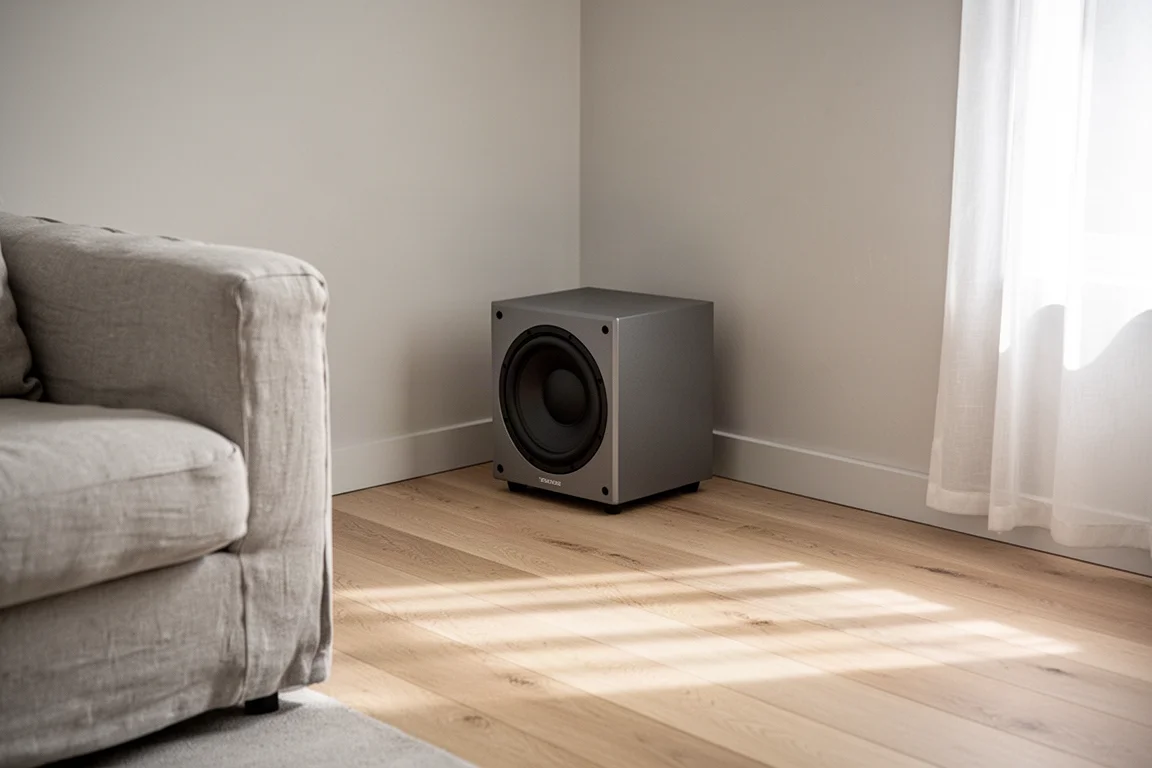
With the subwoofer integrated, the two-way stand mounts high-pass filtered and the resulting 2.1 system corrected in the bass, the Amp Ultra became very hard to argue with. Running the same subwoofer sync test and RoomFit correction on the original WiiM Amp with the same speakers and subwoofer showed a hit to mid-range transparency and more greyness in the uppermost treble. The software, in other words, is doing a great deal of the listening work here, and it is doing it well.
Things to Consider Before Buying
Apple AirPlay 2 is missing, which rules the Amp Ultra out for households built around AirPlay. There is no phono input either, so vinyl listeners will need a separate stage. The touchscreen sits out of arm’s reach from a 2 m listening position, and it cannot browse streaming libraries, so the supplied remote or a phone app will usually be faster. The top panel runs warm after an hour of use, though not hot enough to be a concern around curious fingers.
Room correction should also be understood for what it is. It addresses bass resonances rather than reverberation, and no software can fix a room’s reverb once sound is bouncing around it. Anyone expecting the Amp Ultra to correct a hard, echoey space above the bass region will be disappointed.
Buying Advice
The Amp Ultra makes the most sense for listeners who want one compact box to stream, amplify, manage a subwoofer and apply room correction, and who are comfortable setting those things up in an app. If that describes you, the sequence matters: integrate the subwoofer first, then run the room correction. If you would rather have a richer, more traditional amplifier sound and you do not need subwoofer time alignment or room correction, the Marantz Stereo 70S remains a strong alternative, while the Marantz Model M1 adds a $249 room correction software licence on top of a $1,000 amplifier, which pushes it well past what the WiiM costs.
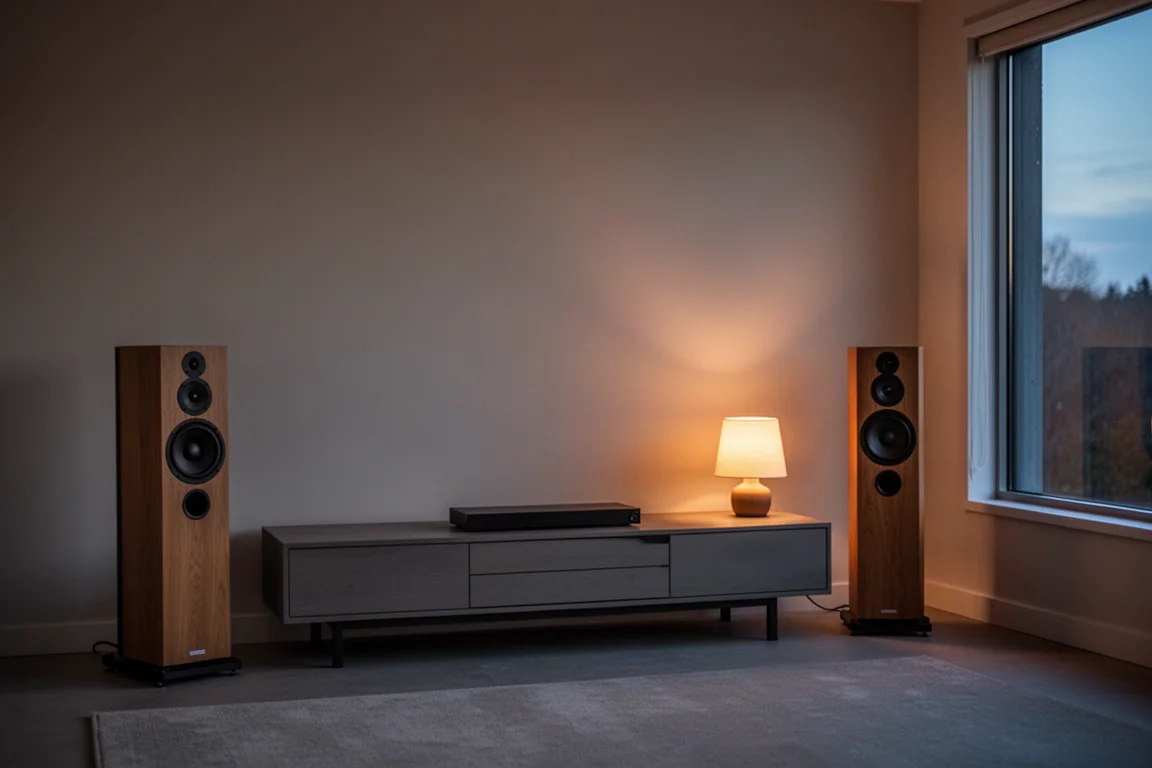
For a small untreated room with stand-mount speakers, though, the combination of software control and a 100 W per channel class D amplifier is difficult to beat at this price. The €599 or $529 asking price buys a level of system tuning that usually appears much further up the market.
Conclusion
The most striking thing about the WiiM Amp Ultra is where its value sits. Its software and DSP contribute more to the listening experience than the audio circuitry alongside them, and WiiM’s operating system offers more to the end user than any other software system currently available, regardless of price. That all of this happens at the entry level of hi-fi is a considerable achievement.
It is not the last word in tonal richness, and it will not suit every system or every listener. But as a streaming computer with an amplifier module attached, it does more, in more rooms, than its price suggests.
Product link
View more details for WiiM Amp Ultra
This product is mentioned in the review. Check the specifications, options, and compatibility before buying.
View more details for WiiM Amp UltraFurther reading
Related Reviews
Streaming Amplifiers
Best High-Performance Streaming Amplifiers: Seven Full-Size One-Box Picks
Seven full-size streaming integrated amplifiers for serious two-channel systems, each chosen for a different priority: room correction, power, minimalism, musicality, or reference build.
Streaming Amplifiers
Best Mid-Tier Streaming Amplifiers: NAD M10 V2 vs Naim Uniti Atom
Two compact all-in-one streaming amplifiers compared on interface, app experience, sound character, and connectivity.
Streaming Amplifiers
Bluesound Power Node N331 Review: A Streaming Amplifier Built for More Than Stereo
The Bluesound Power Node N331 keeps the compact chassis of its predecessor and adds a more powerful amplifier, a dedicated center channel output, and a THX AAA headphone stage.