Streaming Amplifiers
Bluesound Power Node N331 Review: A Streaming Amplifier Built for More Than Stereo
The Bluesound Power Node N331 keeps the compact chassis of its predecessor and adds a more powerful amplifier, a dedicated center channel output, and a THX AAA headphone stage.
Introduction
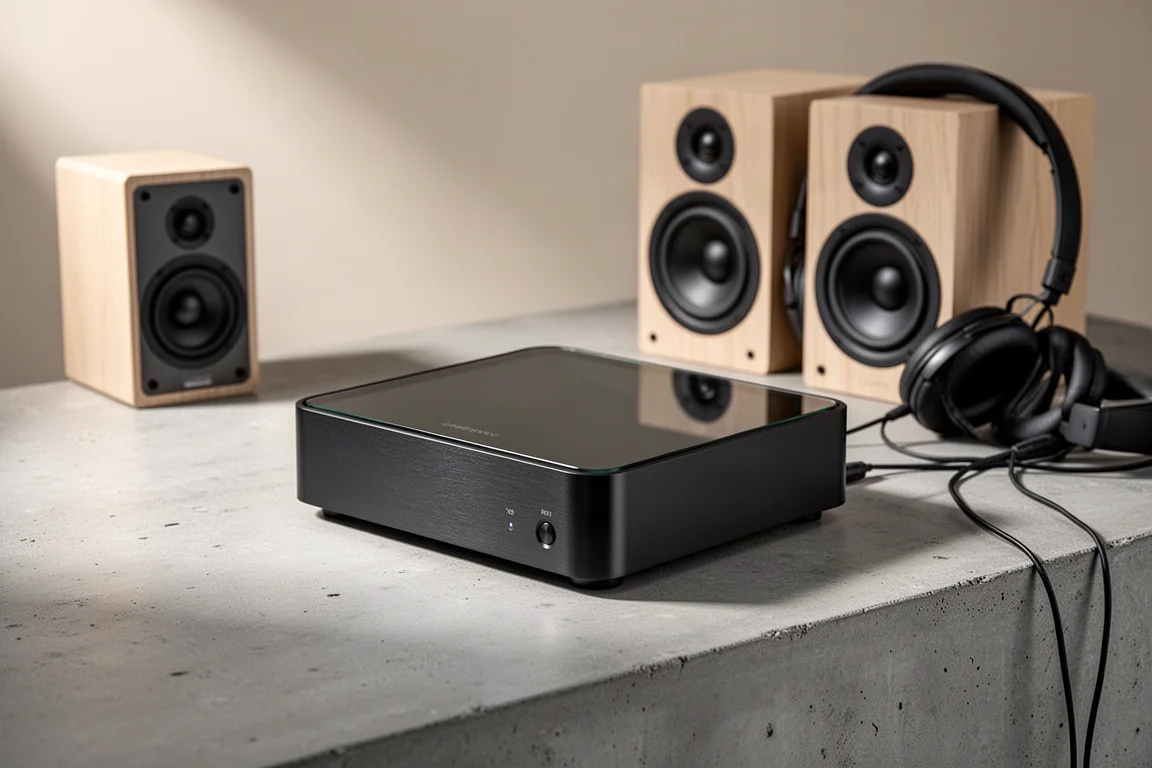
The Bluesound Power Node N331 is the latest generation of the company’s compact streaming amplifier, and it replaces the Power Node N330, a model that has served as a reference point in this category for around four years. The exterior is familiar: the same slim chassis, the same minimalist front panel, and the same choice of black or white matte satin finishes. The changes are internal, and they are more substantial than a typical refresh.
The headline additions are a new direct digital amplifier built around gallium nitride (GaN) FETs, a dedicated three-channel output mode for left, center, and right speakers, and a full-size headphone output powered by THX AAA technology. Alongside those, there is a new USB-C audio input, a full-size optical input, and support for DSD 256 playback.
This article walks through what changed, how the amplifier behaves in practice, and who should consider buying it.
Who the Bluesound Power Node N331 Is For
The Power Node N331 is aimed at listeners who want one compact component to handle several jobs at once. It streams music from major services and a personal library, it can take over television audio through HDMI eARC, it drives a pair of passive speakers, and it has a headphone output capable enough to serve as a dedicated listening station.
Because the N331 can run a left, center, and right speaker configuration on its own, it also suits media rooms, living rooms, and bedrooms where a full AV receiver would be too large or too complicated. Add a subwoofer and a pair of wireless rear speakers, or a second Power Node driving passive rears, and the same box becomes the foundation of a 5.1 system.
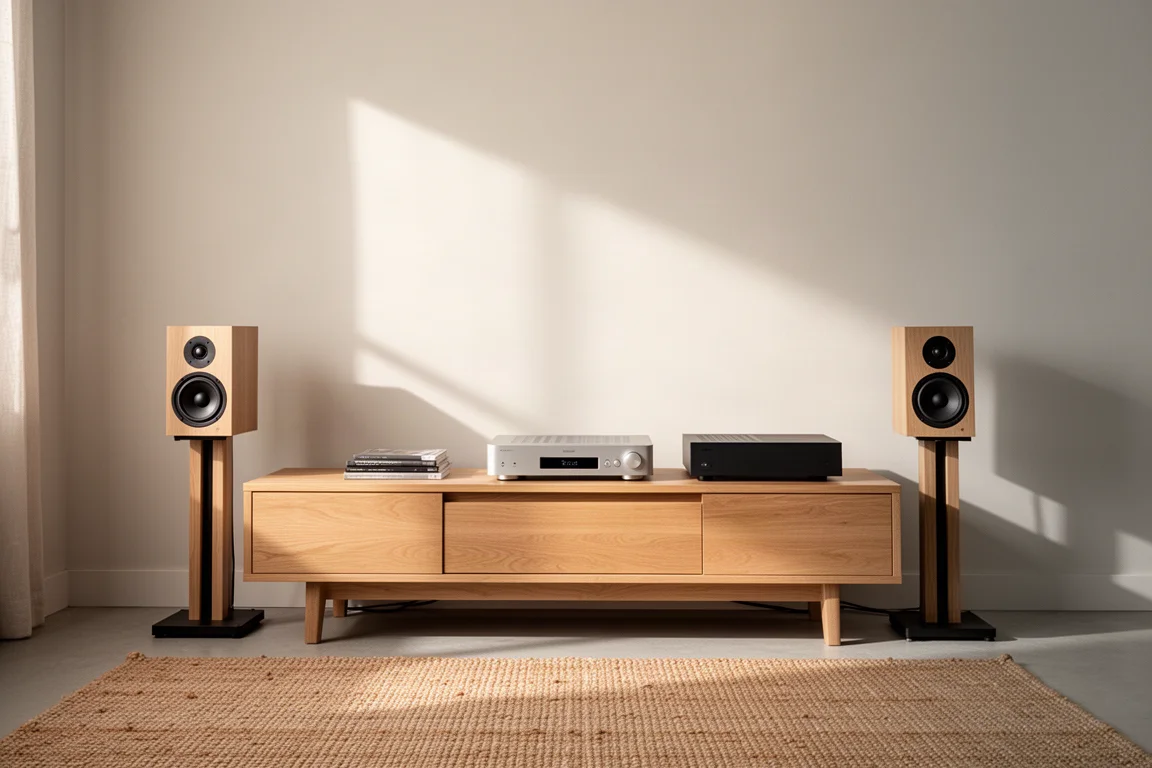
It is also a natural fit for a desktop. The USB-C audio input accepts a high-resolution digital signal straight from a computer, so a single unit can serve speakers and headphones without Bluetooth, AirPlay, or a separate DAC.
A Cleaner, More Powerful Amplifier
The most consequential change is the amplifier itself. The Power Node N330 used a hybrid digital design rated at 80 watts per channel into 8 ohms. The N331 moves to a direct digital amplifier using GaN FETs, a technology that lets the amplifier switch faster and generate less heat.
Power output rises to 100 watts per channel into 8 ohms with two channels driven. Bluesound also improved the distortion figure from 0.008 percent to 0.005 percent and the signal-to-noise ratio from -100 dBA to -102 dBA. In practice, that translates to a cleaner presentation with less background noise and a little more low-level detail.
The extra headroom matters with demanding speakers. Music gains punch and control, bass feels tighter, vocals come through more clearly, and instruments are given more space. The sound stays clean and dynamic whether the volume is low or pushed hard, and the improvement over the previous generation shows up most in the highs and mids, where the presentation feels more open and lifelike.
Three-Channel Output and Surround Expansion
A dedicated three-channel mode is new here. In this mode the N331 delivers 80 watts to each of the left, center, and right channels, which means a genuine front sound stage without a separate AV receiver or processor. Dialogue comes from a physical center speaker placed below the television, which keeps voices anchored and easy to follow.
Because the N331 supports HDMI eARC, Dolby Digital decoding, and volume control from a television remote, the three-channel setup integrates cleanly with a screen. When the television switches on, the Power Node follows and sends audio across all three front channels. From there, a 3.1 system is straightforward: connect left, center, and right speakers, then add a subwoofer through the RCA subwoofer output or a wireless subwoofer from the same ecosystem. Crossover points for the subwoofer can be set in the BluOS app.
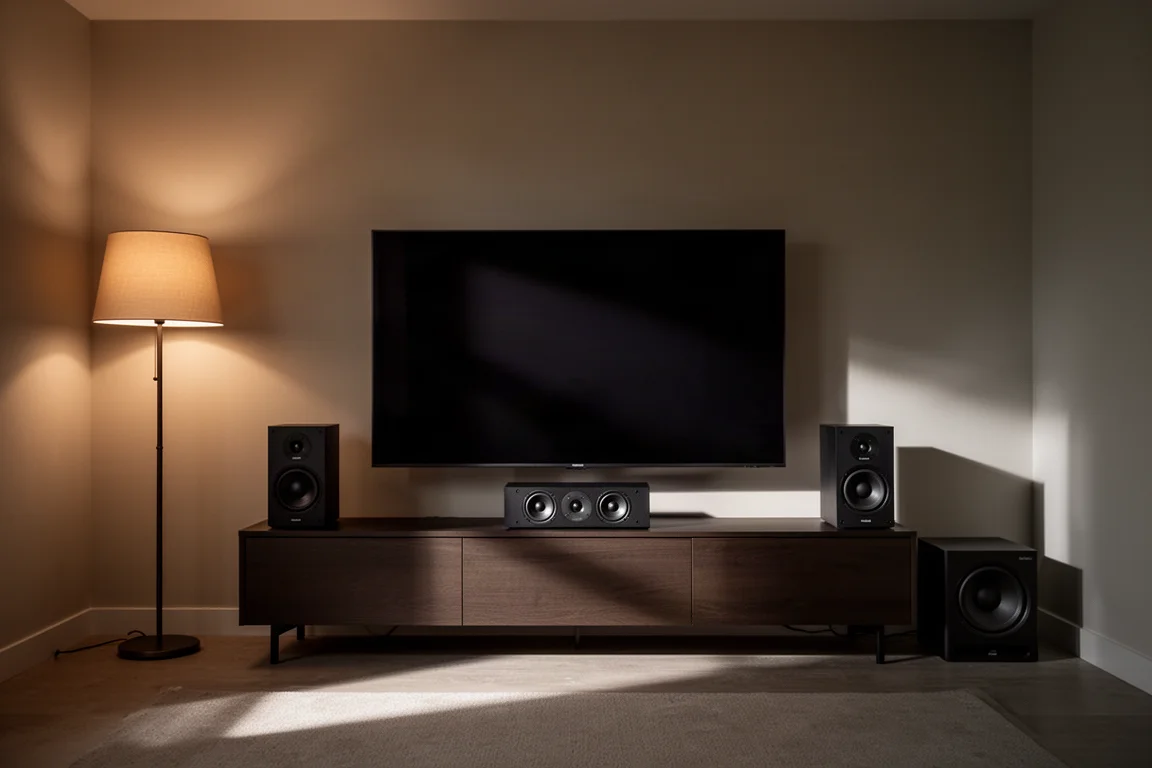
Expansion to 5.1 is also possible. A pair of Bluesound Pulse Flex speakers can serve as wireless rear channels, or a second Power Node can drive passive surround speakers. The N331 uses a bonded speaker link that creates its own private wireless network between the main unit and the rear speakers, so the connection does not depend on the home Wi-Fi network and the rear channels stay in sync with the front. Setup and adjustments are handled in the BluOS controller app.
Headphone Listening and Desktop Connectivity
The headphone output is a clear step up. Where the N330 offered a basic 3.5 mm jack, the N331 provides a full-size 6.3 mm output powered by THX AAA (Achromatic Audio Amplifier) technology, which is designed to remove distortion and background noise. The result is a quiet, detailed, and dynamic presentation, and it holds up well even with sensitive headphones.
Connectivity has been reworked as well. A USB-C audio input allows a computer or laptop to send a high-resolution digital signal directly into the amplifier. A dedicated stereo RCA input handles traditional components such as CD players or turntables with built-in phono stages. The N331 also adds a full-size TOSLINK optical input and a combo 3.5 mm jack, replacing the pair of 3.5 mm combo jacks on the N330 that required an adapter for optical sources.
Streaming, Connectivity, and the BluOS App
Streaming support remains one of the strongest arguments for this platform. The BluOS system provides access to more than 20 streaming services, high-resolution internet radio, and a personal music library, with support for high-resolution audio up to 24-bit/192 kHz. DSD 256 playback is now supported, which the previous model did not offer. AirPlay 2, Spotify Connect, Tidal Connect, and Roon Ready support are all included.
Wireless connectivity improves to Bluetooth 5.2 with aptX Adaptive, which adjusts its bit rate according to the quality of the connection. Wi-Fi and Ethernet remain available. A local server mode lets the unit stream music directly from a USB drive without a separate network drive, and NTFS support has been added to the USB-A port so more external drives work without reformatting. Album art in JPEG and PNG formats is displayed in the app.

The BluOS app itself is available on iOS, Android, macOS, and Windows, and it handles browsing, speaker grouping, EQ adjustments, and multiroom control. Dirac Live room correction is scheduled to arrive as a paid software update, a capability the N330 did not offer. For custom installations, the N331 integrates with Control4, Crestron, RTI, URC, Lutron, and Nice, and it supports Amazon Alexa voice control plus built-in IR learning and remote compatibility.
Things to Consider Before Buying
The N331 looks nearly identical to the model it replaces, so the upgrades are not visible from across the room. The improvements live in the amplifier stage, the headphone output, the input selection, and the three-channel capability.
Dirac Live is planned as a paid software update rather than a feature included at purchase. Building out a 3.1 or 5.1 system also requires additional speakers and, for passive surround channels, a second Power Node, so the total investment grows with the configuration.
For owners of the Power Node N330 who only need stereo streaming and are satisfied with the current sound, the N331 is not an essential upgrade. The case for moving up is stronger for listeners who want more power, a better headphone experience, a true center channel, or a direct connection to a computer.
Buying Advice
For anyone buying a Power Node for the first time, the N331 is the model to choose. It combines the compact form factor and the app experience that made the line popular with a more capable amplifier, a wider set of inputs, and a genuine path to a three-channel or 5.1 setup.
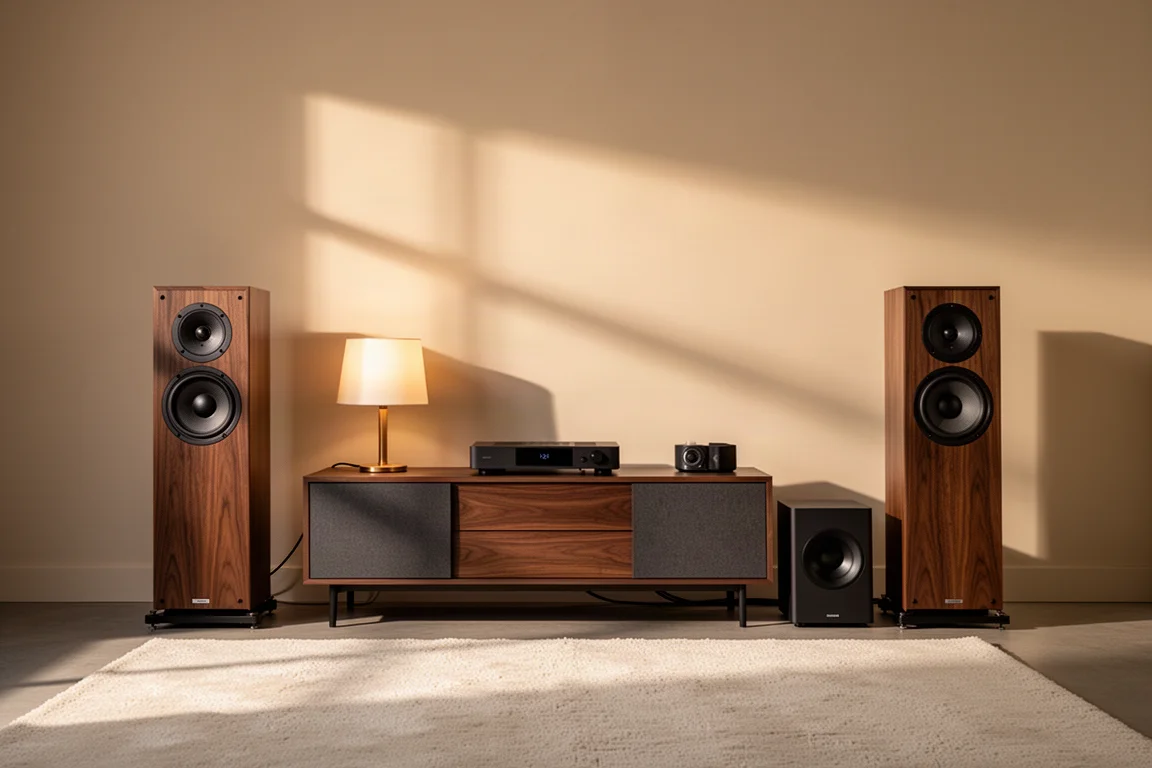
Existing N330 owners have a useful option: move the N331 to the front channels and repurpose the older unit to drive passive rear speakers. That keeps the upgrade cost reasonable while unlocking surround sound. On its own, the improved amplifier design delivers cleaner and more powerful sound, and the added features make the system more flexible over time.
Conclusion
The Bluesound Power Node N331 is not a cosmetic refresh. The direct digital amplifier, the dedicated center channel output, the THX AAA headphone stage, and the USB-C input each address a real limitation of the previous generation. For listeners who want one compact box to handle streaming, television audio, desktop listening, and headphones, the N331 is a well-rounded and capable choice.
Product link
View more details for Bluesound Power Node N331
This product is mentioned in the review. Check the specifications, options, and compatibility before buying.
View more details for Bluesound Power Node N331Further reading
Related Reviews
Streaming Amplifiers
Best High-Performance Streaming Amplifiers: Seven Full-Size One-Box Picks
Seven full-size streaming integrated amplifiers for serious two-channel systems, each chosen for a different priority: room correction, power, minimalism, musicality, or reference build.
Streaming Amplifiers
Best Mid-Tier Streaming Amplifiers: NAD M10 V2 vs Naim Uniti Atom
Two compact all-in-one streaming amplifiers compared on interface, app experience, sound character, and connectivity.
Streaming Amplifiers
Denon Home Amp vs Marantz M1: Two Compact Streaming Amplifiers Compared
A compact streaming amplifier comparison covering what the Denon Home Amp and Marantz M1 share, how their tunings differ, and which one suits your system.