Streaming Amplifiers
Best Mid-Tier Streaming Amplifiers: NAD M10 V2 vs Naim Uniti Atom
Two compact all-in-one streaming amplifiers compared on interface, app experience, sound character, and connectivity.
Introduction
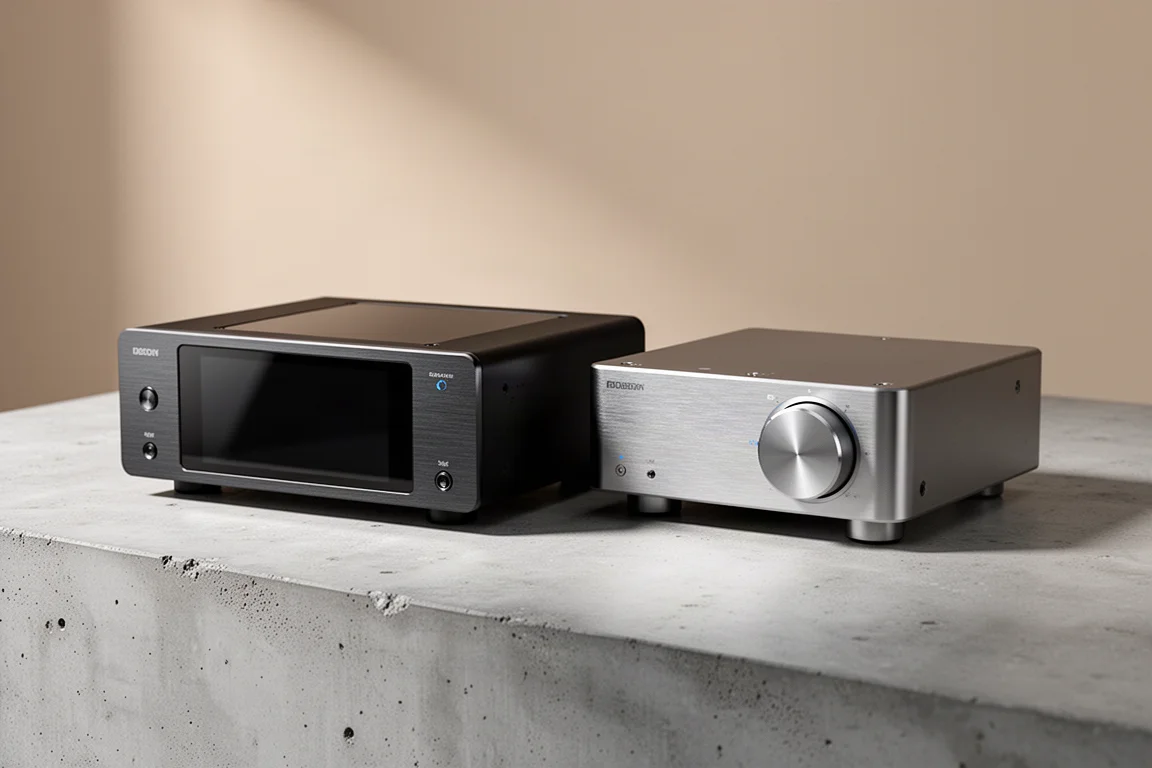
The mid-tier streaming amplifier is one of the more interesting categories in hi-fi right now. At roughly £1,500 to £2,500 you are buying a single box that handles streaming, digital to analogue conversion, preamplification and power amplification, and in most cases a television connection as well. Two products come up repeatedly in this band: the NAD M10 V2 and the Naim Uniti Atom. Both are compact, both are built around a control app rather than a stack of separate components, and both have a clear point of view about what matters most. This guide looks at where each one is stronger, where each one asks for a compromise, and which type of listener is likely to be happier with which box.
How the Mid-Tier Streaming Amplifier Category Has Changed
Network amplifiers have matured quickly. A few years ago the appeal was simply having fewer boxes. Today the expectation is that hardware and software arrive at the same level of polish, and buyers compare streaming platforms as closely as they compare power output.
The Naim Uniti Atom has been the reference point in this category for several years, and most rivals have spent that time catching up. Pricing has moved too. The Uniti Atom now sits above the band that once defined this category, at around £2,700 in the UK and roughly $3,200 to $3,400 in the US, while the NAD M10 V2 remains at £2,200 in the UK.
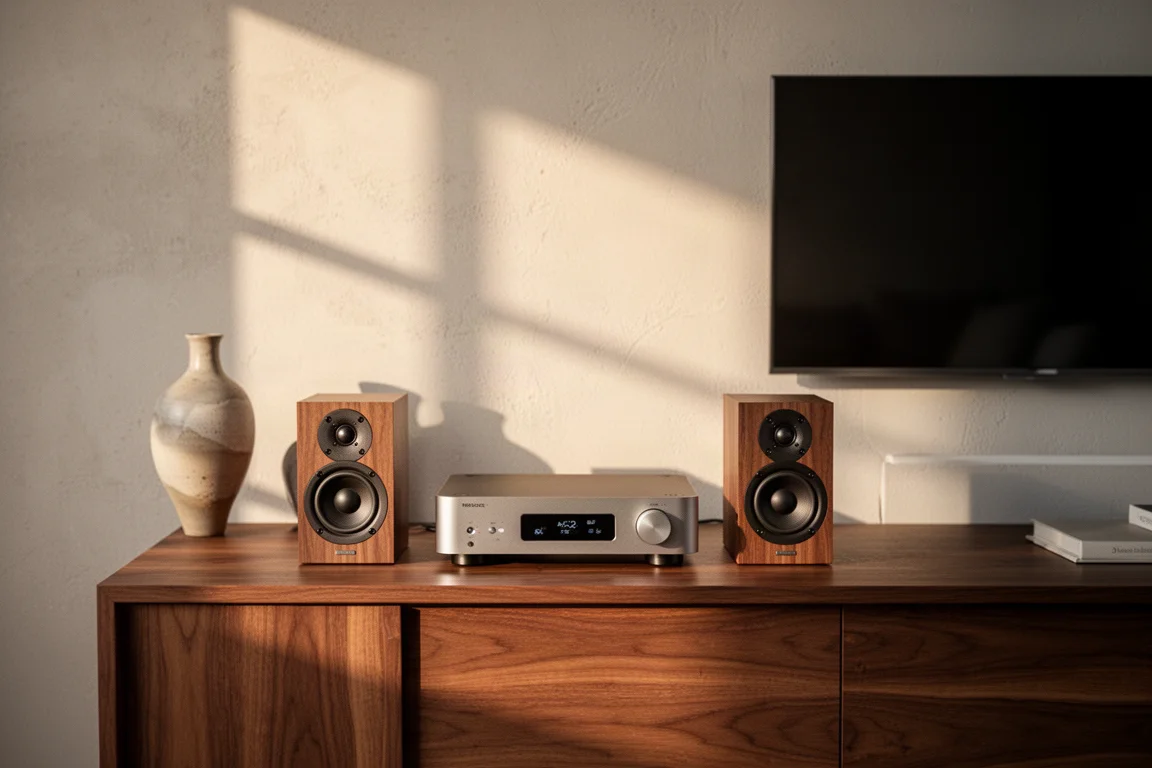
What has changed most is the software expectation. An amplifier at this price with a control app that looks unfinished is difficult to justify, and manufacturers have learned that the app is judged alongside the circuit design. That shift explains why these two products, despite both being compact one-box designs, end up feeling like answers to different questions.
NAD M10 V2: An Interface-Led Streaming Amplifier
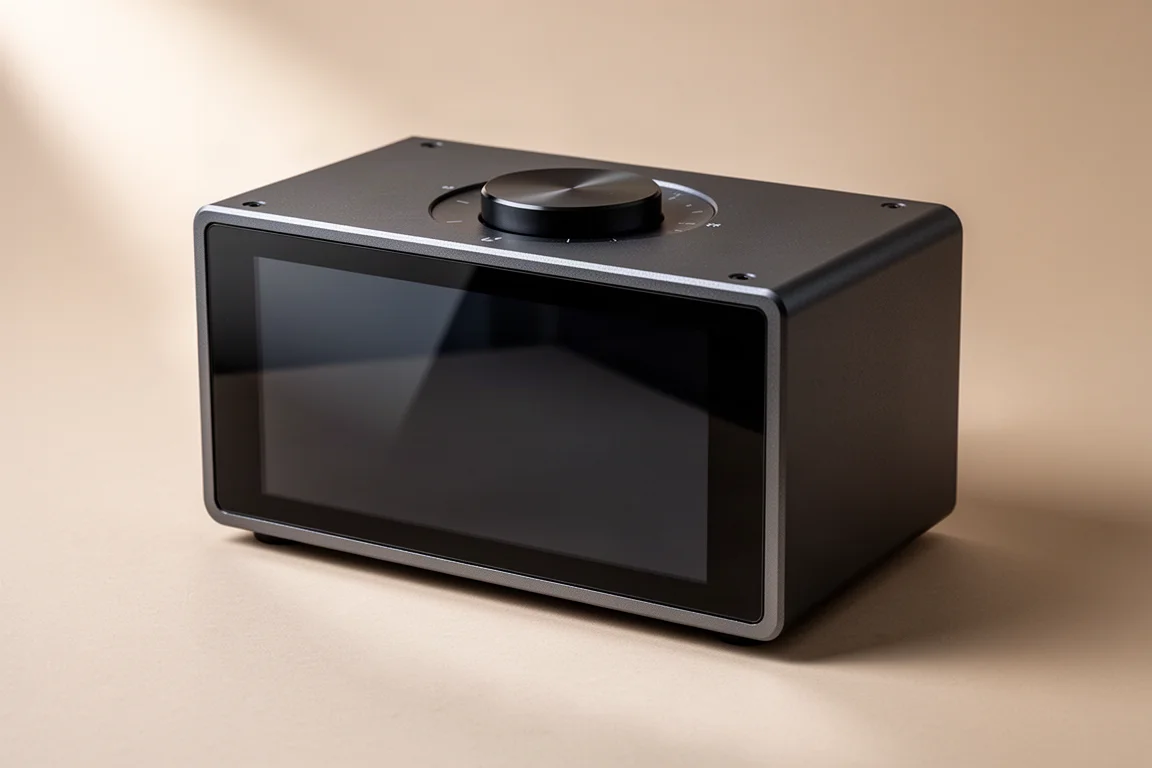
NAD’s M10 V2 is the follow-up to the original M10, and it makes its case through interaction rather than showpiece design. The centrepiece is a seven inch touchscreen with VU meters that respond to the music, and it is genuinely pleasant to live with day to day.
Under the lid, upgraded Hypex amplifier modules give it a clean and controlled presentation, and room correction is included. That is unusual at this price and useful in rooms that are less than ideal. Streaming is handled by the BluOS platform, one of the strongest app ecosystems in the category, so setup and daily control feel familiar to anyone who has used a Bluesound product.
Tonally, the M10 V2 leans slightly towards a smile curve with a touch of leanness through the mid-range, and it is the more detailed and dynamic of the two amplifiers here. One practical caveat: analogue inputs are digitised internally, and analogue sources do not sound as strong through it as digital ones do.
Naim Uniti Atom: Design, App Investment, and Radio
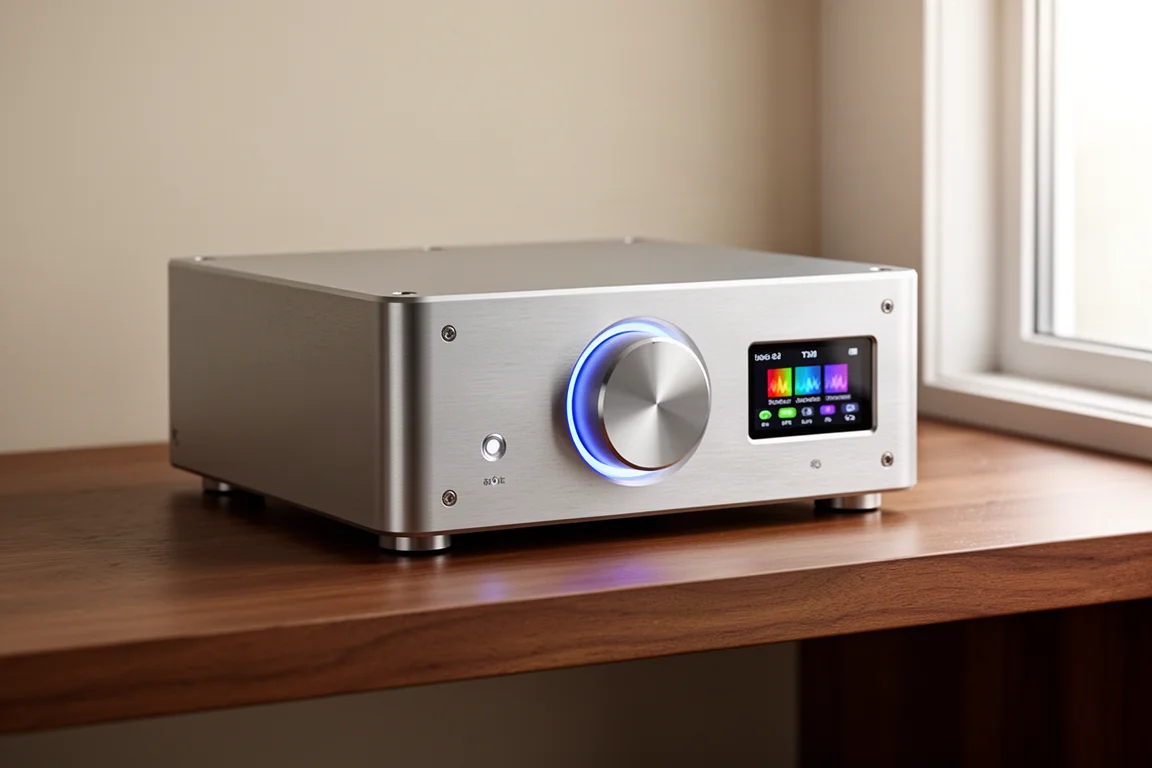
The Uniti Atom is the product that set expectations for this category. Its industrial design is the first thing anyone notices, and the volume control in particular draws comments from visitors in a way that few hi-fi components manage. The colour display is smaller than the NAD’s touchscreen, but the hardware feels deliberate and cohesive.
Naim has invested heavily in its control app, with a dedicated software team behind it. The result is an interface a first-time user can pick up in minutes without instruction. Internet radio is handled particularly well: global stations are easy to search, and BBC stations sit alongside international broadcasts in a way that makes world radio genuinely usable.
The Uniti Atom also has a fuller sound than the M10 V2, especially through the mid-range, which makes long listening sessions easy. It is not quite as detailed or as dynamic as the NAD.
Sound Character: Fuller Mid-Range Versus Sharper Detail
The clearest difference between these two amplifiers is tonal. The M10 V2 prioritises resolution, with a slightly lean mid-range and a presentation that leans towards a smile curve, and its Hypex modules contribute a noticeable sense of clarity. The Uniti Atom gives up a little detail and dynamic snap in exchange for a fuller, warmer mid-range that flatters voices and acoustic instruments.
Which one suits you depends on the rest of the system. If your speakers already run warm, the NAD’s extra clarity can balance them nicely. If your room and speakers lean bright or forward, the Naim’s body may be the easier listen over a long evening.
The M10 V2 also includes room correction, which can be a real advantage in a room with awkward dimensions or limited speaker placement. The Uniti Atom leaves room treatment and speaker positioning to you, which is fine in a well-behaved space but less forgiving elsewhere.
Connectivity: HDMI eARC, Phono Stages, and Modules
Both amplifiers are commonly used as the hub of a television system, and HDMI eARC is a major reason. A single cable from the TV feeds the amplifier, the TV remote controls the volume, and the sound comes out of proper speakers rather than the television’s own drivers. Add a subwoofer and you have a compact 2.1 channel system that handles films and music from the same box. For many buyers this is the feature that decides the purchase.
Turntable owners need to look more carefully. The Uniti Atom has no built-in phono stage, a decision Naim explains in terms of space and circuit compromise, and the recommendation is to use an external phono stage into a line-level input. NAD’s modular approach means some of its amplifiers can be ordered with a factory-installed phono stage board, so it is worth confirming which options apply to the exact model you are buying.
The Streaming App Matters as Much as the Hardware
A control app is part of the product, not an accessory. BluOS is widely treated as a benchmark in the audiophile space, and Sonos S2 holds a similar position for general consumers. Manufacturers that license BluOS rather than build their own platform avoid a large and ongoing development cost, which explains why the platform keeps appearing in more devices.

Naim’s decision to fund its own app team is the reason the Uniti Atom feels finished rather than approximate. Keeping an app current means tracking every iOS and Android update, year after year, and that cost shows up in the price of the box. An amplifier at this level with a weak app is hard to recommend, regardless of how good the amplifier section is.
Buying Advice: Matching the Amplifier to Your System
Choose the NAD M10 V2 if you want the best interface in the category, a large touchscreen, room correction, and the more detailed and dynamic sound of the two. At £2,200 in the UK it is also the less expensive option, and the BluOS platform makes it easy to live with if you already use Bluesound products.
Choose the Naim Uniti Atom if design and app polish matter as much as sound, if you want a fuller mid-range, or if internet radio is a regular part of your listening. Budget for an external phono stage if you play vinyl, and note that the Uniti Atom now sits above this category’s traditional price band at around £2,700 in the UK and roughly $3,200 to $3,400 in the US.
Both are compact, one-box designs. Some alternatives in this category are full-size components with more limited streaming functionality and connectivity, which is worth weighing if shelf space is not your constraint.
What Each Amplifier Does Best
The M10 V2 is the stronger choice for listeners who value interaction, a large touchscreen, room correction, and the sharper end of this category’s sound. The Uniti Atom is the stronger choice for listeners who want the design benchmark, a thoroughly developed app, excellent radio access, and a fuller mid-range that stays comfortable over long sessions.
Neither product is a compromise on the core job. Both stream, both convert, both amplify, and both can anchor a television system through HDMI eARC. The decision comes down to which set of priorities matches the way you actually listen, and both options are solid enough that either one can serve as the only amplifier in a small system for years.
Conclusion
The mid-tier streaming amplifier has become a genuinely competitive category, and these two products show why. The NAD M10 V2 wins on interface, room correction, and detail, at a lower price. The Naim Uniti Atom wins on design, app investment, radio, and mid-range fullness, at a higher price and without a built-in phono stage. Match the amplifier to your speakers, your room, and your sources, and either one will do the job well.
Further reading
Related Reviews
Streaming Amplifiers
Best High-Performance Streaming Amplifiers: Seven Full-Size One-Box Picks
Seven full-size streaming integrated amplifiers for serious two-channel systems, each chosen for a different priority: room correction, power, minimalism, musicality, or reference build.
Streaming Amplifiers
Bluesound Power Node N331 Review: A Streaming Amplifier Built for More Than Stereo
The Bluesound Power Node N331 keeps the compact chassis of its predecessor and adds a more powerful amplifier, a dedicated center channel output, and a THX AAA headphone stage.
Streaming Amplifiers
Denon Home Amp vs Marantz M1: Two Compact Streaming Amplifiers Compared
A compact streaming amplifier comparison covering what the Denon Home Amp and Marantz M1 share, how their tunings differ, and which one suits your system.