Streaming Amplifiers
WiiM Amp Review: The $299 Streaming Amplifier Bargain to Beat
A $299 streaming amplifier with an aluminum chassis, HDMI ARC, and app-controlled subwoofer bass management. Here is what the WiiM Amp does well and where it falls short.
Introduction
The WiiM Amp arrives at $299 and makes a strong case as one of the best value streaming amplifiers on the market. Linkplay, the company behind the WiiM brand, spent the last year and a half building its reputation with the WiiM Mini, WiiM Pro, and WiiM Pro Plus network streamers, which brought Chromecast, Apple AirPlay 2, Spotify Connect, Tidal Connect, and Roon readiness to living rooms for very little money. The WiiM Amp takes that streaming engine and adds speaker amplification, a metal chassis, and a physical volume control.
This guide covers what the amplifier does well, where it falls short, and who should buy it.
Who the WiiM Amp Is For
The WiiM Amp suits listeners who want one box to handle streaming, TV audio, and speaker power. It delivers 60 W per channel into 8 ohms and 120 W per channel into 4 ohms, which is plenty for compact standmount speakers in a normal room. Add a subwoofer and those figures matter far less, because the low bass is handed to the subwoofer’s own amplifier.
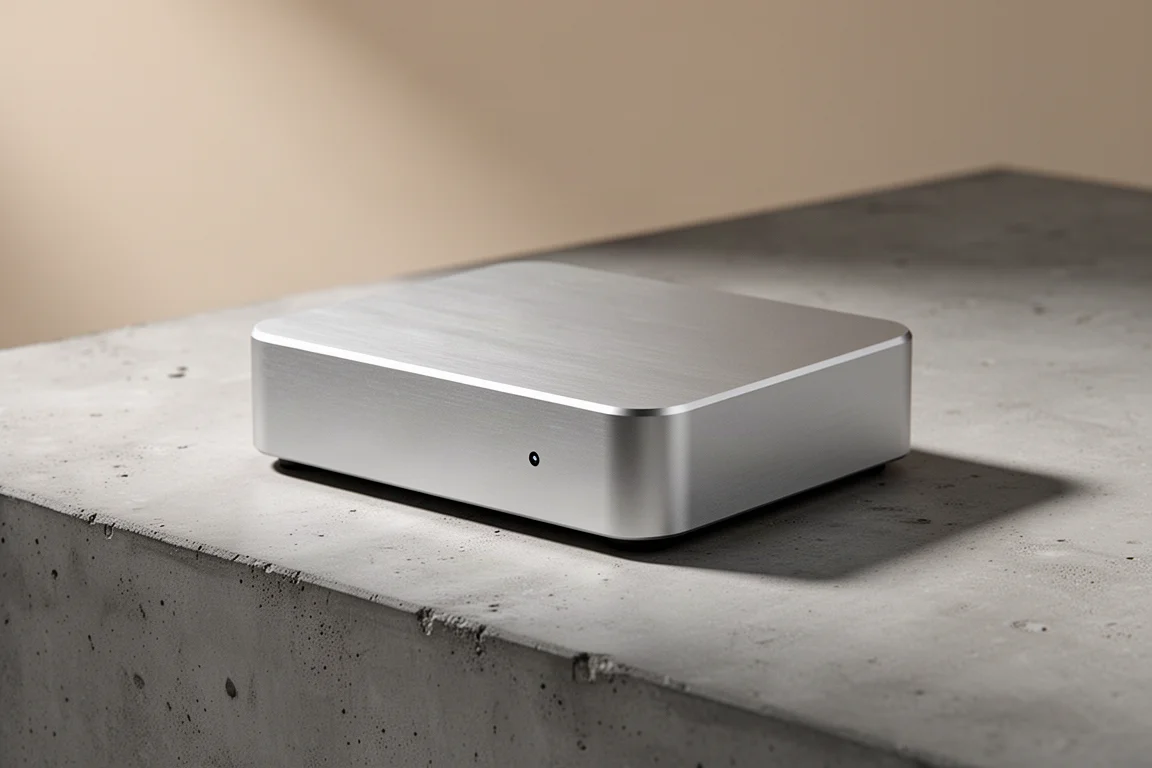
It is also a natural fit for anyone who wants to control the whole system, including subwoofer settings, from a phone without leaving the sofa. The top plate is close in size to a Mac mini, so it disappears easily onto a sideboard, a shelf, or inside a cabinet.
It is not the right choice if you need a moving magnet phono stage, a wired headphone output, or high power for demanding speakers. Those are the three areas where the amp’s price is most visible.
Design and Build Quality
The casework is aluminum on all sides apart from the bottom, a clear step up from the plastic chassis of the WiiM Pro Plus. Buyers can choose space gray or silver. A WiiM logo is cut into the top plate and reads identically from the front and from the back.
A physical volume wheel on the front doubles as a play and pause control when pressed, and the supplied remote pairs over Bluetooth LE, which means the amp itself can be tucked out of sight if you prefer a clean rack. The power supply is built into the unit, so there is no external brick to hide behind the furniture.
Streaming Features and App Control
Streaming support is unusually broad for the money: Chromecast, Apple AirPlay 2, Spotify Connect, Tidal Connect, and two-way Bluetooth, plus AirPlay casting, which allows the amp to transmit AirPlay signals rather than only receive them. Alexa and Siri voice control are on board as well. The WiiM Home app integrates Qobuz and Amazon Music HD, and it includes both a graphic and a parametric EQ for room tuning.
Setup is quick and largely automatic. The app discovers the amp on the network, asks for Wi-Fi credentials, pushes them to the unit, and the amp then downloads its firmware updates. In practice, music is playing about five minutes after unboxing. Voice prompts confirm when the amp has joined a Wi-Fi or Ethernet network, a startup sound plays when the system is ready, and a reboot takes around 30 seconds.

Roon readiness had not arrived for the amp at the time of testing, although it is present on the WiiM streamers. Software development has otherwise moved quickly: two-way Bluetooth, for example, was added through firmware updates.
On the back panel you get analog, optical, and HDMI ARC inputs, an Ethernet socket, and a subwoofer output. HDMI ARC is the most convenient option for a television, since one cable carries the sound and volume can be handled from the TV remote or the app.
Sound Quality in Practice
The WiiM Amp belongs to the clean, lean, and lit-up school of sound. It prioritizes rhythm and swing, draws instrument shapes with crisp edges, and gives more weight to transparency than to tonal saturation. It never sounds gray or washed out. It is simply less tonally saturated than more expensive amplification.
Compared with a Marantz Stereo 70s, the WiiM outlines instruments with crisper edges, while the Marantz sounds more natural and adds an MM phono input. Against an Audiolab 6000A Play, the Audiolab sounds warmer and fuller of body. Neither comparison is a criticism at this price; it is a different tonal presentation rather than a shortfall in detail.
The closest functional cousin is the Bluesound Powernode Edge, which sells in Europe for around €650, roughly twice the price. The Bluesound pushes high hats slightly more laidback and softer, while the WiiM is keener and more front of foot, though the gap is small rather than dramatic. Both amplifiers are better suited to modern pop and electronica than to string-driven classical works.
Subwoofer Integration and Bass Management
The subwoofer output is where the WiiM Amp pulls ahead of much of the competition. The app includes a bass management screen with a crossover point, a gain level that can be set above or below zero, and a phase toggle. All of it is adjustable from the listening seat, so there is no need to reach behind the subwoofer to change settings.
Speaker outputs are high-pass filtered, which hands the low bass to the subwoofer and its own amplifier. The audible benefit is greater mid-range clarity from compact standmount speakers. It also blunts the case for upgrading: once the main amplifier only handles mid-range and treble, the differences between amplifiers become far less obvious.
For a 2.1 system, that combination of high-pass filtering and in-app subwoofer control is rare at this price.
Things to Consider Before Buying
A few quirks are worth knowing. After switching off a television connected over HDMI ARC, the amp can emit a low-level noise through the subwoofer and occasionally through the speakers. The same thing sometimes happens with the optical input. Switching to another input and back stops it. This noise is not audible during playback, even during quiet passages.
A reboot has also produced a similar low-level noise at startup on occasion. In one instance the amp stopped sending a signal to the subwoofer and needed a reboot to recover, and it has not repeated since. A static discharge from the metal chassis during dry winter conditions once caused a skipping-like behaviour that required a power cycle, after which everything worked normally.
Beyond those niggles, the missing features are straightforward: there is no MM phono input, no wired headphone output, and Roon readiness was not yet available at the time of testing. Buyers who need any of those should factor that into the decision.
Buying Advice
At $299, the WiiM Amp undercuts the Sonos Amp by roughly $400 and the Bluesound Powernode Edge by about half. Against the Sonos it also offers more extensive streaming-system support, physical control buttons, an aluminum chassis, and an internal power supply, while the Sonos has the edge on the breadth of streaming services. Compared with the Bluesound, the WiiM does everything the Powernode Edge does apart from wired headphones.
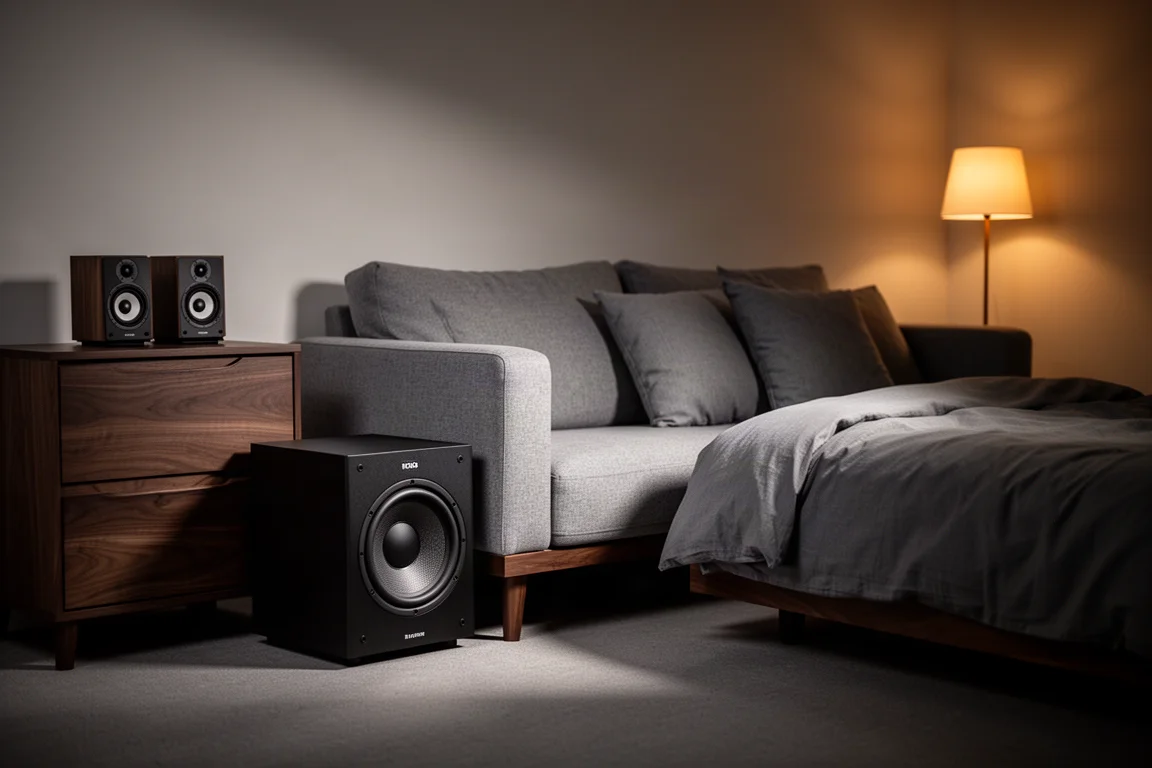
For most buyers the smart build is a pair of efficient standmount speakers plus a compact subwoofer. Bass management from the app makes that easy to set up, and high-pass filtering keeps the main amplifier working where it is strongest. If you need a phono stage, a wired headphone output, or the warmer character of something like the Audiolab 6000A Play, plan to spend more. Otherwise the WiiM Amp is difficult to argue with.
Conclusion
The WiiM Amp is not perfect. It has minor noise quirks around HDMI ARC and optical inputs, no phono stage, and no wired headphone output. What it does offer is a metal chassis, an internal power supply, HDMI ARC, extensive streaming support, app-based subwoofer bass management, and a clean, crisp sound for $299. For listeners assembling a compact two-channel streaming system, it is one of the strongest value picks in Hi-Fi today.
Product link
View more details for WiiM Amp
This product is mentioned in the review. Check the specifications, options, and compatibility before buying.
View more details for WiiM AmpFurther reading
Related Reviews
Streaming Amplifiers
Best High-Performance Streaming Amplifiers: Seven Full-Size One-Box Picks
Seven full-size streaming integrated amplifiers for serious two-channel systems, each chosen for a different priority: room correction, power, minimalism, musicality, or reference build.
Streaming Amplifiers
Best Mid-Tier Streaming Amplifiers: NAD M10 V2 vs Naim Uniti Atom
Two compact all-in-one streaming amplifiers compared on interface, app experience, sound character, and connectivity.
Streaming Amplifiers
Bluesound Power Node N331 Review: A Streaming Amplifier Built for More Than Stereo
The Bluesound Power Node N331 keeps the compact chassis of its predecessor and adds a more powerful amplifier, a dedicated center channel output, and a THX AAA headphone stage.