Electric Mountain Bikes
Whyte E-Lyte vs Santa Cruz Heckler SL: Two Lightweight eMTBs Compared
Two carbon lightweight electric mountain bikes go head to head on motor character, battery range, geometry, climbing manners, and descending composure.
Introduction
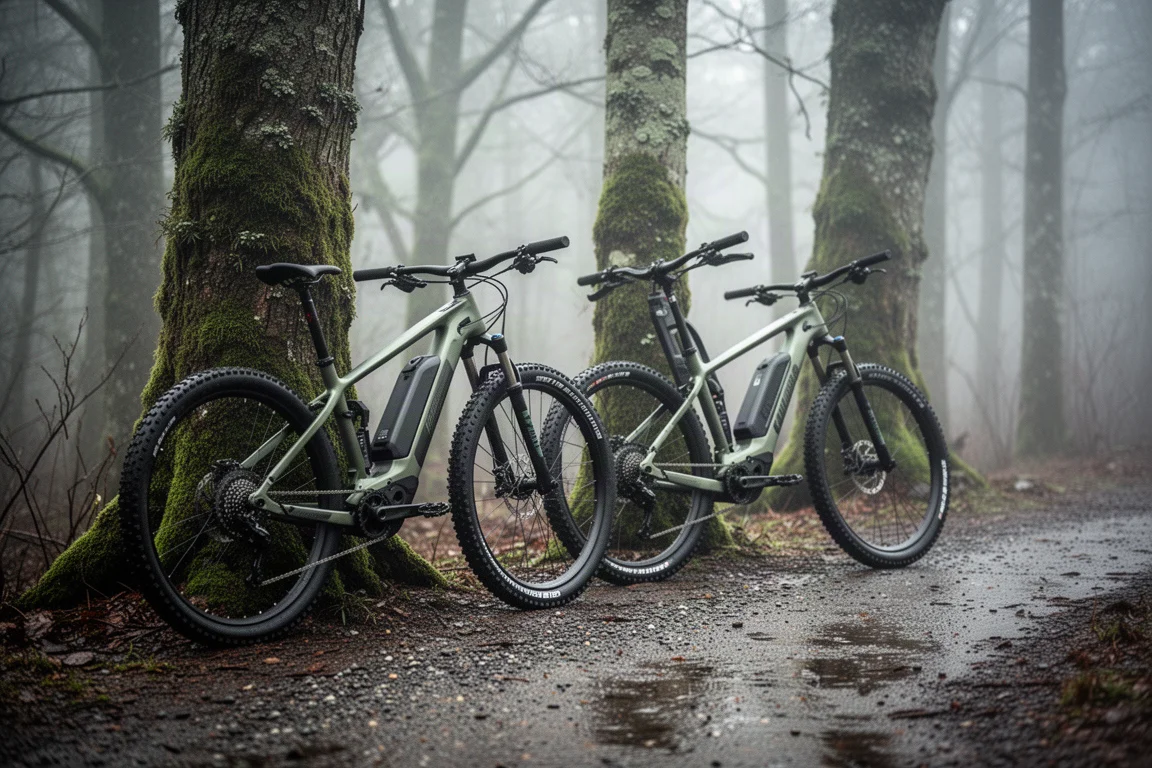
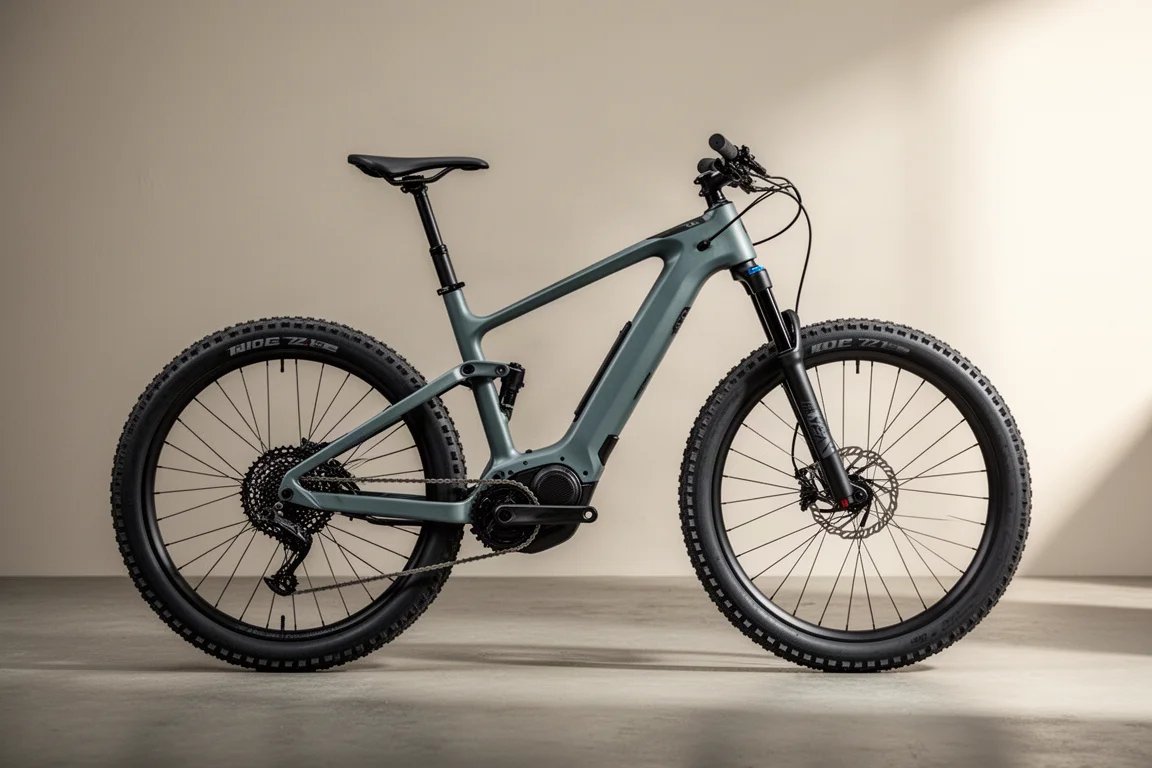
Two carbon-framed lightweight electric mountain bikes, one from the UK and one from the US, were ridden back to back through three months of wet winter forest conditions. On paper the numbers barely separate them: similar travel figures, identical 64 degree head angles, and a claimed weight gap of just 80 grams. The differences only become clear once you point them at a steep climb or a chunky descent, and that is where this comparison focuses.
Riders shopping in this category are usually chasing the same thing: a bike that still behaves like a mountain bike, with enough assistance to extend the day rather than turn it into a motorbike ride. Both contenders deliver that. They simply go about it in very different ways.
What These Two Lightweight eMTBs Share
Both frames are built from carbon fibre. The Heckler SL uses Santa Cruz’s more basic C carbon layup, which keeps cost down at a fractional weight penalty over the brand’s lighter CC material, while the Whyte uses a unidirectional layer designed to be both strong and light.
Cable routing on both bikes runs internally through ports in the head tube rather than through the headset, which makes servicing noticeably simpler. Both use UDH rear derailleur hangers, both carry generous chain slap and underside protection, and both leave room inside the front triangle for a water bottle, a range extender, or tools.
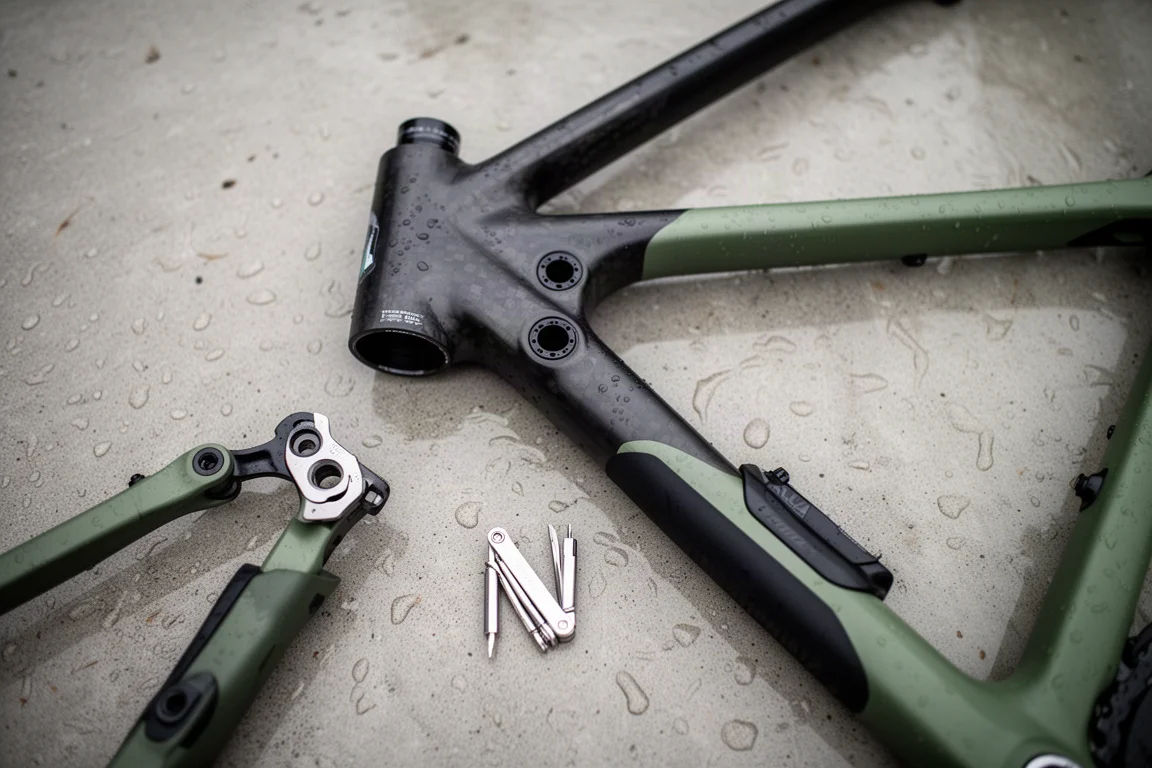
Geometry philosophy aligns too. Both bikes sit firmly in the long, slack, and low camp, and both offer flip chips to switch between high and low settings. The Santa Cruz adjusts at the rear shock mount, the Whyte through an offset shock eyelet. Shared figures include a 64 degree head angle, a 77 degree seat tube angle, and a 480 mm reach on a size large. Chainstays differ: the Heckler SL uses size-specific stays, measuring 446 mm on a large, while the Whyte runs a fixed 450 mm across all sizes.
Where they part company is suspension layout and motor choice. The Whyte runs a Horst link with 142 mm of rear travel and a shock mounted under the top tube. The Heckler SL mounts its shock low above the bottom bracket, driven by Santa Cruz’s twin co-rotating links, for 150 mm of travel. Bottom bracket heights reflect that difference, with the Whyte sitting lower at 334 mm against the Heckler SL’s 340 mm.
Motors, Batteries, and Range Compared
Both motors come from established manufacturers, but they operate on different principles and reward different pedalling styles.
The Santa Cruz uses the Fazua Ride 60, with 60 Nm of torque and a peak power figure of 450 W. The Whyte runs Bosch’s Performance Line SX, which counters with 55 Nm but a much higher 600 W peak power output. The Bosch delivers its peak torque and power at around 104 RPM, while the Fazua peaks much lower at roughly 78 RPM. In practice that means the Bosch asks you to spin quickly to access everything it has, while the Fazua is far more accommodating for riders who turn a heavier gear.
Battery capacity favours the Santa Cruz at 432 Wh against the Bosch’s 400 Wh. Both are compatible with range extenders, but only the Bosch’s 250 Wh external battery is actually available; a 200 Wh Fazua pack has been promised for some time without materialising.
Real world range is strong on both. Used conservatively, the Fazua can clear well over 2,500 m of ascent on a single charge, and even with generous use of its boost function it still passed 1,000 m. The Bosch is similarly frugal: on turbo alone it consistently exceeded 1,000 m of climbing, and adding the range extender pushes that beyond 1,500 m.
Whyte E-Lyte: Bosch Power and Composed Handling
The Whyte’s defining trait is balance. Its seated position places your hips directly over the bottom bracket, which makes pedalling comfortable and efficient and keeps the front wheel weighted on steep gradients. Combined with a relatively short 630 mm top tube, the result is a natural, upright, enduro-style position that responds well to small weight shifts. Picking the front wheel over obstacles feels deliberate rather than forced, and scaling rock and root steps does not upset the bike’s balance.
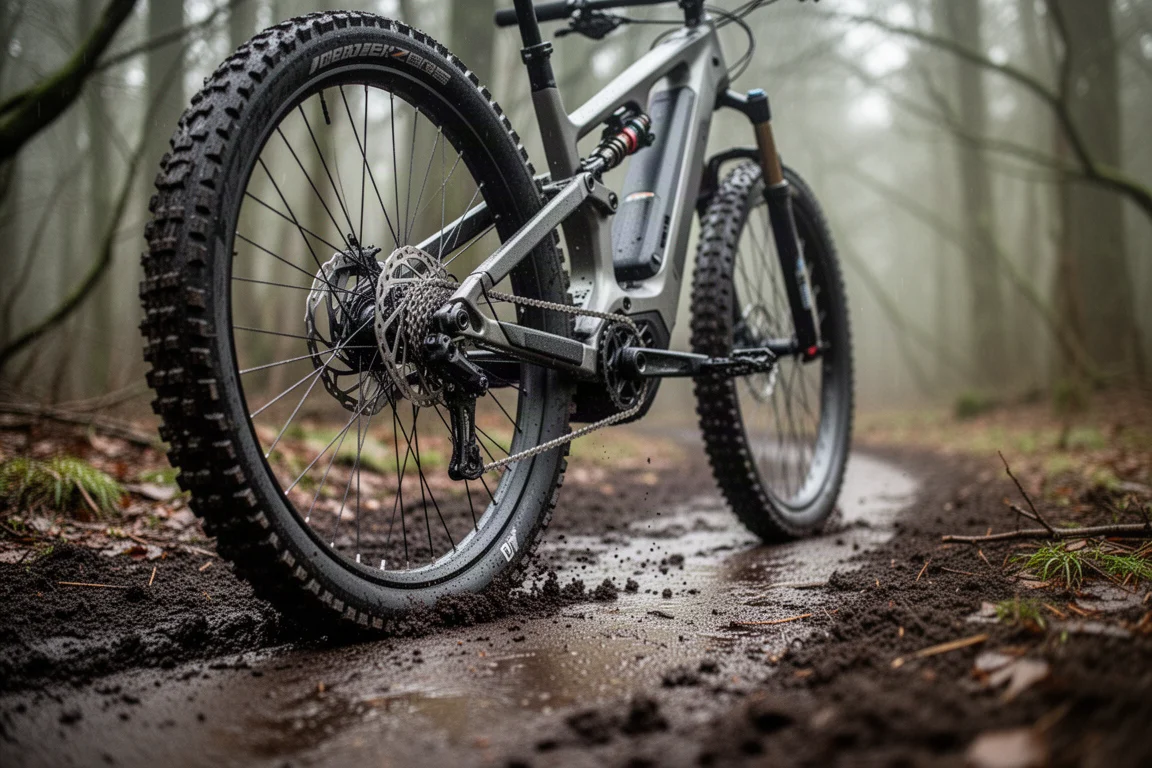
Descending is where the E-Lyte pulls clear. The bars are high, the bottom bracket sits low, and the 652 mm stack gives you plenty of bike to push against on steep sections without feeling like you are about to go over the bars. It holds lines and sticks to turns with remarkably little rider input while still feeling like you are the one in control. Its low-slung weight keeps it composed in choppy terrain, and the ride stability feels closer to a much heavier machine than the 19.62 kg figure suggests.
The trade-off is a firm rear end. With 142 mm of travel it needs to be managed rather than abused, and it does not carry much in reserve for rider mistakes. A softer setup improved comfort but bottomed out too regularly when pushed hard; the firmer setting is more punishing on an off day but extracts the best from the bike, producing a ride that feels closer to a longer travel rig. There is also a climbing catch. The Bosch motor wants a high cadence, and keeping it at peak assistance on steep, slow, technical climbs is difficult, especially with the stock chainring. Fitting a smaller ring is a relatively inexpensive upgrade that makes a meaningful difference here.
Santa Cruz Heckler SL: Fazua Punch and Playful Agility
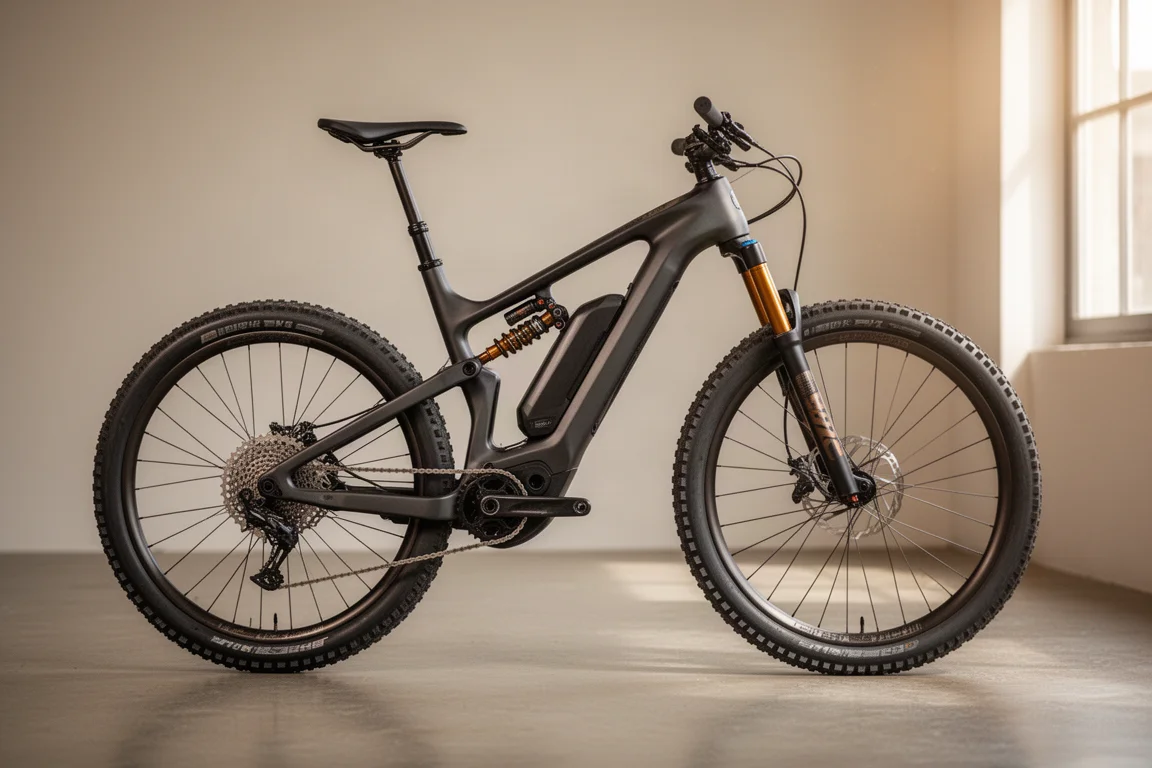
The Heckler SL is the more playful of the two. It can be popped, bounced, and jumped down the trail, and changing direction is easy and engaging without ever feeling out of control. The extra mass of the motor and battery, compared with a human-powered trail bike, helps mute unwanted liveliness, and the suspension adds plenty of support. Driving the bike hard into the ground does not eat into the reserves kept aside for bump absorption, and generous bottom-out resistance means the rear end rarely reaches a hard stop.
Its character rewards an aggressive approach. Treating the Heckler SL like a blunt instrument and working it hard into the terrain extracts speed, control, and dynamism. The trade-off is that the suspension is not especially active. It does not track the ground with surgical precision and can feel lazy when you are not committing, absorbing chatter in broader strokes rather than following every small bump.
Climbing is where the geometry works against it. The seated position carries a rearward bias, concentrating weight over the back wheel, so your hips sit behind rather than over the bottom bracket. Angling the saddle nose down and pushing it forward in the clamps reduces the sensation but does not cure it. On steep gradients the front wheel goes light and skips over bumps, roots, and rocks unless you actively shift your weight towards the bars. It is a shame, because the Fazua motor itself is brilliantly powerful and remarkably efficient, with generous torque and power in everything but its lightest mode and a 32-tooth chainring that lets it pedal much like an unassisted bike.
Climbing Performance Compared
On the way up, the Whyte’s neutral seated position is the clear advantage. Placing your hips over the bottom bracket improves comfort and efficiency, and the weighted front wheel maintains steering accuracy on steep, technical ground. The limitation is the motor’s appetite for cadence. At low bike speeds on the steepest inclines, keeping the Bosch at peak output is almost impossible at times; drop below its preferred cadence and assistance falls away, leaving you to make up the difference with leg power. The stock chainring limits how much drive you can put through the pedals, so a demanding climb quickly becomes a whole-body effort.

The Heckler SL is the mirror image. Its Fazua Ride 60 delivers generous torque and power in all but its lightest breeze mode, making trailhead transfers and undulating singletrack genuinely fun and fast, and it never leaves you lugging dead weight once you exceed the motor’s cut-off. Range is excellent. What holds it back is purely the seating position: a slack-feeling seat tube angle caps climbing performance by limiting control and grip, and no component upgrade can fix geometry.
Neither bike is a standout on the most punishing gradients. The difference is that the Whyte’s shortfall can be addressed with a simple, inexpensive drivetrain change, while the Heckler SL’s cannot.
Descending Performance Compared
Point both bikes downhill and the gap widens in the other direction. The Whyte feels instantly correct: bars high, bottom bracket low, and a cockpit distance that is neither stretched nor cramped. You stand in the bike rather than on it, and it can be left to hold lines with minimal input while remaining very much under your control. Its low-slung weight keeps the chassis level with the horizon in rough terrain.
The Heckler SL takes a different route to speed. It feels lighter and more willing to be thrown around, which suits riders who like to pick lines and move the bike beneath them. Its suspension support and bottom-out resistance encourage hard, committed riding, even if the rear end absorbs chatter in broader strokes rather than tracking every small bump. Ridden with intent, it is seriously fun and fast.
For riders who value composure and stability at speed, the Whyte is the more capable descender, and its 142 mm of travel punches well above its figures. For riders who want a lively, jump-happy trail companion, the Heckler SL is the more entertaining option.
Buying Advice: Which Lightweight eMTB Fits Your Riding
Start with motor character, because it shapes everything else. If you naturally spin a fast cadence and want maximum peak assistance, the Bosch-powered Whyte E-Lyte will suit you. If you prefer to turn a heavier gear at a lower cadence, the Fazua-driven Heckler SL is the friendlier system, and its larger battery and long real world range are a genuine asset.
Then consider geometry and where you spend your time. Riders who climb technical terrain and want a confident, composed descender will get more from the Whyte’s neutral seated position and stable chassis, accepting that a smaller chainring is a sensible first upgrade. Riders who prioritise playfulness, low-speed agility, and an aggressive, hard-charging style will find the Heckler SL more rewarding, provided they are willing to work around its rearward climbing position.
Finally, weigh the specification against the price. The Heckler SL is the less expensive of the two at £8,799 and lighter at 19.54 kg, with Reserve alloy wheels, EXO casing tyres front and rear, Code brakes, a GX transmission, and RockShox Select Plus Lyrik and Super Deluxe dampers. The Whyte E-Lyte is £9,999 and 19.62 kg, with carbon wheels, an EXO front and burlier EXO+ rear tyre, more powerful Hope brakes, and top-spec Fox Factory suspension in the form of a 36 fork and Float X shock. On paper the weights are almost identical, but the Whyte’s component package is a step up.
Conclusion
Both bikes are genuinely fast, and both are limited by one clear flaw. The Heckler SL is the more playful machine, with a superb motor and outstanding range, held back by a seated position that costs it climbing control and grip. The Whyte E-Lyte is calmer and more composed, with exemplary climbing posture and descending stability that extends well beyond its travel figures, held back only by a chainring and cadence demand that are easy to improve.
In this head-to-head, the Whyte E-Lyte came out on top. Its few faults are inexpensive to forgive, while the Heckler SL’s are structural. If you want the most complete lightweight electric mountain bike of the two, the Whyte is the one to shortlist first.
Further reading
Related Reviews
Electric Mountain Bikes
Best E-Mountain Bikes: Five Electric Trail and Enduro Bikes Compared
A practical look at five electric mountain bikes, from a lightweight carbon trail build to long-travel enduro machines, with the trade-offs that matter before you buy.
Electric Mountain Bikes
Best Electric Mountain Bikes 2026: Four Price Points Compared
Four electric mountain bikes from £999 to £9,999 compared on motor power, battery capacity, weight, and trail performance.
Electric Mountain Bikes
Best Electric Mountain Bikes: Five E-MTBs Worth Shortlisting
Five full-suspension electric mountain bikes compared, from lightweight trail machines to full-power enduro rigs, with the strengths and trade-offs to weigh before buying.