Camping Tents
White Duck Rover Scout 8x9 vs Nemo Aurora Highrise 6-Person: Canvas Wall Tent or Dome Tent?
A hands-on look at the White Duck Rover Scout 8x9 canvas wall tent and how it compares with the lighter Nemo Aurora Highrise 6-Person dome tent.
Introduction
A canvas wall tent is not an impulse purchase. It is heavy, it takes up a large share of the load space, and it will not stand up properly unless you pitch it with some care. The White Duck Rover Scout 8x9 is exactly that kind of tent, and its first outing was a weekend trip with a young child and a dog, which is a fair test of whether the extra effort pays off.
This tent was supplied by White Duck for long-term testing and sat unused for around nine months before it was finally pitched. The short version: the living space inside is the reason to own it.
Why Canvas Wall Tents Are Making a Comeback
Canvas is not a new idea. Canvas tents have been used for decades, long before lighter and more packable shelters became the norm. What is interesting is how often they still show up in campgrounds. On a single drive through one site, several other canvas tents were already pitched.
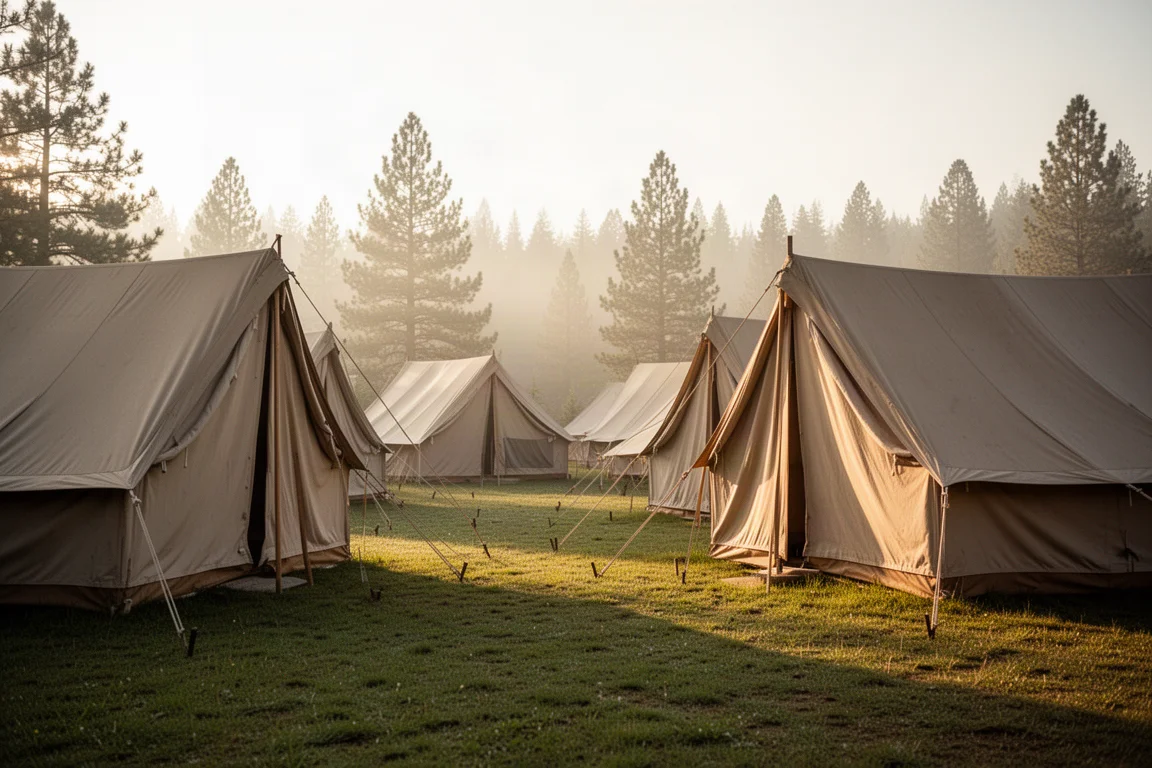
That is not nostalgia for its own sake. Canvas earns its place through a different set of priorities: room to stand up, room to move around, and a structure that holds its shape when the weather turns. The trade-off is obvious and worth stating up front. A canvas tent of this size weighs somewhere around 50 to 60 pounds, and an 8 ft by 9 ft footprint packs into a bulky bundle that takes a real bite out of a vehicle’s load space. Anyone considering canvas should go in expecting that.
White Duck Rover Scout 8x9: Setup and Structure
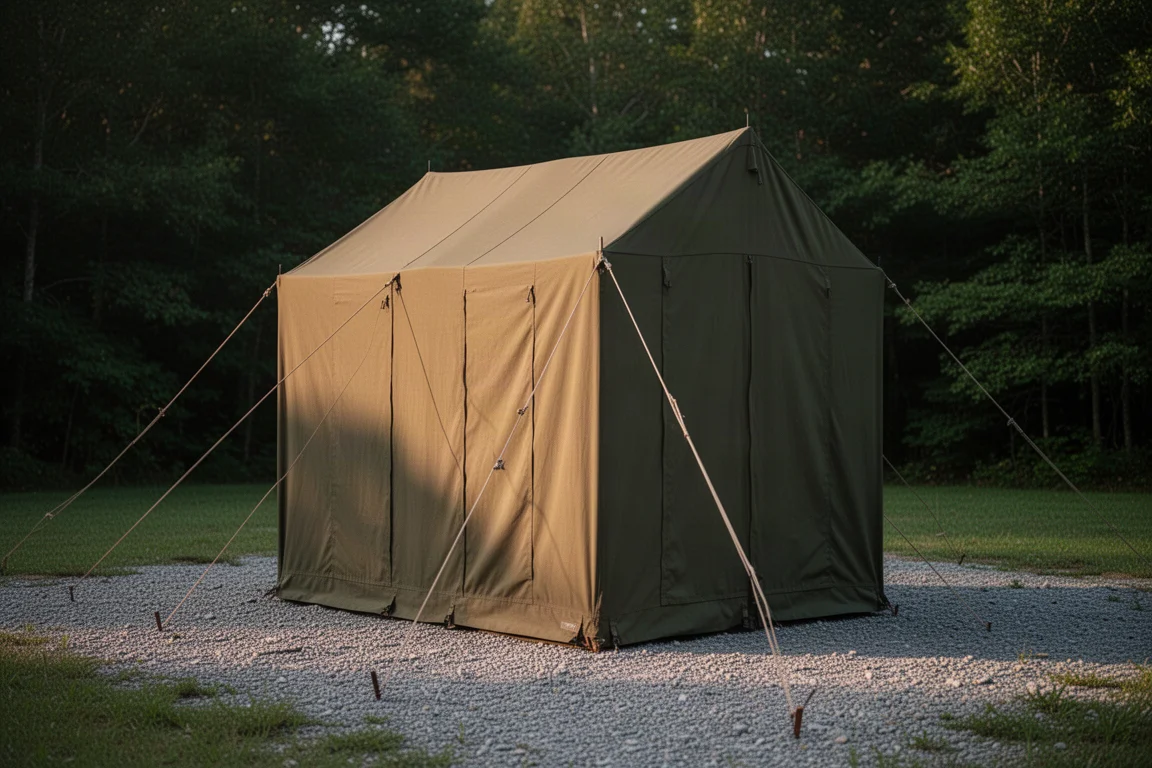
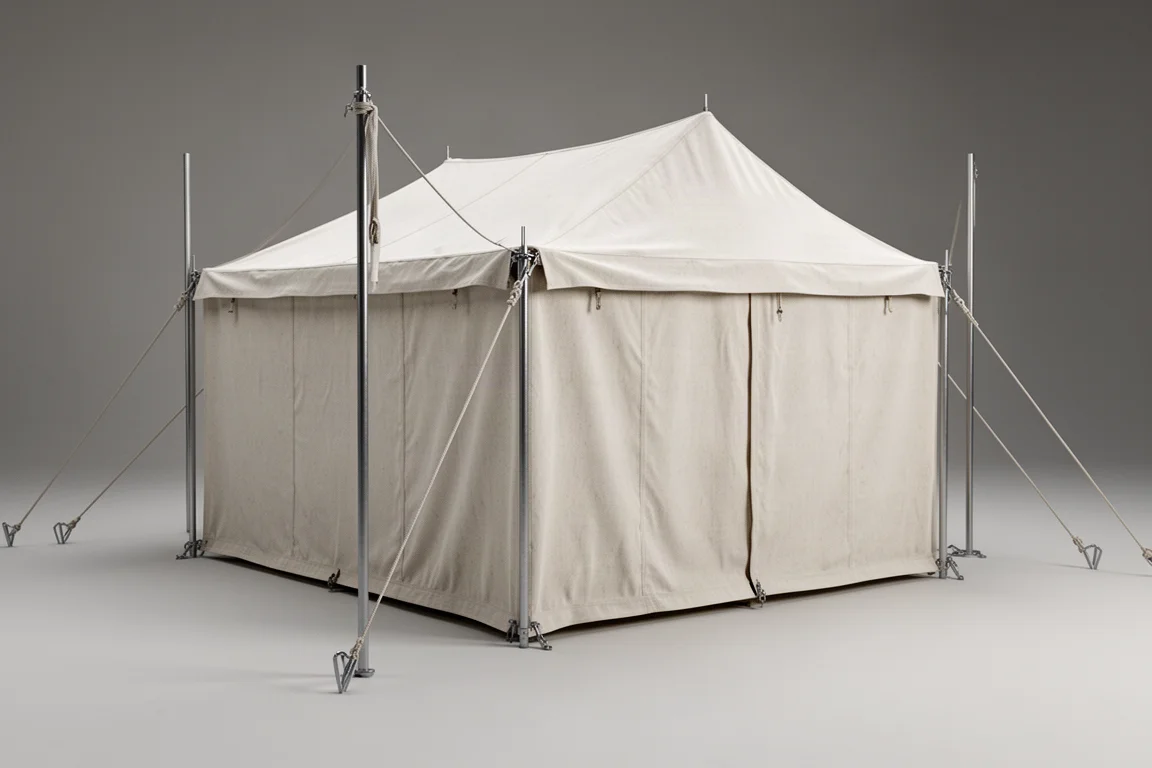
Pitching the Rover Scout is a deliberate process rather than a quick flick. The tent is laid out flat and the four corners are staked, first fairly tight and then adjusted. Two fixed-length end poles go in next. Each pole has a post at the top that slots into the tent body, and the whole shelter lifts up from there.
From that point the walls get staked out so they can stand on their own. The stakes are large and heavy-duty, and they are doing real work: they hold the tension that keeps the vertical sidewalls upright. Two vertical poles and a set of serious stakes are the whole frame. There is no dome geometry here, and that is the point.
Living Space and Ventilation
Inside, the Rover Scout reads as a small room rather than a tent. The 8 ft by 9 ft footprint is a clean rectangle, and the ceiling clears six feet comfortably through the centre, so most adults can stand and change clothes without stooping. A full back door adds a second exit and a second opening.
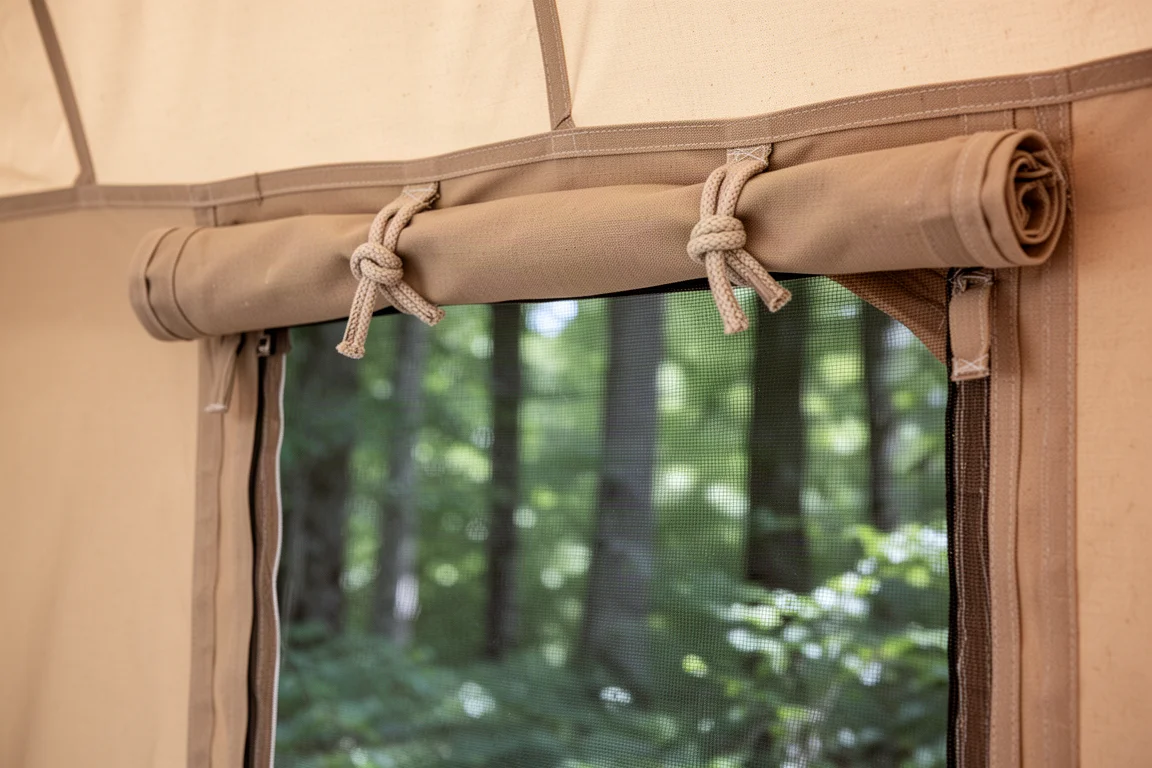
Ventilation is the standout feature. A zipper runs all the way around the bottom of the tent, with loops and toggles along the wall. Unzip it and the wall can be rolled up halfway to expose the mesh layer, or rolled all the way up to open the interior to the air. An overhang stays in place above the opening, so you get airflow without losing cover. Roll the sidewalls up on both sides and the tent effectively becomes a screened bug room, which is what you want during a hot afternoon.
Sleeping arrangements are flexible. Three people can sleep across the width on cots with space left at the front of the tent, and turning the layout the other way would likely fit four. Add bags, duffels and a dog bed and there is still room to move. Part of that comes from the single-wall construction: there is no separate inner mesh body with a rainfly stretched over it, so the full interior stays usable.
Build Quality, Materials, and Winter Use
The hardware is the strongest argument for the price. The poles are large aluminium, the stakes are substantial, and the fittings are metal. The fabric is a heavy canvas that feels built to take a beating and last, provided it is looked after: let it dry completely before rolling it up, or it will turn mouldy.
A stove jack is pre-installed and rolls back when not in use. That single detail changes what the tent is for. With a wood stove inside, the Rover Scout becomes a winter base camp in the same tradition as the outfitter wall tents used by hunters and horse packers, who value comfort over minimal packed weight.
Two caveats are worth knowing before you buy. The first is that large flat roof panels are not ideal under heavy snow, and the roof may need to be knocked clear during a storm. The second is that the tent has not yet been through a serious rainstorm, so long-term weather performance is still unproven here. Neither point undermines the design, but both are things a buyer should factor in.
Nemo Aurora Highrise 6-Person: The Lighter Dome Tent Option
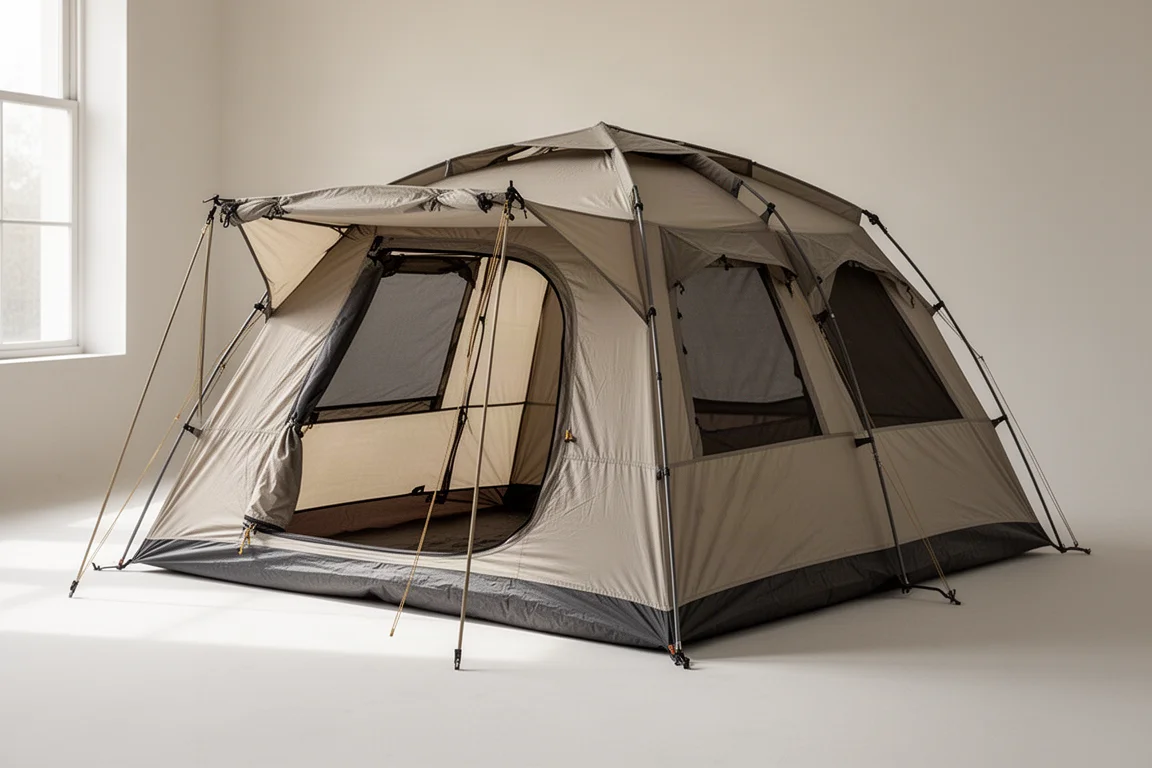
Not every trip calls for a canvas wall tent. The Nemo Aurora Highrise 6-Person is the lighter alternative in this comparison, and it follows the familiar dome-style family camping formula, with a pole structure that curves over the sleeping area rather than standing as vertical walls. It is a tent that has earned plenty of affection on easy family trips.
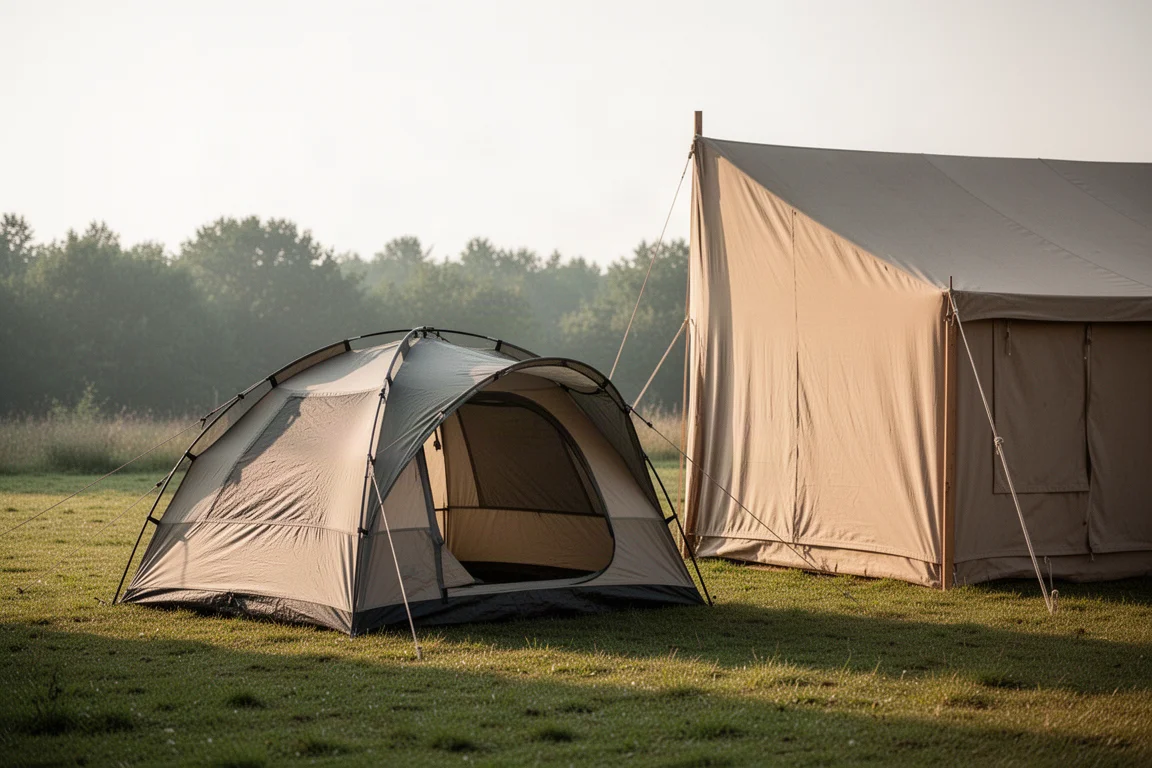
The Aurora Highrise is the easier tent to pack, carry and pitch, and for fair-weather family camping that is often the whole argument. What it does not offer is the same composure in a strong wind. A staked-out wall tent with heavy stakes and taut guy lines feels considerably more planted when the weather turns.
Canvas Wall Tent or Dome Tent? The Practical Difference
Choosing between these two designs comes down to what you are optimising for.
- Packed size and weight: the dome tent wins comfortably. A lighter family tent is easier to load and easier to carry.
- Interior space: the wall tent wins. Vertical sidewalls and a rectangular floor mean every square foot is usable, and standing height runs down the centre.
- Stability: the wall tent wins. Deep-set stakes and taut lines give it a confidence-inspiring feel in wind.
- Ventilation: the wall tent is unusually versatile, with roll-up walls and mesh panels that convert it into a screened space.
- Winter use: only the wall tent has a stove jack, which makes cold-weather camping realistic.
- Setup effort: the dome tent is faster and more forgiving.
Buying Advice: Which Tent Fits Your Trip
The Rover Scout 8x9 is the middle of three available sizes, with a smaller and a larger version in the range. That middle option is a sensible sweet spot: enough room for a small family, for a single hunter, or for two hunters sharing a space with a stove, without going to a size that becomes genuinely difficult to handle.
Pricing for the 8x9 came in at around $590 USD at the time of writing, and the build quality is what justifies it: metal hardware, aluminium poles and substantial stakes. It is an imported canvas tent rather than a domestically made one, and some canvas tents on the market are built locally.
Buy the Rover Scout if you want a comfortable, stable, winter-capable base camp and you can live with the weight and the load space it consumes. Buy the Aurora Highrise if lighter packing, quicker setup and familiar family camping comfort matter more than wind stability and a stove jack.
Conclusion
Canvas tents are not new, and that is precisely why they still work. The White Duck Rover Scout 8x9 delivers on the two things that matter most in a base camp: room to live in and a structure that stands firm. Its weight and bulk are the honest price of that, and the Nemo Aurora Highrise remains the smarter choice when the trip is short, the weather is kind and the vehicle is already full.
Further reading
Related Reviews
Camping Tents
3F UL Gear Taiji Two-Person Tent Review: Field Waterproofing Results and Buying Advice
The Taiji pairs an attached fly with a removable inner, but sustained rain exposed untaped vent seams that need sealing before this shelter can be trusted.
Camping Tents
3FUL Gear Lanshan 2 Pro 4-Season Review: A Sub-$200 Single-Wall Trekking Pole Tent
An early look at the 3FUL Gear Lanshan 2 Pro 4-Season, covering its straightforward pitch, generous interior space, and the condensation and seam-sealing questions that come with any single-wall shelter.
Camping Tents
Alps Mountaineering Lynx 1-Person Tent Review: Big Value in a Small Budget Tent
A close look at the Alps Mountaineering Lynx 1-Person Tent, covering real interior dimensions, materials, setup time, ventilation limits, and who should buy it.