Cycling Groupsets
WheelTop EDS TX First Look: Electronic Shifting From 3 to 14 Speeds
WheelTop's EDS TX brings electronic shifting and hydraulic disc brakes in at just over £600, with firmware-configurable gearing from 3 to 14 speeds and some clear trade-offs.
Introduction
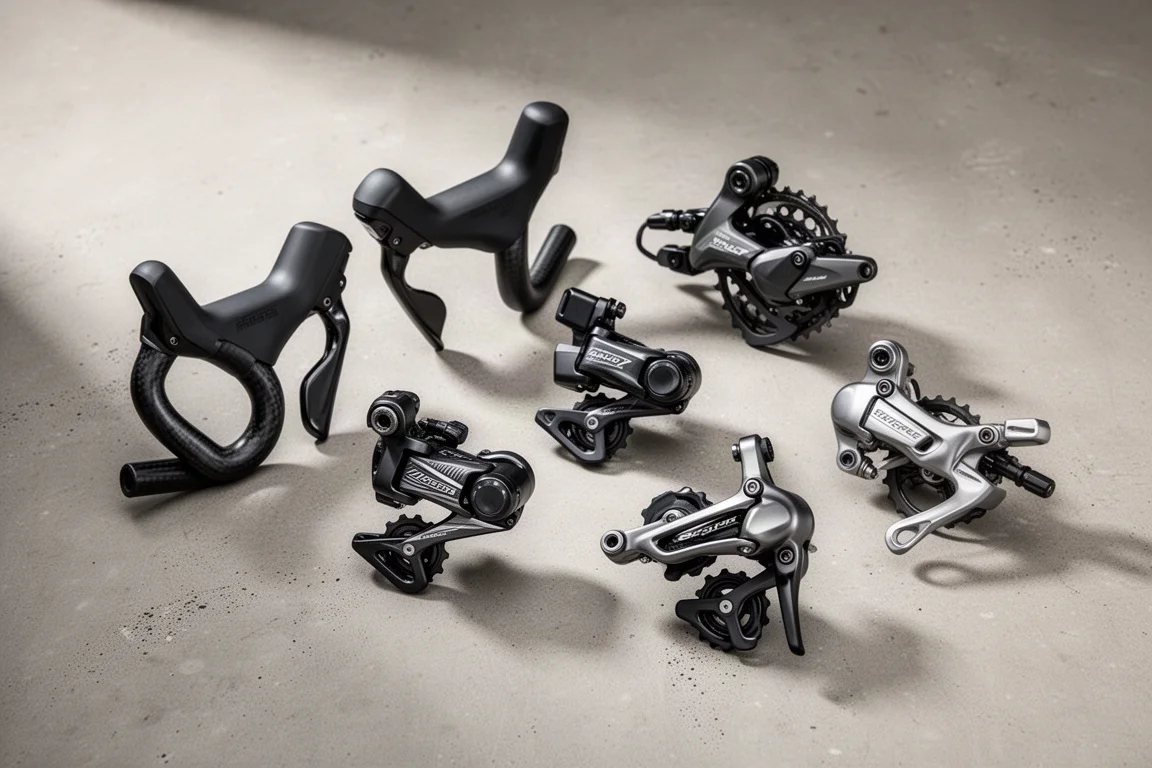
WheelTop has entered the electronic road groupset market with the EDS TX, and a sample has arrived for testing. The kit covers the electronic core of a drivetrain: a pair of wireless shifters, a front derailleur, a rear derailleur, and hydraulic disc brakes, all presented in a glossy black box with printed instructions and a barcode that points to the company’s companion app.
The pitch rests on two things. The groupset retails on the WheelTop website for just over £600 as supplied, which undercuts the mainstream electronic options, and it can be configured in firmware for anything from 3 speeds up to 14 speeds rather than being locked to one drivetrain layout.
That combination of a lower entry price and broad gearing support is what makes the EDS TX worth a closer look, especially for riders with an older frame sitting in the garage. Whether it holds up over months of real riding is the open question, and this first look covers what is in the box, how the components feel in the hand, and how the numbers compare with the established brands.
Who This Groupset Is For
Two groups of riders stand to gain the most here. The first is anyone with an older bike who wants electronic shifting without replacing the whole drivetrain, since the speed count is set in firmware rather than by hardware. A 10-speed frame and a 12-speed frame can run the same system.
The second is budget-conscious builders who are comfortable being early adopters. At just over £600 for the shifting and braking core, the EDS TX sits well below a Shimano 105 Di2 or SRAM Rival AXS build.
It is a weaker fit for riders who want a single purchase that covers every drivetrain part, or who place a premium on a long, documented reliability record. Those buyers are better served by the mainstream groupsets for now.
Shifting Logic and Lever Ergonomics
The shift logic leans on familiar ground. The right-hand shifter carries two buttons for the rear derailleur, stepping up and down the cassette. The left shifter carries a single button for the front derailleur. That layout sits between the two dominant systems, with two buttons on one side and one on the other.
The levers themselves are a reasonable size, slightly wider than the equivalent Shimano units and a little rounder in profile. The bodies use a rubber material, and the lever blades are carbon fibre with a gentle curve built in. In the hand they feel tight rather than loose or slack, and nothing about the finish reads as cheap. A coin cell battery sits inside each shifter, as is common on wireless setups.
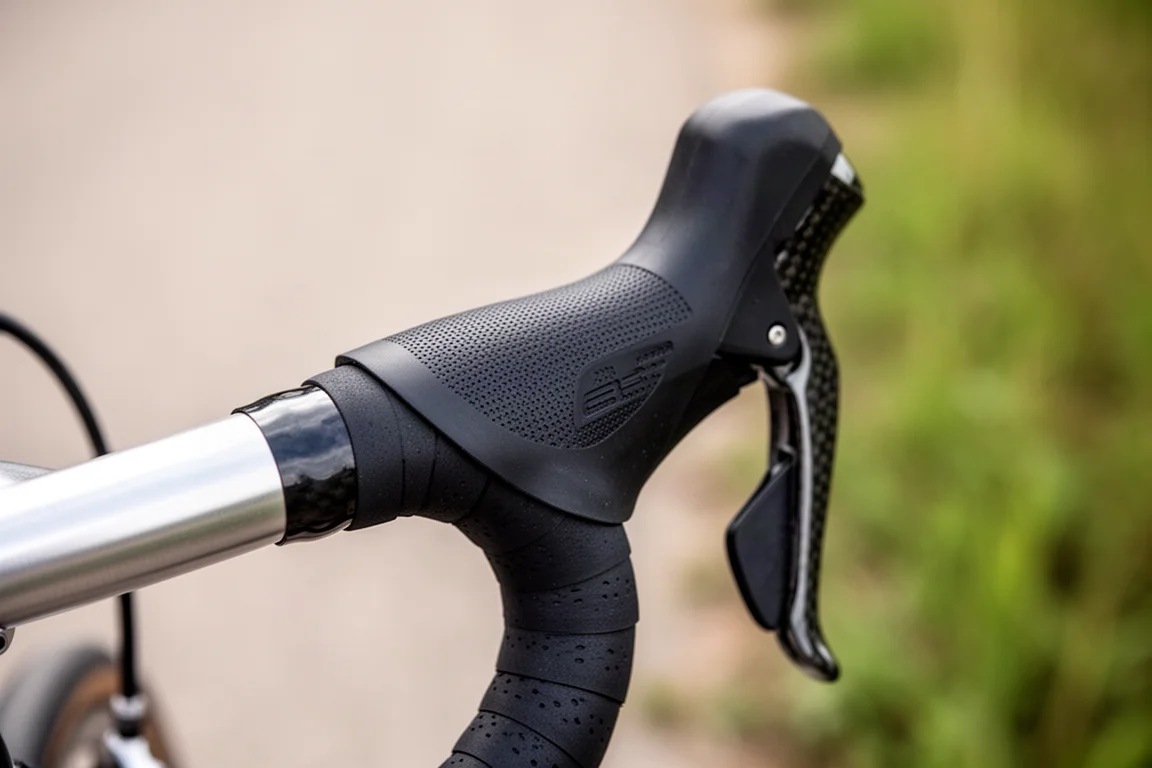
Pairing the levers to the derailleurs takes a specific sequence rather than a simple button press. The shifter batteries come out, a power cable is removed, and a small LED flashes blue to confirm the connection. There are no pairing buttons on either derailleur, which is a departure from what most riders are used to. Once paired, the system shifted through its range during initial checks, and a small LED on the lever lights up when it activates.
Derailleur Hardware and Battery Design
The derailleurs read as a crossover of Shimano and SRAM thinking. Batteries sit on each mechanism, as with SRAM, rather than inside the frame as with Shimano, which simplifies the build process considerably. The trade-off is that the batteries are fixed to the body and cannot be removed, so charging happens through a port on the derailleur itself.
Two USB charge cables are included, each fitted with a small magnet that attaches to the charge port. It is a tidy solution and avoids fiddly connectors.
Materials look respectable for the price. The rear derailleur uses carbon fibre or carbon composite on the cage and the back plate, and the aluminium hardware appears to be machined cleanly with no rough edges. It does not look or feel like a compromise part.
Brakes, Build Quality, and What Is Missing
The hydraulic disc brakes are the weakest part of the package on first inspection. They run mineral oil rather than DOT fluid, which is a sensible choice for home mechanics and easier to live with over time, but the calipers are chunky and industrial next to the sleeker, more compact designs from Shimano and SRAM. There is no heat sink on the caliper body.
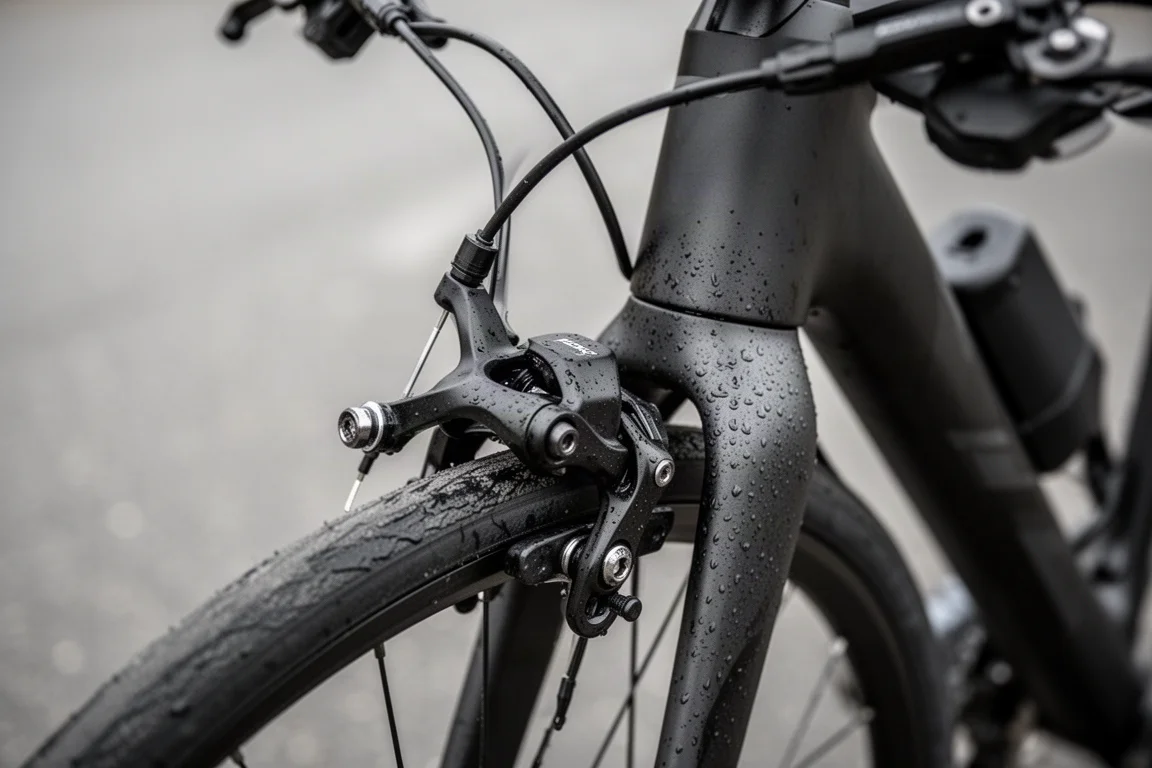
Disc brake rotors are not included, and that points to a broader detail about the package: it is not a complete groupset. There is no crankset, no cassette, no chain, and no rotors. The just over £600 covers the electronic shifting and braking core. Completing the build with a decent crankset, chain, cassette, and rotors pushes the total spend meaningfully higher, which is worth factoring in before comparing it against a full groupset price.
Compatibility and Drivetrain Options
Speed configuration is handled in firmware rather than hardware, and the supported range runs from 3 speeds up to 14. That is a meaningful difference from Shimano and SRAM, which restrict some electronic groupsets to the speed count they were designed for because of hardware differences.
With the EDS TX, an older 10-speed bike can be converted to electronic shifting without replacing the drivetrain hardware, and the same system can be moved onto a modern 12-speed setup. For anyone with a solid frame and wheels already in the garage, that flexibility is the strongest argument for considering this groupset. It also means the system is not tied to a single cassette choice.
Buying Advice
Context matters when weighing the price. A Shimano 105 Di2 12-speed groupset has been available on offer at £900, a full SRAM Rival AXS groupset has been discounted to just over £1,000, and SRAM Force AXS with carbon fibre sits at just over £1,700. Against those numbers, just over £600 for the WheelTop electronic core is a clear saving on the surface.
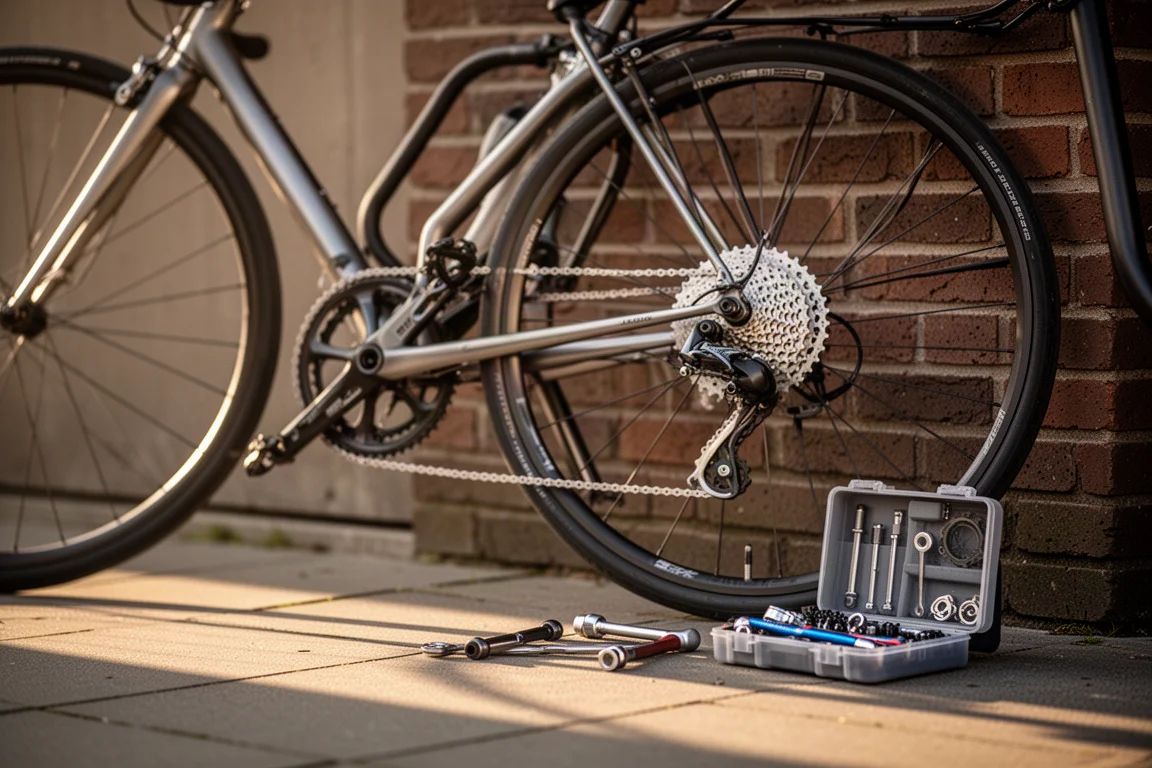
The catch is the unknown. Shimano has been building electronic groupsets since 2009, and its reliability record is well established across a long product history. WheelTop’s long-term durability, service support, and spare parts availability are not yet proven, and there is no ride data behind this system yet.
A sensible approach is to treat the EDS TX as a strong candidate for a second bike or an older frame, where the cost of a mainstream electronic groupset is hard to justify and the firmware-driven speed flexibility is genuinely useful. On a primary race bike, paying a few hundred pounds more for a system with a long track record remains a defensible decision, and many riders will prefer to wait for longer-term reliability reports before committing.
Conclusion
The WheelTop EDS TX arrives with good lever ergonomics, a well-finished rear derailleur, mineral oil brakes, and firmware-driven support for 3 to 14 speeds at a price that undercuts the mainstream options. The calipers look and feel a step behind the rest of the kit, the fixed derailleur batteries add a charging routine, and the package still needs a crankset, cassette, chain, and rotors to become a complete groupset. For riders upgrading an older bike, the value case is genuinely interesting. For everyone else, the reliability question is the one to watch.
Product link
View more details for WheelTop EDS TX
This product is mentioned in the review. Check the specifications, options, and compatibility before buying.
View more details for WheelTop EDS TXFurther reading
Related Reviews
Cycling Groupsets
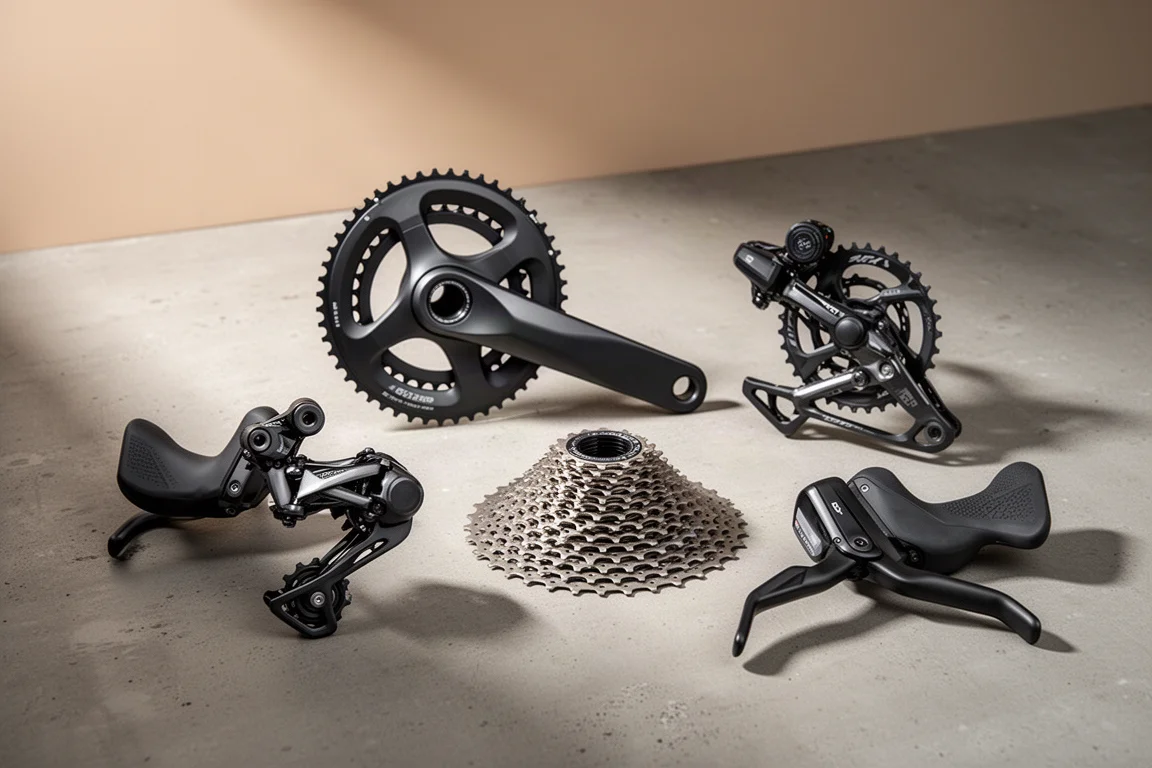
Affordable Road Bike Groupsets: Shimano 105 and SRAM AXS Compared
Shimano 105 Di2, SRAM Apex AXS and SRAM Rival AXS deliver close to flagship performance at a fraction of the price. Here is what to weigh before your next upgrade.
Cycling Groupsets
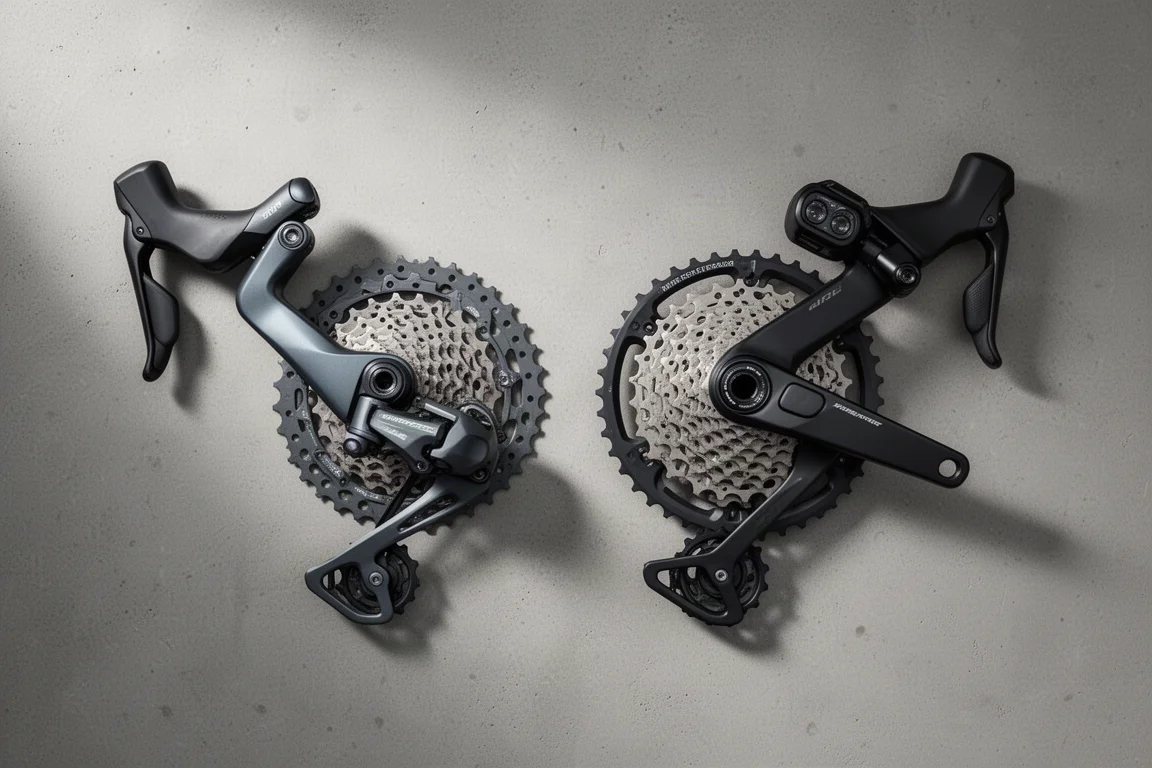
Shimano 105 Di2 vs SRAM Rival AXS: Which Electronic Groupset Is Right for You?
A practical comparison of Shimano 105 Di2 and SRAM Rival AXS covering shifting, gearing, braking, weight, connectivity, and price.
Cycling Groupsets
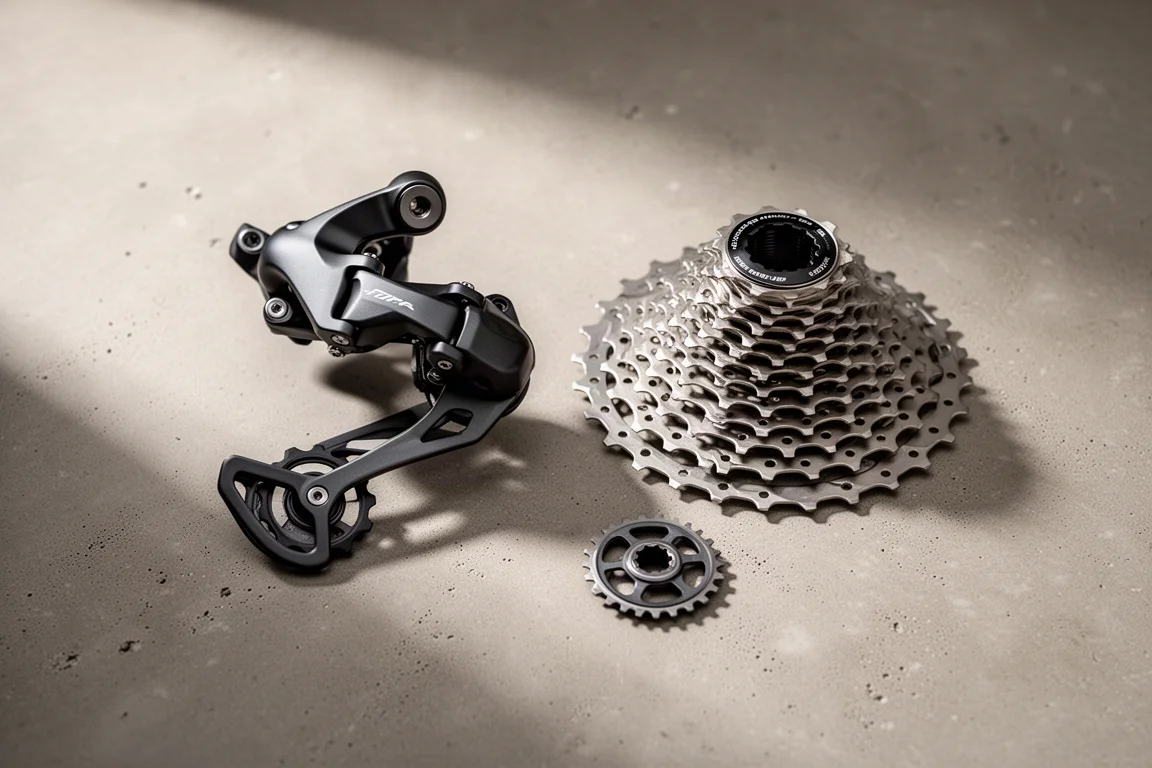
Shimano XT vs SRAM XPLR: Running a 1x Groupset on a Drop Bar Bike
A practical look at two 1x drivetrain routes for all-road and light gravel bikes: a Shimano XT mountain bike derailleur with a 9-45 cassette, and SRAM's dedicated XPLR 1x13 setup.