Cycling Groupsets
Affordable Road Bike Groupsets: Shimano 105 and SRAM AXS Compared
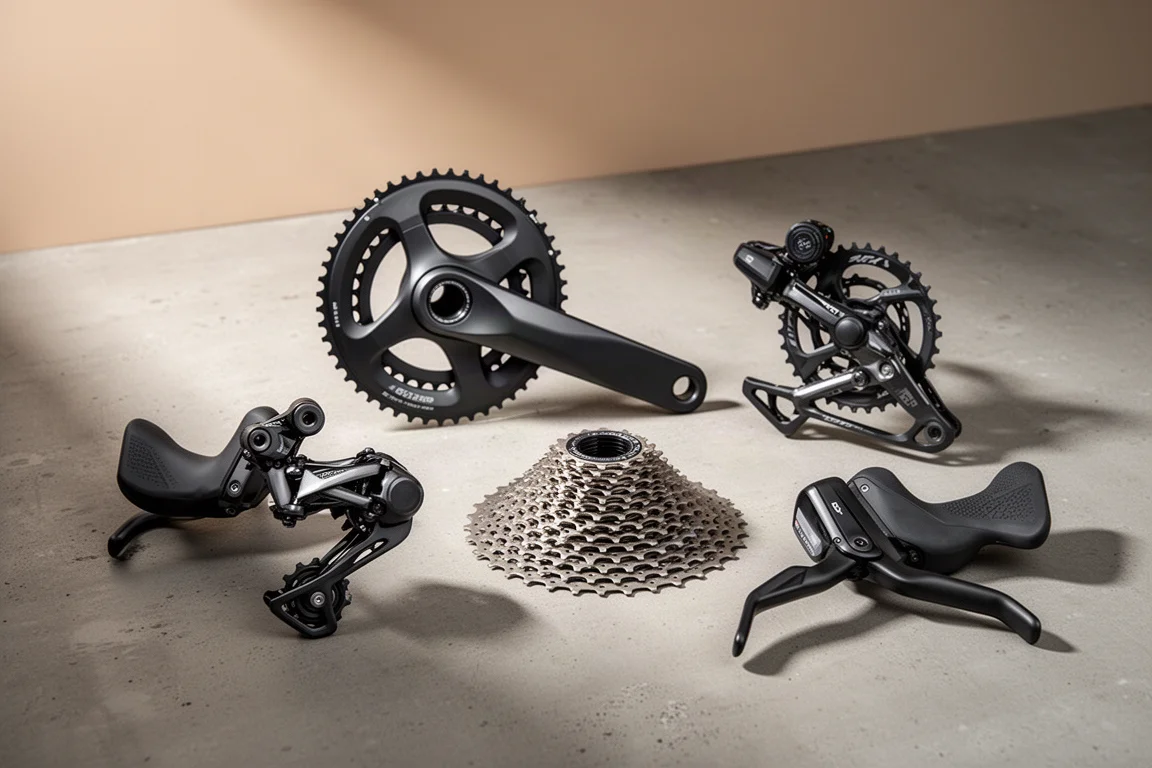
Shimano 105 Di2, SRAM Apex AXS and SRAM Rival AXS deliver close to flagship performance at a fraction of the price. Here is what to weigh before your next upgrade.
Introduction
Flagship groupsets such as Shimano Dura-Ace and SRAM Red AXS are genuinely brilliant, and they are priced accordingly. The more useful question for most riders is whether the affordable tiers have closed the gap far enough to make the flagship premium hard to justify. After extended time on the latest Shimano 105 and SRAM Apex groupsets, the answer is a fairly emphatic yes.
Why Affordable Groupsets Deserve a Second Look
Modern mid-tier groupsets have inherited a great deal of the technology that used to be reserved for the top of the range. Ridden back to back, a current Shimano 105 setup and a Dura-Ace setup are genuinely difficult to tell apart from the saddle, and the same holds true across the SRAM range when comparing Apex and Rival with Force and Red.
The working figure that keeps coming up is roughly 98 percent. The affordable groupsets deliver close to 98 percent of the performance of the tiers above them, at a fraction of the price. Weight is usually the one honest difference that remains, along with a slightly chunkier look on some components.
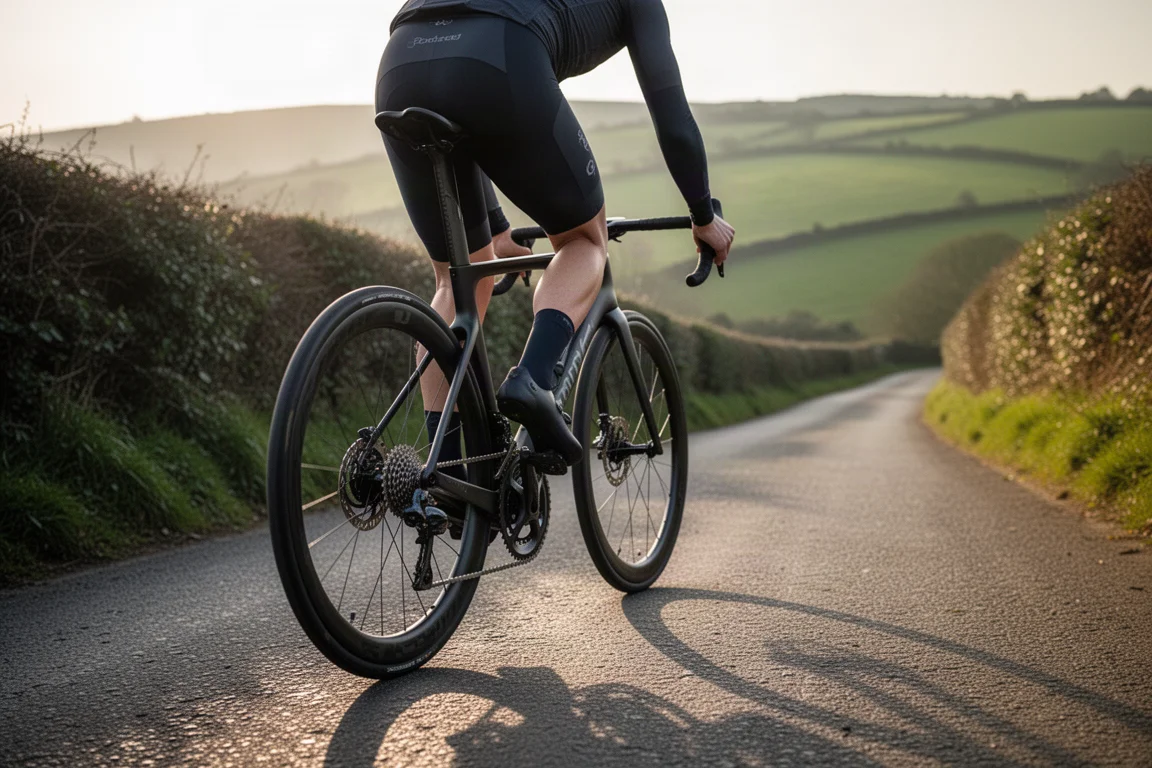
That gap matters to a narrow group of riders, mostly those chasing the lightest possible build. For everyone else, the day-to-day experience of shifting and braking is remarkably close, and the money saved can go towards wheels, tyres or a frame that changes how the bike actually rides.
It is also worth remembering that the bikes themselves have moved on. A complete bike bought today benefits from better frame design, wheels and tyres than an equivalent from a decade ago, which is part of why a mid-tier groupset on a modern frame can feel so much stronger than its price suggests.
Shimano 105 Di2: Electronic Shifting Without the Flagship Price
Shimano 105 is available in both mechanical and electronic versions, and the Di2 variant is the one that makes the strongest case for itself. Fitted to a Giant Defy and ridden over several weeks, it shifts quickly, accurately and reliably, and the hood ergonomics are comfortable enough to disappear from your attention on a long ride.
Shifting speed and brake performance are not quite as sharp as the two more expensive Shimano tiers, but the difference is small. The front derailleur is as fast and dependable as you could reasonably want, and the gearing, built around a compact chainset and an 11-36 cassette, is well suited to a hilly sportive or a steep local climb. A complete bike weighing around 8.6 kg handled a genuinely tough ascent without any need to dismount.
The honest criticism is weight and appearance. This groupset is heavier than Dura-Ace and Ultegra, and the components look a little chunkier. That is essentially the only area where it gives anything meaningful away.
On price, the numbers are the headline. A 105 Di2 groupset retails for just under £1,000, and complete bikes with a carbon frame, electronic shifting and hydraulic disc brakes start at just over £2,000. Prices across cycling have risen in recent years, but that combination at that figure is genuinely strong value.
Shimano 105 Mechanical: The Value Benchmark
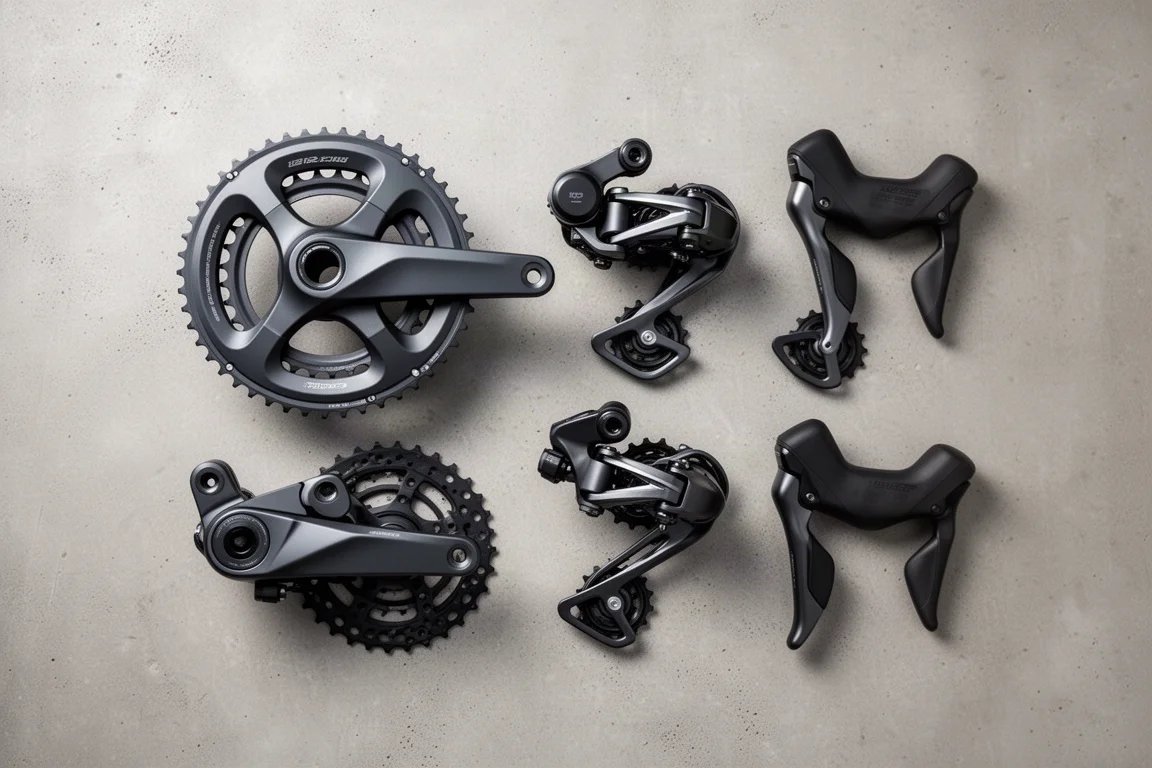
Mechanical 105 sits at around £500 for the groupset alone, and it is a bargain. It brings 12-speed technology, a wide gear range, hydraulic disc brakes, and the same reliability and ergonomics that make the electronic version so easy to live with. Ridden over several months on a rebuild, it has given nothing to complain about.
There is also a practical appeal that electronic groupsets cannot match. There are no batteries to charge and no apps to wrestle with. You charge nothing, you update nothing, and it simply works, ride after ride. Complete bikes with mechanical 105 have appeared at just over £1,500.
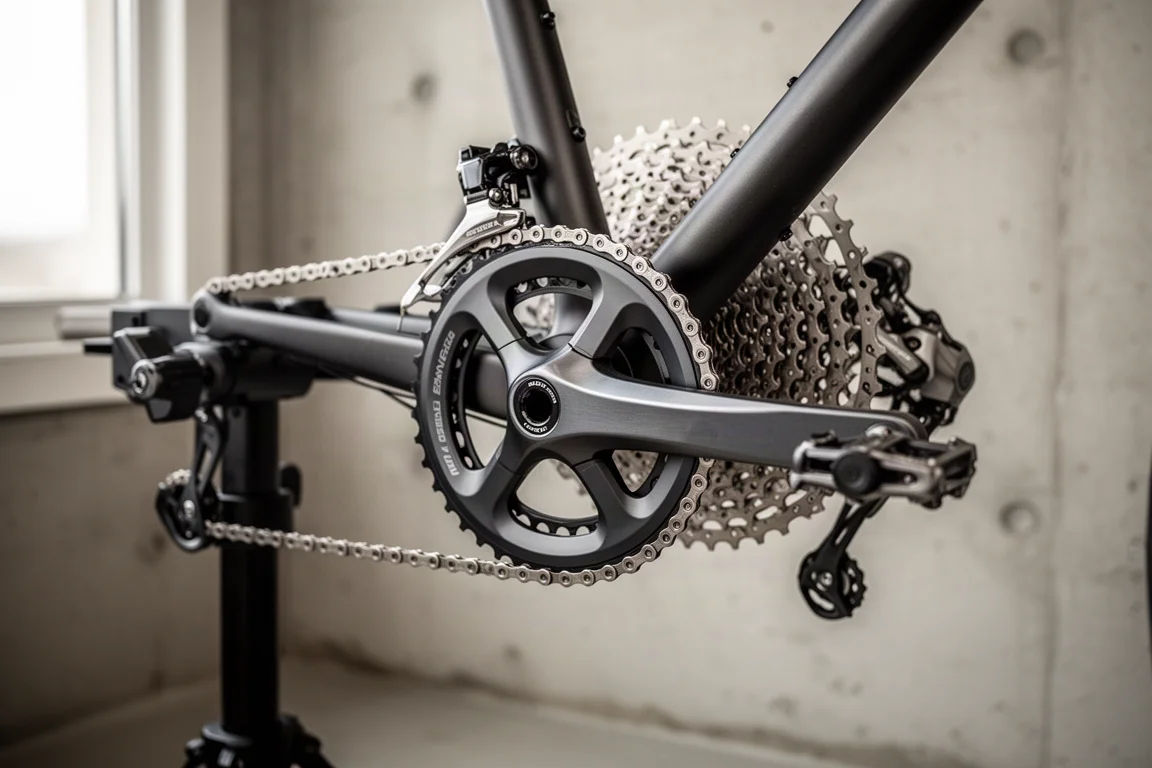
The wider market has shifted, and prices are higher than they once were. Even so, the technology in this generation of 105 is a long way ahead of mid-tier groupsets from 14 years ago, and the bikes it is fitted to are better in every other respect as well.
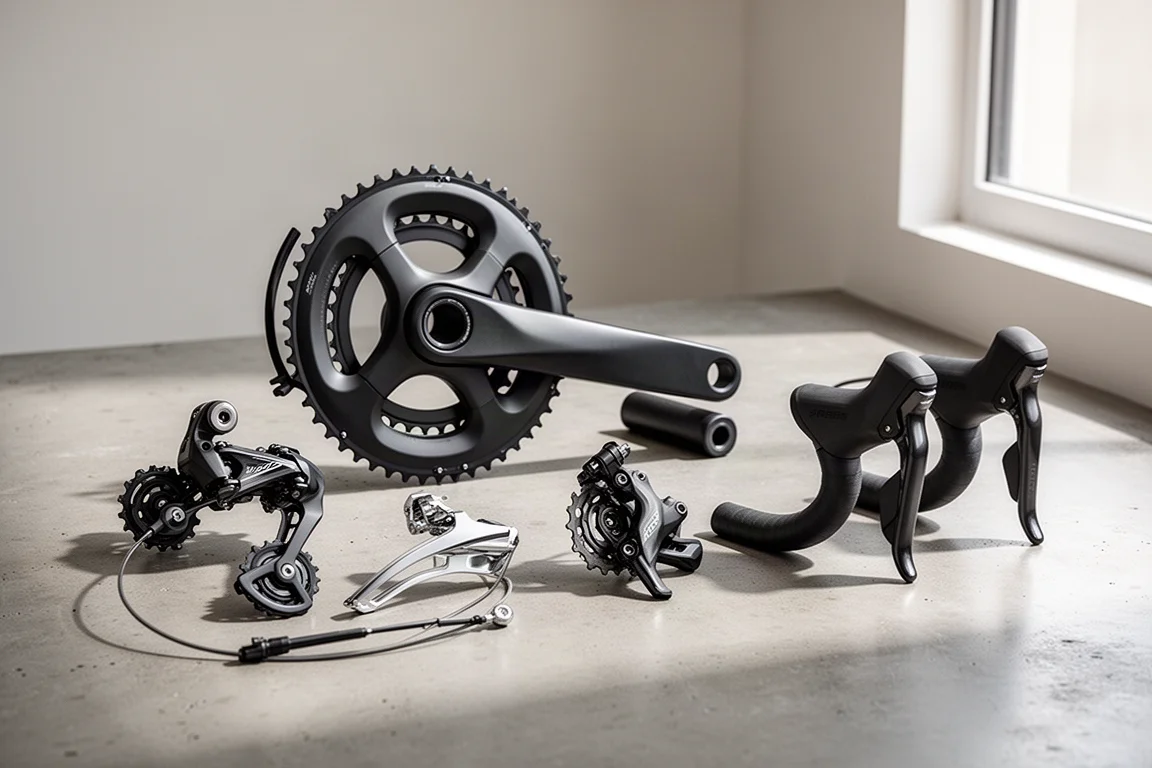
SRAM Apex AXS: Wide-Range 1x for Gravel and All-Road
Apex is SRAM’s most affordable groupset, offered in mechanical and electronic versions. The electronic AXS version has been in regular use for months, and it demonstrates how far the entry point has moved. Braking and shifting are as good as Red, Force or Rival when it comes to speed and ease of use.
The ergonomics are fine rather than exceptional, but the hoods share their shape with Force and Rival, which means a small, compact feel in the hand and very powerful braking. Wireless shifting is a genuine pleasure: a light touch on the button changes gear, which is welcome on long off-road days and bikepacking trips when your hands are tired. There are also no cables to wear out or snap, and maintenance has been excellent.
The main limitation is configuration. Apex AXS is offered only as a wide-range 1x groupset with a single ring up front, aimed at gravel bikes. The gear range has proved adequate for the hills and descents available, and it is easy to see this working as an all-road setup rather than a gravel-only one. Riders who want a 2x drivetrain will need to look elsewhere in the range.
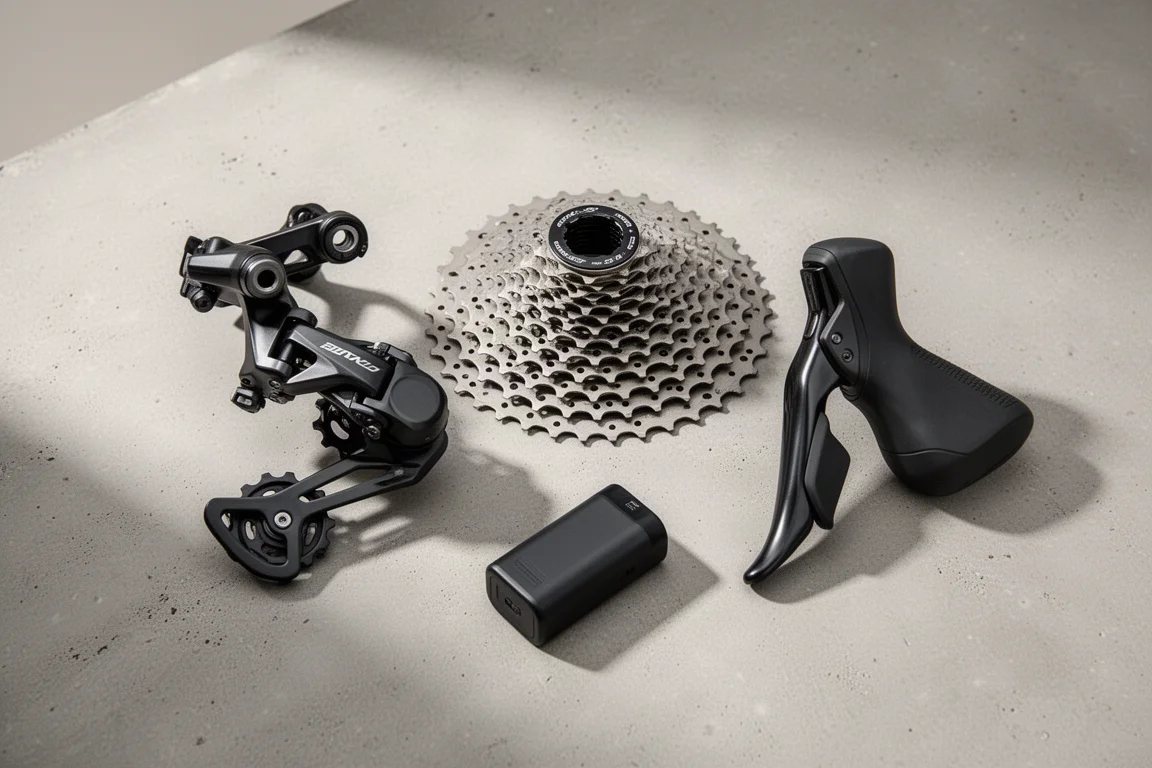
SRAM Rival AXS: Two-By Wireless Reliability
Rival AXS fills the gap for riders who want a 2x wireless setup, and it is offered in both 2x and 1x versions. It has been in use on a Giant TCR for over two years and has been utterly reliable throughout, with all of SRAM’s electronic wireless technology and roughly 98 percent of the performance of the groupsets above it.
Weight is the only real downside, and it has never held the bike back in practice. Because the platform has been around for a couple of years, groupset pricing has become very attainable, and complete bikes with Rival are pretty affordable as well.

For riders upgrading from mechanical shifting, Rival AXS is the most straightforward route into wireless electronic shifting without moving into flagship territory. It also removes the 1x limitation that comes with Apex, which matters if you spend most of your time on tarmac and want a front derailleur.
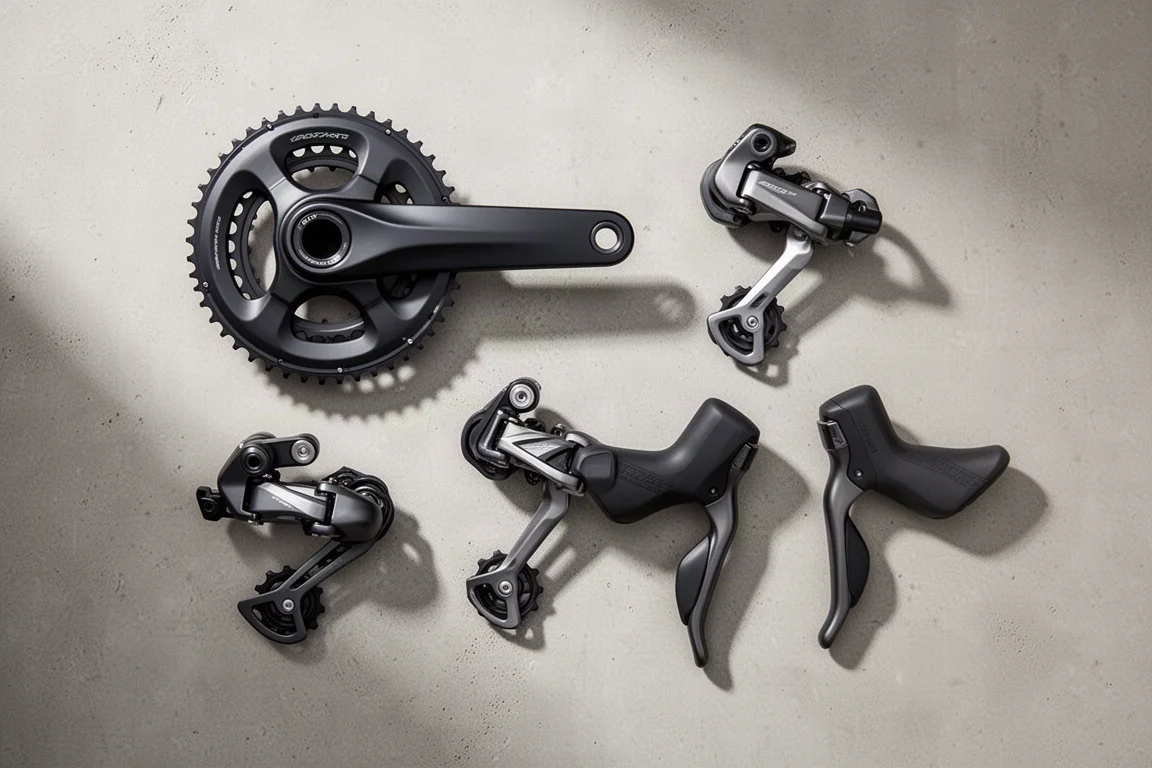
What Else Is Worth Watching
Shimano and SRAM dominate the groupset market, but they are not the only options. Chinese groupsets are drawing increasing attention and there is real interest in what comes out of that part of the industry over the next few years. Microshift Sword is another affordable option now going onto a fresh build, and early impressions suggest it looks like a genuinely good one.
Buying Advice: Matching a Groupset to Your Riding
Electronic or mechanical comes down to preference and practicality. Electronic shifting is lovely to use, with a light press of a button rather than a lever throw, and it is especially welcome on long days off-road or when bikepacking. There are no cables to wear out or snap. Mechanical 105 answers the opposite case: no batteries, no apps, around £500 for the groupset, and complete bikes from just over £1,500.
Drivetrain layout is the next decision. Apex AXS is 1x only, with a wide-range cassette and a single ring up front, which suits gravel and all-road riding. Rival AXS gives you the choice of 2x or 1x, so road riders who want a front derailleur should start there.
Finally, be honest about weight. If saving grams is the priority and the budget allows it, the flagship groupsets are the answer, and there is nothing wrong with choosing them. For everyone else, the performance case for spending several times more is thin. The affordable tiers deliver most of the benefits and features of the top end at prices far more people can afford.
Conclusion
The cheaper groupsets are excellent and deserve far more recognition than they usually get. If you want the best and the lightest and can afford it, that is a legitimate choice. But if the price of new flagship groupsets is what puts you off upgrading, both Shimano and SRAM offer more affordable options that are not a compromise. They work just as well, they shift and brake beautifully, and they let you put the savings towards the parts that change how the bike feels every time you ride it.
Further reading
Related Reviews
Cycling Groupsets
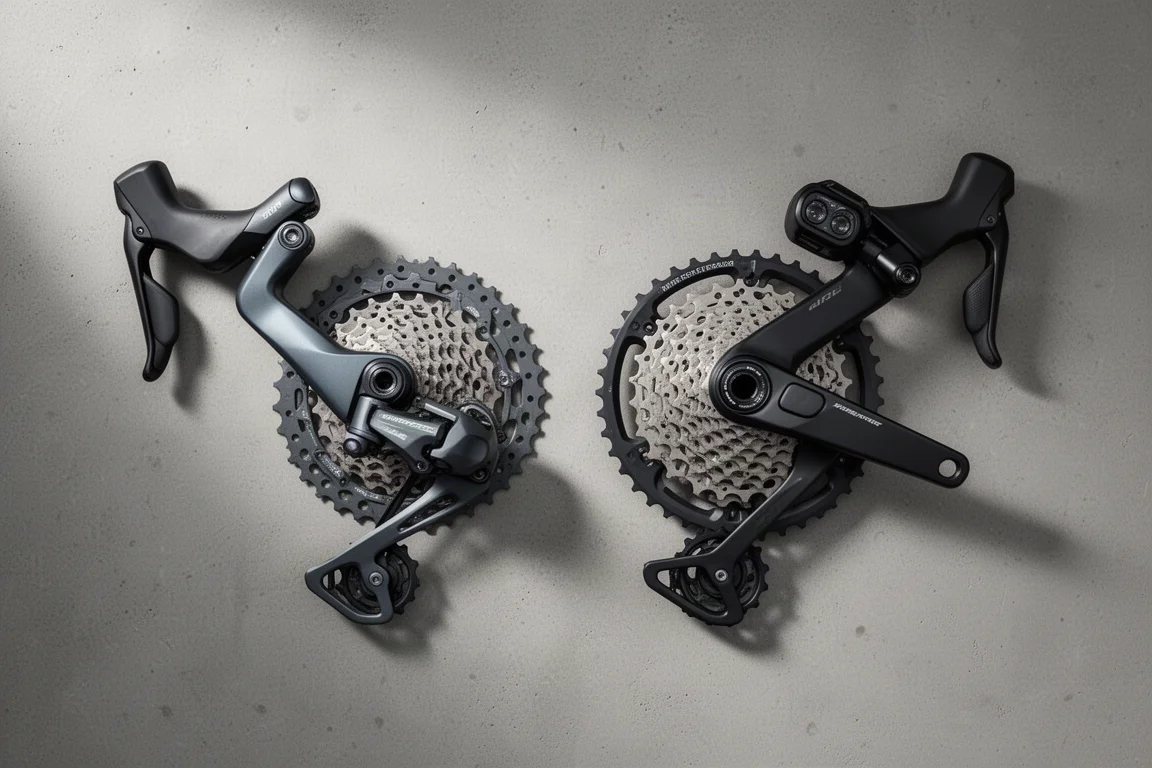
Shimano 105 Di2 vs SRAM Rival AXS: Which Electronic Groupset Is Right for You?
A practical comparison of Shimano 105 Di2 and SRAM Rival AXS covering shifting, gearing, braking, weight, connectivity, and price.
Cycling Groupsets
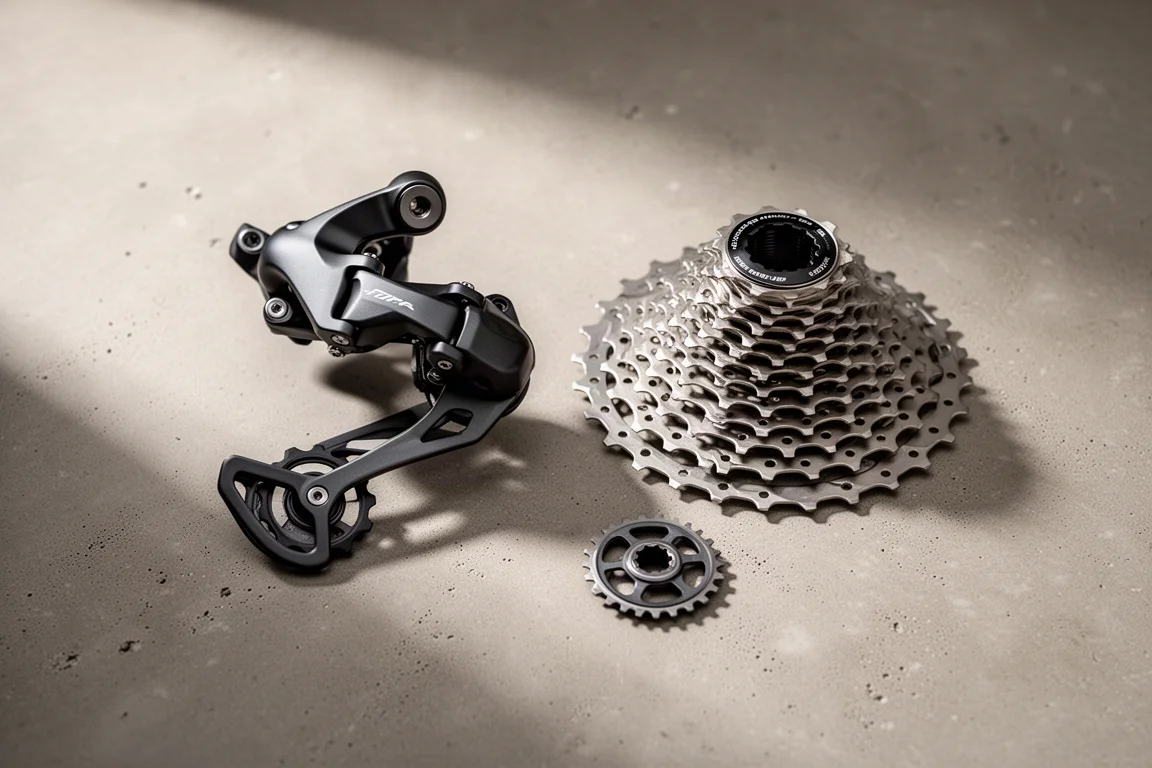
Shimano XT vs SRAM XPLR: Running a 1x Groupset on a Drop Bar Bike
A practical look at two 1x drivetrain routes for all-road and light gravel bikes: a Shimano XT mountain bike derailleur with a 9-45 cassette, and SRAM's dedicated XPLR 1x13 setup.
Cycling Groupsets
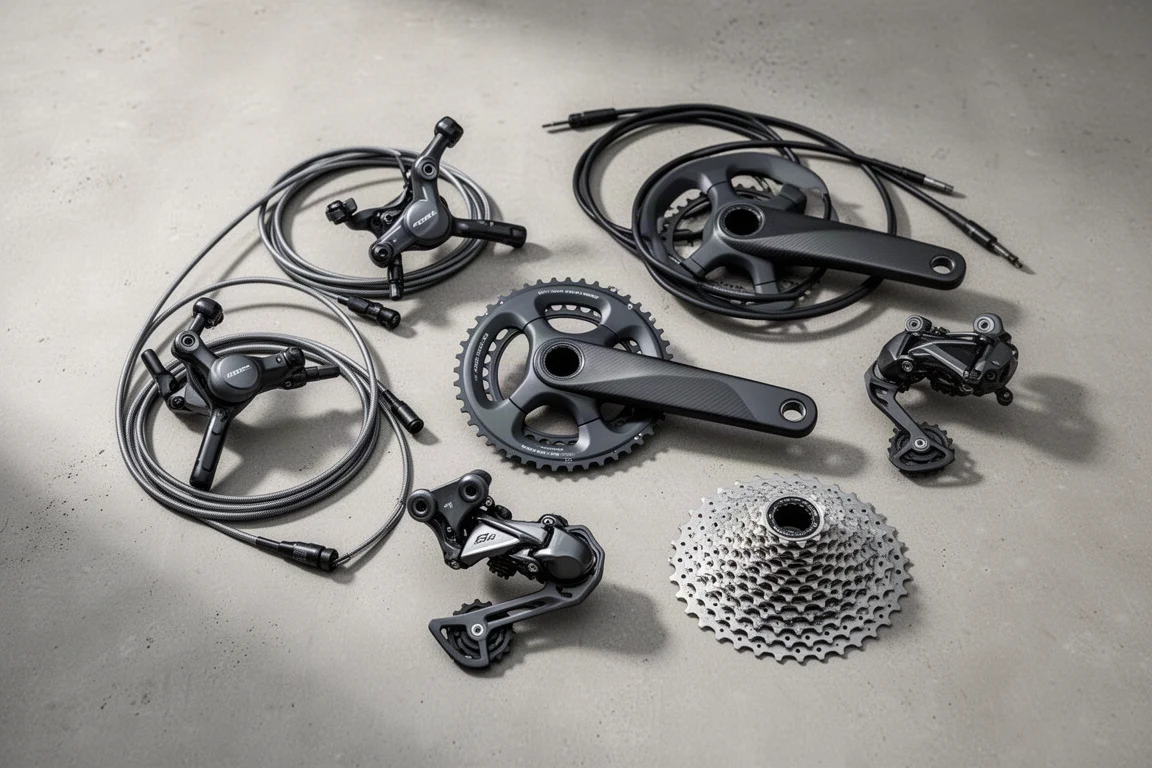
SRAM Force AXS vs Shimano Ultegra Di2: Weights, Changes and What to Buy
A component-by-component weight comparison of the SRAM Force AXS and Shimano Ultegra Di2 groupsets, plus the design changes worth understanding before you commit to either.