Cycling Groupsets
Shimano XT vs SRAM XPLR: Running a 1x Groupset on a Drop Bar Bike
A practical look at two 1x drivetrain routes for all-road and light gravel bikes: a Shimano XT mountain bike derailleur with a 9-45 cassette, and SRAM's dedicated XPLR 1x13 setup.
Introduction
Drop bar bikes have drifted steadily toward wider rubber and mixed surfaces, and the drivetrain conversation has followed. A bike that can take tires up to 40mm and spends most of its life on a 35mm semi-slick sits in the space between road and gravel, and that is exactly where single chainring setups start to make sense.
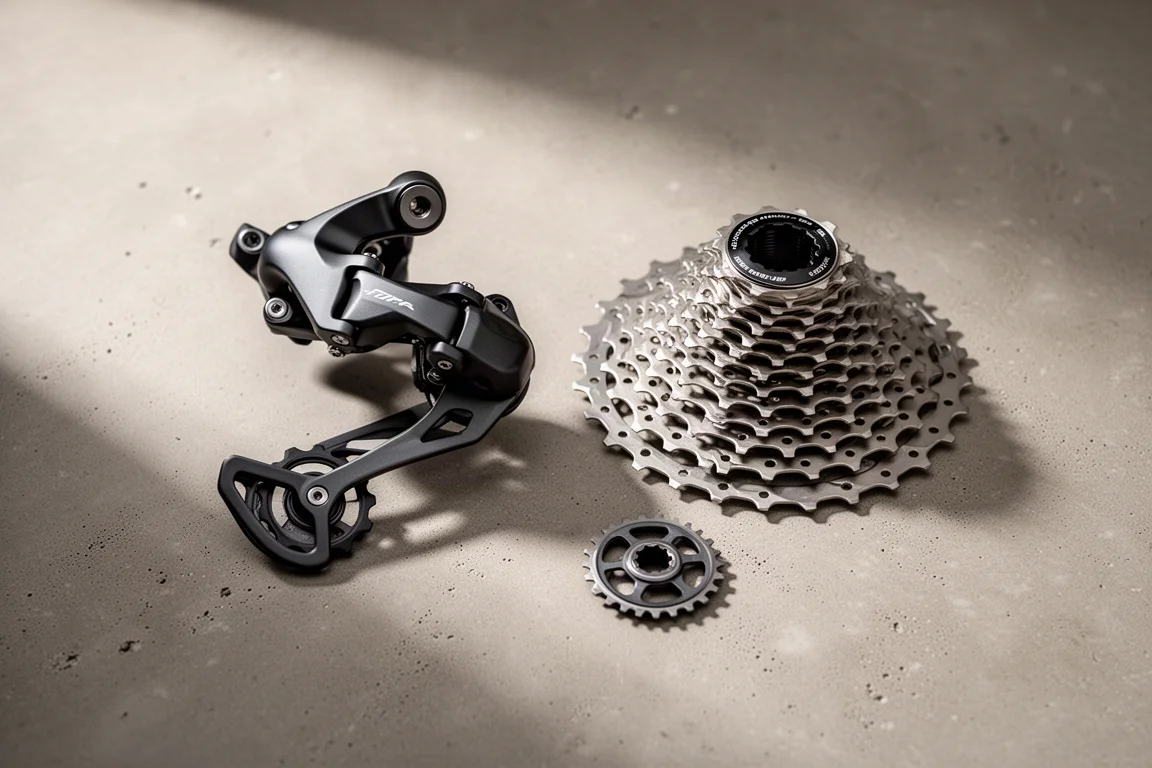
Two routes dominate the discussion. One is SRAM’s dedicated XPLR 1x13 groupset, designed for gravel bikes and available in a 10-46 cassette. The other is more unconventional: a Shimano mountain bike derailleur, specifically the XT model, paired with Shimano’s 9-45 cassette and a 46-tooth chainring on the front. Shimano does not currently offer a dedicated road-oriented 1x option, and the closest in their range is the GRX gravel groupset, which is built around a much larger 10-52 mountain bike cassette.
This comparison looks at what each route actually delivers: gear range, cadence steps, shifting speed, and the practical details that matter once the novelty wears off.
Why 1x Makes Sense on an All-Road Bike
The appeal of a single chainring is not really about performance claims. Racing at the top level has pushed 1x partly for small aerodynamic gains, but for most riders the argument is simpler: fewer moving parts, fewer decisions, and no front shifting to think about when the terrain changes every few hundred metres.
What has changed is that gear range is no longer the compromise it once was. Earlier single chainring setups were genuinely limited, but as drivetrains moved from 11 to 12 and now 13 speeds, the spread of usable gears has widened enough that the gap to a conventional double setup largely closes. Modern cassettes also manage the one persistent complaint about 1x, which is being caught between two gears at a steady speed.

None of this means 1x suits everyone. Riders who are perfectly happy on a 2x setup have good reason to stay there, and a well-chosen double still offers the finest cadence control available. The question is whether the terrain, tire choice, and riding style on a given bike favour simplicity or granularity.
Shimano XT: A Mountain Bike Groupset on Drop Bars
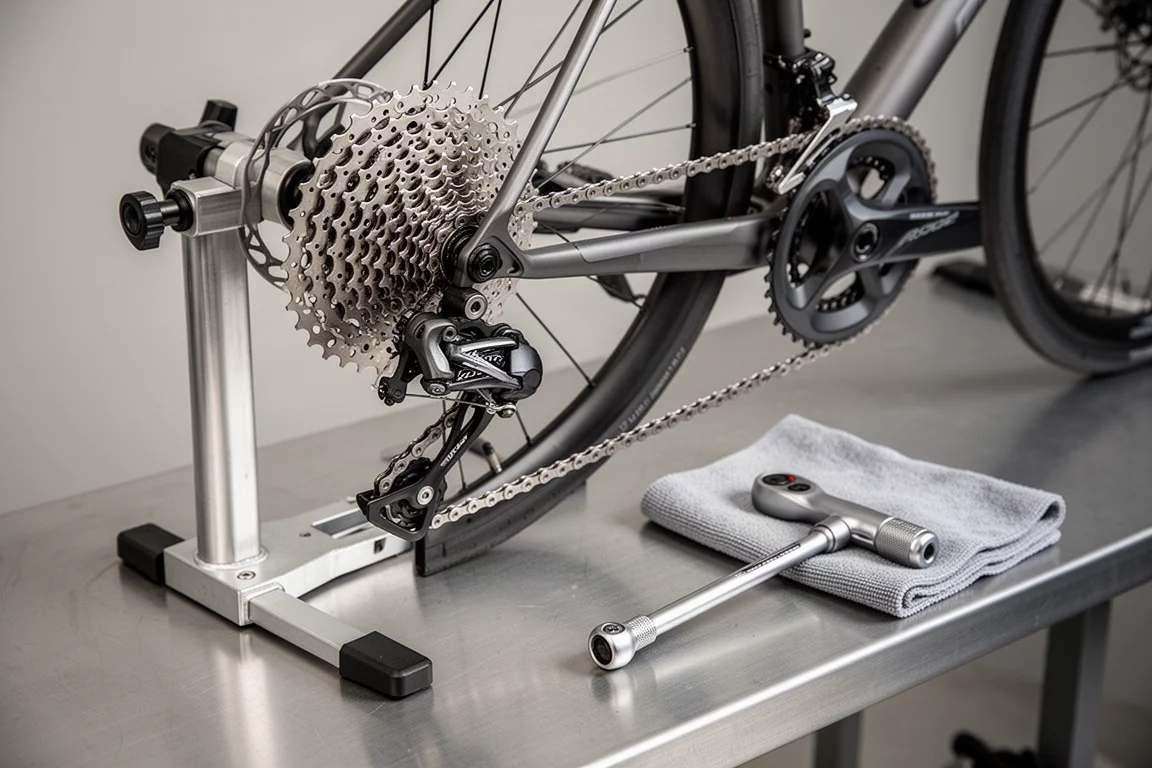
The XT rear derailleur sits one tier below Shimano’s flagship XTR, and in electronic form it is essentially the same unit as a GRX Di2 rear derailleur. The meaningful difference is cage length. Because the XT derailleur is designed around Shimano’s 9-45 cassette, it uses a shorter cage than the GRX version, which has to accommodate a much larger 10-52 cassette.
Paired with a 46-tooth chainring, that combination produces a 500 percent gear range. The progression from the hardest gear down to the easiest is fairly smooth, and the cadence steps are tight enough that finding a comfortable rhythm is rarely a problem. In practice, the setup feels far closer to a conventional double than its mountain bike origins would suggest.
Shifting behaviour is customisable through Shimano’s companion app, which allows the left shifter buttons to move up to a larger sprocket and the right shifter buttons to move down to a smaller one, mirroring the directional logic many riders already use.
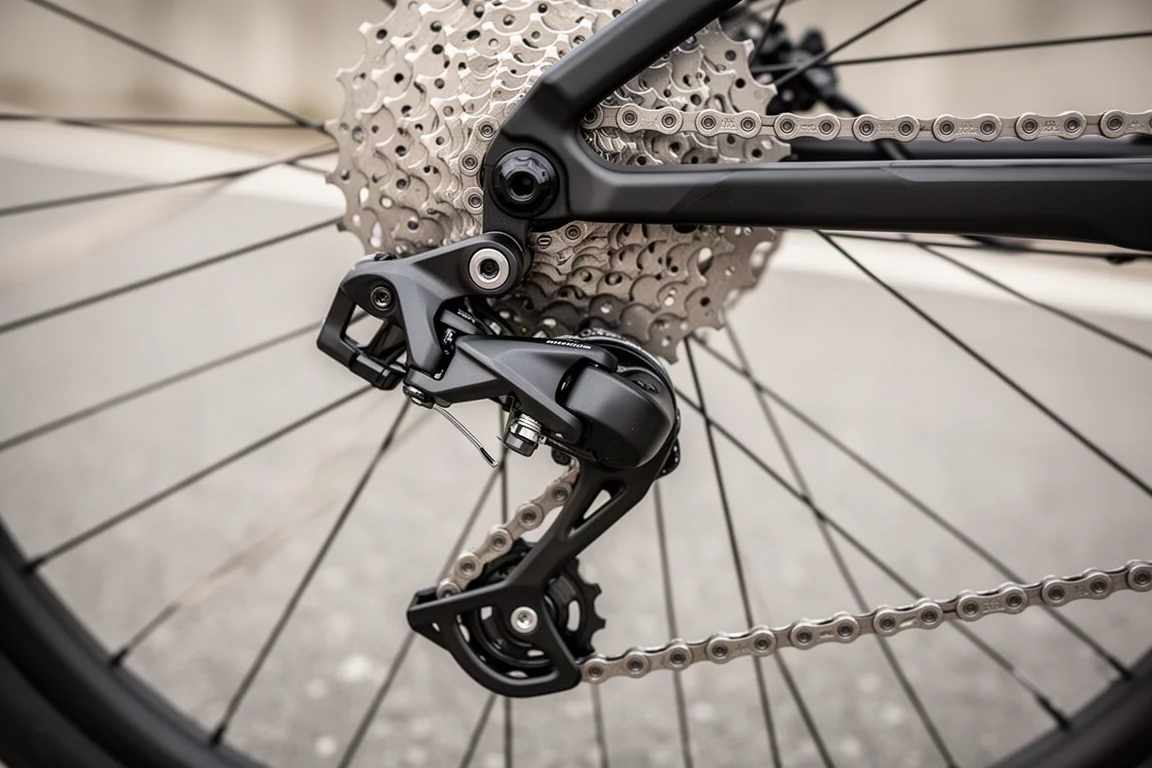
One practical detail to check before committing: the 9-45 cassette requires a Micro Spline freehub body because of the way the smallest sprocket mounts. Most popular wheel brands, including many mountain bike wheelsets, offer a Micro Spline option, so this is a compatibility note rather than a barrier.
SRAM XPLR: The Dedicated 1x13 Alternative
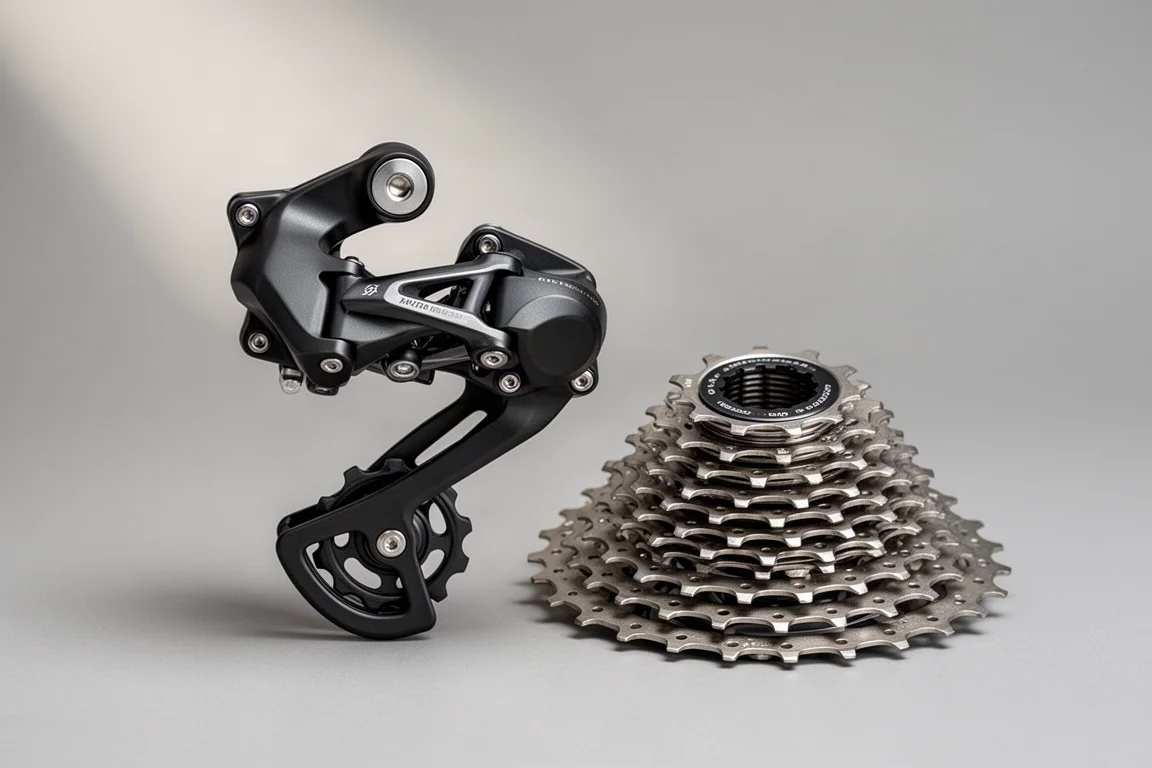
SRAM XPLR is the more conventional answer to the same question. It is a gravel groupset rather than a mountain bike one, which means it is designed for drop bars from the outset, and it runs a 10-46 cassette for roughly 460 percent range.
Where XPLR claws back an advantage is at the fast end of the cassette. It includes a 12-tooth sprocket between the 11 and the 13, which produces a slightly smaller step down when you are pushing on. That is a genuine refinement, though on the Shimano setup it is not a gap that tends to be noticed in normal riding.
XPLR is a quick modern electronic groupset, and there is nothing slow about it. The distinction is relative: the Shimano drivetrain is a touch quicker, with the chain moving up and down the cassette very promptly.
Gear Range, Cadence, and Shifting Speed
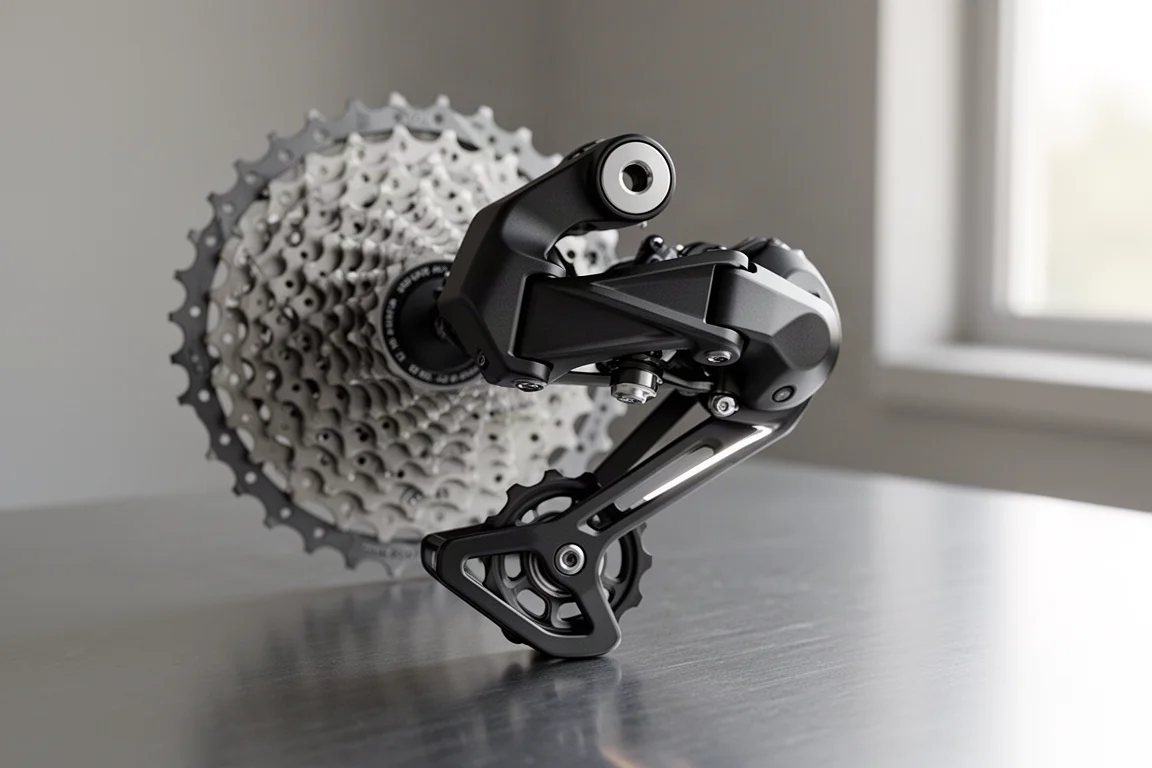
Range is the clearest number on the scoreboard. The Shimano setup delivers around 500 percent against roughly 460 percent for SRAM XPLR, which is a meaningful advantage if the bike sees steep climbs and fast descents on the same ride.
Raw spread matters less than how the gears are spaced, though. The 9-45 cassette offers a fairly even progression, and the experience of riding it over an extended period is that a comfortable cadence is almost always available. The traditional 1x weakness, being stuck at a cadence that is either too high or too low until the gradient or speed changes, is much rarer than it used to be. No mechanical groupset eliminates that possibility entirely, and only a stepless transmission would, but modern 12 and 13 speed cassettes have reduced it to a marginal concern.

Shifting speed is the other differentiator. Both groupsets are fast, but the Shimano drivetrain has a slight edge, particularly in how quickly the chain travels across the cassette under load. For riders who notice shift quality, that difference is perceptible.
Trade-Offs and Buying Advice
The 9-tooth sprocket attracts the most criticism, and the criticism is fair in principle. A smaller sprocket is measurably less efficient in laboratory conditions than a larger one. In real riding, though, that sprocket is only in use at very high speed, roughly 55 to 60 km/h, where most riders are tucked in and recovering rather than trying to hold a power target. It is a gear you use occasionally, not one you live in.
There is a genuine upside to the small sprocket as well. It allows a smaller chainring at the front, which saves a little weight and lets the chainring be matched to the rider and the terrain: larger for flatter routes and stronger riders, smaller for hilly ground. That flexibility is worth more than the theoretical efficiency loss for most people.
The mounting interface is the more substantive trade-off. The Shimano derailleur attaches to a hanger, which protects the frame in a crash but can still bend or snap and take the shifting out with it. The UDH T-type interface used by SRAM eliminates the hanger entirely, and it holds up well to a bike falling over at a cafe stop or being packed into a travel bag. Riders who travel with their bikes or simply want a drivetrain that shrugs off knocks may find that a deciding factor.
On the question of who should buy what: a rider who spends most time on flat terrain, or who produces high power, is likely to prefer a larger front chainring regardless of which groupset they choose. Riders covering mixed surfaces, from gravel to road slicks, on a bike with wide tires and no racing ambitions are the group best served by either option. A 2x groupset remains an excellent and completely valid choice, and a single chainring is offered here as an alternative rather than a replacement.
Conclusion
Both routes into 1x on a drop bar bike work, and the differences between them are narrower than the specification sheets suggest. The Shimano XT approach offers the widest range at around 500 percent, quick shifting, and app-based customisation, with the caveats of a Micro Spline freehub requirement and a hanger-based derailleur mount. SRAM XPLR offers a cleaner dedicated design, a 12-tooth sprocket for tighter fast-end steps, and a more robust mounting interface, at the cost of slightly less overall range.
Choose based on the terrain in front of you and how the bike is stored and transported. Range favours Shimano; durability and design integration favour SRAM. Either way, the days when a single chainring meant a serious compromise in usable gears are largely behind us.
Further reading
Related Reviews
Cycling Groupsets
Affordable Road Bike Groupsets: Shimano 105 and SRAM AXS Compared
Shimano 105 Di2, SRAM Apex AXS and SRAM Rival AXS deliver close to flagship performance at a fraction of the price. Here is what to weigh before your next upgrade.
Cycling Groupsets
Shimano 105 Di2 vs SRAM Rival AXS: Which Electronic Groupset Is Right for You?
A practical comparison of Shimano 105 Di2 and SRAM Rival AXS covering shifting, gearing, braking, weight, connectivity, and price.
Cycling Groupsets
SRAM Force AXS vs Shimano Ultegra Di2: Weights, Changes and What to Buy
A component-by-component weight comparison of the SRAM Force AXS and Shimano Ultegra Di2 groupsets, plus the design changes worth understanding before you commit to either.