Hi-Fi Speakers
Wharfedale Super Linton vs Linton 85th Anniversary Edition: Which Speaker Fits Your System?
Two Wharfedale standmount speakers share the Linton name but not the sound. Here is how the drivers, cabinet, impedance, and voicing differ.
Introduction
Wharfedale sells two standmount speakers that carry the Linton name, and the overlap is easy to misread. The Linton 85th Anniversary Edition has been part of the range for a few years, while the Super Linton is the newer arrival, built on a revised driver set and a taller cabinet. They share a family look, a heritage-inspired front baffle, and real wood veneer finishes, but they are not iterations of the same design in any meaningful sense.
The short version is that the 85th Anniversary Edition leans warm and forgiving, and the Super Linton leans cleaner and more revealing. That single difference shapes almost everything else, from the drivers and crossover to the way each speaker presents a recording.
Choosing between them comes down to the sound you actually want rather than which one is newer, and the price gap is part of that decision.
What Sets These Two Apart
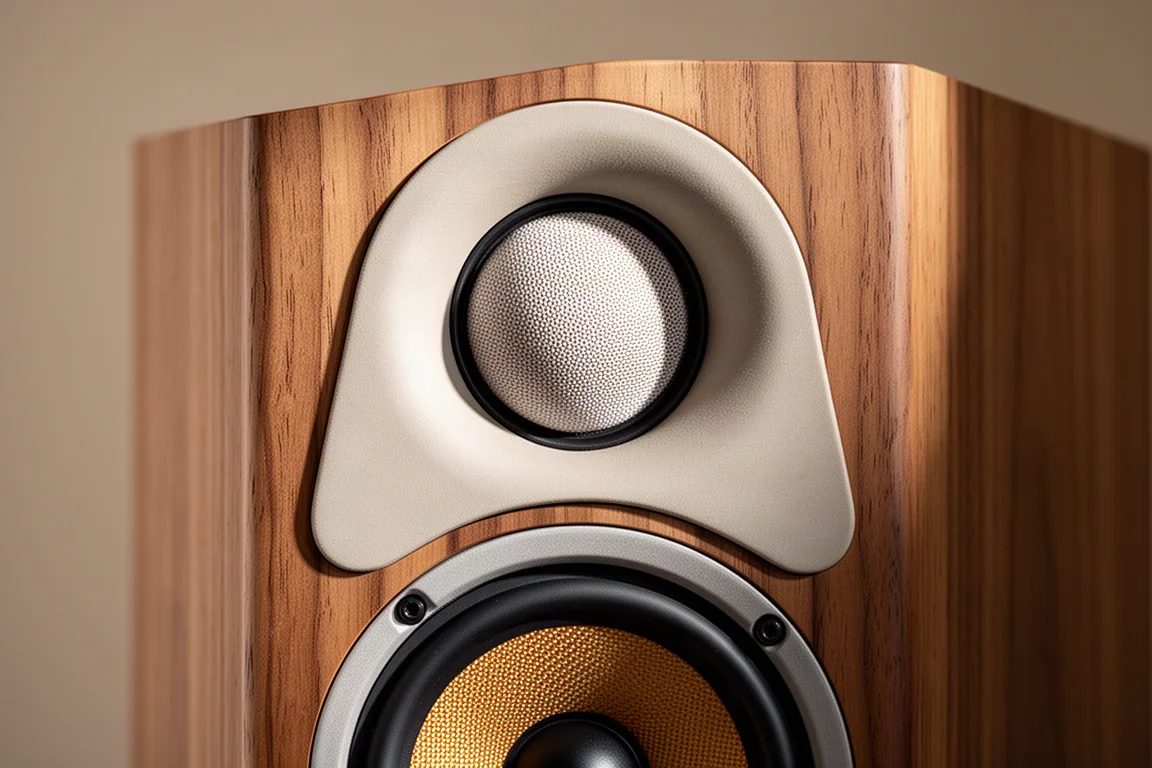
Start with the hardware. The Super Linton uses a refined treble unit that borrows technology from Wharfedale’s flagship Dovetail model, a considerably more expensive speaker. Its treble driver is a fabric dome paired with a ceramic magnet motor system and a redesigned front plate. The bass driver has also been upgraded with a more powerful motor system and increased magnet strength, and the crossover is now split across two separate boards.
The cabinet grew as well. The Super Linton stands 23.8 inches tall and weighs 43.7 pounds, against 22.2 inches and 40.6 pounds for the 85th Anniversary Edition. Internal damping materials were changed too. On paper the extra volume shows up in the low end: the Super Linton is claimed to reach down to 32 Hz, while the 85th Anniversary Edition reaches down to 40 Hz.
Electrical differences matter for amplifier matching. The 85th Anniversary Edition has a nominal impedance of 6 ohms with a minimum of 3.2 ohms. The Super Linton’s minimum impedance is 3.9 ohms, which makes it slightly easier to drive. Both speakers share the same sensitivity rating, though in a direct comparison the Super Linton played noticeably louder at the same volume setting.
Wharfedale Super Linton: The Newer Design
The Super Linton is the more modern voicing of the two. Its midrange is cleaner and leaner than the 85th Anniversary Edition’s, and the top end is noticeably more airy. Even listeners who do not spend much time on audio gear tend to pick up on the extra detail quickly, whether that reads as clearer voices, more separation between instruments, or better-defined drum work.
The tweeter sits further offset on the front baffle than on the 85th Anniversary Edition, part of a revised arrangement aimed at smoother high-frequency dispersion and a more natural handoff into the upper midrange. In listening, the result is a speaker that stays natural rather than sharp: no sibilance, no sense of a boosted top end, and no metallic edge. The overall character sits closer to a neutral, balanced presentation than to a warm one.
Soundstaging is where the Super Linton separates itself most clearly. The image is tighter and better defined front to back, and individual parts of a performance are easier to place. It reads less like a diffuse cloud of sound and more like a group of performers arranged in front of the listener.
Bass is the one area where the 85th Anniversary Edition still holds a small advantage in punch. The Super Linton’s low end tends to fill out as the drivers settle in, and Wharfedale designs are generally known for needing some run-in time before they sound their best. It is worth planning for that rather than judging the speaker in its first hours.
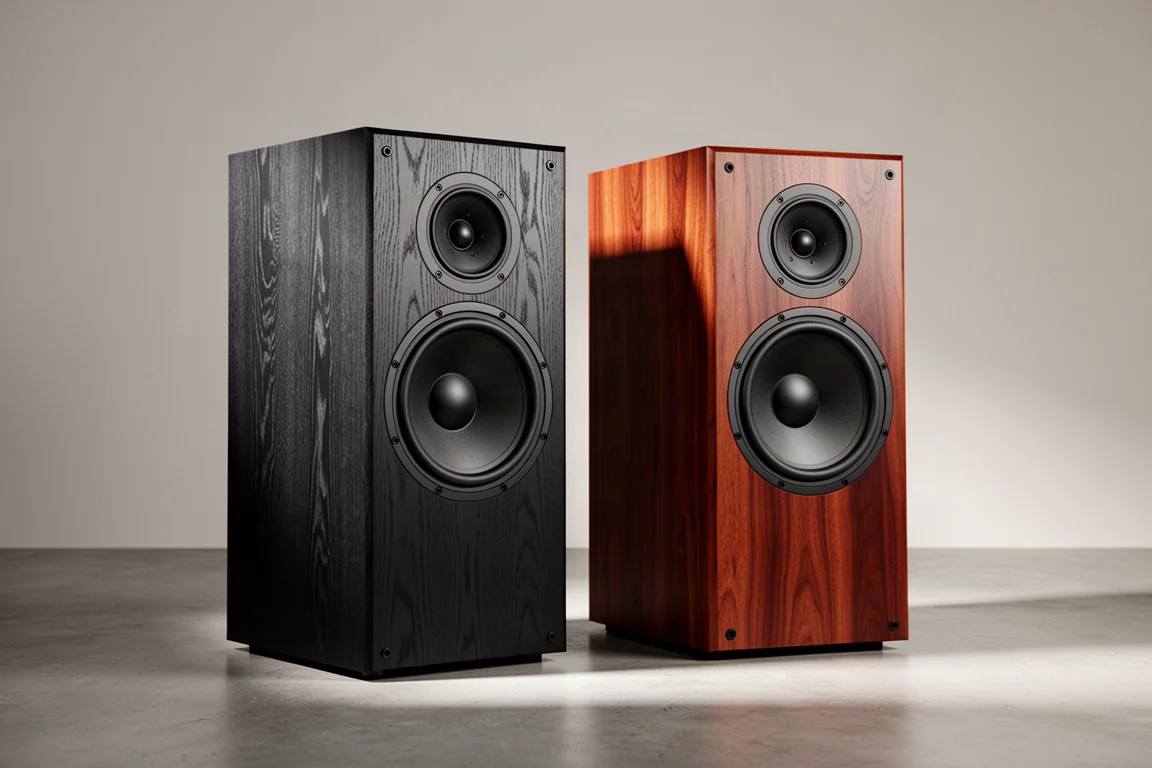
Finish options include black oak, walnut, and mahogany, all in real wood veneer. Wharfedale has been running a promotional price of $2,500 with free stands for early buyers.
Wharfedale Linton 85th Anniversary Edition: The Warmer Classic
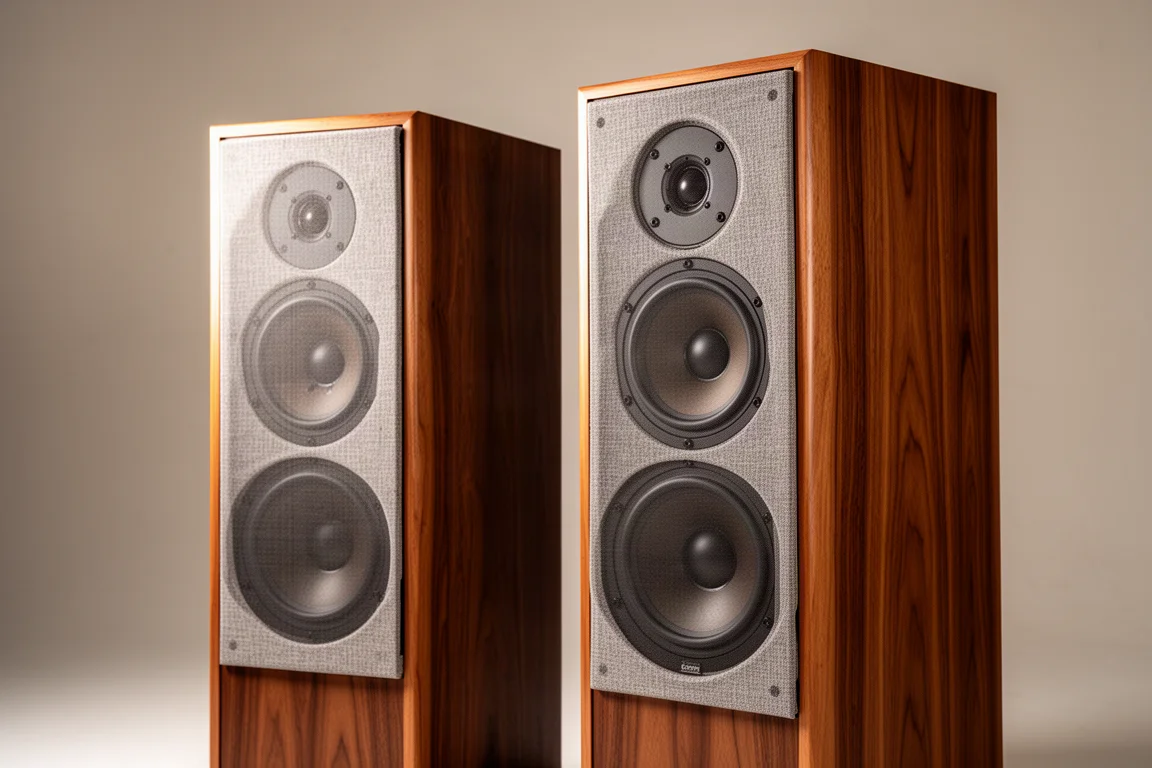
The 85th Anniversary Edition is the warmer, more relaxed speaker. Its low end is robust and full, the midrange is warm, and the treble is slightly rolled off compared with the Super Linton. That combination produces a deep, expansive soundstage with a rounded, enveloping quality rather than a sharply outlined one.
Its specifications are the older set: a nominal impedance of 6 ohms, a minimum impedance of 3.2 ohms, a 22.2 inch cabinet, a 40.6 pound weight, and claimed bass extension down to 40 Hz. It is also the more affordable of the two at around $1,500, and it has been selling with free stands.
Availability is worth checking before ordering. The black oak and mahogany finishes have been the ones in stock, while the walnut finish has been expected to arrive later in the year. All three finishes use real wood veneer, matching the Super Linton’s options.
Sound Comparison: Warmth Versus Clarity
Put the two side by side and the differences are not subtle. The 85th Anniversary Edition keeps its warm balance across the range: strong low-frequency weight, a rich midrange, and a gently softened top. The Super Linton keeps the same general sense of scale but cleans up the middle and opens the top, which makes recordings feel more transparent.
The trade-off is personality. The 85th Anniversary Edition has a pronounced character that many listeners find immediately likeable, particularly with material that benefits from a little extra warmth. The Super Linton is the more neutral speaker, and that neutrality is exactly what makes it compelling: it adds less of its own colour to whatever is playing.
Bass punch is the one place where the 85th Anniversary Edition has a slight edge, at least while the Super Linton is still running in. If deep, physical low-frequency impact is your priority and you like a warmer tonal balance, the older speaker remains a strong choice.
Both speakers also do something that is harder to find in smaller cabinets: they create a sense of a performance happening in the room rather than a pair of boxes playing. The Super Linton simply draws the outlines of that performance more precisely.
Stands, Setup, and Amplification
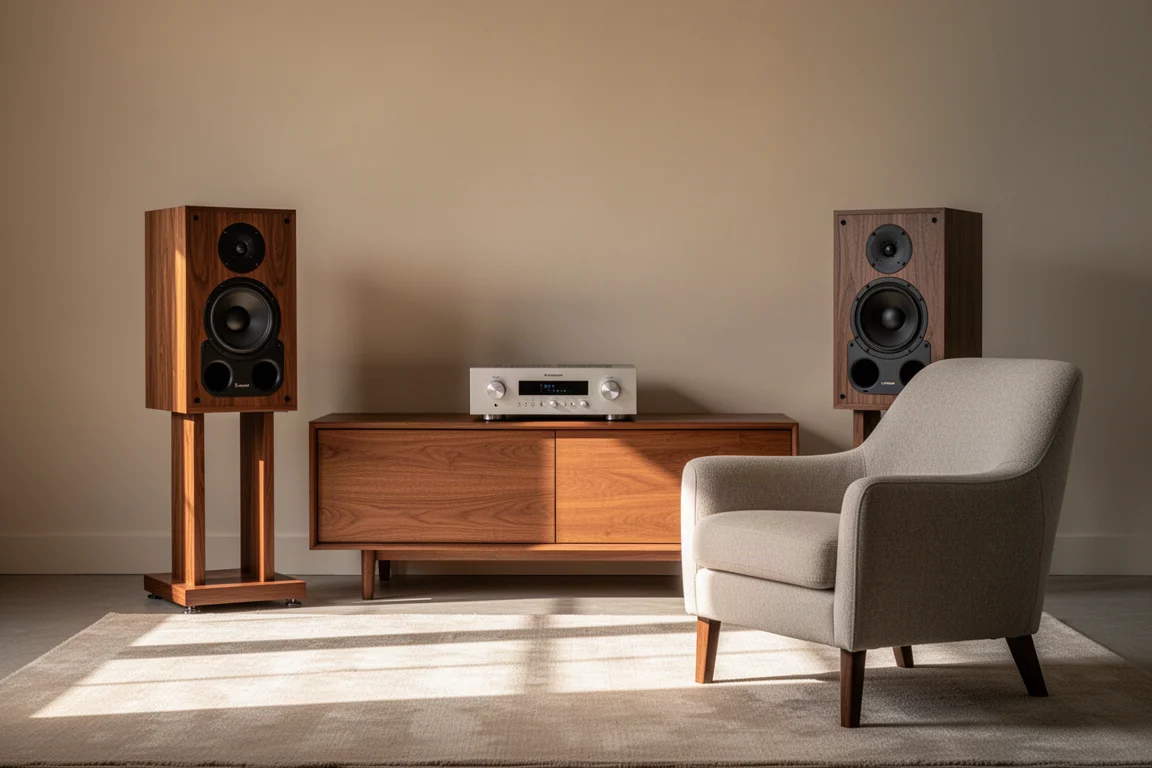
Both models are standmount designs that benefit from proper stands. The dedicated stands supplied with these speakers are unusually good. They arrive assembled, they are colour matched to the cabinet finish, and small rubber pads sit between the speaker and the stand. Setup is a matter of unboxing, placing, and listening.
Amplification requirements are modest for their size. Because both speakers have minimum impedances in the low 3-ohm range and share the same sensitivity rating, a competent integrated amplifier should be able to drive either pair. The Super Linton’s slightly higher minimum impedance gives it a small advantage with amplifiers that are less comfortable into low-impedance loads.
If your amplifier offers two speaker outputs, switching between the two models is straightforward, which makes a direct comparison in the same room easy to arrange.
Overall Buying Advice
Decide what you want the speaker to do. If warmth, weight, and a generous, enveloping soundstage matter most, the Linton 85th Anniversary Edition is the better fit, and at around $1,500 with free stands it is also the better value. Check finish availability before you commit, since the walnut option has been the hardest to find.
If clarity is the priority, the Super Linton is the stronger speaker. It is cleaner through the midrange, more open at the top, and more precise about where each element of a recording sits. The promotional price of $2,500 with free stands narrows the gap with the older model, though it is still the more expensive option.
Either way, give the speakers time. Wharfedale designs are known for improving as the drivers break in, and the Super Linton in particular should be judged after a few dozen hours rather than straight out of the box. Pair them with an amplifier you trust, set them up on the supplied stands, and the differences between the two become obvious within a few tracks.
Conclusion
Two speakers, one name, two distinct goals. The Linton 85th Anniversary Edition delivers warmth, low-end weight, and an expansive soundstage at a lower price. The Super Linton delivers a cleaner midrange, a more open top end, and a more sharply defined image, and it costs more for the privilege. Neither is the correct choice in isolation. The right one is the one whose character matches the sound you enjoy.
Further reading
Related Reviews
Hi-Fi Speakers
1723 THX Tower vs 1528 Bookshelf: Which Speaker Fits Your Room?
Two speakers at roughly the same price, built very differently. How the 1723 THX tower and the 1528 bookshelf compare on construction, bass, power needs, and sound.
Hi-Fi Speakers
Acoustic Energy AE 300 Review: Deep Bass From a Compact Standmount
A two-way standmount with real wood veneer, surprising low-end weight, and a warm, easygoing character. Here is what to know before buying.
Hi-Fi Speakers
Acoustic Energy AE1 40th Anniversary Review: A Modern Take on a British Classic
A compact standmount that revives a 1980s favorite with all-new parts, a warm mid-centric balance, and a price of £1,499 per pair.