Bookshelf Speakers
Wharfedale Super Denton Review: Vintage Looks With Modern Three-Way Sound
A stand-mount speaker that pairs a retro wood-veneer cabinet with a dedicated midrange driver, controlled resonance, and a neutral, detailed presentation.
Introduction
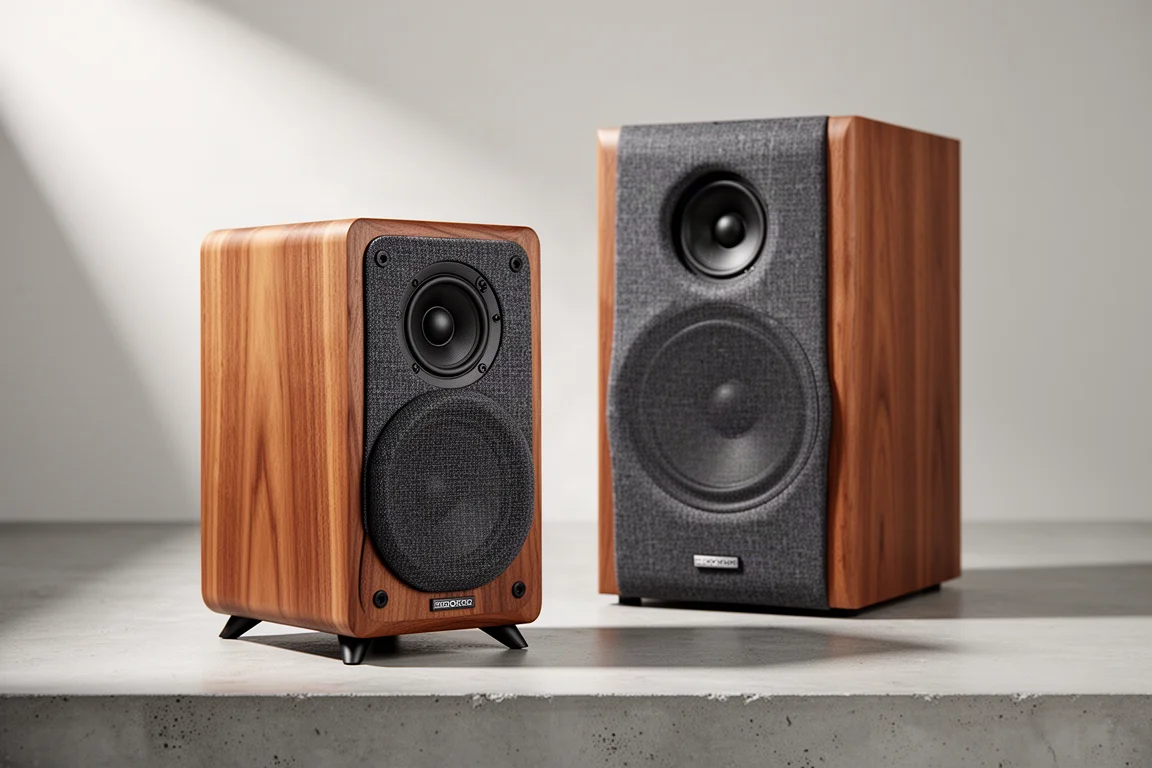
The Wharfedale Super Denton is a stand-mount speaker for listeners who like the look of classic hi-fi but expect modern performance. It belongs to the Wharfedale Heritage series, where the company pairs vintage-inspired design with current acoustic engineering. The styling reaches back to the Denton 3 of 1971: real wood veneer, a retro cloth grille, and a warm, inviting presence in a room.
Underneath that finish sits a true three-way design with a dedicated midrange driver, a braced and damped cabinet, and a driver set engineered to work together. This article covers what the speaker does well, where a stand-mount design still has limits, and how it compares with the Wharfedale 85th Anniversary Denton if you are weighing the two.
Who the Super Denton Is For
This speaker suits people who want the vintage aesthetic without inheriting the problems that often come with older cabinets. Classic speakers are frequently hunted down and rebuilt, and the enclosure is usually the weak point. Cabinets from decades ago were designed before much of today’s research into resonance and vibration control, which can add unwanted coloration to the sound.
The Super Denton is also sized for rooms where larger Heritage models will not fit comfortably. At roughly 14 inches tall, 10 inches wide and 12 inches deep, and just over 20 pounds each, it slots into smaller spaces and modest systems while still aiming at high performance fidelity.

Listeners who care about midrange realism, vocal clarity and instrument tonality are the natural audience here, especially those who play vinyl and digital sources through a capable integrated amplifier.
Cabinet and Build Quality
The enclosure is where this speaker separates itself from the vintage designs it echoes. It uses a combination of layers of particle board and MDF. Because those materials have different resonant properties, they do not transfer their separate resonances onto each other. The layers are bonded with a resonance damping adhesive that tames vibration, the cabinet is braced for structural stability and vibration control, and long-hair fibre damping material is added to the internal volume. The result is a resonance-free cabinet that behaves far better than a classic enclosure.
The front panel stays clean with an inset baffle, while the rear carries twin reflex ports and binding posts. Wharfedale chose simple but high quality binding posts rather than the cheap plastic terminal cups found on plenty of speakers. Real wood veneers and a vintage-looking cloth grille complete the classic look, and the finished quality reads above the price point. Buyers can choose between Antique Walnut, Black Oak and Mahogany Red.
Driver Design and Three-Way Integration
Where the original Denton 3 took a two-way design and elevated it by adding a dedicated midrange driver, the Super Denton follows the same logic. Splitting the frequency range across three drivers instead of two reduces distortion, because each driver has less work to do. It also limits intermodulation distortion, which occurs when multiple frequencies interact inside the same driver and create unwanted harmonics that affect clarity.
The 1 inch soft dome tweeter covers 4.6 kHz to 20 kHz and is built for smooth, detailed highs that complement the vintage-inspired design. It delivers clarity without harshness. It is also offset on the front baffle to reduce diffraction. A centred tweeter interacts symmetrically with the surrounding baffle, and those reflections can affect clarity. Offsetting it reduces the symmetrical diffraction, which improves imaging and produces a more expansive sound stage. That is a refinement engineers in the 1960s and 1970s did not fully account for.
A 2 inch soft dome midrange driver handles 940 Hz to 4.6 kHz, improving upper midrange performance and letting the tweeter concentrate on the presence region. It acts as the bridge between woofer and tweeter and sharpens vocal clarity and instrument tonality. Housed in its own sub-enclosure, it stays isolated from the woofer to keep the midrange pure.
The 6.5 inch woofer uses a lightweight but strong woven Kevlar cone, a diecast chassis, a substantial magnet and a high excursion surround, so it can produce deep, punchy bass while staying controlled. The same driver appears in the 85th Anniversary Denton, but here it runs up to 940 Hz rather than 3.1 kHz, handing over to the dedicated midrange driver earlier. That lower crossover point reduces the strain of covering deep bass and upper midrange at once, which lowers distortion and cleans up the overall presentation. Specified low-end reach is 40 Hz.
Driver count alone never determines quality, and proper integration is what matters. Multi-driver speakers live or die on how seamlessly everything blends, and this midrange driver enhances the overall performance rather than complicating it.
Sound Quality and Setup
The Super Denton keeps the same neutral, even-keeled sonic structure as the rest of the Heritage line. Treble is detailed and smooth but sits nicely in the mix without drawing attention to itself. The midrange has strong clarity and lets the natural tone of guitars and voices come through. Bass is tight, fast and punchy when the recording calls for it, though as a stand-mount speaker it will always be slightly more limited at the bottom end than a floorstander.
Imaging is rock solid and focused thanks to the offset tweeter, and the sound stage is wide and deep for a speaker of this price and size. With a 6 ohm nominal impedance and 87 dB efficiency, the Super Denton is easy to drive.
Natural, unprocessed recordings are the best way to hear what it does. A guitar running through a tube amplifier sounds like a guitar running through a tube amplifier, provided the speaker lets the tone through. The speaker rewards material that relies on tone rather than heavy effects.
Amplifier and Stand Matching
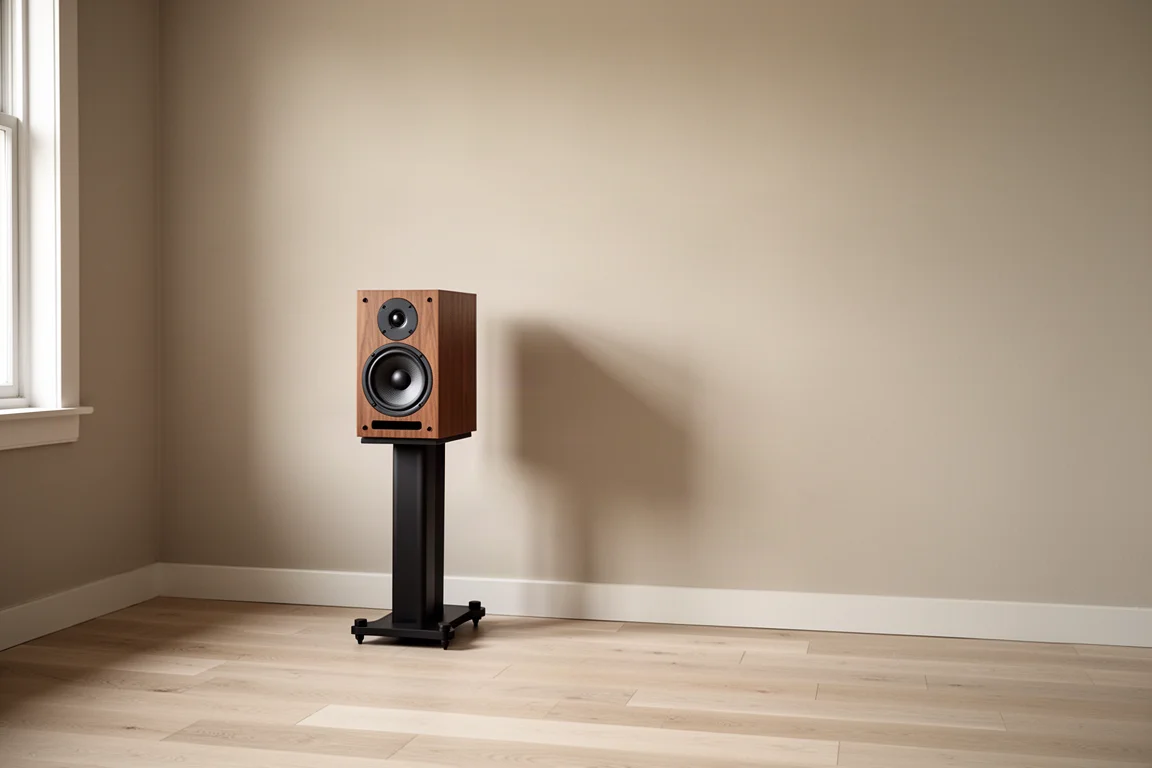
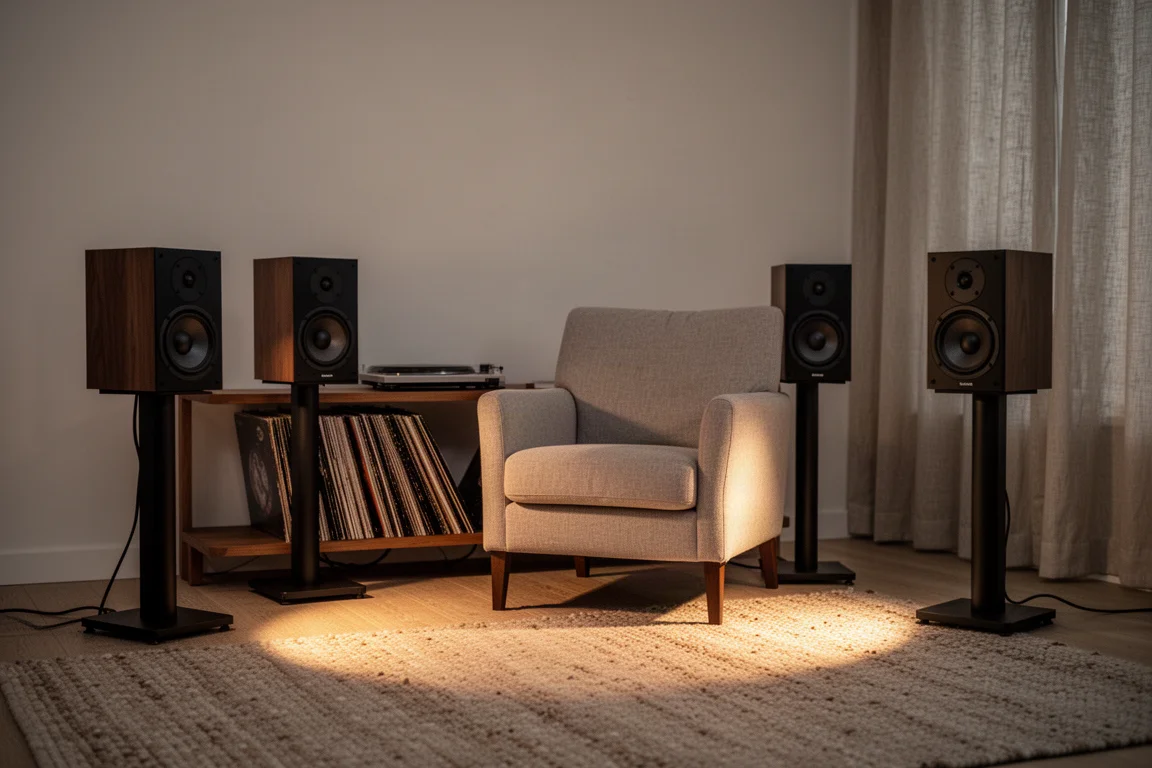
Pairing the Super Denton with 24 inch aluminium stands places the tweeters at ear level and adds stability and resonance control, which keeps the speakers isolated from vibrations that could colour the sound.
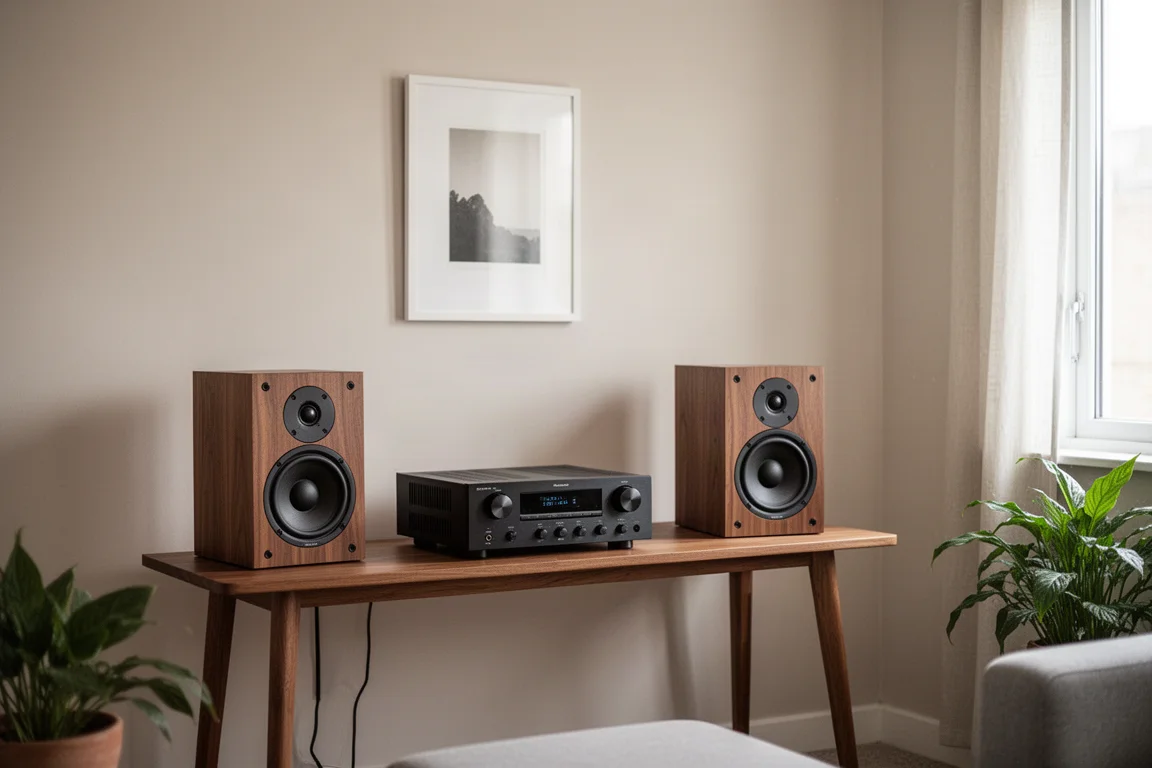
The Leak Stereo 230 integrated amplifier is a natural partner, since Leak is a sister brand to Wharfedale and both share a commitment to vintage-inspired design with modern engineering. Its clean, high current class AB amplification gives the Super Dentons plenty of power, and its ESS Sabre 32 reference DAC and built-in phono stage handle both vinyl and high resolution digital sources with detail. The combination delivers a well balanced, dynamic sound with excellent imaging and a warm, natural tone.
Many integrated amplifiers under $2,500 would also make strong companions for this speaker, so there is no need to build the system around one specific model.
Things to Consider Before Buying
The main compromise is low-frequency output. This is a stand-mount speaker, so deep bass will not match what a floorstanding model can produce in a larger room. Buyers who want the fullest possible bottom end should plan accordingly.
Stands are effectively part of the purchase. The speaker is designed to sit at ear height with proper isolation, and a pair of sturdy stands is what unlocks its imaging and stability.
Budget for a competent amplifier as well. The speaker is easy to drive, but it is transparent enough that the quality of the electronics and source will be audible. Finally, the cabinet is compact but still needs a little room to breathe, and the rear reflex ports mean placement relative to the wall behind it is worth experimenting with.
Buying Advice
If the vintage aesthetic matters to you but you have no interest in the maintenance and coloration issues of genuinely old speakers, the Super Denton is the version of that idea built for modern systems. It combines measured performance with an appeal that few speakers in its class match, and the three-way layout is the reason the midrange sounds as clean as it does.
The obvious alternative is the Wharfedale 85th Anniversary Denton, which sits roughly $400 below the Super Denton. Both are excellent, and the comparison is fair. Think of the Super Denton as a super version of an already great two-way design. The added soft dome midrange turns it into a three-way speaker, and the improvement in midrange clarity is the most audible difference. Since the midrange is where most music lives, the upgrade makes sense if the price difference is manageable and the slightly larger cabinet fits your space.
If your budget or your room will not stretch to it, the 85th Anniversary Denton remains a strong two-way speaker and one of the best options at its price. Either way, the decision comes down to how much you value midrange refinement and how much space you can give the cabinet.
Conclusion
The Wharfedale Super Denton does what few retro-styled speakers manage: it looks like a piece of classic hi-fi while behaving like a modern one. The layered, braced cabinet, the dedicated midrange driver, the offset tweeter and the controlled crossover all serve the same goal, which is accurate, natural sound without the coloration of older designs. If you want a stand-mount speaker that brings warmth and character to a room without asking you to compromise on clarity or imaging, this is a well-judged place to start.
Product link
View more details for Wharfedale Super Denton
This product is mentioned in the review. Check the specifications, options, and compatibility before buying.
View more details for Wharfedale Super DentonFurther reading
Related Reviews
Bookshelf Speakers
Acoustic Energy A100 Mark II Review: A Compact Standmount With an Expansive Soundstage
The Acoustic Energy A100 Mark II brings clarity, natural tonality and a wide soundstage to an entry-level standmount, with a few setup details worth knowing first.
Bookshelf Speakers
Acoustic Energy AE-100 Mark II Review: Compact Bookshelf Speakers With Standout Imaging
A compact British two-way bookshelf speaker with deep, layered imaging, fast bass, and a slight treble lift to weigh against a crowded $500 field.
Bookshelf Speakers
Acoustic Energy AE100 MK2 Review: Measured Performance and Four Alternatives
A close look at the Acoustic Energy AE100 MK2 bookshelf speaker, what its measured performance reveals, and four alternatives with different trade-offs.