Bookshelf Speakers
Acoustic Energy AE100 MK2 Review: Measured Performance and Four Alternatives
A close look at the Acoustic Energy AE100 MK2 bookshelf speaker, what its measured performance reveals, and four alternatives with different trade-offs.
Introduction
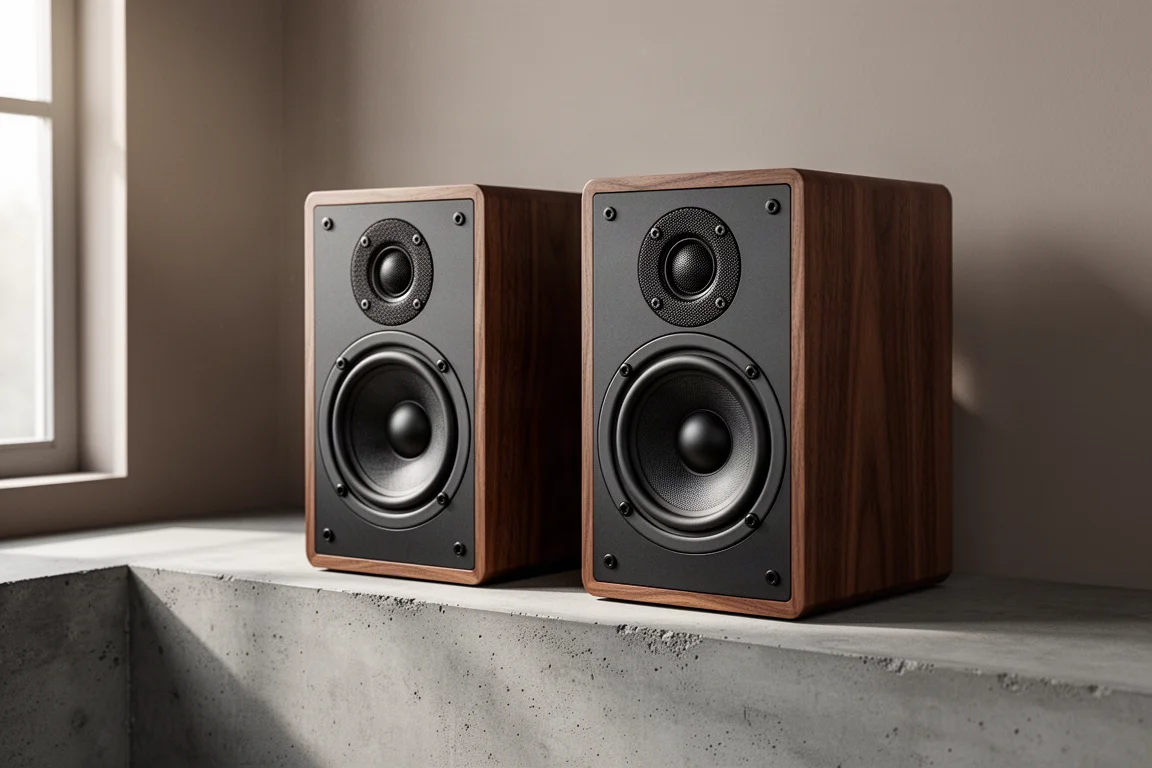
Bookshelf speakers in the $500-per-pair range sit in one of the most competitive corners of the hi-fi market, and the Acoustic Energy AE100 MK2 shows how differently two designs at the same price can behave. It is a compact two-way speaker with a 5.25-inch midwoofer and a 1-inch soft fabric dome tweeter, and it is a genuinely attractive piece of kit. The finish is the kind that makes a small speaker easy to live with in a normal living room.
The sound is where the story becomes more complicated. Across multiple placements, two listening distances and both on-axis and off-axis setups, the same character came through: a mid-range that sounds hollow and a top end that sounds bright. Measurements line up closely with that impression, and they also reveal one real strength that makes the AE100 MK2 more adaptable than its frequency response alone suggests.
Design and Build of the Acoustic Energy AE100 MK2
The AE100 MK2 is a two-way design with a 5.25-inch midwoofer and a 1-inch soft fabric dome tweeter, crossed over at a stated 2.9 kHz. Nominal impedance is 6 ohms and the measured minimum sits at 4.7 ohms, which means a modest AV receiver can drive it comfortably in a medium-sized room. Each cabinet weighs roughly 20 pounds, and the pair retails for about $500.
The cabinet uses a rear slot port with a small internal shelf. There is no internal cross bracing, and tapping the enclosure reveals resonances in a couple of areas, with the slot port a possible contributor. The midwoofer uses a stamped steel frame and a modest magnet, and the cone appears to be polypropylene. The tweeter sits in a shallow waveguide.
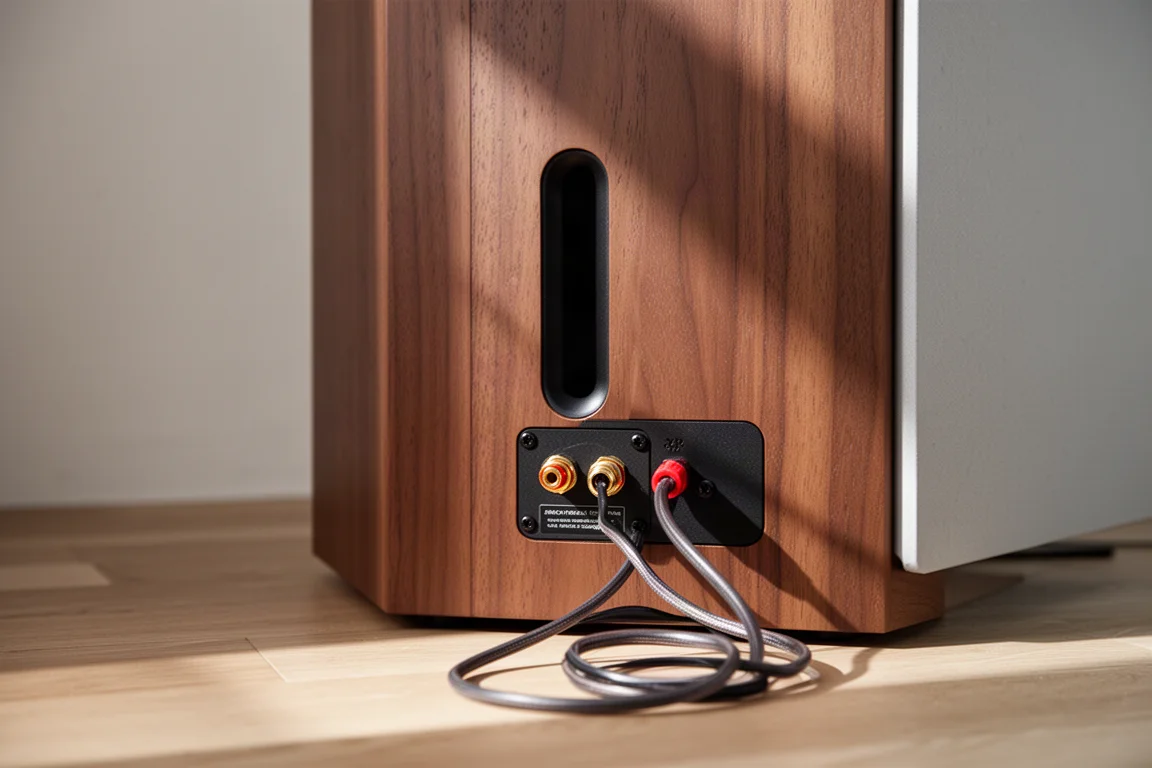
That waveguide shape matters. A shallow profile keeps directivity consistent through the crossover region without making the listening window unusually narrow, and the measurements confirm that the tweeter and midwoofer are well matched on and off axis through the crossover. The cabinet finish is the other clear strength here: the speaker looks more expensive than its price suggests.
Measured Performance of the Acoustic Energy AE100 MK2
Average sensitivity measures 84 dB, and the frequency response shows a dip through the mid-range that makes vocals and instruments in that band sound hollow and slightly sucked out. A resonance around 350 Hz appears in the impedance curve, the frequency response and the harmonic distortion data, and because it shows up at higher order levels it is more likely to be audible. That pattern points to a structural resonance in the enclosure rather than a room artefact.
There is also a step in the lower mid-range with a dip in the 700 to 800 Hz region, adding roughly 2 to 3 dB of output relative to the mid-range. It could be baffle step behaviour, a cabinet resonance, a port resonance, or a combination of these. Either way, it feeds into the hollow character.
The treble is the more obvious departure. Above roughly 4 kHz the response runs about 3 dB high, and about 1.5 to 2 dB above the mid-range on average. A simple resistor in the crossover to pad the tweeter down would likely have addressed most of that sharpness. Bass extension is modest: F3 measures 63 Hz and F10 measures 42 Hz, with in-room output reaching into the mid-50s and giving some kick-drum authority but not a great deal of it.
Where the design holds together is directivity. Horizontal coverage is about ±50 degrees and vertical coverage about ±15 degrees, and because on-axis and off-axis linearity track each other closely, the speaker equalizes well. A competent EQ curve can meaningfully improve the balance without wrecking the off-axis response.
Distortion tells a more limited story. At 86 dB and 96 dB the numbers are broadly typical for a speaker of this size, though the 350 Hz resonance reappears. Multitone distortion rises above roughly 3% at the highest output level, where a grainy quality is more likely to be heard. High-passing the speaker at 80 Hz does not clean up the mid-range much, which suggests the motor is not strong enough to hold the response together at high levels. Around 96 dB at one metre anechoic is roughly the practical ceiling, which corresponds to about 105 dB at one metre and 93 dB at four metres for a stereo pair in a room.
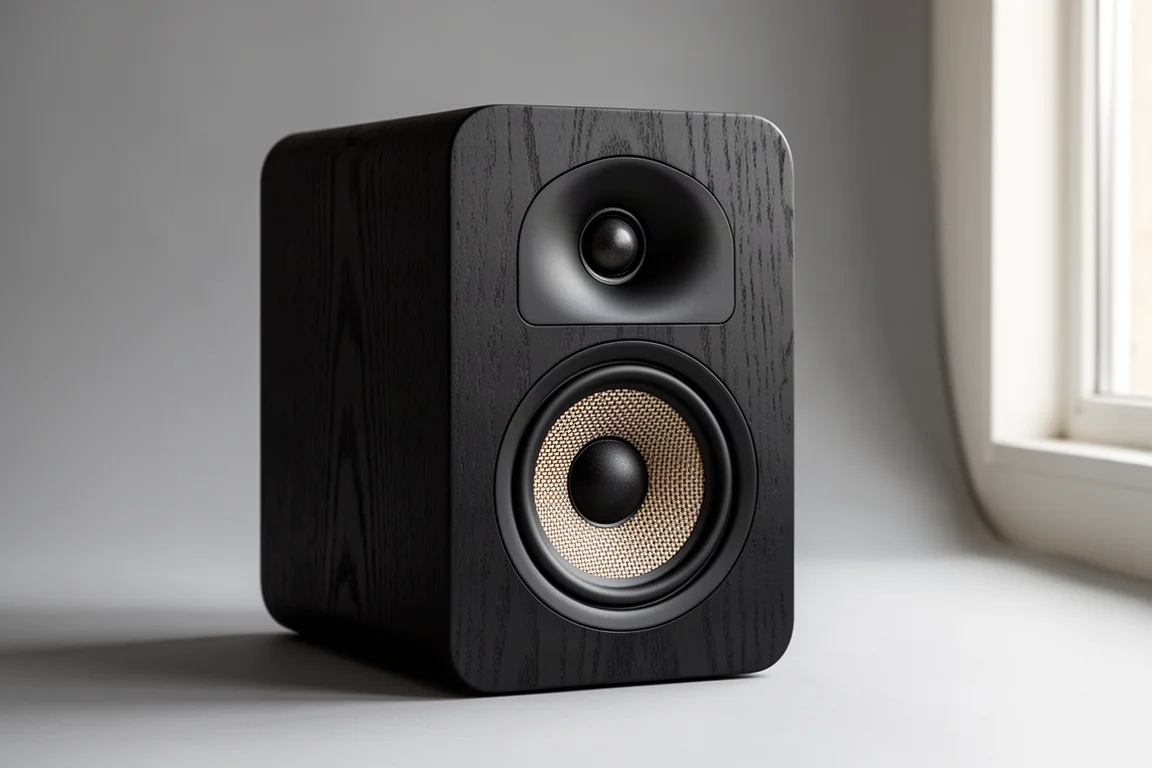
Alternative for a More Neutral Balance: ELAC Debut Reference DBR62
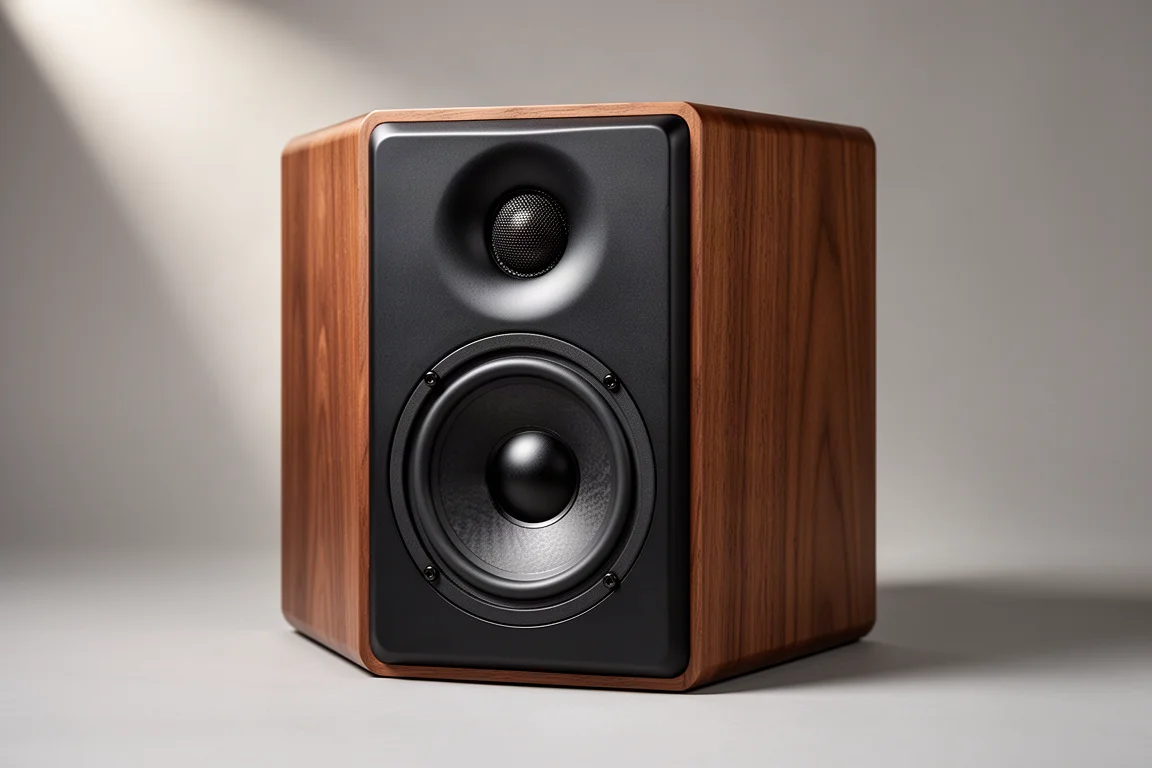
If the mid-range dip is the part of the AE100 MK2 that bothers you most, the ELAC Debut Reference DBR62 is the natural step up. It is a more neutral speaker overall, with a radiation pattern of about ±60 degrees. It retails at about $650 per pair and is frequently discounted to around $530, which puts it within reach of anyone already considering the Acoustic Energy.
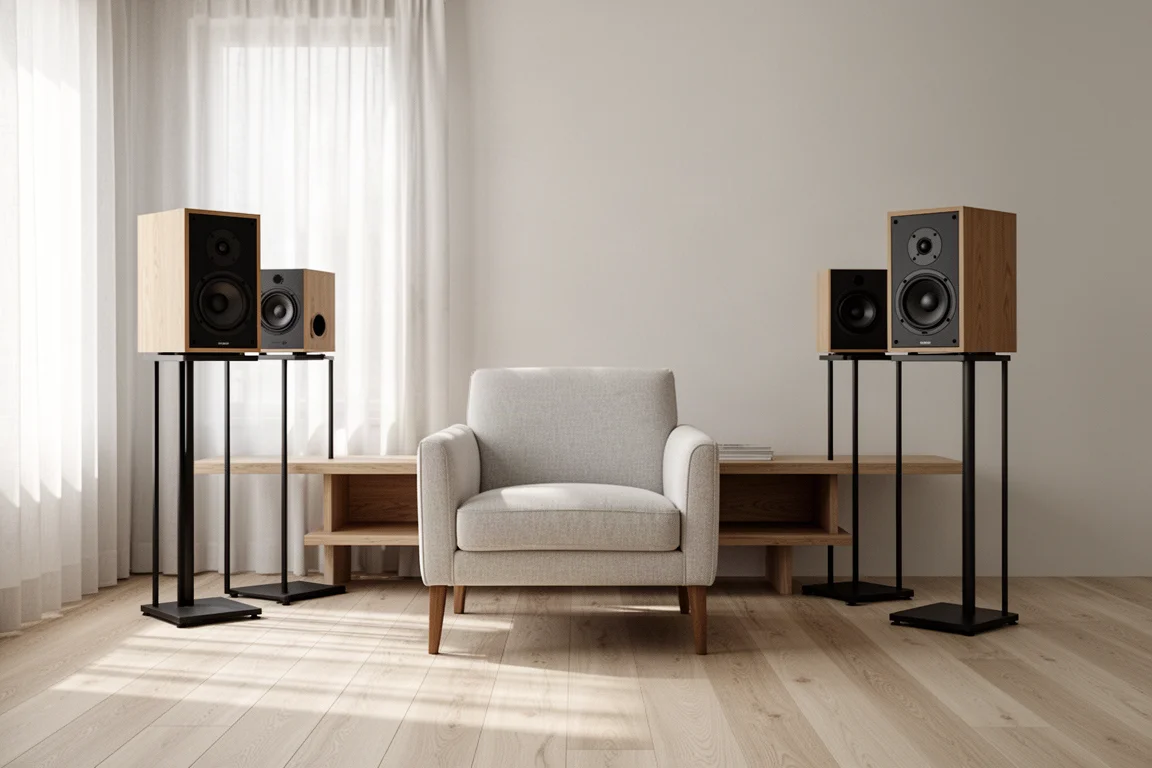
The practical difference is tonal. A more neutral balance means less work for room correction or manual equalization, and the wider radiation window gives a slightly more consistent result across a couple of seats.
Alternative for Reflective Rooms: KEF Q150
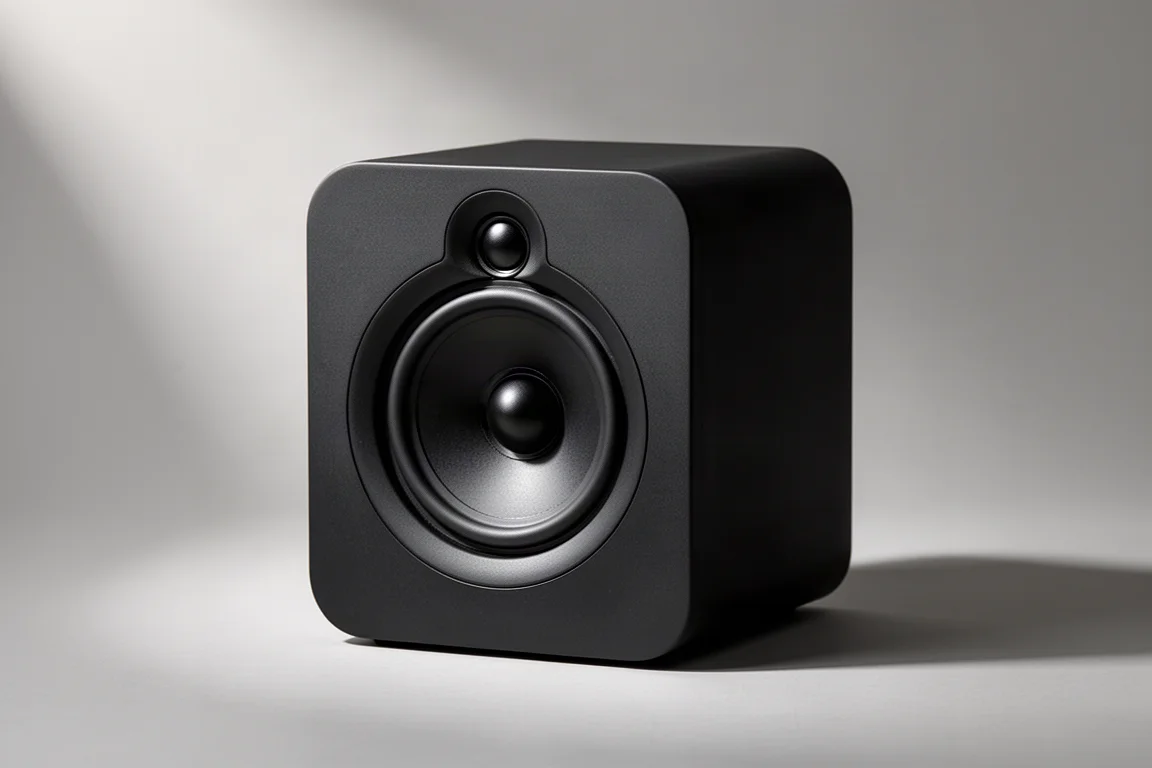
The KEF Q150 takes a different approach. Its MSRP sits around $599, but it is regularly available for about $350 per pair, which makes it the value option of this group. Its horizontal and vertical radiation are more consistent than the Acoustic Energy’s, which helps when listeners move around the room or when several seats need to share a sensible response. Coverage is narrower at about ±40 degrees, and the response appears more linear overall.
That narrower, more consistent pattern is a real advantage in a highly reflective room, where a wide-dispersion speaker can spread energy into side walls and hard floors that the listener then hears as reflected sound.
Alternative for Wide Coverage: SVS Prime Bookshelf
The SVS Prime Bookshelf is the widest of the group. At $600 per pair it is a bit more linear than the AE100 MK2, with a small lift in the top end, and its radiation pattern reaches about ±70 degrees instead of ±50. That extra spread suits larger rooms and listeners who sit well off the centre line.
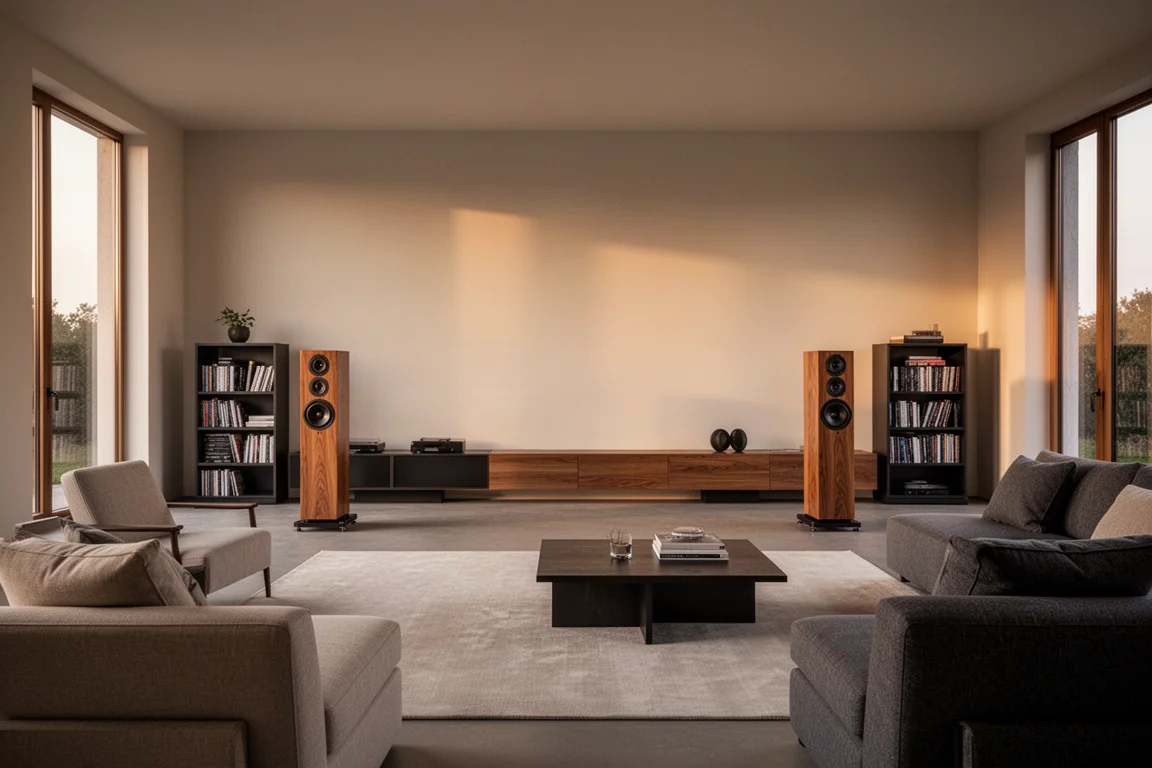
Wide coverage and a reasonably linear response make it an easy recommendation for open-plan spaces where the listening position is not fixed.
Alternative for Smaller Budgets: ELAC Debut 2.0 B6.2
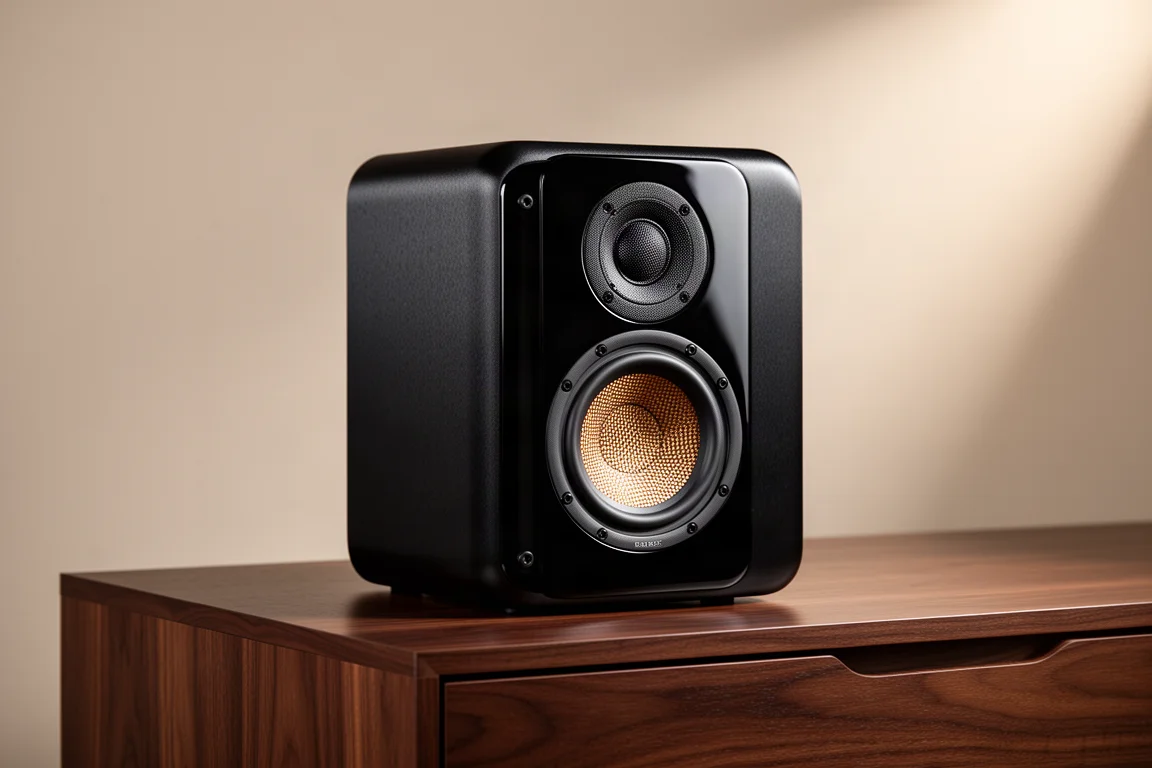
For anyone who wants to spend less, the ELAC Debut 2.0 B6.2 typically retails at about $400 per pair and is often available for around $300. It is more linear than the Acoustic Energy and its horizontal radiation is a little wider. The trade-off is a strong resonance around 600 Hz, which is worth knowing about before you buy.
Buying Advice
The AE100 MK2 is not a speaker without merit. Its directivity is well controlled, its impedance stays high enough for an AV receiver, and its finish is genuinely good. If you are willing to equalize, the underlying on-axis and off-axis consistency means you can improve the balance considerably. What EQ cannot fix is the elevated treble and the hollow mid-range that come from the crossover and the enclosure, and those are the main reasons this speaker is hard to recommend at its price.
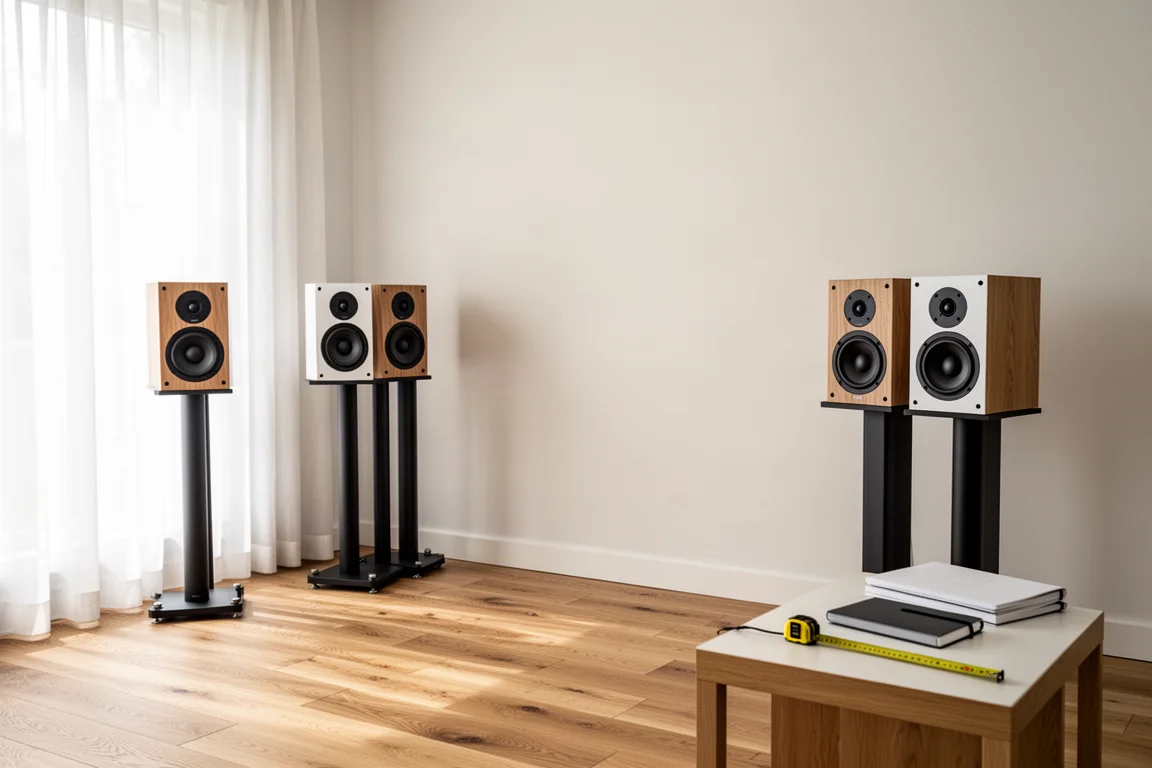
Placement will not rescue it either. Moving the speakers from about two and a half feet off the wall to tight against it, and from on-axis to roughly 30 degrees off-axis, at both 10 feet and 6 feet, produced the same tonal character each time. That consistency points to the speaker’s own response rather than a room interaction.
If you can stretch the budget, the ELAC Debut Reference DBR62 is the most neutral option here. If you want to spend less, the ELAC Debut 2.0 B6.2 is a better-balanced alternative despite its resonance around 600 Hz. For a reflective room, the KEF Q150 and its narrower, more consistent radiation is the smarter choice, and for large open spaces the SVS Prime Bookshelf and its ±70-degree coverage is the most forgiving.
Conclusion
The Acoustic Energy AE100 MK2 is a well-finished, compact two-way speaker with genuinely good directivity and a price of about $500 per pair. It is also a speaker with an elevated top end, a dipped and hollow-sounding mid-range and a resonance around 350 Hz that shows up across multiple measurements. Buyers who plan to equalize and who keep output demands modest can make it work well; buyers who want a neutral balance out of the box will find more satisfaction in the alternatives above.
Further reading
Related Reviews
Bookshelf Speakers
Acoustic Energy A100 Mark II Review: A Compact Standmount With an Expansive Soundstage
The Acoustic Energy A100 Mark II brings clarity, natural tonality and a wide soundstage to an entry-level standmount, with a few setup details worth knowing first.
Bookshelf Speakers
Acoustic Energy AE-100 Mark II Review: Compact Bookshelf Speakers With Standout Imaging
A compact British two-way bookshelf speaker with deep, layered imaging, fast bass, and a slight treble lift to weigh against a crowded $500 field.
Bookshelf Speakers
Amphion Argon1 Review: A Neutral Finnish Bookshelf Speaker Worth the Premium
A two-way Finnish bookshelf speaker with a titanium dome tweeter, tight bass, and a remarkably neutral midrange. Here is what to know before buying.