Bookshelf Speakers
Acoustic Energy A100 Mark II Review: A Compact Standmount With an Expansive Soundstage
The Acoustic Energy A100 Mark II brings clarity, natural tonality and a wide soundstage to an entry-level standmount, with a few setup details worth knowing first.
Introduction
Entry level hi-fi has rarely looked healthier, and the Acoustic Energy A100 Mark II is one of the clearest examples of why. It is the most affordable speaker the brand builds, priced at £259 in the UK, and it arrives in a segment where several manufacturers now offer genuinely capable compact designs.
The interesting question is not whether the A100 Mark II is inexpensive. It is whether it does anything special. Set up with a little care, it does: this compact two-way standmount delivers clarity, a natural tonal balance and a soundstage far larger than its cabinet suggests. There are caveats, mainly around volume limits and a lively top end, but the fundamentals are strong.
Who the Acoustic Energy A100 Mark II Is For
The A100 Mark II suits listeners in small to medium rooms who value detail, imaging and tonal honesty over bass weight and sheer output. It works especially well in the near field, helped by the close spacing of its two drivers, and it holds together beautifully at low and moderate listening levels. If most of your listening happens at conversational volumes rather than party volumes, it is squarely on target.
Listeners who want deep bass and high sound pressure levels should look at larger cabinets or plan for a subwoofer. This is a compact standmount with the physical limits that implies, and it performs best when it is not asked to fill a large room on its own.
Design, Cabinet and Drivers
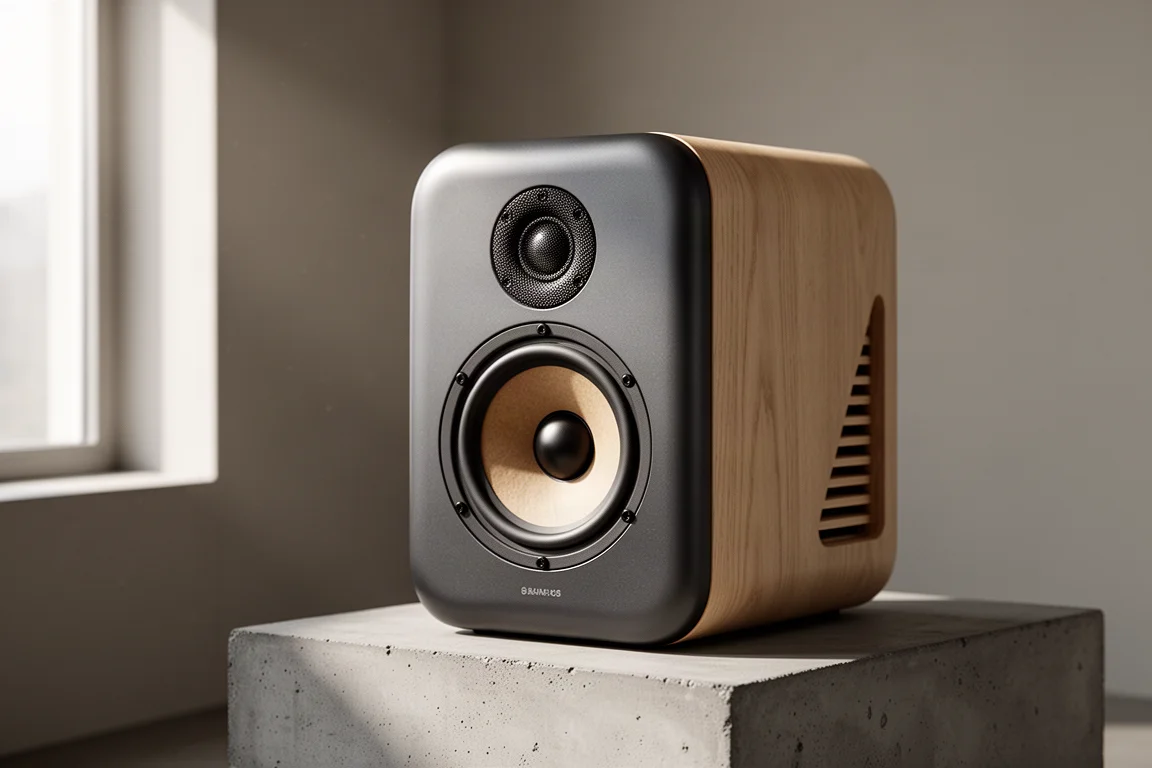
The cabinet is built from 15 mm high density fibreboard with curved edges, a first for a speaker at this price. That change allowed Acoustic Energy to keep the rigidity of the previous 18 mm MDF construction while increasing internal volume by 30 percent, even though the external cabinet grew by only 15 percent.
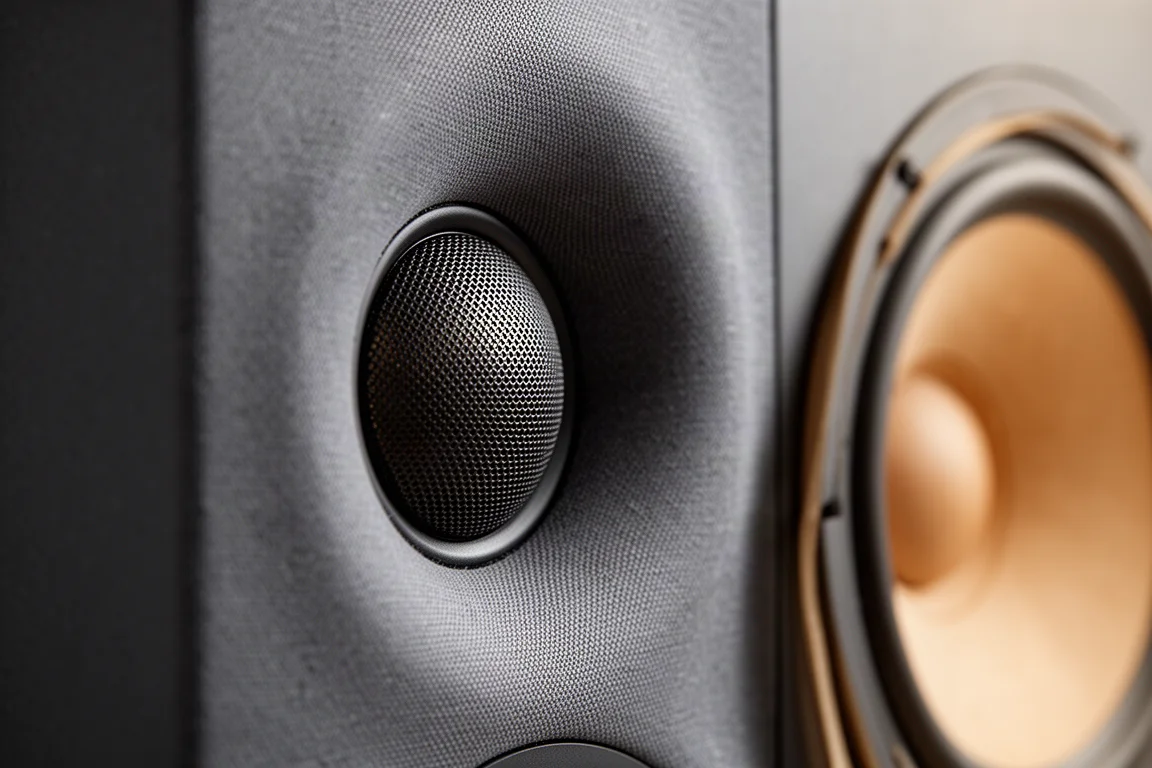
The extra volume is paired with a larger paper cone midwoofer, up from 110 mm to 130 mm, which brings more bass output and better power handling. A new 25 mm fabric dome tweeter sits in a revised waveguide informed by the flagship 500 series, and it is positioned much closer to the midwoofer to improve integration and even out dispersion between the two drivers. Around the back there is a slotted port rather than a cylindrical one, which should help reduce port chuffing, along with standard five-way speaker binding posts.
Finish options are satin black, white and walnut vinyl veneer. The curved edges and restrained proportions keep it easy to live with in a normal room.
Main Strengths: Clarity, Tonality and Soundstage
The headline is clarity. Leading edges are sharp, decays are clean, and the speaker never sounds slow or muddled. Bass is snappy rather than deep, and the balance between weight and definition is well judged for a compact two-way. Bigger enclosures at this price will dig lower and hit harder, and a subwoofer will add extension and dynamics if you want them, but the A100 Mark II gets the essentials right first.
The soundstage is the standout. It is as wide as anything comparable in a normal room, with real depth, and the imaging is precise enough that the speakers effectively disappear. Vocals sound natural and unforced, and the presentation holds together across a broad listening window, which points to well controlled off-axis behaviour.
How It Compares With Other Speakers
At a similar outlay, the obvious alternative is the Q Acoustics M20, a powered speaker at £399 that accepts analog and digital sources; it is warmer and richer, with fuller bass and midrange and more rolled off highs, and it sounds a touch more dynamic, but it does not match the A100 Mark II for clarity or for the sheer size of its sound field. The Sound Artist LS35A is harder to compare on price, since shipping and taxes bring it to the best part of £800 in the UK, and that extra money buys a fuller, richer midrange with more texture, better instrument separation and more refinement on top, while dynamics stay close and the A100 Mark II keeps an edge as the slightly larger speaker with the wider stage. At around £1,000, the Amphion Argon 1 sits at roughly four times the price and is a much more dynamic speaker with a similar sense of scale; it is a touch leaner and cooler through the midrange, and it offers better detail, more refinement and cleaner instrument separation, handling complex pieces of music with greater ease.
The pattern is straightforward. Spending more brings refinement, midrange texture and the ability to cope with demanding material, while the A100 Mark II holds its ground on tonality, imaging and stage width. Judged against its own price, that is a favourable trade.
Things to Consider Before Buying
The top end is lively. Unlike some darker sounding Acoustic Energy models, this one lets the tweeter run a little hot, with a touch of hardness in the upper midrange and sibilance that is emphasised more than ideal. It is not fatiguing, and it makes the speaker engaging, but it responds well to sensible amplifier matching and careful positioning.
Volume is the other limit. The A100 Mark II sounds excellent at low and moderate levels, but above roughly 85 dB it begins to sound shouty. That is the expected trade-off at this price, where motor structures are necessarily simpler than in speakers costing several times more. Bass extension is modest too, so a subwoofer is a sensible addition for anyone who wants more weight and impact.
Buying Advice: Setup and Partnering Equipment
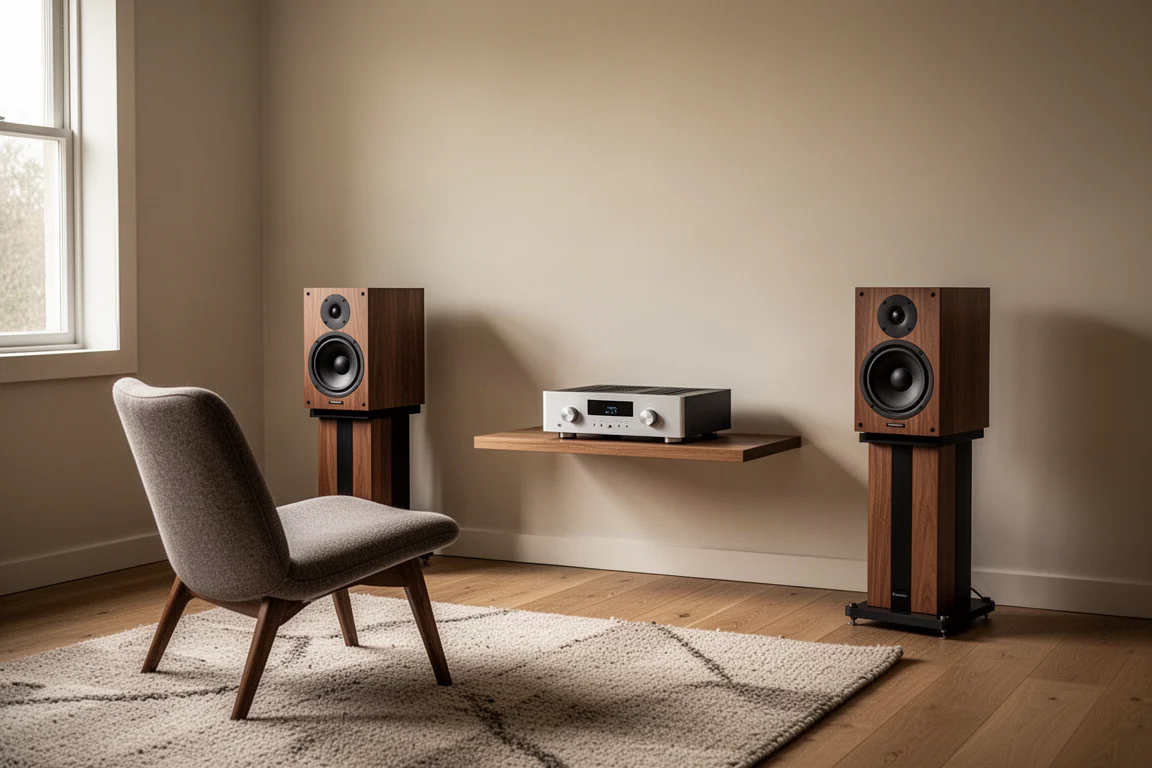
Positioning matters more than usual here. The A100 Mark II benefits from sitting closer to the wall behind it than a typical two-way standmount, at around 80 cm measured from the front of the speaker to the wall, because the extra boundary reinforcement supports the bass. Toe-in should be minimal, just a few degrees away from pointing straight ahead, which calms the tweeter while preserving a wide stage and a solid centre image. Listening slightly off axis achieves much the same result.
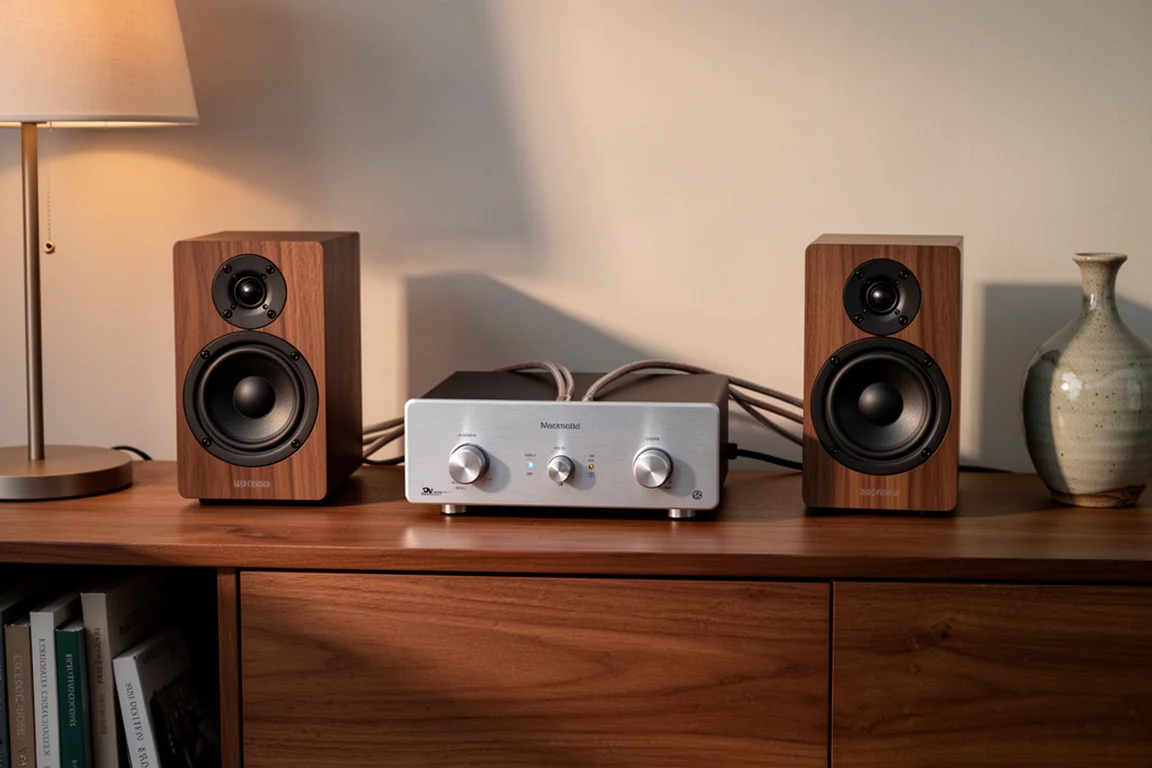
Amplifier matching is less fussy than the treble behaviour might suggest, but neutral or warm-leaning electronics are the safer choice. A compact class D amplifier around £130, built on an Infineon amplifier chip with a digital USB input, produced a complete system for roughly £400 that stands up well against pricier powered alternatives. A 50 watt class A/B integrated at £399 gave a fuller midrange and a wider stage, and a 50 watt per channel class A/B model at £735 added body through the midrange and more overall refinement. Given the modest outlay for the speakers themselves, a small integrated amplifier is a perfectly sensible partner.
Conclusion
The Acoustic Energy A100 Mark II earns its place by prioritising the things that matter most at this price: clarity, natural tonality, precise imaging and a soundstage that belies the cabinet size. It will not deliver high volumes or deep bass, and its treble asks for a little attention during setup, but those are understandable compromises rather than flaws.
For a small room, a desk system or a first serious two-channel setup, it punches well above its price. At £259 in the UK, that makes it one of the more convincing entry points into proper hi-fi listening.
Product link
View more details for Acoustic Energy A100 Mark II
This product is mentioned in the review. Check the specifications, options, and compatibility before buying.
View more details for Acoustic Energy A100 Mark IIFurther reading
Related Reviews
Bookshelf Speakers
Acoustic Energy AE-100 Mark II Review: Compact Bookshelf Speakers With Standout Imaging
A compact British two-way bookshelf speaker with deep, layered imaging, fast bass, and a slight treble lift to weigh against a crowded $500 field.
Bookshelf Speakers
Acoustic Energy AE100 MK2 Review: Measured Performance and Four Alternatives
A close look at the Acoustic Energy AE100 MK2 bookshelf speaker, what its measured performance reveals, and four alternatives with different trade-offs.
Bookshelf Speakers
Amphion Argon1 Review: A Neutral Finnish Bookshelf Speaker Worth the Premium
A two-way Finnish bookshelf speaker with a titanium dome tweeter, tight bass, and a remarkably neutral midrange. Here is what to know before buying.