Home Audio
Wharfedale Heritage Center Review: The Missing Center Channel for the Heritage Line
Wharfedale's first dedicated Heritage center channel brings a three-way driver layout, matched voicing, and real wood veneers to Linton and Super Linton owners watching movies.
Introduction
The Heritage Center is the first dedicated center channel in Wharfedale’s Heritage lineup, and it arrives to solve a problem that owners of the series have been circling for a while. The Linton relaunch in 2019 brought the family back after a long absence, the Super Linton and the Denton models followed at various sizes, and the UK-built Dovetail and Aston sit at the higher end of the range. Across all of them the formula is consistent: real wood veneers, cloth grilles, and a warm, musical character that does not give up detail to get there.
That consistency is exactly why the missing center channel stood out. Plenty of owners run Lintons or Super Lintons through a receiver as their main audio for films, and until now there was nothing in the range that truly belonged in that system. The alternatives were to watch movies without a center channel at all, or to add a speaker that looked visually mismatched and sounded like it came from a different design philosophy. The Heritage Center is Wharfedale’s answer to both.
Why a Dedicated Center Channel Matters for Movies
In a properly mixed film soundtrack, the center channel carries somewhere around 60 to 70 percent of the total audio information. That is primarily dialogue and voice-overs, plus the anchor of nearly every scene. A stereo pair never receives that content as a separate channel: the receiver or amplifier folds the center information into the left and right speakers through a process called downmixing, and the center track is effectively reduced to mono. In theory that can work well, but only when the listener sits dead center between the two speakers and the pair is perfectly centered on the screen.
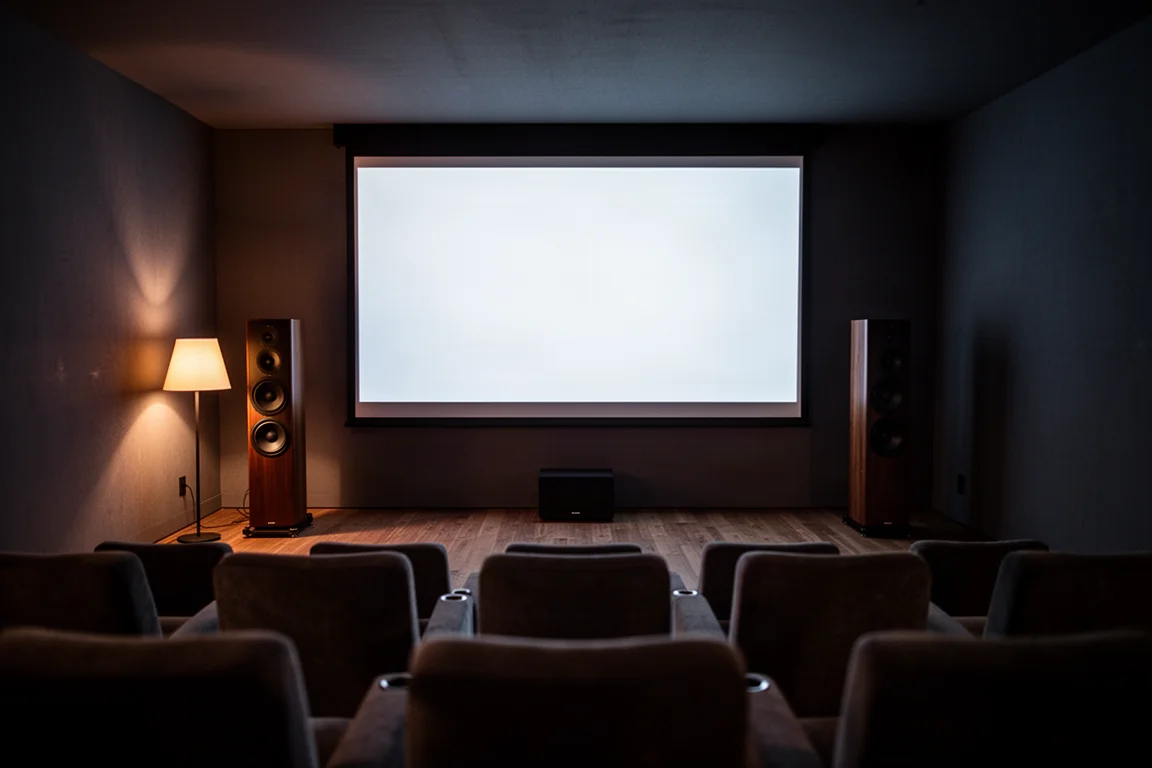
In practice, that makes for a one-person experience at best. Dialogue can feel slightly loose or detached from the image. Lines of conversation can get buried when a music cue or a sound effect lands at the same moment. Listeners sitting off-center hear voices pull toward whichever speaker is closer, which makes longer viewing sessions subtly fatiguing in a way that is hard to pin down. A dedicated center channel addresses all of it at once, because the content it carries is reproduced directly below or above the screen rather than reconstructed from two speakers in the room.
One practical caveat applies here: if the amplifier is a two-channel design, adding a center channel means moving to a home theater receiver.
Design and Heritage Family Match
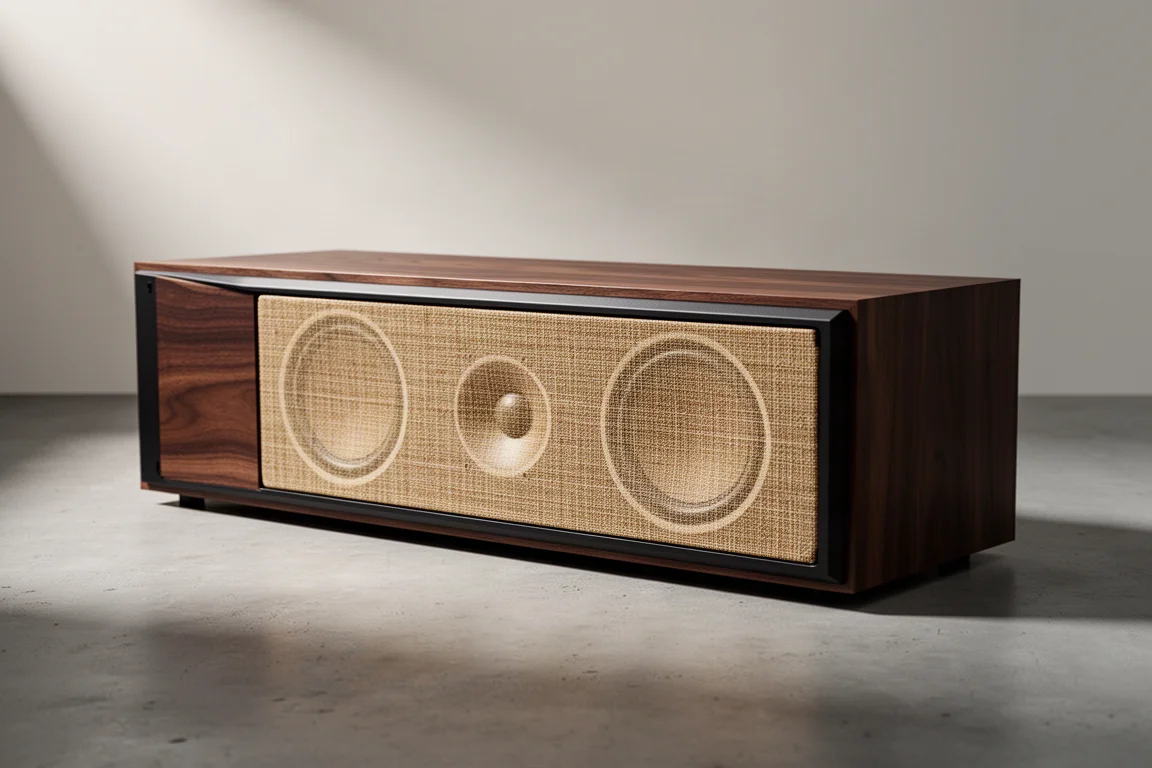
The Heritage Center is offered in walnut, mahogany, and black oak, using the same real wood veneers as the rest of the range, along with a black baffle, a vintage cloth grille, and a gold badge. Every Heritage model goes through Peter Comeau, Wharfedale’s director of acoustic design, and this one is no different. That matters more than it might sound. The crossover was engineered for this specific driver array in this specific cabinet, and the voicing was matched to the Linton and Super Linton rather than approximated from them. The stated goal is a center channel that disappears into a Heritage system and does its job without calling attention to itself.
For a two-channel owner, that shared design language is the whole point. A center channel that looks and sounds like a different brand in the same room undermines the system it is meant to complete, and the Heritage Center was built specifically to avoid that outcome.
Driver Layout, Crossover, and Cabinet
The Heritage Center is a three-way design, which is worth calling out because many center channels cut corners with a two-way layout to keep the cabinet small and the price down. In a two-way center, the tweeter or the woofer ends up handling frequencies that really belong to a dedicated midrange driver, and the midrange is where a great deal of voice information lives. A three-way design gives that range its own driver, which shows up in dialogue clarity and separation when a mix gets busy. Two-way centers can still perform well, but the strong ones tend to sit at the higher end of the price scale.
The driver layout puts two 6.5-inch woven Kevlar woofers on the outside, a 2-inch soft dome midrange in the center, and a 1-inch soft dome tweeter. The cone and dome materials mirror the Linton and Super Linton. Crossover points sit at 900 Hz and 2.7 kHz, which keeps the midrange driver in the sweet spot for vocals. The cabinet is rear-ported with two rear ports and generous internal bracing, and it reaches down to 47 Hz at -6 dB, a solid figure for a center channel cabinet. That low-end extension is what keeps the speaker from collapsing or sounding thin when a scene turns loud and dynamic.
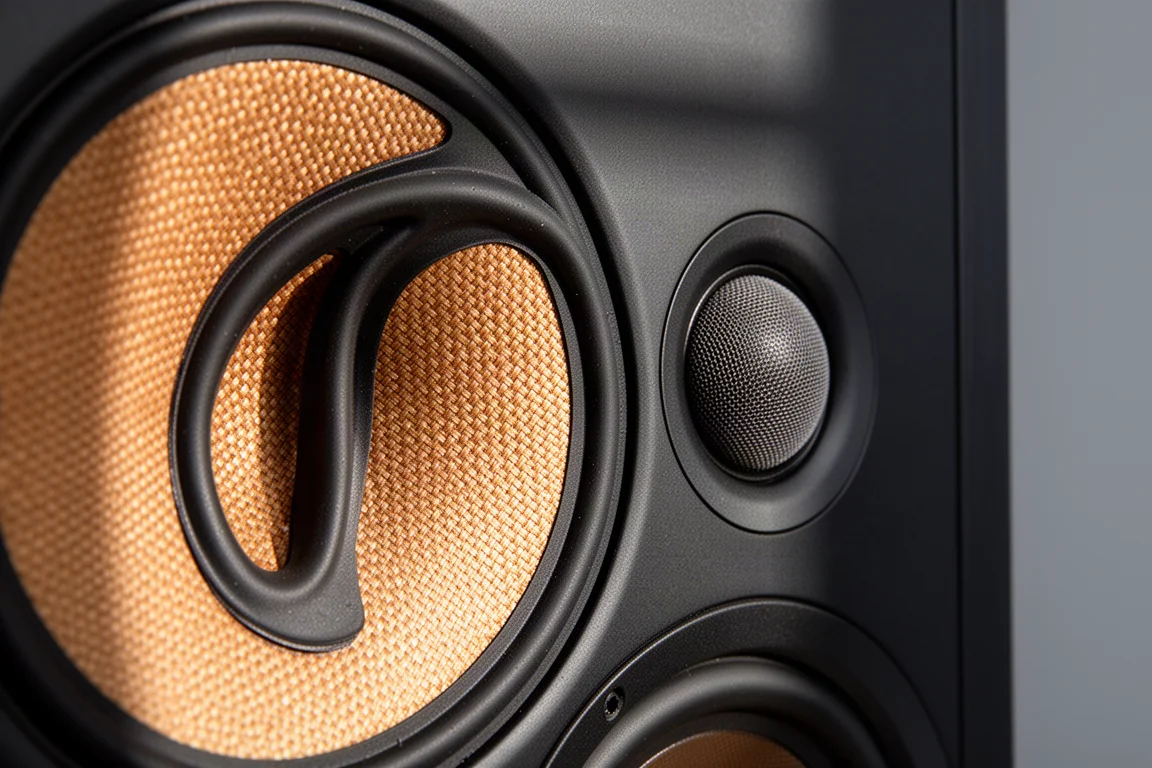
On the specification side, sensitivity is 90 dB and nominal impedance is 6 ohms with a minimum of 4 ohms, listed as compatible with 8-ohm rated amplifiers and receivers. Recommended amplifier power is 25 to 150 W with a peak SPL of 106 dB. The cabinet measures 21.7 inches wide, 9.8 inches tall, and 12.6 inches deep including the terminals, and it weighs just under 31 pounds, so it is a substantial piece of furniture rather than something that rattles around on a shelf.
How It Performs in Real Use
Paired with Super Lintons across the left and right, the improvement in soundstage stability over a downmixed stereo presentation was immediately apparent. Action sequences that previously had a slightly diffuse, spread-out quality became more spatially coherent and easier to follow, and the speaker handled both dense action audio and quiet, dialogue-heavy scenes without complaint.
Midrange performance is where the case is strongest. The 2-inch soft dome gives voices texture and presence, and intelligibility holds at volume levels where a two-way center would start to compress or lose definition. Even through demanding sequences, there was no congestion or smearing at similar volumes.
The tonal match across the front stage is the other headline. Audio panning from center to left to right moved continuously, with no sense of a different-sounding speaker taking over the middle as the sound passed by. That handoff is what makes a front stage feel like one unified system rather than a collection of separate speakers, and it is the detail Heritage owners are most likely to notice first.
Things to Consider Before Buying
The first consideration is the amplifier. If your current setup is a two-channel integrated amp or stereo receiver, you will need a home theater receiver to run a center channel at all. That is not a flaw in the speaker, but it is a real cost to plan for if you are moving from stereo listening into film playback.
The second is placement. With two rear ports, the cabinet wants some space behind it. An enclosed media console that blocks the ports is the wrong home for it, and a cramped position can compromise the low end.
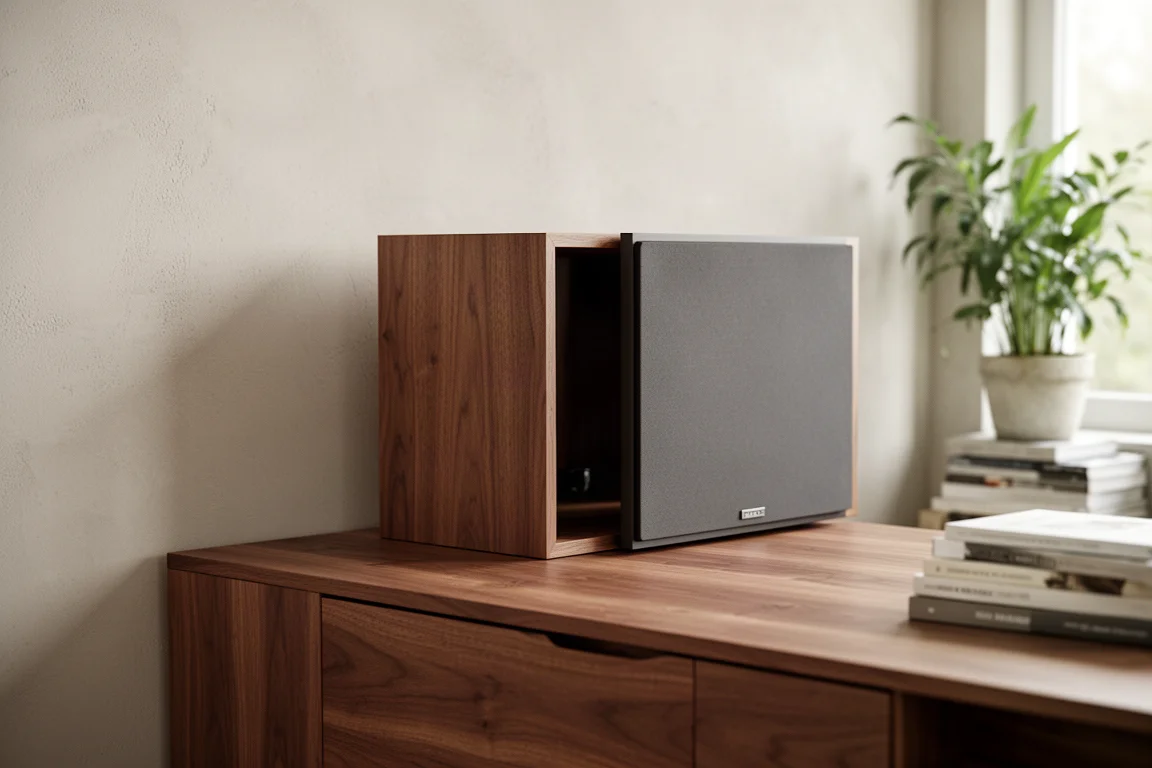
The third is physical scale. At 21.7 inches wide, 9.8 inches tall, and just under 31 pounds, the Heritage Center needs a console or shelf that can genuinely support it and center it under the screen. It is also worth being honest about the value case: the speaker makes the most sense for owners of Linton, Super Linton, Denton, or other Heritage models, where the acoustic and visual match is the reason to choose it.
Setup and Placement Notes
Because the cabinet is rear-ported, give it breathing room. Aim for at least about 6 inches between the back of the cabinet and the wall, and avoid an enclosed media console where the ports are blocked. It does not need a great deal of space, but a cramped placement can choke the low end and introduce a honky quality that keeps the speaker from showing what it can actually do.
Electrically, integration is straightforward. With 6-ohm nominal impedance, a 4-ohm minimum, and 8-ohm amplifier compatibility, the Heritage Center pairs with a wide range of current AV receivers, and the 90 dB sensitivity means it does not demand a high-powered amplifier to reach satisfying levels.
Buying Advice
If you own Lintons, Super Lintons, Dentons, or any other Heritage speaker and you watch movies through a two-channel setup, this is an extremely logical upgrade, even if you only use the system for films occasionally. There is no other center channel designed from the ground up to match that lineup acoustically and aesthetically, and that match is precisely what makes the addition feel seamless rather than bolted on.
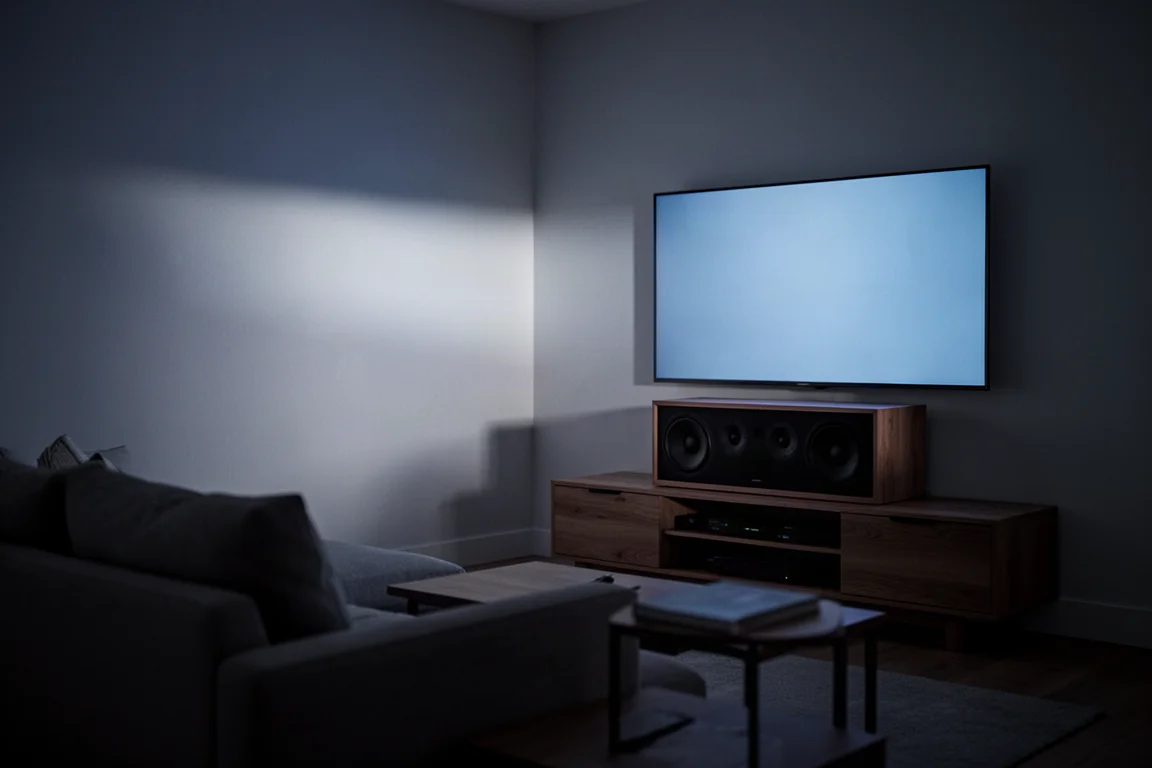
If you are planning a Heritage-based home theater from scratch, the same logic applies, and the Heritage Center is the natural anchor for the front stage. The one thing to budget for alongside the speaker is a home theater receiver if your amplifier is two-channel only, since that is the gate to running any center channel at all. If you already own a multichannel receiver, the upgrade path is simply a matter of space and placement.
Conclusion
The Heritage Center fills a gap that Heritage owners have been pointing at for years. It is a three-way design with a dedicated midrange driver, a cabinet that reaches down to 47 Hz at -6 dB, and a voicing and finish palette that match the Linton and Super Linton family rather than merely resembling it. For anyone running a Heritage stereo pair as their main film system, it is the upgrade that makes dialogue stable and the front stage coherent, no matter where you sit in the room. If your setup already lives in the Heritage ecosystem, this is the piece that completes it.
Product link
View more details for Wharfedale Heritage Center
This product is mentioned in the review. Check the specifications, options, and compatibility before buying.
View more details for Wharfedale Heritage CenterFurther reading
Related Reviews
Home Audio
Aperion Novus Tower and Center Review: Punchy Home Theater Sound With Real Refinement
A close look at the Aperion Novus tower and center speakers, from their layered paint finish and punchy bass to the 4-ohm load and what the price actually buys.
Home Audio
Arendal 1610 Tower Review: Flagship Dynamics in a Room-Friendly Tower
A compact floorstanding tower with three 8-inch aluminium woofers, a 5-inch carbon midrange, and the kind of bass heft usually reserved for much larger speakers.
Home Audio
Arendal 1723 S THX Review: A Reference Speaker Built Like a Tank
A practical look at the Arendal 1723 S THX, a sealed, THX-certified speaker with exceptional build quality, a very flat top end, and a midrange that responds beautifully to EQ.