Home Audio
Arendal 1610 Tower Review: Flagship Dynamics in a Room-Friendly Tower
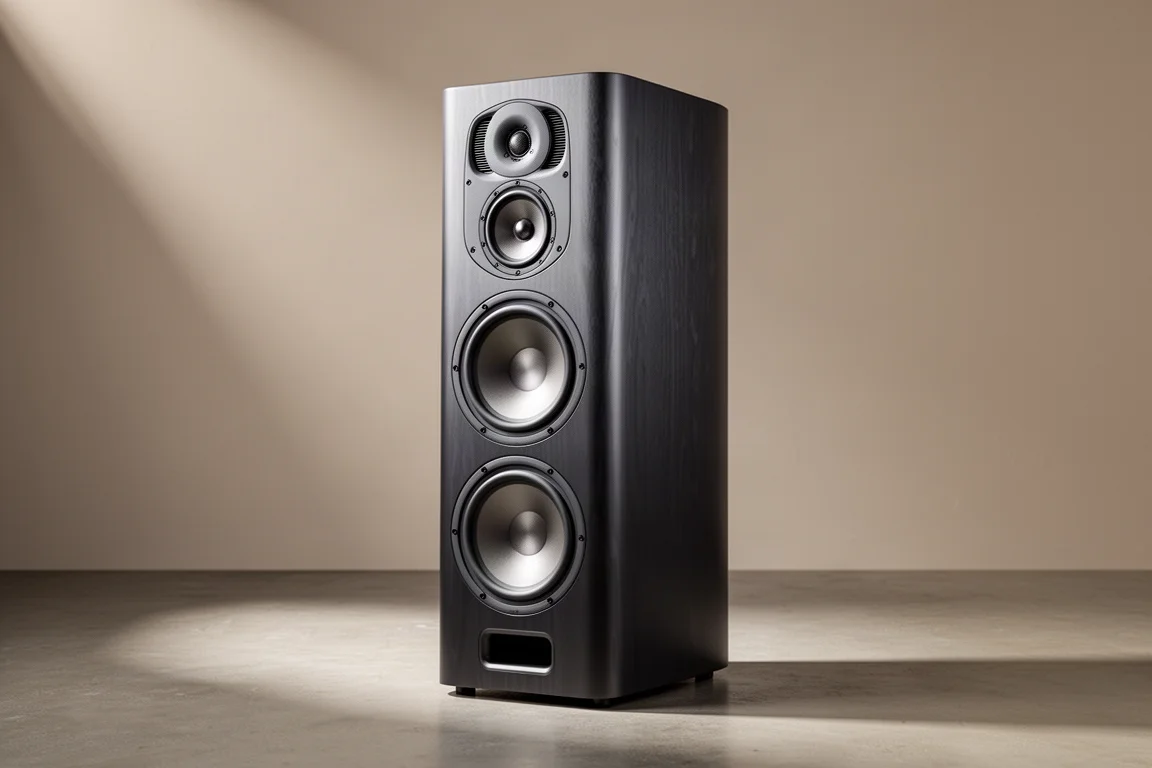
A compact floorstanding tower with three 8-inch aluminium woofers, a 5-inch carbon midrange, and the kind of bass heft usually reserved for much larger speakers.
Introduction
Arendal’s 1610 Tower is a floorstanding loudspeaker that takes the engineering thinking behind the brand’s largest tower and packages it into a cabinet that fits real rooms. It is a compact answer to the much bigger 1528 Tower, and it lands close in size to the 1723 TH6 Tower. What did not shrink is the part that matters most: the bass heft, the dynamic punch, and the sense of scale.
That combination is what makes the 1610 Tower interesting. Most listening happens in living rooms, bedrooms, offices, and modest dedicated rooms rather than purpose-built large basements. The 1610 Tower is built around exactly those spaces.
Who the Arendal 1610 Tower Is For
This is a speaker for listeners who want the physicality of a large tower without the room demands that normally come with one. In a small to medium-sized space, the 1610 Tower delivers much of the perceived bass extension and dynamic capability of the larger 1528 Tower, because in a room of that size the bigger model’s extra headroom is not always usable. Put both in a much larger room and the 1528 Tower can still dig lower and play louder, which is a fair expectation to keep in mind.
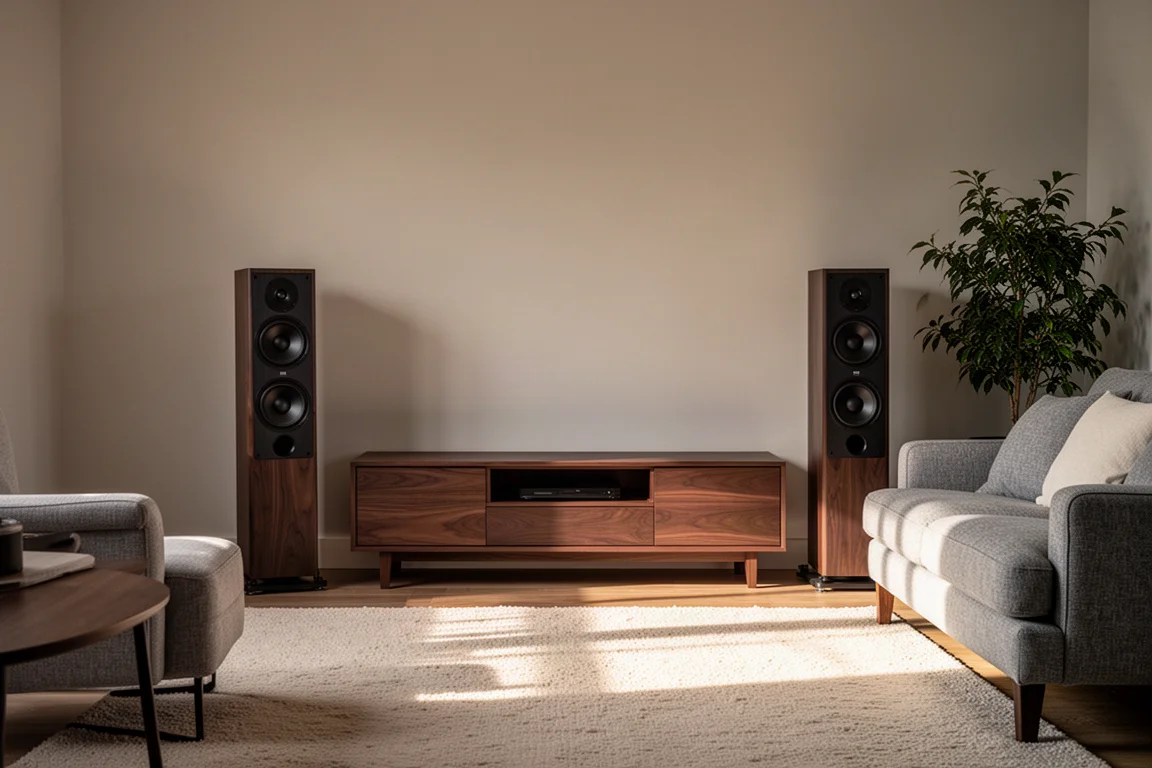
It also suits listeners who care about dynamics across the entire frequency range rather than only at the bottom. The 1610 Tower is designed to feel dynamic from top to bottom, so instruments and voices carry impact as well as tone. For anyone building a first serious full-range system, or upgrading a smaller stand-mount setup in a normal living space, that is a meaningful difference.
Design and Cabinet Construction
Each tower carries three 8-inch aluminium drivers per side, working with a bass port tuned at the bottom of the cabinet. The enclosure is built exclusively from HDF, a denser and more costly material than MDF that is normally reserved for higher-priced designs, and it is heavily braced to keep the cabinet inert.
The front baffle is close to 2 inches thick and is made by gluing and sandwiching thin layers of HDF to create the curved front, a process that is integrated into the cabinet rather than added as a separate protruding panel. The drivers sit as close together as possible, with a permanent grille and an elliptical waveguide shaping how the midrange and tweeter behave together.
The crossover follows the same logic. Air core inductors are used exclusively in the midrange and tweeter circuits, polypropylene capacitors handle the tweeter section, and wire-wound resistors are used, including aluminium heatsinked versions for thermal stability. The binding posts are pure solid copper with rhodium plating, and the signal path uses non-ferrous parts throughout, with no steel nuts or washers.
Bass and Dynamics: Flagship-Level Character
The three 8-inch aluminium drivers and the bottom-tuned port create bass weight and presence that normally comes from genuinely large speakers. Two things separate that bass from ordinary ported output. The first is decay structure. When a bass note lands, the note does not simply stop; it decays, and on the 1610 Tower that decay stays clean and natural because the HDF cabinet and heavy bracing keep internal resonances under control. The result is a ported speaker with the kind of agile, textured bass quality usually associated with sealed acoustic suspension designs.
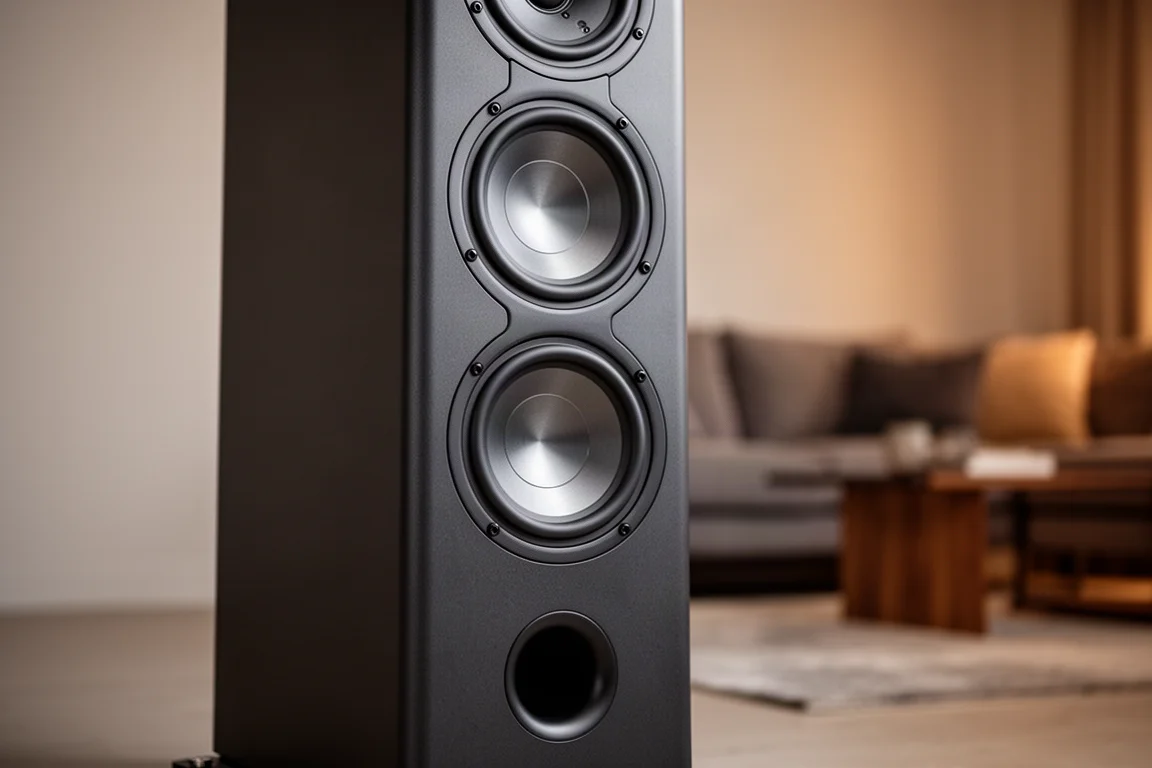
The second is behaviour near room boundaries. Despite the authority on offer, the bass does not turn bloated or boomy when the speakers sit close to a wall, provided the room itself is not adding excessive bloom. The low end stays defined rather than muddy.
Dynamics are not limited to the low frequencies either. The midrange carries a level of impact that is normally reserved for very large flagship towers, where a plucked string or a snare hit arrives with a physical punch rather than as texture alone. Combined with the bass performance, that gives the 1610 Tower a full-range sense of scale that is rare at this size. It is worth setting expectations honestly: the larger 1528 Tower still has more headroom, and the biggest flagship designs from other makers still move more air in a large room. What the 1610 Tower does is bring much of that character into a normal-sized space.
Midrange and Tweeter Performance
The midrange driver is a 5-inch carbon unit with a substantial motor structure. It is not the carbon graphene driver used in the 1528 series, and it gives up a little of that model’s intrinsic transparency and fine nuance. What it brings instead is a notably dynamic midrange, and the two approaches are close enough in appeal that the choice comes down to preference rather than one being plainly better.
The tweeter is an aluminium magnesium design rather than the lithium magnesium unit in the 1528 series. On paper, aluminium domes are a hard sell for listeners who dislike metal tweeters, but the 1610 Tower does not present itself that way. It reads as a softer, easier version of the 1528 tweeter: a step down in refinement, sparkle, and air, in exchange for a more conservative tuning that resists listening fatigue.
That trade is most obvious at high volumes. The tweeter stays composed when the system is pushed hard, and so does the rest of the speaker. Instruments remain separated, the presentation stays uncluttered, and the imaging holds solid across different listening levels.
Soundstage and Phase Coherence
The driver layout, the curved baffle, and the waveguide all work toward phase coherence, meaning the tweeter and midrange behave as close to a single sound source as possible. The payoff is a stable, natural image. Voices, guitars, and violins sit in clearly defined positions rather than smearing together.
The soundstage itself is wide, deep, and layered front to back rather than a flat two-dimensional wall of sound. The speakers effectively disappear in the room, which is unusual for a tower of this size and especially unusual for one with this much dynamic capability. Dynamic speakers often narrow their stage, and spacious speakers often soften their punch. The 1610 Tower largely avoids that compromise.
Arendal recommends a listening distance of 4 metres, with a minimum of 2 metres, and a seated ear height between 80 and 100 cm. In practice, 2 metres works very well, while a 4-metre distance and the suggested seating height produce the most cohesive result. Measurements submitted by Arendal, taken on a Klippel system, show roughly 2.5 dB variation across the frequency range.
Amplifier Matching and Setup
With a sensitivity rating of 89.5 dB and a nominal 4-ohm load that dips to a minimum of 3.2 ohms at 95 Hz, the 1610 Tower is not unusually power hungry on paper. The practical picture is different. These speakers are built to scale, and they reward high-power, high-current amplification with the decay, grip, and dynamic character described above.
Underpowering them is the fastest way to lose that character. A cheap high-wattage amplifier will make them loud, but that is the floor, not the ceiling. High-current class D designs with modern measurement performance, and high-end integrated amplifiers with robust power supplies, both pair well. Integrated amplifiers with tone controls can also help in rooms that need a little correction in the bass or treble.
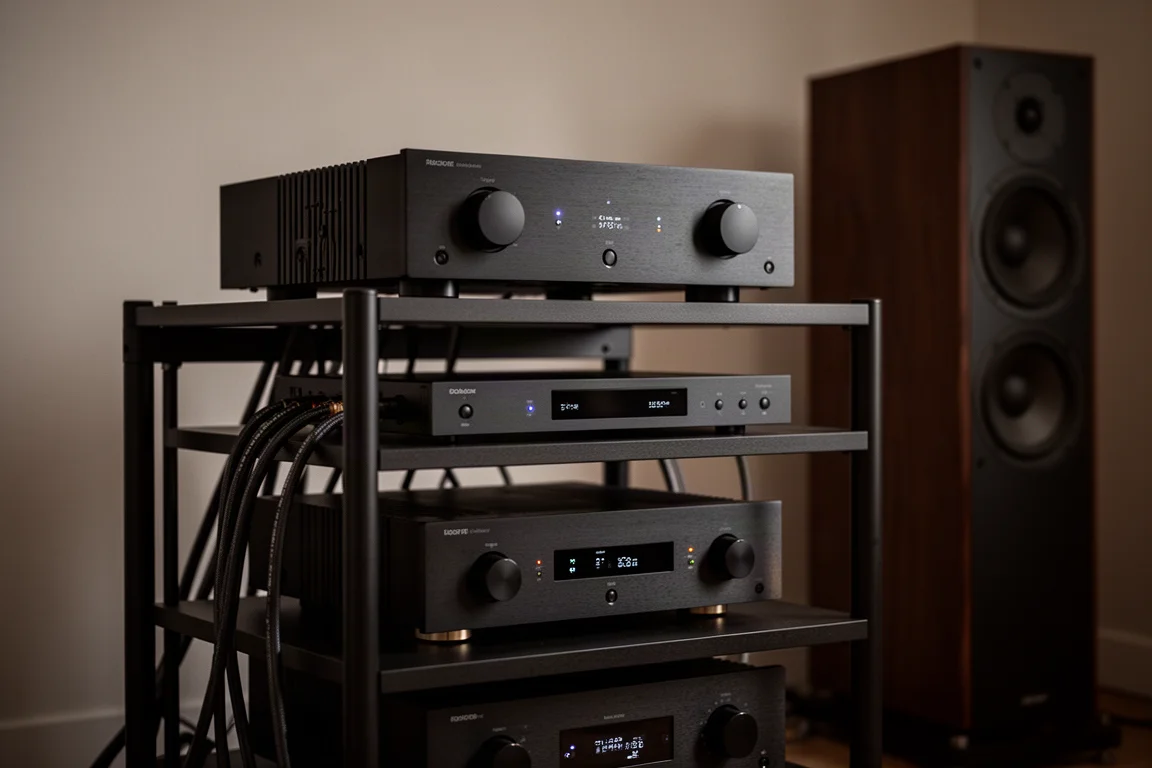
Friendly as they are to a wide range of amplification, the priority is current delivery and quality rather than raw wattage figures. Feed them properly and the low end tightens, the decay stays clean, and the midrange impact comes through as intended.
Things to Consider Before Buying
- They are still large tower speakers. Compact next to the 1528 Tower, but they need floor space and some distance from the front wall to sound their best.
- Amplification matters. Budget for a quality high-current amplifier rather than treating the speakers as the whole purchase.
- The treble is a deliberate step down from the 1528 series in refinement and air, traded for a more relaxed, fatigue-resistant presentation.
- The ideal listening position is fairly specific. A 4-metre distance and a seated ear height of 80 to 100 cm give the most cohesive result, and the effect softens as you move away from that spot.
- The price is significant. Value here comes from what the speaker delivers relative to much more expensive designs, not from the number itself.
Buying Advice
Arendal sells direct, skipping the distribution and dealer chain, and that model comes with terms worth weighing. The 1610 series includes a 60-day in-home trial, free shipping, and a 10-year warranty. The trial is the important part. A tower this capable behaves differently in every room, and an in-home trial lets you confirm the bass behaviour, the sweet spot, and the amplifier match in your own space rather than in someone else’s.
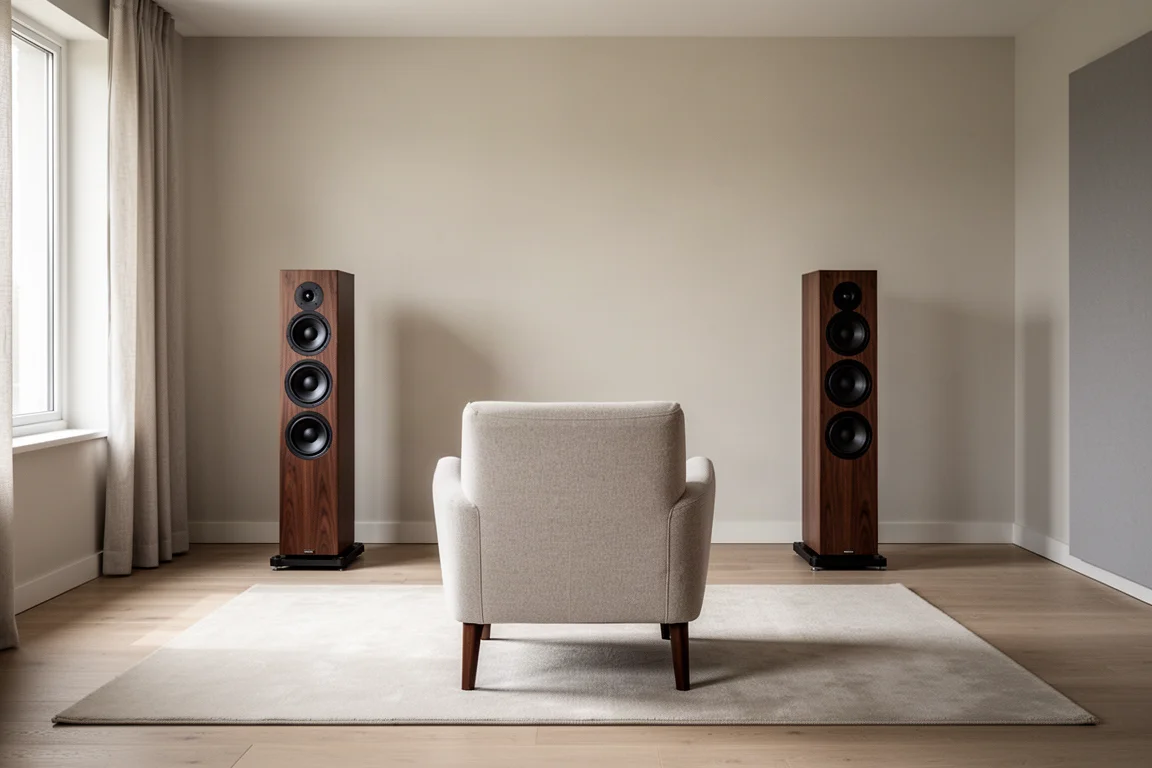
For listeners with a small to medium-sized room who want full-range dynamics without a flagship footprint, the 1610 Tower is one of the more compelling options in its price category. If your room is genuinely large and you want maximum headroom, the bigger 1528 Tower remains the more appropriate choice.
Conclusion
The Arendal 1610 Tower makes a clear case for itself. It keeps the bass weight, the decay quality, and the dynamic impact that make large towers so appealing, then fits that experience into a cabinet that works in ordinary living spaces. The compromises are honest ones: a treble that trades some refinement for long-session comfort, and a genuine appetite for high-current amplification.
Get those two things right, give the speakers a sensible listening distance, and the result is a tower that disappears into the room while still hitting with real physical authority. For a small to medium room, that is a difficult combination to beat.
Product link
View more details for Arendal 1610 Tower
This product is mentioned in the review. Check the specifications, options, and compatibility before buying.
View more details for Arendal 1610 TowerFurther reading
Related Reviews
Home Audio
Aperion Novus Tower and Center Review: Punchy Home Theater Sound With Real Refinement
A close look at the Aperion Novus tower and center speakers, from their layered paint finish and punchy bass to the 4-ohm load and what the price actually buys.
Home Audio
Arendal 1723 S THX Review: A Reference Speaker Built Like a Tank
A practical look at the Arendal 1723 S THX, a sealed, THX-certified speaker with exceptional build quality, a very flat top end, and a midrange that responds beautifully to EQ.
Home Audio
Arendal Sound 1723 Monitor S Review: Big, Neutral and Built for Music and Film
A close look at the Arendal Sound 1723 Monitor S, a large two-way bookshelf speaker with selectable port tuning, 4-ohm nominal impedance and a remarkably neutral presentation.