Home Audio
Arendal 1723 S THX Review: A Reference Speaker Built Like a Tank
A practical look at the Arendal 1723 S THX, a sealed, THX-certified speaker with exceptional build quality, a very flat top end, and a midrange that responds beautifully to EQ.
Introduction
The Arendal 1723 S THX is a sealed, THX-certified speaker priced at around $1,600 per pair, against a stated retail of $3,200. It belongs to a wider 1723 family that also includes a center channel, a tower, a ported monitor, and height modules, so the line can be built out into a full surround system over time. Arendal sells direct to customers, and the more affordable 1961 series is currently out of stock.
Two things define the 1723 S. The first is construction quality that is genuinely rare at this price. The second is a deliberately flat, reference-style tonal balance that favors accuracy over added excitement. This article looks at where that balance pays off, where it asks something of the listener, and what is worth checking before ordering.
Who the Arendal 1723 S THX Is For
This is a home theater speaker first. THX certification began as a Lucasfilm program intended to standardize how a film should sound in a room, and the practical effect is a guarantee that the design avoids the large peaks and dips that pull a speaker away from a flat frequency response. Arendal publishes its own frequency response graph for the 1723 S, and the trace stays close to flat out to roughly 10 kHz, where there is a bump, before rolling off below about 100 Hz.
Because the cabinet is sealed rather than ported, that low-frequency rolloff is gradual instead of abrupt. The rated response is 65 Hz to 20,000 Hz at -6 dB. Anyone expecting a full-range speaker without a subwoofer should look elsewhere, but listeners who already run a subwoofer, or whose music mostly lives above 100 Hz, get a very clean handoff from a sealed alignment.
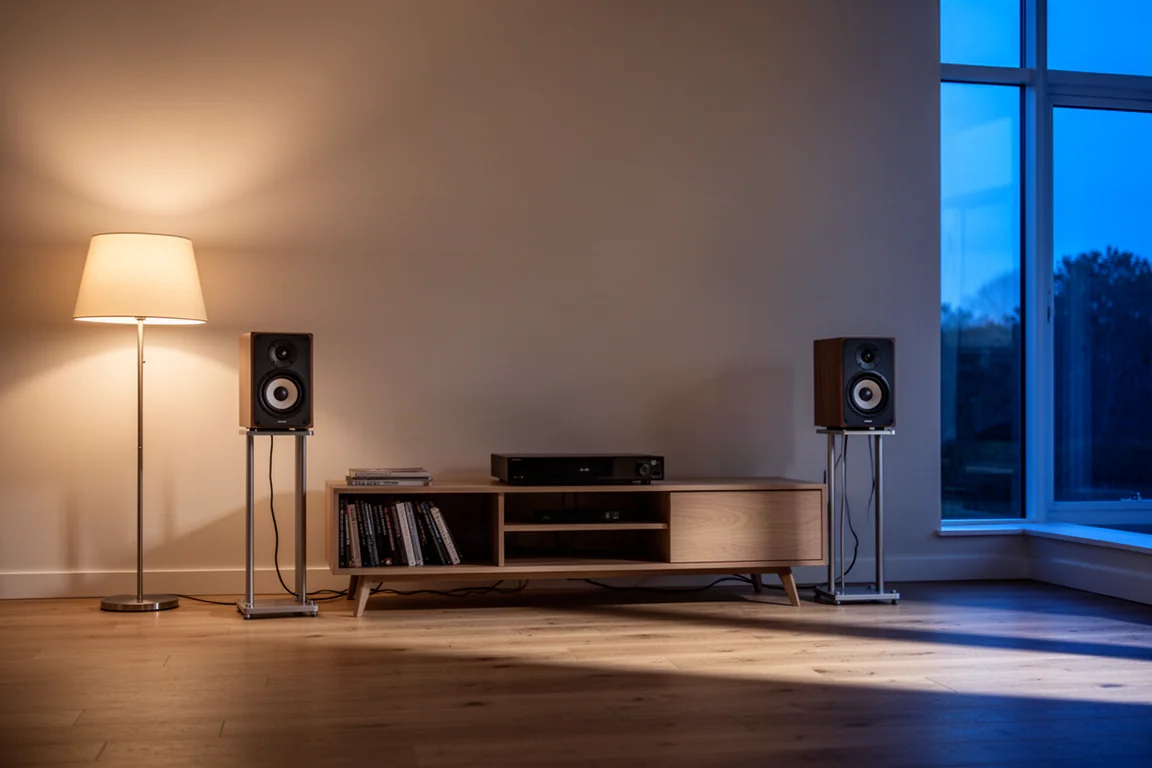
Arendal’s own guidance suggests these suit smaller rooms. In a large living room they filled the space into the mid-80s dB range and beyond without strain, which is about as loud as most listeners would ever want.
Arendal backs the speaker with a 60-day in-home audition period and a 10-year warranty. The company is not based in the United States, so it is worth confirming how return shipping is handled before ordering.
Build Quality and Design
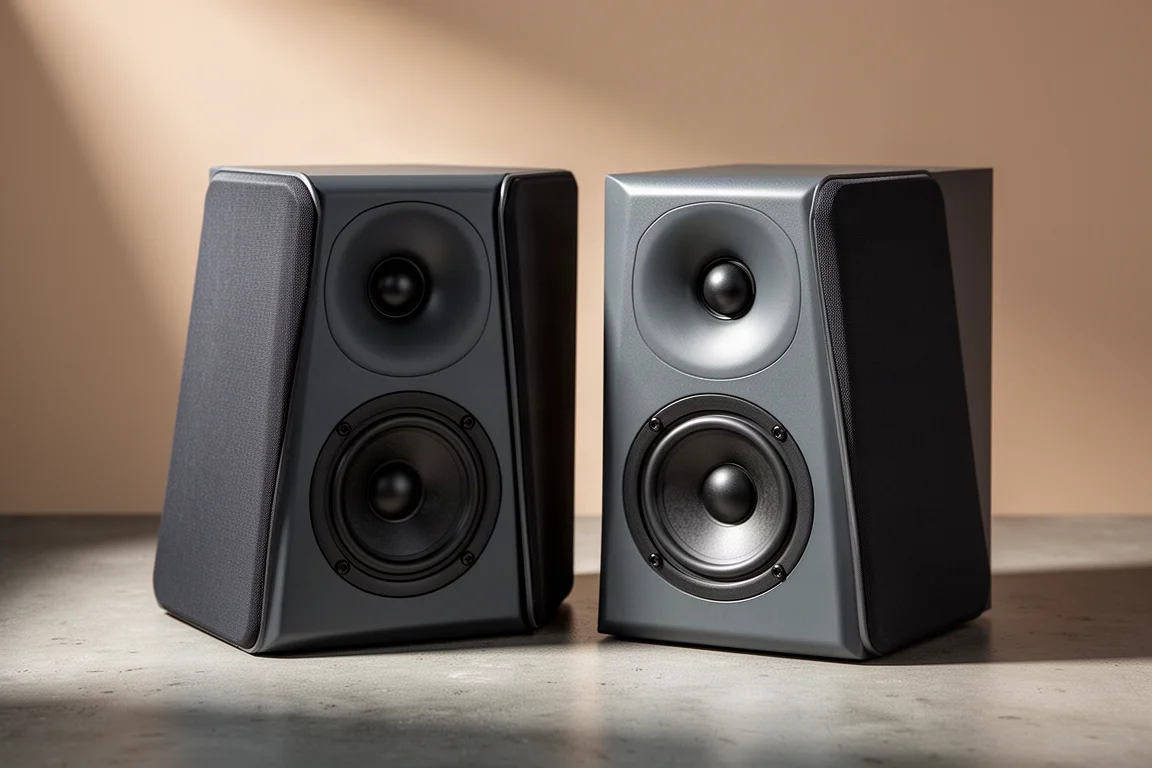
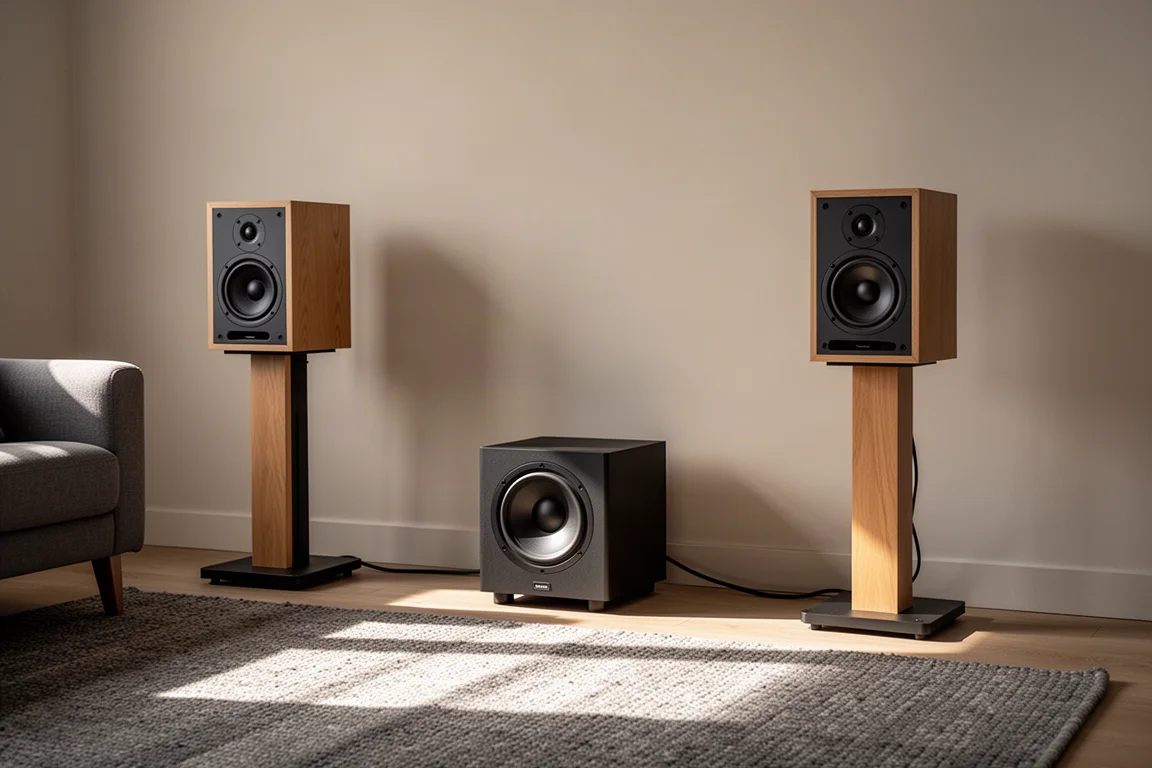
The 1723 S is one of the best-finished and best-assembled speakers you can put your hands on at this price. The cabinet uses a painted finish rather than a wood veneer, with a subtle angle at the front baffle and a slim magnetic grille that holds cleanly to the face. The binding posts on the rear are beautifully made, and the back panel includes a keyhole hanger plus threaded inserts, so the speaker can be wall mounted directly if that suits the room.
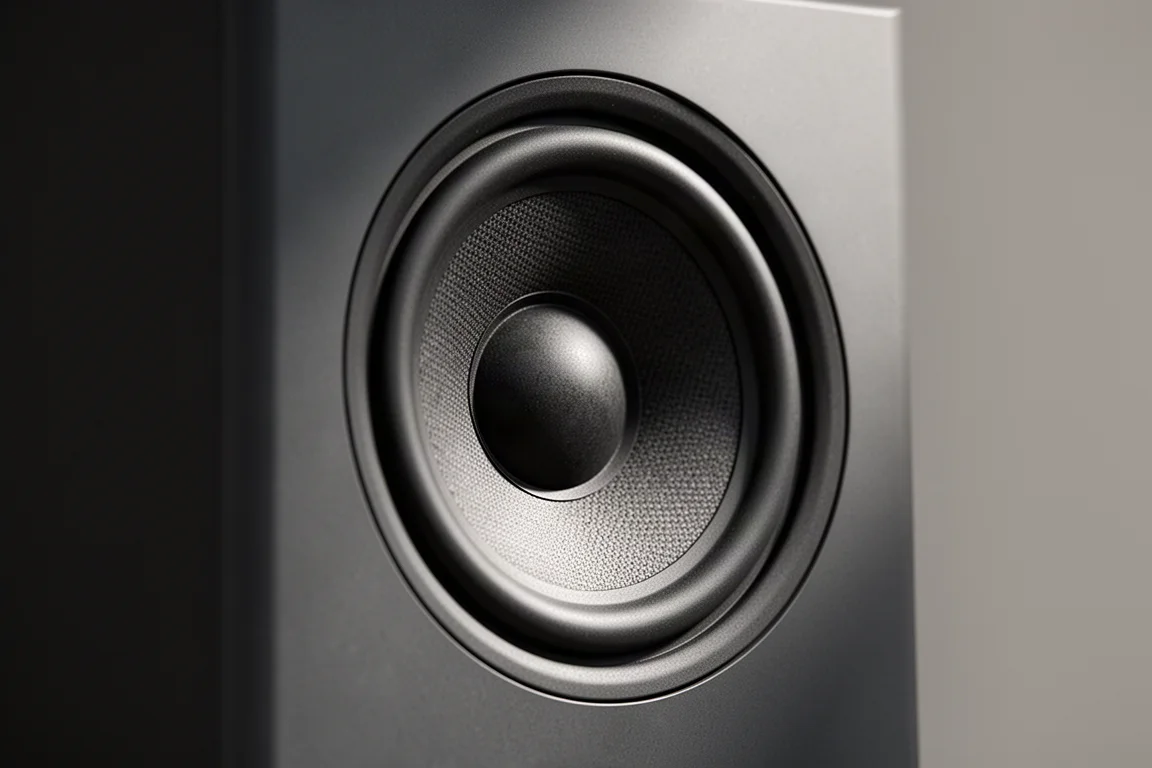
The driver complement is straightforward. A 28 mm tweeter, roughly one inch, sits behind a large waveguide, and a 6.5 inch woofer with a substantial surround handles the lower registers. The crossover point is 1,500 Hz, which is low for a two-way design and generally helps a speaker sound more cohesive, since the midrange can transition to the tweeter before the ear starts to notice the handoff.
Nominal impedance is 4 ohms and sensitivity is 84 dB, so this is not a speaker that will flatter a modest amplifier.
Bass Performance
The 1723 S is sealed, which sets expectations for the bottom end. It is rated down to 65 Hz at -6 dB, and Arendal’s own measurements show the rolloff beginning around 100 Hz. The useful context is that most bass content in popular music actually sits well above 100 Hz, so the practical result is better than the numbers suggest.
The bass drum that opens Black Sabbath’s Iron Man, which lands around 250 Hz, arrived with unusual clarity and realism, and the punch felt like it came from a larger cabinet. The low synth line in Marilyn Manson’s Killing Strangers, roughly 100 to 140 Hz, was punchy and confident. Metallica’s Ride the Lightning was notably punchy throughout. Material that reaches much deeper, such as the passage around the one-minute mark of Korn’s Narcissistic Cannibal, was beyond what the sealed cabinet could deliver cleanly.
The trade-off is a more linear rolloff than a ported design, which is exactly what makes this speaker easy to blend with a subwoofer.
For listeners with deep low-frequency material and no subwoofer, this is the single biggest limitation to plan around.
Midrange and Treble Performance
The midrange is flat and slightly forward, and it is the part of the presentation most likely to divide listeners. During a guitar solo in the 2,800 to 3,000 Hz region, the sound became intense at listening levels above 80 dB. Acoustic string detail on Chris Cornell’s Patience felt similarly intense, and vocals read slightly cool rather than rich and baritone, which was also true of Johnny Cash’s God’s Gonna Cut You Down. Sensitivity in the upper midrange varies a great deal between listeners, so this is worth weighing against personal taste rather than treated as a fixed flaw.
The treble turned out to be one of the strongest parts of the speaker. Everclear’s re-recorded Santa Monica, with its relentless cymbals from about the one-minute mark, was handled very well. The key detail is that individual cymbal strikes remained distinguishable rather than collapsing into a uniform wash of white noise. The Police’s King of Pain from the MTV Unplugged record is a genuine sibilance test, and the 1723 S handled it cleanly, which points to a very flat top end. The initial impression was that the treble seemed a little dry, but closer listening showed a well-behaved, organic top end. Some listeners may still want a touch more air and extension above 10 kHz.
Amplification, Room, and EQ
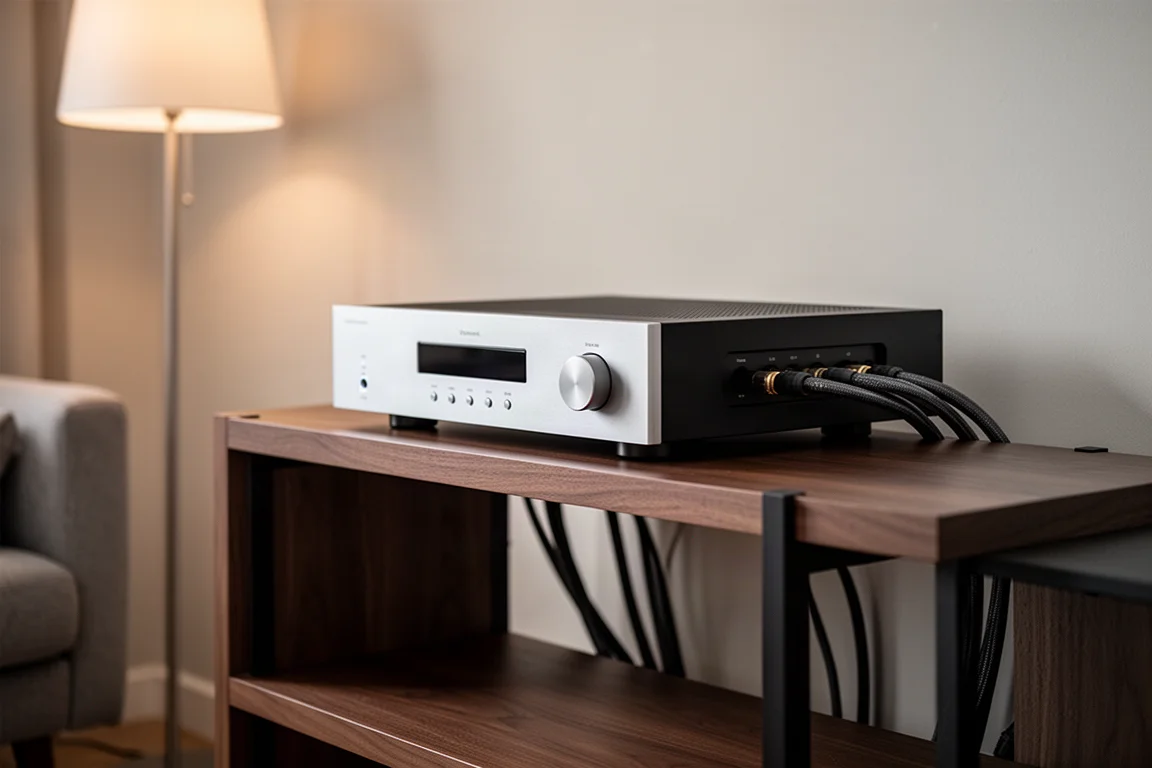
At 84 dB sensitivity and 4 ohms nominal, the 1723 S rewards an amplifier with real power and current delivery. It was driven here by an Emotiva RMC-1L processor paired with an XPA Gen 3 amplifier, a combination with ample headroom for the load.
The speaker also takes equalization unusually well, which matters given how flat the midrange is out of the box. Pulling down the region around 2,800 Hz and adding a gentle lift near 300 Hz brought noticeably more richness and baritone weight to vocals, and the character of the speaker shifted without losing its composure.
Engaging an all-channel stereo mode with a loudness contour transformed the presentation at lower volumes, making the speakers more fun and more engaging without pushing the level. Around 80 dB they begin to come alive on their own, but at quiet listening levels the extra shaping is genuinely useful.
Things to Consider Before Buying
The 1723 S is a just-the-facts speaker, and it will not hide a poor recording. Material that is badly produced sounds badly produced.
The sealed cabinet limits deep bass extension, so a subwoofer is close to essential for anyone who listens to content with real low-frequency weight. Sensitivity of 84 dB at 4 ohms means a capable amplifier is part of the budget, not an afterthought.
Some listeners may find the speaker too well behaved at low volumes, particularly if they prefer a livelier, more forward presentation straight out of the box. The finish is painted rather than wood, which is a styling decision rather than a performance one. Finally, because Arendal is not US-based, buyers outside the United States should confirm return logistics before ordering.
For context, the 1723 S recalls the KEF LS50 in character but with substantially better bass. It also recalls the ELAC Uni-Fi 2.0, which starts out very flat and opens up over time, and the ELAC Uni-Fi Reference, which offers better bass punch and extension thanks to its ported cabinet. Listeners who want something a little more exciting and a little less reference-flat have a strong alternative in the SVS Ultra, which is also very well built, though it lacks finer touches such as the magnetic grilles found here.
Buying Advice
At $1,600 per pair against a stated retail of $3,200, the 1723 S is a direct-to-consumer proposition, and the value sits mainly in the cabinet work and the measured flatness rather than in added sonic flavor. The 60-day in-home audition window and the 10-year warranty substantially lower the risk of buying without hearing them first, and that combination is unusual at this price.
Buy the 1723 S if you are building a home theater system, plan to run a subwoofer, want a flat and accurate response you can shape with EQ, and care about how a speaker is put together. Look elsewhere if you want deep bass without a subwoofer, if you prefer a warmer or more energetic voicing out of the box, or if you listen mainly at low levels and want immediate excitement rather than a speaker that comes alive as the volume rises.
Conclusion
The Arendal 1723 S THX earns its place through construction and consistency. The cabinet finish, the magnetic grilles, the mounting hardware, and the general assembly quality set a high bar, and the measured response is genuinely flat, with a top end that handles cymbals and sibilance better than the first impression suggests. The bass is clean, tight, and quick for a sealed design, and the midrange is honest to the point of being demanding.
For a reference-oriented listener with a capable amplifier and a subwoofer, this is a speaker that is difficult to fault at the price. For a listener chasing warmth or drama, EQ is the adjustment that makes it work, and the SVS Ultra is the more characterful route. Either way, the 1723 S is a serious speaker that rewards being set up properly.
Product link
View more details for Arendal 1723 S THX
This product is mentioned in the review. Check the specifications, options, and compatibility before buying.
View more details for Arendal 1723 S THXFurther reading
Related Reviews
Home Audio
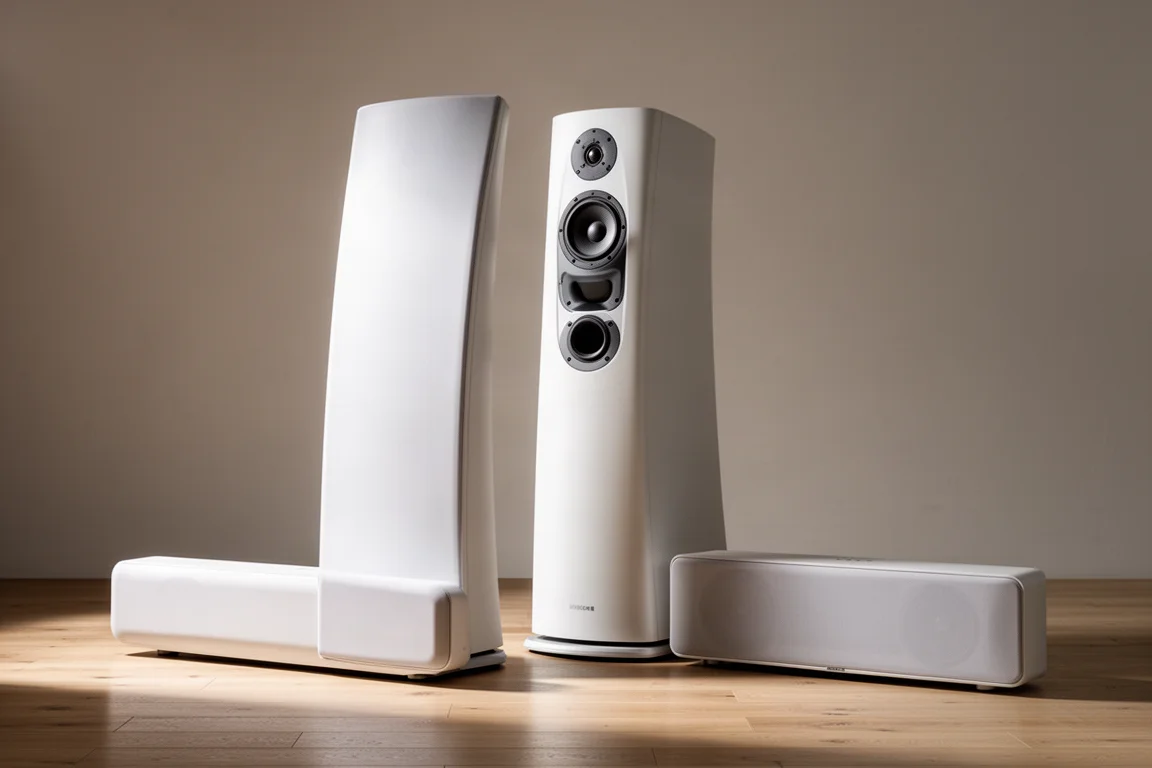
Aperion Novus Tower and Center Review: Punchy Home Theater Sound With Real Refinement
A close look at the Aperion Novus tower and center speakers, from their layered paint finish and punchy bass to the 4-ohm load and what the price actually buys.
Home Audio
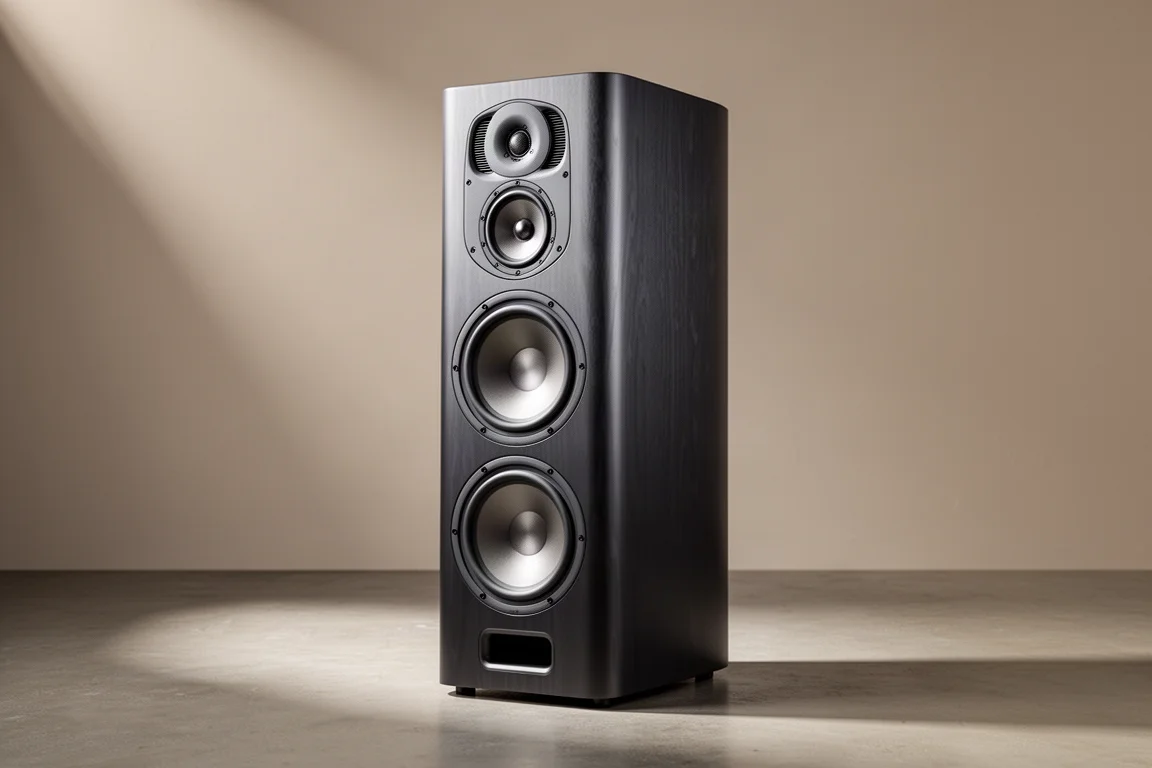
Arendal 1610 Tower Review: Flagship Dynamics in a Room-Friendly Tower
A compact floorstanding tower with three 8-inch aluminium woofers, a 5-inch carbon midrange, and the kind of bass heft usually reserved for much larger speakers.
Home Audio
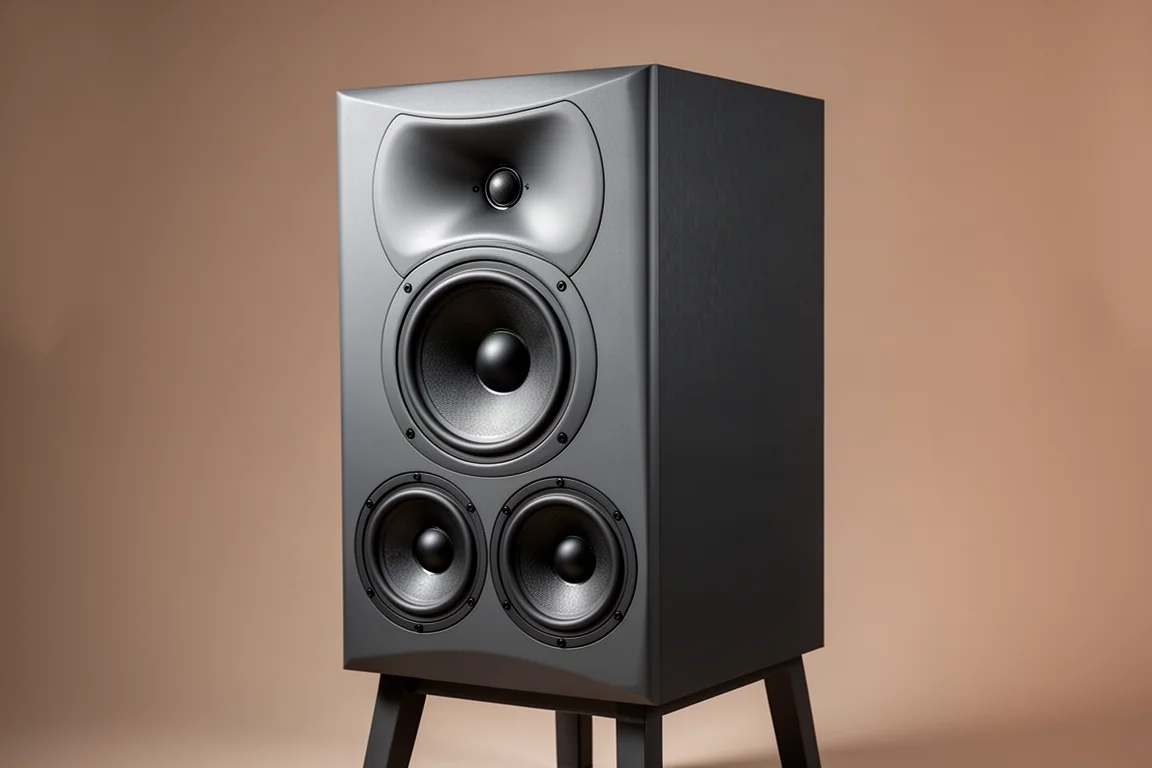
Arendal Sound 1723 Monitor S Review: Big, Neutral and Built for Music and Film
A close look at the Arendal Sound 1723 Monitor S, a large two-way bookshelf speaker with selectable port tuning, 4-ohm nominal impedance and a remarkably neutral presentation.