Home Audio
Aperion Novus Tower and Center Review: Punchy Home Theater Sound With Real Refinement
A close look at the Aperion Novus tower and center speakers, from their layered paint finish and punchy bass to the 4-ohm load and what the price actually buys.
Introduction
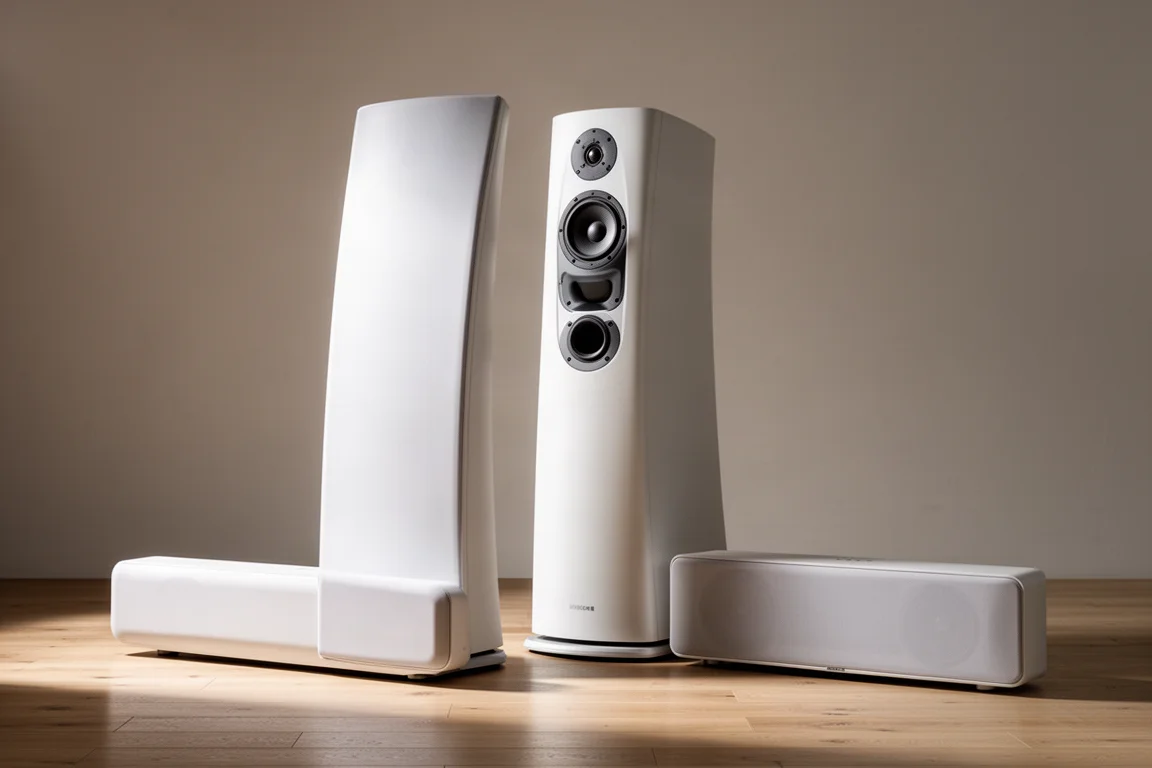
The Aperion Novus tower and center speakers are aimed at listeners who want one system for music and movies without filling the room with traditional hi-fi furniture. Aperion has been building speakers for more than two decades and sells directly to customers, and the Novus line carries that approach forward with a modern cabinet and a finish that stands out well beyond its price class.
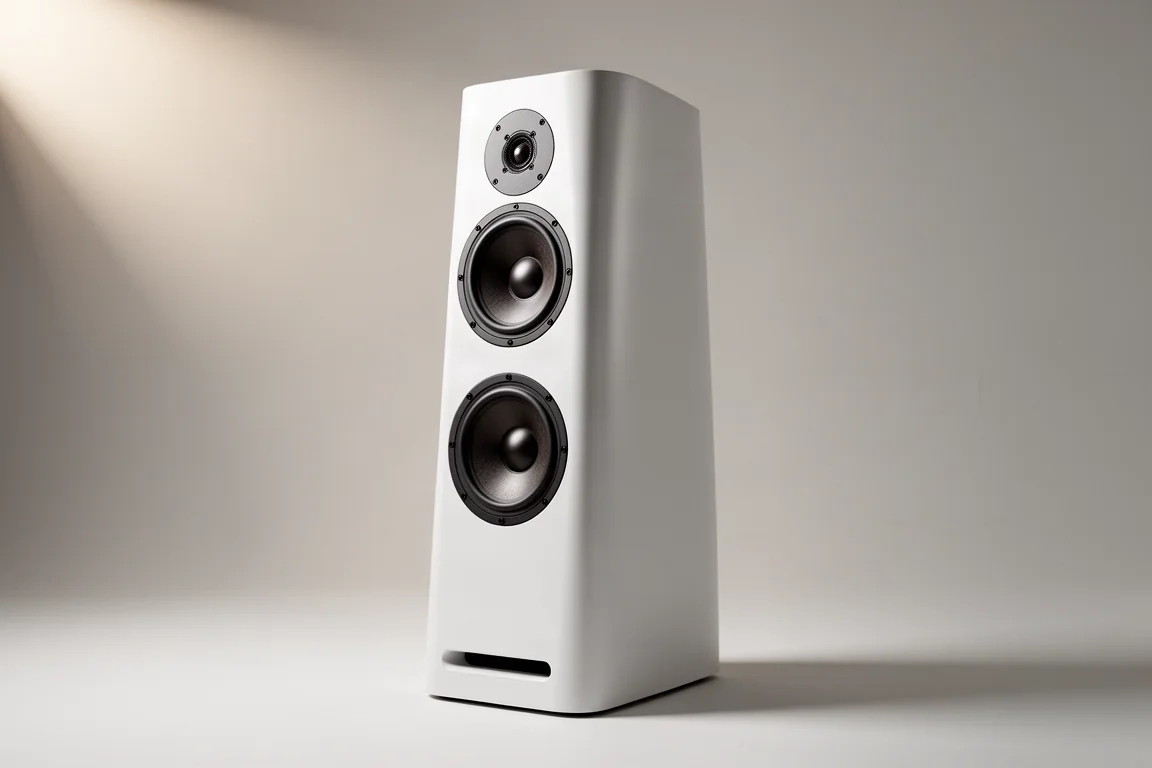
The towers lead the range with two 6.5-inch woofers and a 1-inch German silk dome tweeter. A smaller dual 5.25-inch tower is also available at a lower price, and the matching center channel uses the same silk dome tweeter in a sealed enclosure.
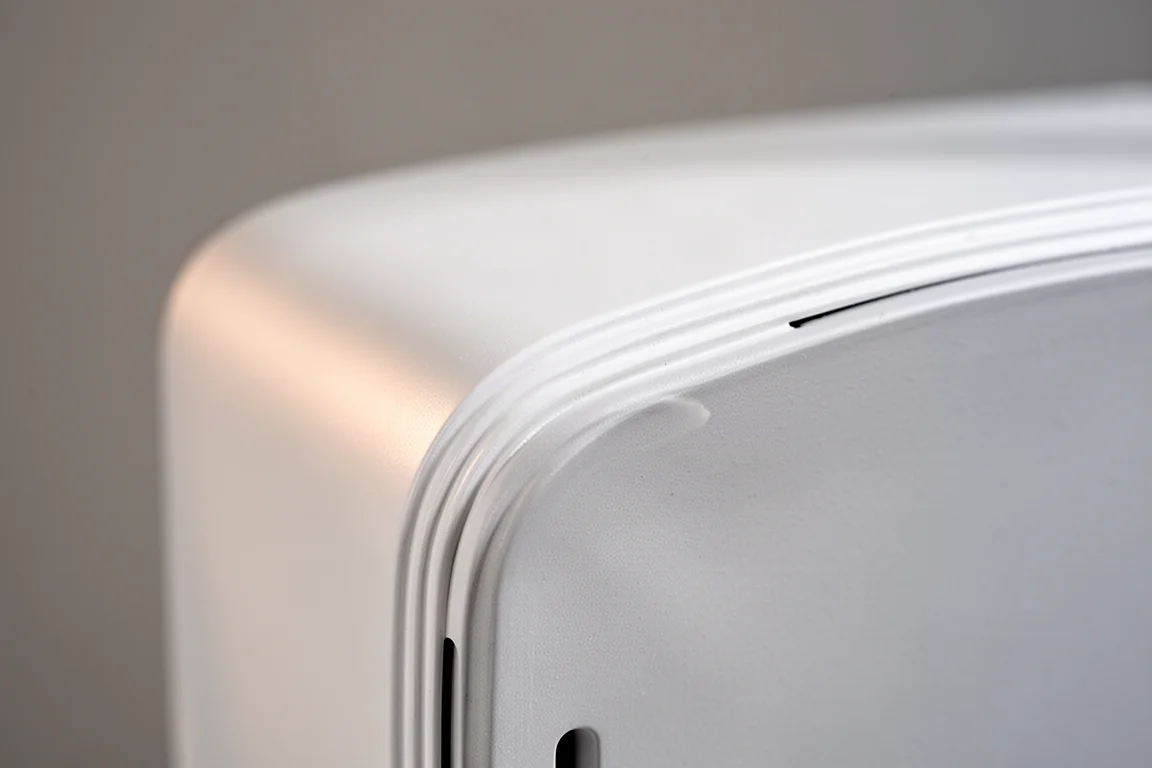
Both models come in white or black, and the paint is built up in more than a dozen layers rather than applied as a wood veneer. The result is a smooth, low-sheen surface with a clean edge, which is a big part of why the Novus range looks like a deliberate design piece rather than a box with a pattern on it.
What Defines the Aperion Novus Line
Three design decisions shape how these speakers behave once they are in a room.
The first is the tweeter. A 1-inch German silk dome, soft dome design is a departure from the aluminum domes and air motion transformers that dominate this part of the market, and it gives the top end a specific character that leans toward sparkle rather than hardness.
The second is the cabinet. The towers use a slot-shaped front port rather than a rear port, and the enclosure leans back slightly. That lean is described as time alignment for the drivers, and it also gives the speaker a distinctive silhouette that separates it from a standard rectangular tower.
The third is the load. Both the towers and the center are rated at 4 ohms nominal, which is worth checking against your receiver or amplifier before you commit, because not every budget AVR is comfortable driving a 4-ohm speaker.
Aperion Novus Tower
Design, Finish and Cabinet
The tower reviewed here uses two 6.5-inch woofers in an MTM arrangement with the tweeter between them. If you want something smaller and less expensive, the dual 5.25-inch version offers the same design language in a more compact footprint.
The cabinet itself is the most immediately impressive part. Those layered coats of paint produce a finish that sits between matte and gloss, with a smoothness that hides fingerprints and reflects light gently. The front slot port keeps the speaker easier to place near a wall than a rear-ported design, and the slight backward lean gives the whole tower a purposeful, furniture-friendly stance.
Sound Signature
Low frequencies are where these towers make their first impression. The bass is punchy and palpable, with good texture and refinement rather than a single blunt thump, and extension is genuinely strong for a tower of this size. On percussion-heavy and layered recordings, the extra weight in the lower registers makes itself known without smearing the rest of the mix.
That output comes with one caveat worth planning for. Because the towers produce so much low-end energy, they can turn boomy when pushed close to a rear wall or used in a very small room, so give them some breathing space behind and to the sides. At very high volumes the bass can begin to encroach on mid-range clarity, though at typical listening levels it stays clean and controlled.
The mid-range is slightly relaxed rather than forward. Female vocals can sound a touch warm, while male vocals and electric guitars come across as clear, thick and visceral, with real chest-punch on well-recorded rock. It is not a shouty, nasal or fatiguing presentation, which makes long listening sessions easy.
Treble is the other highlight. It is crystalline, with excellent percussion detail, cymbal decay and air, and it reveals more than most soft dome tweeters manage. It is not as airy as an air motion transformer and not as hard as an aluminum dome, which lands it in a comfortable middle ground. If the top end ever feels too lively, a treble mod jumper on the rear reduces the reported high frequency output by about 3 dB, though the stock voicing is unlikely to need it.
Off-axis behavior is strong laterally and less so vertically. Ear height relative to the tweeter matters more than side-to-side position, so aim for a listening seat roughly level with the tweeter.
Setup, Impedance and Room Fit
The tower is rated at 89 dB sensitivity with a reported low frequency roll-off at 31 Hz and extension up to 30 kHz. In practice that sensitivity figure feels honest, because the volume setting needed to reach a comfortable listening level stays close to what other speakers in the same room require.
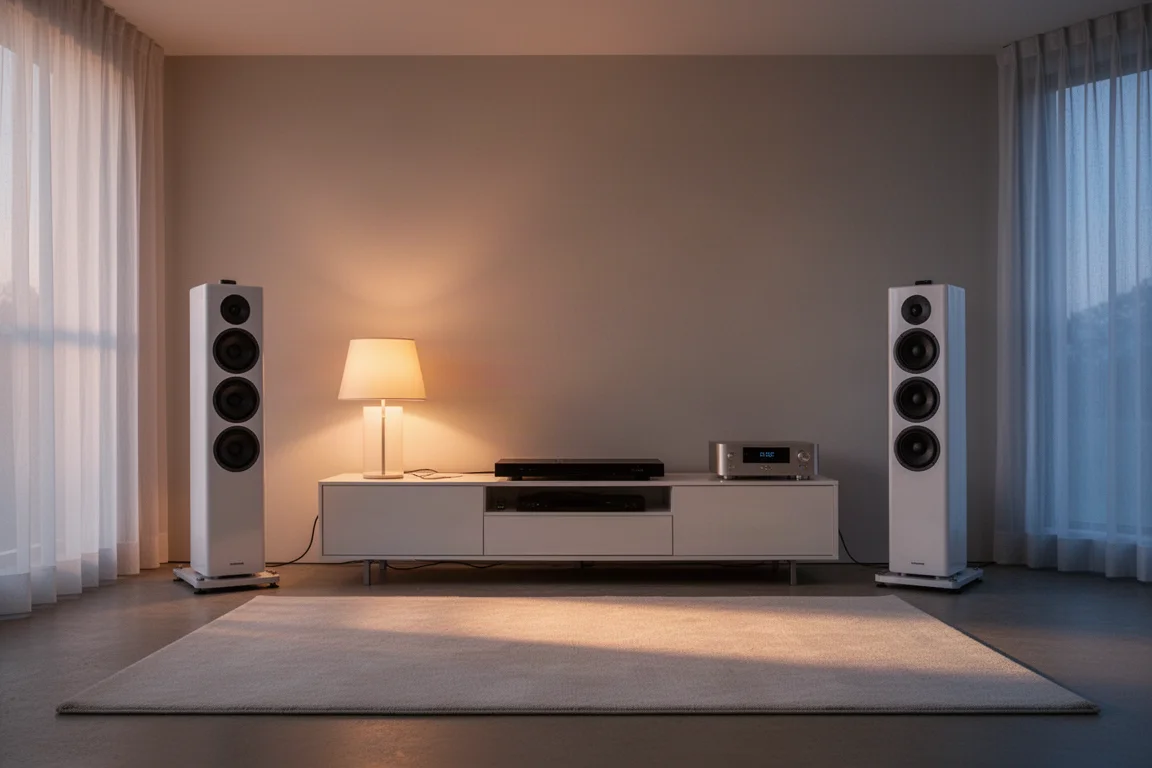
Driving them is not difficult, but the 4-ohm nominal impedance is the number to respect. A mid-range AV receiver rated around 50 watts into 8 ohms, which translates to roughly 75 to 80 watts into 4 ohms, handled them without strain. If your amplifier is specified only for 8-ohm loads, check its documentation first. Positioning them with clearance from the back wall and away from tight corners will do more for the sound than any electronics upgrade.
Aperion Novus Center
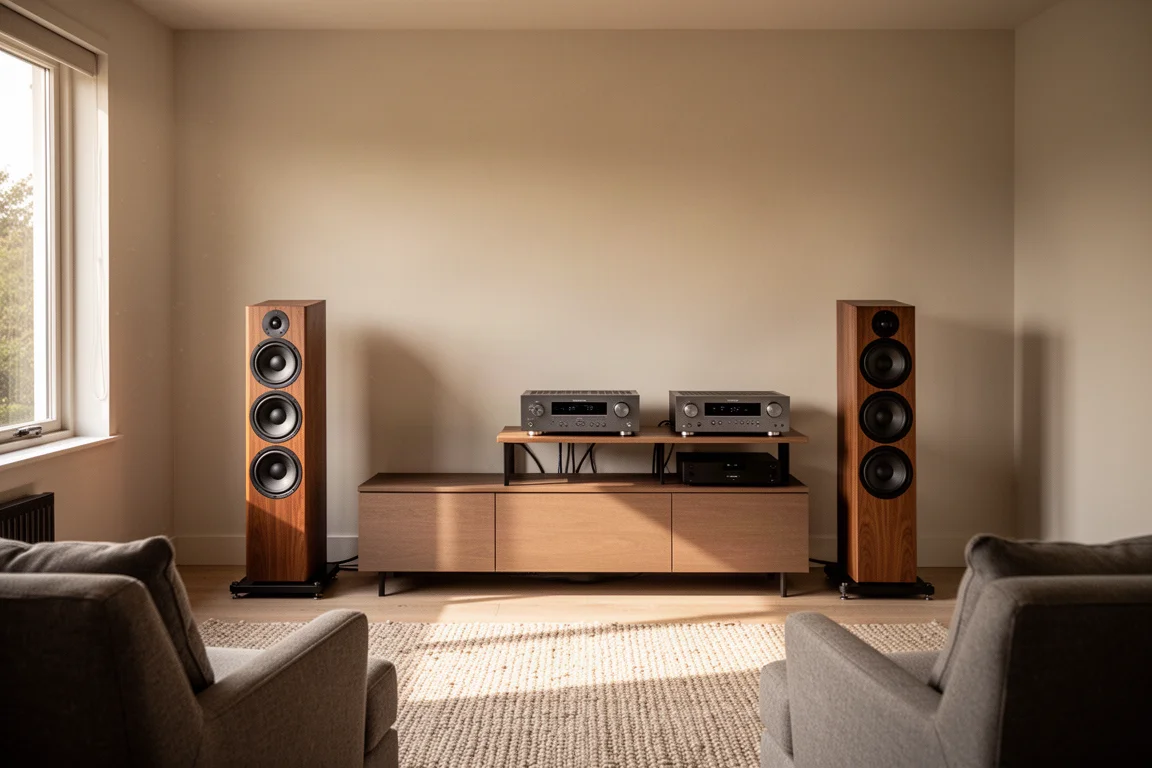
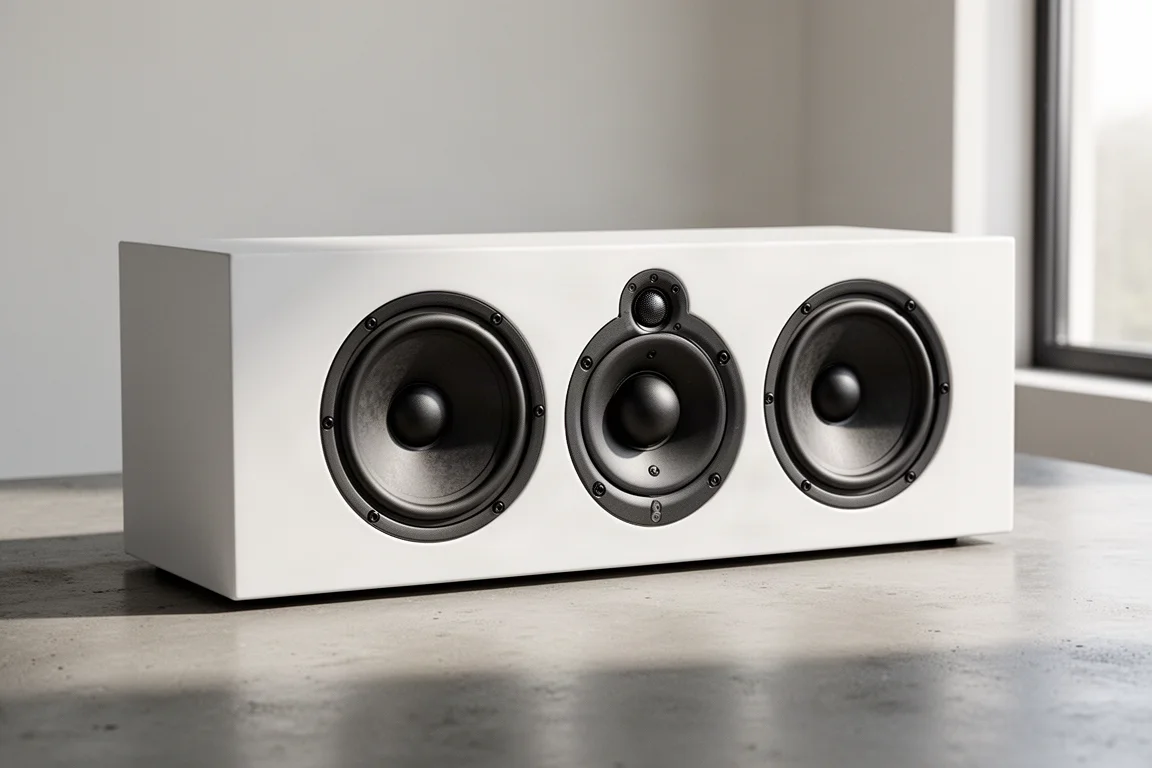
The matching center channel takes the same design philosophy and adapts it to dialogue duty. It uses two 5.25-inch drivers, a dedicated 4-inch mid-range driver and the same 1-inch German silk dome tweeter, all in a sealed cabinet that reaches down to around 70 Hz. Sensitivity is rated at 87 dB and impedance is 4 ohms nominal, matching the towers.
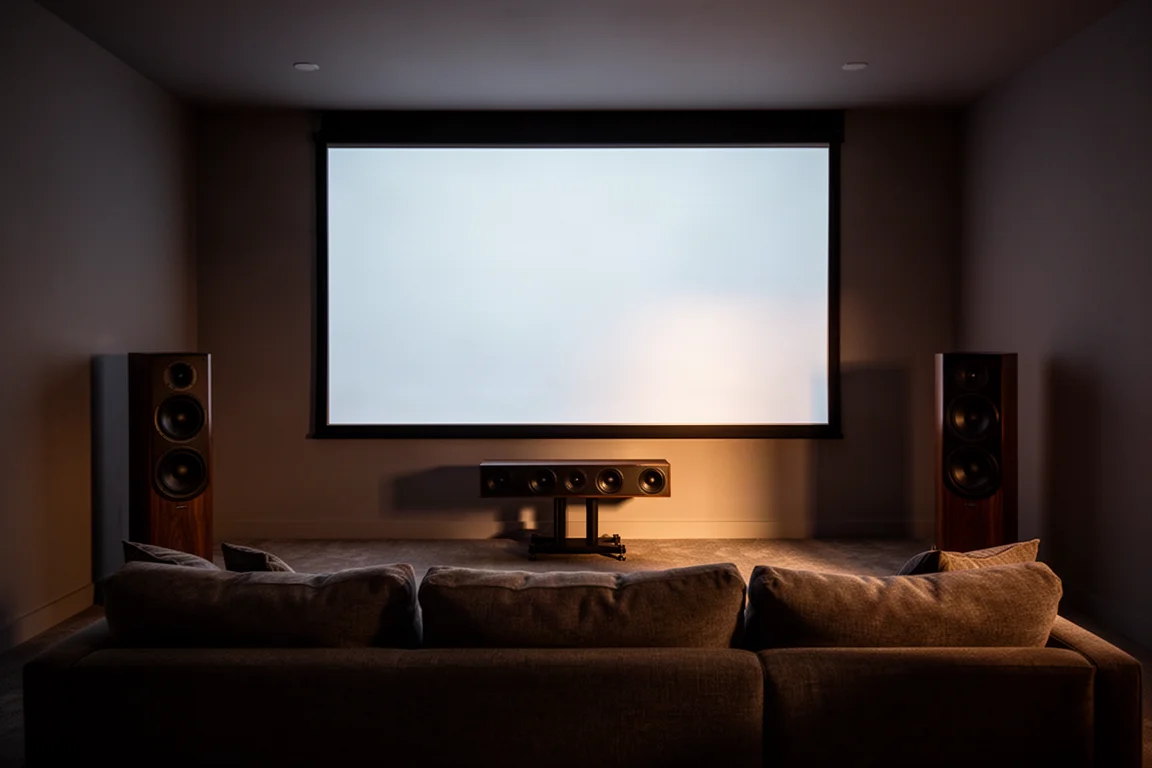
Center imaging is the standout quality. Voices lock firmly to the screen and stay there, and the speaker avoids the shouty, sharp or fatiguing character that plagues so many center channels. For movie watching, that combination of clear dialogue and a relaxed upper mid-range is exactly what you want, and it pairs naturally with the towers for a coherent front stage.
At $540 it is not the cheapest center channel on the market, but the build, finish and voicing line up with the towers rather than feeling like an afterthought.
Price, Competition and Buying Advice
The tower sells for $850 each, which works out to $1,700 for a pair, and the center channel is $540. A 10 percent coupon has been offered on the Novus line in the past, and Aperion also maintains an open box section, so it is worth checking both before paying full retail. Combined, those routes can bring a pair of towers meaningfully closer to the $1,400 mark.
At this price the competition is real. ELAC, Klipsch and Wharfedale all have strong options in the same territory, and some of those are true three-way designs, while the Novus tower is an MTM layout with two woofers and a tweeter. That is a fair point to weigh if you are comparing specifications on paper.
What the Novus brings instead is a specific character: a punchy, weighty low end, a crystalline top end, and a mid-range that stays clear without pushing vocals forward. If your priority is a very forward vocal presentation or a lean, tight low end, this is probably not the speaker for you. If you want a system that sounds exciting with rock and jazz, excels with home theater, and looks good enough to live in a shared room, the towers and center make a persuasive case, especially once a discount is factored in.
Conclusion
The Aperion Novus tower and center speakers deliver a sound signature that is easy to like: substantial bass, revealing treble and a mid-range that never turns harsh. The 4-ohm load and the need for some space behind the towers are the two practical details to plan around, and the price sits in a crowded part of the market where a coupon or an open box unit improves the value considerably. Buyers who want punch, clarity and a modern finish in one package will find a lot to like here.
Further reading
Related Reviews
Home Audio
Arendal 1610 Tower Review: Flagship Dynamics in a Room-Friendly Tower
A compact floorstanding tower with three 8-inch aluminium woofers, a 5-inch carbon midrange, and the kind of bass heft usually reserved for much larger speakers.
Home Audio
Arendal 1723 S THX Review: A Reference Speaker Built Like a Tank
A practical look at the Arendal 1723 S THX, a sealed, THX-certified speaker with exceptional build quality, a very flat top end, and a midrange that responds beautifully to EQ.
Home Audio
Arendal Sound 1723 Monitor S Review: Big, Neutral and Built for Music and Film
A close look at the Arendal Sound 1723 Monitor S, a large two-way bookshelf speaker with selectable port tuning, 4-ohm nominal impedance and a remarkably neutral presentation.