Hi-Fi Speakers
Wharfedale Evo 5.2 Review: A Three-Way Stand Mount That Earns Its Price
A three-way stand mount with a soft dome midrange and a large folded ribbon tweeter at $1,299 per pair. Here is what it does beautifully, and where it asks for restraint.
Introduction
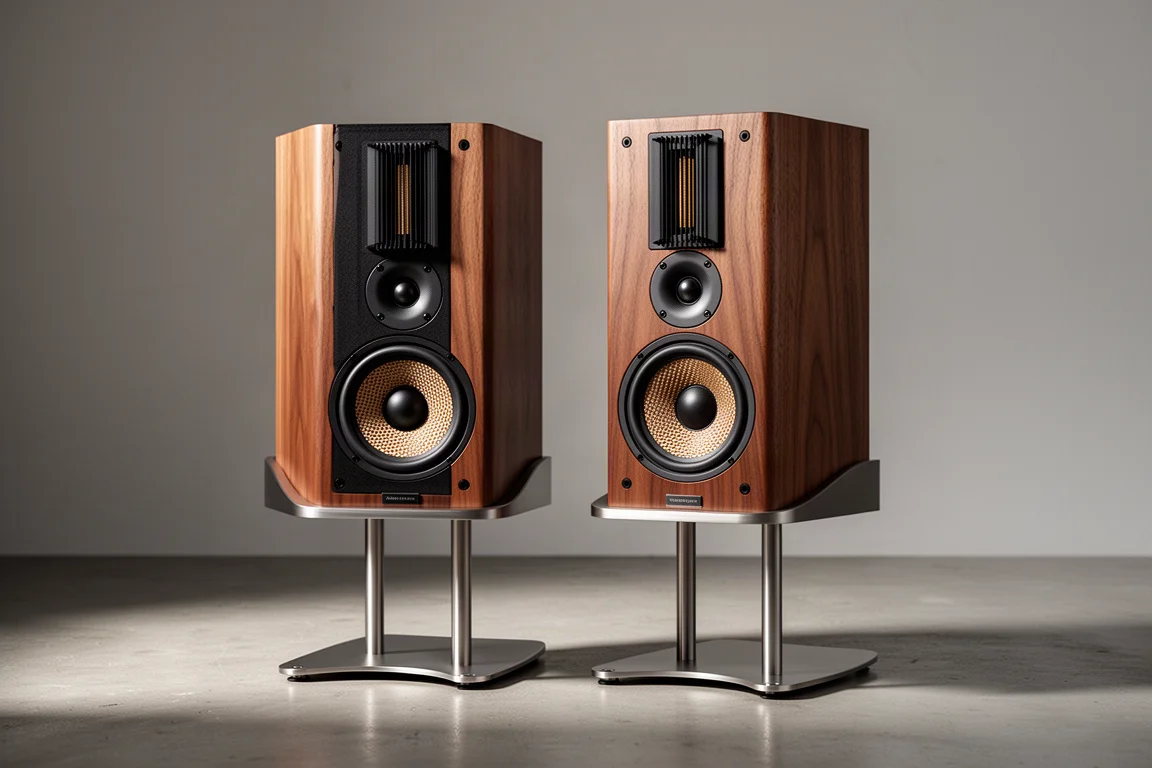
The Wharfedale Evo 5.2 is a three-way stand mount speaker, and that configuration is genuinely uncommon at this price. Most stand mounts at this level are two-way designs that split the work between a tweeter and a single woofer. The Evo 5.2 adds a dedicated 2-inch soft dome midrange between a folded ribbon tweeter and a 5.9-inch woven Kevlar woofer, which is the sort of arrangement usually reserved for larger, more expensive cabinets.
It sits within the new Evo 5 series, which also includes a smaller two-way stand mount, a centre channel, and two tower models. The Evo 5.2 costs $1,299 per pair in all four finishes, with optional matching steel stands at $500 per pair.
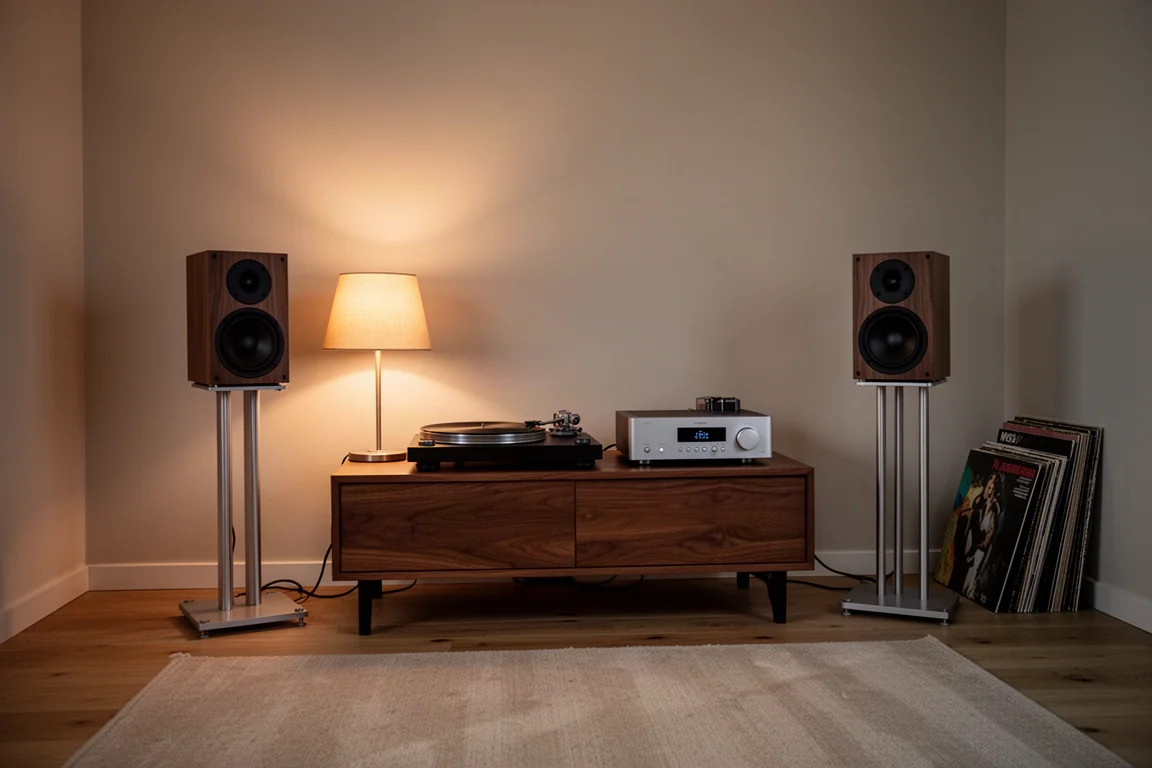
Wharfedale is one of the oldest speaker companies in the world, and the Evo 5.2 reads as a considered design rather than a collection of parts: in-house drivers, a bottom-ported cabinet, and a stand shaped to follow the curve of the speaker’s base.
Inside the Cabinet: Drivers, Port, and Finish
At the top of the baffle sits an air motion transformer, a folded ribbon design measuring 30 by 70 mm, or 1.8 by 2.75 inches. That is larger than the tweeters typically used in stand mounts, and it gives the speaker an unusually generous high-frequency surface area. Below it is the 2-inch soft dome midrange, a driver type Wharfedale has used before, now fitted with improved damping material behind the dome. The same damping treatment applies to the tweeter, quieting the back wave so it colours the output less.
The woofer is a 5.9-inch woven Kevlar unit, and all three drivers are designed in-house rather than drawn from an off-the-shelf catalogue.
The cabinet is ported, but you will not find a port on the front or the rear. It sits underneath: the cabinet is raised roughly an inch and a half above its own metal plinth, and airflow leaves through the gap, directed out from the centre around the pillars of the base. The enclosure itself is built from layers of chipboard and MDF with internal bracing, and it arrives with black cloth grilles.
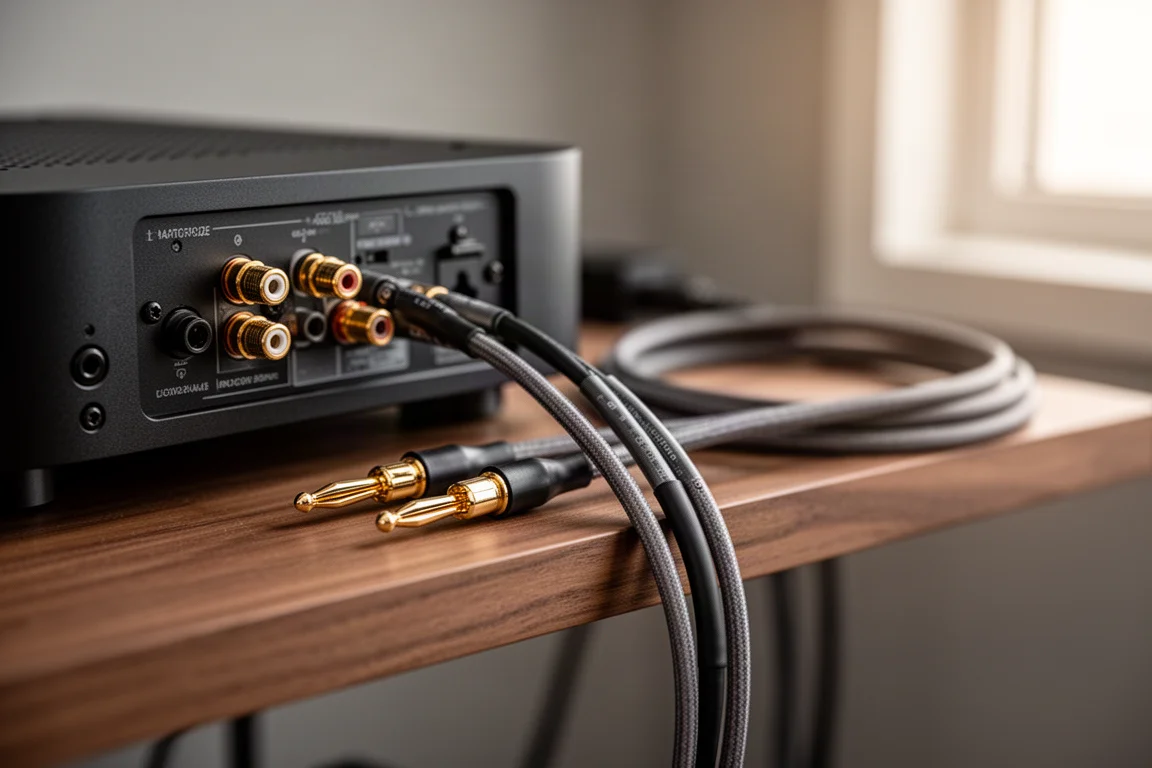
A single set of binding posts sits on the back, a change from the bi-wire connectors used on the previous Evo generation. Four finishes are offered: the walnut sample, a new gray option, plus black and white. All four carry a satin sheen rather than a high gloss or a flat matte, and the walnut in particular looks convincing up close.
Who the Wharfedale Evo 5.2 Is For
This is a speaker for listeners who value tone, weight, and texture over sheer output. Sensitivity is rated at 88 dB, which is about average, and the impedance is 4 ohms nominal but dips to 3.2 ohms. That means the Evo 5.2 asks for an amplifier that is comfortable driving low-impedance loads rather than one that merely looks powerful on paper.
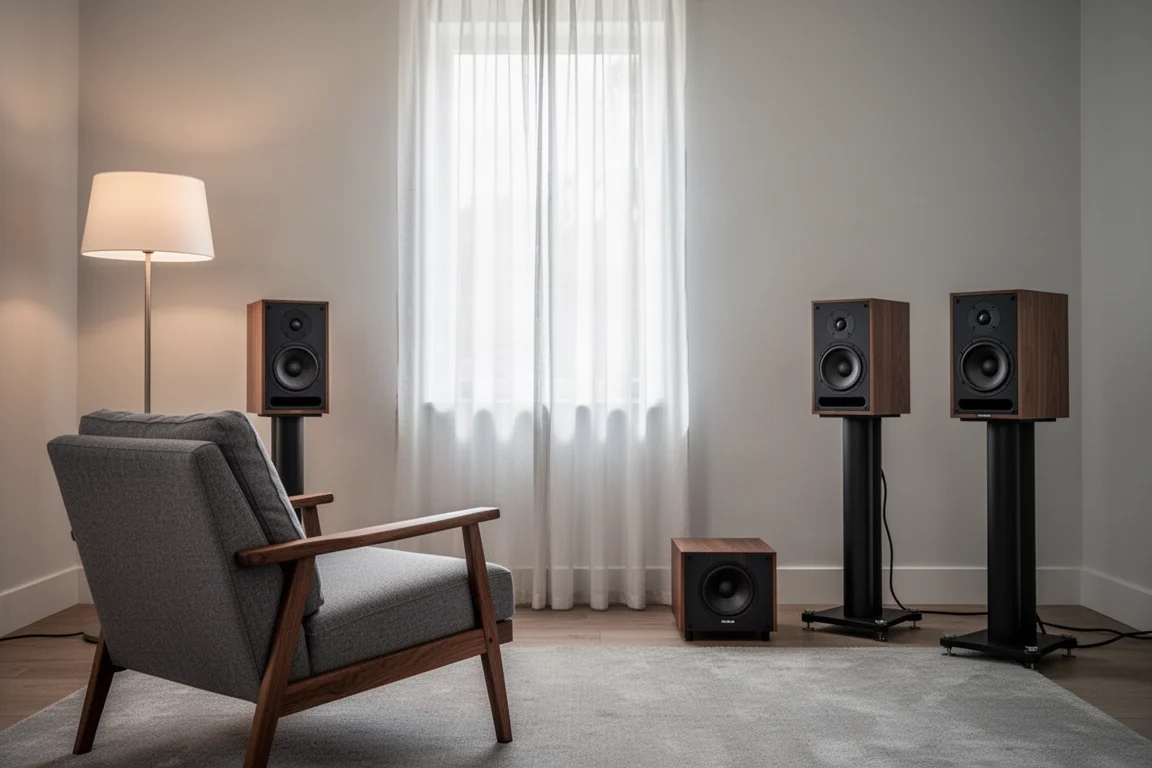
If your listening happens at low to moderate levels, in a small or mid-sized room, the Evo 5.2 is a natural fit. If your habit is to push a system past the mid-80s on a regular basis, this is the point to think carefully, because sustained high volume is the one thing the speaker does not do with complete ease.
Main Strengths: Bass Weight and Midrange Realism
The claimed frequency response is 44 Hz plus or minus 3 dB, which is low for a cabinet of this size. Playing test tones confirmed it: bass was clearly present down to around 40 Hz in the room. That is not subwoofer depth, and it is not presented as such, but for a stand mount it is a surprising amount of low-frequency weight.
More importantly, the bass is well behaved. On recordings with real low-end content, the Evo 5.2 stayed tuneful and pitch accurate, with texture and rhythm rather than thickness, muddiness, or bloat. Controlled is the word that keeps coming back.
The dome midrange earns its place too. On quieter, more exposed material, the speaker conveyed the character of a recording rather than simply the notes. Pedal steel, strings, and a singer’s intent all came through with a natural, unforced quality. Dynamics at moderate levels are strong, and the Evo 5.2 carries a sense of solidity that makes it feel like a more expensive speaker than it is.
How the Evo 5.2 Compares With Other Stand Mounts
Set against a full-size tower, the Zu DW6, the Evo 5.2 was the weightier and more solid sounding of the two, even though the tower is the considerably larger cabinet. The DW6 was leaner, yet it was better at placing a listener inside a venue on live recordings, where the ambience between songs was easier to follow. At quiet and mid-loud levels the Evo 5.2 was the more enjoyable speaker. Pushed to the mid-80s and above, the balance shifted and the tower took the advantage, with a wider swing between soft and loud dynamics.
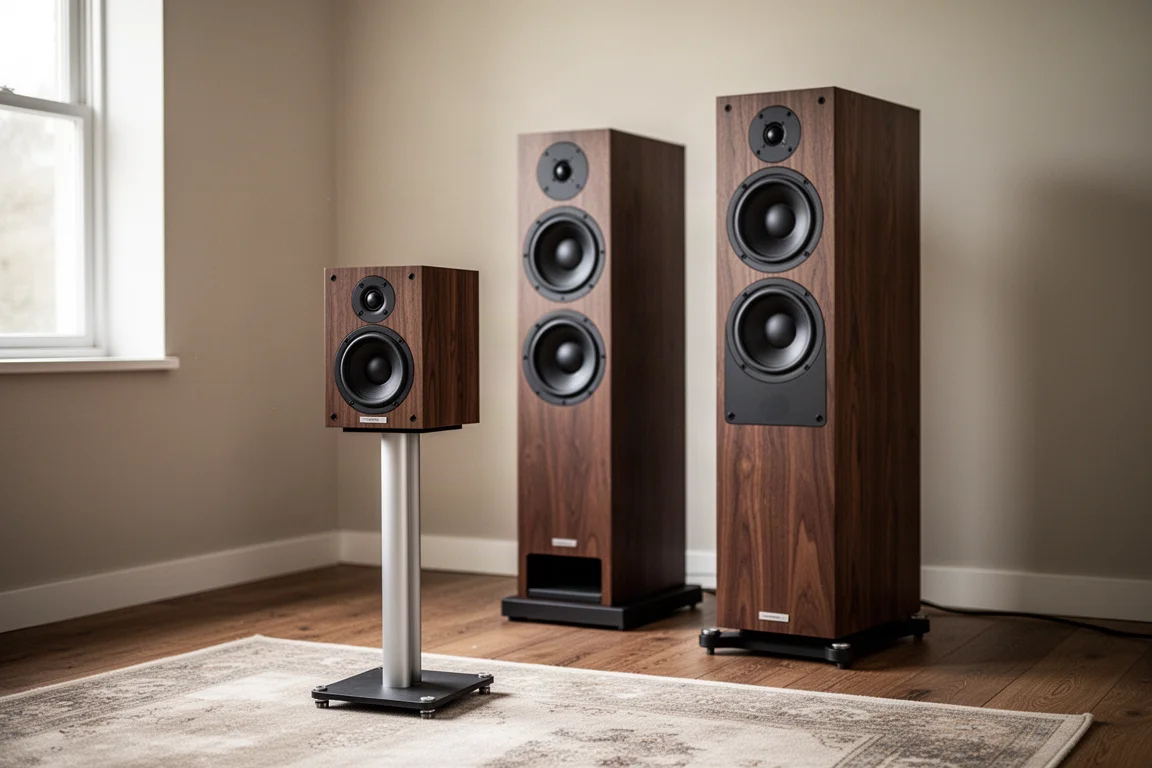
Against the Buchardt S400 Mark II, a two-way stand mount with a passive radiator on its back panel, the Evo 5.2 went deeper, though not by a wide margin. The smaller S400 Mark II played louder with ease and sounded better when driven hard. The Evo 5.2, by contrast, is happiest at moderate levels, which is the trade-off that comes with its particular strengths.
Things to Consider Before Buying
The 4 ohm impedance that dips to 3.2 ohms is the first thing to check against your amplifier. The Evo 5.2 rewards an amp with real current delivery, and it will not flatter a design that struggles with low-impedance loads.
Volume habits matter just as much. This is not a speaker that enjoys being pushed hard, so buyers who listen loudly on a regular basis may be better served elsewhere in the market, even if the Evo 5.2 is the more refined option at moderate levels.
The matching steel stands are optional and sold separately at $500 per pair. They are shaped to meet the curve at the base of the cabinet, so nothing else on the market integrates the same way, but they do add meaningfully to the total cost. The black cloth grilles are included and removable if you prefer the sound without them.
Buying Advice
At $1,299 per pair, the Evo 5.2 delivers build and sound quality that feels closer to a more expensive speaker. The three-way configuration, the in-house drivers, the bottom-ported cabinet, and the quality of the finish all point to a design that was thought through rather than assembled to a price.
If you listen at low to moderate levels and want a stand mount with genuine bass weight, a natural midrange, and a cabinet that looks as considered as it sounds, the Evo 5.2 is easy to recommend. Pair it with an amplifier that is happy into 4 ohms, budget for the matching stands if you want the integrated look, and be honest about how loudly you actually listen.
Conclusion
The Wharfedale Evo 5.2 is a rare thing at its price: a three-way stand mount with a dedicated dome midrange, a large folded ribbon tweeter, and bass that reaches meaningfully lower than its cabinet size suggests. It will not out-shout a big tower, and it is not designed to. What it offers instead is weight, control, and a midrange that lets recordings sound like themselves. For listeners who favour moderate levels and value refinement over output, it is a genuinely rewarding choice.
Product link
View more details for Wharfedale Evo 5.2
This product is mentioned in the review. Check the specifications, options, and compatibility before buying.
View more details for Wharfedale Evo 5.2Further reading
Related Reviews
Hi-Fi Speakers
1723 THX Tower vs 1528 Bookshelf: Which Speaker Fits Your Room?
Two speakers at roughly the same price, built very differently. How the 1723 THX tower and the 1528 bookshelf compare on construction, bass, power needs, and sound.
Hi-Fi Speakers
Acoustic Energy AE 300 Review: Deep Bass From a Compact Standmount
A two-way standmount with real wood veneer, surprising low-end weight, and a warm, easygoing character. Here is what to know before buying.
Hi-Fi Speakers
Acoustic Energy AE1 40th Anniversary Review: A Modern Take on a British Classic
A compact standmount that revives a 1980s favorite with all-new parts, a warm mid-centric balance, and a price of £1,499 per pair.