Bookshelf Speakers
Wharfedale Diamond 12.1 Review: A Laidback Bookshelf Speaker With Premium Build
The Wharfedale Diamond 12.1 pairs strong build quality with a relaxed tonal balance, a 1 to 3 kHz crossover dip, and modest dynamic headroom. Here is what to know before buying.
Introduction
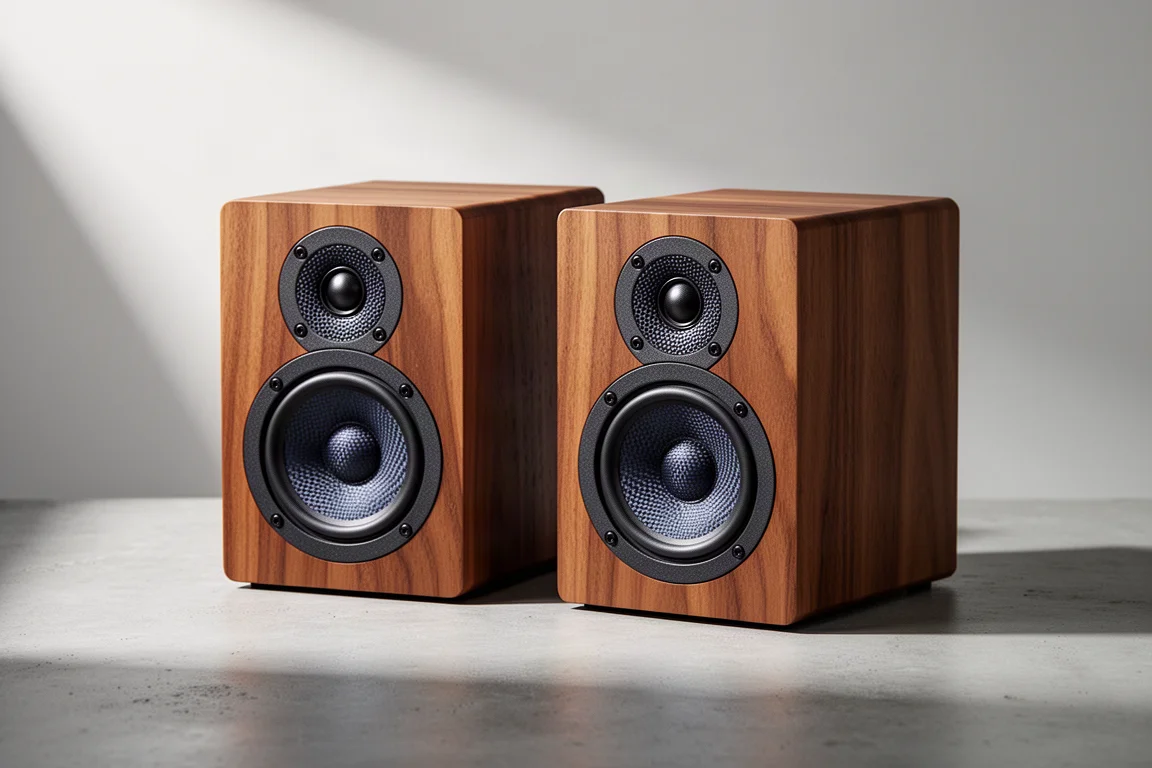
The Wharfedale Diamond 12.1 is a compact bookshelf speaker that retails for about $450 a pair. It pairs a 5-inch midwoofer with a dome tweeter in a cabinet that gets noticeably more attention than most speakers at this price. That combination shapes almost everything about how it performs: a refined and understated tonal character, genuinely good build quality, and a clear set of limits worth understanding before you buy.
Measured performance suggests the sound quality sits closer to what good speakers in the $300 to $400 range deliver, while part of the $450 asking price goes toward finish, looks, and cabinet construction. That is not a criticism on its own, and there are plenty of speakers at this price that perform far worse. The real question is whether this particular trade-off suits the way you listen.
Who this product is for
This speaker suits listeners who play music at moderate, sensible levels in a normal room and care about how a speaker looks and feels as much as how it measures. Tonality, timbre, and overall sound quality are good at reasonable volumes, and most music comes across well.
It is a weaker fit for anyone who wants to fill a large space or listen loudly without strain. The speaker does not reach deep into the low bass on its own, and its dynamic headroom runs out well before high output levels. If either of those matters to you, plan for a subwoofer and a high-pass filter, or look at a larger design.
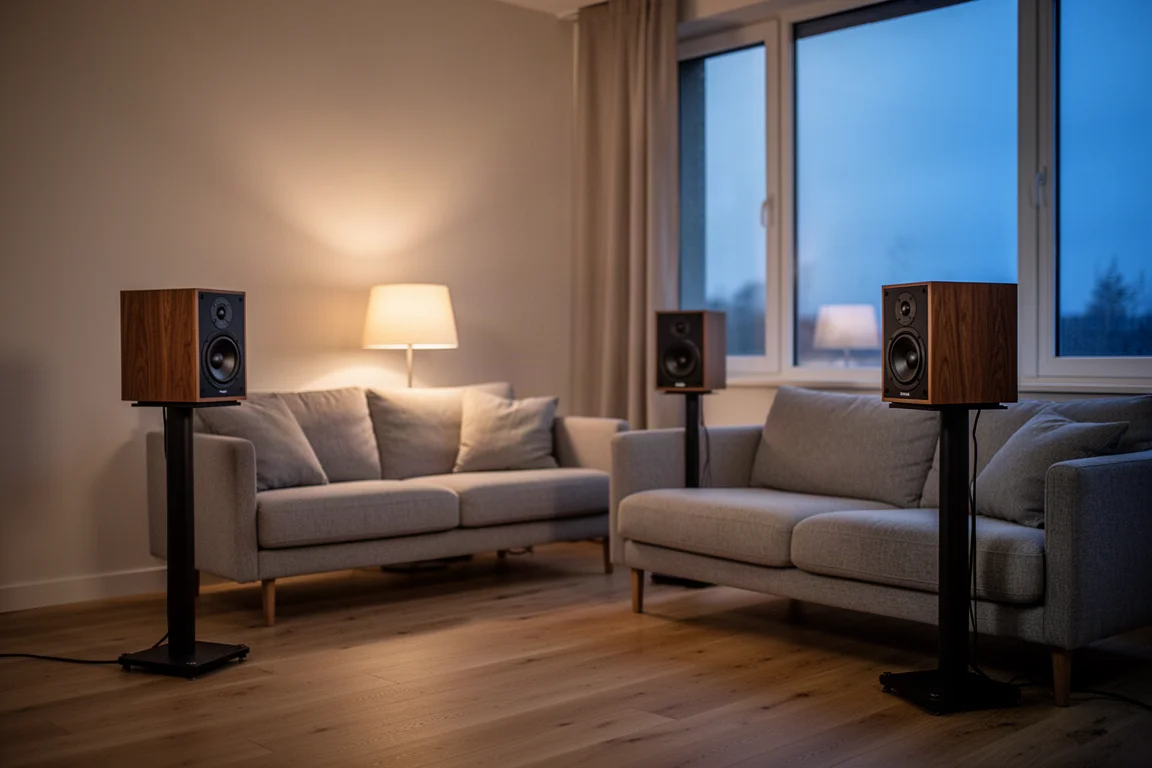
The strengths it does have are the kind you notice every day: a smooth and easy tonal balance, a wide horizontal presentation, and a cabinet that feels more expensive than the price suggests.
Main strengths
Build, Finish, and Cabinet Quality
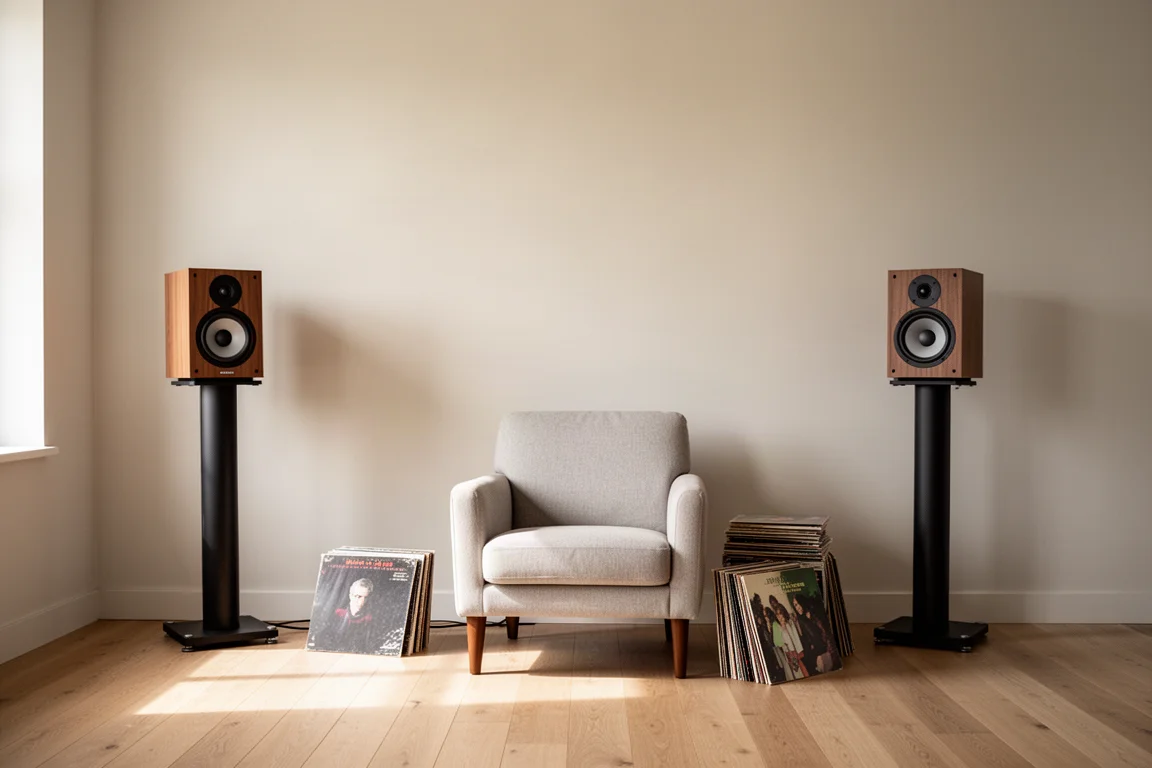
Build quality is the clearest reason to pay the asking price. The finish and overall presentation sit a step above the typical speaker in the $300 to $400 bracket, and the cabinet feels solid in a way that cheaper rivals often do not.
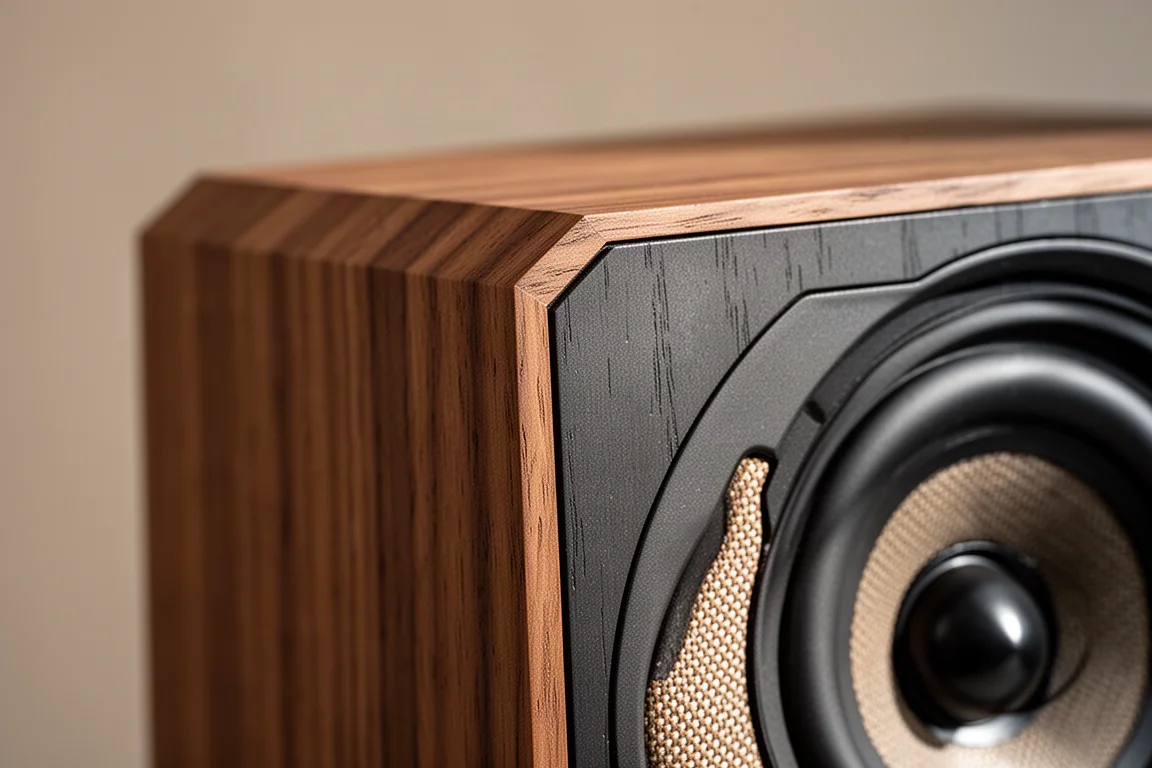
That matters beyond aesthetics. A rigid, well-damped cabinet contributes to the clean midrange and to the smooth handoff between the midwoofer and the tweeter that shows up in the early reflections data.
Tonality, Attack, and the 1 to 3 kHz Dip
Tonality is where this speaker divides opinion. The overall character is laidback and slightly soft rather than forward or analytical, and that comes from a crossover dip between roughly 1 kHz and 3 kHz, where the response sits about 3 dB down.
The audible result is a loss of attack and transient bite. Drum hits, guitar, and saxophone can lack the edge they should have, and the liveliness of a recording is slightly reduced. It is not a total absence of detail, but on tracks that depend on snap and immediacy, the difference is easy to notice.
Some designs place a dip in this region deliberately, in the tradition of the BBC sound. Whether or not that is the intent here, the dip is measurable and audible, and it is the main reason the speaker sounds relaxed rather than neutral. A response that stays smooth and even through this region tends to sound more faithful to the recording, whatever you happen to play.
Soundstage, Dispersion, and Measured Behaviour
Horizontal radiation is wide, roughly plus or minus 60 degrees up to about 5 kHz, before narrowing as the dome tweeter begins to beam. In practice that means a broad listening window and a stable sense of stage width.
Estimated average sensitivity is around 84 dB, and the on-axis response tracks that level closely. Measured bass extension reaches 61 Hz at F3 and 46 Hz at F10, which confirms what the 5-inch midwoofer already suggests: this is not a speaker that plays low. The early reflections data also shows a smooth handoff between the midwoofer and the tweeter, although two diffraction effects, one near 3 kHz and another near 5 kHz, appear in the measurements.
Things to consider before buying
Output Limits, Compression, and Distortion
Distortion stays below 1 percent total harmonic distortion up to about 60 Hz at 86 dB, which is respectable for a driver this size. Push the speaker to 96 dB and the picture changes sharply: distortion climbs above 1 percent, and above 3 percent at around 150 Hz.
Compression data tells a similar story. Output compresses noticeably between 96 dB and 102 dB, and multi-tone distortion exceeds 10 percent at 96 dB, which works out to about 11.26 volts. At 300 Hz the speaker is already about 1.5 dB down at 102 dB measured at one meter. Since 102 dB from a single speaker at one meter is roughly equivalent to 92 dB from a pair in a room at four meters, the practical advice is simple: sit relatively close if you want volume, or keep the level in check if you sit further away.
Applying a high-pass filter at 80 Hz reduces multi-tone distortion across the midrange considerably. A crossover of that kind is one of the most useful things you can add to this speaker.
Placement and the Vertical Listening Window
Vertical dispersion is very tight, only about plus or minus 5 degrees. Sitting even slightly above or below the tweeter axis produces a hole in the response and a noticeably different tonal balance. Careful stand height and a listening position aligned with the tweeter line make a real difference here.
There is also a dip in the horizontal response between 1 kHz and 3 kHz, tied to the same crossover behaviour described above. Toeing the speakers in and keeping them away from side walls helps, but it will not remove the character of that region.
Bass Extension and Subwoofer Needs
With F3 at 61 Hz and F10 at 46 Hz, deep bass is simply not part of the package. A subwoofer is effectively mandatory for anyone who listens to bass-heavy material or wants to play at higher levels, and pairing one with a high-pass filter also cleans up the distortion picture considerably.
Buying advice
At about $450 a pair, the Wharfedale Diamond 12.1 is a reasonable purchase if you value finish, build quality, and an easygoing sound at moderate levels. You are paying something of a premium for the way it looks and feels, and the raw performance is closer to what good speakers in the $300 to $400 range deliver.
If you want a speaker that stays composed at high volumes, reaches lower without help, or reproduces transients with more bite, this is not the strongest choice at the price. If you listen at sensible levels, plan to add a subwoofer, and want a compact speaker that looks considerably better than the average budget option, it is easy to recommend.
Conclusion
The Diamond 12.1 gets a lot right: solid construction, a smooth and wide horizontal presentation, and pleasant tonality at moderate volumes. Its limits are equally clear. The 1 kHz to 3 kHz dip softens attack and dynamics, vertical placement is fussy, and output capability is modest, with compression and distortion rising quickly as volume climbs. Buy it for the finish and the relaxed character, and pair it with a subwoofer and a high-pass filter to get the most from it.
Product link
View more details for Wharfedale Diamond 12.1
This product is mentioned in the review. Check the specifications, options, and compatibility before buying.
View more details for Wharfedale Diamond 12.1Further reading
Related Reviews
Bookshelf Speakers
Acoustic Energy A100 Mark II Review: A Compact Standmount With an Expansive Soundstage
The Acoustic Energy A100 Mark II brings clarity, natural tonality and a wide soundstage to an entry-level standmount, with a few setup details worth knowing first.
Bookshelf Speakers
Acoustic Energy AE-100 Mark II Review: Compact Bookshelf Speakers With Standout Imaging
A compact British two-way bookshelf speaker with deep, layered imaging, fast bass, and a slight treble lift to weigh against a crowded $500 field.
Bookshelf Speakers
Acoustic Energy AE100 MK2 Review: Measured Performance and Four Alternatives
A close look at the Acoustic Energy AE100 MK2 bookshelf speaker, what its measured performance reveals, and four alternatives with different trade-offs.