Bookshelf Speakers
Wharfedale Denton 80th Anniversary Edition Review: A Compact Speaker With a Big Midrange
The Wharfedale Denton 80th Anniversary Edition pairs real wood veneer and careful cabinet work with a smooth low end and a midrange that rewards long listening sessions.
Introduction
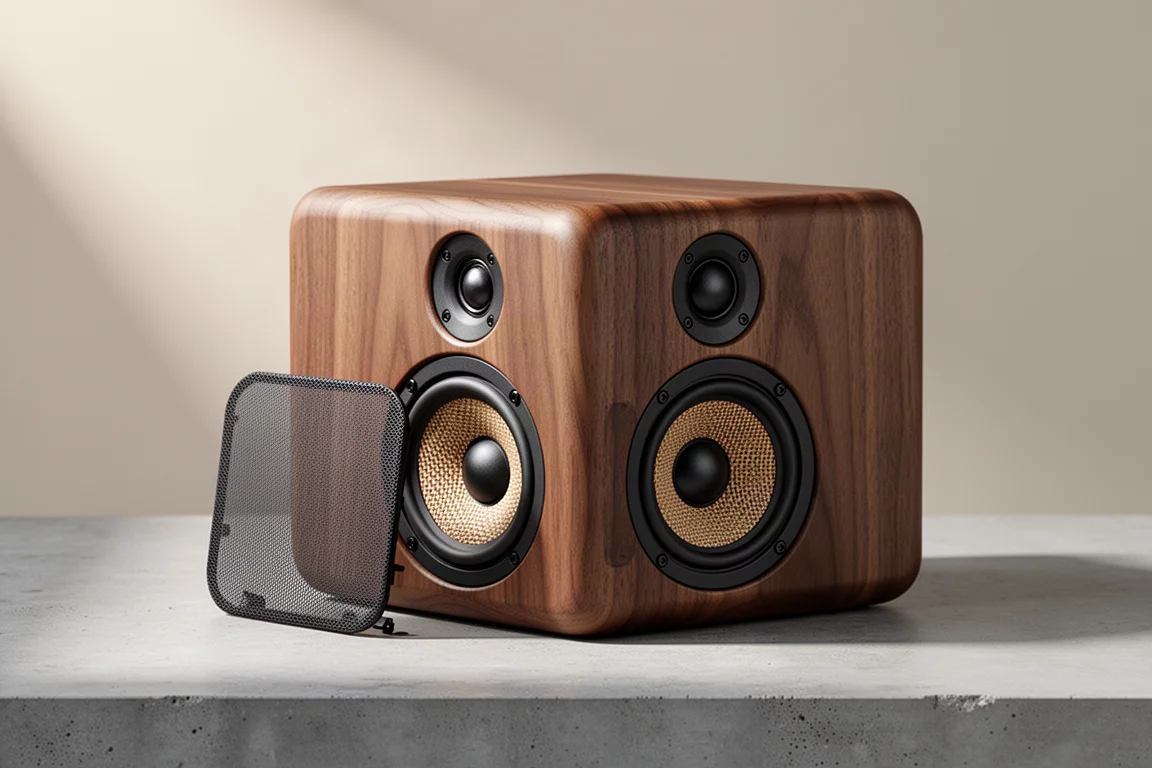
The Wharfedale Denton 80th Anniversary Edition is the more affordable of the Denton editions currently offered, and it arrives with a clear family resemblance to the larger Linton. It is a compact two-way standmount speaker with a real wood veneer cabinet, a beveled grille that sits flush against the front baffle, and a finish choice of walnut or mahogany.
At $500 for a pair, it occupies a price band where genuine wood veneer and this standard of cabinet work are genuinely uncommon. That combination of price, materials, and heritage is the reason this speaker is worth a closer look rather than a passing glance.
Who This Speaker Is For
This is a speaker for listeners who value tone and long-term comfort over instant spectacle. Its strengths suit smaller rooms, near-field setups, and anyone who wants to keep music playing for hours without fatigue.
Because the cabinet is not especially deep, it can sit closer to the wall behind it and still produce a convincing sense of space. In a near-field arrangement, that shallower cabinet behaves much like a larger speaker pulled further out into the room, which gives the Denton unusual placement freedom for its size.
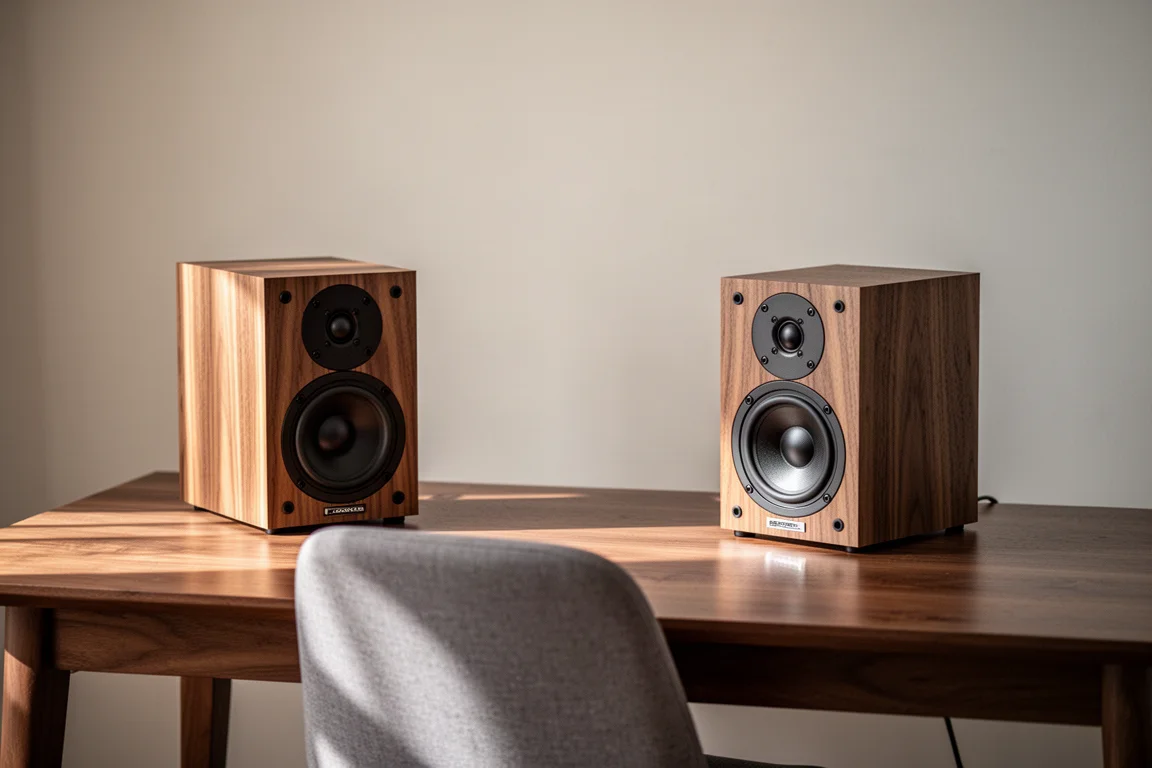
That freedom matters in practice. Placing the speakers a little wider apart than usual and sitting slightly inside the triangle can deepen the soundstage noticeably. Toe-in is easy to experiment with, and small adjustments tend to pay off.
The Denton also works as a straightforward two-channel system for film and television. Running a pair on its own, with no centre channel and no subwoofer, dialogue remained clear and intelligible, which is a useful quality for anyone building a simple living-room system around two speakers.
Main Strengths
The Denton does not announce itself. Its appeal builds over time, and the qualities that stand out most are the ones that keep listeners coming back rather than the ones that impress in the first thirty seconds.
Sound Character and Imaging
Imaging is where the compact cabinet earns its keep. In a two-channel setup, the lateral soundstage extended wider than the physical distance between the speakers, and it was taller as well. Movement across the stage was seamless from left to right and back again, and on live recordings the sense of a large space around the performance came through clearly.
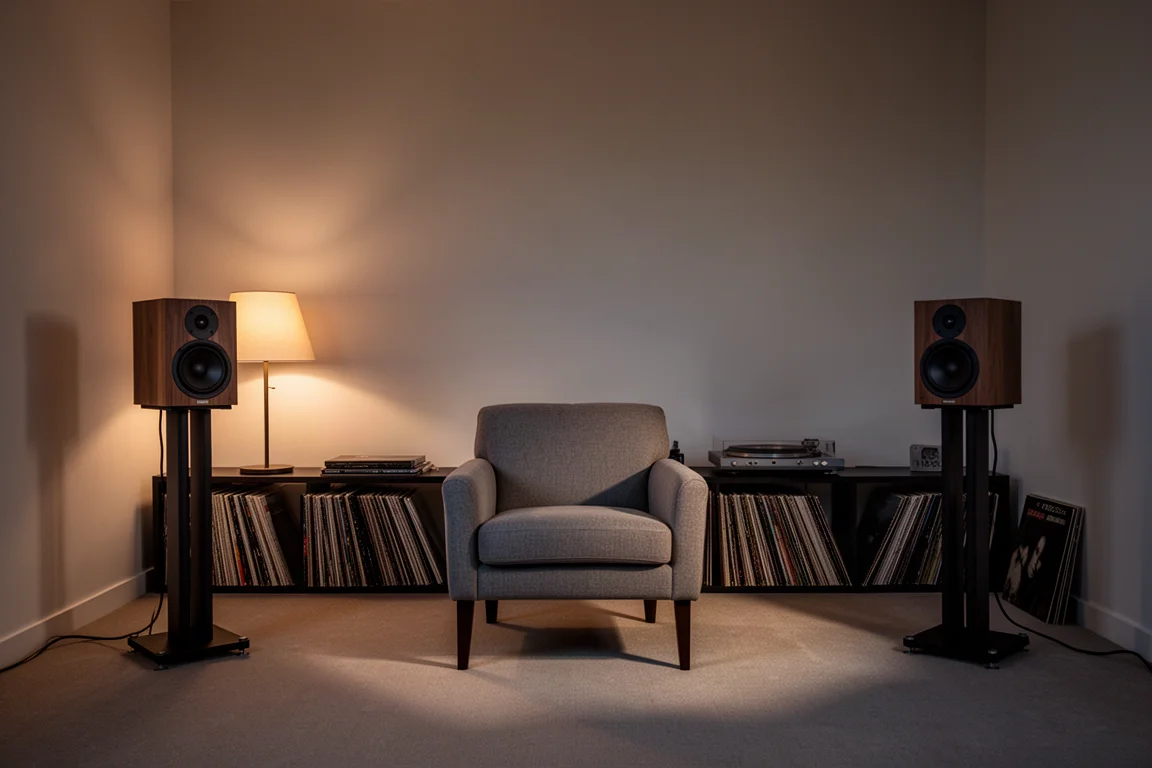
Vocals sit slightly above the speaker when the tweeter is level with the ears, which makes careful height placement worthwhile. The presentation is not a bright or forward one, and it does not need to be pushed hard to come alive.
The treble is linear and believable rather than airy. Percussion and cymbals have a natural attack, and the decay is not drawn out as sharply as on some brighter designs. That trade-off is deliberate in character: the reward is a top end that stays comfortable instead of drawing attention to itself. The overall result is a speaker that can be listened to all day without fatigue.
Bass, Midrange, and Treble
Rated down to 44 Hz at minus 3 dB and up to 24,000 Hz, the Denton reaches lower than its dimensions suggest. The roll-off is smooth rather than boosted, so the low end stays clean and controlled instead of booming. There is enough weight to satisfy, and noticeably little resonance in the cabinet.
Where the low end genuinely excels is clarity. On acoustic jazz, the shape of a plucked stand-up bass came through beautifully, with the note rising and falling rather than sitting on a single frequency. That same bass clarity is a hallmark of the larger Linton, and the family resemblance here is easy to hear.
The midrange is the star of the show. Male vocals in particular carry a robustness and presence without being overdone, and acoustic guitars benefit from the same quality. The effect is a slightly thicker, more three-dimensional rendering than many speakers manage, even ones known for a strong midrange. Female vocals come across as smoky and engaging rather than sharply detailed, which many listeners will find more believable and more organic.
Build Quality and Design
At 17.4 pounds each, and measuring 7.8 inches wide, 10.8 inches tall, and 12.6 inches deep, the Denton is a genuinely small speaker that feels more substantial than its footprint implies. For context, some much larger tower speakers weigh only marginally more, which says something about how much bracing and cabinet mass is packed into this smaller box.
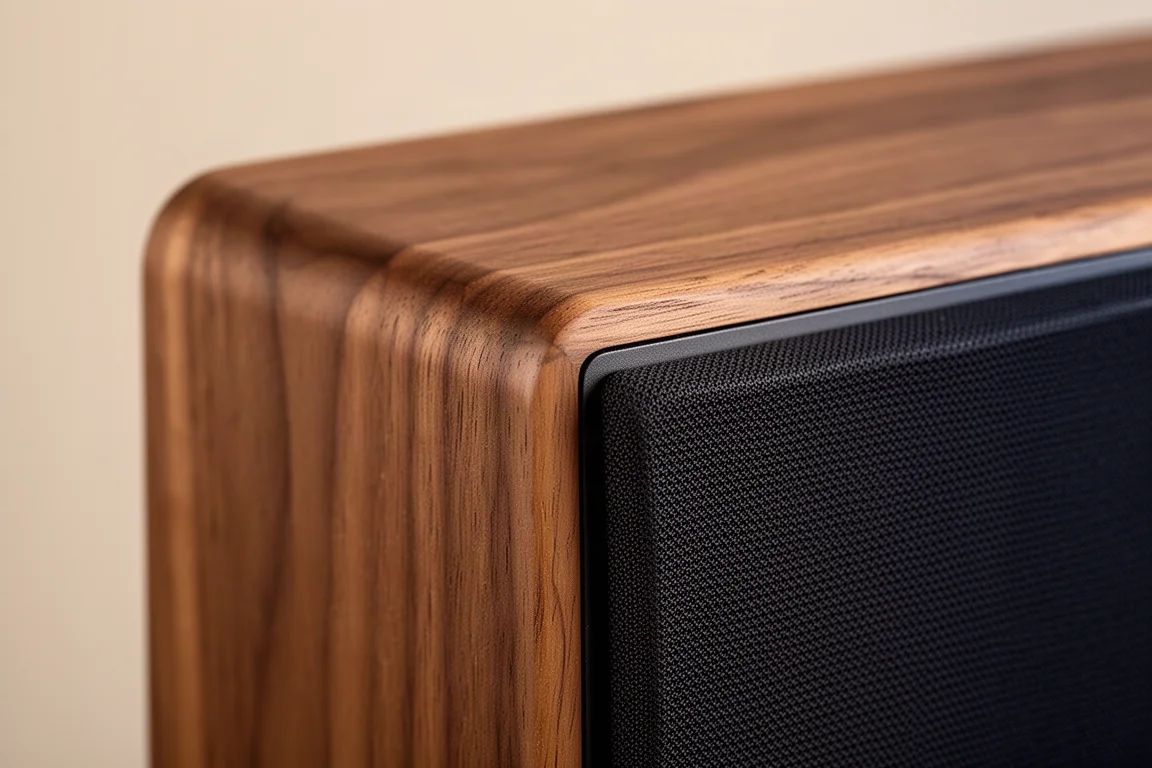
The finish is real wood veneer on a cabinet whose grille is beveled and sits flush with the front baffle. It is a refined, traditional look rather than a modern one, and it is executed with care.
The rear panel carries the classic Wharfedale arrangement of offset binding posts with bi-wire and bi-amp options. Single wiring works perfectly well, and the extra flexibility is simply there for anyone who wants it.
Inside, a one-inch soft dome tweeter handles the top end, while a five-inch woven Kevlar woofer covers the rest, mounted with a rubbery surround. The tweeter is not fitted with a large waveguide, yet the imaging performance suggests nothing is being lost for the omission.
Things to Consider Before Buying
The Denton asks a little of its amplifier. With a nominal impedance of 6 ohms and a sensitivity of 86 dB, it benefits from a capable amp rather than a minimal one. Wharfedale rates the speaker for roughly 20 to 100 watts, and it performed well on both a pair of hefty monoblocks and a modest integrated amplifier putting out around 50 clean watts. More power and a better amplifier will likely extract a little more from it.
Height placement deserves attention. This is a shorter speaker, so most stands will not lift the tweeter to ear level on their own. Adding a few inches of isolation material underneath, whether dedicated pads or simply rubber between the stand and the cabinet, brought the tweeter closer to ear level and cleaned up the low end. That small change had a disproportionate effect on soundstage and imaging, so budget for it if the speaker ends up on a typical stand.
Finally, consider what the Denton does not do. It will not deliver the airiest, most spacious treble, and its bass favours smoothness and clarity over outright punch. Those looking for a booming low end or a bright, attention-grabbing top end will find other speakers more immediately exciting, though often at the cost of naturalness.
Buying Advice
At $500 for a pair, the Denton 80th Anniversary Edition is close to the entry point for a speaker with this level of build, real wood veneer, and historic pedigree. Both walnut and mahogany finishes are offered, so the choice comes down to how the cabinet will sit in the room.
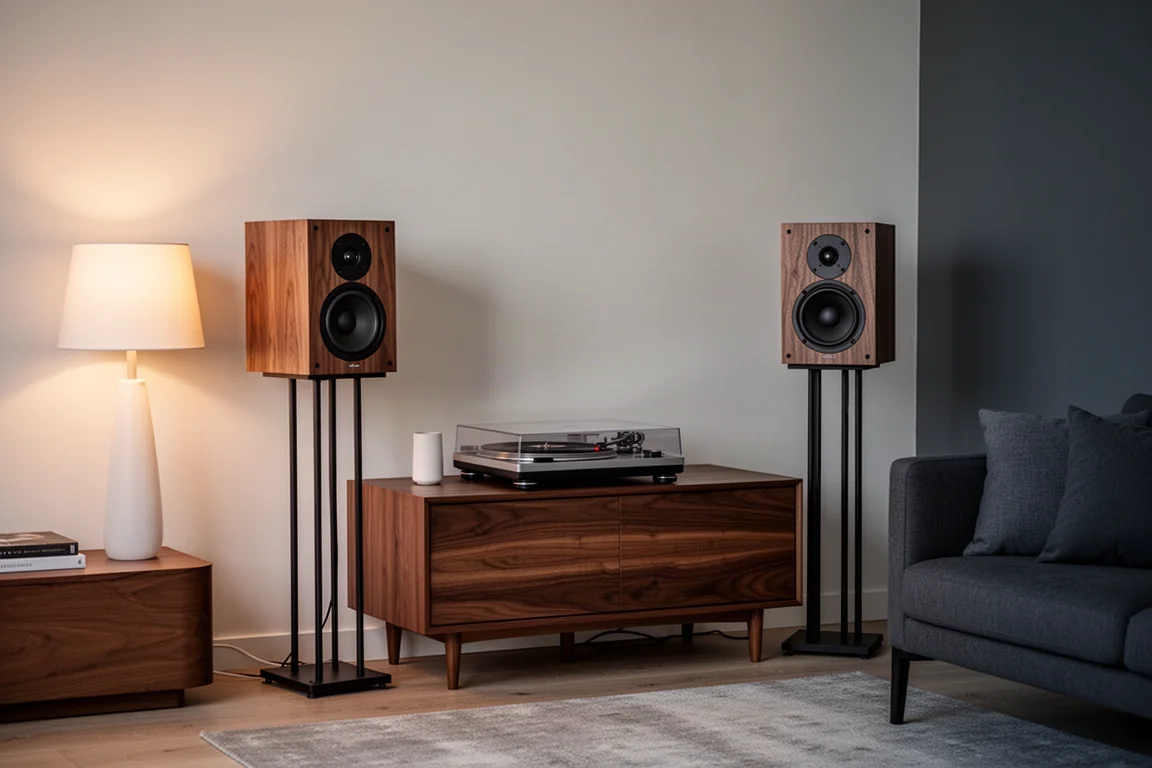
If the speaker is currently available at this price, it represents unusually strong value for anyone building a compact two-channel system, a near-field setup, or a simple living-room arrangement without a centre channel or subwoofer. Pair it with an amplifier that has a little headroom, raise the tweeter toward ear level, and take some time with placement.
Conclusion
The Denton 80th Anniversary Edition is a speaker that reveals more the longer it is used. Its midrange pulls listeners into the music, its bass stays clean and controlled, and its treble stays comfortable enough for extended sessions. It does not chase spectacle, and that is precisely why it works so well over time. For listeners who want a compact, beautifully built speaker with a natural, non-fatiguing character, this one deserves serious consideration.
Product link
View more details for Wharfedale Denton 80th Anniversary Edition
This product is mentioned in the review. Check the specifications, options, and compatibility before buying.
View more details for Wharfedale Denton 80th Anniversary EditionFurther reading
Related Reviews
Bookshelf Speakers
Acoustic Energy A100 Mark II Review: A Compact Standmount With an Expansive Soundstage
The Acoustic Energy A100 Mark II brings clarity, natural tonality and a wide soundstage to an entry-level standmount, with a few setup details worth knowing first.
Bookshelf Speakers
Acoustic Energy AE-100 Mark II Review: Compact Bookshelf Speakers With Standout Imaging
A compact British two-way bookshelf speaker with deep, layered imaging, fast bass, and a slight treble lift to weigh against a crowded $500 field.
Bookshelf Speakers
Acoustic Energy AE100 MK2 Review: Measured Performance and Four Alternatives
A close look at the Acoustic Energy AE100 MK2 bookshelf speaker, what its measured performance reveals, and four alternatives with different trade-offs.