Bookshelf Speakers
Wharfedale D320 Review: A Warm, Laid-Back Bookshelf Speaker at a Discontinued Price
The Wharfedale D320 pairs a warm, easy-going tone with strong imaging and refined bass, and the discontinued line makes it a compelling budget pick.
Introduction
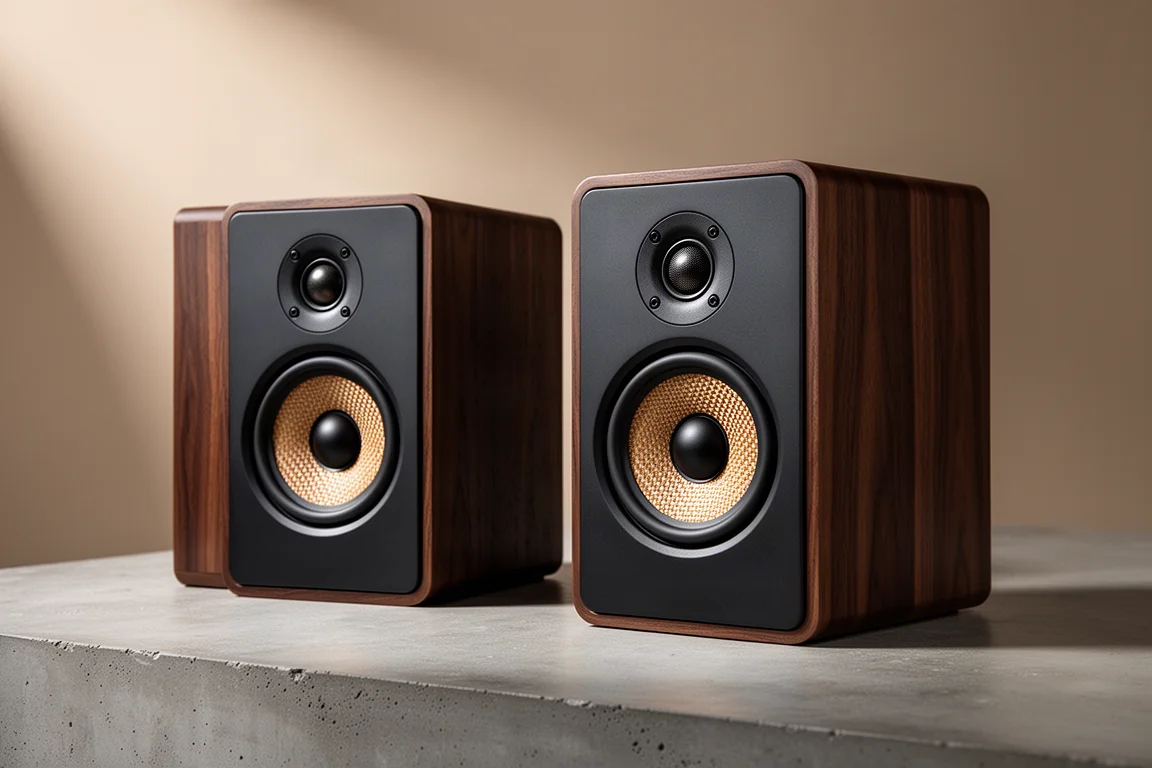
The Wharfedale D320 is a compact two-way bookshelf speaker from a line that also includes a tower and a centre channel, and the entire series is being discontinued. That matters for buyers, because a speaker that carried a retail price of around 250 dollars per pair is now widely discounted to roughly 179 dollars per pair while stock lasts.
Physically it is a conventional design executed with care: a one inch soft dome tweeter, a five inch Kevlar reinforced woofer, a bottom ported cabinet, five way binding posts, and a wood effect vinyl wrap with a black front baffle. Wharfedale rates the pair from 56 Hz up to 20 kHz with 87 dB sensitivity. What makes it worth a closer look is not the specification sheet but the character, because the D320 takes a warmer, more relaxed approach than most of its budget rivals.
Who This Speaker Is For
This is a speaker for listeners who value tone and long term comfort over razor sharp detail. The presentation leans warm and buttery through the midrange, which makes it easy to keep playing for hours without fatigue. It also suits smaller rooms, desks, and shelves, and the bottom port gives it a practical advantage for anyone who cannot pull speakers far out into the room.
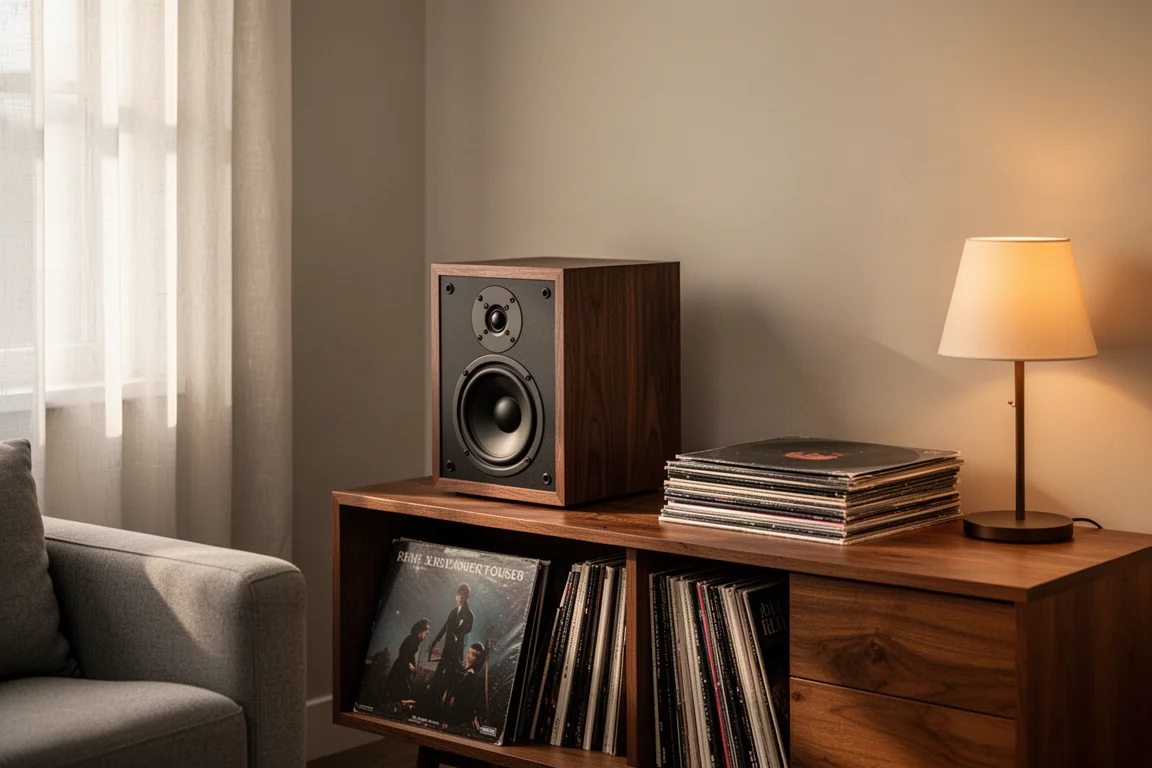
With 87 dB sensitivity the D320 is neither especially hard nor especially easy to drive, so a sensible amplifier is the right match rather than an underpowered one. Its laid-back signature also makes it a good second pair for budget listeners who already own a brighter speaker and want a genuine change of flavour rather than a marginal upgrade.
Soundstage and Imaging
Imaging is one of the D320’s strongest arguments. On Just Like Heaven, Robert Smith’s voice sat clearly above the tweeters, and on the unplugged recording of Something in the Way a cough at the five second mark landed inside the left speaker and well back in the stage rather than floating in front of it. Chocolate Chip Trip moved convincingly from side to side, and vertical placement of sounds was unusually good for the price.
The stage is not enormously wide, and sounds only just pushed past the outer edges of the cabinets. Even so, the speaker’s tonal balance supports a sense of space, and there were no complaints about how instruments and voices were arranged between the two boxes.
Bass, Midrange, and Treble Performance
Bass is a genuine strength. Rated down to 56 Hz, the D320 handled the deep low end of Intergalactic without going all the way down, stopped a touch short of the deepest notes, then delivered real punch on Killing Strangers and stayed notably tight on Highway to Hell. The overall bass response is neutral rather than boosted, and among budget rivals such as the Sony SSCS5, JBL Stage A130, Yamaha S805 and Emotiva B1 Plus it stands out as the most refined. The Polk ES15 reaches lower, but the Wharfedale is the more articulate of the two.
The midrange is where the speaker’s personality lives. Guitars on Shoot to Thrill arrived with both body and grit rather than one at the expense of the other, and while there is a slight lack of fine detail, clarity is never in question. Redemption Song showed believable vocal texture and audible finger plucking on the acoustic guitar, and Adele’s Hello gained detail as her voice rose without ever becoming forward or fatiguing.
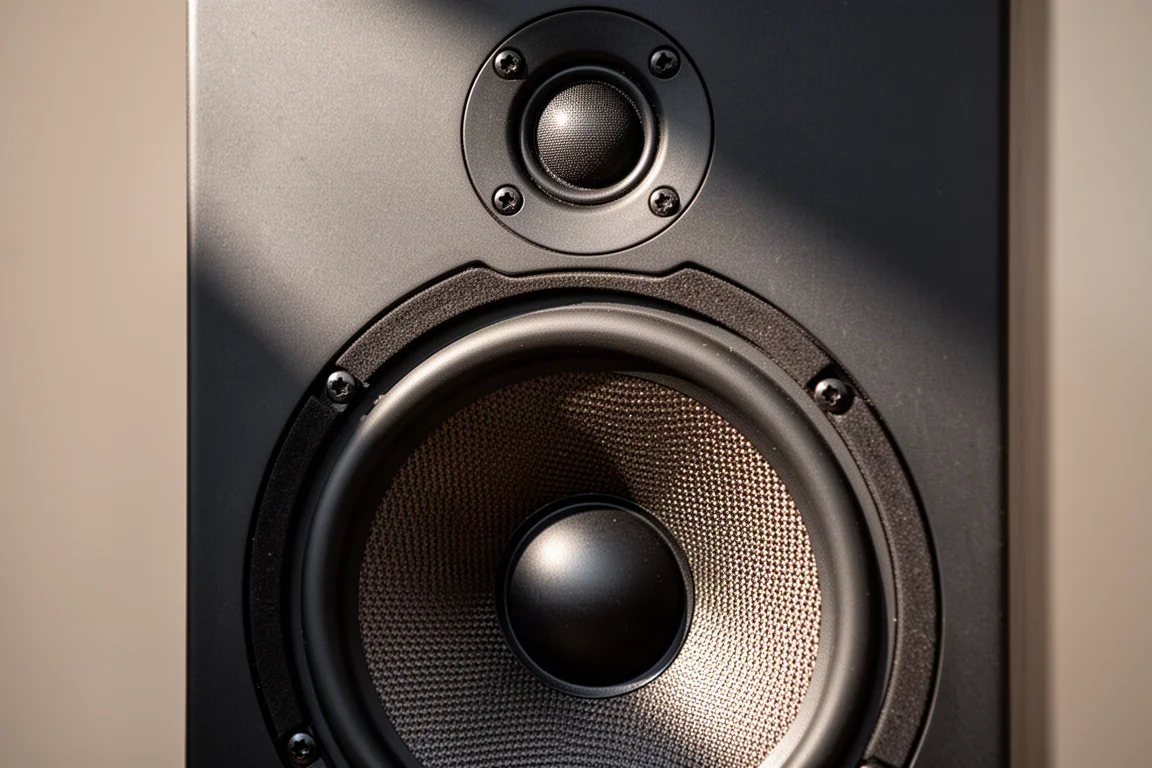
The treble is clear and apparent but sits behind a slight veil. Cymbals on Harvester of Sorrow were pushed well back rather than placed front and centre, rim hits lacked the final degree of sharpness, and the top end gives up a little sparkle and air. Snare hits, by contrast, sounded weighty, and cymbal decay on the Weezer cover of Africa hung in the air nicely. Speakers such as the JBL Stage A130, Sony SSCS5 and Emotiva B1 Plus still offer more treble presence.
Build, Design, and Placement Flexibility
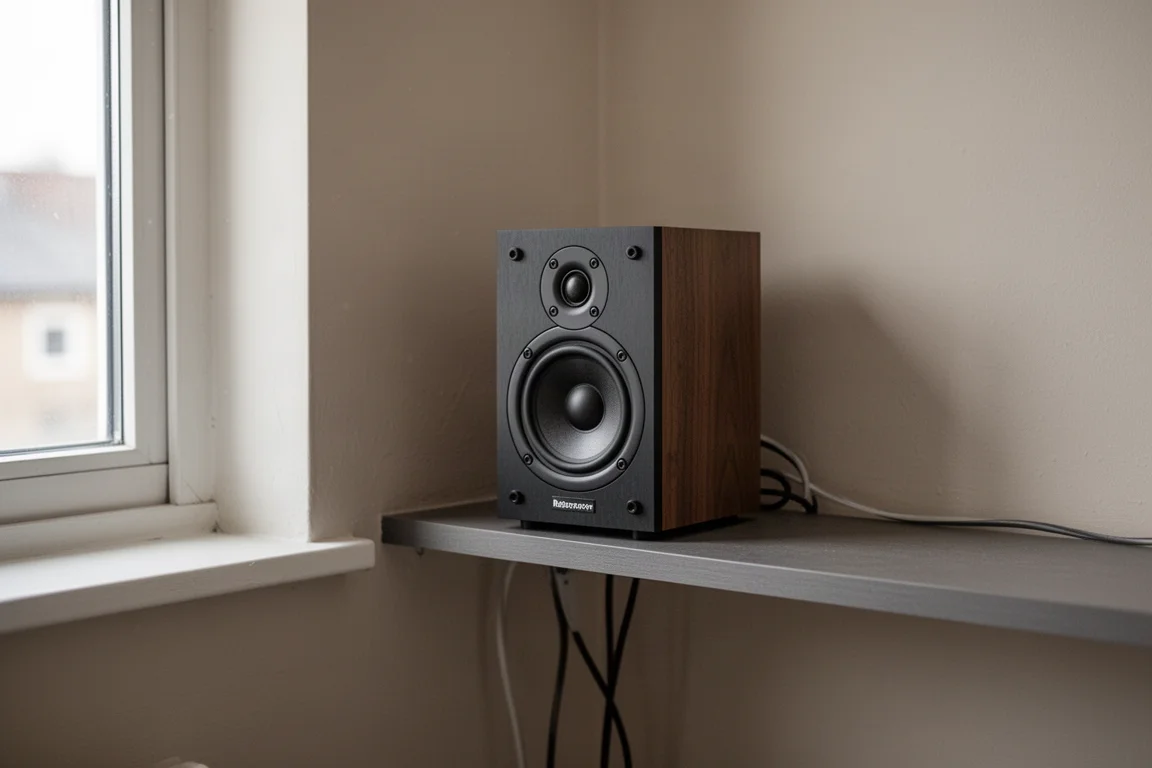
The bottom port is the most practical design decision here. Because the port does not fire forward or rearward at ear height, the D320 can be positioned relatively close to a wall without producing boomy, over-reinforced bass. That opens up placement options in smaller rooms, on shelves, or in corners where a rear ported speaker would need more breathing room.
The cabinet uses a wood effect vinyl wrap with a black front baffle, and the five way binding posts accept the usual connection types. Wharfedale states that its speakers see more than 25 hours of play before they ship and that the company believes in burn-in, so it is worth giving the D320 some running time before forming a final judgement.
Things to Consider Before Buying
The main trade-off is treble. If your priority is sparkling cymbals, airy detail and a forward top end, this is not the speaker that delivers it, and several cheaper rivals are stronger in that specific area. Bass extension is also honest rather than dramatic: it is refined and punchy, but it does not dig as deep as some alternatives.
Availability is the other consideration. Because the line is being discontinued, stock will not last indefinitely, and the current discount is the reason the value proposition is so strong. It is also worth pairing the D320 with an amplifier that does not add brightness of its own, since the speaker already leans warm.
How the D320 Compares With Other Budget Bookshelf Speakers
Against the Polk ES15, the Wharfedale offers a flatter, warmer midrange with a bit less detail and less low end extension. Against the Sony SSCS5, JBL Stage A130 and Emotiva B1 Plus, it trades treble emphasis for a more relaxed and organic presentation. The Monolith Encore B6 brings more bass but less clarity through the midrange and top end.
The closest relative is the older Wharfedale Diamond 11.2, which is warmer still. The D320 keeps the family DNA while adding more activity in the top end. Because these speakers differ so much in signature, owning more than one pair is a reasonable budget strategy: rotate them and familiar music sounds new again.
Buying Advice
At roughly 179 dollars per pair while discontinued stock remains, the D320 is an easy recommendation. Even at the original 250 dollar retail price it holds up well, because the combination of warm tonality, convincing imaging and refined bass is uncommon at this level.
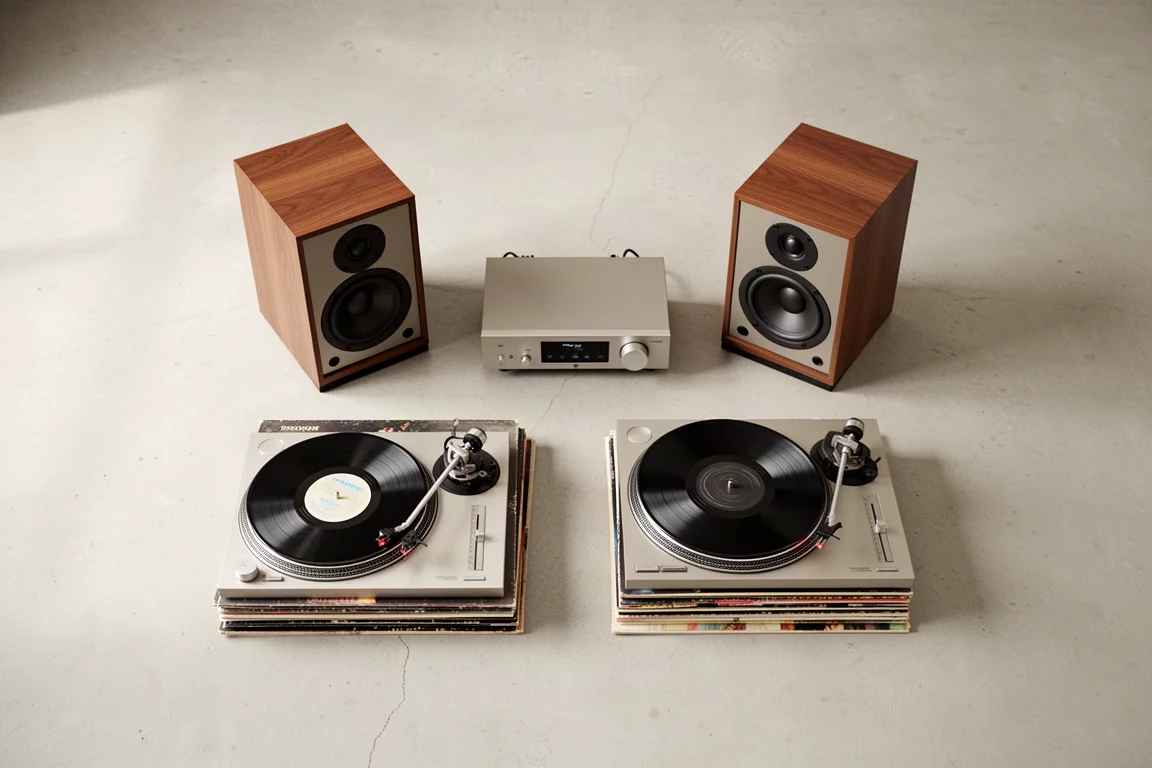
Buy it if you want a speaker you can listen to for hours, place near a wall without fuss, and match with almost any modest amplifier. Give it some burn-in time, keep it away from aggressively bright sources, and it will reward you with a presentation that feels larger and more substantial than its cabinet size suggests.
Conclusion
The Wharfedale D320 is not the most detailed budget bookshelf speaker on the market, and it does not try to be. It delivers weight, warmth and a pleasingly organic character, backed by imaging that punches above its price and bass that is among the most refined in its class. With the line discontinued and prices reduced, it is a straightforward pick for anyone who prefers easy listening over analytical sharpness.
Product link
View more details for Wharfedale D320
This product is mentioned in the review. Check the specifications, options, and compatibility before buying.
View more details for Wharfedale D320Further reading
Related Reviews
Bookshelf Speakers
Acoustic Energy A100 Mark II Review: A Compact Standmount With an Expansive Soundstage
The Acoustic Energy A100 Mark II brings clarity, natural tonality and a wide soundstage to an entry-level standmount, with a few setup details worth knowing first.
Bookshelf Speakers
Acoustic Energy AE-100 Mark II Review: Compact Bookshelf Speakers With Standout Imaging
A compact British two-way bookshelf speaker with deep, layered imaging, fast bass, and a slight treble lift to weigh against a crowded $500 field.
Bookshelf Speakers
Acoustic Energy AE100 MK2 Review: Measured Performance and Four Alternatives
A close look at the Acoustic Energy AE100 MK2 bookshelf speaker, what its measured performance reveals, and four alternatives with different trade-offs.