Photography
Canon RF 800mm f/11 vs Funleader 18mm f/8: Two Unusual Lenses Tested Under the Stars
A long, slow telephoto and an ultra-compact cap lens go head to head for deep sky astrophotography, with daytime strengths and trade-offs for each.
Introduction
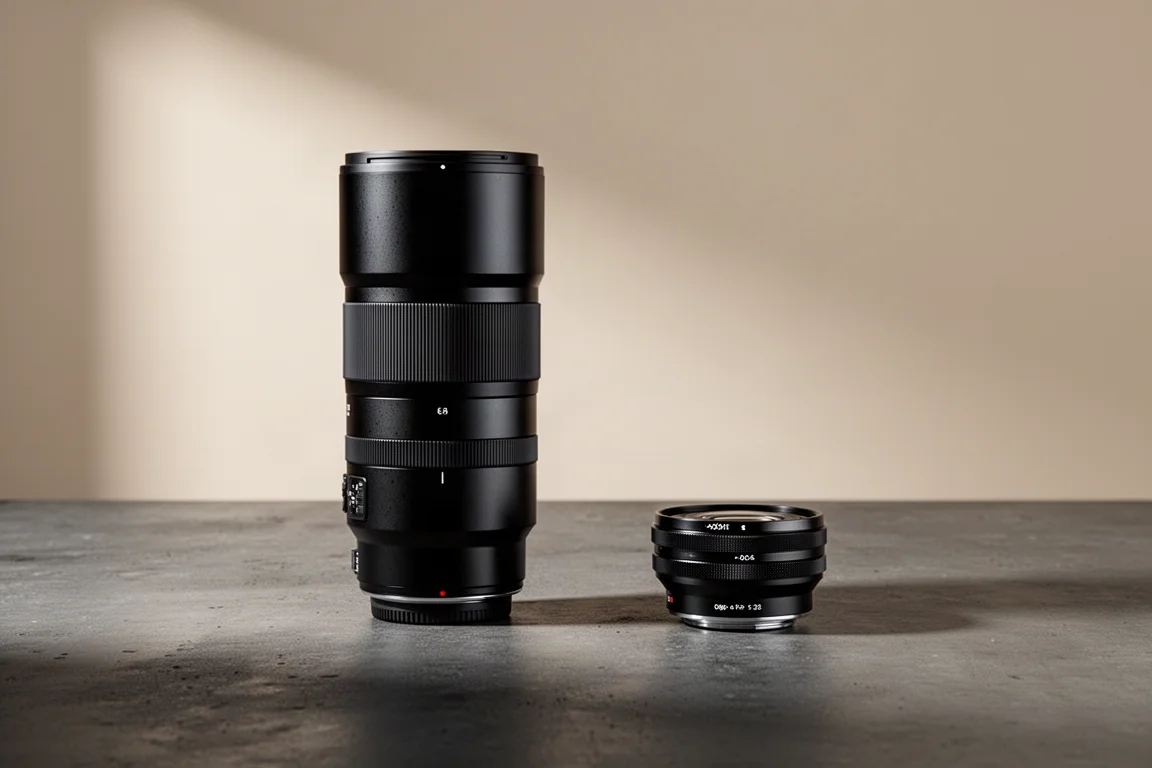
Some lenses are weird in the best way. Two of the most unusual lenses worth a look sit at opposite ends of the focal length scale: the Canon RF 800mm f/11, an unusually light super-telephoto, and the Funleader 18mm f/8 Cap Lens, an ultra-compact lens that literally replaces your camera’s body cap. Both are fixed-aperture, slow lenses, which raises an interesting question: what happens when you point them at the night sky? This test puts both lenses through a deep sky session and also looks at where they shine in everyday use.
How the Two Lenses Were Tested
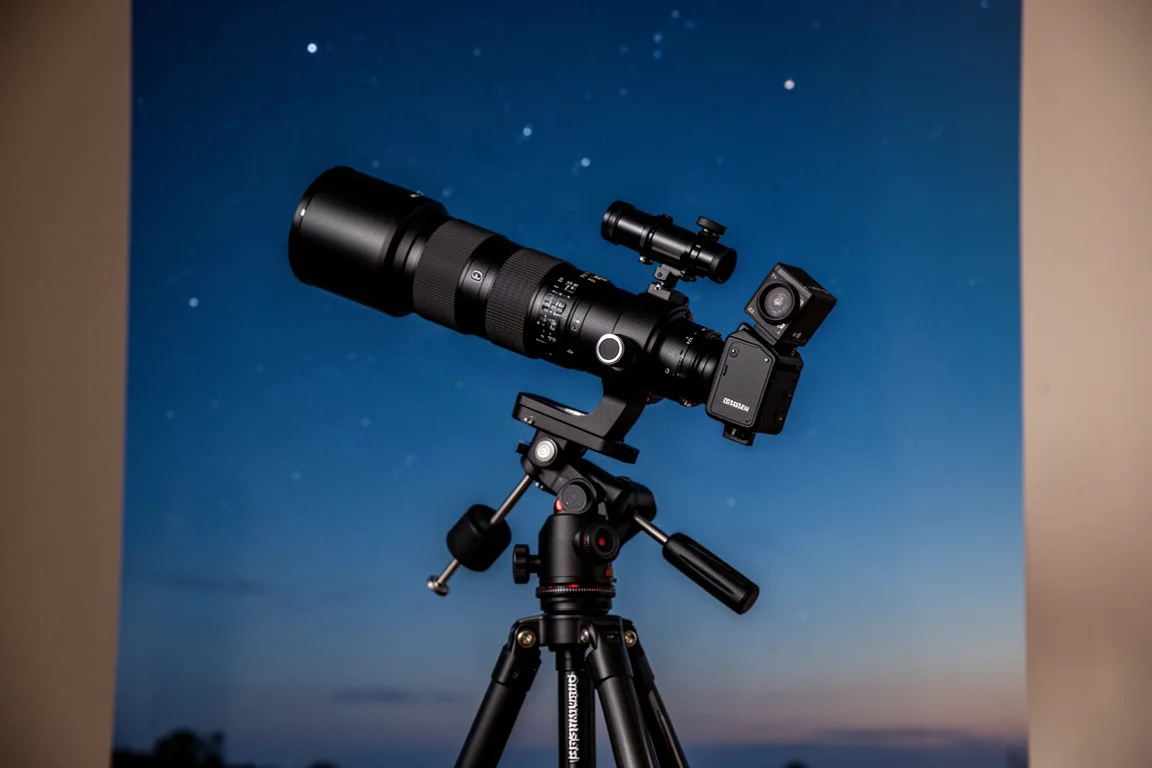
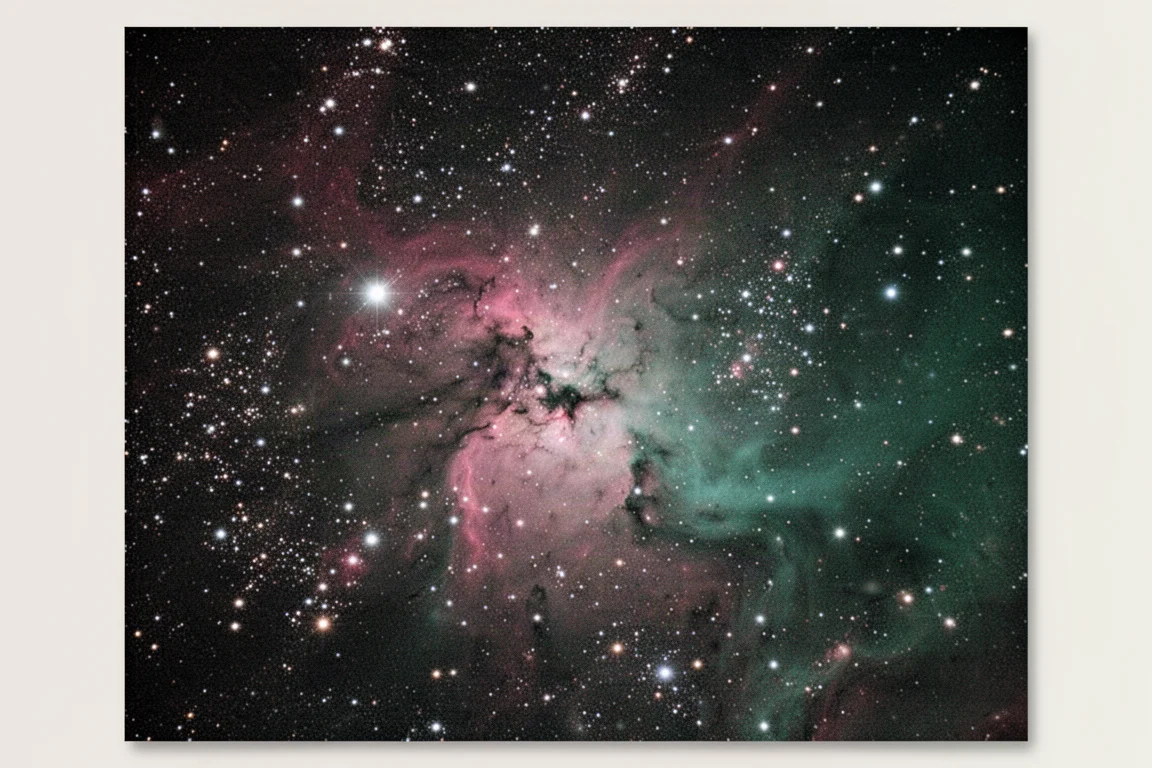
The test session targeted the Lagoon Nebula in the constellation Sagittarius, with the lenses paired to an Orion Atlas mount and a Canon Ra full-frame mirrorless body. Because both lenses are slow at fixed apertures, each sub-exposure needed three to five minutes rather than the 30 to 60 seconds typical for fast f/2 or f/2.8 glass.
At 800mm, even a sturdy mount cannot track accurately enough for round stars over five-minute exposures, so the RF 800 setup added a William Optics guide scope and a ZWO guide camera running PHD2 guiding software, which monitors star movement and sends corrections back to the mount. The wide 18mm lens did not need guiding, since small tracking errors do not show up at that focal length. It did, however, need to sit right at the front of the dovetail so the hardware stayed out of frame.
Funleader 18mm f/8 Cap Lens: Design and Daytime Use
The Funleader is exactly what the name suggests: a lens thin enough to replace the body cap on your camera. There is very little to describe because there is very little to it. No moving parts, a fixed f/8 aperture, and fixed focus from about three feet away to infinity, which rules out close focusing but causes no problems for astrophotography. It is roughly 15 millimeters thick and weighs about 80 grams, or three ounces.
Funleader makes versions for all major mirrorless systems including Sony and Nikon, while the version tested here uses the Canon RF mount. In everyday use it is best understood as a fun walking-around lens: photos come out roughly at cell phone quality, but with full manual control over shutter speed, ISO, and picture profile, plus the comfort of holding a camera with a grip instead of a phone. For bright daytime snapshots it delivers exactly that kind of low-effort fun.

Canon RF 800mm f/11: Design and Daytime Use
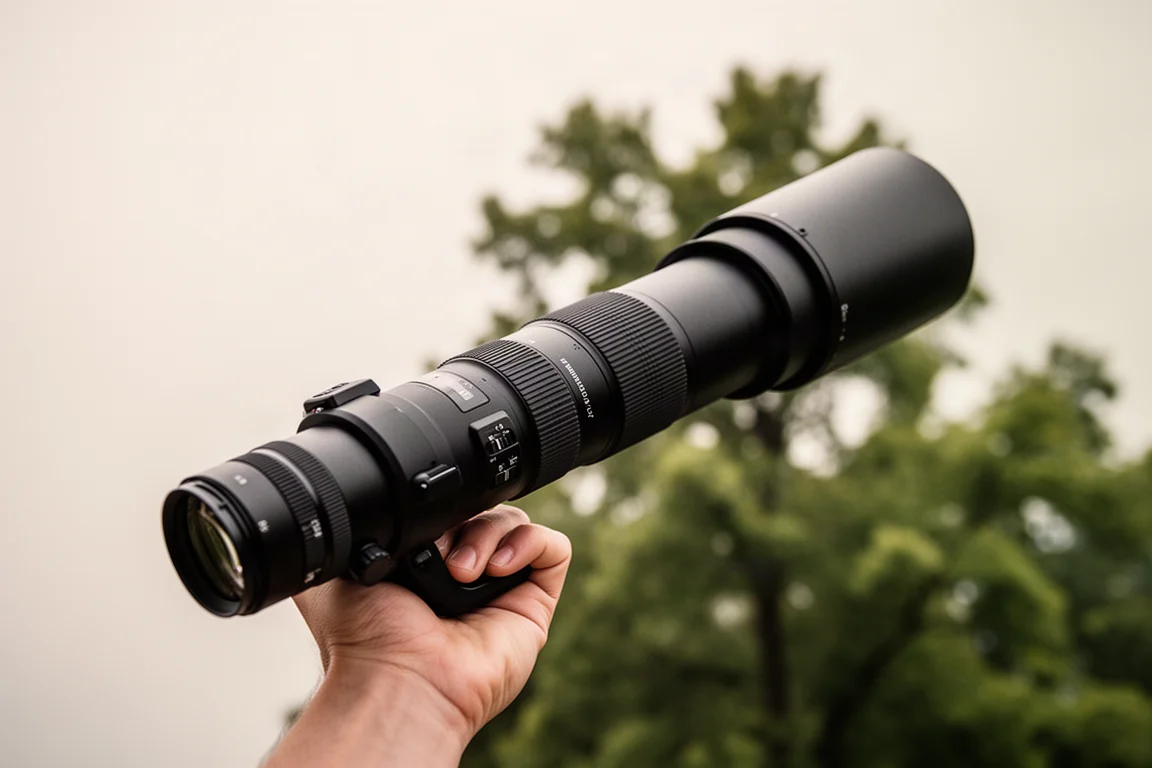
The Canon RF 800mm f/11 was bought for daytime nature photography, with handheld shooting as the main draw. By fixing the aperture at f/11, Canon kept the weight down to about two and a half pounds, which makes the lens surprisingly comfortable to carry and use without a tripod, image stabilization switched on. Early handheld results of wildlife, including a well-rendered shot of an adolescent goose with a cocked head and water droplets on its feathers, and a test of an interesting cloud formation, came out well.
In its retracted state the lens measures 282 millimeters for storage, extending to 352 millimeters, over 13 inches, when in use. The barrel carries three switches: one for image stabilization, one for autofocus or manual focus, and one for focusing distance range. For night work the settings are manual focus and stabilizer off, because leaving the stabilizer on can produce odd star shapes as the lens makes tiny corrective movements. This lens also performed well for lunar work, including a total lunar eclipse shot on a star tracker, with the moon looking sharp and little fringing.
Results Under the Stars
The Funleader 18mm produced a classic full-frame Milky Way framing at 18mm. A single four-minute exposure showed pretty extreme vignetting and plenty of distortion away from center, which grew worse in a stack of 12 frames. Cropping tighter and bringing back a foreground element, a friend with a red light, made for a more interesting final image. Evaluation: vignetting and color shifting away from center, but in the very center the stars, colors, and detail actually look fine, about as expected and perhaps slightly better in the middle.
The RF 800mm f/11 was the bigger surprise. A single five-minute exposure of the Lagoon and Trifid nebulae looked genuinely good for a sub-$1,000 800mm lens. The f/11 aperture was not a major obstacle on bright deep sky objects, and the star field renders remarkably well: little distortion, little chromatic aberration, and sharp-looking stars even in the corners. The stack of 12 frames revealed hourglass distortion on the brightest stars, a common artifact that affects even highly regarded lenses like the Rokinon 135 wide open, and the result is noisier than fast-lens work at an hour of integration, which is to be expected at such a slow focal ratio.
Which One Should You Buy?
Neither lens is a strong value purely for deep sky astrophotography given their slow fixed apertures, and both make more sense as daytime tools that happen to survive a night under the stars. The Funleader is a fun daytime lens that will not earn a repeat night shift. The RF 800mm is far more versatile than it first appears: strong for wildlife, good for the moon, and surprisingly decent on star fields and bright deep sky objects, all with 800mm of reach in a small, light package. Its light weight also opens the door to lighter star trackers with lower payload limits.
Conclusion
If you want an almost weightless ultra-wide for casual daytime shots, the Funleader 18mm f/8 Cap Lens delivers cheap fun without taking any bag space. If you want serious reach for wildlife, the moon, and occasional bright deep sky targets without the bulk of a classic super-telephoto, the Canon RF 800mm f/11 is the more versatile and more capable buy of the two.
Product link
View more details for Canon RF 800mm f/11
This product is mentioned in the review. Check the specifications, options, and compatibility before buying.
View more details for Canon RF 800mm f/11Further reading
Related Reviews
Astrophotography
ASKAR FRA400C Review: A Versatile 400mm Refractor for Astrophotography and More
The ASKAR FRA400C is a compact 72mm refractor that balances reach, versatility, and portability for astrophotographers and visual observers.
Astrophotography
Askar SQA106 Review: A Premium 106mm Astrograph With Exceptional Optics
The Askar SQA106 is a premium 106mm quintuplet astrograph with impressive sharpness across full-frame sensors, though its price and weight demand careful consideration.
Astrophotography
Astro Imaging Gear 2026: Eight New Products Worth Watching
A look at the most interesting new astrophotography and astronomy products announced this year, from fast telescopes to smart cameras and wireless accessories.