Backpacking Gear
Warm-Weather Backpacking Layers: Four Lightweight Pieces for Summer Trips
A practical look at four lightweight layers for summer backpacking, from a packable down vest to a water-repellent synthetic jacket, and how they work together.
Introduction
Summer backpacking has a specific temperature problem. From June through September you spend the daylight hours in shorts and a t-shirt, running warm and sweating, and then the sun drops behind a ridge or a stand of trees and the air turns cool within minutes. That is the moment when a layer stops being dead weight and starts earning its place in your pack.
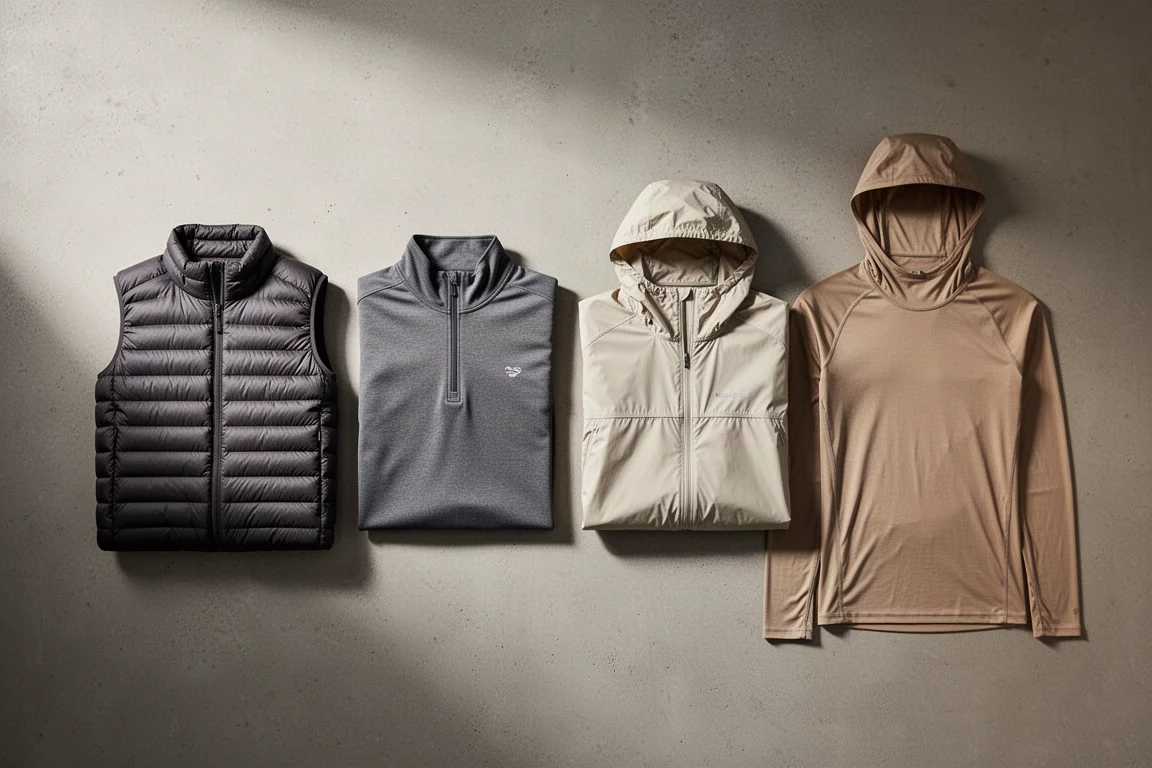
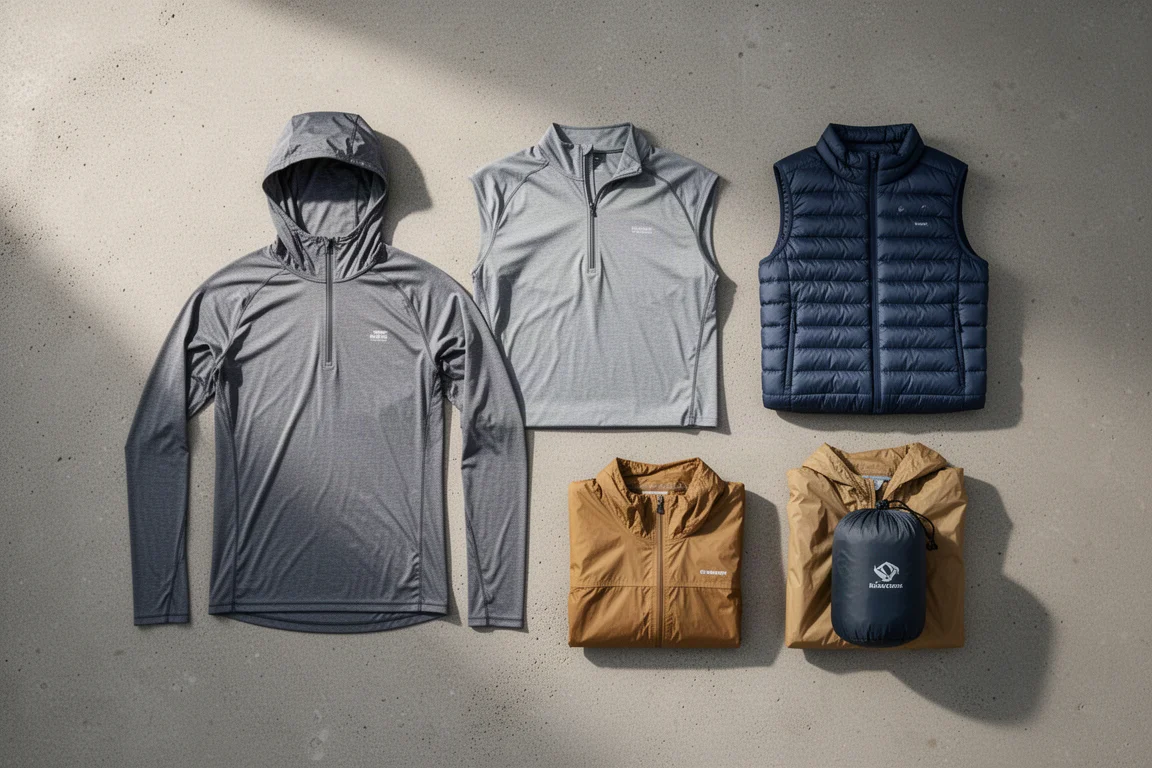
The goal for those months is not survival gear. It is a small set of lightweight pieces that handles a modest drop in temperature, packs down to almost nothing, and stays useful across a range of conditions from roughly 40°F and up. This roundup covers four pieces that fit that brief: a lightweight down vest, an active synthetic mid-layer, a light synthetic jacket with a water-repellent finish, and a long-sleeve hooded base layer.
What to Look For in a Summer Layering System
Three things matter most in warm-weather layers. First, weight and packed size: a layer you resent carrying is a layer you will leave at home. Second, versatility: a piece that works on a summer trip and also in three-season conditions gives you more value per dollar. Third, moisture behaviour: summer rain and sweat are both real, and synthetics dry quickly, while down does not insulate well once it is wet.
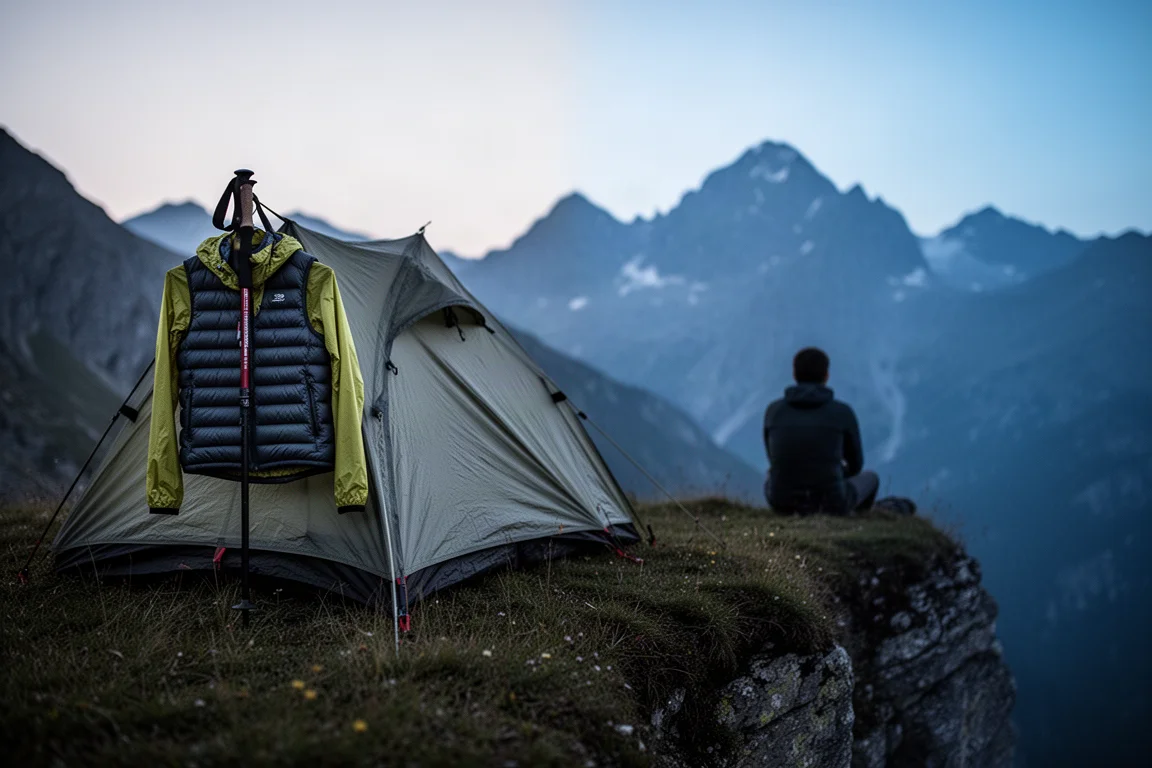
A rain jacket is the quiet workhorse of the whole system. Worn over a mid-layer, it breaks the wind, keeps rain off, and traps warmth without the bulk of a heavier insulated jacket. In the 40°F to 50°F range, that combination is often more comfortable than a dedicated down jacket, which can be overkill once you are moving. Treat the shell as part of the layering system rather than a separate category.
Best Down Layer: Arc’teryx Cerium LT
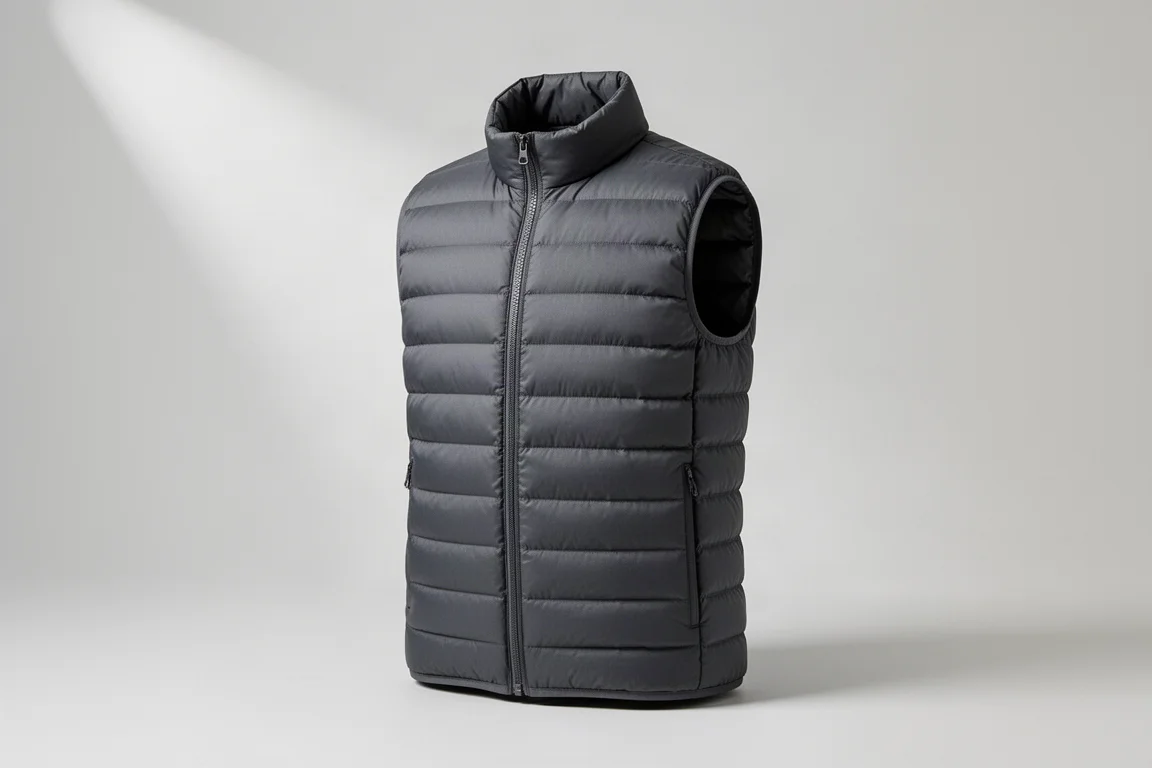
The Cerium LT is a lightweight down vest, and its job is narrow and useful: it takes the chill off. It warms your core without trying to defeat serious cold, which is exactly what a summer evening at camp calls for. It is also remarkably light, and it compresses down to a very small package, so it costs you almost nothing in pack space.
Down is not compulsory for summer backpacking, and this is the piece that proves it can still be the right call. A vest gives you core warmth with fewer grams than a full jacket, and because it packs so small it can also supplement a sleep system during the coldest part of the night, which on most summer trips lands in the early morning hours. The trade-off is moisture: down loses its insulating ability when it gets wet, so it belongs in the pack when rain is likely and under a shell when the weather turns.
Best Active Mid-Layer: Outdoor Research Vigor
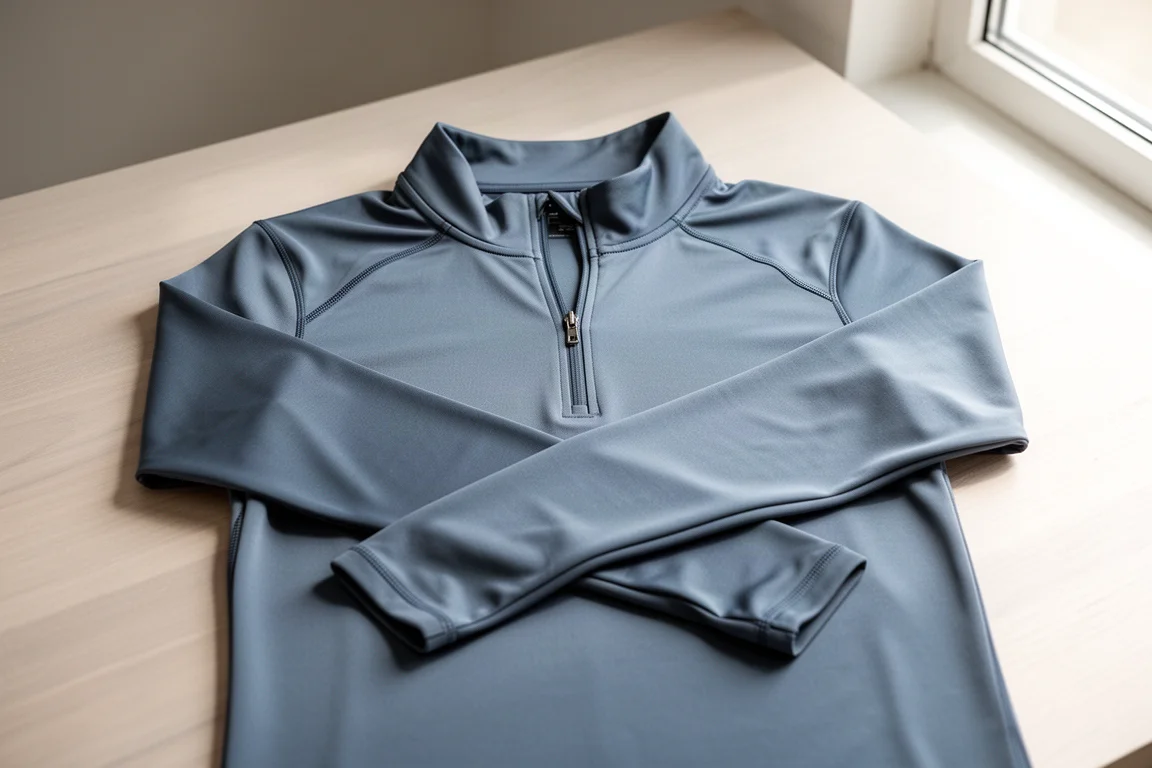
The Vigor is a synthetic mid-layer with a half-zip or quarter-zip design, and it is built for movement. If you need added warmth while you are still walking, whether because a weather system has moved in or because the trail has climbed into cooler air, this is the layer that keeps working without making you overheat.
Worn under a rain jacket, it pulls heat in and holds it while still letting you dump warmth through the zip when you pick up the pace. It is also one of the better value options in a layering kit, since it does not cost a great deal and stays useful across multiple seasons rather than being a summer-only purchase.

That combination of modest cost and year-round relevance is what makes an active synthetic mid-layer such an easy recommendation. You are not buying a specialist item. You are buying a layer that will see use on summer trips and in three-season conditions alike.
Best Lightweight Synthetic Jacket: Arc’teryx Atom SL
The Atom SL is a very light synthetic jacket. The SL designation points to a minimal amount of synthetic fill, and the anorak version trims weight further by using a pullover design rather than a full front zip. A jacket version is also available if you prefer a full zip.
What sets it apart for summer use is the DWR treatment on the face fabric. A light shower does not force you to stop and dig out a rain jacket, and you do not have to worry about the insulation soaking through the way you would with down. In warm weather you dry off quickly anyway, and the synthetic fill keeps working even if you get damp. A slightly heavier LT version is also worth knowing about if you want more warmth for three-season use, though the SL is the better match for the warmest months.
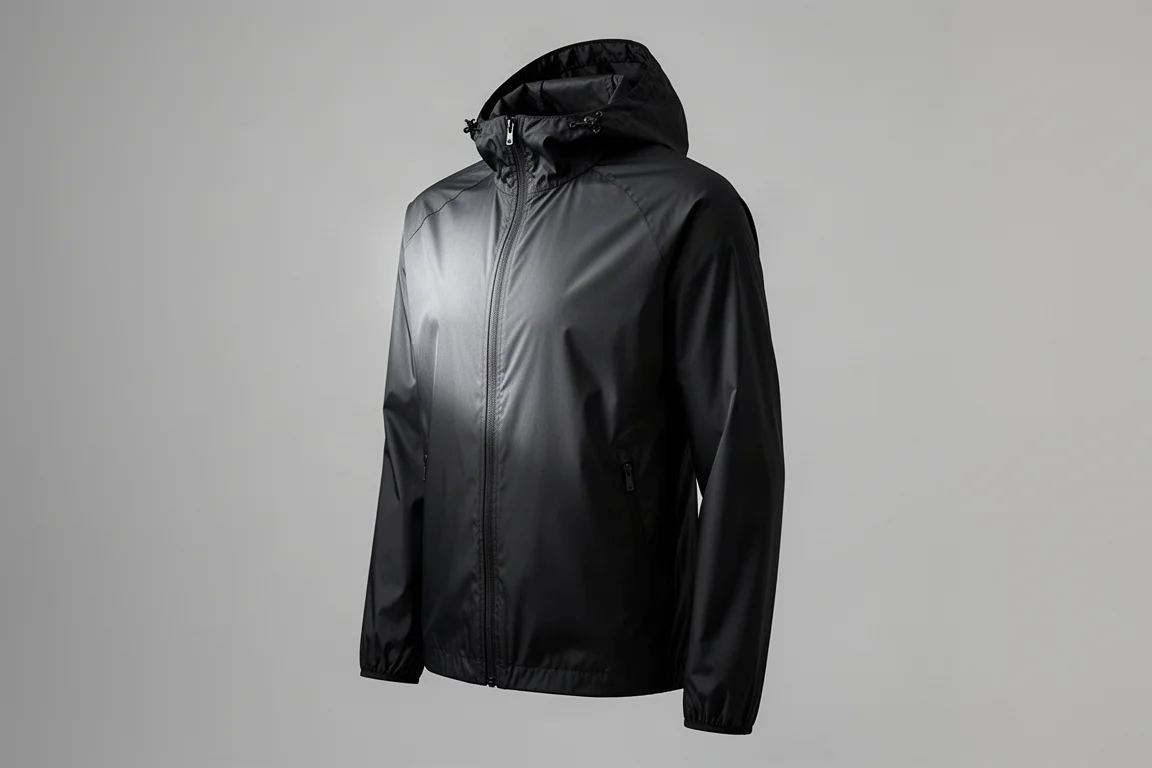
Best Base Layer: Outdoor Research Echo Hoodie
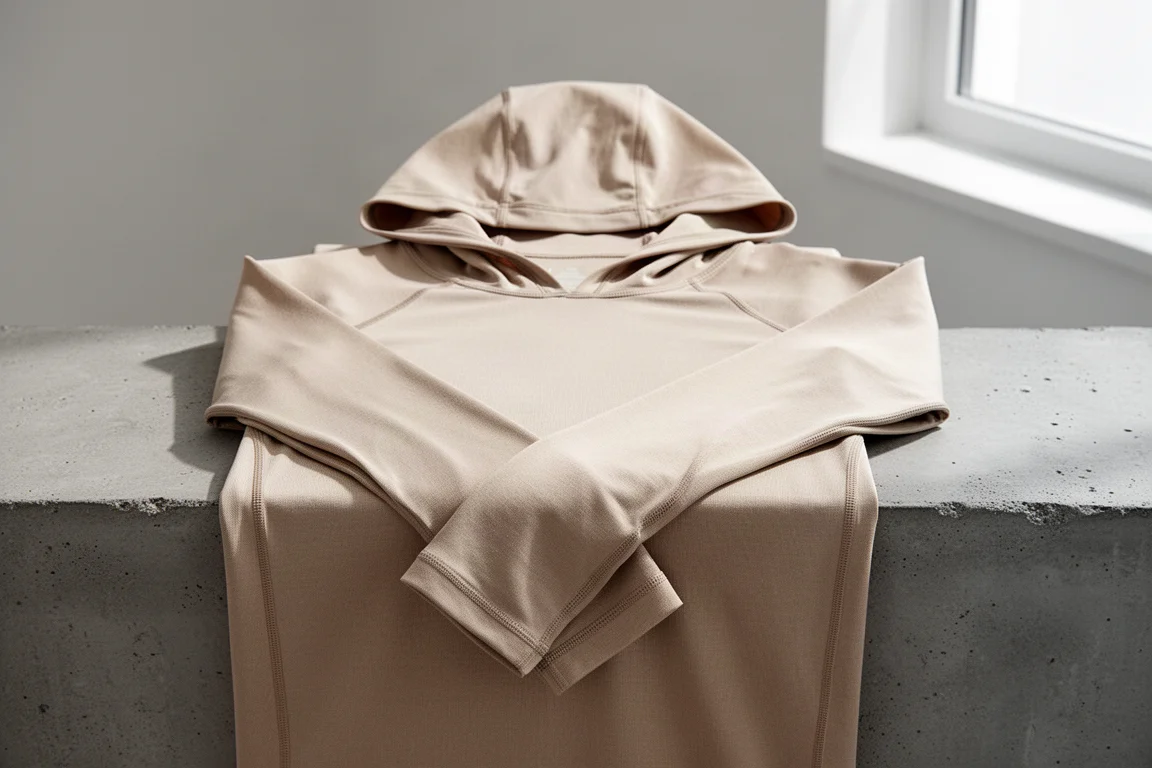
Everything above sits on top of a base layer, and the Echo Hoodie is the one to build around. It is a long-sleeve hooded top that provides good coverage and layers cleanly under a mid-layer and a shell without adding bulk or restriction.
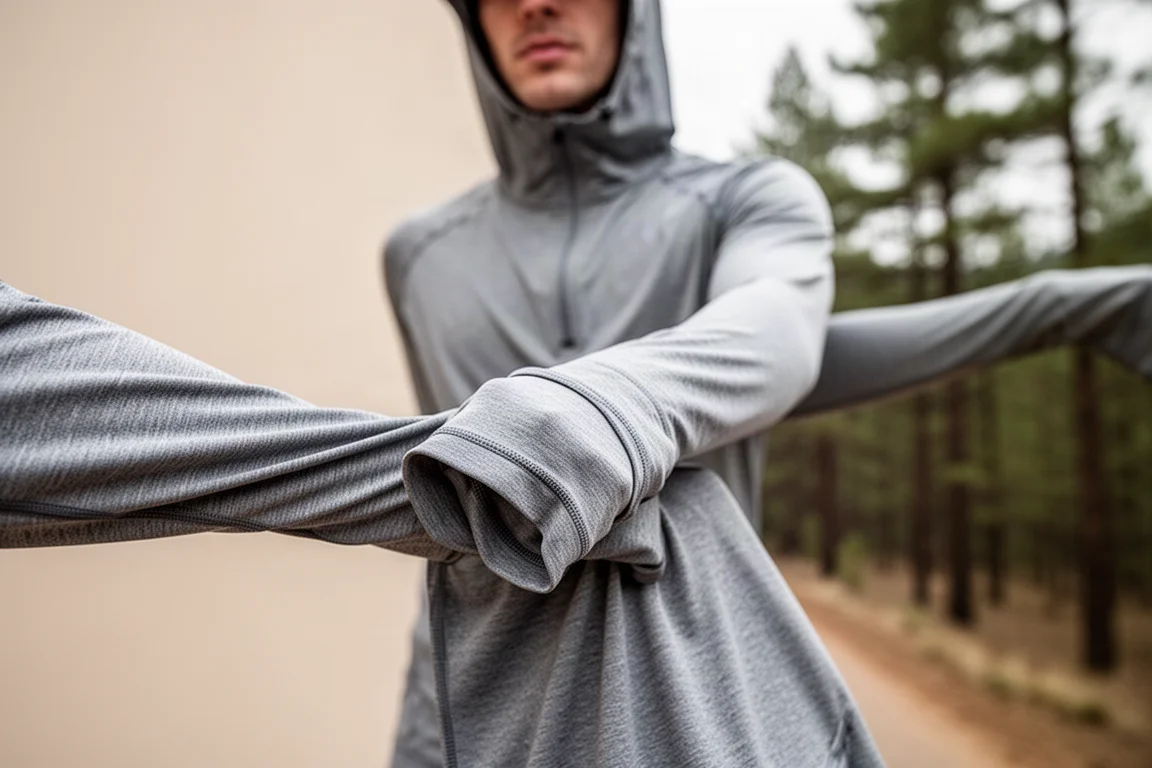
As the foundation of the system, a base layer like this is what you wear for most of the day and what the rest of the layers are sized around. Long sleeves and a hood give you coverage when the sun is strong or the air is cool, and the fabric works with the synthetic mid-layer above it to move moisture rather than hold it.
How These Layers Work Together
The four pieces are not meant to be worn at once for most of the trip. On a typical summer day the base layer carries you through the warm hours, the mid-layer comes out when the temperature drops or the weather changes, and the shell goes over the top when wind or rain arrives.
The down vest is the camp layer. It is what you pull on when you stop moving, the sweat cools, and the evening air settles in. Because it packs so small, keeping it in the pack for exactly that moment costs almost nothing.
If you are caught out in sustained rain on a ridgeline, the shell over a synthetic mid-layer is the combination that holds up. The synthetic insulation keeps working when damp and dries quickly, which is the main reason a summer kit leans synthetic rather than down.
Buying Advice: Matching Layers to Conditions
Start with the conditions you actually expect. A summer layering system is designed for temperatures that stay above freezing, with the coldest point of the trip usually arriving in the early morning hours in your sleeping bag. If that describes your trips, you do not need a heavy down jacket that you would never want to carry.
You also do not need to buy everything at once. A fleece or synthetic mid-layer you already own for three-season or winter use will work well for summer applications, with the one caveat that fleece does not compress the way down does, so it takes up more room in the pack. If you are starting from scratch, a light synthetic jacket like the Atom SL is a strong single purchase because it handles light rain on its own and layers well under a shell.
Budget matters here too, and the good news is that the most versatile pieces in this category are not the most expensive ones. An active mid-layer and a long-sleeve base layer cover a lot of ground for a modest outlay, and the down vest can wait until you know you want a dedicated camp layer.
Conclusion
A warm-weather backpacking layering system comes down to a few lightweight pieces that punch above their weight: a base layer you wear all day, a synthetic mid-layer for movement, a light synthetic jacket with a water-repellent finish, and a packable down vest for camp. Add a rain jacket over the top and you have a system that handles cool evenings, sudden showers, and windy ridgelines without the weight of a full winter kit.
Pick the pieces that match the trips you take, and buy them for the seasons you will actually use them in. That is what makes a summer layer system worth the space in your pack.
Further reading
Related Reviews

Backpacking Gear
Building a 10 lb Base Weight: An Ultralight Backpacking Gear List
A practical walkthrough of the ultralight pieces behind a 10 lb base weight, from a 765 g pack and a roomy one-person tent to a full camp chair and a dependable water filter.

Backpacking Gear
A 15-Pound Lightweight Backpacking Gear List for Solo Trips
A beginner-friendly 15-pound backpacking setup built from easy-to-find gear, with notes on what each piece does, how it packs, and where to spend your attention.
Backpacking Gear
8 Ultralight Backpacking Gear Upgrades Worth Carrying
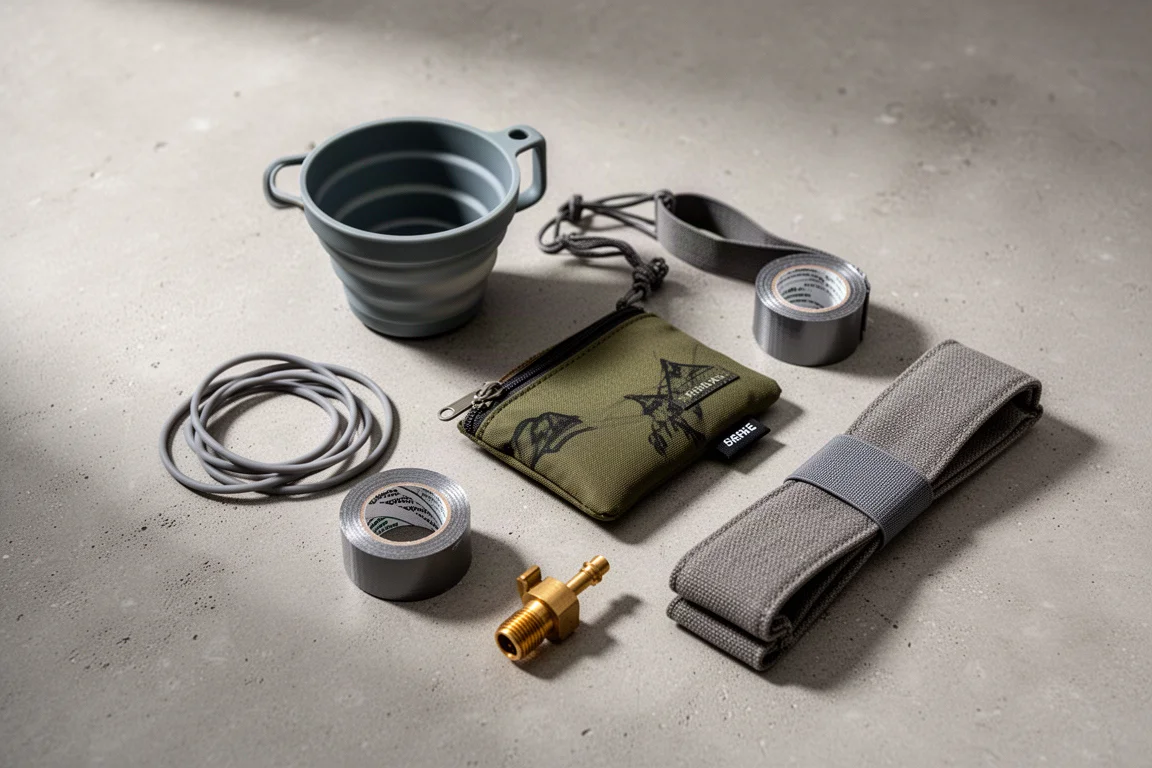
Eight small, affordable backpacking upgrades that solve real trail annoyances, from a pillow that stays put to a fuel valve that rescues leftover canister gas.