Camping Tents
Wakeman Outdoors Two-Person Tent Review: What a $20 Amazon Bestseller Really Delivers
A single overnight test of the lowest-priced two-person tent on Amazon, covering usable interior size, seam sealing, and who should avoid it.
Introduction
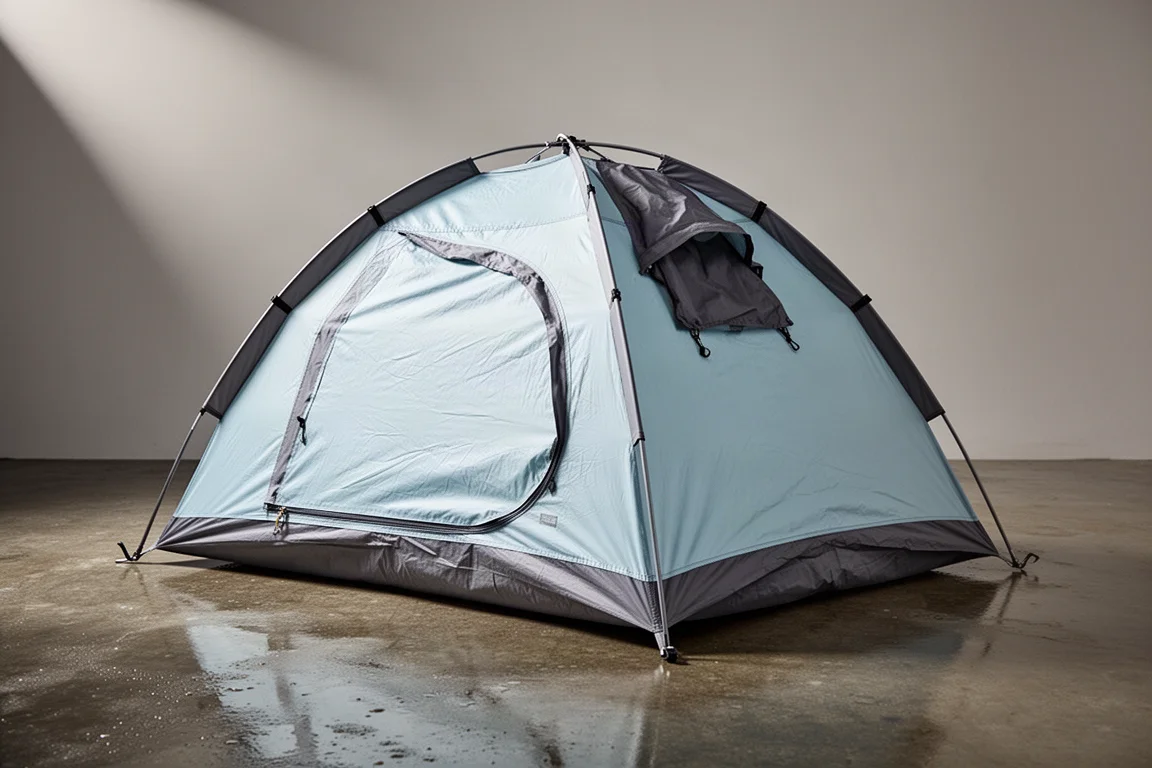
The Wakeman Outdoors two-person tent is the lowest-priced tent available on Amazon, selling for around $20 at the time of testing. The listing describes it as a two-person shelter large enough to fit a queen-size mattress, and it carries more than 13,000 customer ratings, the large majority of them five stars. That combination, an extremely low price and an extremely high rating volume, is exactly why it deserves a closer look.
This review is based on a single overnight outing in cold, wet weather, with temperatures in the mid-30s Fahrenheit and rain arriving overnight. The plan was simple: buy the cheapest tent on the market and find out how it holds up when the weather turns.
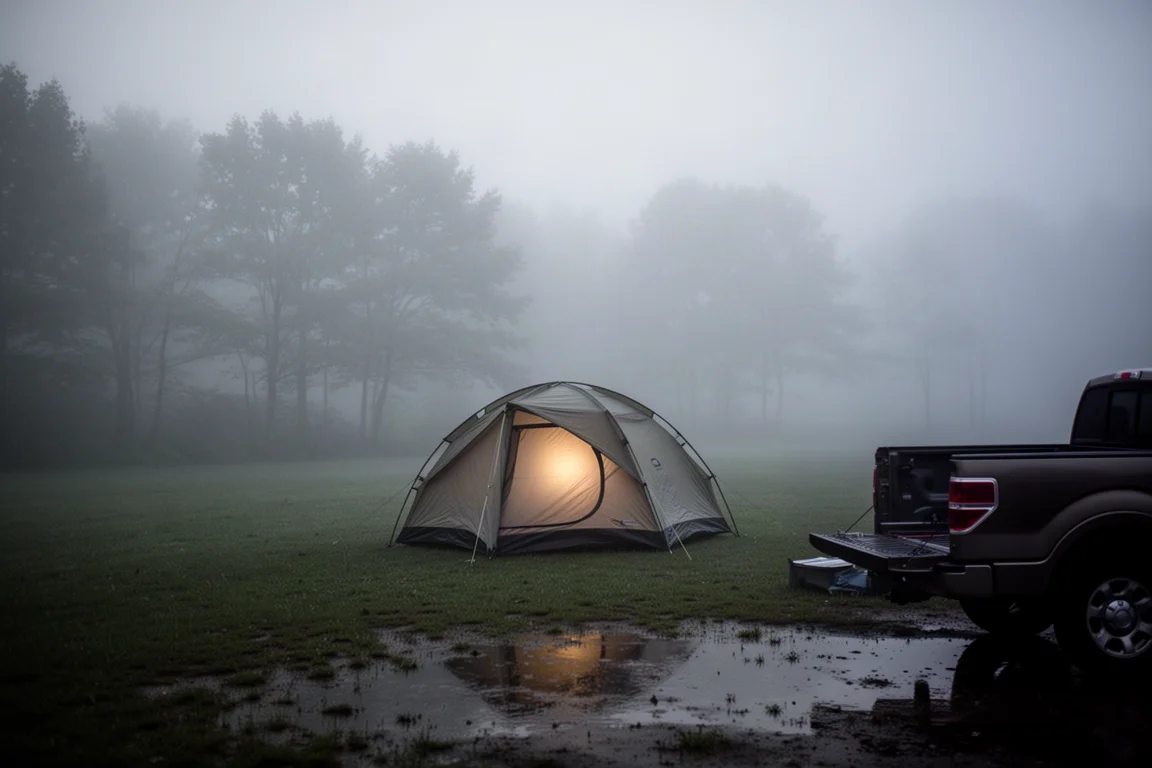
What follows is a straightforward account of what this tent gets right, where it falls short, and who should think carefully before buying it.
Who This Tent Is For
Price is the entire appeal here. At roughly $20, this is a tent for occasional fair-weather use, a backyard sleepout, or a children’s indoor play tent where waterproofing and interior volume do not matter much. Buyers in that situation get a complete shelter for very little money.
It is not a tent for anyone who needs dependable protection from rain, cold, or wind, and it is not a tent for two adults. The interior simply does not support that. Anyone camping in shoulder seasons, in wet climates, or at altitude should look elsewhere.
Main Strengths
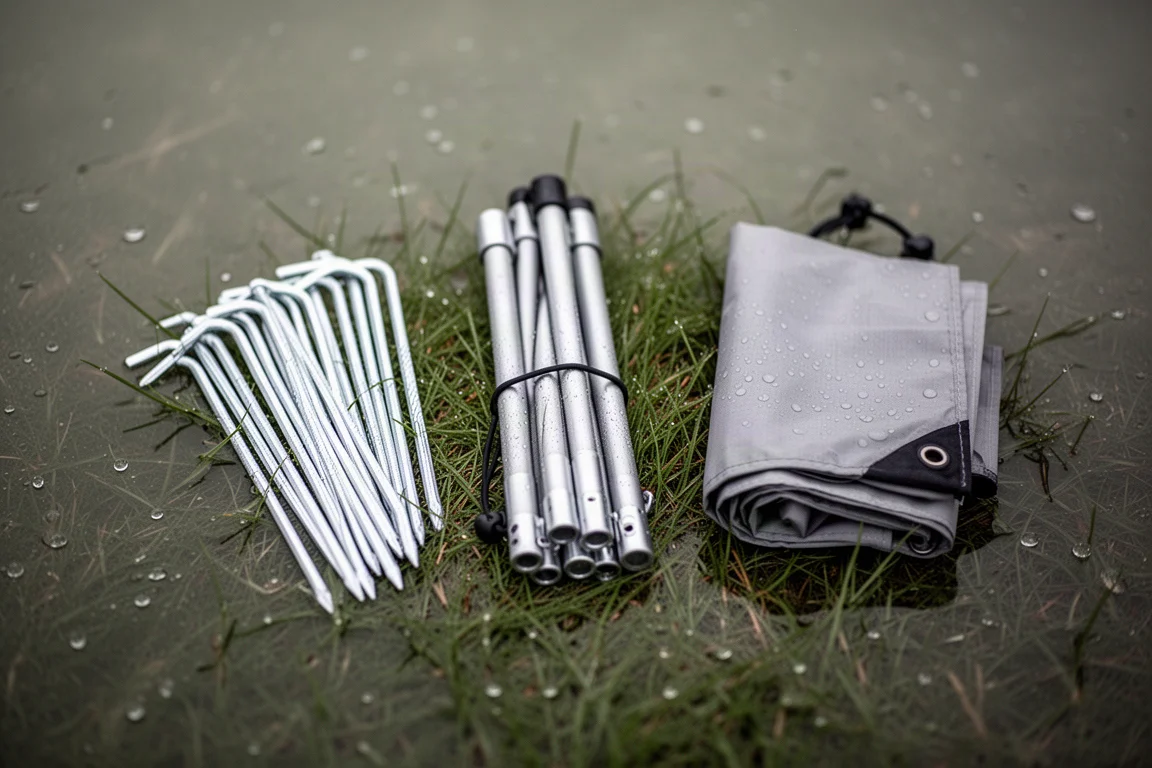
Price is the headline. At about $20 this is the cheapest tent on Amazon at the time of testing. Lower-cost shelters exist, but they are emergency covers and bivvy-style options rather than tents. For the money you get a complete package: fiberglass poles, tent stakes, and a rain fly.
The tent also survived setup without breaking. The poles went together, the canopy stood up, and the stakes, though very thin, held well enough in soft ground. That is not a given at this price point.
A few construction details are better than expected. The seams along the top of the tent are taped, and the rain fly, small as it is, covers the vent at the top. There is also a storm flap over the door zipper.
That is a short list, and it is worth being clear that none of these strengths relate to weather protection.
Real-World Size and Setup
The listing gives the tent as 77 inches long, 57 inches wide, and 42 inches tall. Those numbers describe the very base of the tent at its longest and widest points, and the walls slope inward sharply from there. Inside, the usable length is closer to five feet and the usable width is around three feet eight inches.
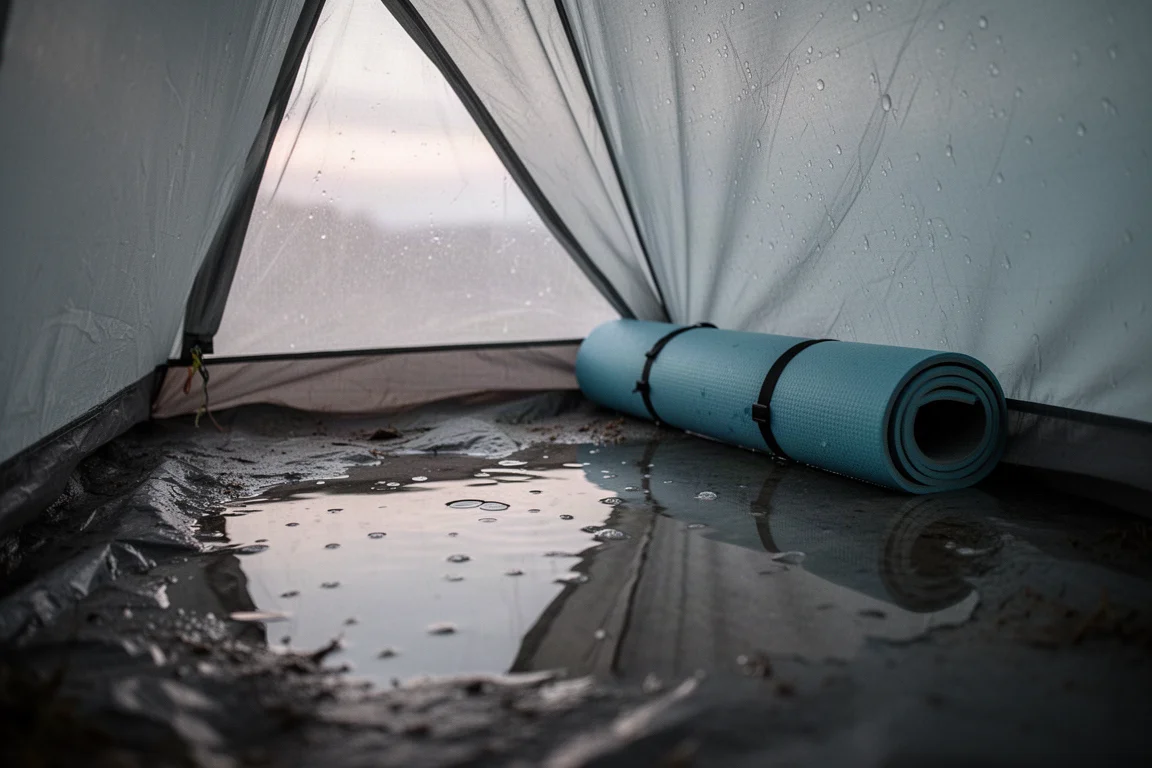
That gap between the listed footprint and the usable interior is the biggest surprise of the test. A single sleeping pad took up essentially the entire floor. Lying down, the head touched the back wall and the feet reached the front wall, which means every contact point becomes a wet point once the fabric is soaked.
The rain fly is also much smaller than expected. It covers the vent at the top of the tent and little else, leaving the body of the canopy exposed.
Things to Consider Before Buying
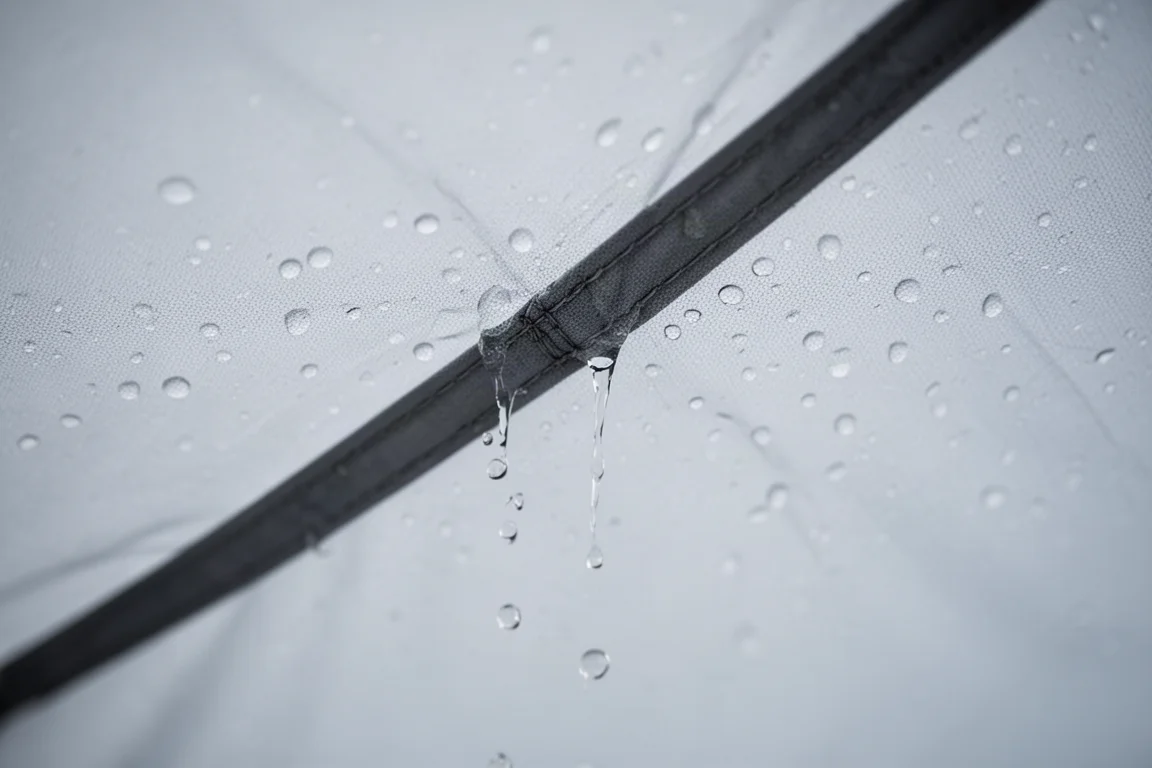
The most serious issue is seam sealing. The seams at the top of the tent are taped, but a seam that runs around the body of the tent is not, and that is where water gets in. During the test, water was visibly moving through the fabric along that seam line before the rain had even started in earnest.
Other details are worth weighing too. Pinholes at the stitching let daylight through the canopy. The stakes are extremely thin. The floor is not convincingly waterproof. And because the interior is so tight, any moisture that gets inside has nowhere to go except onto you and your sleeping bag.
Cold weather makes all of this more serious. In temperatures in the mid-30s Fahrenheit, a wet sleeping area stops being an inconvenience and becomes a genuine safety concern.
What Happened in the Rain
The tent leaked before the rain arrived, and it kept leaking once the weather settled in. Water pooled on the floor and spread, and by morning the interior was holding standing water across a floor roughly five feet long and three feet wide.
The overnight plan changed quickly. Staying inside a wet tent in near-freezing temperatures was not a reasonable risk, so the sleeping setup moved to a vehicle and the tent was left to collect water. An exposed ground sheet at the front of the tent was not the cause; the ground sloped away from that side, and the failure was in the canopy and its seams.
Buying Advice
If the goal is a cheap shelter for dry, warm conditions or an indoor play tent, about $20 buys a complete tent that sets up and stays standing. If the goal is a tent you can trust in rain or cold, this is not it. A high volume of positive ratings does not change what happens when water meets an unsealed seam.
A useful way to think about it: a shelter is only as good as its worst night. Budget-conscious buyers are generally better served by spending more on a tent with fully taped seams and a rain fly that covers the body of the canopy than by replacing a failed cheap tent every season.
The ratings on this listing are a reminder that enthusiasm in customer feedback and verified performance in bad weather are two very different things. Reading the lower-rated entries before buying is worth the few minutes it takes.
Conclusion
The Wakeman Outdoors two-person tent does exactly one thing well: it costs about $20. It sets up, it stands, and the seams along the top are taped. Everything else, including usable interior size, seam sealing around the body, rain fly coverage, and the floor, falls well short of what a tent needs to do.
As a fair-weather shelter or an indoor play tent, it is a defensible purchase at this price. As a two-person tent for real camping in real weather, it is not.
Product link
View more details for Wakeman Outdoors Two-Person Tent
This product is mentioned in the review. Check the specifications, options, and compatibility before buying.
View more details for Wakeman Outdoors Two-Person TentFurther reading
Related Reviews
Camping Tents
3F UL Gear Taiji Two-Person Tent Review: Field Waterproofing Results and Buying Advice
The Taiji pairs an attached fly with a removable inner, but sustained rain exposed untaped vent seams that need sealing before this shelter can be trusted.
Camping Tents
3FUL Gear Lanshan 2 Pro 4-Season Review: A Sub-$200 Single-Wall Trekking Pole Tent
An early look at the 3FUL Gear Lanshan 2 Pro 4-Season, covering its straightforward pitch, generous interior space, and the condensation and seam-sealing questions that come with any single-wall shelter.
Camping Tents
Alps Mountaineering Lynx 1-Person Tent Review: Big Value in a Small Budget Tent
A close look at the Alps Mountaineering Lynx 1-Person Tent, covering real interior dimensions, materials, setup time, ventilation limits, and who should buy it.