Backpacking Stoves
Waddio 7200 Watt Backpacking Stove Review: Huge Output, Serious Heat
A 24,567 BTU three-burner canister stove with three-fuel flexibility, very fast boils, and heat retention that demands careful handling.
Introduction
The Waddio 7200 Watt Backpacking Stove is an unusual piece of camp equipment. Its headline figure is raw output: 7,200 watts, which translates to roughly 24,567 BTU, delivered through three burner heads. That is far more heat than a typical canister stove produces, and it shapes nearly everything about how the stove behaves in camp.
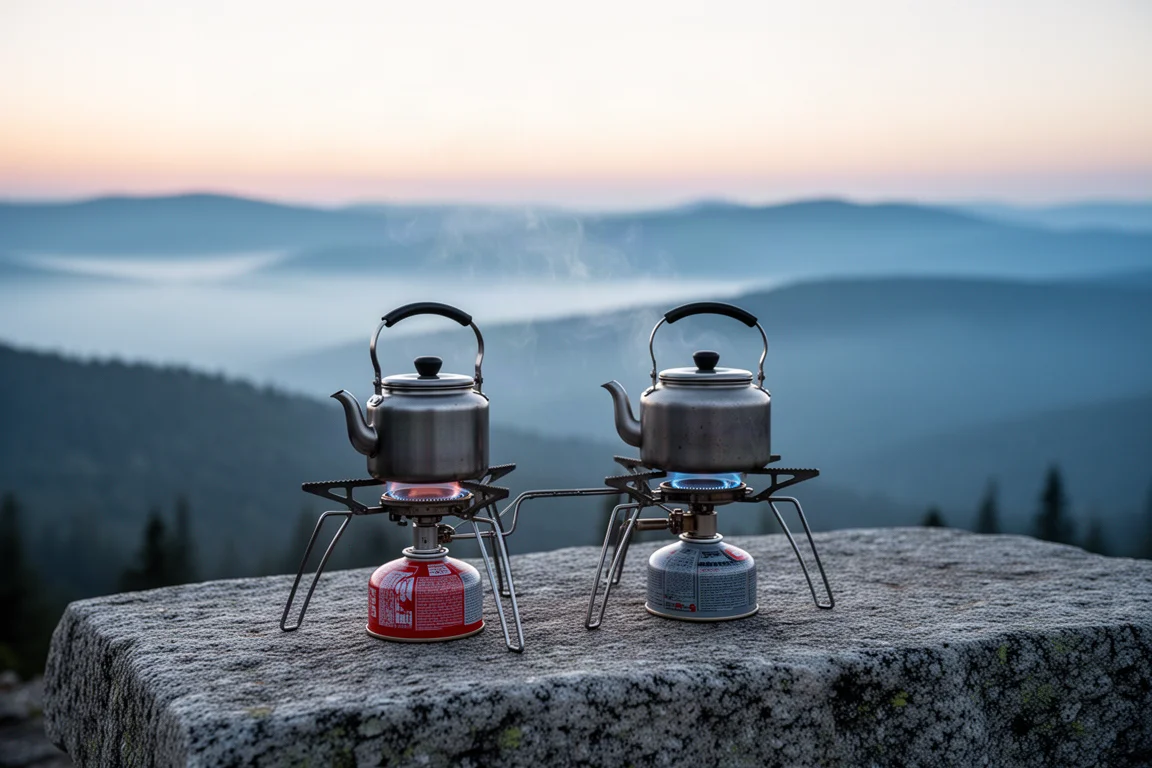
The result is a stove that boils water remarkably quickly, accepts three different fuel types, and asks for a level of care that most backpacking stoves never require. This review covers what the stove does well, where it becomes awkward, and the handling details worth understanding before buying.
Who this product is for
This stove makes the most sense for campers who value output and cooking range over pack weight. It suits group trips, basecamp cooking, and anyone who wants to boil larger volumes quickly or cook a full meal rather than simply rehydrate a pouch.
The three-fuel support broadens its appeal. It runs on isobutane out of the box, and the included propane and butane adapters let owners match the fuel to the season: inexpensive butane in warm weather, isobutane as temperatures drop, and propane in the cold.
It is a poor fit for ultralight backpackers, for anyone counting ounces, or for campers who want to set up, boil, and pack away in a hurry. The stove is not compact, and it has to cool before it goes back in its case.
Main strengths
Output is the defining strength. Two cups of water come to a boil in less than 1 minute 22 seconds, and in good conditions the same volume has boiled in under a minute. Few canister stoves come close to that.
The fuel adjuster gives usable control across that range. The stove can simmer, which makes it far more versatile than a boil-only burner: water, coffee, full meals, and reduced sauces are all realistic.
The electronic igniter has fired on the first attempt every time, and the rubberized feet keep the stove planted on the surface. Thanks to the size of the body and the placement of the legs, the stove is extremely stable and shows no tendency to tip. Build quality holds up as well: edges are clean, materials are high quality, and the construction feels heavy duty.
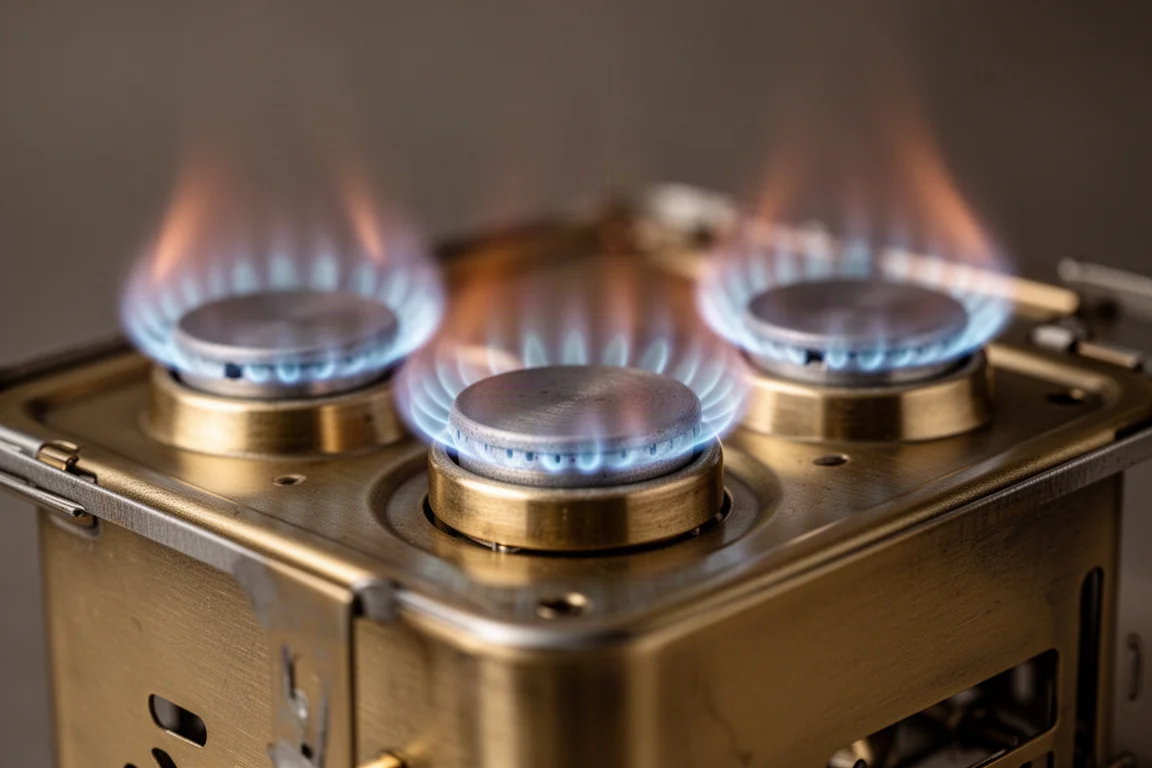
Beyond the numbers, the stove is genuinely pleasant to cook on. The wide burner spread and the stable platform handle a kettle or a medium pan well, and the simmer control means output can be dialed back to a gentle heat when a recipe calls for it.
Build quality, storage case, and fuel adapters
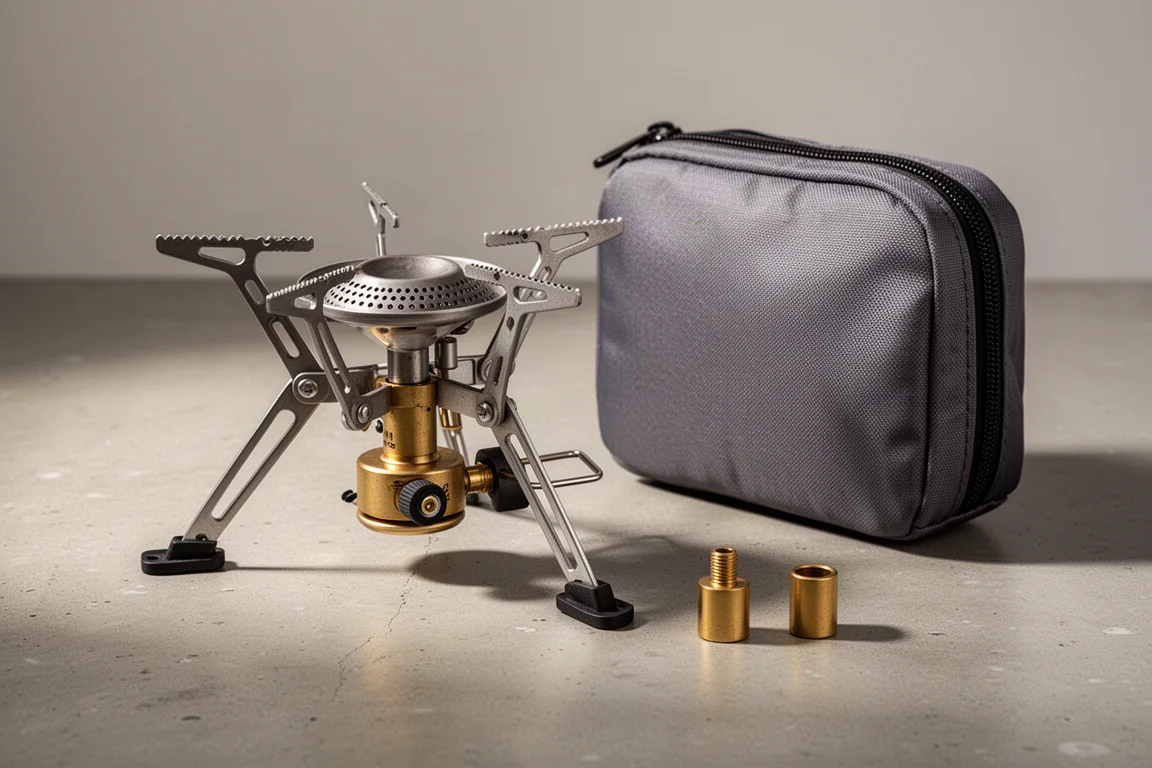
The primary materials are aluminum and brass, with some rubber components and a polyester storage case. The three pot supports carry aggressive gimping that grips cookware, and the legs fold out and lock into position. The locking action is very tight, tight enough that it feels like something could be strained, though nothing has broken.
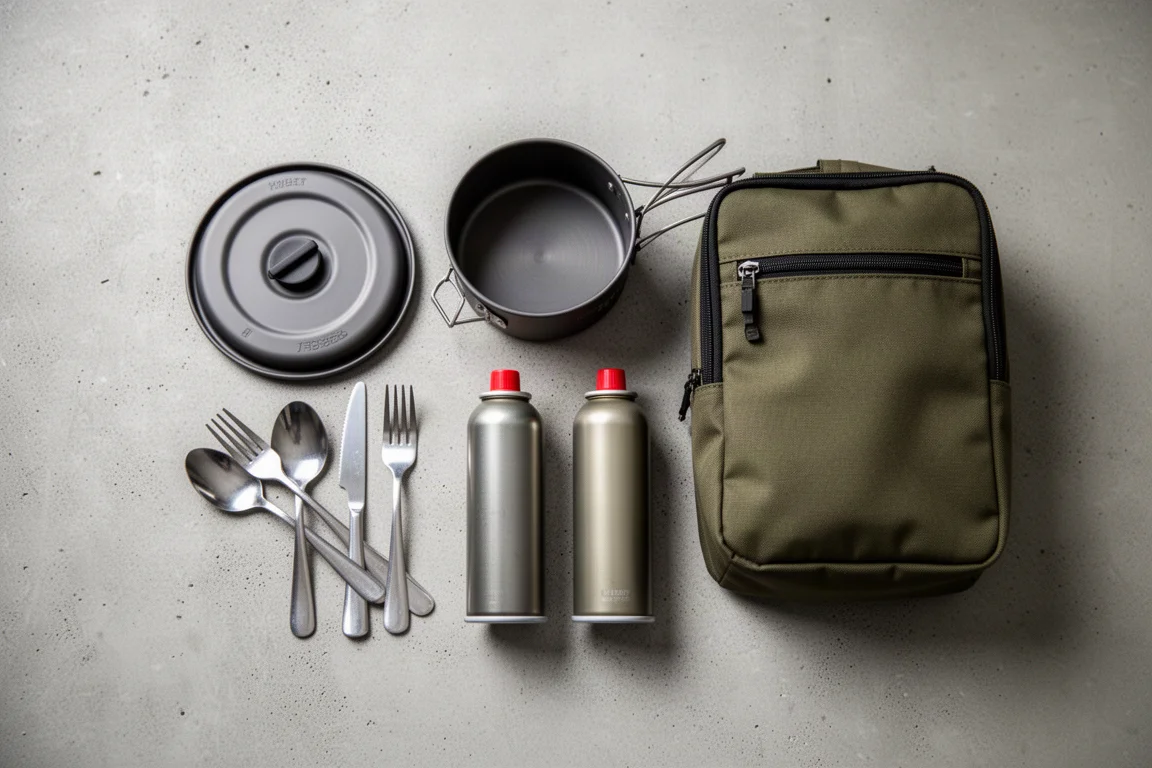
The storage case is a standout. It uses a stiff insert and a thick liner, with a grab handle and two-way zippers fitted with rubber pulls. It protects the stove well. The only odd note is the branding: rather than printing its name on the case, the company applied a sticker.
Stored, the stove measures about 6 by 6 inches and roughly 4 inches deep. Set up, it measures about 7.5 by 7.5 inches and 3 inches deep. The stove alone weighs 13.3 oz, 17.1 oz in its case, and 19.7 oz as a full kit with both adapters. That is heavier than a minimalist canister stove but still light enough to carry on a backpacking trip. Both a propane adapter and a butane adapter are included, which is what unlocks the three-fuel capability.
Things to consider before buying
Heat retention is the big one. Because the body and base are brass, and brass releases heat far more slowly than copper or aluminum, the stove stays hot long after the flame is off. The base gets hot enough to be a real concern on a kitchen table or on a polyester or nylon camp table, where it could melt the surface. There is also a potential risk of scorching the ground beneath it, though that has not been observed.
The burn risk is just as important. The stove gets hot enough to cause a serious burn, and it stays that way for a long stretch after cooking. Around children or anyone unfamiliar with this kind of equipment, that is a meaningful hazard. It also means the stove cannot go straight back into its case, because a hot stove will melt the lining. Plan for a cooldown period.
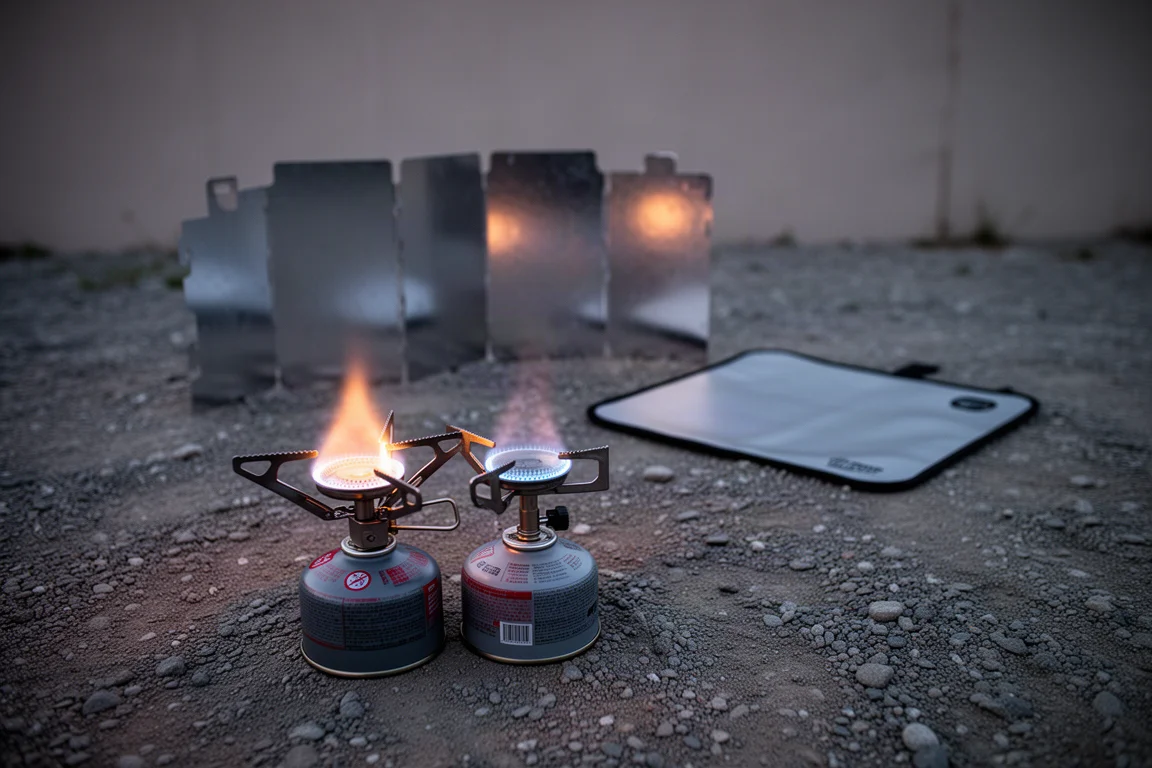
Noise and wind performance round out the practical trade-offs. The stove is loud at almost any setting above a very low simmer. Its built-in windscreen helps only somewhat, and in real wind it needs something more substantial, kept well away from the burner because of the heat output.
Two smaller points matter for cookware. The stove is not ultralight and it is not compact, so it takes up noticeable space in a cook kit and then in a pack. And because the pot supports sit relatively far apart, small cups and small pots will not rest securely, though a kettle or a medium pan fits well.
The four versions and how they differ
The stove is sold in four versions across five purchase options, all visually near-identical. The 24,567 BTU model is the one rated at 7,200 watts and retails around $40. A 23,202 BTU version is about $33, a 19,790 BTU version about $24, and a far lower output version about $20. There is also a bundle that adds a cook set with pots, cutlery, and similar items for about $51.
The pricing is clustered tightly, and the output differences between the three high-output models are small in practice. The gap between those and the lowest-output version is much larger. The spread of near-duplicate listings looks like a market strategy rather than a set of meaningfully different products, so it pays to check which rating you are actually buying before adding one to a cart.
Buying advice
Buy this stove for what it does uniquely: enormous output and the ability to run on isobutane, propane, or butane. If fast boils for group cooking and fuel flexibility are the priorities, it delivers more of both than most canister stoves.
Plan around the heat. Use it on a surface that tolerates high temperatures, keep it clear of children and anyone unfamiliar with it, allow time for it to cool before packing, and treat any additional windscreen with distance and caution.
If instead you want a stove that sets up, boils, and goes straight back in the pack, or if you are counting grams, this is the wrong tool. A simpler, lighter stove will serve that routine better. Output is impressive, but output is rarely the thing that decides whether a stove is pleasant to live with.
Weigh the handling requirements honestly before buying. Anyone who understands the cooldown and burn-risk considerations can still get a lot out of this stove, particularly for group cooking where the three burners and the power are genuinely useful.
Conclusion
The Waddio 7200 Watt Backpacking Stove is interesting, powerful, and demanding. Its 24,567 BTU rating and boil times of less than a minute and a half put it in a class of its own among canister stoves, and the three-fuel support with two included adapters adds real versatility.
Those strengths come with heat that lingers dangerously, a heavy and bulky build, a loud burner, and pot supports that rule out small cups. Buyers who value maximum output and fuel flexibility, and who are prepared to handle the stove carefully, will find a lot to like. Everyone else is likely better served by something lighter, quieter, and easier to pack away.
Product link
View more details for Waddio 7200 Watt Backpacking Stove
This product is mentioned in the review. Check the specifications, options, and compatibility before buying.
View more details for Waddio 7200 Watt Backpacking StoveFurther reading
Related Reviews
Backpacking Stoves
Best Backpacking Stove and Pot Combinations: Budget to Premium
A practical look at fourteen backpacking stoves and cook pots, from inexpensive starter pairings to windproof all-in-one systems that cost close to $200.
Backpacking Stoves
Best Backpacking Stove Systems: Five Canister Stoves Compared
Five canister stove and pot systems compared on wind resistance, boil speed, packed size, and cooking control, from a bare titanium burner to a fully integrated cook system.
Backpacking Stoves
Best Backpacking Stoves 2026: Six Stove Types Compared and Ranked
A practical comparison of canister, white gas, wood burning, solid fuel, and alcohol backpacking stoves, ranked on speed, weight, fuel availability, and cost.