Electric Cargo Bikes
VOC U Review: A Four-Wheeled Electric Cargo Bike Built for Cities
A close look at the VOC U, a four-wheeled electric cargo quadricycle built for commercial urban delivery, with the real strengths and trade-offs to weigh before buying.
Introduction
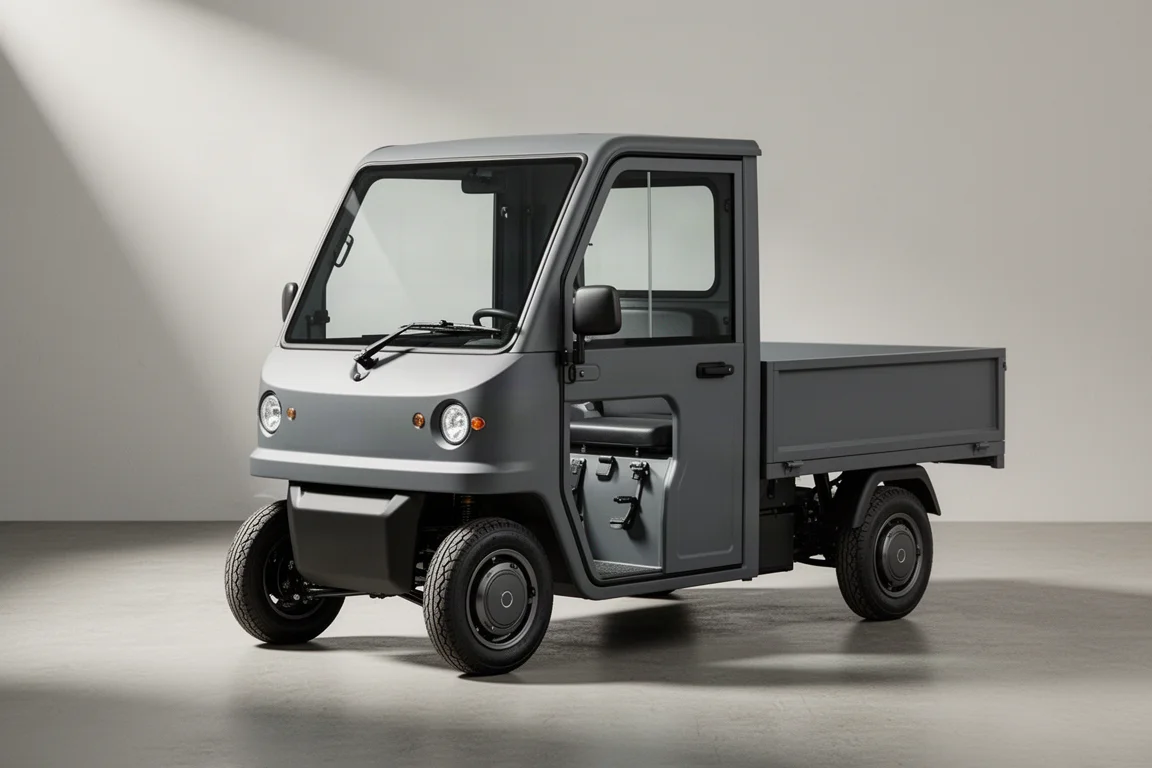
The VOC U is one of those vehicles that does not fit neatly into a single category. It has four wheels, a motor at each one, and pedals that respond to your legs, yet in the markets where it is sold it is legally classified as an electrically assisted pedal cycle. That classification is the whole point. It means no tax, no insurance and no licence are required, and it can be used on the open road as well as on bike paths. It costs around €15,000, it is built for commercial work, and it raises an interesting question about how cities move goods.
What the VOC U Actually Is
VOC is an Estonian company, and the U is its four-wheeled model. The range also includes the S and the XL, for small and extra large. VOC currently sells in 15 countries and describes the U as an automotive four-wheeled electric cargo bike built specifically for commercial purposes in dense urban environments.
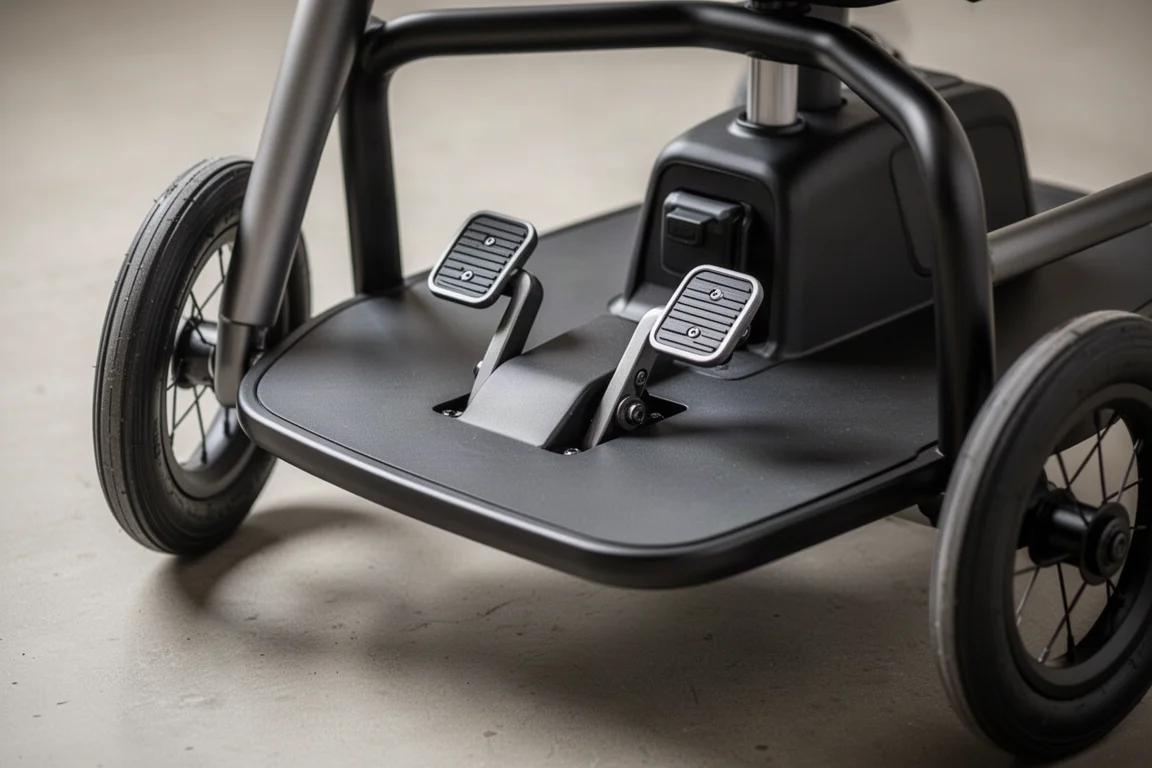
The mechanical layout is what makes it unusual. There is no chain, and the pedals are not attached to anything that drives the wheels. They simply spin. When the vehicle senses that pedalling motion, the motor engages, and the faster the pedals turn, the more power the motors deliver. Stop pedalling and the assistance stops. There is no throttle.
Under the regulations that define an electrically assisted pedal cycle, the electrical assistance must cut off at 15.5 mph, the motor must have a maximum continuous rated power not exceeding 250 W, and the vehicle must be fitted with pedals that can propel it. The VOC U meets that framework, and the 250 W figure turns out to be more interesting than it first appears.
That 250 W is the power the motors can sustain over long periods. Peak output can be much higher, which is what allows a heavy vehicle to accelerate or climb a steep hill, but it cannot be held there for long because of the thermal capability of the motors. Put out too much power for too long and they overheat. The sustained average is what has to stay at 250 W.
Who This Product Is For
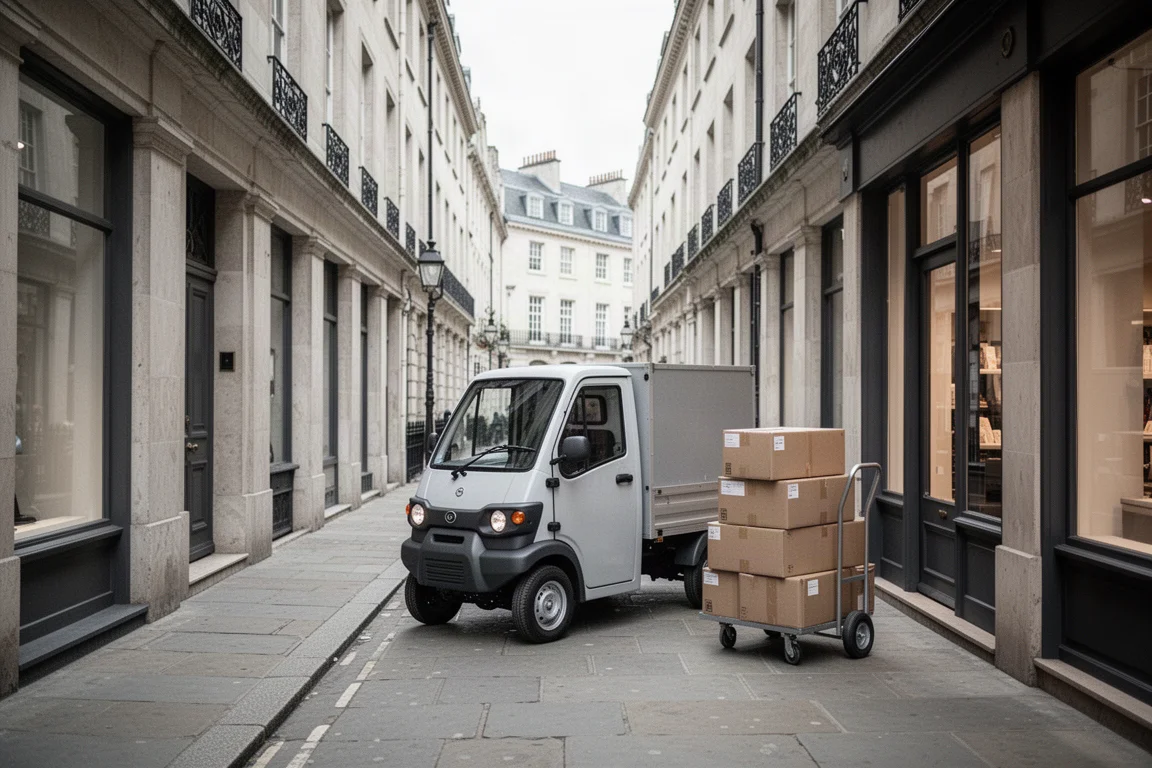
VOC is direct about the intended customer. This is not a bike for taking children to school or for popping to the shops. It is aimed at businesses that want to supplement or replace vans in dense urban environments, where loading restrictions, access limits and congestion make a full-size van inefficient for the last few hundred metres of a delivery.
Courier operators are the clearest example. Priority Express runs VOC bikes in Bath and Bristol, and the case they make is about access rather than novelty. Van drivers had to park in loading bays, unload onto a trolley and walk a couple of hundred metres before reaching the first delivery address. A cargo bike can park directly outside the property and deliver from there.
Main Strengths: Assist, Battery and Cargo Capability
Each wheel carries its own motor, so the VOC U is effectively four-wheel drive. On a test ride through Bath it accelerated faster than expected and pulled strongly away from a standstill, and the pedal resistance can be adjusted through the central console so the rider can set how much effort the pedals require.
The numbers behind that performance are substantial. The vehicle alone weighs around three times the mass of an average adult rider, and it can carry roughly three more adults as cargo, which puts a fully loaded unit at about 540 kg. Getting that moving, and getting it up a steep hill, is exactly where the higher peak power matters.
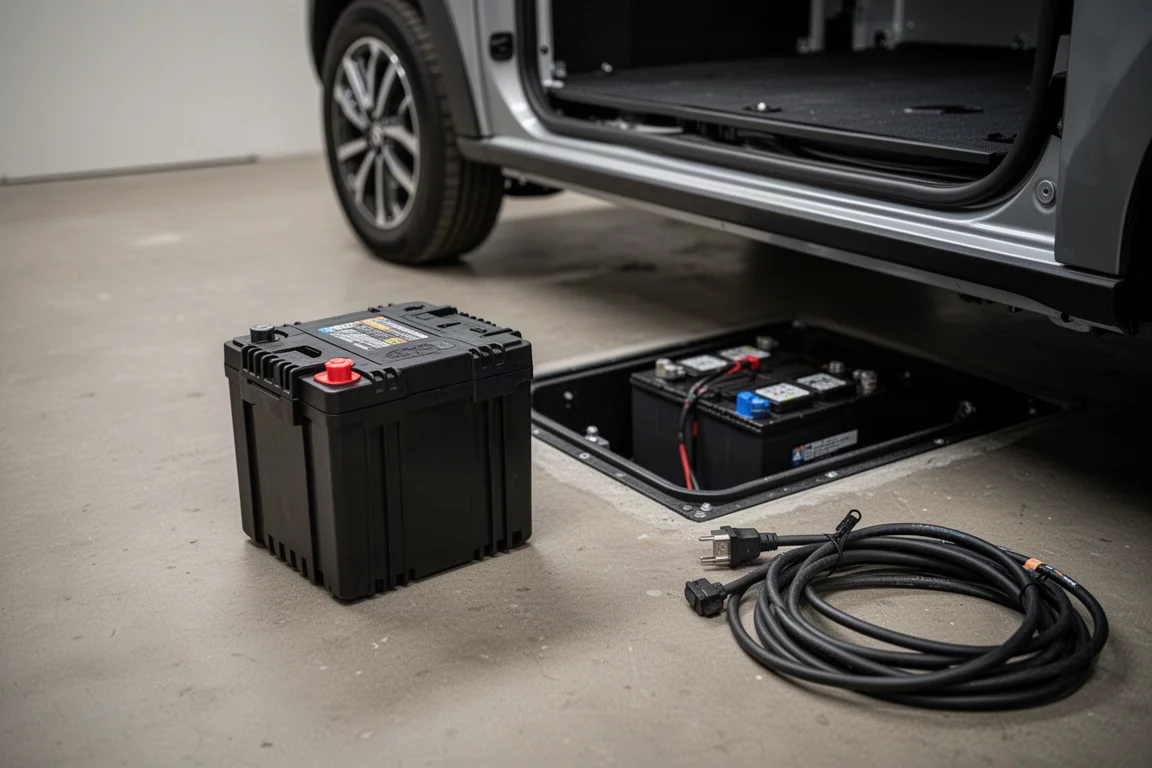
Energy comes from a 2,300 Wh battery mounted under the floor. That is a large pack, and there is room for a second one, with both designed to be easily removable so a depleted battery can be swapped for a charged one and the vehicle kept on the road all day. The U also has regenerative braking, so pedalling backwards while moving sends charge back into the battery.
The commercial case rests on running costs. VOC claims its bikes cost 30 times less per year to operate than a normal van, and the operators using them point to time savings as well as money saved, because deliveries no longer begin with a walk from a loading bay.
Real-World Use: Courier Fleets and Urban Deliveries
Priority Express has two VOC bikes on the road in Bath, and those two bikes have taken two vans off the road in the city. The company has expanded its Bristol fleet to six bikes, up from four on the road until August, with two more added for autumn and further bikes being prepared for the peak season around late November and December.
The logic behind that growth is regulatory as much as financial. As local authorities enforce more traffic restrictions in city centres, vans become harder to use and cargo bikes become more important to the operation. For a courier business, the advantage is not only lower running costs but the ability to reach addresses that a van cannot serve efficiently.
Things to Consider Before Buying
The most important thing to understand is that you cannot propel this vehicle with your legs alone. Because the pedals are not connected to the wheels, a flat battery means no movement. There is no chain to fall back on, so the VOC U depends entirely on its electrical system in a way that a conventional ebike does not.
The legislation that allows it onto roads and bike paths was written long before vehicles like this existed, and the 250 W limit is easy to misread. It describes sustained output, not the peak power available for acceleration or climbing, and that peak is capped by how much heat the motors can tolerate. Riders expecting unlimited power on a long climb will not find it.
Assistance is also capped at 25 km/h, and on the steepest climb of the test route the U topped out at roughly 7 to 8 mph. That was still enough to stay with a road bike in a head-to-head run up the hill, which says a great deal about how the peak power is deployed, but it is worth being realistic about what happens on a long, steep gradient with a full load.
Price is the other consideration. At around €15,000 the VOC U costs about as much as a high-end road bike, and it needs to be justified as a commercial asset rather than a personal purchase. There is also a broader question about where these vehicles belong. Riding a commercial vehicle on an off-road cycling path felt out of place even though it was legal and suitable, and if more businesses adopt cargo bikes, the debate about capacity on cycling infrastructure will become more pressing.
Buying Advice
Buy the VOC U as a business tool, not as a personal runaround. The strongest case for it is dense urban delivery work where vans are constrained by loading restrictions, traffic limits and congestion, and where two bikes can replace two vans in the same city. That is the scenario in which the running cost claim, the access advantage and the time savings all point in the same direction.
Before committing, check how the vehicle is classified in your market. The tax, insurance and licence exemptions depend on it being treated as an electrically assisted pedal cycle, and those rules vary between countries. The 250 W sustained power limit and the 25 km/h assistance cut-off are central to that classification, so any change in the regulations would affect how the vehicle can be used.

Budget for a second battery if the vehicle will be in service all day. The under-floor tray accepts one, and swapping packs is designed to be straightforward, which keeps the bike earning rather than charging. It is also worth weighing the safety argument in your own operating environment: a 200 kg vehicle travelling at 25 km/h is a very different proposition from a 2,000 kg van at 50 km/h, both for the people it passes and for the people who ride it.
Conclusion
The VOC U makes a more convincing case than its odd specification suggests. It is not a bicycle in any conventional sense, but it is a genuinely practical answer to a real problem, which is moving goods through city centres that are increasingly hostile to vans. The reduction in noise and air pollution, the lower running costs and the way it humanises delivery work all point the same way.
It is not for everyone. It is expensive, it depends entirely on its battery, and it asks questions of cycling infrastructure that cities have not yet answered. But for the businesses it was designed for, the logic is sound, and it is easy to see why operators are expanding their fleets rather than shrinking them.
Product link
View more details for VOC U
This product is mentioned in the review. Check the specifications, options, and compatibility before buying.
View more details for VOC UFurther reading
Related Reviews
Electric Cargo Bikes
Tern GSD vs Riese & Müller Load 5: Which Electric Cargo Bike Layout Suits You
A longtail and a front loader compared on carrying capacity, handling, and everyday practicality, plus what first-time riders notice in the first ten minutes.
Electric Cargo Bikes
Tern GSD Review: The Compact Electric Cargo Bike, Third Generation
A practical look at the third generation Tern GSD, from its 210 kg capacity and Bosch Cargo Line motor to battery options and the features worth paying for.
Electric Cargo Bikes
Tern GSD Review: The Compact Electric Cargo Bike That Replaces Car Trips
A practical look at the third generation Tern GSD, the compact electric cargo bike with up to 210 kg of capacity, Bosch Cargo Line power, and ABS plus connected features on the top models.