Electric Cargo Bikes
Tern GSD Review: The Compact Electric Cargo Bike, Third Generation
A practical look at the third generation Tern GSD, from its 210 kg capacity and Bosch Cargo Line motor to battery options and the features worth paying for.
Introduction
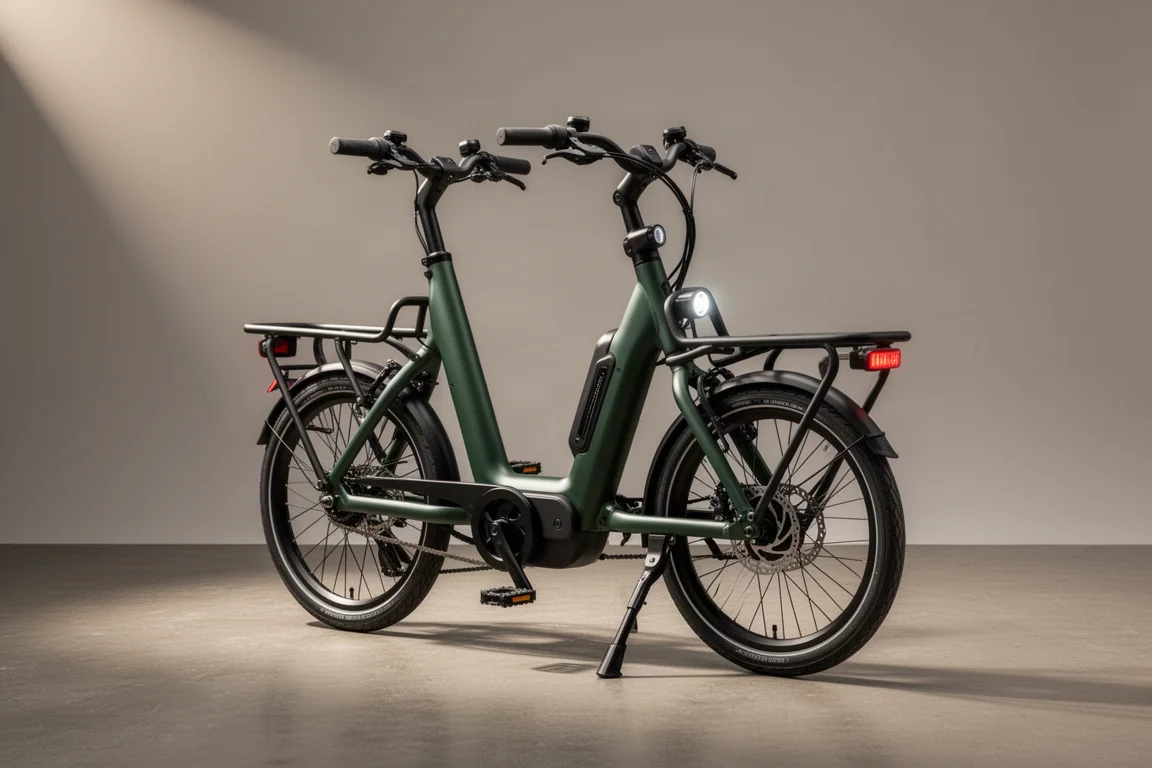
The Tern GSD has been a reference point in the compact electric cargo bike segment since Tern launched the design in 2017, which the company describes as the first compact cargo bike. The third generation keeps the familiar silhouette and short wheelbase while reworking much of what sits underneath it. Tern says nearly every part on the bike either works better, is more robust, or both, and the headline figures support that direction: the bike still carries two smaller passengers or one adult on the rear, and load capacity has grown to 210 kg.
For riders who need to move people and cargo through dense urban streets, that mix of a small footprint and genuine hauling ability is the core appeal.
Who This Bike Is For
The GSD is built around 20-inch wheels. They are smaller than the wheels found on mountain bikes, road bikes, and most town bikes, but they are not novelty-sized. What they allow is for the overall dimensions of the bike to stay close to a standard bicycle even with 100 cm of carrying space at the rear. The bike comes in a single size and adjusts quickly to fit different riders, and Tern says it suits anyone from 150 cm to 200 cm tall.
Storage is where the compact format earns its place. The handlebars fold flat, the seatpost drops quickly, and the bike can be stored on its back end. In apartments, narrow hallways, and small garages, that flexibility matters more than outright size.
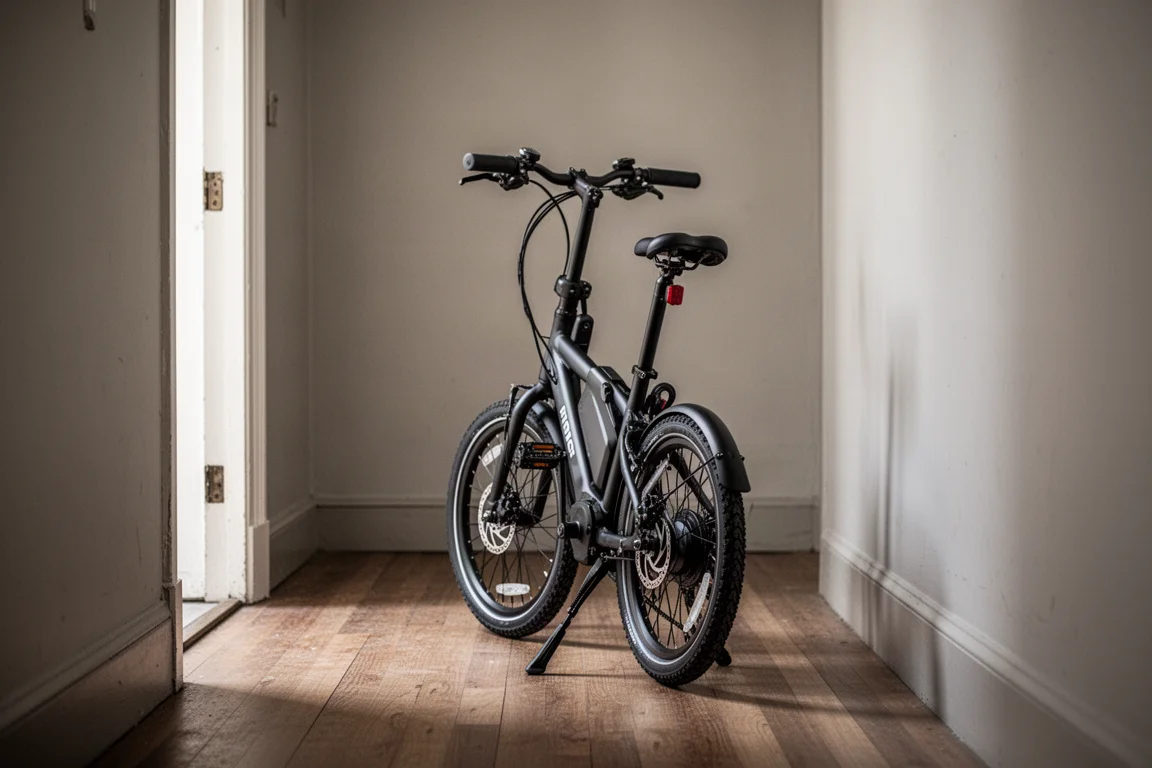
Once moving, the rear-loading layout makes the GSD feel like an ordinary bike rather than something that demands an adjustment period. It is easy to steer out of tight spots, and it is compact enough to be picked up, turned, or carried up a couple of steps.
Main Strengths
The third generation is a refinement exercise rather than a redesign. Tern says almost every subcomponent is better, more reliable, or stronger than before, and the changes are concentrated in the places owners interact with most: the kickstand, the charging port, the footrests, and access to the drivetrain.
Compact Dimensions and Everyday Handling
Ride quality benefits from a stiffer frame and slightly revised handling, which makes the bike easier to control when it is fully laden. A suspension fork is standard across the range, and almost every model now also includes a suspension seatpost. The top models step up to an upgraded fork.
Bosch Performance Cargo Line Motor
At the heart of the bike is a Bosch Performance Cargo Line motor. It is a pedal-assist system, meaning it adds power to the pedals as you turn them and provides nothing when you are not pedalling. To comply with local rules, assistance stops above 25 km/h, and in the United States assistance continues up to 20 mph. The motor can deliver up to four times the power a rider puts through the pedals, and its torque, combined with the gears, is enough to climb the steepest streets.
Assist levels run from Eco through Tour and Auto, which works well in mixed conditions, up to Cargo mode at the top of the range. Cargo mode was previously called Turbo, and the new name reflects what the motor was designed for.
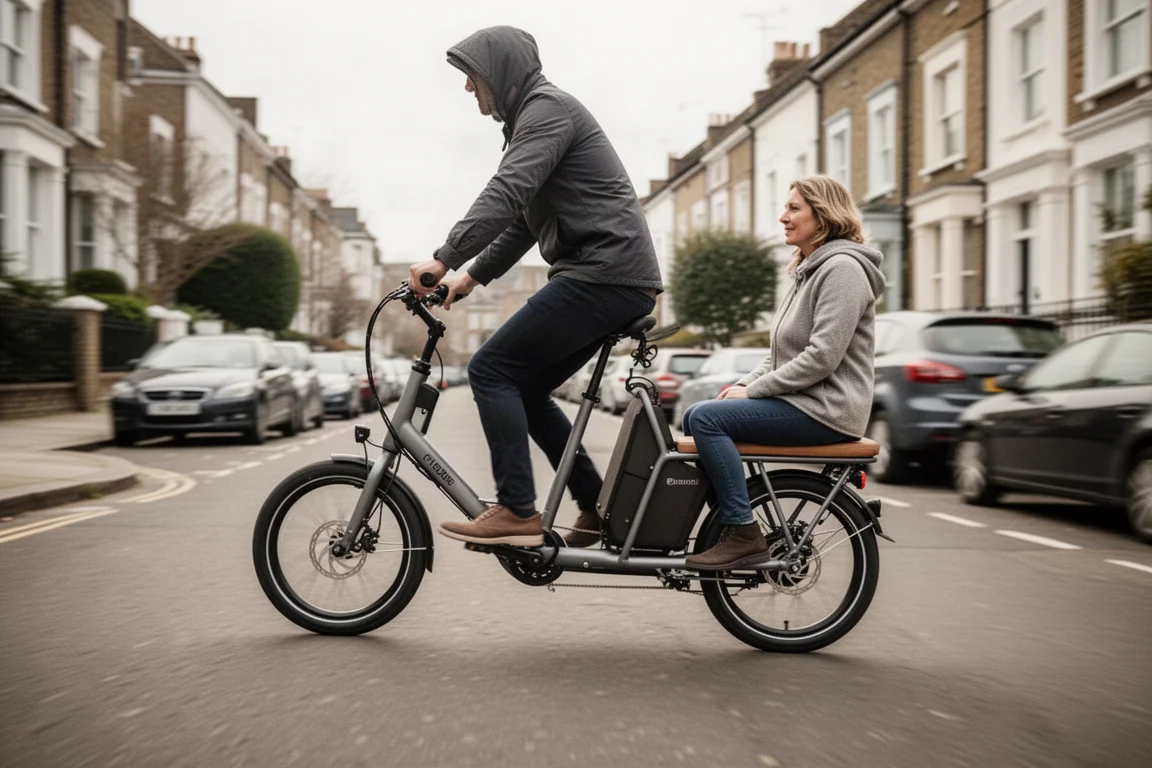
In practice, that means carrying an adult passenger and a full load of luggage up a steep city street without breaking a sweat. The motor is shared across the whole range, so the entry-level bike delivers the same power and assistance as the flagship build.
Carrying Capacity and Passenger Options
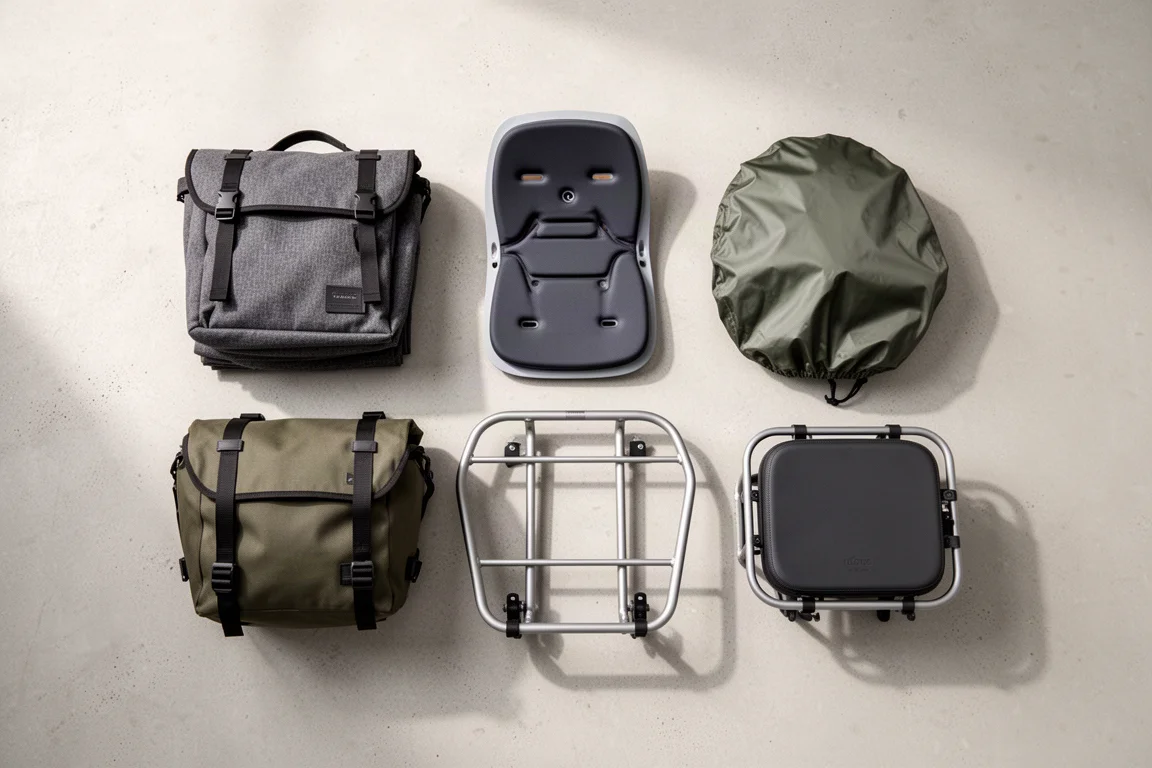
Almost all the storage sits at the rear, and there are many ways to configure it. The panniers are very large, expand and contract as needed, and can easily swallow a week’s shopping; they can be used at the same time as a rear passenger. The Storm Box accessory turns the entire rear of the bike into one compartment with 150 litres of space, and passengers can sit inside it with their legs and most of their torso kept dry.
An optional front rack is a practical addition for helmets after the school run, a bag, a lock, or groceries. For passengers, accessories range from large seats that strap small children in safely, to the Clubhouse, a metal frame that lets children use the bench seat with a back rest and handholds, to the Captain’s Chair, which helps adults get on and off more easily. Weather protection for passengers is available too. The only real limitation at the rear is very large, bulky items, though secure strapping opens up more options than the shape of the rack suggests.
Battery Options and Range
Four models share the same motor and the same power, but battery capacity differs: 500 Wh, 545 Wh, and up to 800 Wh. A bigger battery is the sensible choice for long rides, such as around 90 minutes in genuinely hilly terrain, while shorter regular trips mean plenty of journeys between charges.
As a real-world reference point, a 500 Wh battery was charged 81 times over 1,800 miles, which works out at roughly 22 miles between charges when ridden mostly in the top assist mode with three people aboard.
What Is New in the Third Generation
The new kickstand is wider, which makes the bike more stable on uneven ground, and its mechanism is better sealed against the elements. The battery charging port has moved into the top tube, where it is easier to reach than the previous location.
The wider rear footrests, properly called stoex, are now standard rather than an optional extra, and they fold out of the way when they are not needed or when panniers need to be compressed. Access to the gears has improved, and the rear wheel is easier to remove, which simplifies puncture repairs and should keep workshop bills lower. There is also a USB-C charge port that can power accessories ranging from a heated blanket for passengers to lights, a portable fridge, or speakers.
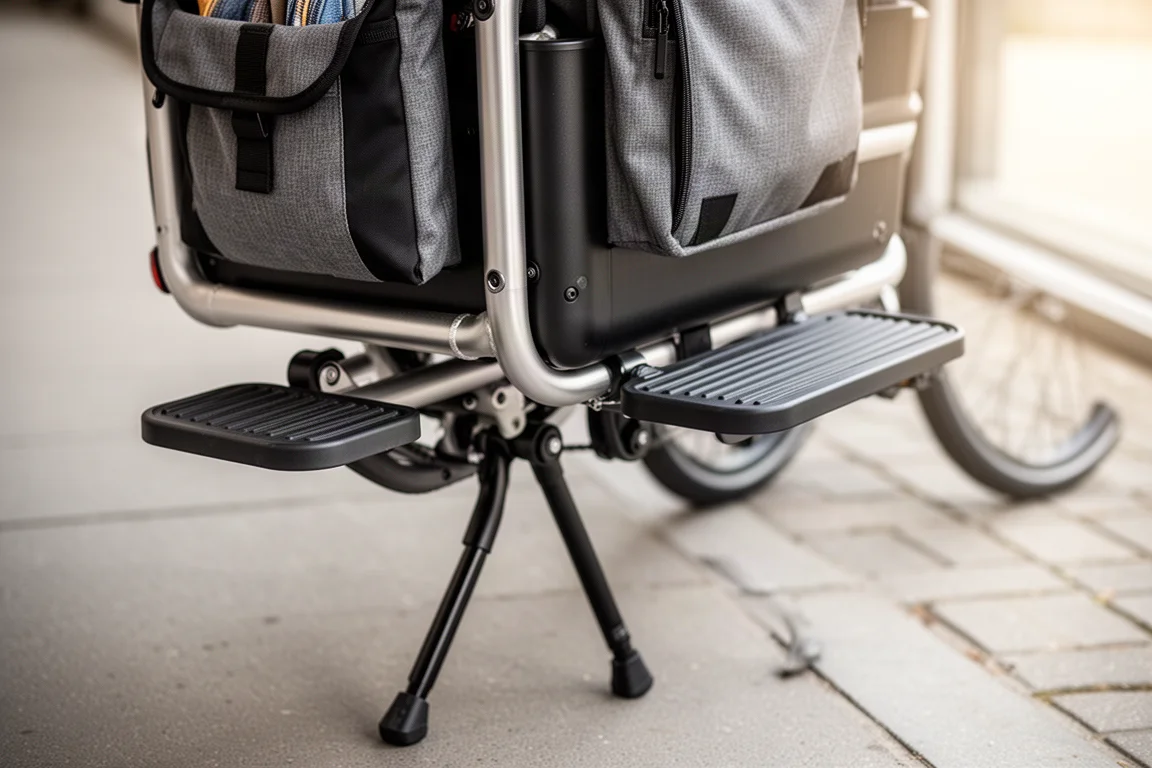
Taken together, these changes are about reducing friction in daily use rather than adding headline features. A more stable stand, an easier charging point, and simpler rear wheel removal are the kinds of details that make a heavy cargo bike less intimidating to own.
Bosch Connect Module and ABS Brakes
The top two models add Bosch ABS brakes and the Bosch Connect module. The ABS system works on the front wheel only and is designed to stop the bike as quickly as possible in any conditions without the front wheel skidding, which is especially valuable when the bike is fully loaded and needs more braking force.
The Connect module pairs a smartphone with the bike and, through the Bosch Flow app, provides information and lets riders customise certain motor attributes. Turn-by-turn satnav runs on the head unit, which is useful for finding quieter streets and shortcuts rather than following routes designed for cars. There is also an electronic lock: switching the bike off disables the motor and battery until the smartphone is present or the head unit is used as a removable key. A premium service on the Bosch Flow app activates GPS tracking, sending a phone notification and sounding an alarm if the bike is moved while locked.
These features are a supplement to a good lock, and insuring the bike, much as you would a car, adds peace of mind that makes it easier to leave it in more places.
Things to Consider Before Buying
Price is the first thing to weigh. This is not a cheap cargo bike. Entry-level models are listed at £4,700, £4,999, or £5,399 depending on configuration, while the top R14T build runs to £8,900, £9,499, or £10,199. The counter-argument is durability: the bike carries a solid warranty, including separate Bosch coverage for the battery and motor, and Tern Care is transferable from the original owner if the bike is ever sold.
The range splits into three clear tiers. The R14T flagship uses internal hub gears and a belt drive, so there is no oily chain and less maintenance, alongside the Connect features, ABS, and an 800 Wh battery. The next model down keeps the Connect features and ABS but uses a chain drive with 10-speed Shimano gears and a 545 Wh battery. The entry-level model drops the connected features and uses a smaller battery, but retains the same carrying capacity and the same motor power, and is a couple of kilograms lighter.
Accessories are a significant part of the cost of ownership. Passenger seats, the Clubhouse, the Captain’s Chair, the Storm Box, panniers, the front rack, and weather protection are all separate purchases. Availability of specific models and colours also varies by region.
Finally, keep expectations realistic about load shape. Very bulky items are the hardest thing to carry at the rear, and the ABS system covers the front wheel only.
Buying Advice
Choose the entry-level model if the priority is carrying capacity, motor power, and a lighter bike, and the connected features are not important. Step up one tier if ABS and the Bosch Connect module matter, since that build pairs them with a familiar chain drive, 10-speed Shimano gears, and a 545 Wh battery. The R14T makes sense for riders who want belt drive and internal hub gears for lower maintenance, the largest battery, and the full feature set.
On battery capacity, the deciding question is ride length rather than daily distance. Riders planning long, hilly routes of around 90 minutes will appreciate the 800 Wh option, while shorter regular trips are comfortably covered by the smaller packs.
It is also worth planning the accessory list at the point of purchase, since passenger carrying, weather protection, and extra cargo capacity all come from add-ons rather than the base bike.
Budgeting for a strong lock and insurance alongside the bike itself is a practical part of the same decision, particularly for anyone who intends to leave it locked in public places.
Conclusion
The third generation GSD takes a design that has been refined since 2017 and improves the details owners deal with every day: a more stable kickstand, an easier charging port, folding footrests, simpler drivetrain access, a stiffer frame, and a broader set of technology options on the higher tiers. Capacity is up to 210 kg, the compact 20-inch wheel format keeps the bike practical to store and natural to ride, and the Bosch Cargo Line motor handles steep streets with passengers and luggage aboard.
It is a premium purchase, and the accessory list adds up quickly. For riders who want one bike that can replace car trips for people and cargo in a city, the GSD remains a compelling answer.
Product link
View more details for Tern GSD
This product is mentioned in the review. Check the specifications, options, and compatibility before buying.
View more details for Tern GSDFurther reading
Related Reviews
Electric Cargo Bikes
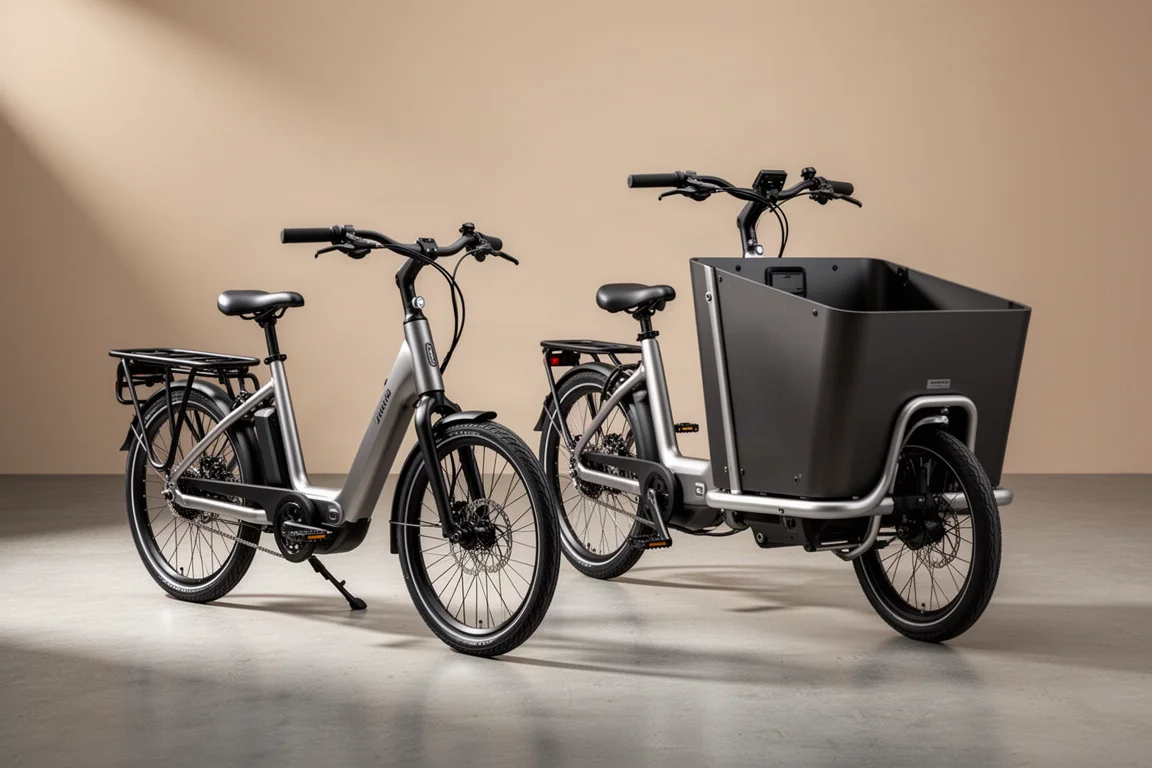
Tern GSD vs Riese & Müller Load 5: Which Electric Cargo Bike Layout Suits You
A longtail and a front loader compared on carrying capacity, handling, and everyday practicality, plus what first-time riders notice in the first ten minutes.
Electric Cargo Bikes
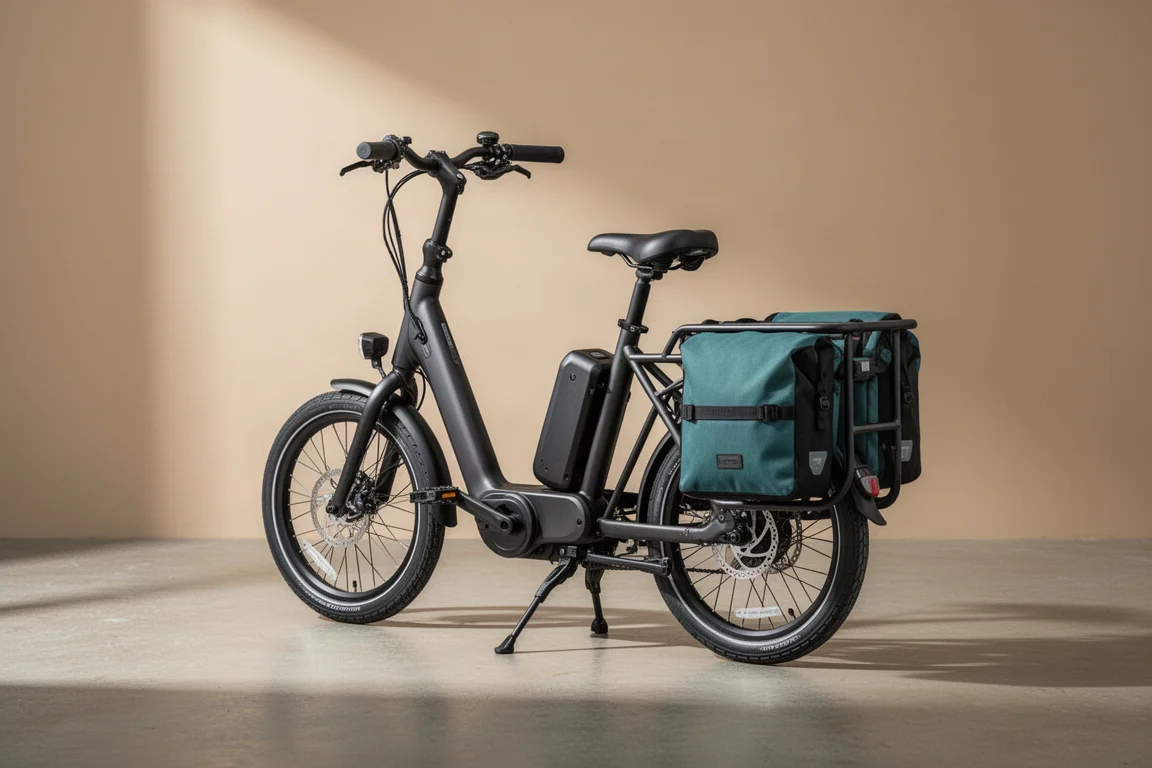
Tern GSD Review: The Compact Electric Cargo Bike That Replaces Car Trips
A practical look at the third generation Tern GSD, the compact electric cargo bike with up to 210 kg of capacity, Bosch Cargo Line power, and ABS plus connected features on the top models.
Electric Cargo Bikes
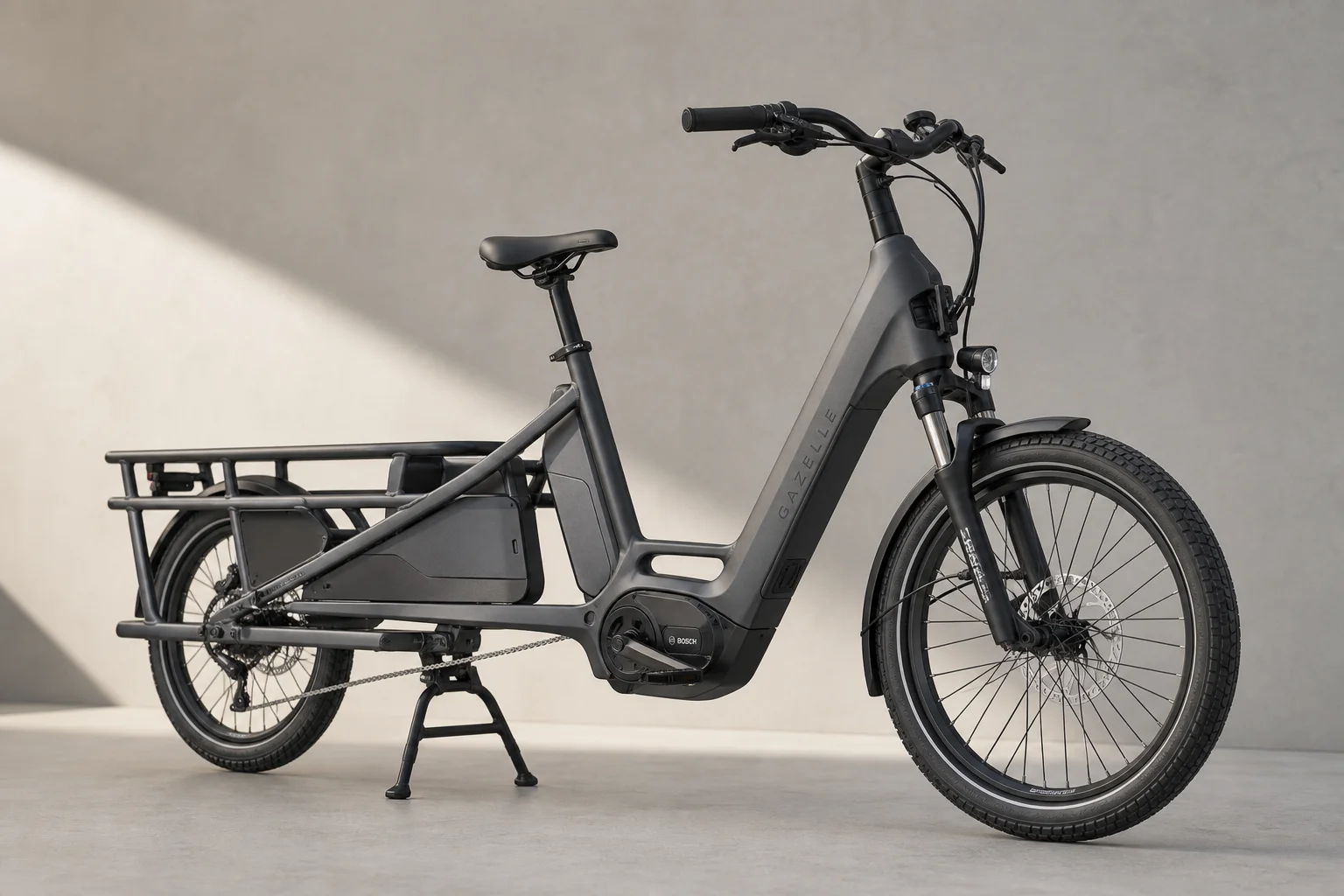
Urban Arrow Breeze Longtail Cargo Bike Review: A Practical Family Commuter
The Urban Arrow Breeze combines an upright Dutch riding position with modern cargo-bike utility, making it a compelling one-bike solution for family transport.