Hi-Fi Amplifiers
Vista Audio Zest Review: A No-Frills Integrated Amplifier Built for Sound
A compact 30 watt per channel Class AB integrated amplifier handcrafted in Serbia, with a clear focus on sound quality over features.
Introduction
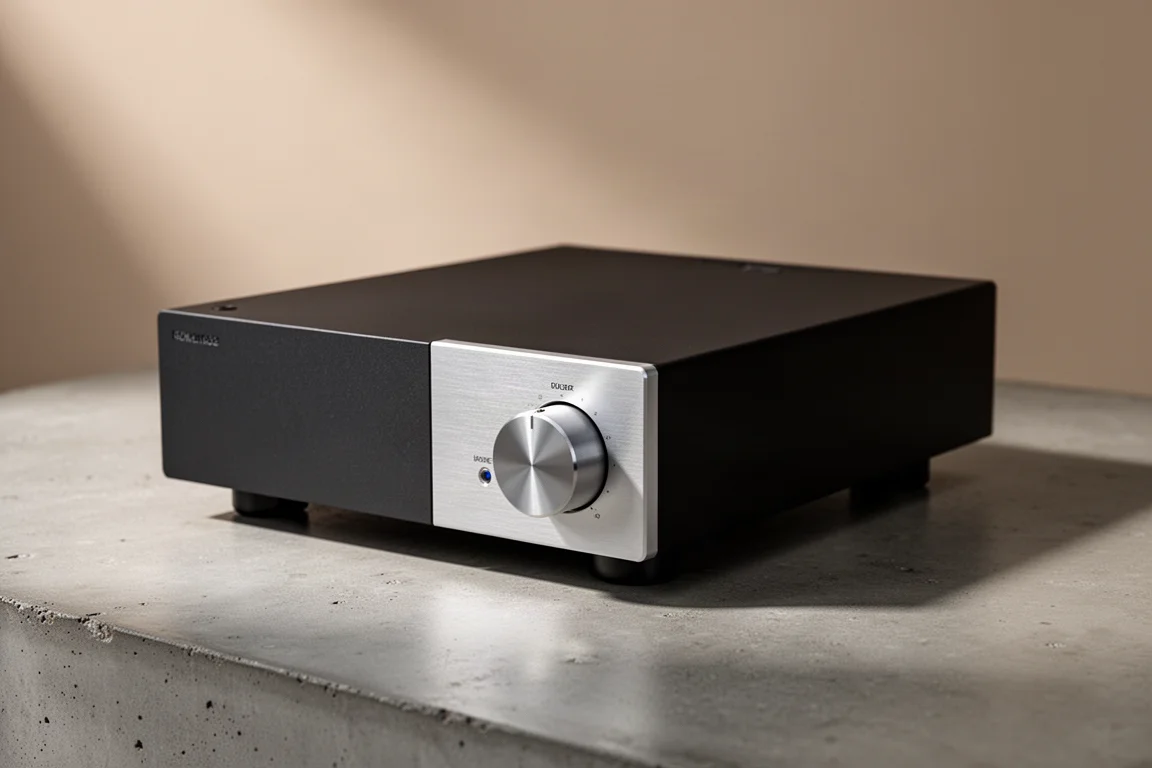
The Vista Audio Zest is a stereo integrated amplifier handcrafted in Serbia, and it takes a deliberately narrow approach to hi-fi design. There is no remote control, no built-in phono stage, and no digital connectivity anywhere on the chassis. What the Zest offers instead is a Class AB circuit rated at 30 watts per channel, a large custom transformer built specifically for this amplifier, and a compact case that measures under 6 inches wide and roughly 12.25 inches deep. In North America it is priced at $579.
That makes the Zest an unusual proposition in a market where amplifiers are usually sold on feature lists. The thinking here is that the entire design budget goes into the parts that shape sound quality, and almost nothing goes into extras. It is also genuinely small, which makes it a natural fit for a desktop system while still being usable in a full-size setup. The rear panel is about as simple as it gets: two sets of RCA inputs, a set of speaker binding posts, and an IEC power inlet. You will not need an owner’s manual to work out how to use it.
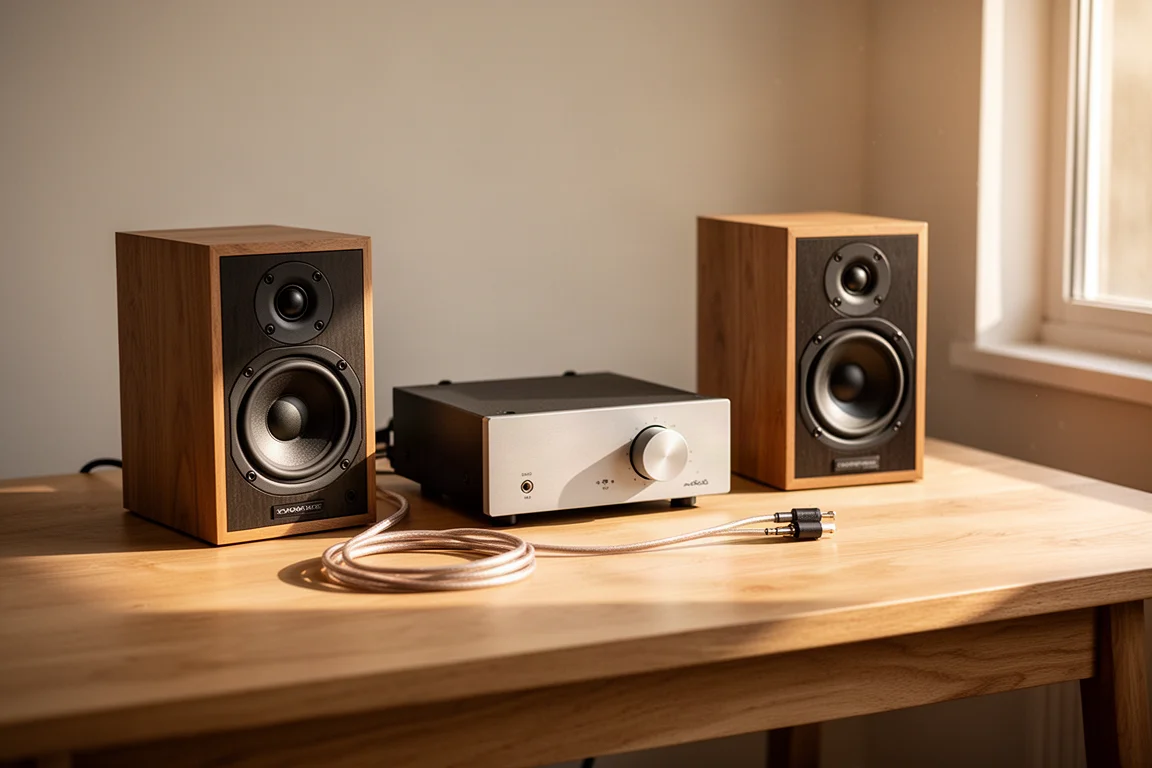
The Zest is not the company’s only amplifier. The Vista Spark, its smaller sibling, is a 20 watt per channel design that is still in production as the Spark 3. The Zest sits above it as a more powerful, more substantial amplifier with noticeably more weight behind the sound.
Who This Product Is For
This amplifier is aimed at a specific kind of listener. If your priority is squeezing the best possible sound out of a modest budget, and you already have a source and a pair of speakers you like, the Zest makes a strong case for itself. It suits someone who is happy to plug in a CD player, a DAC, or a separate phono stage and simply listen.
It is also a good match for smaller spaces. At under 6 inches wide, it takes up very little room on a desk, and it can sit quietly in a full-size system without looking out of place. Anyone building a second system for a study or bedroom will find the size and the simplicity appealing.
It is a less obvious choice for listeners who want everything in one box. If you need a remote control, a built-in phono stage, or digital inputs on the amplifier itself, this is not the product for you, and that is a deliberate part of the design rather than an oversight.
Main Strengths
The strengths of the Zest come down to two things: how it is built, and how it sounds when it is asked to drive real speakers.
Build Quality and the Power Supply
The most notable piece of hardware inside the Zest is its transformer, which is unusually large for a 30 watt per channel amplifier. It is a custom unit built specifically for this model rather than an off-the-shelf part, and that is a meaningful part of why the amplifier feels more capable than its power rating suggests. The overall build quality is solid, and the amplifier has the sense of a carefully assembled product rather than a cost-optimised one.
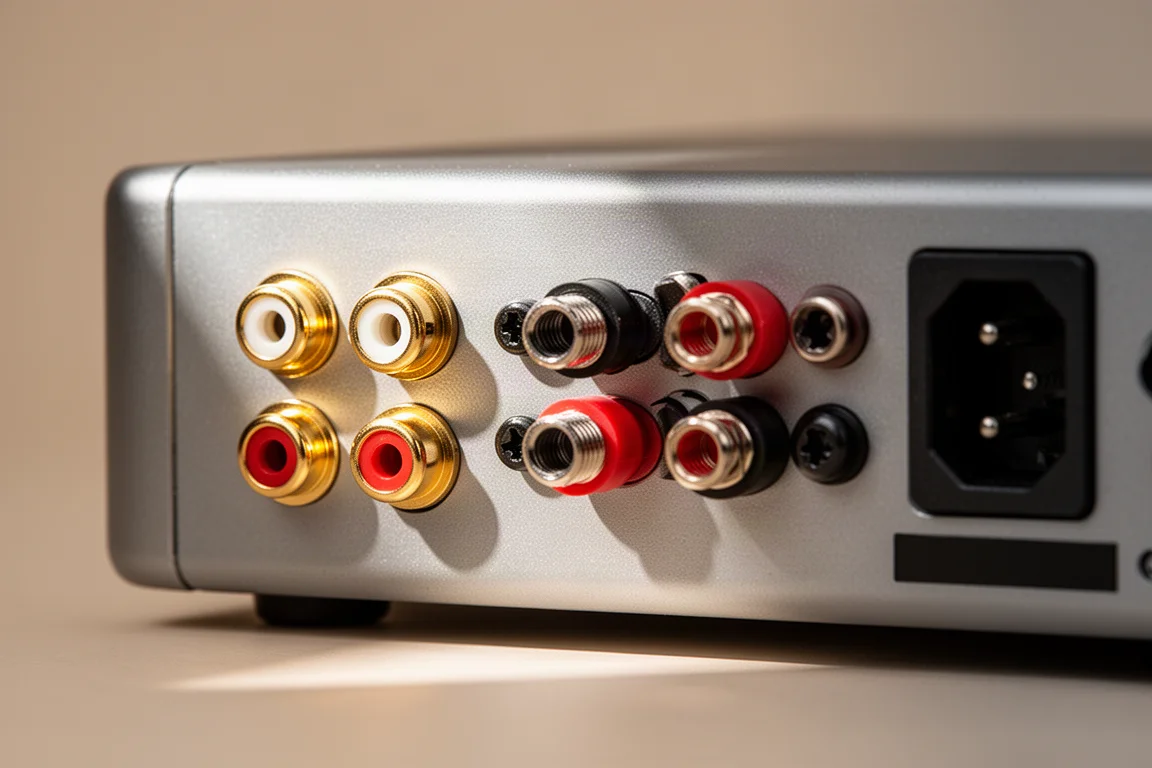
The back panel reflects the same philosophy. Two sets of RCA inputs give you room for two analogue sources, the speaker binding posts are nicely finished, and power comes in through a standard IEC inlet. There are no switches, no menus, and no configuration to work through before you can start listening.
Sound Quality With Demanding Speakers
The clearest way to judge an amplifier like this is to pair it with speakers that make life difficult. Two pairs were used during testing: the Bowers and Wilkins 607 S2 and the Sound Artist LS3/5A, a compact sealed design rated at 83 dB sensitivity and 11 ohms impedance. That combination of low sensitivity and high impedance is hard to drive, which makes it a genuinely useful test for a 30 watt per channel amplifier.
With the 607 S2, the results were immediately convincing. A well-recorded brass-led pop album revealed a trumpet with real body and bite, and the overall impression was of serious audio quality at a very reasonable price. Pushing the amplifier harder with a percussion-driven film score showed that the 30 watts were being put to good use: the kick drum had genuine impact through small speakers, and the delicate cymbal work came through with shape and colour. That score is a dynamic recording, and the Zest handled its swings without sounding strained.
The LS3/5A told a different story. Its character is warmer, fuller, and softer on top, and the Zest drove it to a beautiful, deeply musical result. The amplifier was held back to some degree by the speaker’s low sensitivity and high impedance, so the kick drum lost some of the punch it had with the 607 S2, but the pairing remained very satisfying.
Vocal recordings were the highlight. On a close-miked jazz vocal and piano recording, the presence and immediacy were right on the money, with the voice sitting clearly in front of the accompaniment. Taken together, the amplifier and a $600 pair of speakers came in under $1,200 and still qualified as audiophile-level sound.
Things To Consider Before Buying
The trade-offs here are clear and easy to plan around. None of them affect sound quality, but they do affect how the system fits together.
No Remote, No Phono Stage, No Digital Inputs
There is no remote control, so volume is adjusted at the amplifier. There is no built-in phono stage, which means a turntable needs an external one. There are also no digital inputs, so a computer or streamer needs its own converter. If any of those three things is a requirement for you, the Zest will not be the right amplifier.
The good news is that each gap has a straightforward and relatively inexpensive fix. For vinyl, the Mani 2 phono preamp at $149 works with moving coil, moving magnet, and moving iron cartridges, and its phono performance is well beyond what you would get from the built-in phono stage of any $1,000 integrated amplifier. For digital sources, the Modi DAC at $129 is a sensible recommendation. A CD player needs nothing at all, since its analogue outputs connect directly to one of the Zest’s RCA inputs.
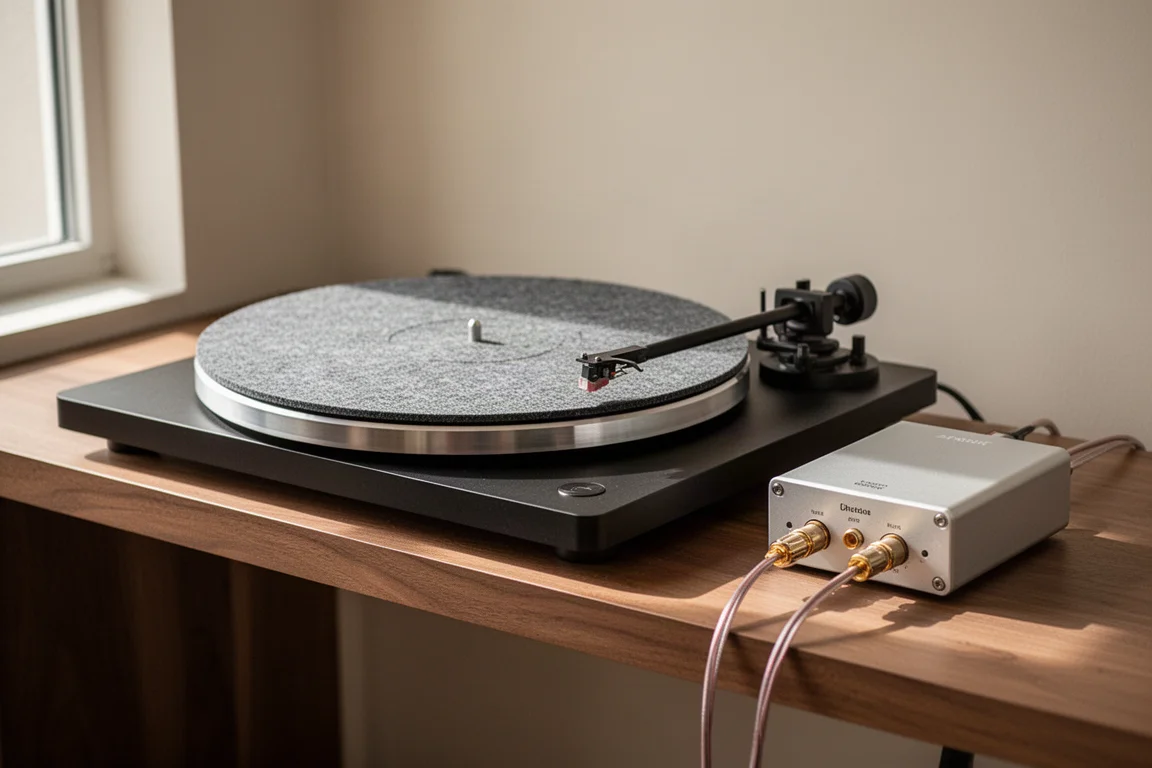
Budgeting for those add-ons is worth doing before you buy. The amplifier itself is $579, and a turntable or computer-based system will realistically add a little more on top.
System Matching Matters
Power ratings only tell part of the story, and the Zest is a good example. It drove a hard-to-drive 83 dB, 11 ohm speaker to a genuinely enjoyable result, but it did not have the same grip and punch it showed with an easier load. If your speakers are unusually insensitive or drop to low impedance, it is worth thinking about whether 30 watts per channel is enough for the volume levels you want.
With reasonably efficient bookshelf speakers, though, there is plenty of headroom here for normal listening in a normal room. The compact size also means the Zest is happiest on a desk or a small shelf, where its short chassis depth is an advantage rather than a compromise.
Buying Advice
For the right buyer, the Zest is easy to recommend. If great sound is the top priority, if you do not want to spend a lot of money, and if you are willing to accept a no-frills design, this amplifier is worth serious consideration. It delivered convincing results even with a difficult speaker load, which is a strong indication of what it can do with an easier one.
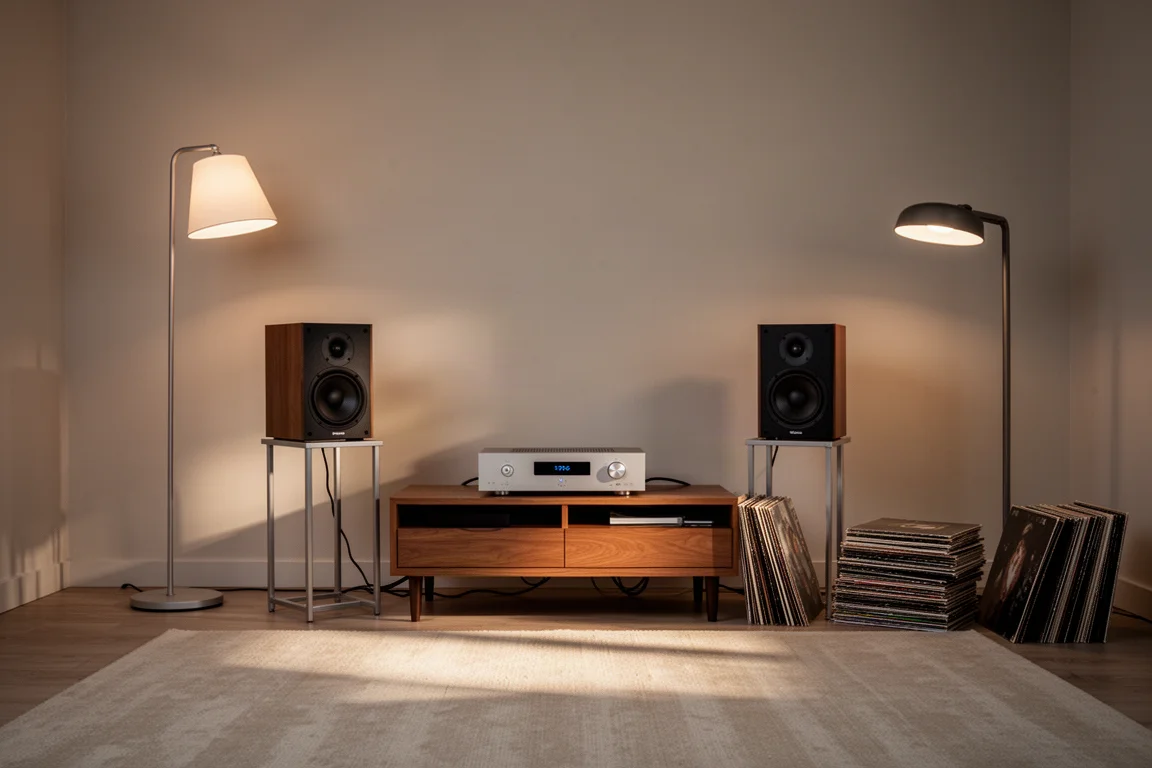
North American buyers also get a practical benefit: the brand has distribution in North America, so any service issue is handled locally rather than requiring a shipment back to Serbia. Elsewhere in the world, the amplifier is sold direct from Serbia with service provided from Serbia. Either way, the amplifier is a long-term purchase rather than a disposable one, and its simplicity works in its favour over time.
If you already own efficient speakers and a decent source, the Zest is a low-risk way to step up the quality of your system. If you need a remote control or a single box that handles everything, look elsewhere, and you will save yourself the frustration.
Conclusion
The Vista Audio Zest is not for everyone, and it does not try to be. It has no remote control, no phono stage, and no digital inputs, and those omissions are the point. What it offers instead is a well-built 30 watt per channel Class AB amplifier with a large custom transformer, a compact chassis that suits desktop use, and sound quality that stands up even when the speakers are hard to drive.
For listeners who prioritise sound above features and want to keep the cost sensible, the Zest deserves a place on the shortlist.
Product link
View more details for Vista Audio Zest
This product is mentioned in the review. Check the specifications, options, and compatibility before buying.
View more details for Vista Audio ZestFurther reading
Related Reviews
Hi-Fi Amplifiers
Accuphase E-280 Review: Entry-Level Accuphase With Flagship Attention to Detail
A close look at the Accuphase E-280 integrated amplifier, covering its champagne build, AAVA volume control, sound quality, and the speakers and sources that suit it best.
Hi-Fi Amplifiers
Advance Paris A10 Classic vs Yamaha A-S301: Two Integrated Amplifiers Compared
A practical comparison of a $350 integrated amplifier and a $2,500 reference model, covering the differences that matter and the ones that do not.
Hi-Fi Amplifiers
Affordable Chinese Amplifiers Worth Buying: Five Budget Hi-Fi Amps Compared
A practical look at five affordable amplifiers, what each one does well, and the trade-offs to weigh before you buy.