Hi-Fi Amplifiers
Vintage Receiver vs Modern Class D: Kenwood Model 9G and Douk Audio ST-01 Compared
A 1978 Kenwood Model 9G flagship receiver meets a $130 tube-equipped Class D amplifier, with a vintage Yamaha CR-800 as a reference point.
Introduction
Two amplifiers, two eras, and one question worth answering before any money changes hands: how much of the character of a top-end 1970s receiver can a compact, affordable modern amplifier reproduce?
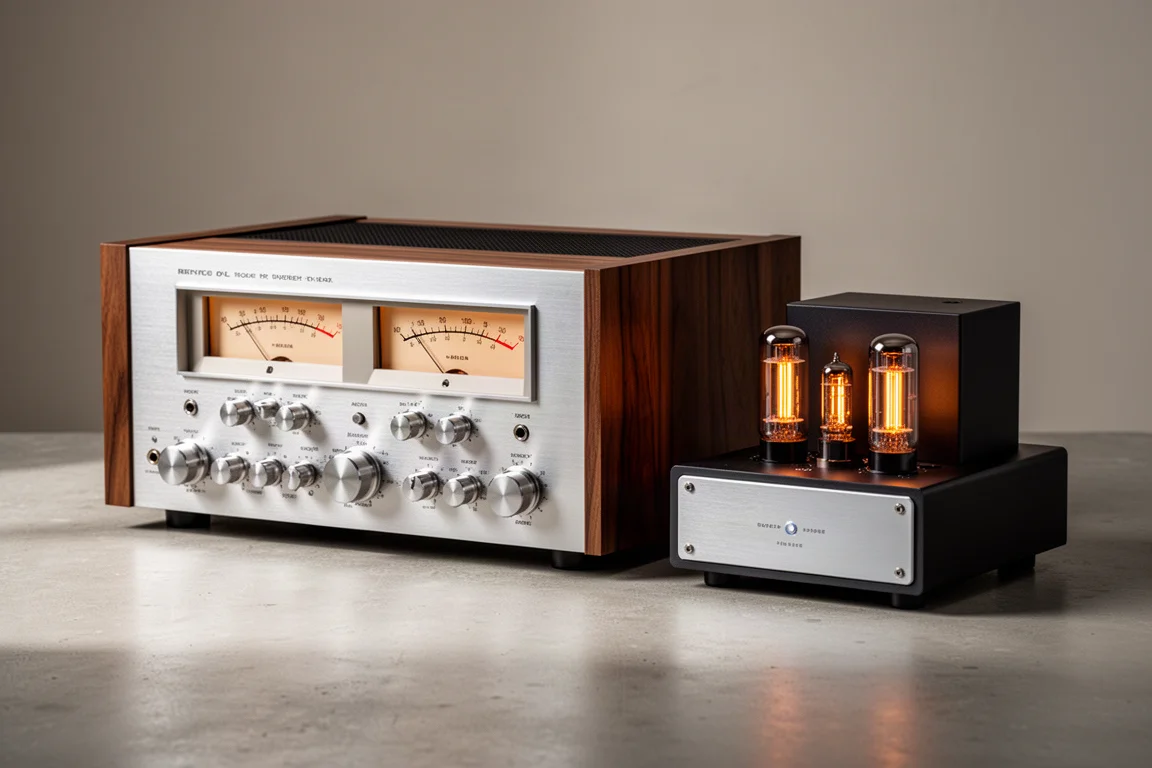
The Kenwood Model 9G is a 1978 flagship receiver. It is a full-size component with analogue meters, three tone controls, three speaker outputs, and a power rating of 80 watts per channel. The Douk Audio ST-01 is a tube-equipped Class D amplifier that costs around $130 and takes up almost no space. A Yamaha CR-800 from the same period joins the discussion as a reference point for what vintage sound actually means.
This is not a story about one design defeating the other. It is a story about matching character to expectation, because these two amplifiers do not sound alike, and the differences are more meaningful than the specification sheets suggest.
How We Compared These Amplifiers
Both amplifiers were fed the same digital source and level-matched as closely as possible, then switched between the same pair of Wharfedale Denton speakers. The Kenwood ran through an external DAC, while the Douk Audio relies on its own internal DAC. Switching between the two on the same track made the differences in midrange, dynamics, and overall presentation straightforward to hear.
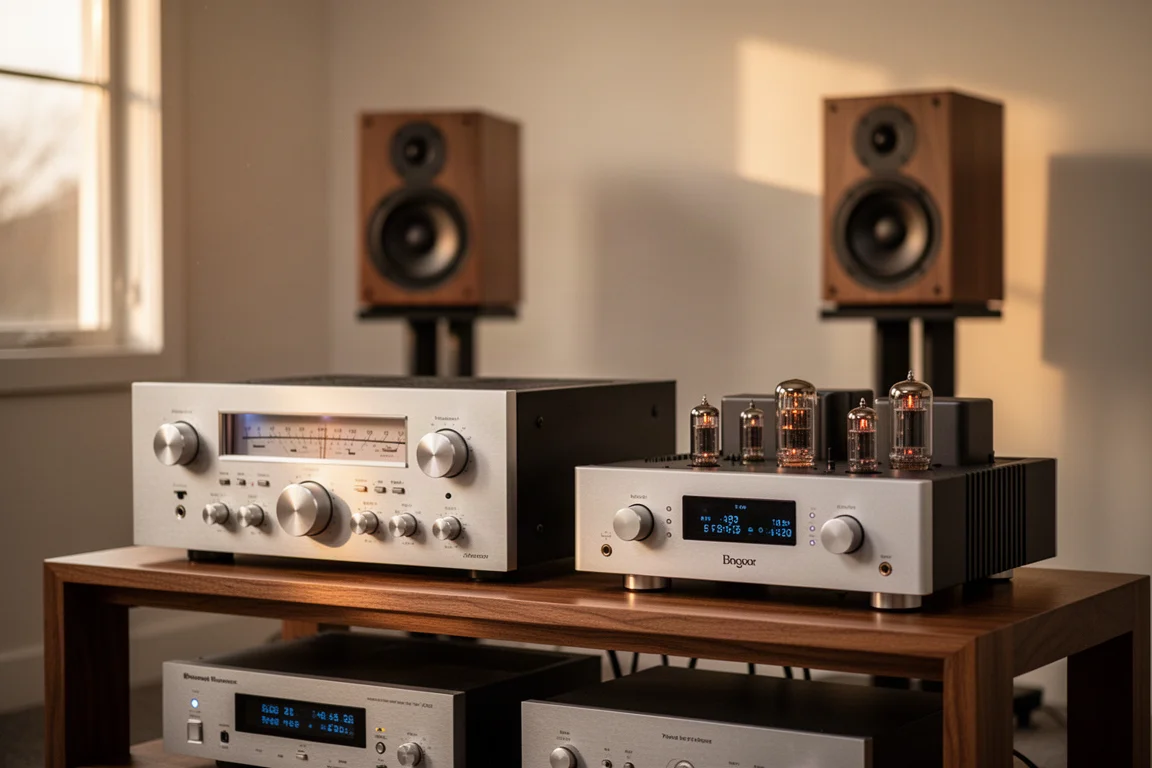
The gap was narrower than expected. Both amplifiers are clean, and their top and bottom ends are broadly similar. What separates them is the midrange and the sense of space. The Kenwood places vocals slightly back in the mix, which makes everything around them sound punchier and more dynamic. The Douk Audio keeps the midrange more forward and even, which reads as better balance but costs some of that drive.
Vintage Classic: Kenwood Model 9G
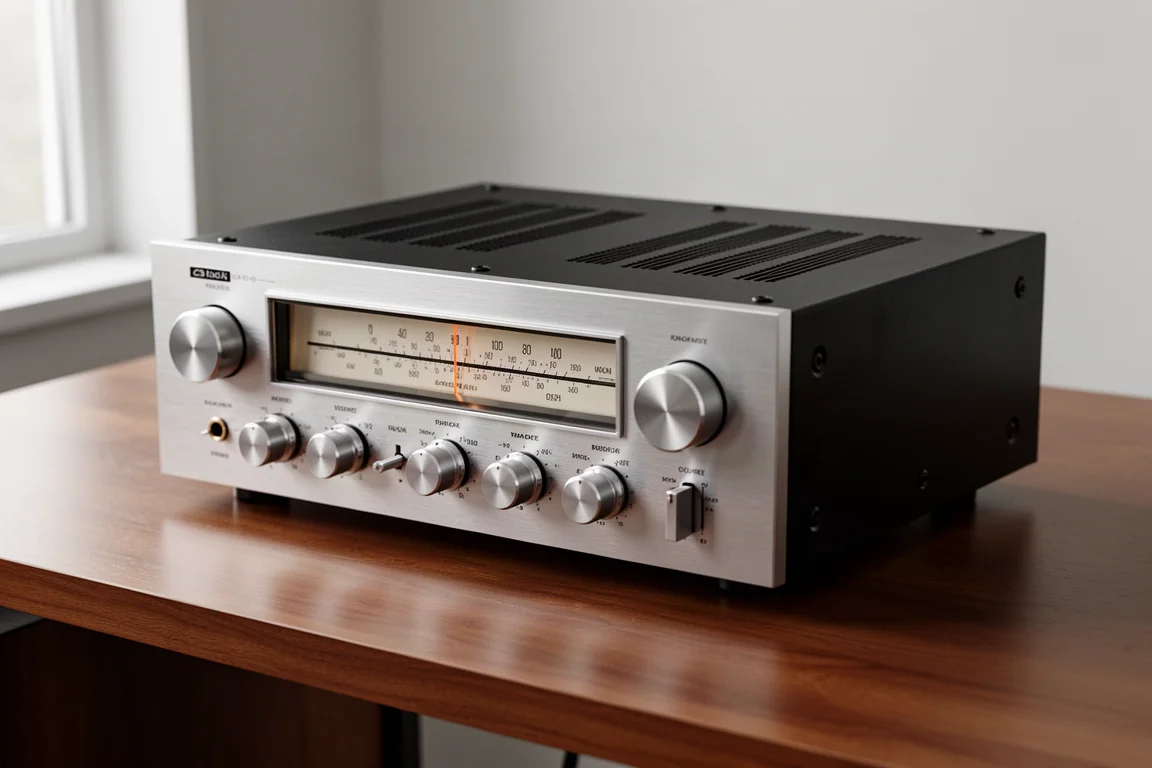
The Model 9G dates from 1978 and was a genuinely top-end receiver in its day. It is also enormous. At 24.5 inches wide, it barely sits on top of a standard rack rather than inside one, so space planning matters before anything else.
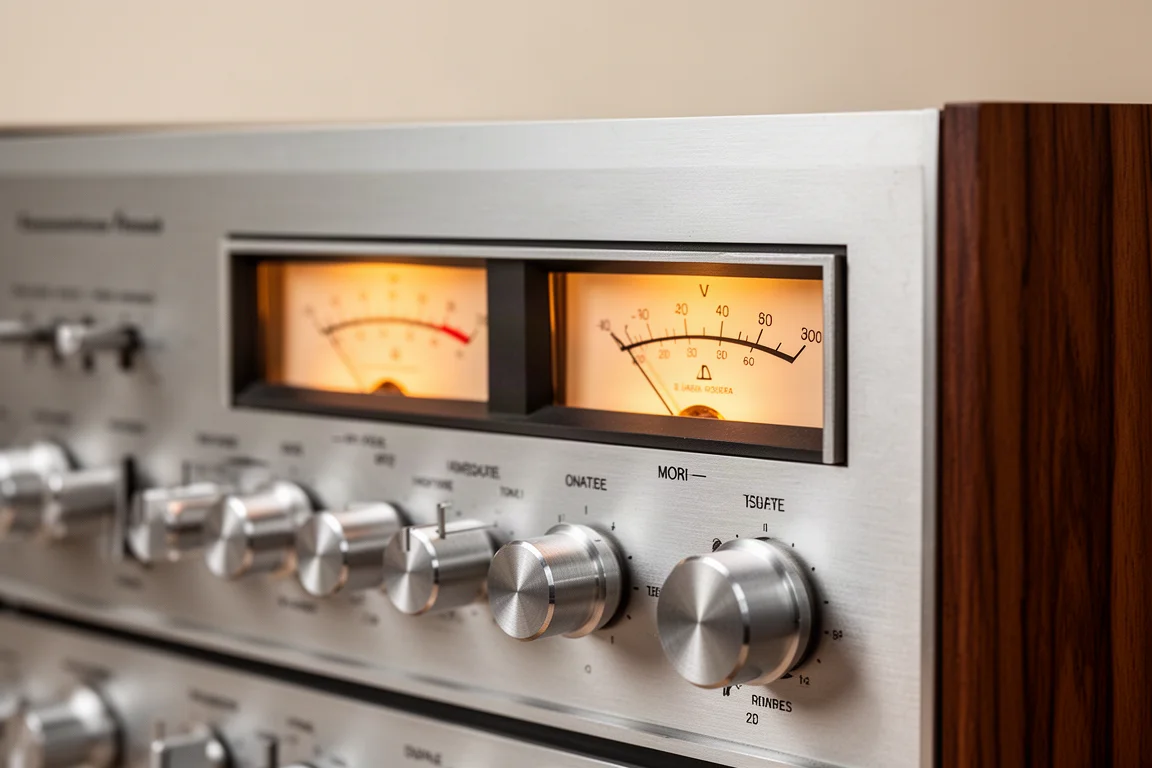
Power is rated at 80 watts per channel. Around the front panel you get three pairs of speaker outputs that can all run at the same time, a VU meter sensitivity control, two headphone outputs, and a sleep timer that can shut the system down after 100 or 120 minutes. Tone control is unusually flexible: separate bass, midrange, and treble controls with a bypass, plus subsonic and high-pass filters that are genuinely useful for turntable rumble. The loudness button is so intense that it is best left alone, since the receiver is already punchy in stock form.
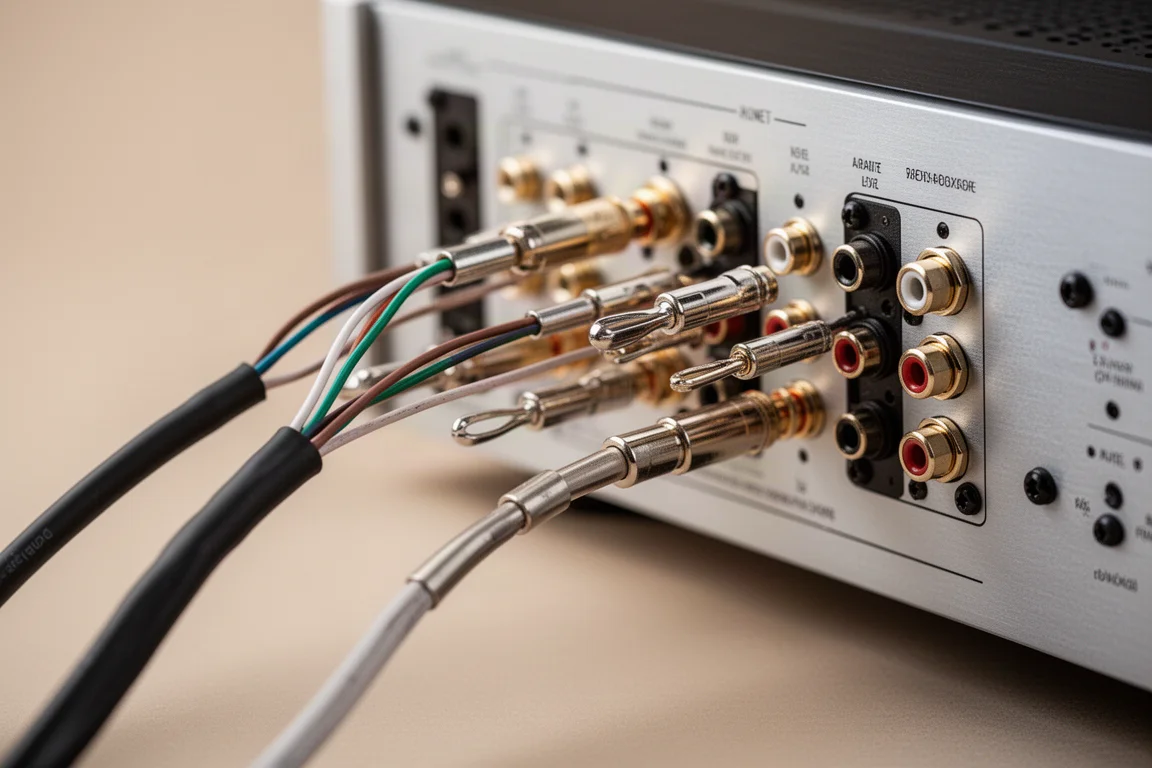
Connectivity is generous. There are two phono inputs with a ground terminal, an auxiliary input, tape loops with Dolby and level controls for mixing, a microphone input, FM antenna connections, and main in and main out jacks. Those last two allow an equaliser to be inserted between the preamp and power amp sections, or a subwoofer to be added with a line running back in. The rear panel also carries switched and unswitched power outlets and voltage options for 120 and 240 volts.
Sonically, the Kenwood is punchy, dynamic, and large in presentation, with plenty of air around instruments and vocals that sound sweet and well defined. It showed noticeably more of its capability once paired with the Wharfedale Denton speakers, and it is simply more fun than the more even, clinical Yamaha CR-800 from the same era. The trade-off is the usual vintage caveat: an occasional crackle or pop shows up now and then, which is what you accept with a receiver of this age, even one in remarkably good condition.
Modern Alternative: Douk Audio ST-01
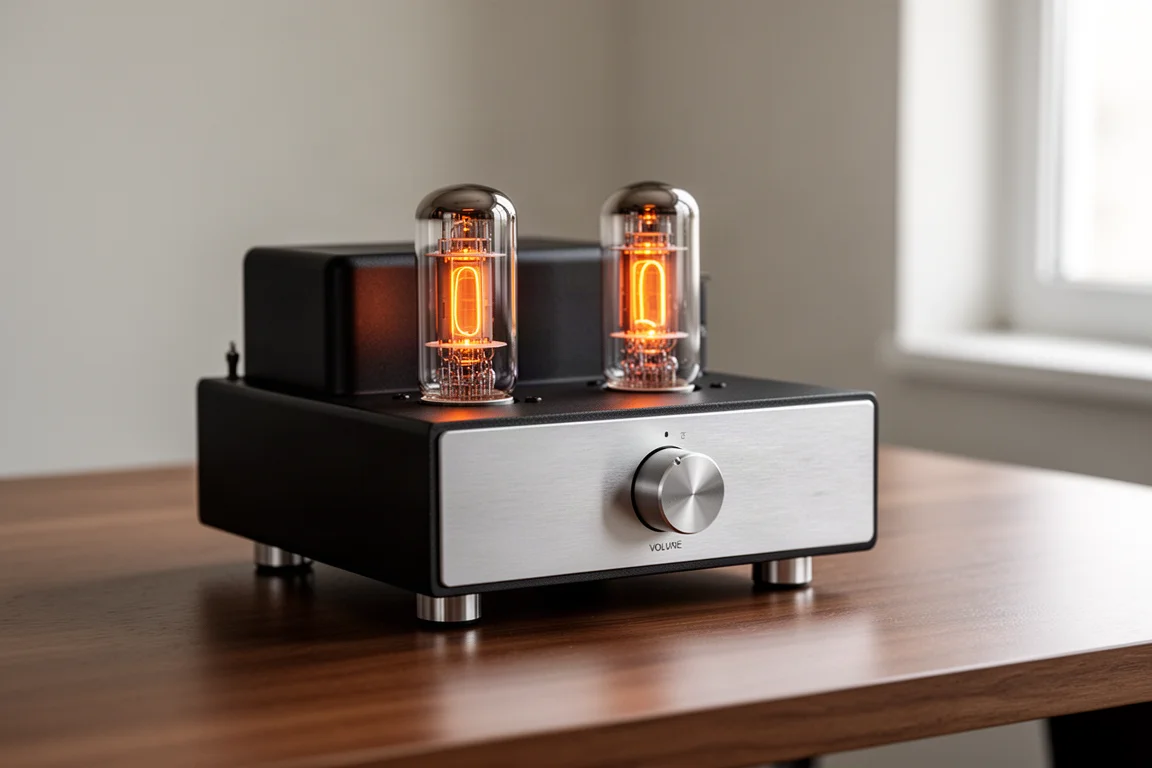
The Douk Audio ST-01 is a compact Class D amplifier with tubes, priced around $130, and it includes its own internal DAC. That combination makes it a very easy component to live with: fewer boxes, less desk space, and a straightforward signal path from a digital source.
Its sound is clean and well balanced, and vocals avoid the thinness that shows up in some Class D designs. The problem is not quality, it is scale. The ST-01 does not have the punch, the dynamics, the air, or the sheer personality of the vintage Kenwood. Its presentation is smaller and less engaging, even though it is arguably the more neutral of the two.
At this price, it is difficult to find real fault. Listeners who only have around $130 to spend will get a capable, clean-sounding amplifier that handles the basics well. What they should not expect is the drama and presence of a flagship 1978 receiver.
A Vintage Reference Point: Yamaha CR-800
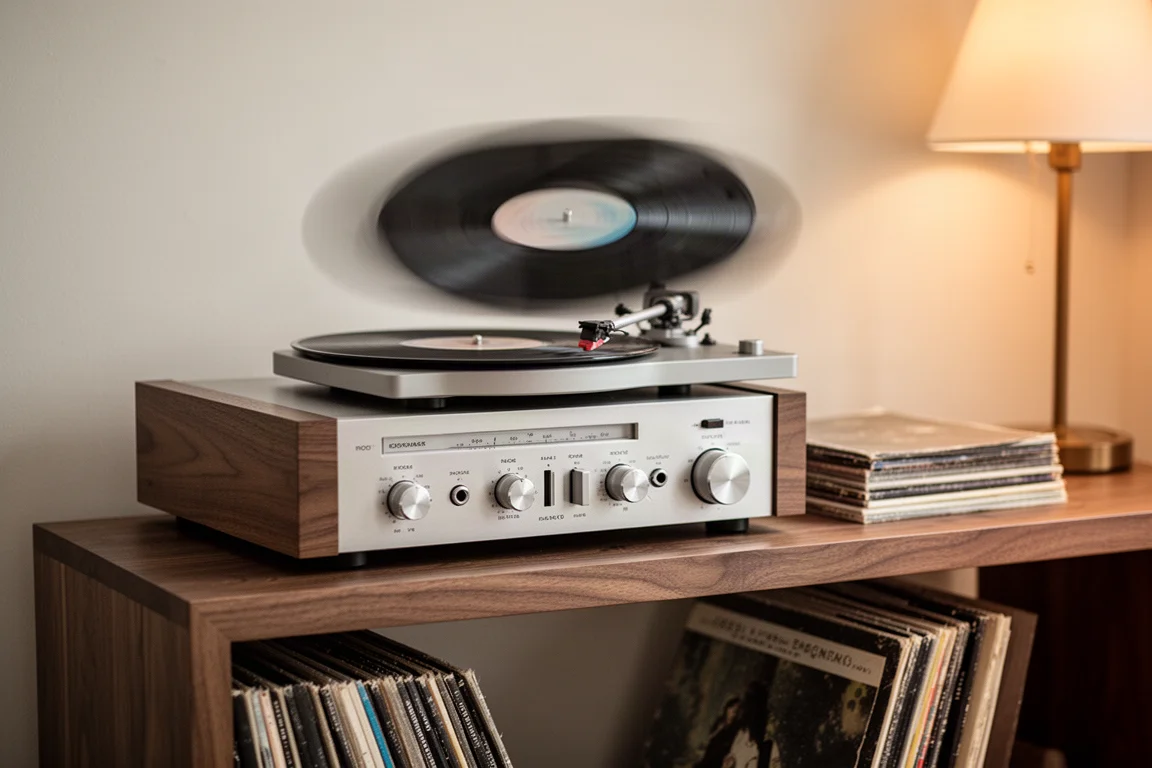
The Yamaha CR-800 comes from roughly the same period, a couple of years older than the Kenwood Model 9G. It is a useful yardstick because it demonstrates how differently two vintage receivers from the same era can be voiced.
In direct listening, the CR-800 sounds more clinical and more even, and it could reasonably be described as the more audiophile-leaning of the two. It is not, however, as punchy and not as much fun as the Kenwood. Where the Model 9G leans into drive and presence, the Yamaha leans into neutrality and composure.
Because the CR-800 serves here as a comparison reference rather than a full assessment, it is best treated as context. It shows that vintage character is not a single sound, and that buyers chasing a specific feel should listen rather than assume that any 1970s receiver will deliver it.
Buying Advice
Start with budget and space. The Douk Audio ST-01 is the sensible entry point for anyone working with around $130, a small room, or a first system. It is clean, balanced, and self-contained, and it will not ask you to rearrange furniture or hunt down a specialist.
The Kenwood Model 9G makes sense for a different buyer: someone with a wide rack, an interest in analogue features such as dual phono inputs and tone controls, and a tolerance for the small noises that come with vintage electronics. Finding one in genuinely good condition is the real challenge, since units this well preserved do not appear on demand.
Whichever direction you take, plan the supporting parts. Speaker matching matters a great deal here, since the Kenwood only revealed its full character with the right pair of speakers, and a level-matched comparison of your own is the only way to know which presentation suits your ears.
Conclusion
The Douk Audio ST-01 is a genuinely impressive amplifier for its price, and it deserves the recommendation it earns. The Kenwood Model 9G is something else entirely: bigger, more dynamic, more spacious, and full of the personality that made 1970s flagship receivers desirable in the first place.
The honest summary is that a $130 modern Class D design can hold its own on cleanliness and balance, but it cannot reproduce the dynamics, soul, and scale of a well-kept vintage flagship. Buy the ST-01 for value and simplicity. Buy the Model 9G for character, and only if you have the space and patience to keep it running.
Further reading
Related Reviews
Hi-Fi Amplifiers
Accuphase E-280 Review: Entry-Level Accuphase With Flagship Attention to Detail
A close look at the Accuphase E-280 integrated amplifier, covering its champagne build, AAVA volume control, sound quality, and the speakers and sources that suit it best.
Hi-Fi Amplifiers
Advance Paris A10 Classic vs Yamaha A-S301: Two Integrated Amplifiers Compared
A practical comparison of a $350 integrated amplifier and a $2,500 reference model, covering the differences that matter and the ones that do not.
Hi-Fi Amplifiers
Affordable Chinese Amplifiers Worth Buying: Five Budget Hi-Fi Amps Compared
A practical look at five affordable amplifiers, what each one does well, and the trade-offs to weigh before you buy.