Desktop Speakers
Vanatoo Transparent Encore Plus Review: Compact Powered Speakers With Real Bass
A compact powered speaker system with a real wood finish, extended bass from a passive radiator, and articulate mids, plus the compromises worth knowing before you buy.
Introduction
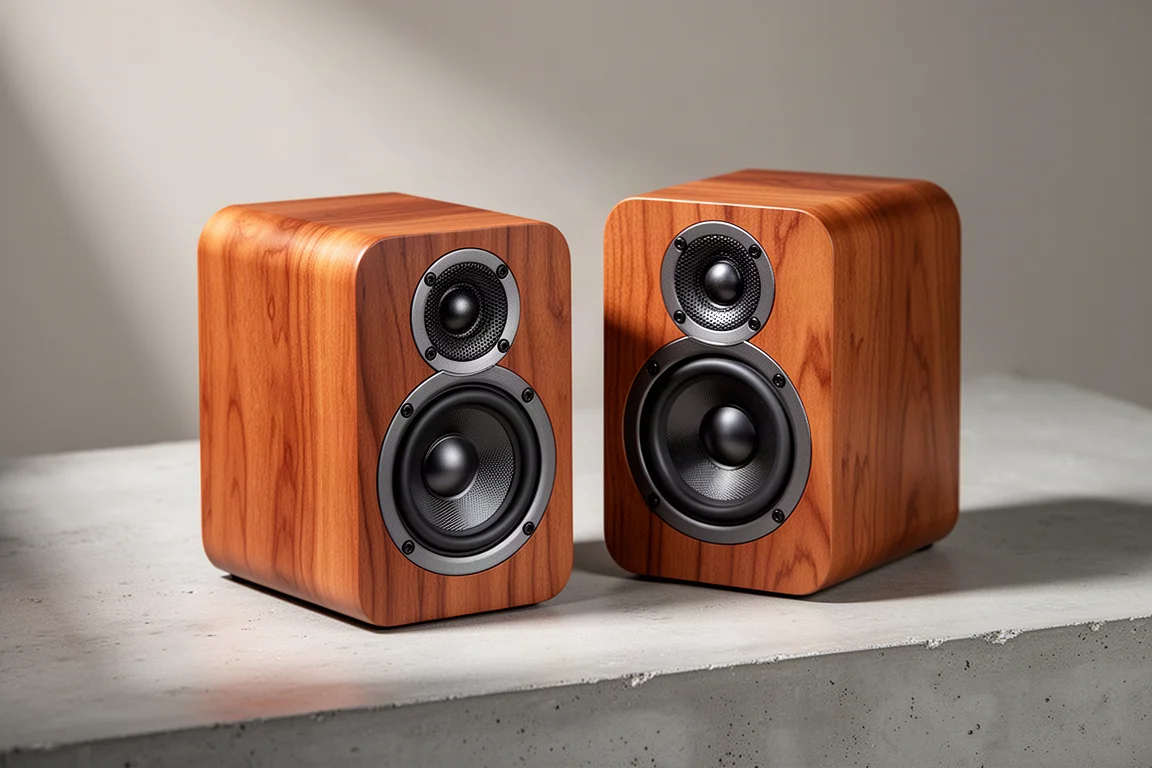
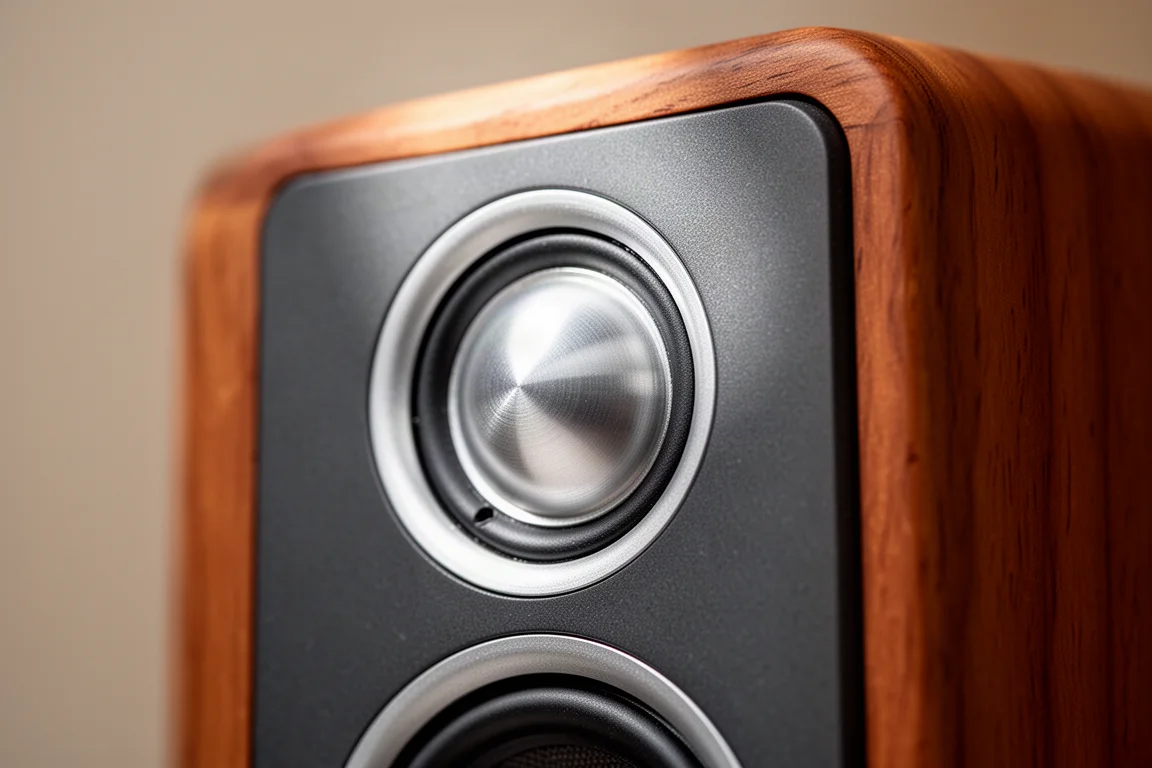
The Vanatoo Transparent Encore Plus is a compact powered speaker system priced at around $700, and it has earned a strong reputation among desktop listeners for one simple reason: it does not sound like a small speaker. Each cabinet pairs a class D amplifier with a 5.25 inch aluminium cone woofer, a 20 watt class D amplifier with a 1 inch aluminium dome tweeter, and a rear firing 5.25 inch passive radiator. Onboard DSP ties the drivers together and extends the low end well beyond what the cabinet size suggests.
That combination makes the Encore Plus more interesting than a typical pair of desktop speakers. It is a small, well built active system designed to sit on a desk or to stand in for a soundbar in a secondary entertainment setup, and it is expected to handle music, films, and games with equal composure.

The short version: the bass is the headline, the midrange is clear and articulate, and the list of real compromises is short. The sections below explain who the speakers suit, where they shine, and what to check before you commit.
Who this product is for
The Encore Plus is aimed at listeners who want a complete, compact system rather than a passive speaker paired with separate amplification. Because the amplifiers, DSP, and tone controls are built into the cabinets, all you need is a source and power. That makes it a natural fit for a desk, a nearfield listening position, or a small room where a full size speaker and amplifier stack would be impractical.
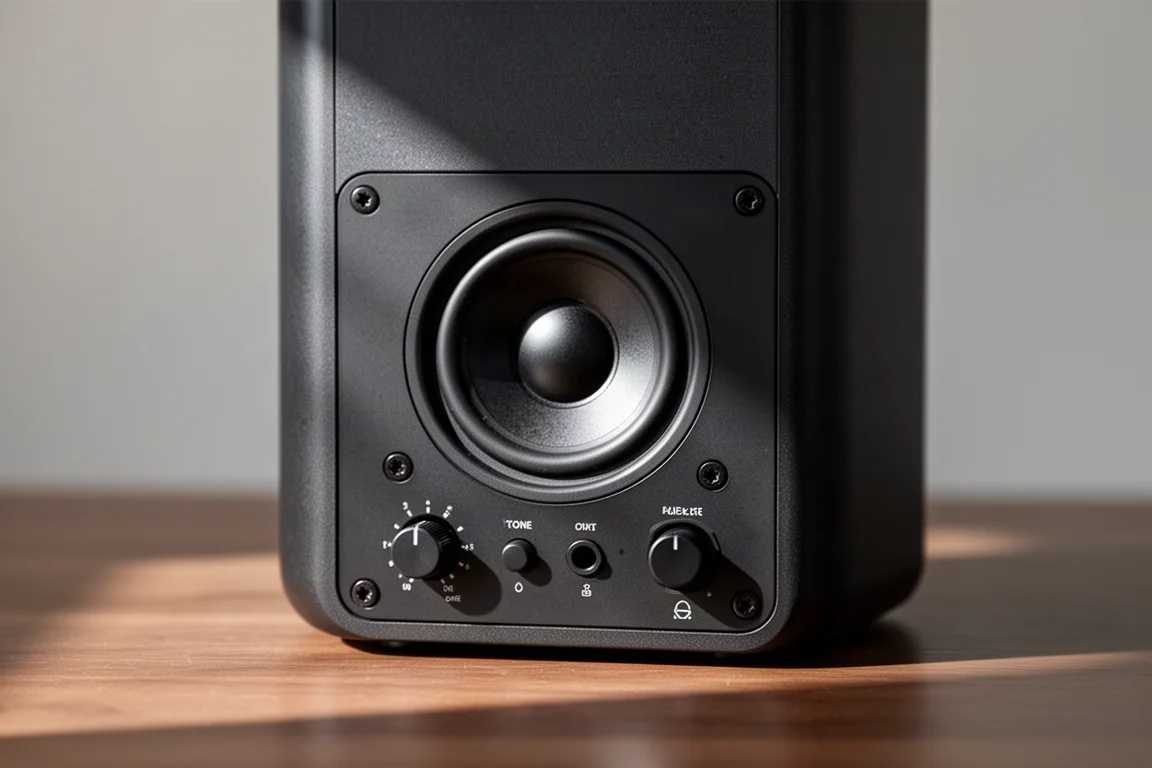
It also suits anyone who wants a single system for mixed use: music during the day, then films and games in the evening. The bass and treble tone controls on the back, together with the included remote, let you tune the balance without adding hardware. Listeners who want deeper low frequency output later can use the subwoofer output on the back to bring in a sub, which makes for a practical upgrade path rather than a dead end.
If you mostly listen at low volume in a treated room and want absolute neutrality, this is not the only sensible option. If you want a compact system that handles several kinds of entertainment well, it is a very strong candidate.
Main strengths
Build quality is the first thing you notice. The cabinets are compact but solid, and the real wood cherry veneer gives them a finish that looks considerably more expensive than the price suggests. They are small enough to sit either side of a monitor without dominating the desk.
The second thing you notice is the bass. A 5.25 inch passive radiator on the back of each cabinet, working with the DSP, produces low frequency output that is genuinely extended for the size. It is dynamic, punchy, and clean rather than boomy, and it is the main reason these speakers surprise people who expect a small cabinet to sound thin.
Versatility is the third strength. The same character that makes the speakers enjoyable with music also works for film dialogue, game sound effects, and podcasts, which is exactly what a desktop system is asked to do. The speakers do not need to be specialised to sound good at any of it.
Bass reach and dynamics
The passive radiator and DSP combination is what delivers the low end, and the result is a bass presentation that sounds larger than the cabinet. Kick drums land with weight, bass lines stay defined, and the low frequencies reach further than most compact speakers manage.
There is a practical ceiling to this. The DSP limits output when the speakers are pushed hard to fill a large room, and the bass is the first thing to be reduced as a protective measure. In normal desktop use this is unlikely to be noticeable. If you want more headroom and more low frequency extension, the subwoofer output on the back lets you add a sub, which both extends the response and takes load off the main drivers so they can play louder.
Midrange clarity and imaging
The midrange leans towards studio reference neutrality, with a touch of extra presence in the upper midrange. That presence shows up most clearly on guitar, where string scrape and pick attack come through with more edge than a warmer sounding speaker would give you. It is the kind of detail that can be dialled back with the treble control if you prefer a softer balance.
That same upper midrange emphasis is what makes dialogue so intelligible. Speech in films, podcasts, and games is articulate and transparent, and it is the trait that gives these speakers their name. The trade off is that the Encore Plus is not the right choice for loud, aggressive music played at full volume. That is not what this balance is built for, and it is a fair exchange for the clarity it brings to everything else.
Imaging is another area where the speakers do well. Vocals and instruments are placed accurately within the stage, and the phase coherent presentation makes the positioning sound precise and stable. Soundstage width is moderate: more open and spacious than a typical studio monitor of the same size, but not the largest you will hear in a nearfield setup. Effects in films, such as a car passing across the screen, are easy to follow and convincing.
Things to consider before buying
The first omission is connectivity. There is no HDMI eARC input, which would have been a natural fit for a system that can stand in for a soundbar in a television setup. The rear panel is already busy, so this is a design compromise rather than an oversight, but it is worth knowing if you plan to connect a TV directly.
The second point is feedback. The included remote is functional and covers the same options as the rear panel, but the only indication of a change is a small orange LED blinking. There is no display and no scale, so you cannot see how much volume, bass, or treble you have just applied. The rear dials do not move in response to remote adjustments, and they have no clicks or markings of their own, so the dials and the remote can end up holding different settings. If you like to know exactly where your settings sit, plan to trust your ears instead.
The third consideration is output limits in large rooms. The DSP protection that keeps the woofer safe also reduces bass when the speakers are driven hard to fill a big space. In a desk or small room setting this is unlikely to matter. In a larger room, adding a subwoofer through the sub out solves both the extension and the headroom question.
Buying advice
At around $700, the Transparent Encore Plus sits in a competitive part of the powered speaker market, and the value case rests on what the system does as a package: compact cabinets with a real wood finish, built in amplification and DSP, useful tone controls, a remote, and a subwoofer output for future expansion.
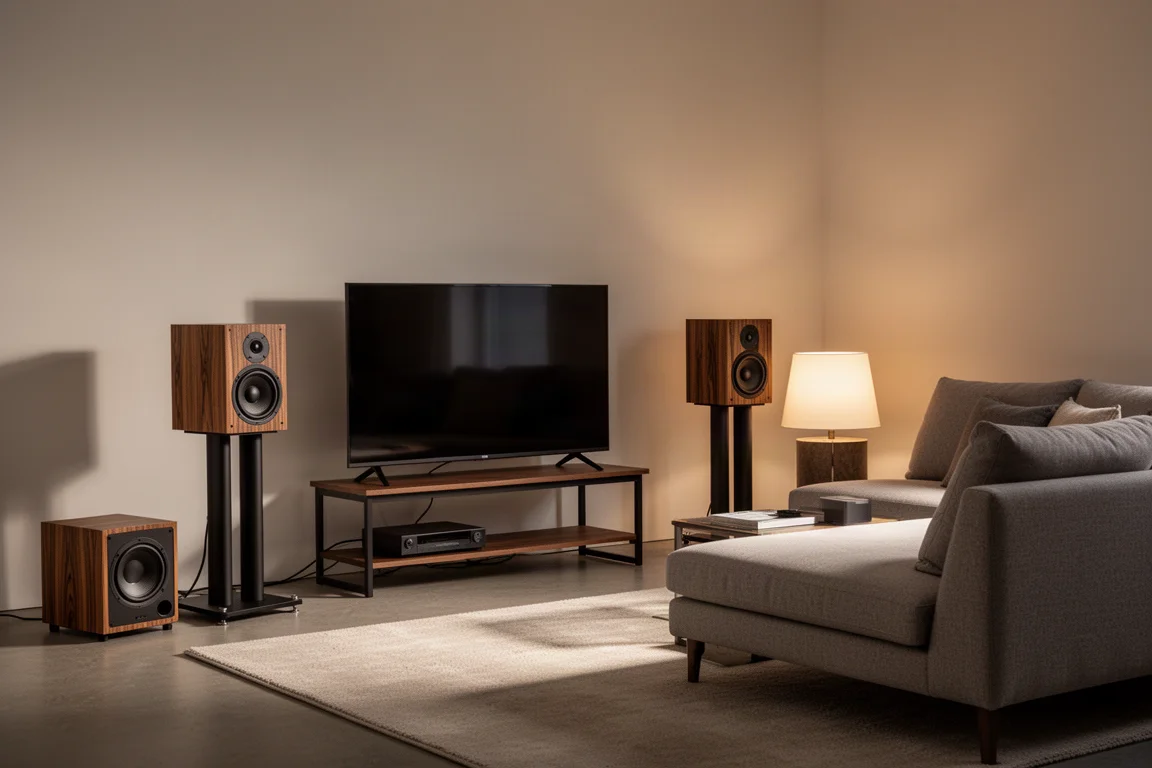
For a desktop or nearfield setup, the priorities are straightforward. If you want deep, punchy bass from a small cabinet and a clear, articulate midrange for speech and instruments, the Encore Plus delivers both without extra hardware. If you want a single pair of speakers to cover music, films, and games, the versatility is the strongest argument in its favour. If you plan to use it with a television, check how you will handle the audio connection, because there is no HDMI eARC input.
If your room is large or you like to listen very loudly, budget for a subwoofer as part of the purchase. The subwoofer output makes that easy, and it turns the system into something close to full range while giving the main speakers more room to breathe.
Conclusion
The Vanatoo Transparent Encore Plus earns its reputation on the strength of its bass and its clarity. A compact cabinet with a real wood veneer finish, class D amplification, a passive radiator, and DSP add up to a system that sounds far larger than it looks, and it handles music, films, games, and speech with equal competence.
The compromises are specific and easy to plan around: no HDMI eARC, limited visual feedback for volume and tone adjustments, and DSP protection that limits bass output when the speakers are pushed hard in a large room. Add a subwoofer through the sub out and the last of those stops being a concern.
If you want a compact, versatile powered speaker system that does not need a rack of equipment to sound good, the Encore Plus is easy to recommend. If you need television connectivity without workarounds, or you mainly listen at very high volume, look carefully at those two points first.
Product link
View more details for Vanatoo Transparent Encore Plus
This product is mentioned in the review. Check the specifications, options, and compatibility before buying.
View more details for Vanatoo Transparent Encore PlusFurther reading
Related Reviews
Desktop Speakers
Audio Smile Little British Monitor Review: A Compact Desktop Speaker With Measured Neutrality
A small European powered desktop speaker with a waveguide tweeter, an aluminum cone woofer, and an unusually flat measured response for its size.
Desktop Speakers
Audioengine A2+ Review: A Small Desktop Speaker That Knows Its Place
The Audioengine A2+ is a compact powered desktop speaker pair with Bluetooth, a tidy footprint, and a sound profile tuned for life on a desk rather than a listening room.
Desktop Speakers
Five Desktop Speakers Compared: Edifier, Kanto, Adam Audio, and Kali
Five compact desktop speakers from roughly $170 to $349 per pair, compared on accuracy, listening window stability, output capability, and desk footprint.