Desktop Speakers
Audioengine A2+ Review: A Small Desktop Speaker That Knows Its Place
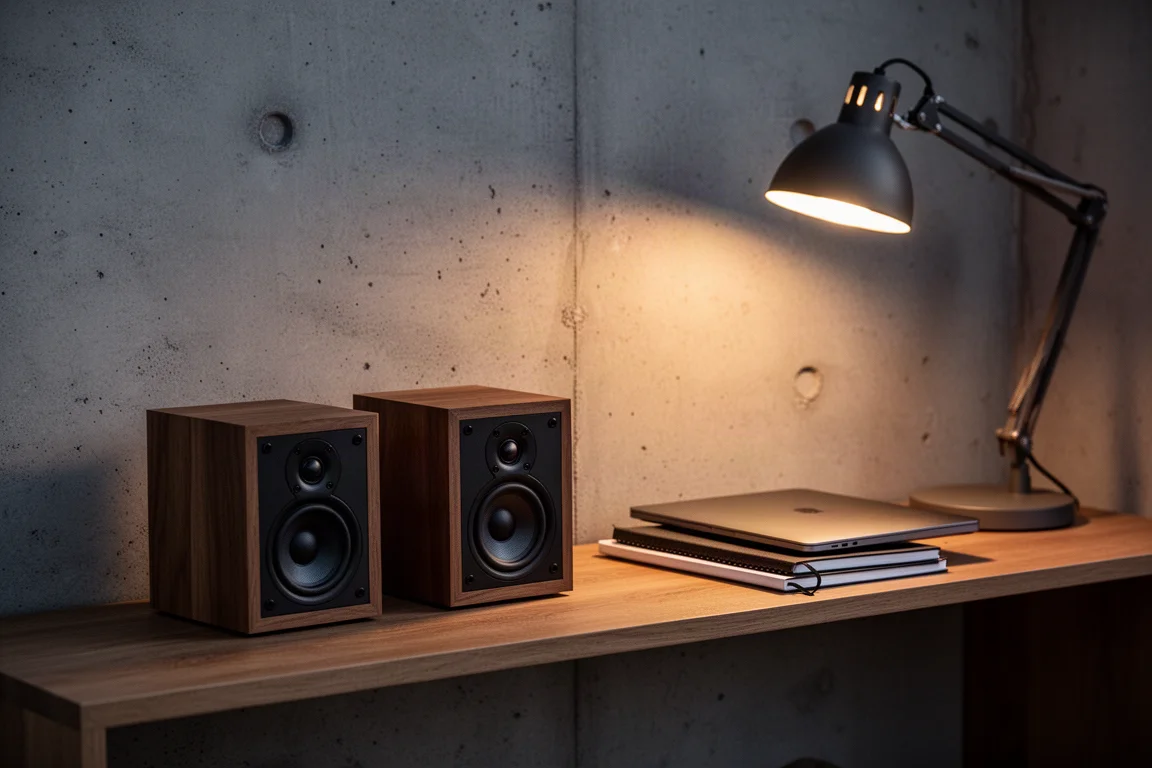
The Audioengine A2+ is a compact powered desktop speaker pair with Bluetooth, a tidy footprint, and a sound profile tuned for life on a desk rather than a listening room.
Introduction
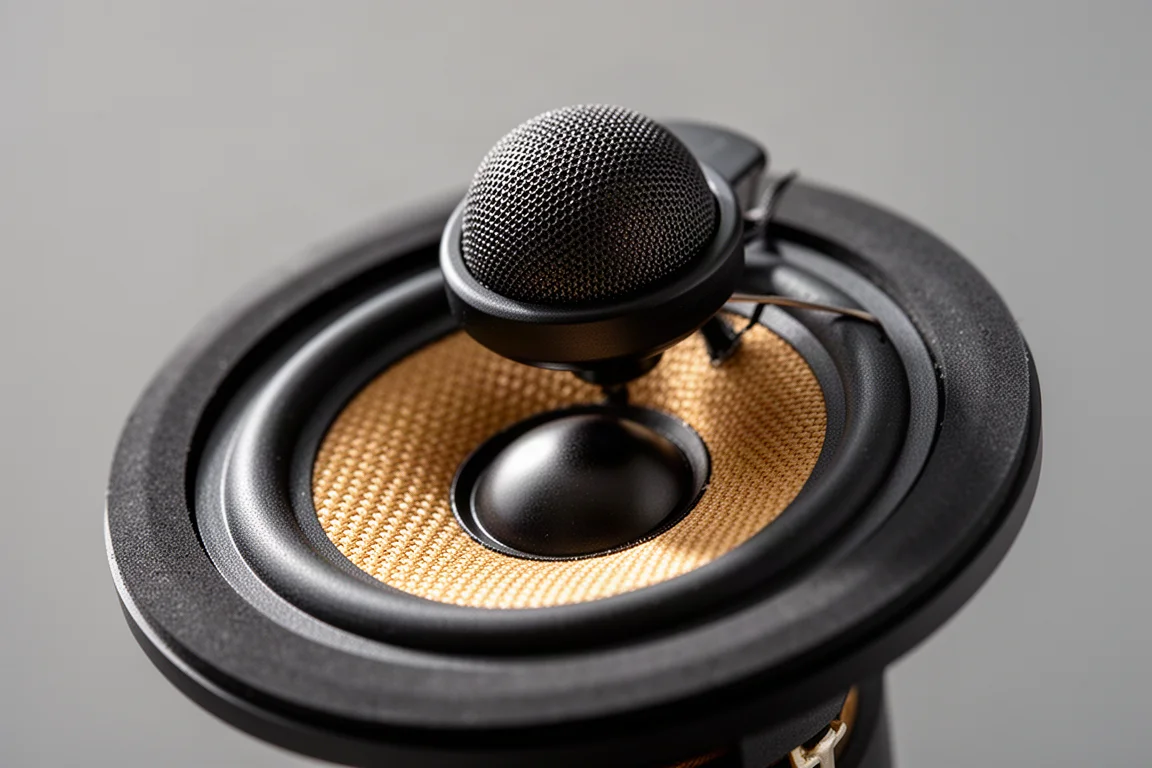
The Audioengine A2+ is a pair of powered desktop speakers priced at around $269 per pair. Each cabinet holds a 3/4 inch silk dome tweeter and a single 2 3/4 inch fiber woofer, driven by analog 15 W amplifiers, and the system covers Bluetooth 5.0, RCA inputs, a micro USB input, and an additional analog input. A volume knob sits on the rear panel, so you can dial in a fixed gain on the speaker and then ride the level from your computer instead.
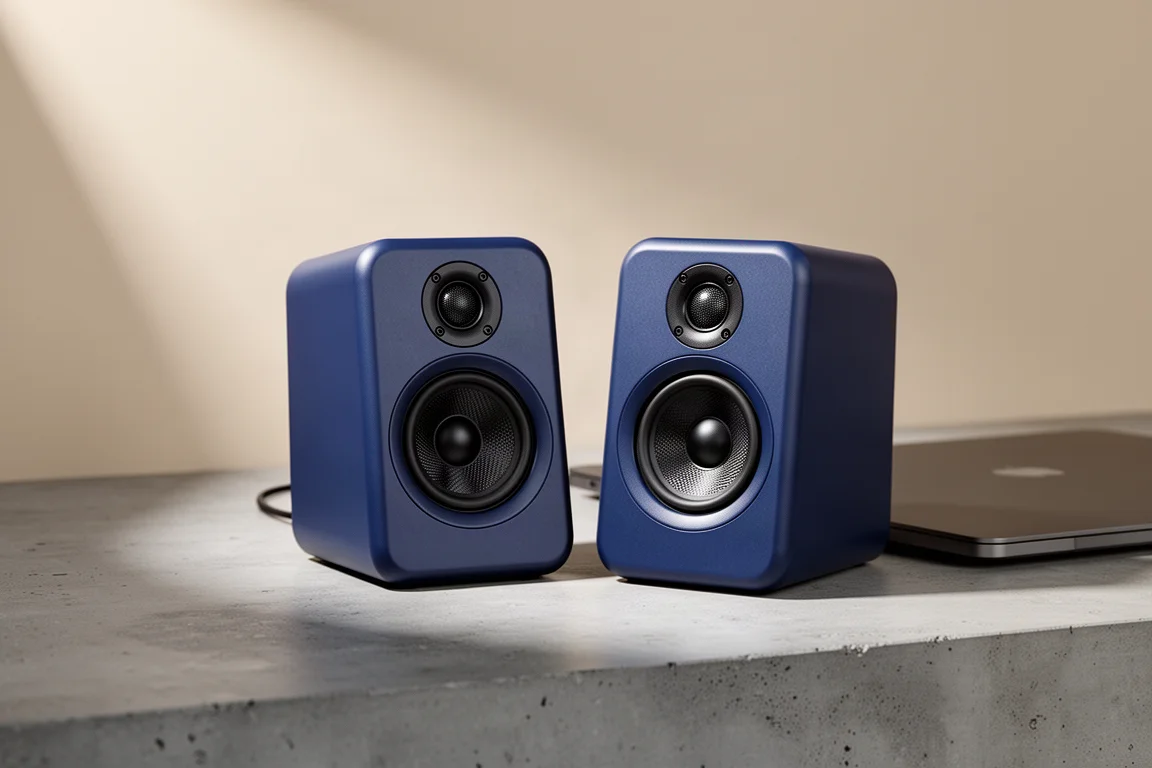
The speakers are available in blue, black, white, and red. The compact dimensions are the headline feature, and the way they are tuned assumes they will sit on a desk rather than on a stand in open air.
Who the Audioengine A2+ Is For
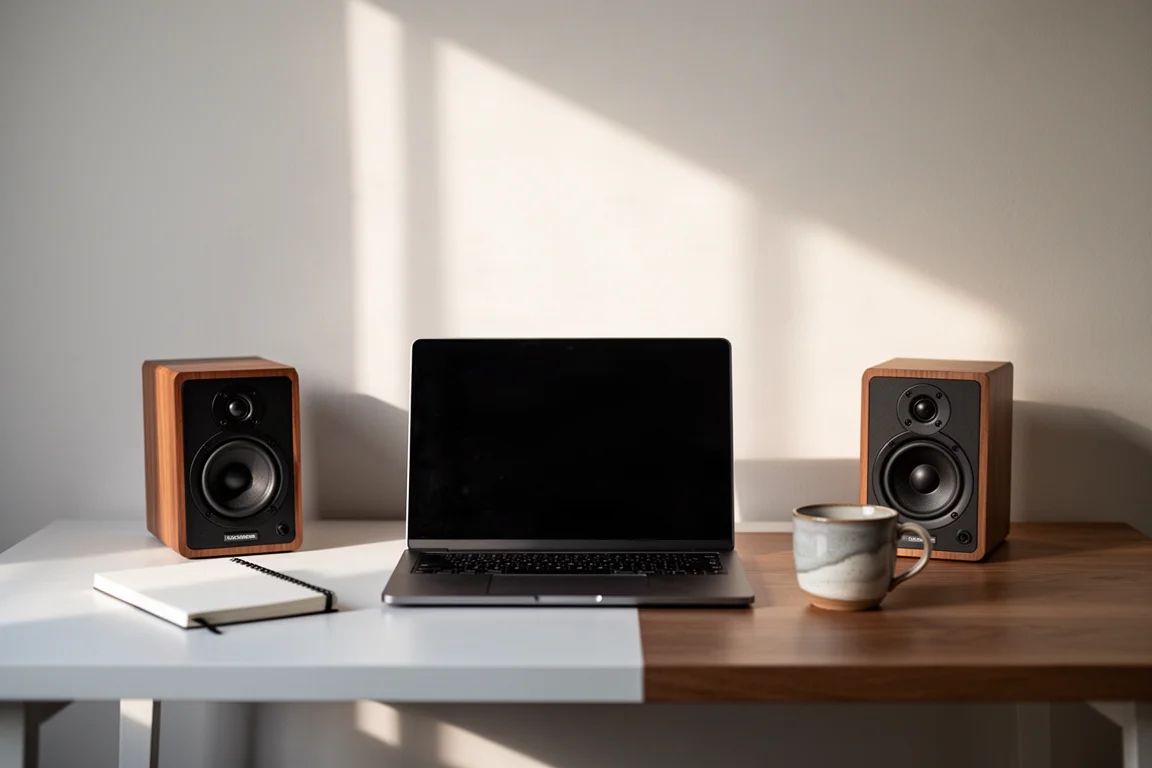
This is a speaker for people who work at a desk. It suits a nearfield setup where the cabinets sit on the same surface as your keyboard, roughly an arm’s length away, playing background music or spoken audio while you get on with something else. It also suits anyone who cares about how their desk looks, since the small footprint and the four finish options make them easy to live with in a visible space.
It is not aimed at listeners who want a wide, room-filling presentation, and it is not the right pick if your priority is deep bass or high output levels.
Main Strengths: Size, Finish, and Connectivity
The strongest argument for the A2+ is simply how little room it takes up. On a crowded desk, that matters more than a specification sheet suggests, and the cabinets are small enough to slot in around a monitor without rearranging everything else.
Connectivity is generous for the category: Bluetooth 5.0 for wireless listening, RCA inputs, a micro USB input, and an additional analog input, plus a rear volume knob for setting gain at the speaker. The absence of an HDMI input is worth noting only for completeness, since a desktop computer speaker does not need one.
Sound Quality and Measured Behavior
The on-axis response shows a pronounced mid-range dip, with a swing of roughly plus or minus 3 dB, along with a lift around 200 Hz that does little for perceived weight given how the low end rolls off. The treble is comparatively even, though it sits about 2 dB down between roughly 3 kHz and 5 kHz. Bass reaches down to around 100 Hz with authority and falls away quickly below that point.
Placement changes the picture more than the raw data suggests. Desk bounce typically fills in the mid-range by roughly 1 to 2 dB, which is exactly why the tuning works in the position the speakers were designed for. Sitting about 20 degrees above the tweeter line is the sweet spot, and the speakers can be toed out roughly 20 degrees rather than aimed straight at your ears. Horizontal coverage is wide, at roughly plus or minus 60 degrees, and vertical listening positions anywhere from about 15 to 30 degrees above the tweeter line remain workable. For listeners who want a flatter response, the mid-range dip can be raised and the treble shelf flattened with equalization.
Things to Consider Before Buying
Output is the main limitation. These speakers will not get loud, and listening from more than about an arm’s length away runs them out of headroom quickly. Compression starts to set in around 86 to 87 dB at one meter, and distortion rises noticeably at 96 dB, so they are not the right tool for high-volume listening.
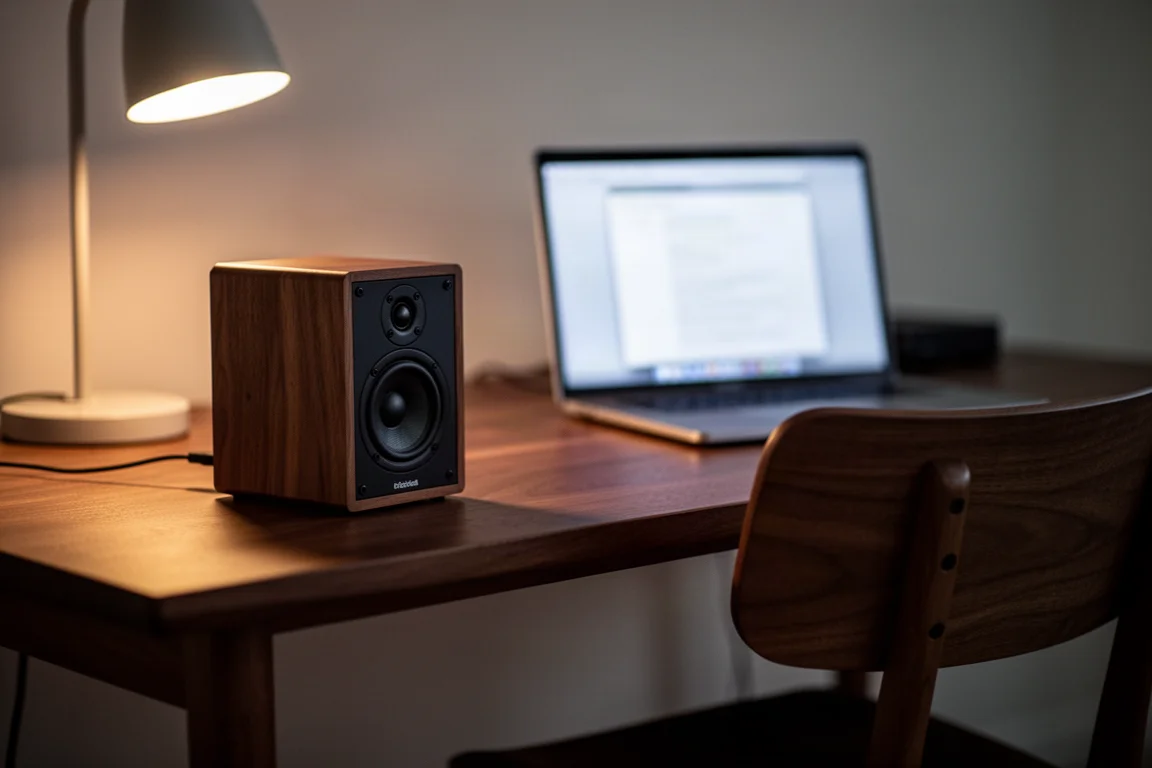
Placement is the second consideration. Raising the cabinets onto stands at ear level exposes the mid-range dip and makes them sound noticeably more colored, which is the opposite of what most desk setups need. They also stay close to their limits in the low end: below roughly 100 Hz there is very little output to work with.
How the A2+ Compares With Close Alternatives
Two similarly priced options come up often. The Kali LP-UNF sells for around $299 per pair, is roughly twice the size, measures more linearly, and plays lower, with rear dip switches that let you adjust for desk, stand, or wall placement. The FiiO SP3 also sells for around $299 per pair and is close to the A2+ in size, but it is more nonlinear, with high frequencies that sit well above the mid-range and a narrow resonant peak around 70 Hz.
Between the A2+ and the SP3, the A2+ is the more sensible buy, and it costs about $30 less. Against the Kali, the decision comes down to space: the Kali is the better speaker, and it is also a much larger one.
Buying Advice
Buy the Audioengine A2+ if your priority is a small, good-looking pair of powered speakers that disappears onto a desk and handles everyday listening with Bluetooth convenience and a useful set of inputs. The tuning is built around that exact scenario, and in that scenario it holds up well.
If you need more output, deeper bass, or a system that stays linear at higher volumes, put the money toward a larger speaker instead. The A2+ is honest about what it is, and it is at its best when it is not asked to be something bigger.
Conclusion
The Audioengine A2+ earns its place through restraint. It is small, it is easy to connect, it looks good on a desk, and its response is shaped for the position it will actually be used in. Its limits are real, particularly in output and low-frequency extension, but they sit outside the job these speakers are meant to do. For a compact desktop setup at around $269 per pair, that is a reasonable set of trade-offs.
Product link
View more details for Audioengine A2+
This product is mentioned in the review. Check the specifications, options, and compatibility before buying.
View more details for Audioengine A2+Further reading
Related Reviews
Desktop Speakers
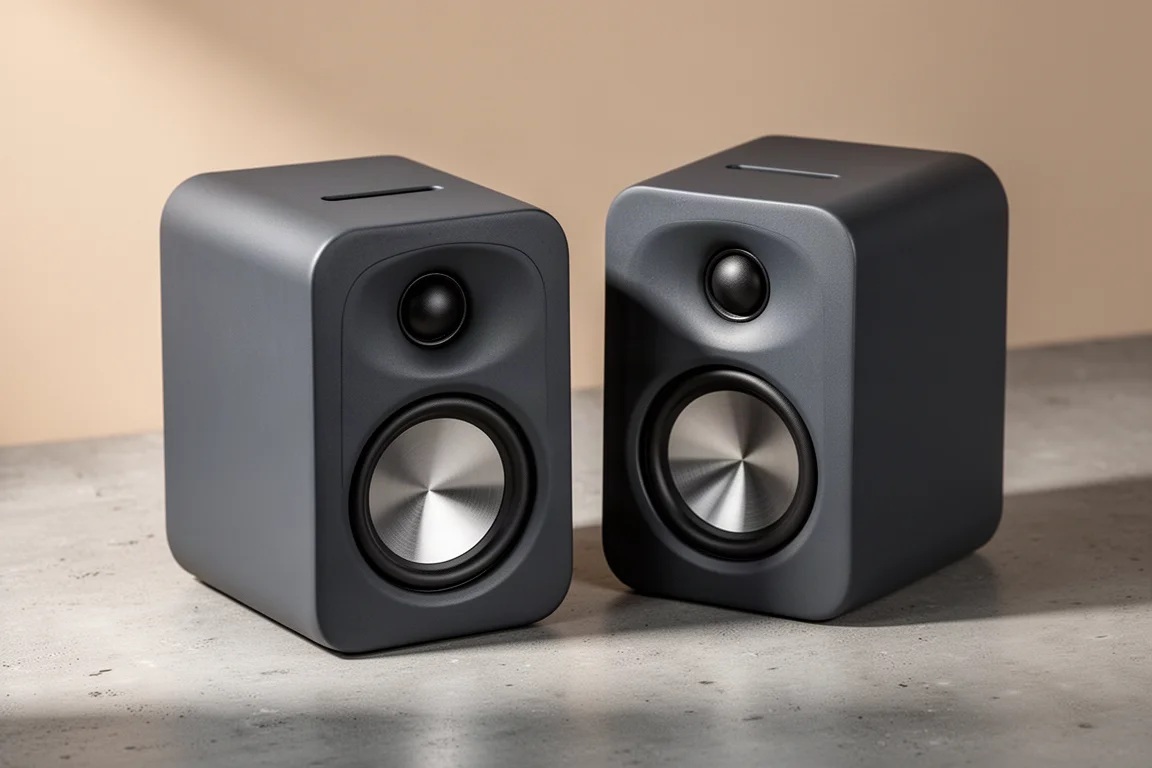
Audio Smile Little British Monitor Review: A Compact Desktop Speaker With Measured Neutrality
A small European powered desktop speaker with a waveguide tweeter, an aluminum cone woofer, and an unusually flat measured response for its size.
Desktop Speakers
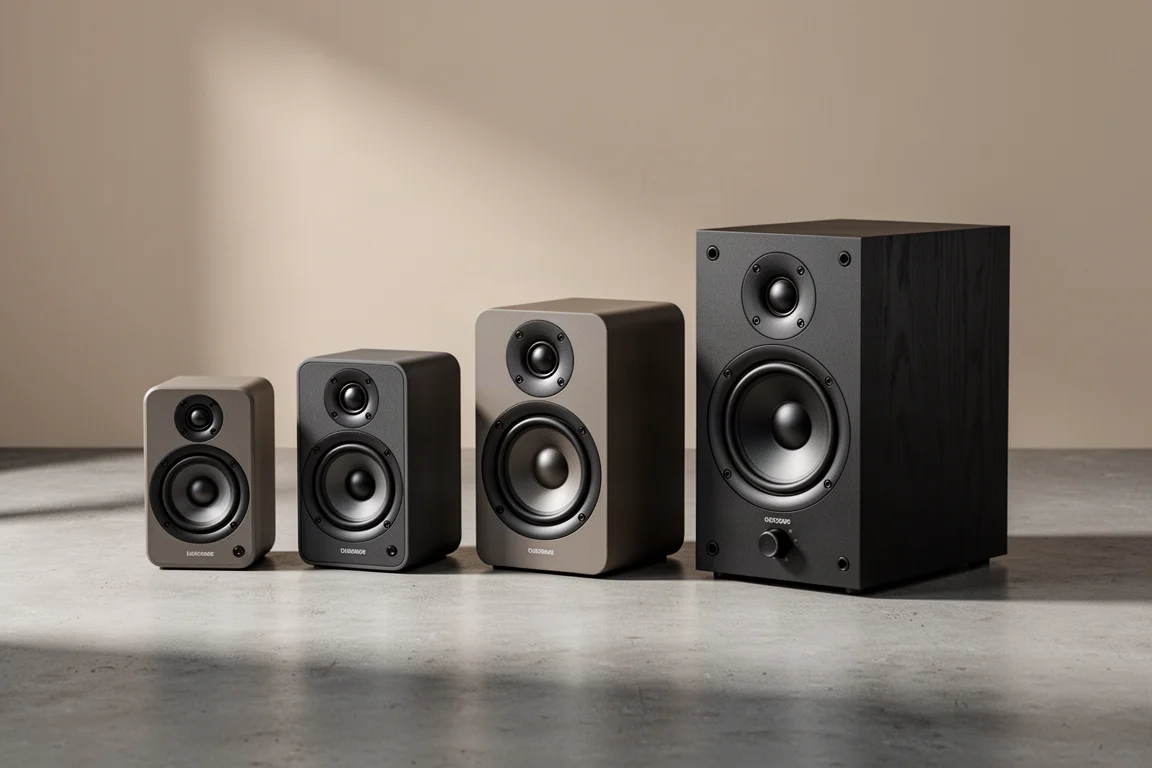
Five Desktop Speakers Compared: Edifier, Kanto, Adam Audio, and Kali
Five compact desktop speakers from roughly $170 to $349 per pair, compared on accuracy, listening window stability, output capability, and desk footprint.
Desktop Speakers
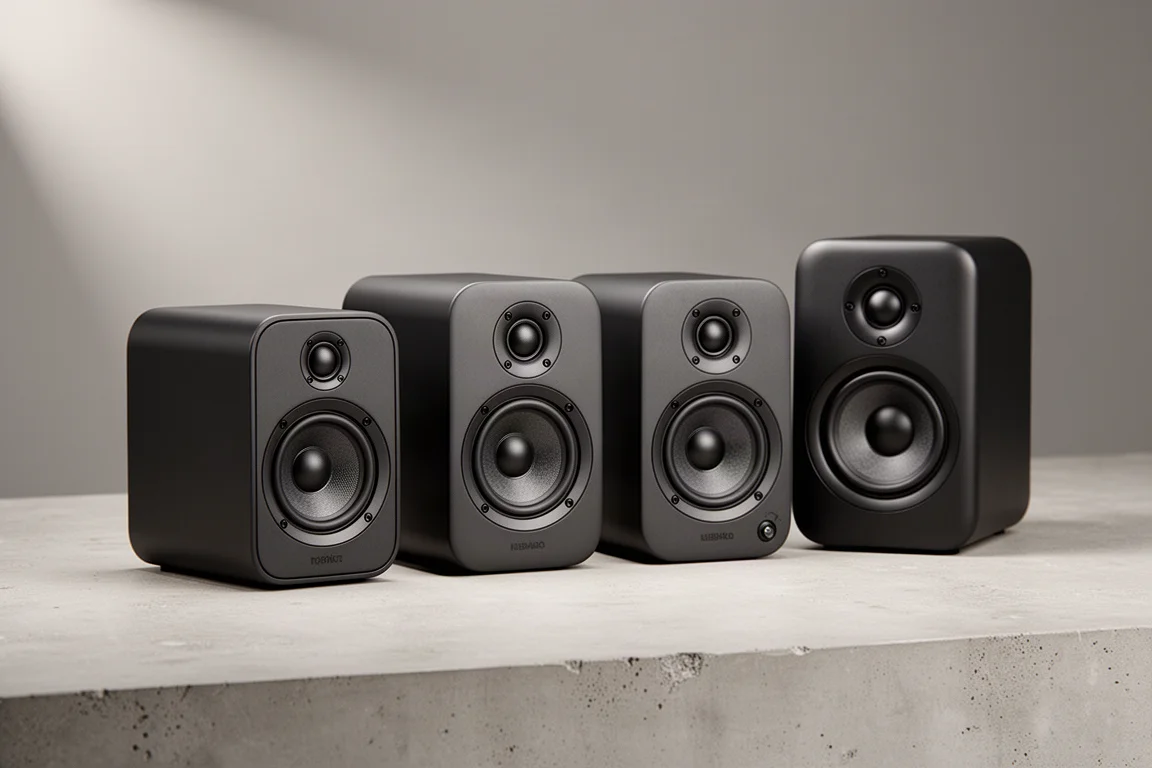
Best Powered Desktop Speakers Compared: Vanatoo, Klipsch, Kanto, and Kali
Four powered desktop speakers compared on midrange linearity, bass extension, cabinet size, and value, with practical guidance on which one suits a desk, a television, or a larger room.