Desktop Speakers
Audio Smile Little British Monitor Review: A Compact Desktop Speaker With Measured Neutrality
A small European powered desktop speaker with a waveguide tweeter, an aluminum cone woofer, and an unusually flat measured response for its size.
Introduction
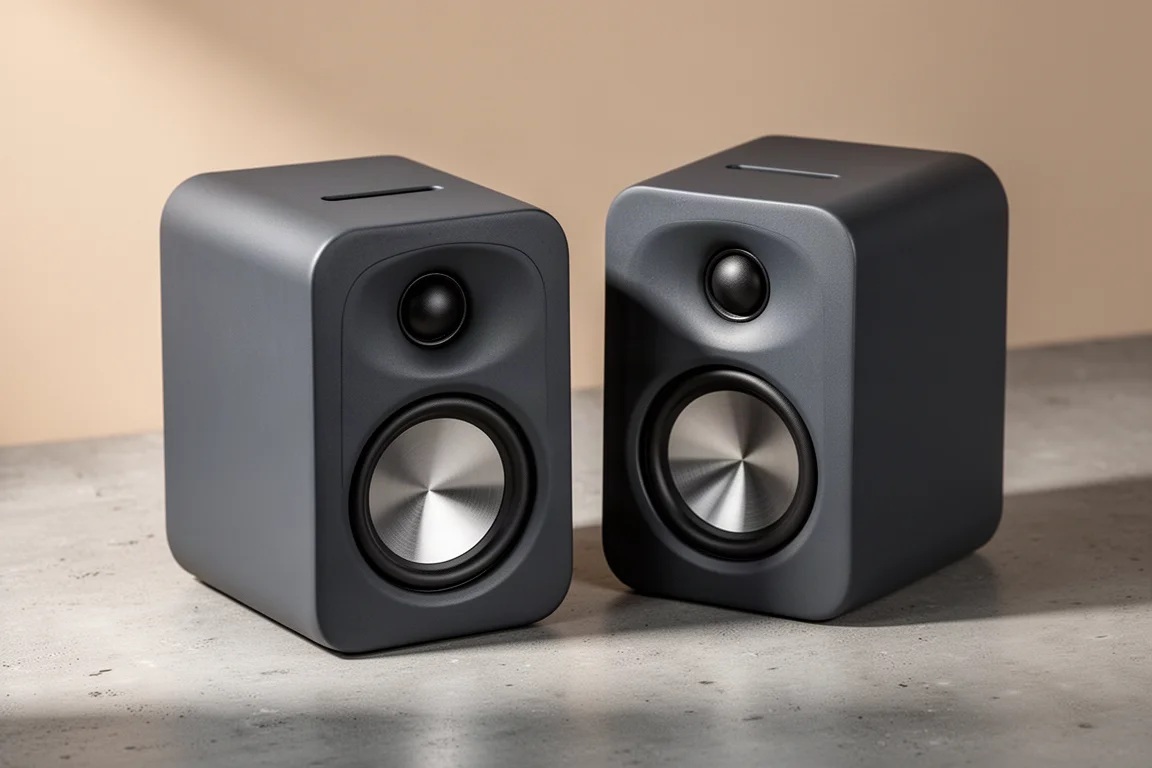
The Audio Smile Little British Monitor, often shortened to LBM, is a compact powered desktop speaker from a small European brand that has stayed largely under the radar in the United States. It is a two-way active design built around a 3/4 inch dome tweeter set into a waveguide and a 3 inch aluminum cone driver, and it carries a surprising amount of engineering inside a cabinet that sits comfortably beside a laptop.
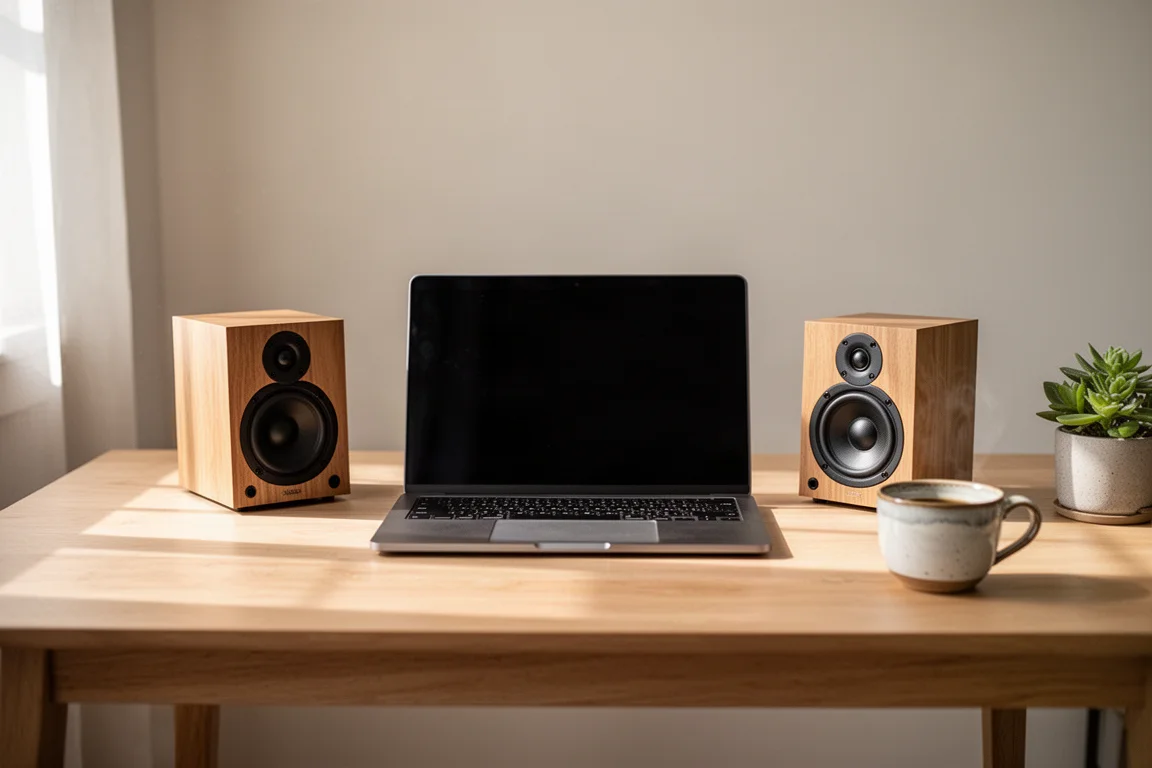
What sets it apart is not the size but the intent. This is a speaker designed around measured neutrality, wide dispersion, and real bass extension for its footprint, and the technical documentation published for it is unusually thorough for a small consumer model. The result is a desktop speaker that behaves more like a reference tool than a lifestyle accessory.
Who the Little British Monitor Is For
This speaker makes the most sense for listeners who value accuracy over a coloured, bass-forward presentation. On a desk, that means vocals and instruments land where they should, and the tonal balance stays consistent as you move around.
It is also a strong candidate for anyone who mixes or monitors at a desk and wants a neutral reference without stepping up to a full studio monitor setup. The measured response is flat enough that monitoring and mixing work is realistic, particularly when a subwoofer handles the lowest octaves.
Small rooms and nearfield setups suit it well too. The cabinet is compact, the amplifier is built in, and the design tolerates placement flexibility that many small speakers do not. If your priority is maximum output for a large room, this is not the right tool; if your priority is precision at close range, it is.
Main Strengths and Measured Performance
Neutrality is the headline. The measured on-axis response is remarkably flat, with nothing objectionable across the band and a clean, well-controlled top end. Off-axis measurements track the on-axis curve closely, which means the reflected sound in a room matches the direct sound rather than fighting it.
Dispersion is wide and consistent, holding roughly 60 to 70 degrees through most of the range. Because the two drivers sit so close together, the speaker behaves almost like a point source, and the vertical listening window is unusually broad, with roughly 30 to 40 degrees of usable vertical angle. Practically, that means you do not have to keep your ears locked at tweeter height. Sit tall, slouch, or shift sideways, and the tonal character barely changes, which matters a great deal at a desk where posture moves constantly.
Amplifier Power and Driver Design
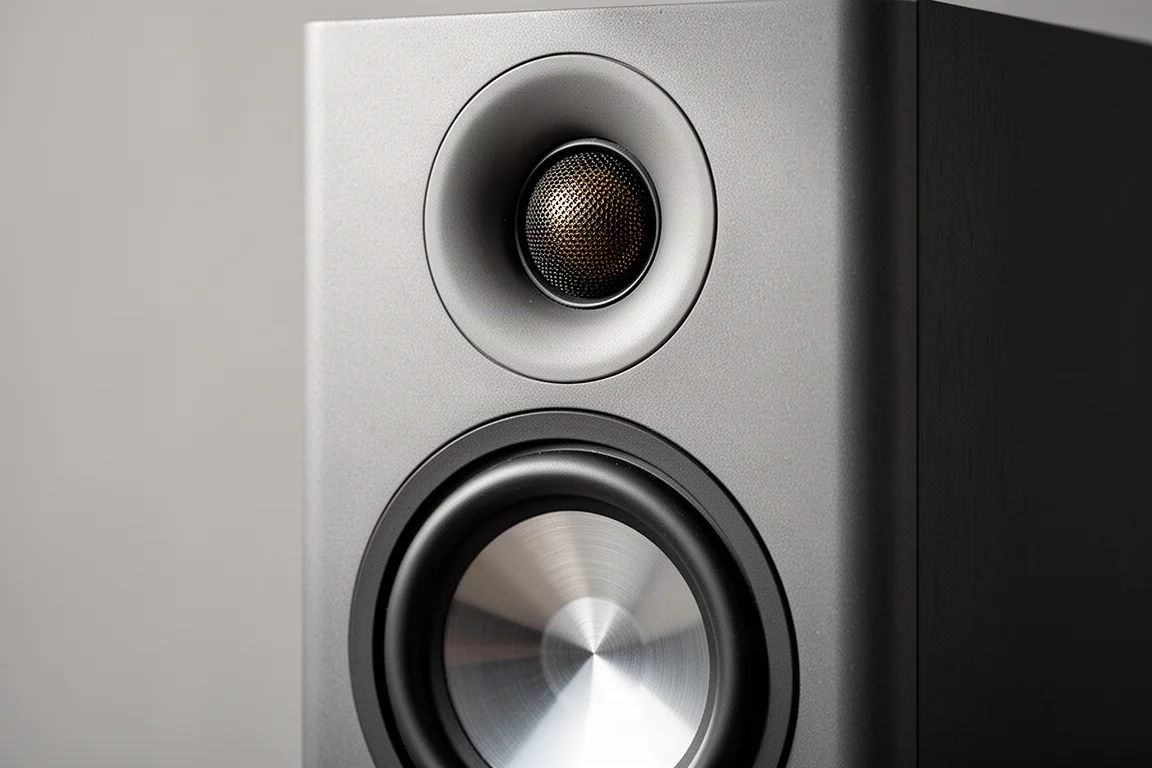
Each speaker receives 50 watts for low frequencies and 50 watts for high frequencies from a linear amplifier, a generous amount of power for a cabinet this small. The crossover is active, fourth order acoustic, time aligned, and implemented with Analog Devices DSP at a 1500 Hz crossover point.
That low crossover frequency is only possible because the tweeter is claimed to have a self-resonance below 300 Hz, far lower than the 900 Hz to 1 kHz typical of small dome tweeters. Combined with the waveguide, it allows the tweeter to cover more of the midrange and hands the woofer a narrower job. The woofer itself uses an unusually long throw, and the spider is nearly as large as the cone area, which explains how a 3 inch driver copes with the power being sent to it.
The Port Design, Bass Extension, and Build Quality
Bass extension is the second surprise. The published minus 6 dB point sits at roughly 58 Hz, which is a serious figure for a 3 inch driver in a small sealed-looking cabinet, and in-room placement near a wall or corner will push usable output lower still.
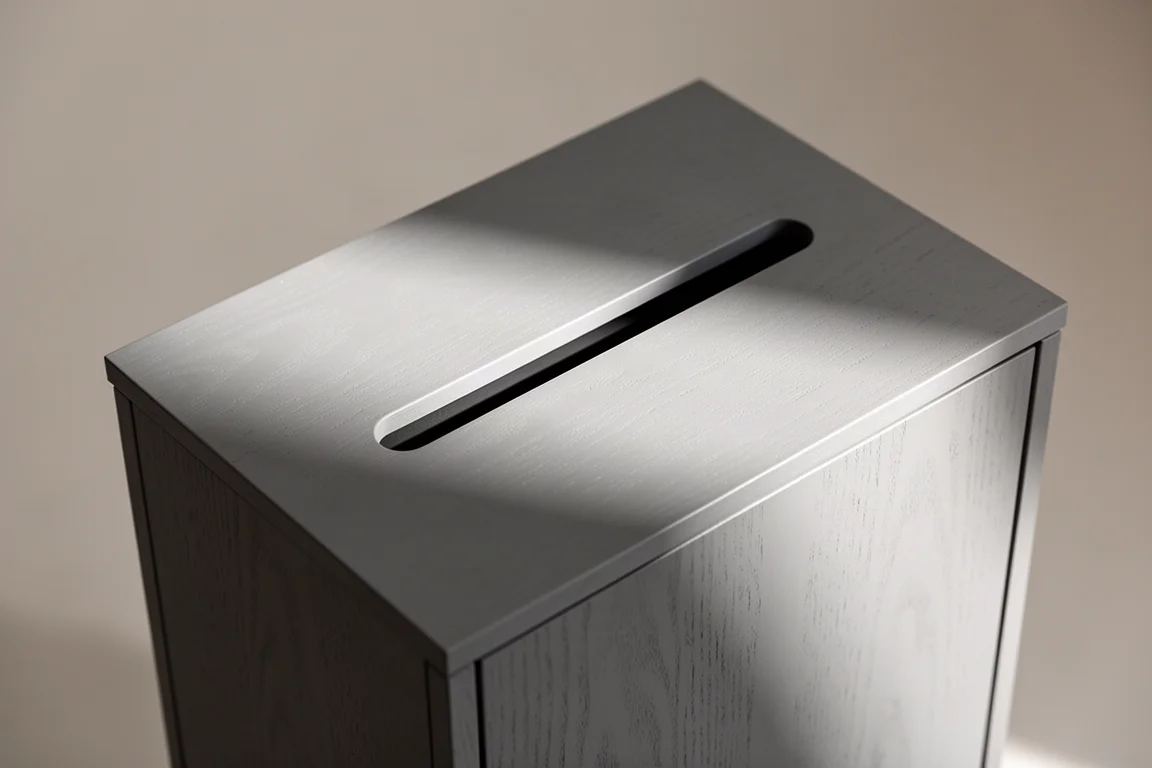
The port is an unusual shaped slot that vents through the top of the cabinet. Its behaviour is exceptionally clean: harmonic resonances are held around 30 dB below the fundamental, a level of control rarely seen even in textbook port designs. The result is bass that stays tight and integrated rather than boomy or smeared.
Build quality backs up the engineering. The cabinet feels dense and rigid, the amplifier plate is substantial, and the speakers are handmade in England. It is not an inexpensive desktop speaker, but the construction explains where a meaningful share of the cost goes.
Things to Consider Before Buying
The input selection is consumer-focused. You get RCA, a 3.5 mm input, and Bluetooth, along with a subwoofer output. There is no USB audio input and no balanced connection, so buyers who want a direct digital link from a computer or a studio-style interface should plan accordingly.
One cabinet houses the amplifier and drives the other through an umbilical cable, which keeps the second cabinet simple but means placement needs to accommodate that link.
There is also on-board bass management. A boundary compensation control lets you trim bass output when the speakers sit close to a wall or desk surface, and the same control engages a 100 Hz high pass when you connect a subwoofer. It is a straightforward system rather than a full DSP suite, but it removes the need for external bass management.
Finally, price. Converted from European pricing, a pair lands under $700, though exchange rates move that figure around. That is not cheap for a desktop speaker, and it is the main reason to think carefully about whether your setup will actually use what this design does well.
Buying Advice and System Pairing
Audio Smile also makes matching stands for these speakers, and they are worth taking seriously. The stands carry an adjustable tilt with a wide range of movement, which lets you aim the tweeter toward your ears at a desk where the cabinets would otherwise sit below ear height. They normally sell for roughly $50 to $60, and they are currently offered free for a limited time with a speaker purchase.
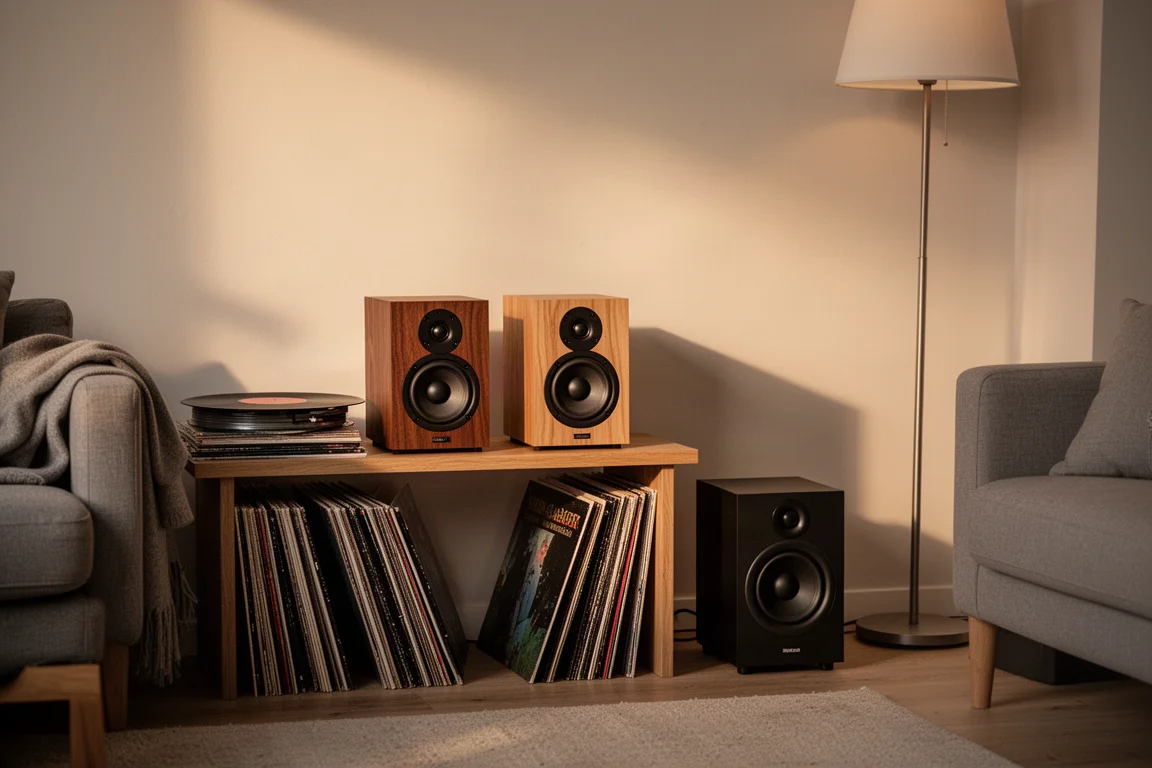
A kit version is available as well, which lowers the cost for buyers who are comfortable assembling the speakers themselves.
If you want deeper low-frequency output, pairing these with a compact subwoofer is the logical next step. The 100 Hz high pass on the boundary control makes integration simple, and the neutrality of the speakers means they blend rather than fight. Compact options in the 8 to 10 inch class are the natural match, including models such as the SVS SB-1000 Pro, the Martin Logan Abyss 8, and, at the higher end of the compact category, the Sigberg Audio 10D. Subwoofers in this size range will always deliver more deep bass headroom than a 3 inch driver can, so the high pass is the cleaner route once a sub enters the system.
For buyers who simply want a neutral, well-integrated desktop system with no additional boxes, the speakers are entirely satisfying on their own.
Conclusion
The Audio Smile Little British Monitor is one of the most accurate compact powered desktop speakers available, and it is a genuinely interesting design rather than a rehoused commodity product. Its measured neutrality, wide and consistent dispersion, clean port behaviour, and solid build quality address several of the hardest problems in desktop audio at once.
The trade-offs are clear and easy to weigh. There is no USB or balanced input, and the price is real. If you want a compact speaker that stays honest across the whole desk, works as a nearfield reference, and can grow into a subwoofer-based system later, this is an easy recommendation. If you want maximum output or the lowest possible cost, look elsewhere.
Product link
View more details for Audio Smile Little British Monitor
This product is mentioned in the review. Check the specifications, options, and compatibility before buying.
View more details for Audio Smile Little British MonitorFurther reading
Related Reviews
Desktop Speakers
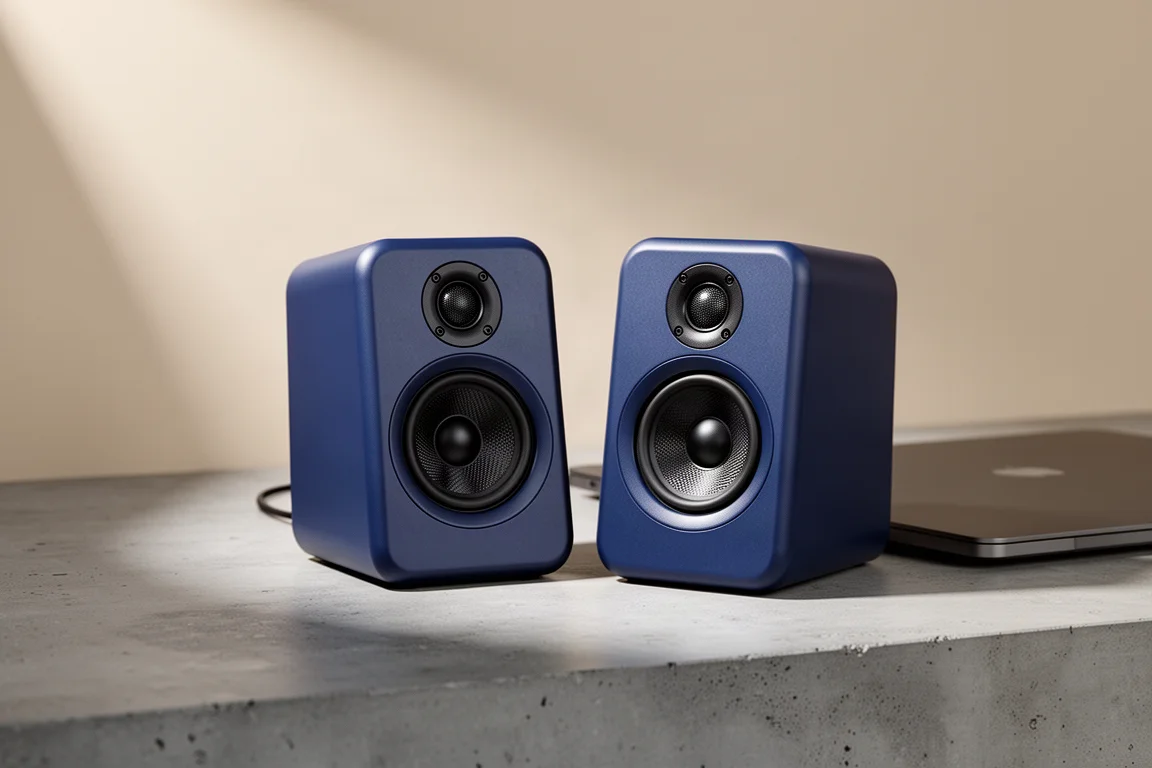
Audioengine A2+ Review: A Small Desktop Speaker That Knows Its Place
The Audioengine A2+ is a compact powered desktop speaker pair with Bluetooth, a tidy footprint, and a sound profile tuned for life on a desk rather than a listening room.
Desktop Speakers
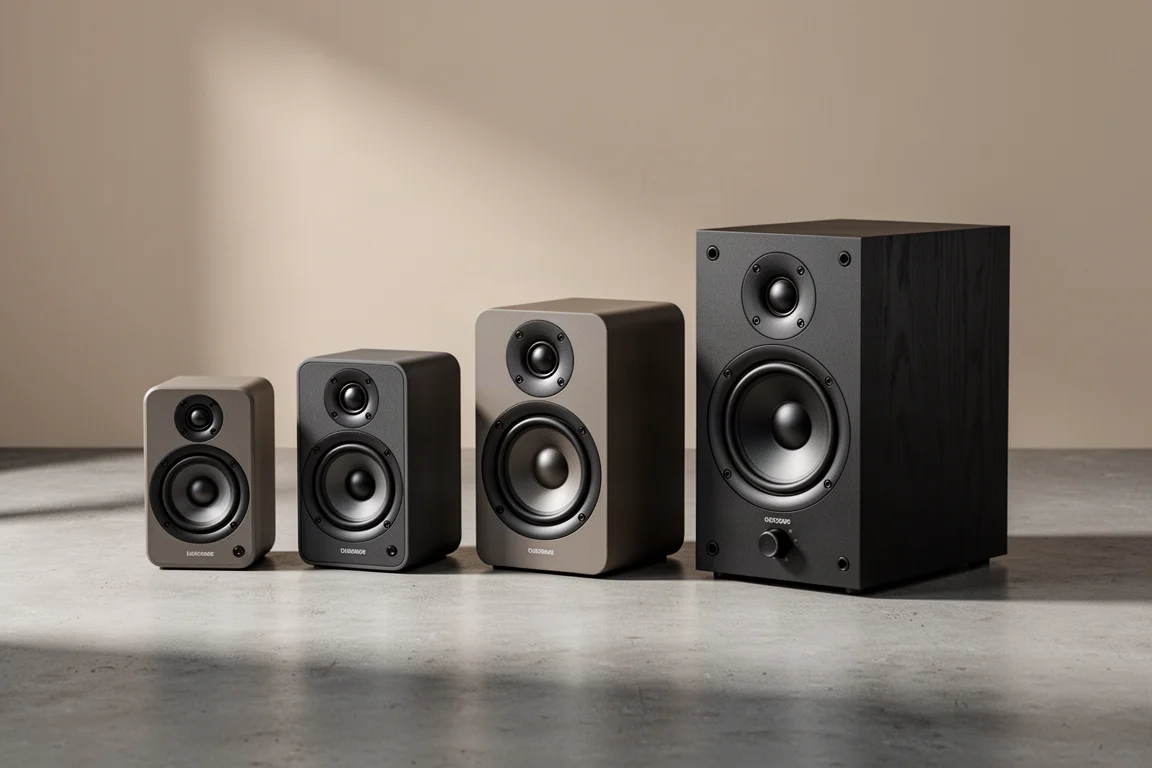
Five Desktop Speakers Compared: Edifier, Kanto, Adam Audio, and Kali
Five compact desktop speakers from roughly $170 to $349 per pair, compared on accuracy, listening window stability, output capability, and desk footprint.
Desktop Speakers
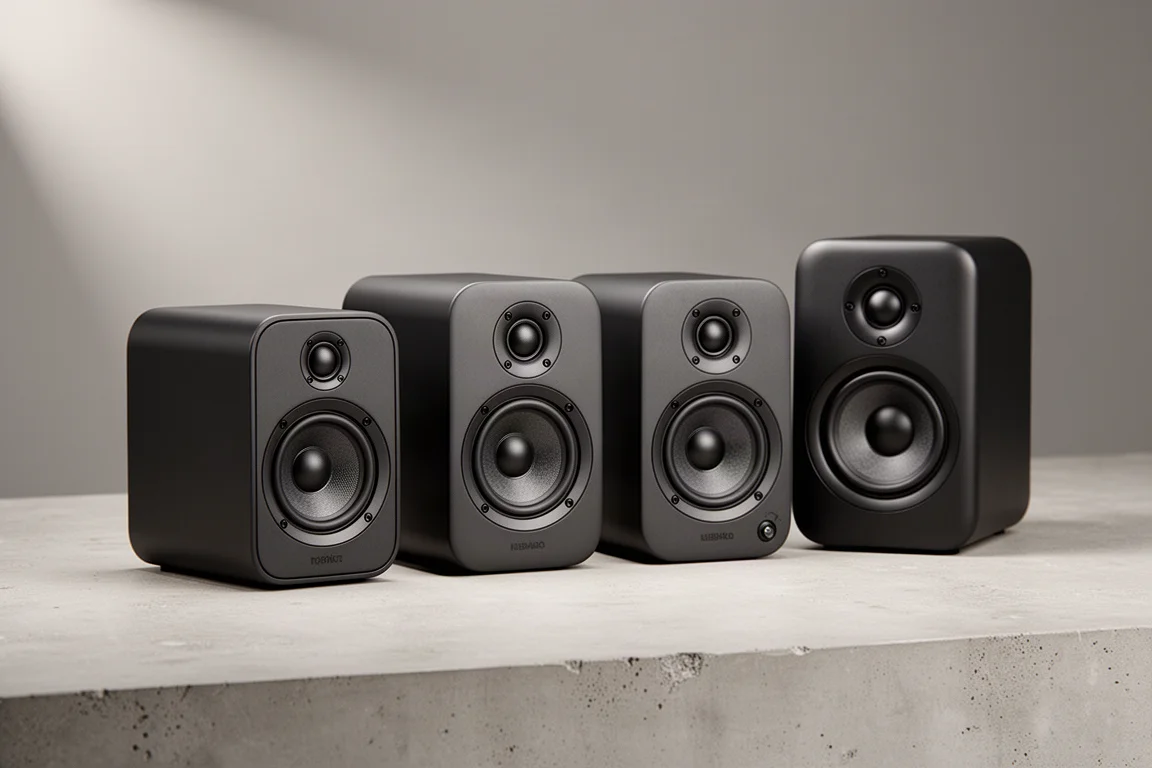
Best Powered Desktop Speakers Compared: Vanatoo, Klipsch, Kanto, and Kali
Four powered desktop speakers compared on midrange linearity, bass extension, cabinet size, and value, with practical guidance on which one suits a desk, a television, or a larger room.