Desktop Speakers
Five Desktop Speakers Compared: Edifier, Kanto, Adam Audio, and Kali
Five compact desktop speakers from roughly $170 to $349 per pair, compared on accuracy, listening window stability, output capability, and desk footprint.
Introduction
Five compact powered speakers make up this shortlist, and they sit in a narrower price range than you might expect. Four of them are priced at $349 per pair, while the Edifier M60 retails for approximately $170 per pair, roughly $200 less than the rest.
Because the four more expensive models cost the same, choosing between them comes down to priorities rather than budget: on-axis accuracy, listening window stability, maximum output, and how much desk space you are willing to give up.
The least expensive option is not a compromise in every area. The Edifier M60 gives up output capability and some linearity compared with the others, but it still sounds good on a desk if you are not asking for deep bass extension or high volume.
This is not a best-to-worst ranking. There is a lot of overlap between these five speakers, so the more useful approach is to describe what each one does well and let you match it to your room, your ears, and your listening habits.
How These Speakers Were Evaluated
Three things separate these speakers in practice. The first is on-axis linearity, which describes how closely the speaker’s output matches the signal being fed into it. The second is the stability of the listening window: how much the tonal balance changes as you move your head above, below, or to the side of the reference axis. The third is output capability, which is governed by the DSP protection built into every speaker here.
All five models include DSP limiting. As you raise the volume, the bass stops rising before the mids and treble do, because that is the region where the driver runs out of excursion first. Smaller cabinets tend to limit more aggressively, which means they deliver less maximum SPL. The effect is familiar from car audio: turn it up and the highs get higher while the lows stay put.
Measured maximum output is close across most of this group, with the Edifier MR5 as the clear exception. The MR5 holds roughly 93 dB, while the Kali LP-UNF reaches about 91 dB and comes closest to it. The remaining three sit a little below the LP-UNF, which means the practical differences between them show up in accuracy and listening window rather than in how loud they can go.
Best Value: Edifier M60
At approximately $170 per pair, the Edifier M60 is the least expensive speaker here by a wide margin, and it is the obvious starting point if your goal is simply to have something on the desk that sounds good. Its cabinet is small enough to disappear on a crowded desktop.
It is a voiced speaker rather than a neutral one. The treble region is lifted, so next to something more neutral like the Kanto Ora 4 it will sound brighter, and that brightness can become tiring over long listening sessions. Deep bass extension and maximum output are its real limits, not its overall tonality.
Within those limits it is a strong value. For casual desktop listening where space and budget matter more than reference accuracy, the M60 delivers considerably more than its price suggests.
Best for Small Desks: Kanto Ora 4
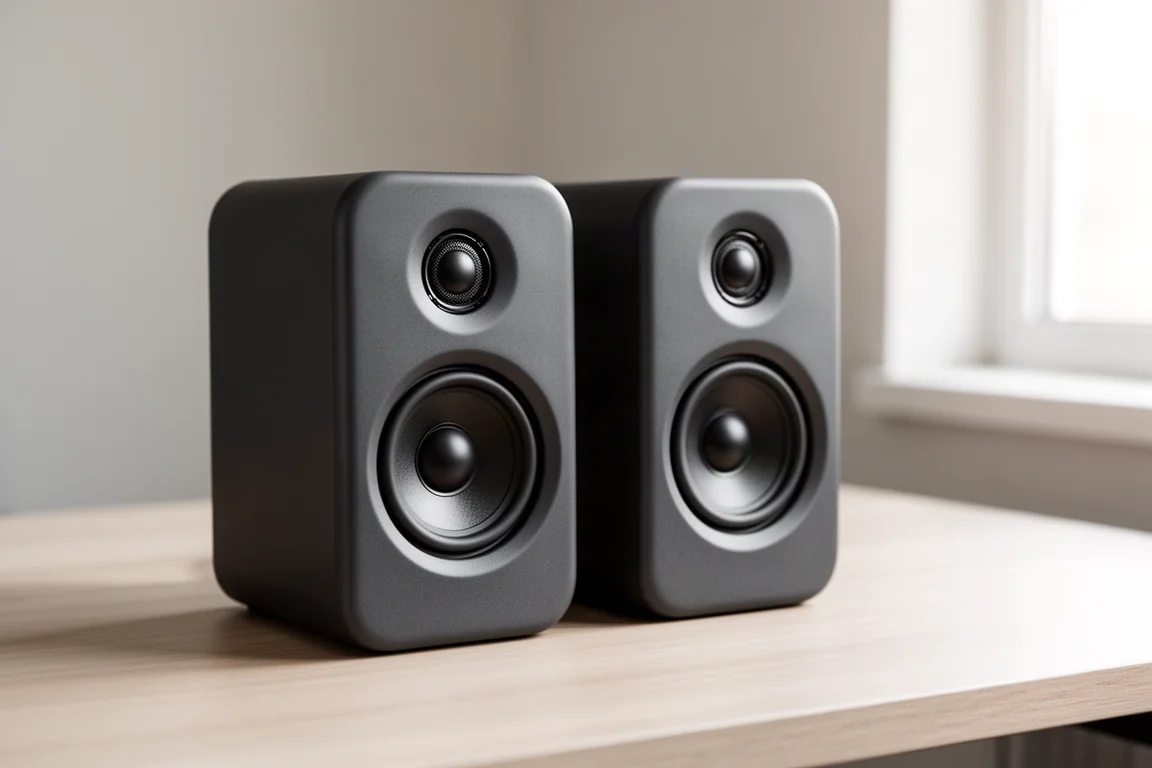
The Kanto Ora 4 retails for $349 per pair and is one of the most compact speakers in this group, which makes it the natural pick when desk space is the deciding factor.
Its on-axis response is very good, and accuracy is a genuine strength, along with precise imaging. There is one caveat worth knowing before you buy: the frequency response rolls through a number of deviations, most noticeably a dip in the lower midrange. In practice that can read as bass that feels hollow, with a bass drum landing with less impact than you might expect.
The Ora 4 does not match the maximum output of the Kali LP-UNF or the Edifier MR5, so if you need volume, look elsewhere. If you want accurate tonality and tidy imaging in the smallest possible footprint, it represents a very good performance value.
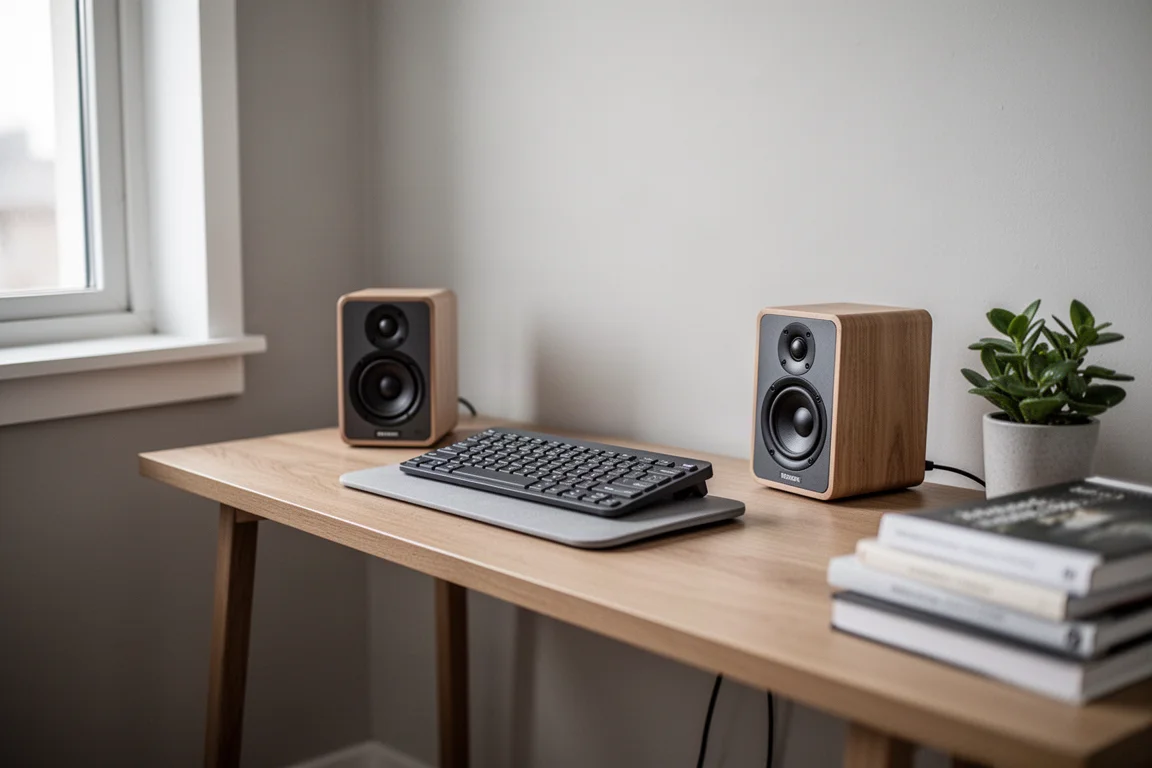
For a small desk in a small room, that combination of tonality, imaging, and size is difficult to beat, and the lower output ceiling rarely becomes an issue at nearfield distances.
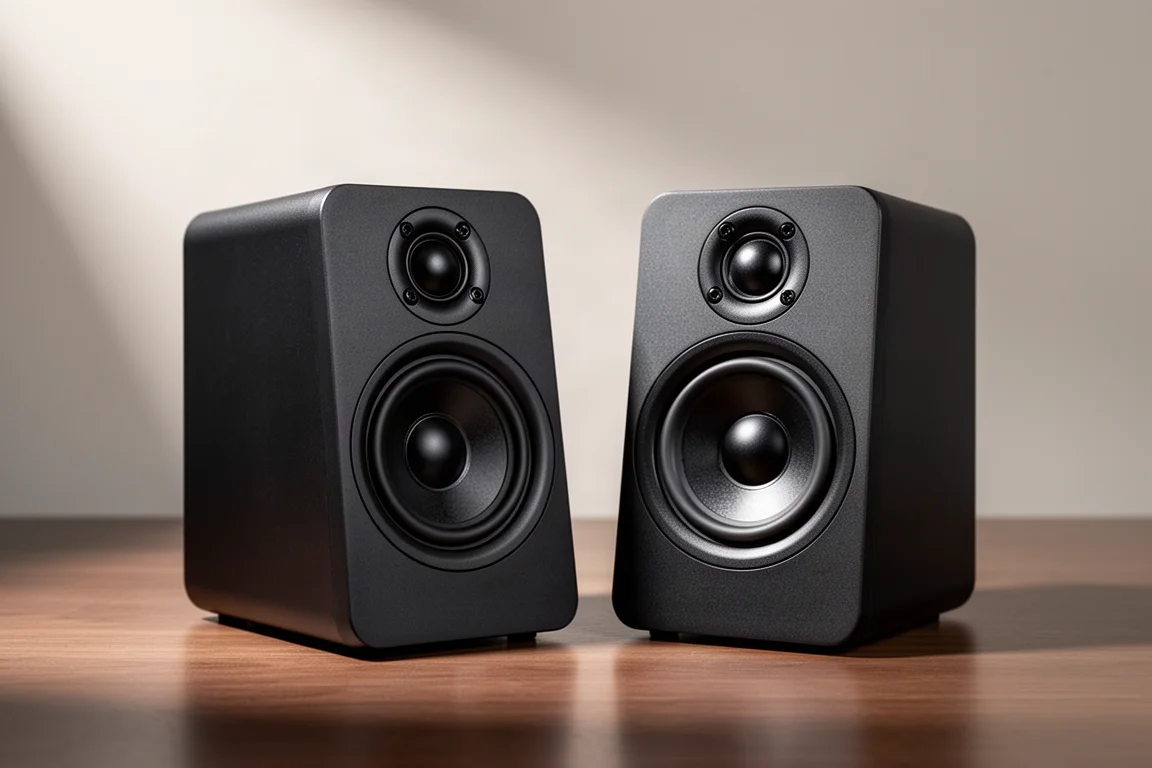
Most Accurate: Adam Audio D3V
The Adam Audio D3V costs $349 per pair and is the most precise speaker on this list. Its output closely tracks the signal going in, which makes it the strongest option here for high fidelity listening or studio monitoring accuracy.
The trade-off is a listening window that is narrower than the others. At the reference axis, level stays within about 3 dB of the direct sound at the tweeter. Move roughly 10 degrees above or below that axis and you fall into a null where the tonality starts to change. That is why head position matters more with the D3V than with the rest of the group.
There is also a lift of about 1 to 1.5 dB in the treble, similar in character to the Edifier M60, which can become tiring over extended sessions. A small EQ cut handles it, and sitting slightly above the tweeter axis is another option. The slimmer cabinet is a practical advantage on a busy desk, and if you can keep your head reasonably stable, the accuracy on offer is hard to beat.
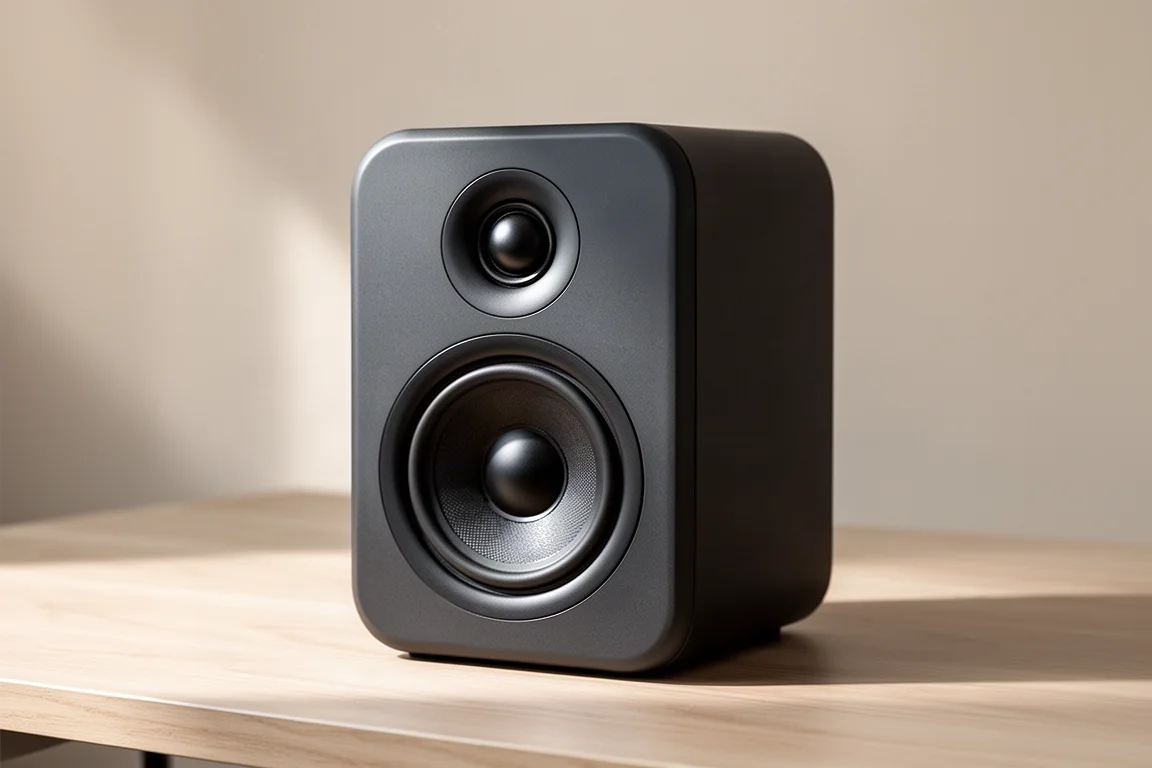
Most Balanced: Kali LP-UNF
At $349 per pair, the Kali LP-UNF is the most balanced speaker in this group. Above the bass region its on-axis response is close to linear, and its listening window is more stable than the Adam Audio D3V’s, which means it forgives a slouched or shifting listening position.
A bass bump adds punch and can make the speaker feel more dynamic than it measures. There is also a dip around 200 to 300 Hz, similar in location to the Kanto Ora 4’s but not as pronounced, and it may show up as a slightly hollow quality in female vocals.
Maximum output lands at about 91 dB, second only to the Edifier MR5, and the cabinet is a little larger than the Adam D3V’s. If you want one speaker that handles music, speech, and films without demanding a rigid seating position, this is the one to shortlist first.
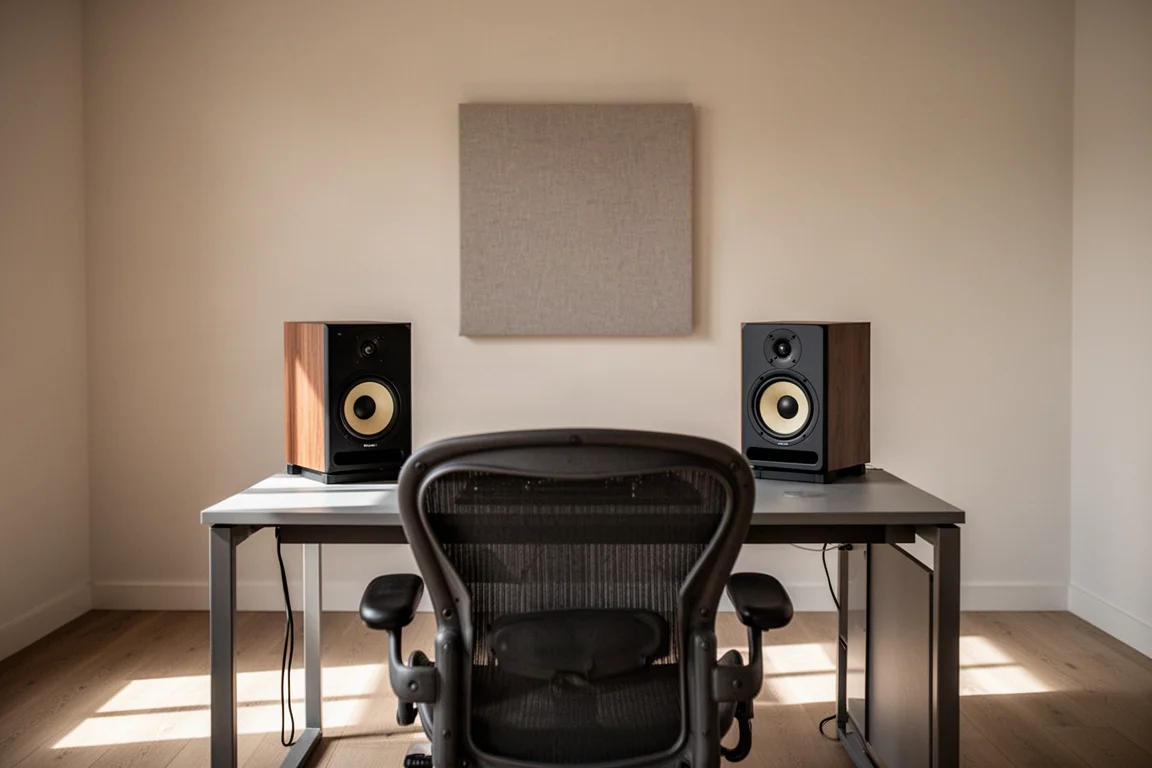
That stability is the practical difference. A stable listening window means the tonal balance holds together when you lean back, shift sideways, or move around the desk, which is how most people actually listen.
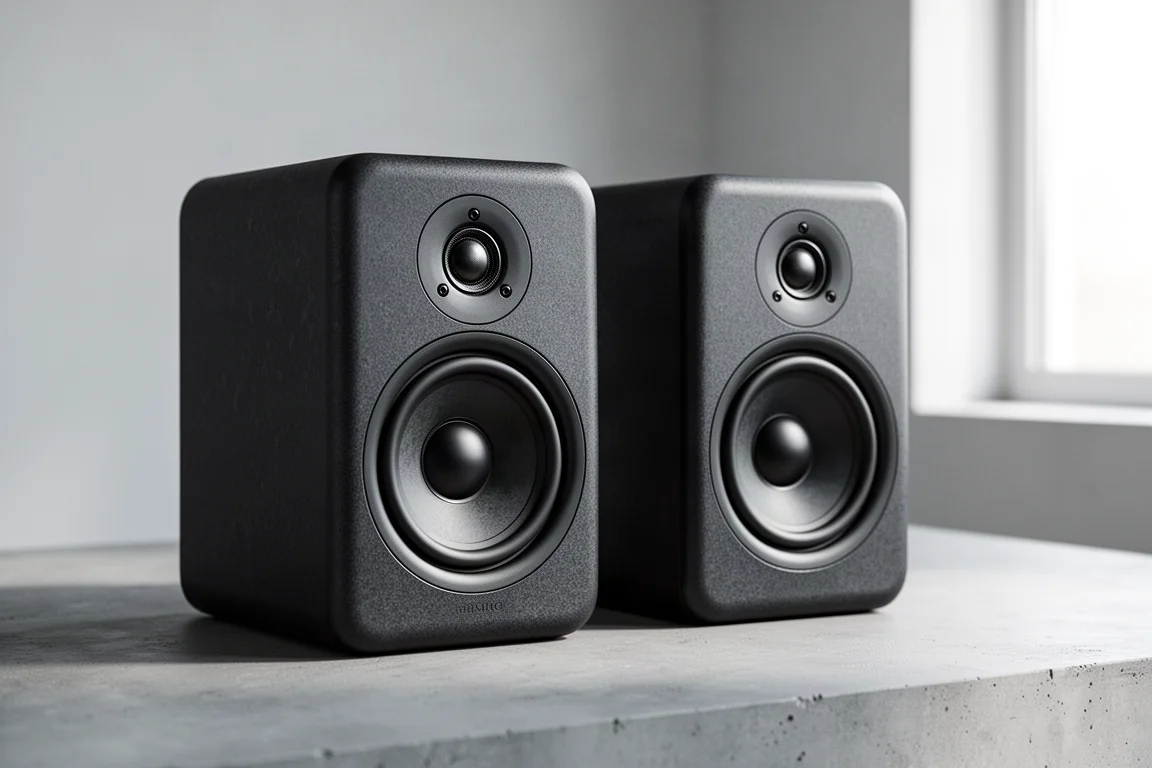
Highest Output Capability: Edifier MR5
The Edifier MR5 is the largest speaker here and the one that trades accuracy for volume. At $349 per pair it offers more output capability than anything else on the list, holding roughly 93 dB.
It is also the least linear speaker in the group, and that is the direct consequence of the output it provides. The cabinet is bigger, the ceiling is higher, and the tonal balance is the price you pay for both.
If your priority is speech, vocals, films, or music listening, linearity and accuracy matter more than raw level, and the other speakers on this list will serve you better. If you simply want the loudest pair in the room, whether that is an office, a shared space, or a hallway-adjacent desk, the MR5 is the one that will deliver it.
Buying Advice
The right choice depends on what you value most, and there is no single answer that fits every desk.
If accuracy is the priority, the Adam Audio D3V is the strongest performer here, provided you can keep your head on the tweeter axis. If you want that same level of competence with more forgiveness in seating position, the Kali LP-UNF is the better all-rounder.
The Kanto Ora 4 makes the most sense when space is tight and you still want good tonality and precise imaging. The Edifier M60 is the value pick for casual desktop listening, as long as you accept its limited bass extension and output. The Edifier MR5 answers a different question entirely: it is for buyers who need the most output and are willing to accept the least linear response to get it.
Conclusion
All five of these speakers overlap far more than their price tags suggest, so the useful question is not which one wins, but which one fits how you listen. Buy for accuracy if you monitor or listen critically, buy for a stable listening window if you move around, buy for footprint if your desk is crowded, and buy for output if volume is the point.
The Edifier M60 remains the value option at approximately $170 per pair. The Kanto Ora 4 is the compact choice for tight spaces. The Adam Audio D3V is the accuracy leader. The Kali LP-UNF is the most balanced of the group. The Edifier MR5 is the loudest. Match the speaker to the room and the habit, and any of them will earn its place on the desk.
Further reading
Related Reviews
Desktop Speakers
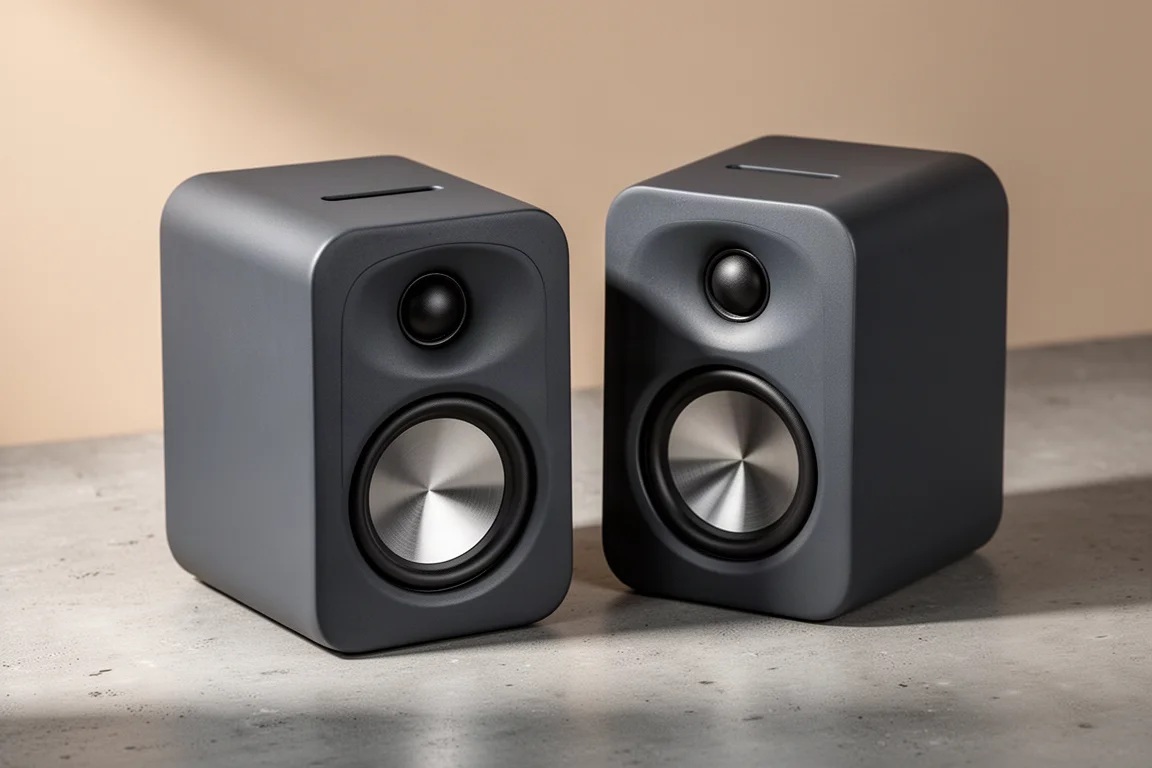
Audio Smile Little British Monitor Review: A Compact Desktop Speaker With Measured Neutrality
A small European powered desktop speaker with a waveguide tweeter, an aluminum cone woofer, and an unusually flat measured response for its size.
Desktop Speakers
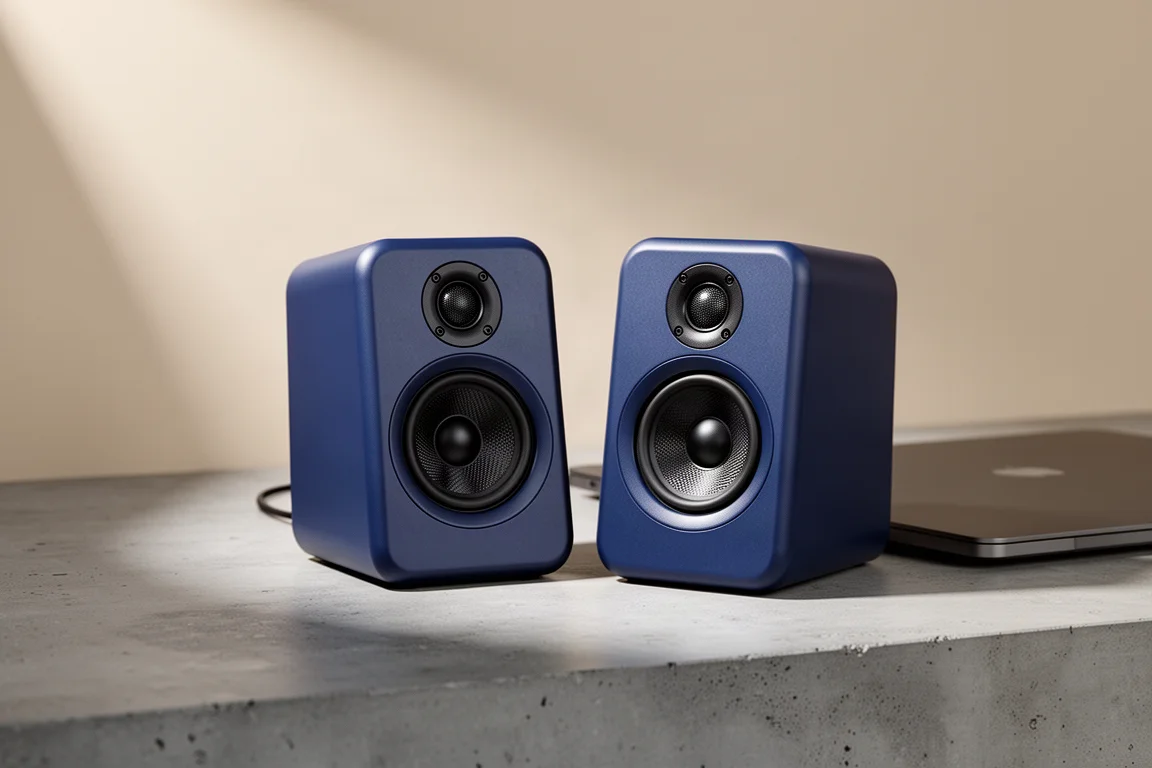
Audioengine A2+ Review: A Small Desktop Speaker That Knows Its Place
The Audioengine A2+ is a compact powered desktop speaker pair with Bluetooth, a tidy footprint, and a sound profile tuned for life on a desk rather than a listening room.
Desktop Speakers
Best Powered Desktop Speakers Compared: Vanatoo, Klipsch, Kanto, and Kali
Four powered desktop speakers compared on midrange linearity, bass extension, cabinet size, and value, with practical guidance on which one suits a desk, a television, or a larger room.