Triathlon Bikes
Van Rysel XCR Tri, UCR and Hybrid: Three Triathlon Bikes Compared
Van Rysel's first triathlon platform arrives in three builds. Here is how the XCR Tri, XCR UCR and XCR Hybrid differ, and which one suits your racing.
Introduction
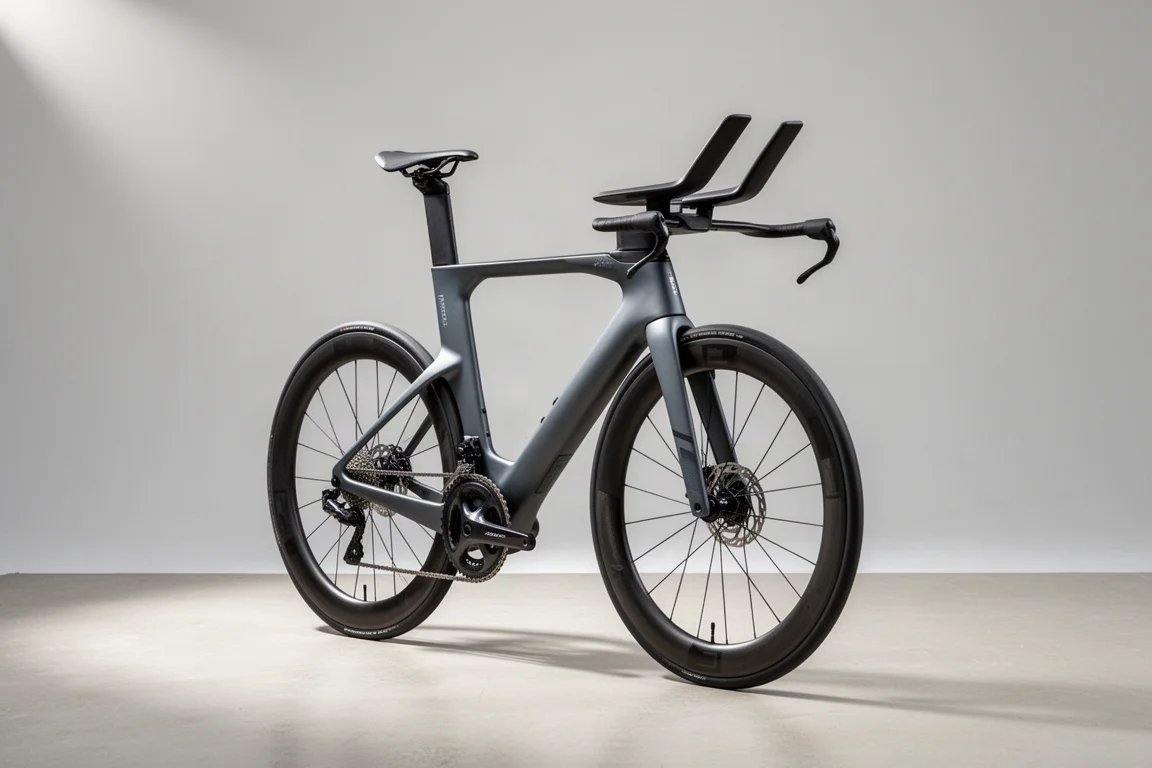
Van Rysel began as Decathlon’s performance cycling label and has already established itself in road racing. The XCR is the brand’s first dedicated triathlon platform, and it arrives in three versions: the XCR Tri, the UCI-legal XCR UCR, and a mid-point XCR Hybrid.
All three use the same frame and the same base bar, and all three were developed with aerodynamic input from Swiss Side. The tri version took three years to reach production and went through 14 frame iterations before it was raced in Kona.
The question worth answering is simple: does the XCR range deliver race-ready triathlon performance without the usual superbike price tag?
What All Three Van Rysel XCR Bikes Share
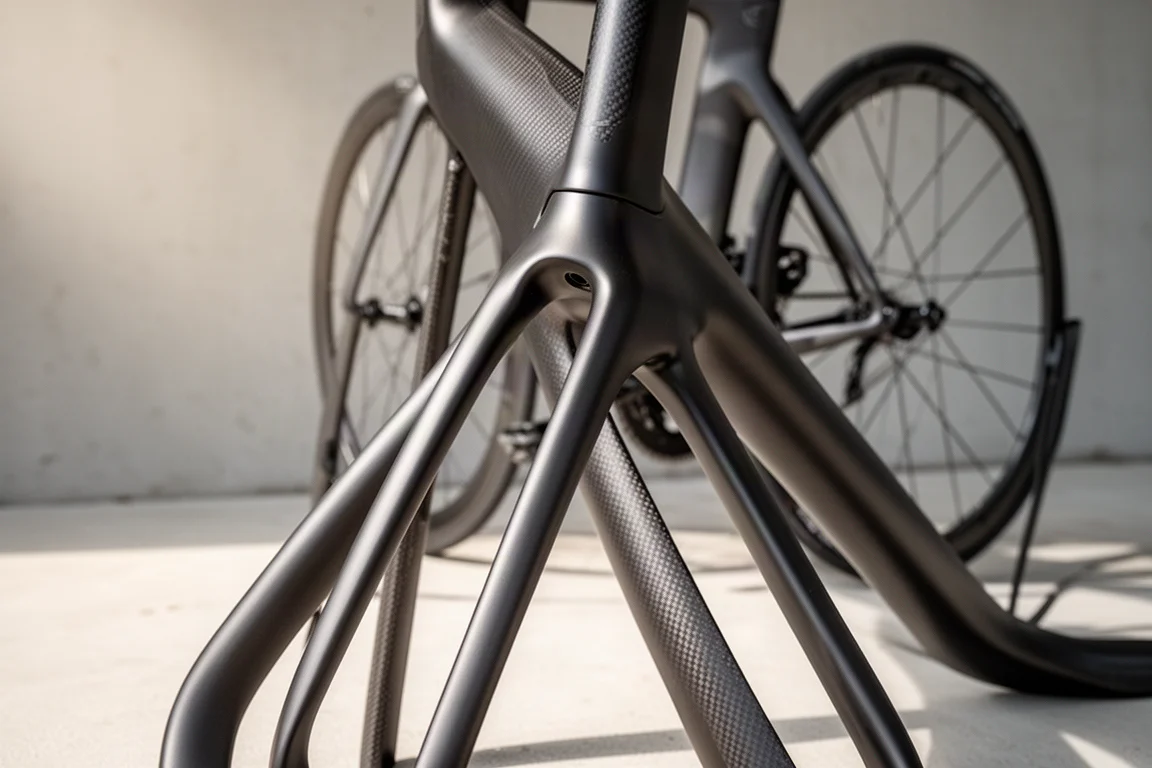
The frame is a conventional double-diamond design rather than a beam bike, with aerofoil profiles on the seat stays and fork legs and a wide fork that leaves clean space for air to pass. It is built from high modulus carbon rather than the super high modulus layup used on the RCR. Van Rysel’s explanation is practical: with these tube shapes, the stiffer layup produced a harsher ride than they wanted, and the high modulus version already met their stiffness targets.
That frame was not rushed. The platform spent three years in development, and the production frame is the 14th iteration. It comes in five sizes, from extra small to extra extra large, and every size runs 700c wheels, including the smallest.
Fit is a clear priority. The seat angle sits at 79 degrees, there is a wide range of fore and aft adjustment at the top of the seatpost, and the seat clamp can be flipped to push the saddle further forward for a more aggressive position.
The base bar is shared across the range and offers several hand positions. It is long, which some riders will find generous and others will find excessive, but the grip areas themselves are comfortable.
Van Rysel XCR Tri: The Complete Triathlon Build
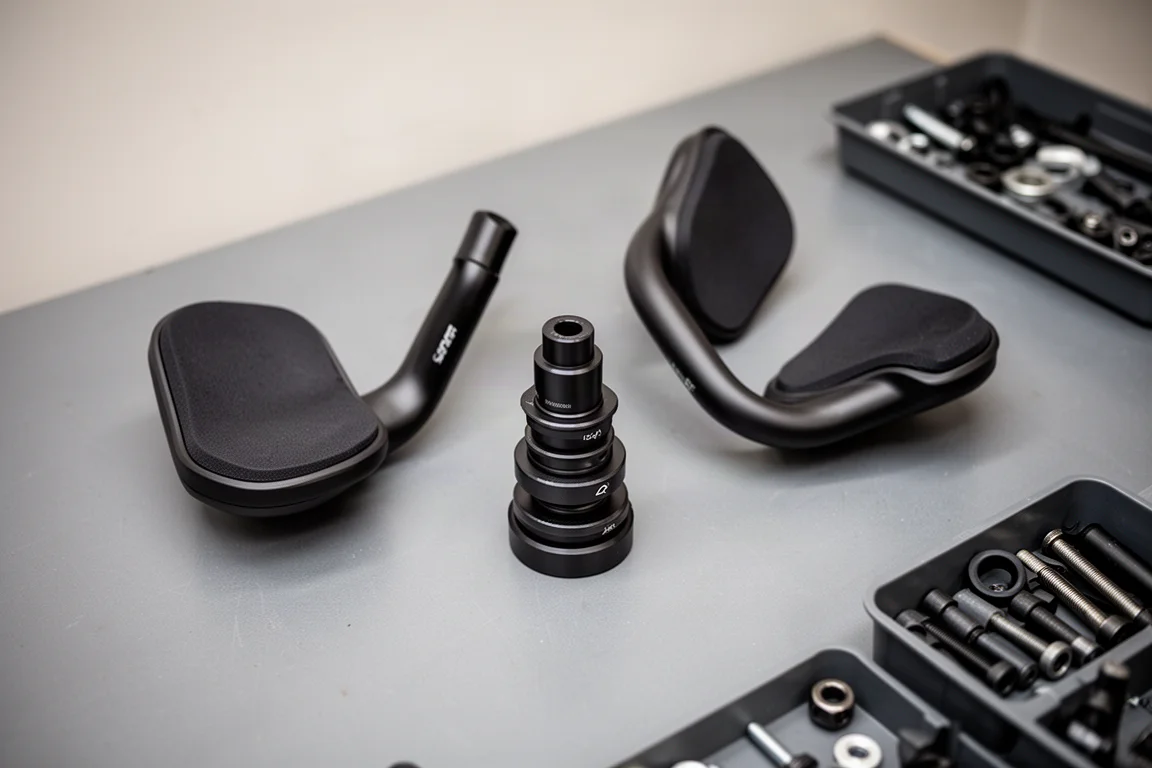
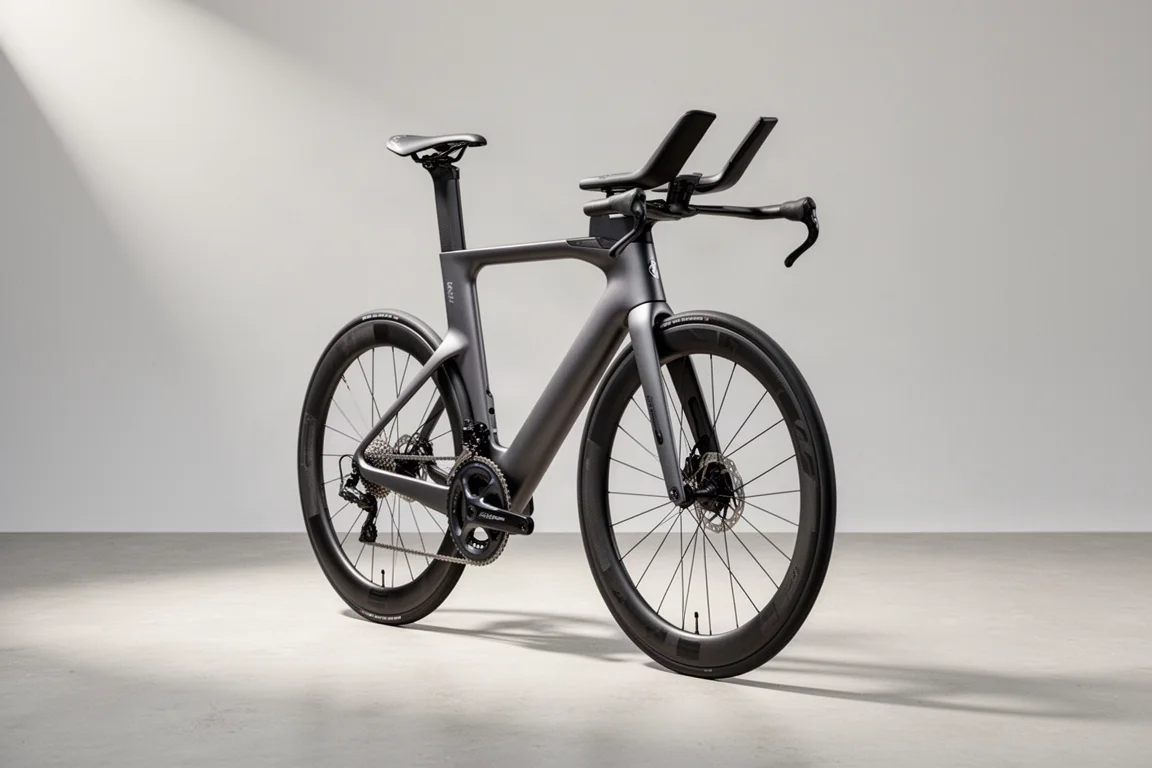
The tri version is the most fully equipped of the three. Its cockpit is designed in house rather than sourced, with riser spacers spanning 10 mm to 90 mm, angled spacers to tune the tilt of the extensions, and a wide range of movement in the extensions and armrest pads. The extensions adjust fore and aft and in and out, the pads move through multiple positions, and the whole bracket slides forward and back.
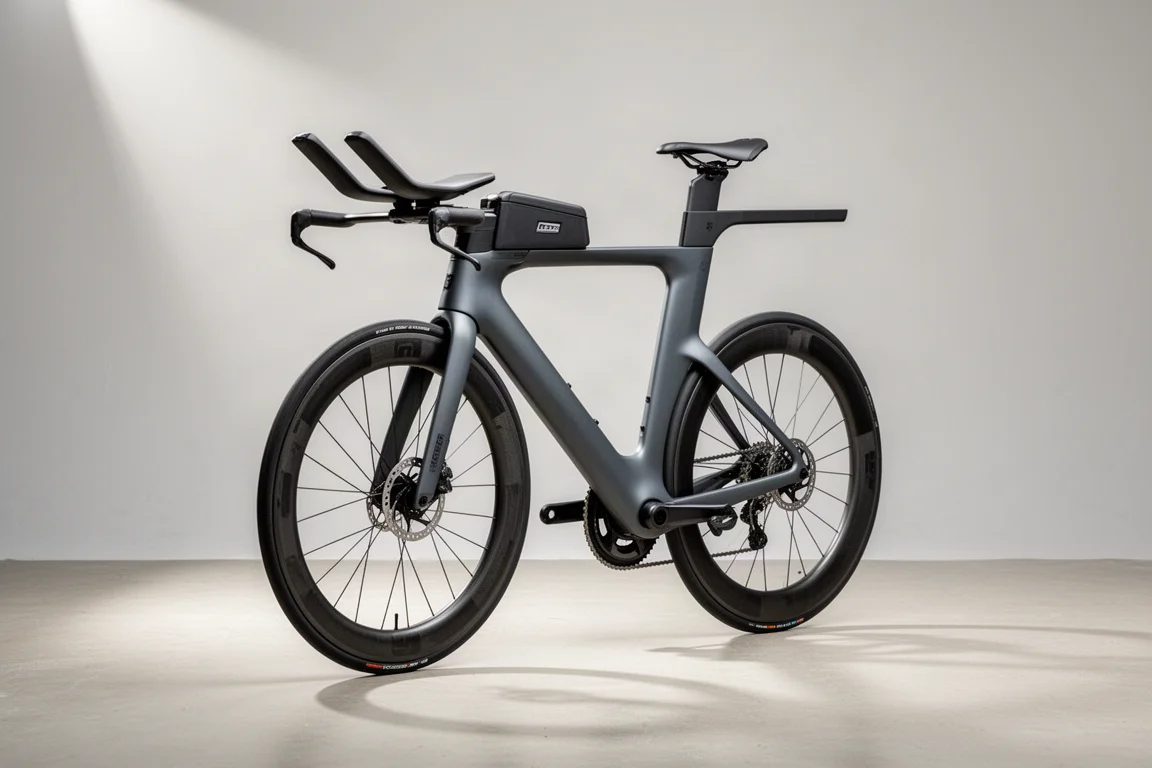
Storage is comprehensive: a top tube box, a bento box behind the stem, and a toolkit in the bottom bracket area holding spares, a mini CO2 pump and tyre levers. The saddle includes an integrated behind-the-saddle bottle mount, and there is a between-the-arms bottle cage mount as well.
Wheels come from Swiss Side, with a 625 front and 800 rear, both tubeless ready. The drivetrain is Shimano Ultegra R8150, 12-speed, with a 52/36 chainset and an 11-30 cassette. The crankset includes an integrated power meter, and crank length scales with frame size from 170 mm to 175 mm. Claimed weight is 8.9 kg in a medium, and a larger frame built up with every accessory weighed 9.74 kg.
One detail to note: the bento box on early builds was not the final production part and is due to be upgraded.
Van Rysel XCR UCR: The UCI-Legal Racer
The UCR version is the one to look at if your racing calendar includes UCI-governed events. It uses the same frame and base bar as the tri version but swaps the in-house cockpit for Deda Jet aero bars, and it drops the triathlon-specific storage and mounts.
The drivetrain is still Shimano Ultegra Di2, so shifting performance matches the tri build. What you give up is the top tube box, the bento box, the bottom bracket toolkit and the extra bottle mounts.
For riders who race road events as well as triathlon, that trade makes sense: the UCR is a cleaner setup for anything that has to pass a commissaire’s check, and it costs a couple of hundred less than the tri version.
Van Rysel XCR Hybrid: The Lower-Cost Entry Point
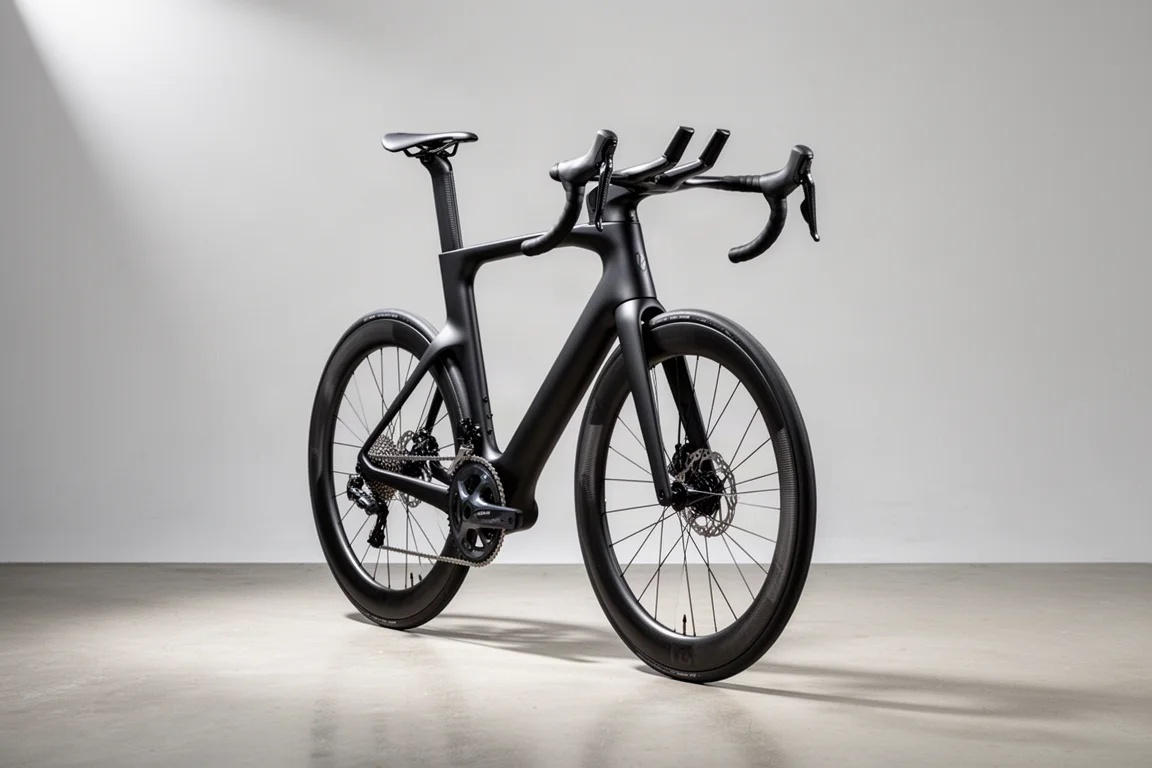
The Hybrid sits between the other two. It keeps the Van Rysel tri aero bars, so much of the fit adjustability of the tri version carries over, but it runs a SRAM groupset and an alternative wheelset instead of the Shimano and Swiss Side combination.
That is where the saving comes from, and it is substantial. The Hybrid is listed at €6,200, roughly €1,500 below the tri build. The tri version is priced at around $7,700, with the UCR just a couple of hundred below that.
Fit, Adjustability and Everyday Comfort
The XCR range was built around the idea that riders should not have to buy aftermarket parts to make the bike fit them. That shows up in the cockpit: the riser range, the angled spacers, the extension and pad adjustment and the sliding bracket together cover a very wide spread of positions, and the seatpost adjustment does the same at the rear.

On challenging roads the ride quality stood out. The bike feels responsive and stable rather than nervous, and it is confident enough to encourage hard riding on rough surfaces. For a brand’s first triathlon platform, that is a notable achievement.
Wheels, Drivetrain and Weight
Swiss Side’s involvement goes beyond supplying wheels: the company contributed aerodynamic expertise to the frame design as well. On the tri version the wheelset is a 625 front and 800 rear, tubeless ready, which is a fast combination for race day.
The Shimano Ultegra R8150 groupset is 12-speed, with a 52/36 chainset and an 11-30 cassette, and the integrated power meter in the crankset means no extra hardware is needed to train with power. Crank lengths run from 170 mm to 175 mm depending on frame size.
The weight figures are competitive for the category: 8.9 kg claimed in a medium, and 9.74 kg for a larger frame with all the triathlon accessories fitted.
Buying Advice: Which Version Makes Sense
The three builds split cleanly by use. If you race non-drafting triathlon and want the bike ready out of the box, the XCR Tri is the obvious choice: cockpit, storage, bottle mounts, deep Swiss Side wheels and a power meter all come as standard.

If you race under UCI rules, or you split your time between triathlon and road events, the XCR UCR gives you the same frame and shifting without the triathlon hardware you would not be allowed to use. And if budget is the deciding factor, the XCR Hybrid keeps the adjustable tri cockpit and trims the cost through the groupset and wheels.
Availability is worth mentioning. Supply has been a persistent problem across the bike industry, and Van Rysel’s parent company Decathlon is known for the strength of its supply chain. The brand says all three triathlon models will be available across all sizes shortly.
Conclusion
For a first triathlon platform, the XCR range is a convincing effort. The frame went through three years and 14 iterations, the cockpit is genuinely adjustable rather than nominally adjustable, and the ride quality holds up on rough roads. The tri version is the most complete package, the UCR is the practical choice for UCI racing, and the Hybrid opens the door at a lower price. Riders who want race-ready triathlon equipment without superbike pricing now have a serious option to consider.
Further reading
Related Reviews
Triathlon Bikes
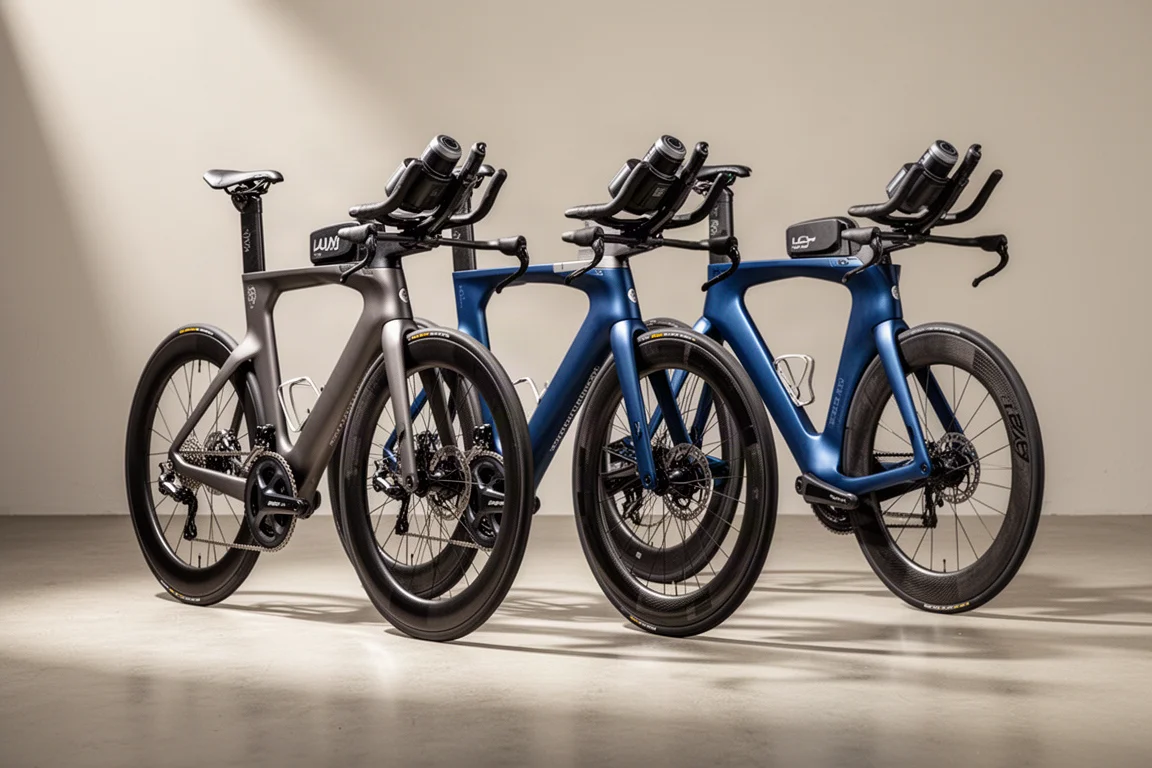
Best Triathlon Bikes 2026: Seven Race Bikes Compared
Seven triathlon bikes assessed on front-end adjustability, onboard hydration and storage, and value, from the most common bike in transition to lower-cost race options.
Triathlon Bikes
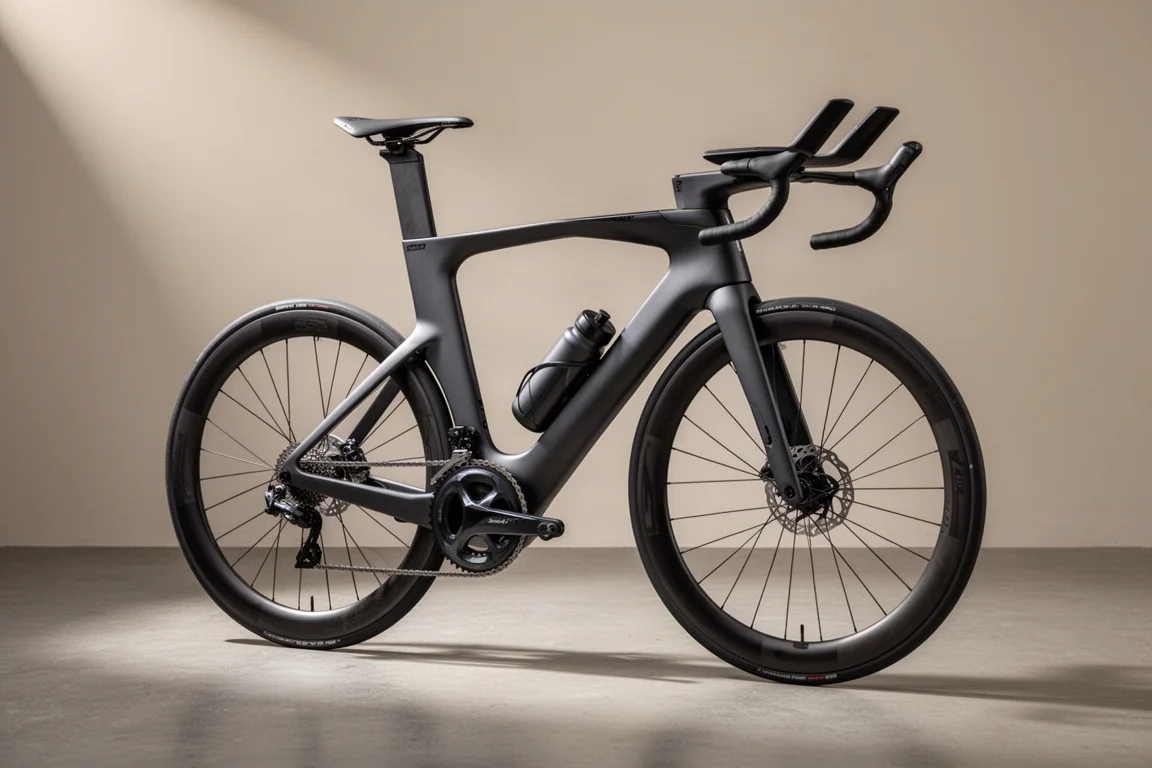
BMC Speedmachine Review: A Formula One-Informed Triathlon and TT Bike
The BMC Speedmachine pairs Red Bull Advanced Technologies aerodynamics with a redesigned frame, integrated hydration, and a 500 gram weight saving over BMC's previous triathlon platform.
Triathlon Bikes
Buying Speed: Canyon Speedmax CFR vs Triban RC 120 Road Test
A head-to-head 22 km test of a premium triathlon race bike, an affordable disc-brake road bike, and a disc wheel upgrade, with the numbers and the trade-offs that matter.