Portable Power
Van Powers AC10 Review: A Portable Power Station That Also Jump-Starts Your Truck
A 600W lithium iron phosphate power station with USB and 12V outputs plus a 500-amp jump starter feature, tested with real loads and a dead 3/4-ton pickup.
Introduction
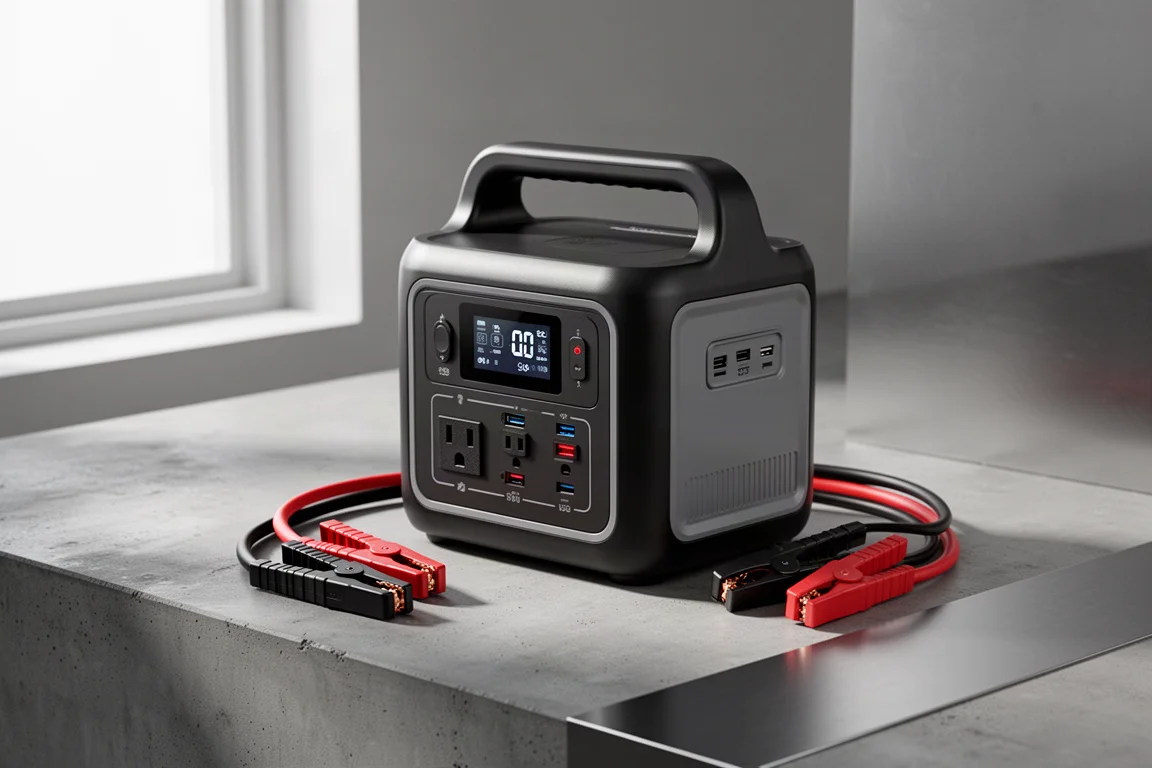
It is rare to see a multi-purpose power tool recommended seriously, because products that try to do everything usually do none of it well. The Van Powers AC10 is an exception worth a close look: a 600W battery inverter that also provides 12V and USB outputs, and adds a vehicle jump-starter on top. With a lithium iron phosphate battery system promising a very long service life, it aims to be both an everyday emergency power source and a get-you-home jump starter. This review walks through the AC10 top to bottom so you can decide whether it fits your needs.
Who This Product Is For
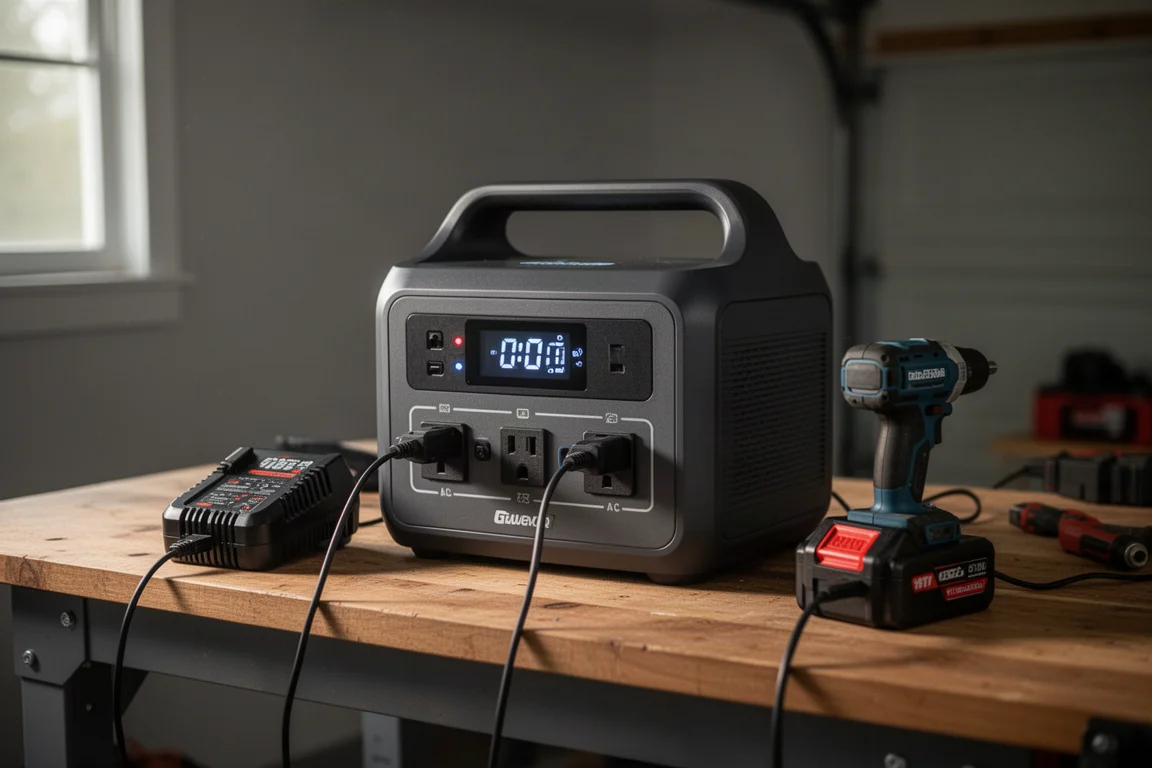
The AC10 makes the most sense for people who want one device covering several emergency scenarios. It can charge tool batteries and small electronics, run modest AC loads, and start a vehicle with a dead battery. If you keep it charged in the garage or vehicle, it covers a lot of bases without buying three separate products.
That said, a do-it-all design comes with trade-offs, and this unit has some notable ones around overloads, charging speed, and physical fit under a hood.
Battery Capacity and Rated Output
Inside, the AC10 carries a 200,000mAh, 640Wh lithium iron phosphate battery. With a realistic 15 to 20 percent efficiency loss, expect roughly under an hour of runtime at a full 600W draw, or about two hours at 300W.
Lithium iron phosphate is the headline feature here. Compared with standard lithium ion, it tolerates far more charge cycles with minimal capacity loss, and could realistically retain about 80 percent of its full function after around 10 years of use. For a device you might rely on in an emergency, that longevity is a genuine advantage.
Charging Speed and Options
You can recharge the AC10 from a solar panel, a wall AC adapter, or a car cigarette lighter adapter, and there is also an expansion battery that can be connected for extra capacity. The catch: charging from zero to full takes about seven and a half hours no matter which method you use. Solar requires roughly eight-plus hours of good sun, which is easy in some regions and seasons and difficult in others.
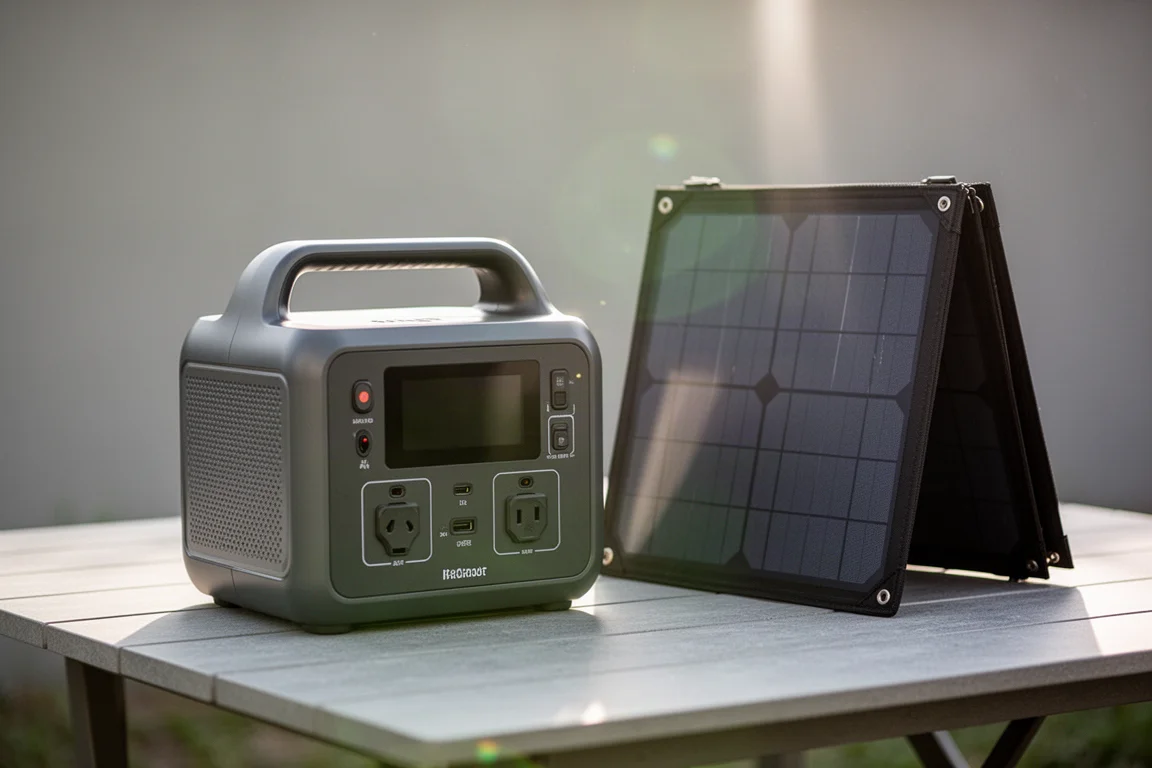
The slow charge rate is probably gentler on the batteries, but it is a real limitation if you want the unit topped up quickly. Winter use adds another constraint: the minimum operating and charging temperature is around 0 degrees, so leaving it outside for solar charging in freezing weather is not an option.
One usability gripe: the LED display is hard to read at an angle, and the screen goes dark after roughly 10 seconds of inactivity. Operation itself is simple, with dedicated buttons for the USB and AC outputs and clear status feedback.
AC Output and Load Testing
With the AC inverter on, output measured around 112 volts. A 750W heat gun on medium drew about 620 watts continuously, slightly above the 600W rating, and the unit held it without issue for an extended period. Voltage stayed in a reasonable band, with a maximum around 113V, a low near 106.9V, and an average around 110V.
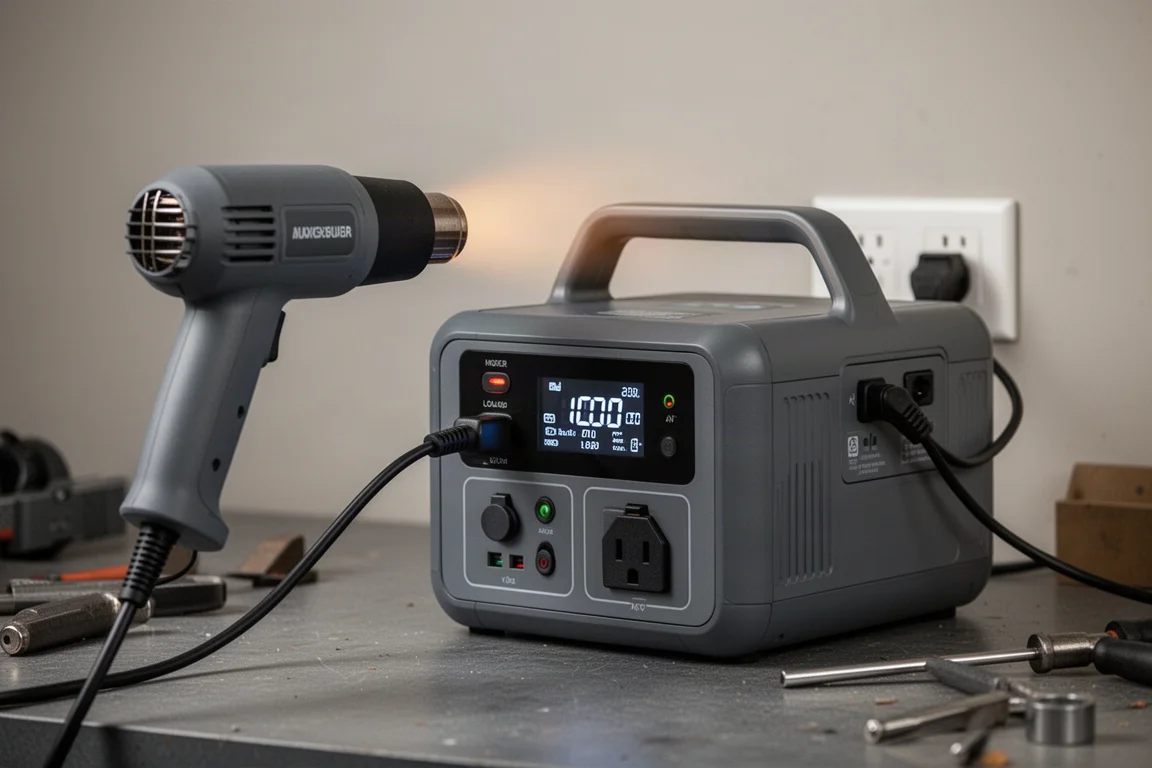
Switching the heat gun to high is where things got interesting. The unit beeped intermittently and voltage sagged dramatically, dropping as low as 79 volts, but it never cut out. It simply kept supplying a strained, undervoltage output instead of tripping. That is a problem: a properly functioning unit should trip when a load exceeds its rating, because sustained voltage drops can damage sensitive electronics. Either this was a defective unit, or the protection circuit is too lenient.
If you buy one, test the overload behavior with a load above 600W and confirm it trips. If it does not, a warranty claim is reasonable. If it does trip correctly, the AC10 is a solid performer for battery chargers, small appliances, and everyday emergency loads, as long as you never push it past its 600W rating.
Jump-Starting Performance
The AC10 is rated at 500 amps for jump starting, a refreshingly modest figure next to the wildly inflated 2,000 to 4,000 amp claims common among small brands. In a real test, it started a 3/4-ton gas pickup whose battery had been drained by two hours of lights left on.
The process is straightforward: connect the clamps, wait for the green light confirming correct connection, press the boost button, and crank the engine. It worked, and cleanly.
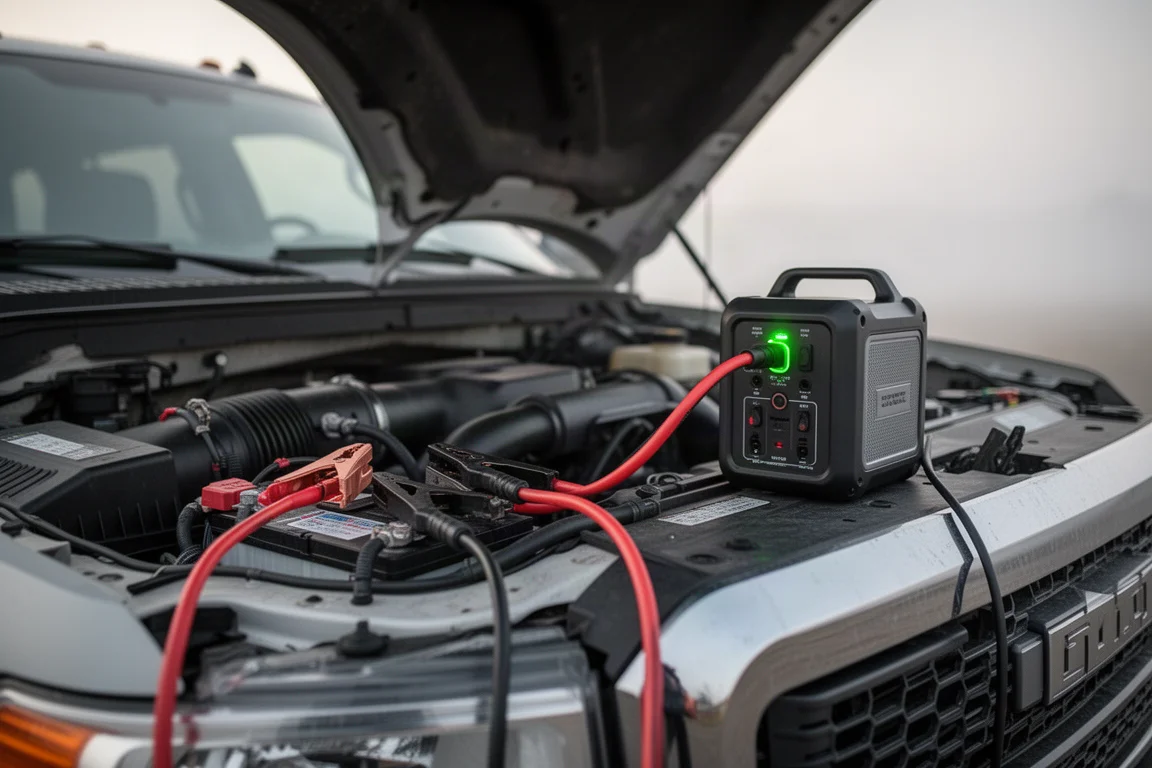
Two practical caveats. The cables are short, so placement under the hood is awkward, and the unit is bulky enough that it will not fit easily in some engine bays. Having a second person to hold and unhook it during the start makes the process much easier.
Things to Consider Before Buying
The strengths are clear: long-life lithium iron phosphate chemistry, multiple output types, solar and multi-source charging, expansion battery support, and a jump starter that handled a large truck.
The weaknesses matter too. The overload protection may not trip, which is potentially dangerous for delicate electronics. Charging is slow across every method. The screen is hard to read and dims quickly. The jump-start cables are short and the unit may not fit every engine bay. And cold-weather charging below 0 degrees is off the table.
Buying Advice
If you buy the AC10, test the overload trip behavior on day one with a load above its 600W rating. Keep your loads comfortably under 600W at all times, since a voltage sag on an over-limit load can harm sensitive devices. Plan around the slow seven-and-a-half-hour charge, keep it somewhere warm in winter, and expect to need a helper or a bit of patience when jump starting due to the short cables.
Conclusion
The Van Powers AC10 is that rare multi-tool power product that mostly pulls off its tricks: a long-lasting 640Wh lithium iron phosphate battery, useful 600W AC output, USB and 12V options, and a jump starter that handled a large gas truck with ease. The unverified overload protection is the one serious concern to test before relying on it. Buy it for its longevity and versatility, use it within its limits, and it could serve you well for years.
Product link
View more details for Van Powers AC10
This product is mentioned in the review. Check the specifications, options, and compatibility before buying.
View more details for Van Powers AC10Further reading
Related Reviews
Portable Power
Best Portable Power for Camping and Remote Work: Six Power Banks and Solar Panels Compared
A practical comparison of six portable power options, from a 500W solar generator for car camping to a one pound solar power bank built for backpacking.
Portable Power
Best Portable Power Stations 2026: Nine Models Compared for Real-World Use
We compared nine portable power stations across output, capacity, charging speed, noise, and UPS performance to find the best value and the best overall pick.
Portable Power
Best Portable Power Stations and Power Banks for Blackouts and Travel
Five portable power solutions compared: two EcoFlow power stations, a flight-friendly Zendure power bank, a see-through Shargeek, and the feature-packed Omni 20c+.