Sleeping Pads
U.S. Military Pneumatic Air Mattress Review: A $40 Surplus Sleeping Pad Worth Knowing About
A classic olive drab military surplus air mattress that trades weight and bulk for serious comfort, toughness, and a very low price.
Introduction
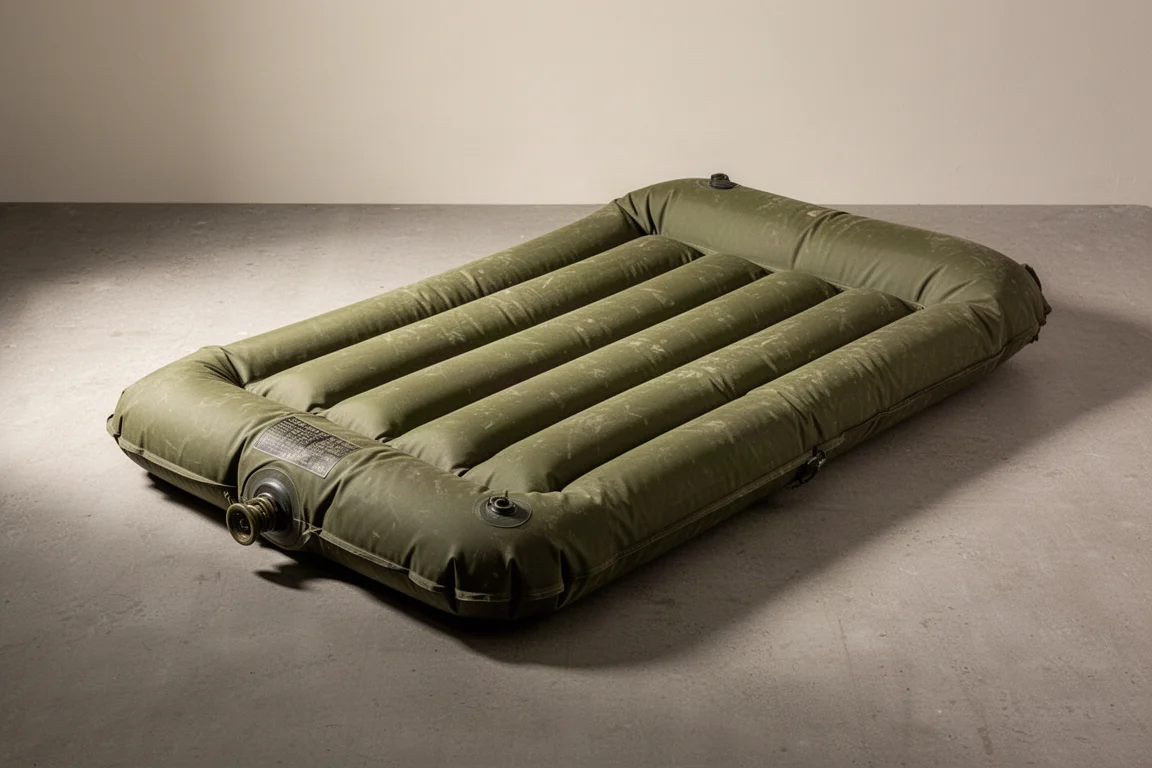
The U.S. military pneumatic air mattress is one of the more obscure pieces of surplus gear still doing the rounds, and it has quietly earned a reputation among campers who value comfort and toughness over pack weight. Pneumatic simply means air filled. What you get is a thick, heavily built sleeping pad with an olive drab rubberized shell, six large internal baffles, and a design that traces back to 1965 and possibly earlier. These pads were issued during the Vietnam era, received a NATO stock number in the 1980s, and were known to soldiers by the nickname “the rubber.”
Rolled up, the pad measures roughly 11 inches by 5.5 inches and weighs 3.2 pounds. That is heavy for an air mattress, and once it is inflated it becomes obvious where that weight comes from. Inflated dimensions are 26 inches wide, 72 inches long, and 5 inches thick, which puts it in a different class from most lightweight backpacking pads.
Who This Air Mattress Is For
This pad makes the most sense for car campers, surplus enthusiasts, and anyone who wants a genuinely comfortable sleeping surface for a very small outlay. It is also a reasonable pick for cold weather camping when paired with a second pad underneath, and for anyone who appreciates gear with real history behind it.
It is not a backpacking pad. It is large, it is cumbersome, and it takes real effort to inflate. If size and weight are your main concerns, lighter options exist and this is not the product to chase.

The people who tend to get the most from it are those who drive to camp, pitch in one spot, and want to sleep well without spending much. That combination is exactly where this mat shines.
Main Strengths
Comfort and Support
Five inches of cushioning, a 26 inch width, and a 72 inch length add up to a genuinely comfortable night. Lying on your back, your side, or your stomach all work well. The only time you notice the ground is when you sit on the pad with just your body weight on one spot, where you can feel what is underneath. Once your full weight is spread across the surface, the ground disappears entirely.
The pad is sized for someone around six foot tall. Shorter users have room to spare. Anyone taller will find their legs hanging off the end.
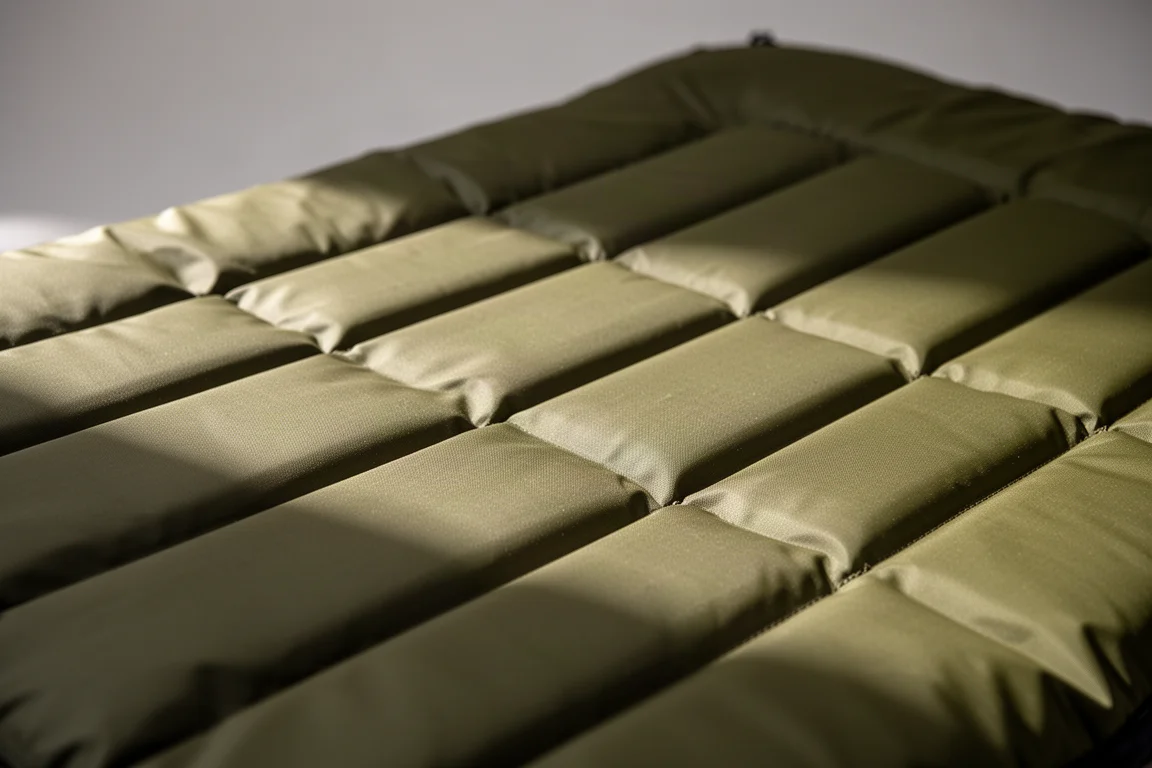
Inside the baffles, polyester insulation keeps cold air from rising up through the pad, which is what separates this from a plain uninsulated air mattress.
Durability and Materials
The construction is a nylon exterior with a rubber coating on the inside. That rubber has proven remarkably long lived. Even examples dating back to the 1960s are often found with the coating still intact, which is unusual for gear of this age. The pad is made in the United States.
Long term field use in tents, directly on the ground, and under tarps has produced no leaks and no holes. It is a burly piece of equipment, and it keeps going.
Cold Weather Performance
Because the pad is insulated, it performs well in genuinely cold conditions. For the coldest nights, a secondary pad underneath is a sensible addition, which is true of essentially any air mattress. The exact insulation rating is not documented, so treat the cold weather performance as proven in practice rather than as a published number.
Things to Consider Before Buying
Inflation and Weight
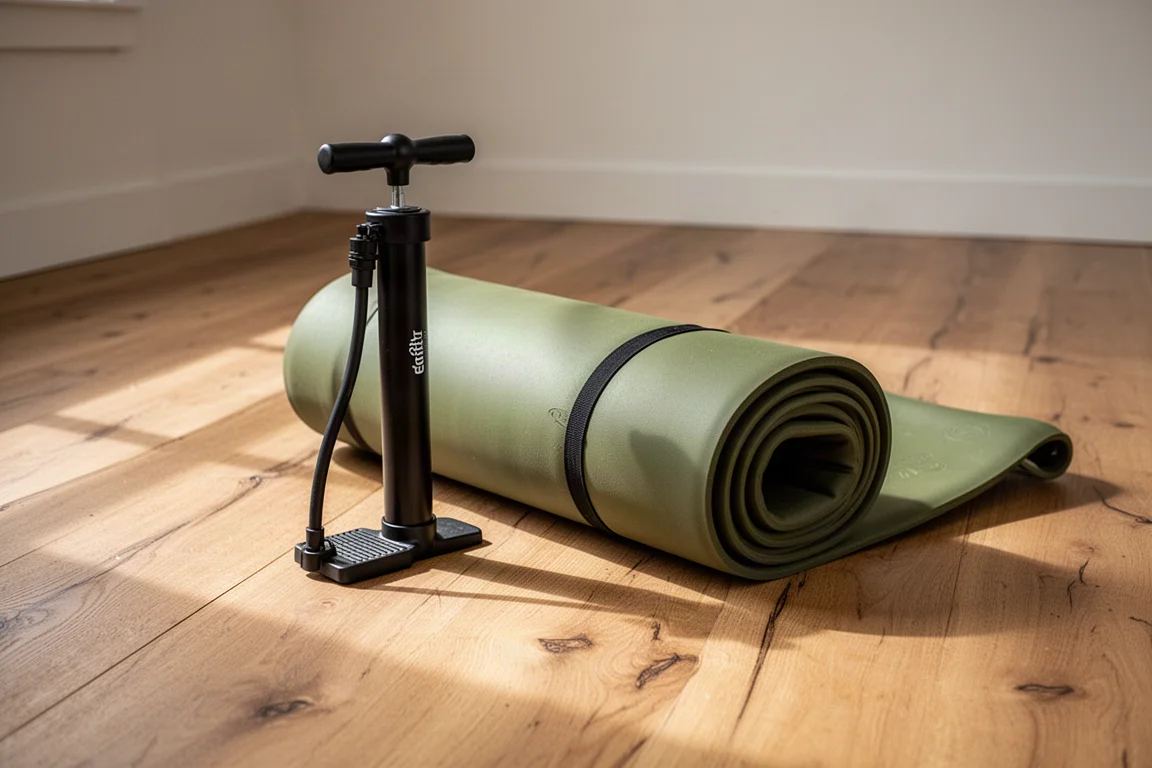
Inflating this pad is a workout. It takes roughly three minutes of steady effort, with a few breaks along the way, and most owners will want an air pump to make the job easier. Deflating, by contrast, is quick and simple.
At 3.2 pounds and a bulky packed size, this is a pad you carry deliberately rather than casually.
Valve Care
The inflation valve is a snap lock mouthpiece that works well, but it has no stopper. If you pause mid breath, you need to cover it with a thumb or insert the plug. A small amount of air escapes when you seal it, and that is fine, because the pad is not designed to be rock hard. A little give in the surface is what makes it comfortable, and over inflating it makes it less pleasant to sleep on.
The valve is also the weakest point in the system, and no pressure should be placed on it. That is the reason the word “top” is printed on the material, along with simple instructions covering how to inflate the pad and how to test it by sitting down. If your backside barely touches the ground, the pad is properly inflated.
Water and Moisture
The rubber coating absorbs water. Rain, wet shoes, and even sweat will soak into the surface, and it takes a long time to dry out. Keep the pad sheltered and away from damp gear. This is the one handling habit that matters most for long term ownership.
Condition and Availability
These pads still turn up at military surplus stores and through online marketplaces, and it is possible to find them in brand new condition. Expect to pay around $40 for a single mat, which is fair for what you get.
Because the pads are old and many saw service around the world, condition matters enormously. Check listings for signs of repairs and for leaks, and if the seller does not describe the condition clearly, ask questions before buying.
Buying Advice
For car camping, this is an easy recommendation, especially if you bring an air pump. For winter trips, it works well with a second pad underneath. For surplus collectors and anyone who wants a comfortable, inexpensive, extremely durable mat, it delivers.
For backpacking, only consider it if you are comfortable carrying the weight and the bulk. If either of those is a deal breaker, look elsewhere.

One practical point on timing: these mats are not going to be available forever. The materials have a shelf life, and eventually the rubber and nylon will fail. Anyone who wants one should buy while supply still exists rather than waiting.
Conclusion
The U.S. military pneumatic air mattress is a rare thing in modern gear: a product that is very cheap, very comfortable, and very tough all at once, with the trade off being weight, bulk, and a slow inflation process. It is not the right pad for every trip, but for the trips it suits, it is hard to beat at the price. If you value a good night’s sleep at camp more than a light pack, this surplus classic deserves a place in your kit.
Product link
View more details for U.S. Military Pneumatic Air Mattress
This product is mentioned in the review. Check the specifications, options, and compatibility before buying.
View more details for U.S. Military Pneumatic Air MattressFurther reading
Related Reviews
Sleeping Pads
Best Backpacking Sleeping Pads 2026: Nine Pads Rated on Price, Comfort, Warmth, and Weight
Nine backpacking sleeping pads compared on price, comfort, warmth, and weight, from a $65 summer pad to a year-round option rated at R-7.3.
Sleeping Pads
Best Backpacking Sleeping Pads: Comfort, Warmth, and Weight Compared
A practical comparison of the Nemo Quasar 3D, Therm-a-Rest NeoAir XTherm Max, and Big Agnes Rapide SL for backpackers choosing between comfort, warmth, and packed weight.
Sleeping Pads
Best Backpacking Sleeping Pads: Ultralight, Winter, Comfort and Budget Picks
A practical roundup of the sleeping pads that stand out for ultralight weight, winter warmth, pressure relief and value, plus three popular pads that fell short.