Bivy Sacks
US Military MSS Gore-Tex Bivy Review: A Simple, Extremely Tough Cold-Weather Shell
A three-layer Gore-Tex bivy from the Modular Sleep System that trades features and light weight for waterproofing, breathability, and durability at a surplus price.
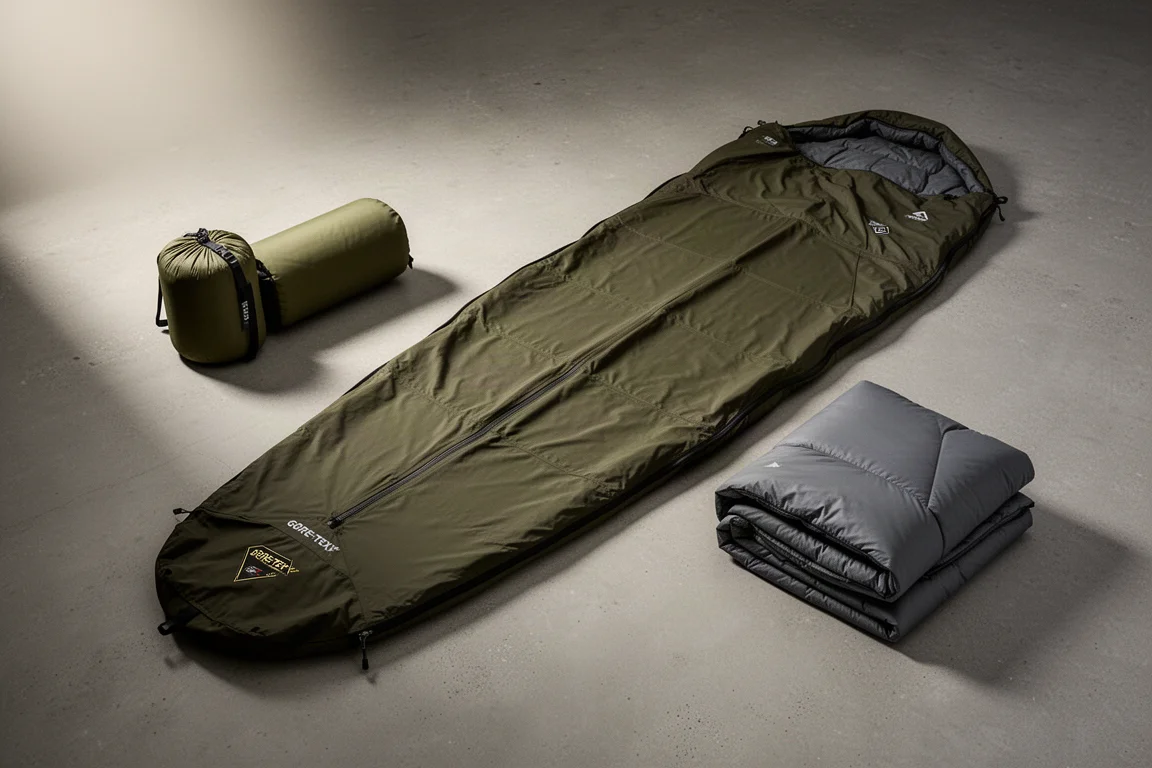
Introduction
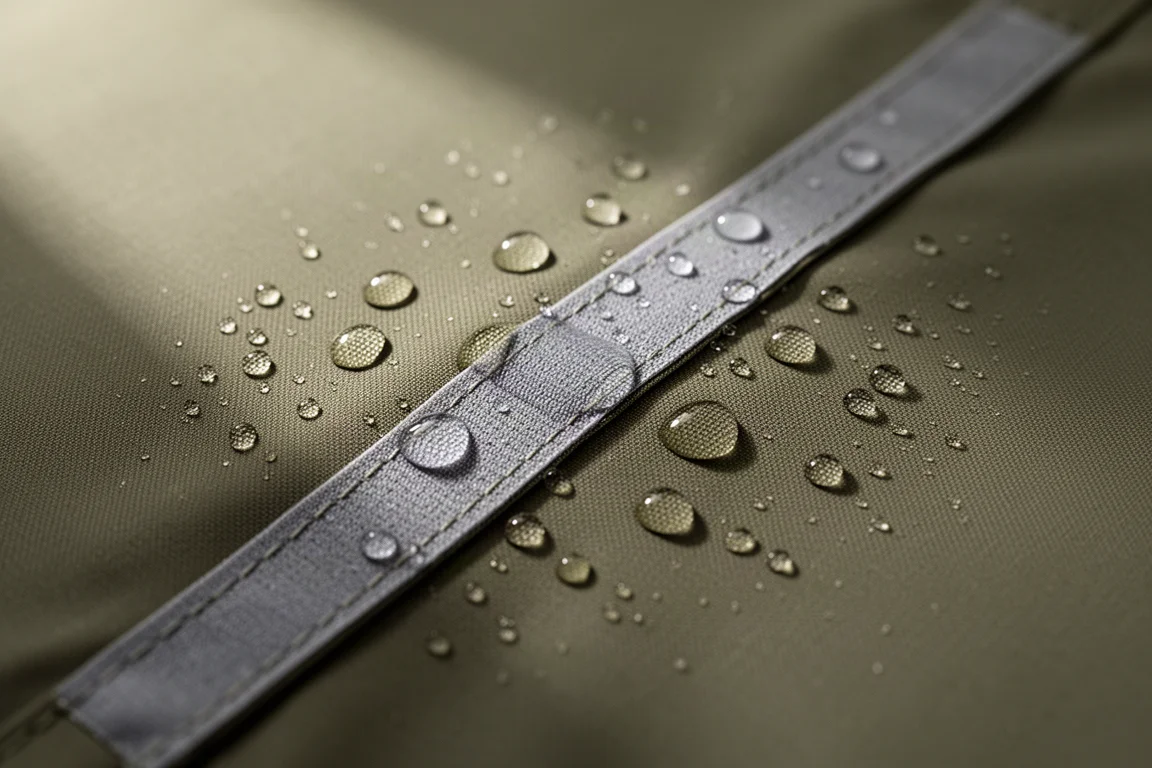
The Modular Sleep System Gore-Tex bivy is one of the simplest pieces of shelter a camper can own, and that simplicity is entirely deliberate. There is a perimeter zipper, a set of snaps for mating the bivy to the system’s sleeping bags, and taped seams. That is the complete feature list. No pockets, no mesh, no bug netting, no vents to adjust in the dark.
What the bivy does bring is a three-layer Gore-Tex shell and an unusually generous cut. It has been used seasonally for roughly a decade, from late fall into early spring, through rain, snow, and ice storms, and it has held up without drama.
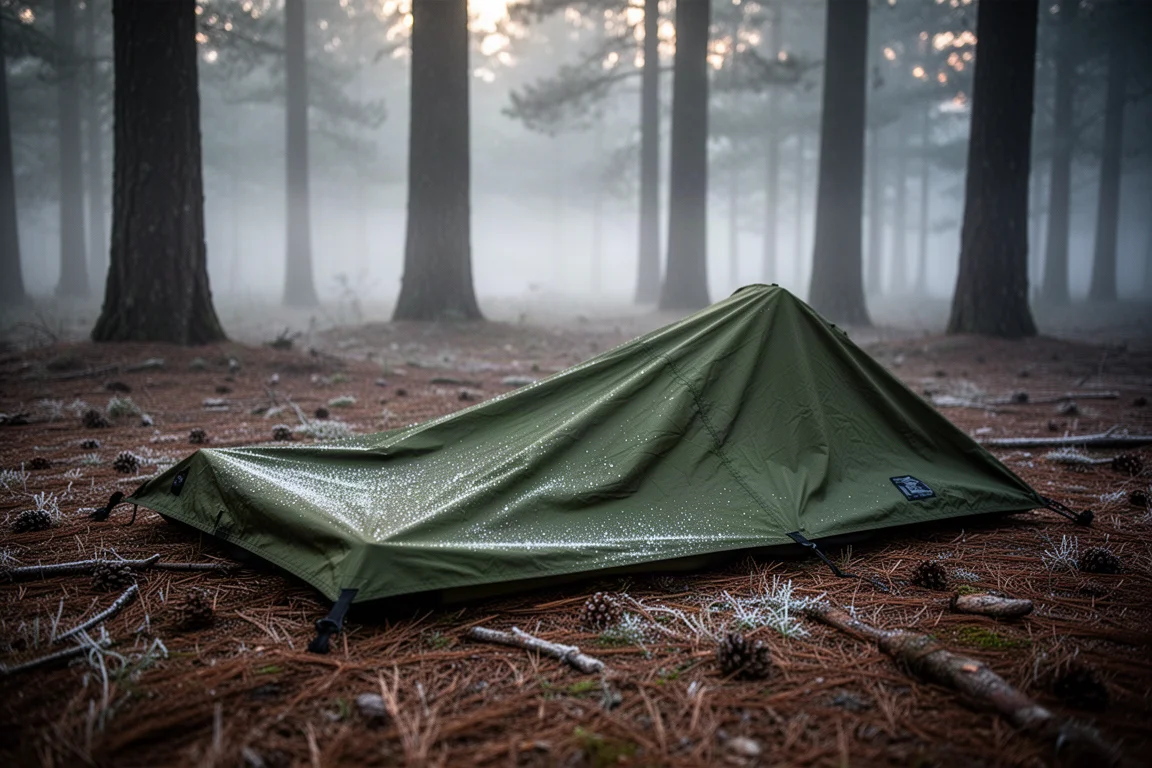
That longevity is the heart of the case for this bivy. It is not a product that has been refined year after year. It is a product that was specified once, built to a utility-first standard, and left alone, and it still does the job it was designed for.
What the Modular Sleep System Includes
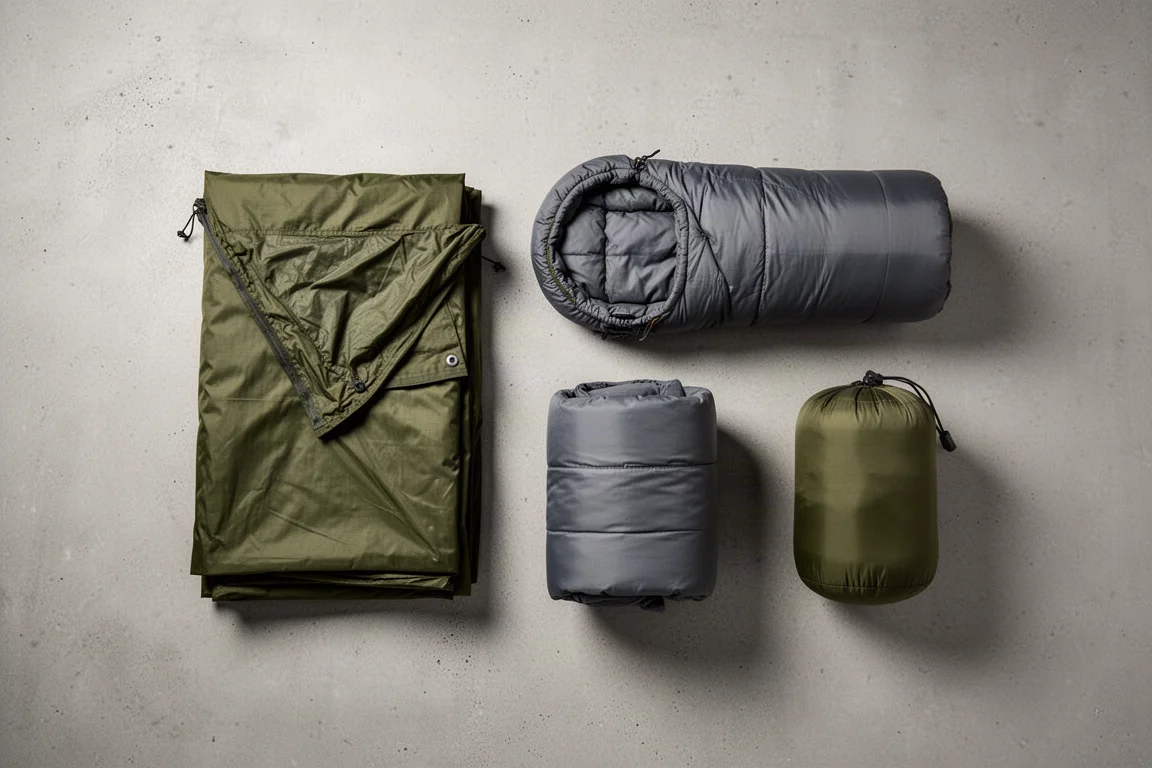
The bivy is one component of a larger kit. The full Modular Sleep System, usually shortened to MSS, is made up of four pieces: a lighter patrol bag intended for warmer conditions, an intermediate cold weather sleeping bag, the Gore-Tex bivy, and a compression sack.
Each component can be used on its own, or the bags can be nested together inside the bivy. With both sleeping bags and the bivy combined, the system is rated to roughly -30 degrees Fahrenheit, and additional warm clothing can stretch that range toward -50 degrees Fahrenheit. The design intent is straightforward: one system that covers the needs of a single user across the whole year, instead of several separate sleep systems for different seasons and locations.
Who This Bivy Is For
This is a cold-weather shelter, and it makes the most sense for campers who head out in late fall, winter, and early spring. Anyone who wants a shell that shrugs off rain, snow, wind, and rough ground without worrying about it will find the appeal immediately.
It is a good match for:
- Winter and shoulder-season campers who sleep on snow or frozen ground
- Buyers who want maximum durability per dollar and are willing to carry extra weight
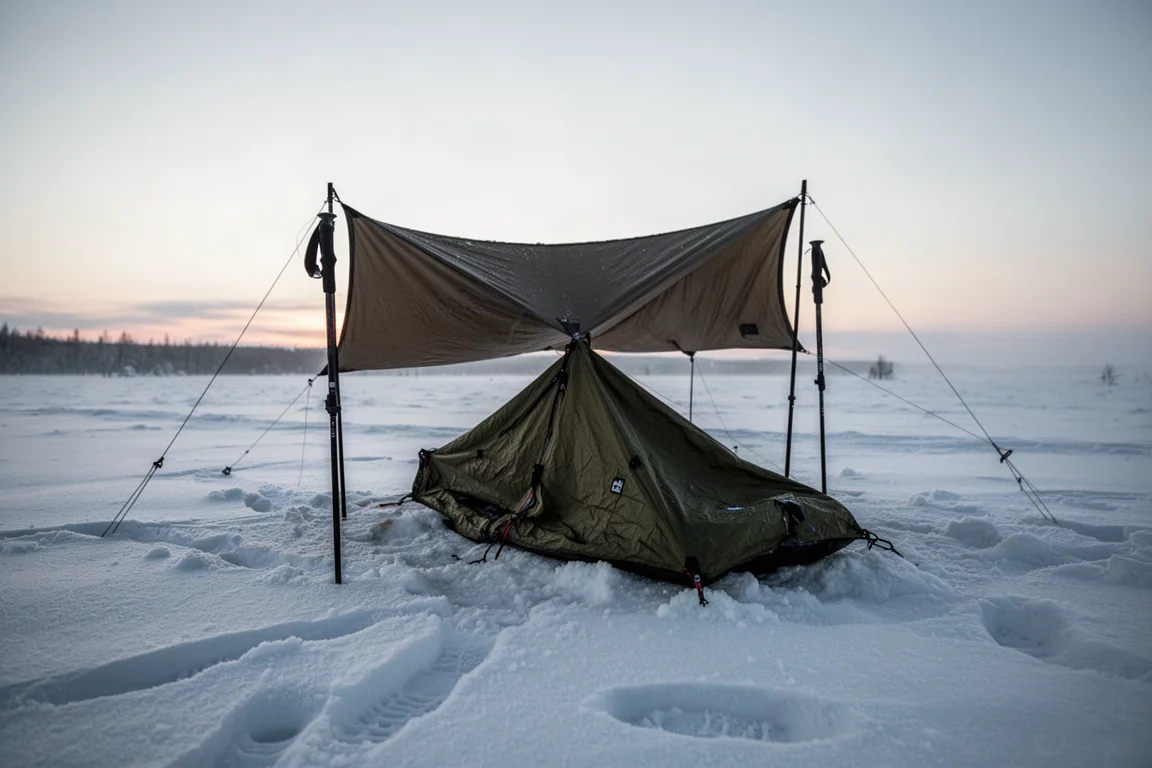
- Campers who already use a tarp and want a waterproof, breathable layer underneath it
- Anyone who prefers a large, roomy bivy over a tight, technical one
It is a poor match for ultralight backpackers, summer campers, and anyone who needs insect protection built in.
Main Strengths
The bivy’s strengths all come from the same place: a no-compromise material choice wrapped in a very plain design. There are no zippers to snag on mesh, no poles to bend, and nothing to break. It is a shell, and it behaves like one.
The cut is the other half of the story. The bivy has a mummy shape, but it is wide and long enough that a full rectangular sleeping pad plus a sleeping bag fit inside without a fight. That roominess matters more than it sounds, because it means you can bring the pad you already own rather than buying a shaped one.
Waterproofing and Breathability
Waterproofing is not in question here. This bivy has been used in rain, on top of snow, in snow, and through ice storms, and it has kept its occupant dry. In sustained wind-driven rain it has also performed, staying completely dry inside.
One practical caveat is worth knowing before you commit. A bivy of this type is not the shelter you want to ride out a downpour in on its own, because there is no way to get in or out without letting water into the interior. If you can seal it up and stay put until the rain stops, you are fine. If you have to get out, your sleeping bag and possibly your pad will get wet. For that reason, pairing the bivy with a tarp whenever rain or snow is likely is the sensible approach, and using it on its own when the forecast is good.
Breathability is where the three-layer Gore-Tex construction earns its place. Condensation and moisture build-up are still possible inside any bivy, but Gore-Tex remains one of the most breathable waterproof materials available, and that is as true of this shell as it is of high-end rain jackets. It also blocks wind effectively, which matters on exposed ground.
Durability and Three-Layer Gore-Tex
Durability is the strongest argument for this product. Gore-Tex at this grade is not just a waterproof layer or a breathable layer; it is a structural one. You can lay the bivy directly on the ground with no ground sheet, over sticks, twigs, and rocks, and the material will come through fine.
That is the same reason high-end technical shells are built this way. Three-layer construction is what you want when gear is rubbing against rock or pushing through brush, and it is why a bivy that has been in seasonal use for about a decade still looks the way it should. YKK zippers and taped seams round out a build that is meant to be used hard and handed down.
Things to Consider Before Buying
Three trade-offs define this bivy, and all three are the direct cost of the design philosophy behind it.
Weight. The bivy weighs about 2.5 pounds on its own, which is more than some complete tents. That weight buys durability and a very large interior, but it is real weight in a pack.
Packed size. Rolled or folded, the bivy is bulky and takes up a significant amount of space, roughly comparable to a high-quality two- to three-person tent. If pack volume is tight, this is the first thing you will notice.
No bug protection. There is no zipped-in mesh and no netting of any kind, so insects are not kept out. That is a luxury the design skips, and it is the main reason this bivy is best kept to the colder months rather than used through summer. Treatments such as permethrin can help, but nothing short of mesh will get you fully bug-free. If you want that, mesh can be draped over the top, or the bivy can be tailored to have mesh sewn in, but the stock product is not built for it.
Price and Availability
Pricing is where this bivy becomes genuinely unusual. A comparable bivy from a domestic outdoor brand using the same three-layer Gore-Tex construction would run around $1,000 or more, and very few shelter makers still offer Gore-Tex at all because of the material cost. Brand-new MSS bivies typically sell for roughly $70 to $100 through military surplus channels, and used examples have gone for as little as $30.
If you buy used, inspect the details carefully. You want intact fabric with no holes or repairs needed, a zipper that runs smoothly, and seams that are still sealed. Ask for photographs and ask questions before committing. Because imitation and counterfeit versions circulate in the market, it is worth confirming that what you are looking at is genuine surplus rather than a low-cost copy of the same design.
Buying Advice
Buy this bivy if you camp in cold weather, want a waterproof and breathable shell that will outlast almost anything else at the price, and do not mind carrying a couple of extra pounds and some pack volume to get it. The value calculation is hard to argue with: for the cost of a modest piece of gear, you get a full-size, three-layer Gore-Tex shelter that has proven itself over a decade of hard seasonal use.
Skip it if you are counting grams, if you mostly camp in warm weather, or if mosquitoes and ticks are part of your usual trip. In those cases, a lighter bivy with integrated mesh will serve you better.
If the whole kit appeals, the full Modular Sleep System is worth a look as well. The four-piece set adds the patrol bag for warmer conditions, the intermediate bag for cold, and a compression sack to the bivy, and all three components still take up considerable space. It remains a genuinely capable all-year system, and buying the complete set is a low-risk way to cover a wide range of conditions with one purchase.
Conclusion
The Modular Sleep System Gore-Tex bivy is not trying to be clever. It is a shell that keeps you dry, breathes well, and refuses to wear out, and it does all of that for a surplus price that no comparable new product can touch. The trade-offs are honest and easy to understand: extra weight, extra bulk, and no bug protection. If your camping happens in the cold half of the year, those are reasonable things to accept for a shelter this tough.
Product link
View more details for US Military Modular Sleep System (MSS) Gore-Tex Bivy
This product is mentioned in the review. Check the specifications, options, and compatibility before buying.
View more details for US Military Modular Sleep System (MSS) Gore-Tex BivyFurther reading
Related Reviews

Backpacking Gear
Building a 10 lb Base Weight: An Ultralight Backpacking Gear List
A practical walkthrough of the ultralight pieces behind a 10 lb base weight, from a 765 g pack and a roomy one-person tent to a full camp chair and a dependable water filter.

Road Bikes
10 New Road Bikes Worth Watching: Aero, Titanium, Steel and Endurance Standouts
A practical roundup of 10 new road bikes, from aero flagships chasing single-watt gains to titanium, steel and endurance platforms built for real roads.
Bikepacking Gear
11 Bikepacking Essentials for Long-Distance Cycling
Eleven bikepacking essentials for long-distance cycling, from a steel gravel frame and a two-person tent to helmet lights, packable gloves, and a frame bag that puts weight in the right place.