Sleeping Bags
U.S. Forestry Service Firefighter Sleeping Bag Review: A 1980 Surplus Bag Worth Knowing
A practical look at the U.S. Forestry Service firefighter sleeping bag, a 1980 intermediate cold weather surplus bag with a 30-degree comfort rating, reversible design, and a very low used price.
Introduction
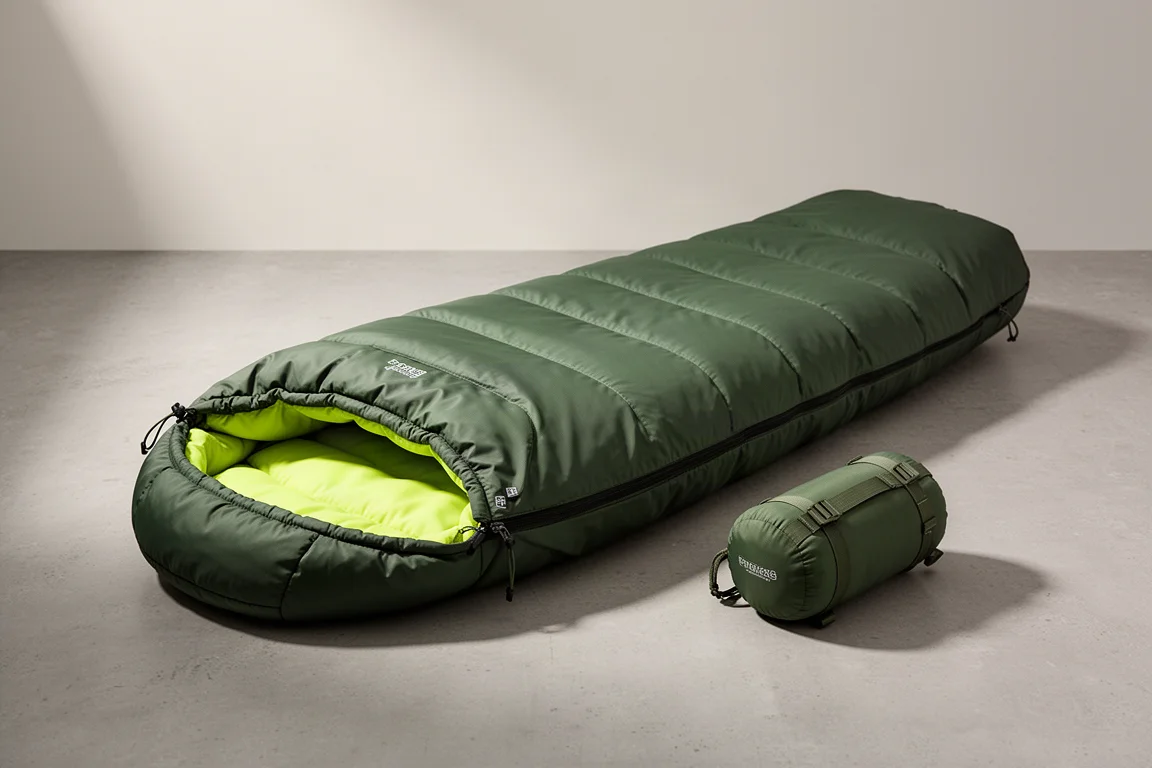
Military surplus gear earns its reputation slowly, through decades of hard use rather than marketing. The U.S. Forestry Service firefighter sleeping bag is a clear example. It was first fielded in 1980 as an intermediate cold weather sleeping system for forestry firefighters, and a closely related military version appeared in 1981. The bag is rated at 30 degrees for comfort with a push down to 20 degrees, uses a nylon shell over polyester insulation, and shows up regularly on the surplus market for a fraction of what a comparable new bag costs.
It was built to military specifications with military materials, and it carries a NATO stock number, 8465011, along with a manufacturer mark from Tenor Industries Inc, a military contractor. That paperwork matters when you are buying surplus: it tells you exactly what the bag is, who made it, and when. For a product designed for forestry crews and service members, that level of traceability is unusual at this price point.

What makes the bag interesting today is not nostalgia. It is the combination of a documented origin, a genuinely usable temperature range, and a used price that sits well below most entry-level camping bags. The trade-off is bulk, and it is a real one, which is why understanding the design before buying matters more here than with a modern compressible bag.
Design and Construction
The bag is a tapering rectangle with a mummy-style hood, 80 inches long from the foot to the tip of the hood. It measures 26 inches across the shoulders and tapers to 22 inches toward the foot. A drawstring at the top lets you pull the hood around your head and close it down into a proper mummy shape.
A YKK zipper runs the full length of the bag and around the edge, and a strip of velcro connects the body of the bag to the hood. There is a draft collar as well: it sits on the inside when the yellow side faces out, and on the outside when the green side faces out, laying over the zipper to block cold air. A second zipper at the foot lets you open the bottom to vent your feet if you get warm.
The shell and lining are nylon, and the insulation is polyester. The bag weighs about four pounds, which is reasonable for its size. It is convertible and can be turned completely inside out, so you can run the forest green side out or the neon yellow-green side out. Two compression straps at the foot, one on each side, let you roll the bag up and tie it off.
The label supplies care instructions and identifies the product as a general purpose synthetic filled sleeping bag made in 1980. Note that a storage or compression bag is not part of the package. You will need a large one, because even packed the bag fills a lot of space: roughly 19 inches by 10 inches by 10 inches when stuffed into a generous sack.
Who This Sleeping Bag Is For
This is a car camping and truck camping bag first, and an emergency bag second. Because it does not pack down small, it makes little sense for backpacking, where volume matters as much as weight. In a vehicle, that same bulk costs you nothing.
It also suits anyone who needs a low-cost spare: a bag kept in a cabin, a garage, or a vehicle kit, or an inexpensive first sleeping bag for a younger camper heading out with a scout group. The price makes it easy to justify as a backup rather than a primary piece of gear.
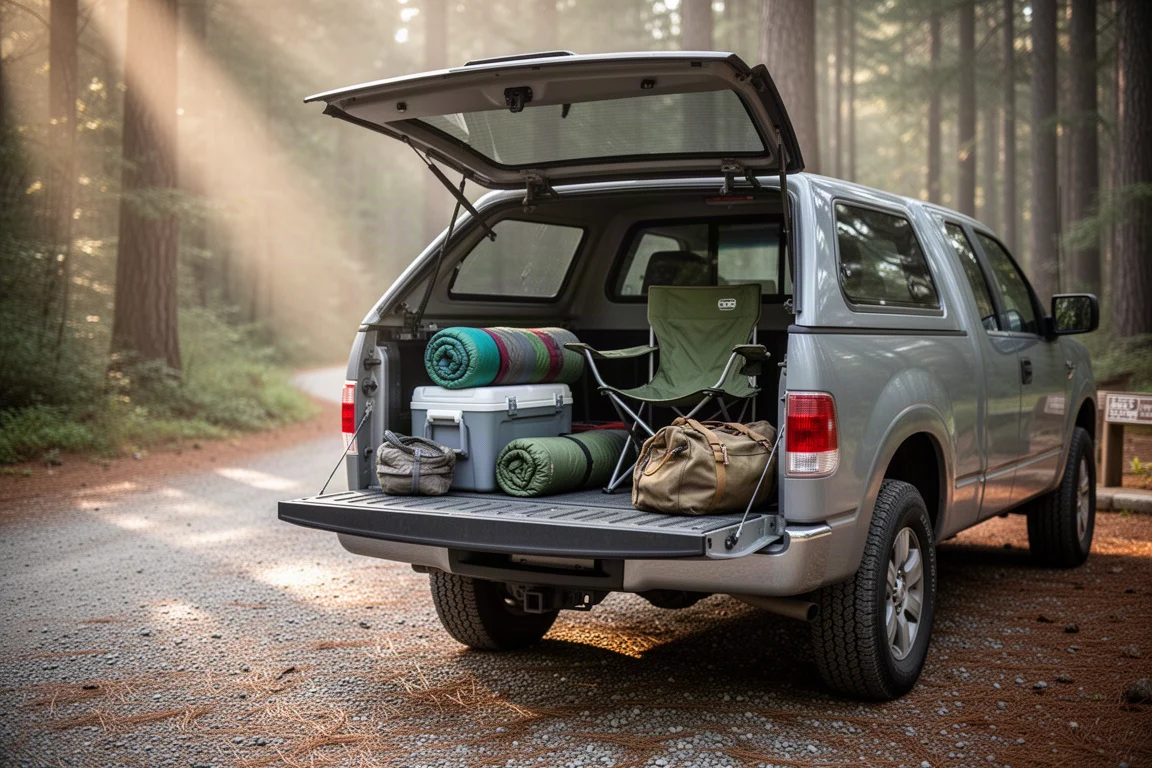
If your trips involve driving to a site and sleeping near the vehicle, the size stops being a drawback and the price becomes the headline. If you carry your gear on your back, this is the wrong bag.
Main Strengths
Build quality is the standout. A bag produced in 1980 that still shows no functional issues speaks for itself, and the materials were specified for government use rather than for a weekend-only life.
The reversible design is more useful than it first appears. With the bright side facing inward, the interior is highly visible, which makes it easy to find a phone, a battery bank, or a headlamp that has slid to the foot of the bag in the dark. Flip it the other way and the forest green exterior keeps a lower profile at camp.
Opening the bag flat turns it into a blanket for warmer nights, and the foot zipper gives you a second way to dump heat without unzipping the whole bag. The draft collar over the zipper is a small detail that makes a measurable difference on cold, drafty nights. And the price is the final strength: surplus availability keeps a durable, well-documented bag within reach of almost any budget.
Warmth, Comfort, and Real-World Use
The rated figures are 30 degrees for comfort and 20 degrees as a push limit, and those numbers hold up in practice. Field use down to roughly 45 degrees has been comfortable without drama.
Read the ratings the way they are meant to be read. Around 30 degrees, plan on proper clothing and multiple layers. In lighter clothing, shorts and a t-shirt, think of roughly 40 degrees as the comfortable floor. The 20-degree figure is a survival-style limit rather than a temperature you would choose to sleep at. Treated that way, the bag behaves exactly as advertised for an intermediate cold weather system.
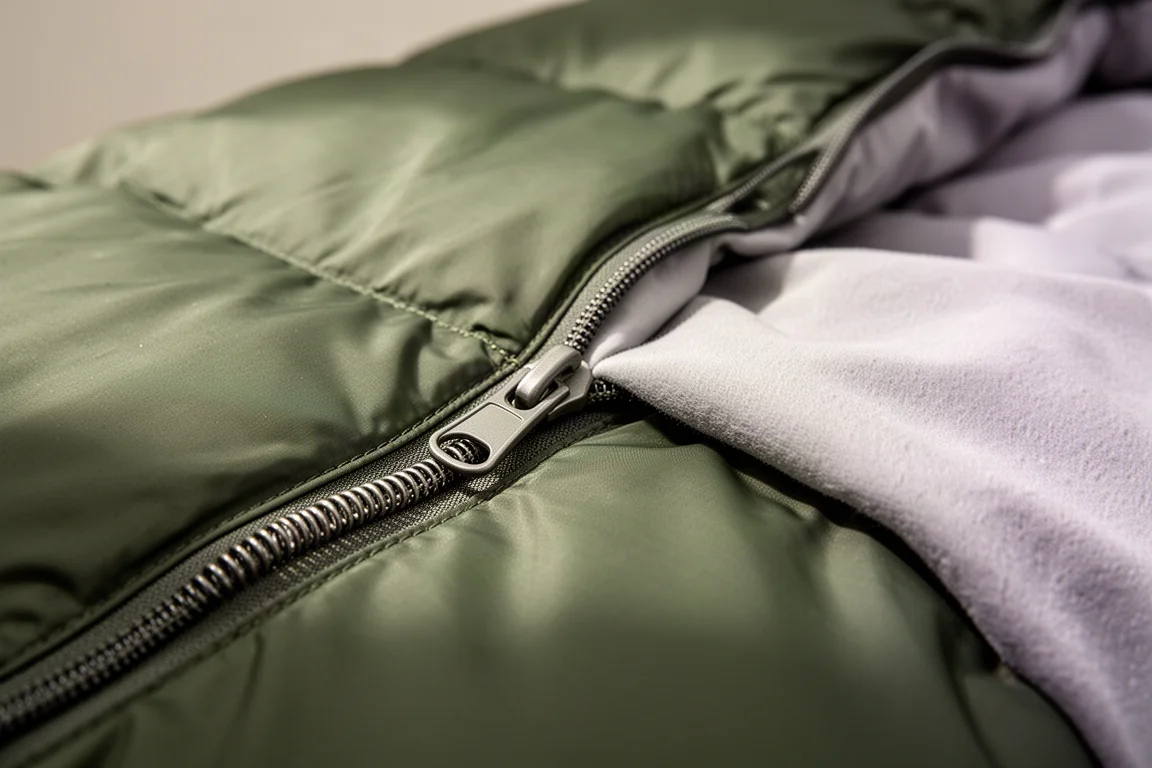
The high-visibility interior earns its place on real trips. Small items stay findable inside the bag, which sounds trivial until you are hunting for a headlamp in the dark at 40 degrees. Overall quality is very good for the age, with no failures to report across the shell, zipper, or insulation.
Things to Consider Before Buying
Bulk is the main compromise. The older polyester insulation does not compress much at all, and the bag stays large even when rolled and strapped. If packed size is a priority, this is not the bag for you, regardless of price.
A storage or compression sack is not included, so budget for a large one. The colors are also a matter of taste: forest green paired with a neon yellow-green lining is functional and unmistakably forestry service, but it is not a subtle olive drab.
There is one compatibility point worth being precise about. This bag predates the modular sleep system used today, and it does not share the same snaps or hardware, so it does not interconnect with that system the way the current intermediate bag does. Listings that claim otherwise are describing the product inaccurately. The same caution applies to inflated pricing: this bag has been offered at around 130 dollars in some places, which is far outside what it is worth.
Buying Advice
Used examples generally run about 40 to 50 dollars, and new-condition bags sit closer to 70 dollars. Surplus retailers have listed it at around 40 dollars, which is a fair number for what you get. A sensible ceiling is roughly 55 dollars. Above that, the value case weakens quickly.
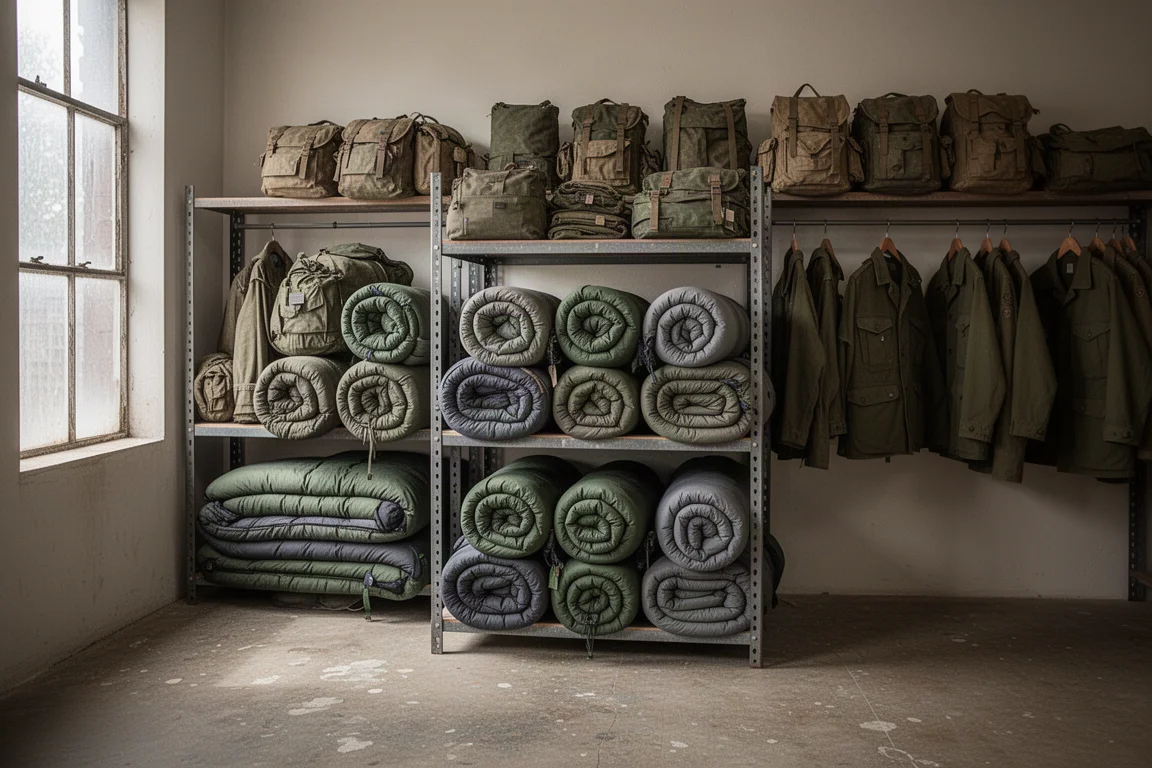
Availability is straightforward. These turn up on eBay and at military surplus sellers, and the military version is priced similarly depending on condition. Before buying, compare against the modular sleep system, whose components can be bought individually at low cost. If you can find those parts cheaply, they are worth weighing against this bag. If you cannot, a clean example of the forestry service bag at 40 to 50 dollars is a solid purchase for vehicle-based camping and emergency use.
Conclusion
The U.S. Forestry Service firefighter sleeping bag is a well-made, honestly rated surplus item with a documented history and a price that is hard to argue with. It is a car camping, truck camping, and emergency bag rather than a backpacking one, and that distinction should drive the decision. Buy it for the low price, the durable construction, and the practical reversible design, and accept the bulk as the cost of entry.
Product link
View more details for U.S. Forestry Service Firefighter Sleeping Bag
This product is mentioned in the review. Check the specifications, options, and compatibility before buying.
View more details for U.S. Forestry Service Firefighter Sleeping BagFurther reading
Related Reviews
Sleeping Bags
Best Down Sleeping Bags Under $300: Four Backpacking Options Worth a Look
Four down sleeping bags that stay under $300, compared on fill power, baffle design, hood comfort, and packed size.
Sleeping Bags
Best Sleeping Bags and Sleep Systems: Five Premium Down Picks Compared
Five premium down sleeping bags and sleep systems compared on warmth, weight, construction, and value.
Sleeping Bags
Big Agnes Lost Ranger UL 3-in-1 Sleeping Bag System Review: One Bag, Three Setups
A practical look at the Big Agnes Lost Ranger UL 3-in-1 Sleeping Bag System, covering how the three configurations work, where it shines, and the details worth weighing before buying.