Sleeping Bags
Best Down Sleeping Bags Under $300: Four Backpacking Options Worth a Look
Four down sleeping bags that stay under $300, compared on fill power, baffle design, hood comfort, and packed size.
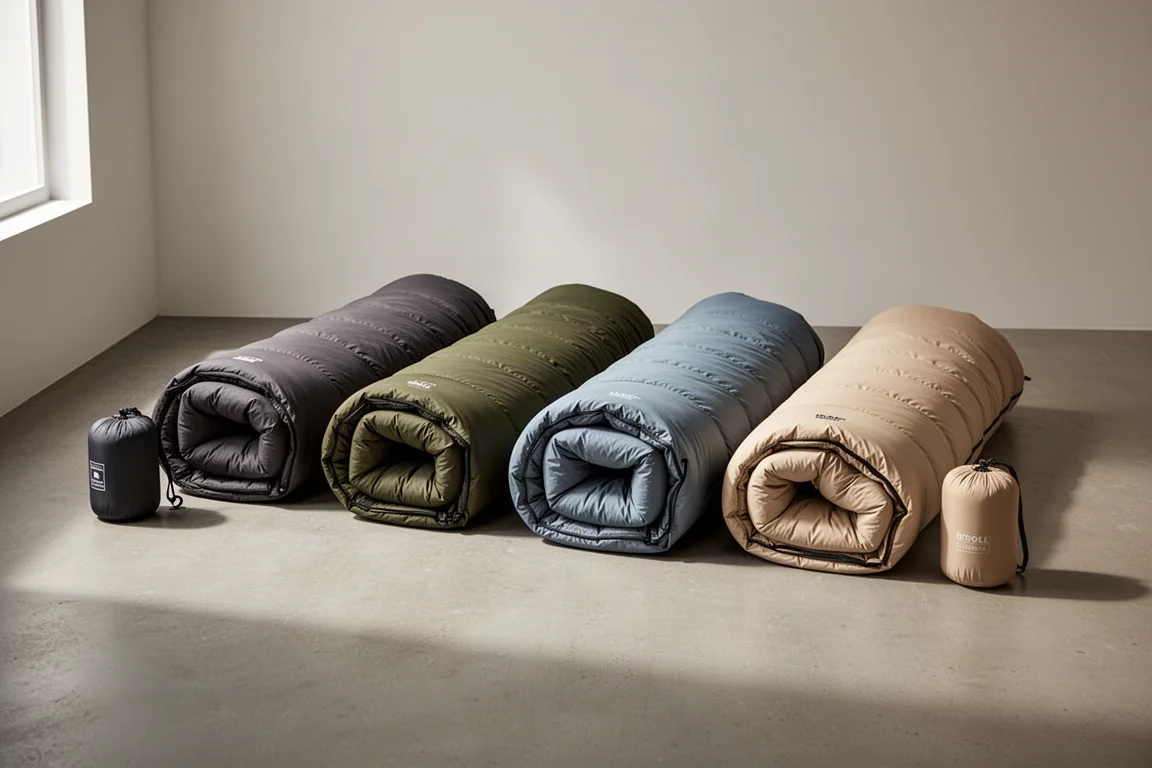
Introduction
Shopping for a down sleeping bag usually means balancing warmth, weight, and price. The four bags here show what is possible when the ceiling sits at $300. One starts at $225, the most expensive lands at $289, and every one of them uses down insulation aimed at backpacking rather than car camping.
The differences matter more than the headline numbers. Fill power draws the most attention, but baffle layout, hood shape, footbox cut, and zipper design do just as much work in deciding whether a bag is comfortable across a full night. Each of these four bags makes a different set of compromises to stay in the bracket, and knowing which compromise you can live with is the whole decision.
What to Look For in a Sub-$300 Down Sleeping Bag
Fill power is the figure shoppers notice first, and it is not the whole story. A high fill power rating describes how much loft a given weight of down provides, but warmth depends on how that down is arranged inside the shell. Horizontal baffles running the full length of a bag let insulation migrate toward the sides over time, while staggered baffle widths or baffles that change direction between the torso and the footbox hold the down closer to where it started.
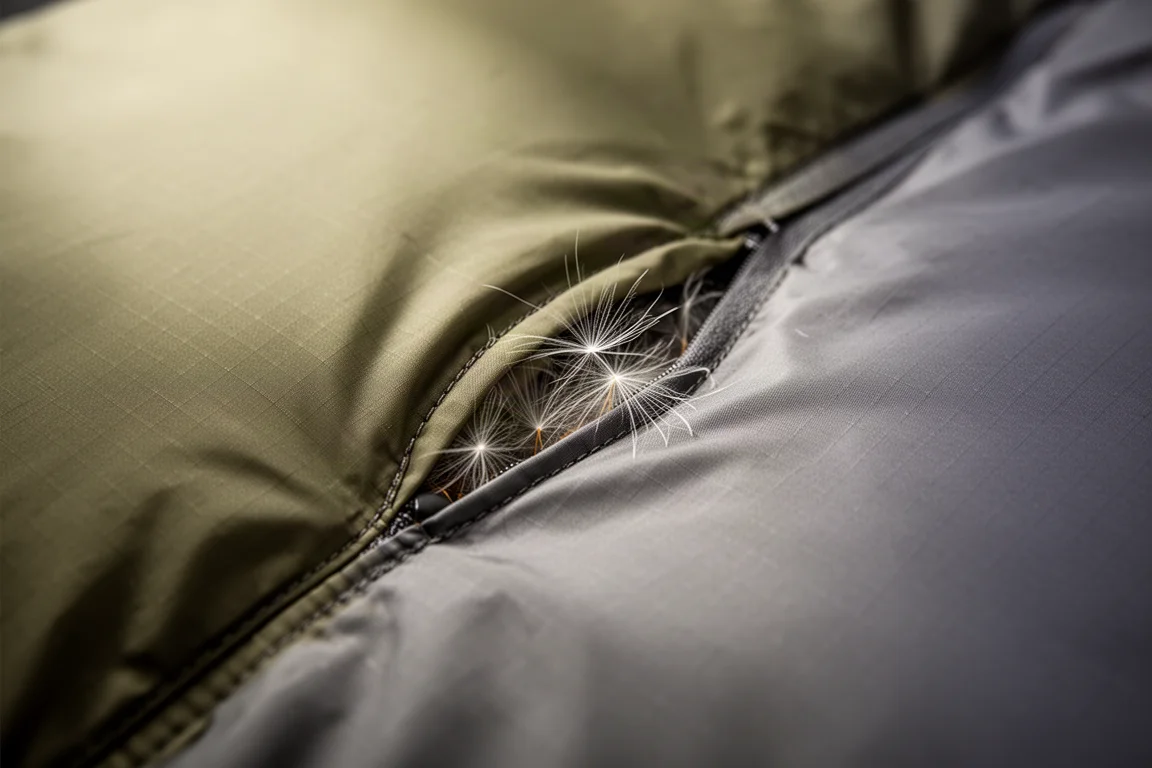
The second half of the equation is the cut. A hood that sits comfortably around the face, a draft collar at the neckline, and a footbox with enough room for your feet to move are what separate a bag that sleeps well from one that only looks good on paper. Zipper hardware matters too: a rigid ribbon along the track and a well-placed draft tube keep the zip from catching and help keep cold air where it belongs, outside the bag.
Best Budget Pick: Kelty Cosmic Ultra Down 20
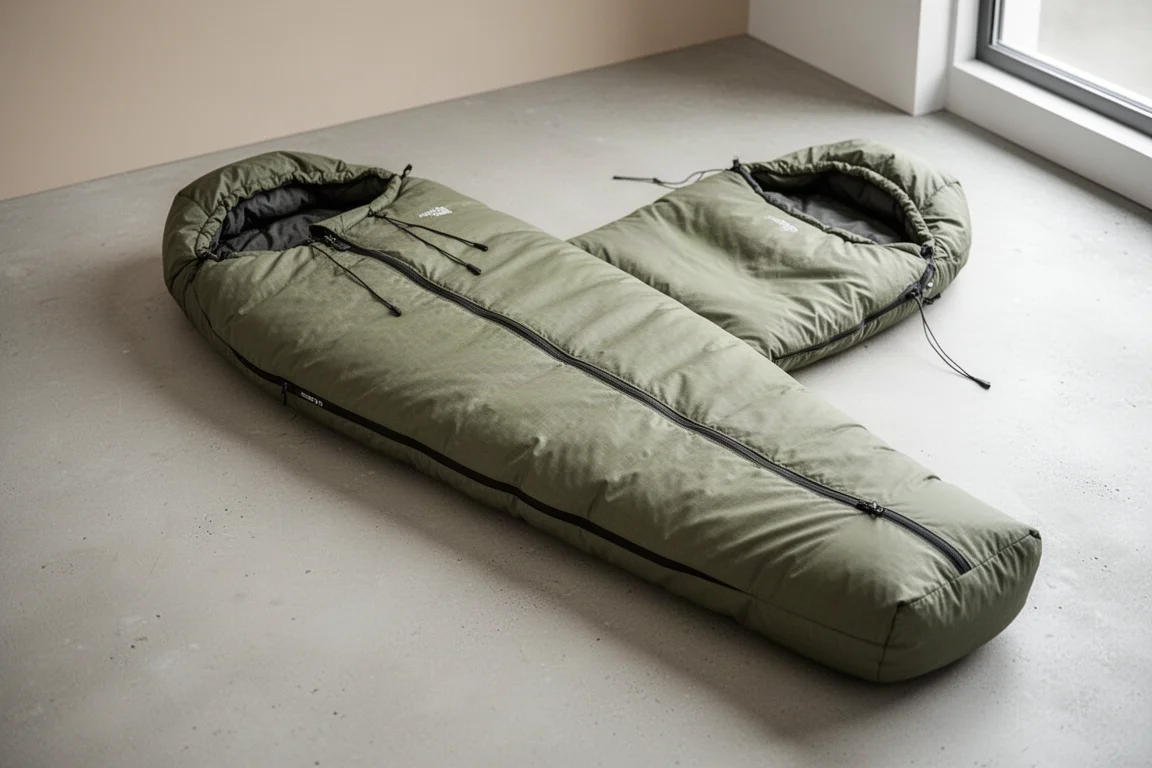
At $225 for the regular size, the Kelty Cosmic Ultra Down 20 is the least expensive bag in this group. It carries 800 fill power dry down, and the 20D nylon used inside and out has a smooth, comfortable hand feel that makes the bag pleasant to climb into.
The trade-offs show up in the details. Baffles run horizontally through the entire bag, so the down can shift more than it would in a design that changes baffle direction between the torso and the footbox. The hood has an unusual shape, and its drawcord tends to sit right in front of the face rather than out of the way. There is also synthetic insulation in the base of the footbox, which feels lumpy next to the rest of the bag.
For a bag at this price with 800 fill power down inside it, those compromises are easier to accept. The Kelty is a sensible starting point for anyone who wants a genuine down bag without stretching the budget.
Best Value: Cumulus Lightline 400
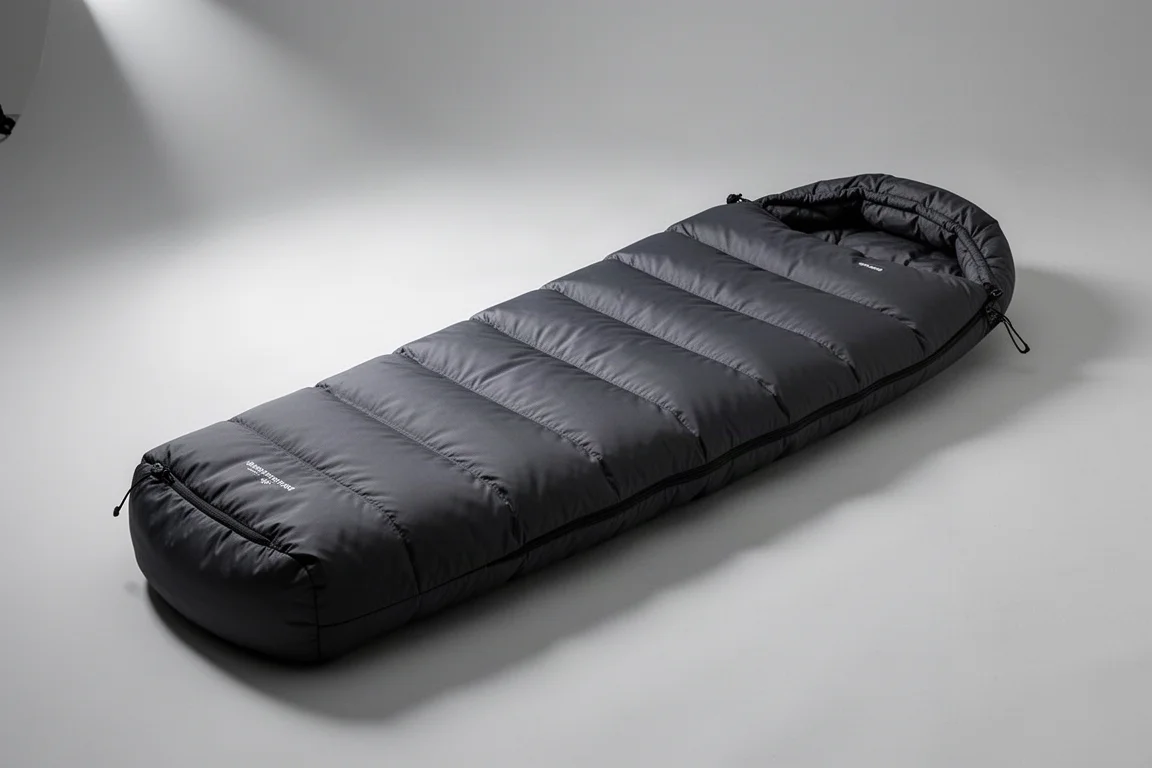
The Cumulus Lightline 400 is the most customizable option here, and that flexibility is what makes it the strongest value of the four. The name refers to 400 g of insulation, and this configuration was specified with 460 g to reach a 20°F limit rating, which puts its comfort zone right around freezing.
Several design choices stand out. The hood has dual adjustment, so the neckline can be cinched while the top stays a little looser, and a draft collar sits around the neck. The left-hand zip runs more smoothly than the one on the Kelty, though the anti-snag plow does occasionally catch on the draft tube. Inside, a small mesh pocket keeps a phone, headlamp, or lip balm within easy reach during the night.
Baffle widths are staggered rather than uniform, which helps keep the down from sliding to the sides. The mummy cut is roomy without feeling loose, and the footbox is shaped so your feet can point upward without pressing the down into a cold spot. The shell uses Pertex Quantum fabric, which is light and soft against the skin and helps move condensation away from the bag. At 850 fill power, it also packs down smaller than anything else in this group.
Fill Power, Weight, and Pack Size
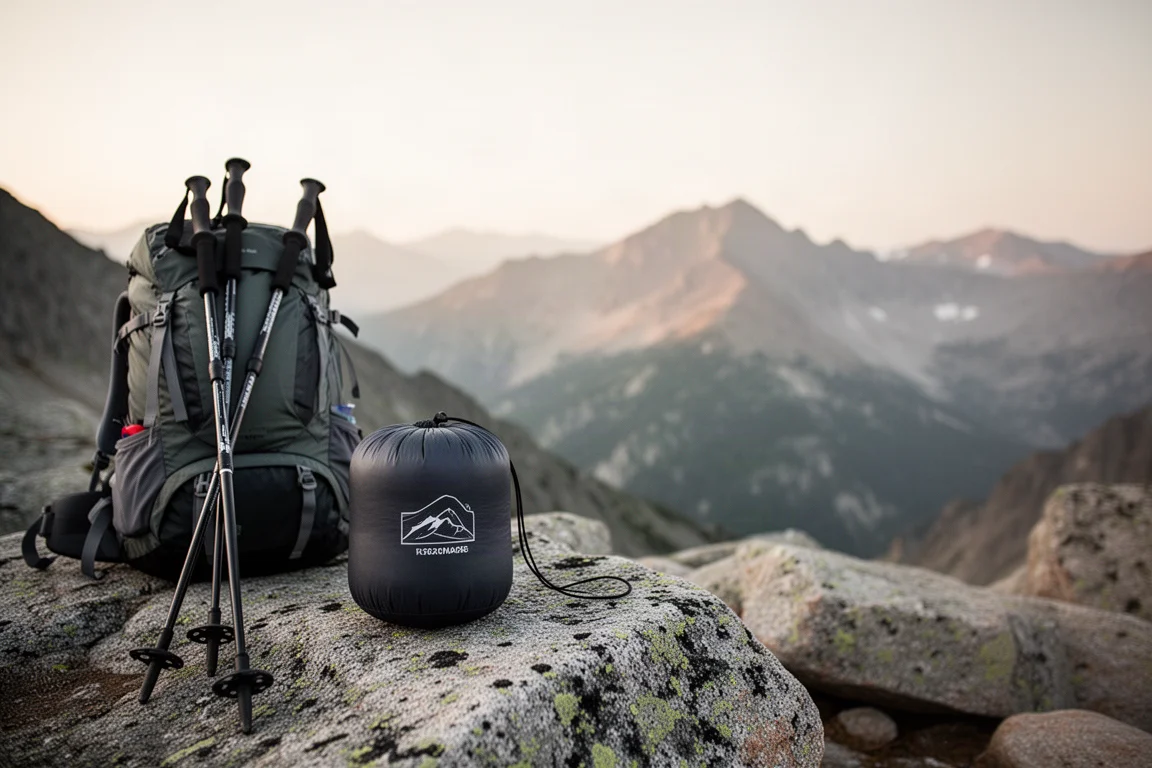
Higher fill power is not automatically better, but it does change what a bag weighs and how much room it takes up in a pack. Down with a higher fill power needs less material to reach a given temperature rating, so the 800 and 850 fill bags here compress smaller and carry lighter than the 650 fill options. The lower fill power bags can still be warm, but they need more insulation to get there, and that shows up as weight and packed volume.
Best Warmth for the Money: Mountain Hardwear Bishop Pass 15
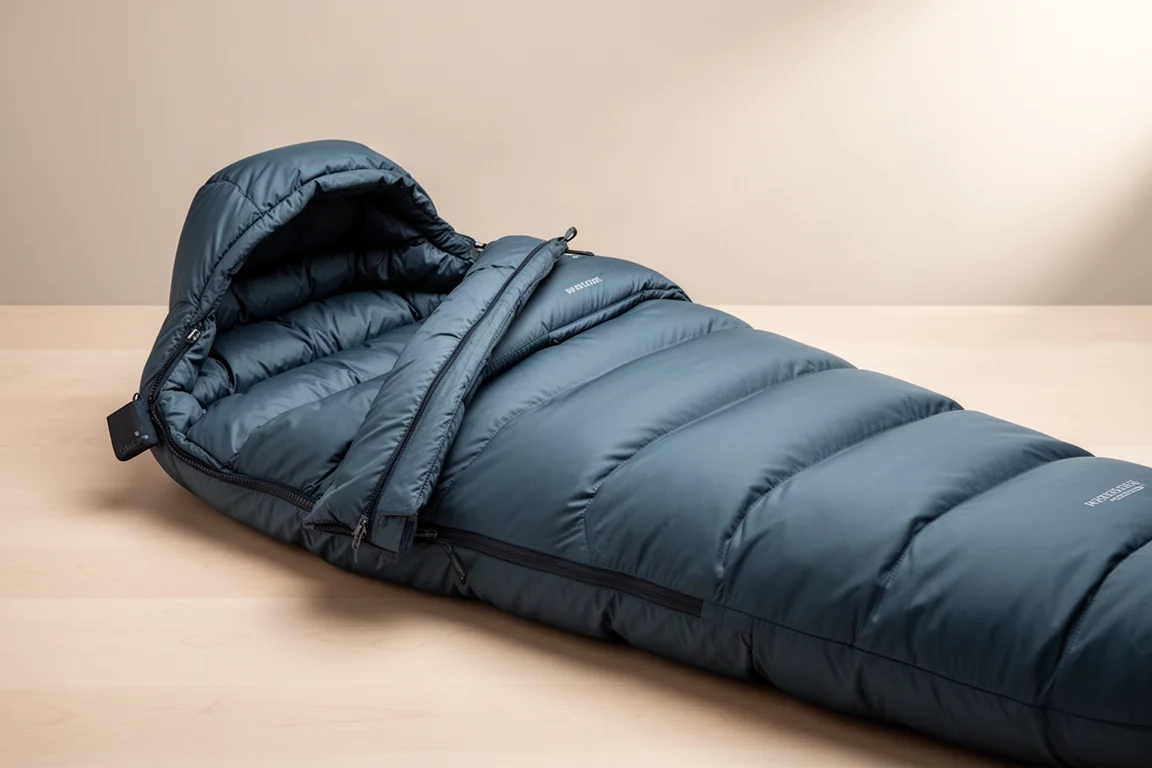
The Bishop Pass 15 lands at $285 and uses 650 fill power down. That lower fill power means more insulation is required to reach its rating, and the payoff is a bag with noticeably good loft. On paper the cut looks narrow; in person it is roomy and does not feel restrictive at all.
Detail work is where this bag earns its price. The left-side zipper has a large draft tube and a rigid ribbon along the track, which keeps the anti-snag plow from catching. The hood is well shaped and carries a draft tube around its full circumference rather than only at the neckline, and a separate draft collar closes off the neck. Together they make the bag exceptionally warm down to freezing and into the high 20s.
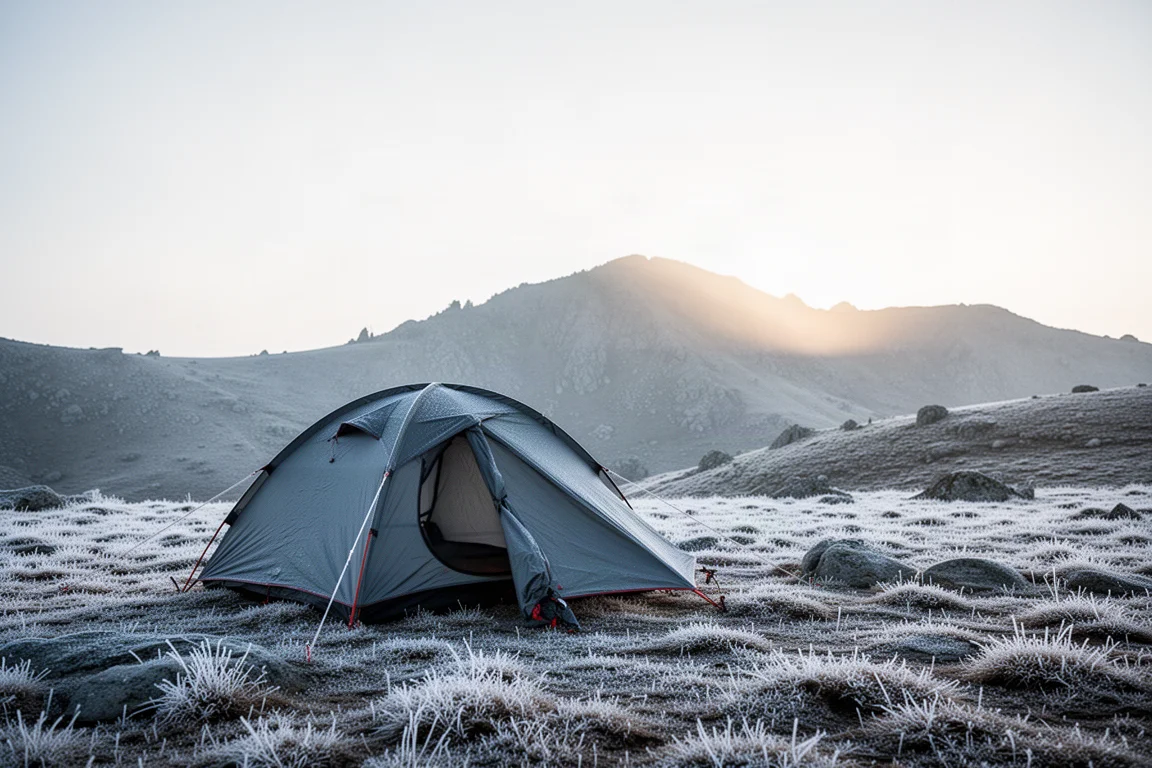
The footbox is cut with an upward angle that leaves plenty of room for your feet to move. The compromise is bulk: 650 fill power does not compress as far as higher fill down, so this bag is heavier and takes up more pack space than the 800 and 850 fill options here.
Most Comfortable: ZenBivy Core Bed 25
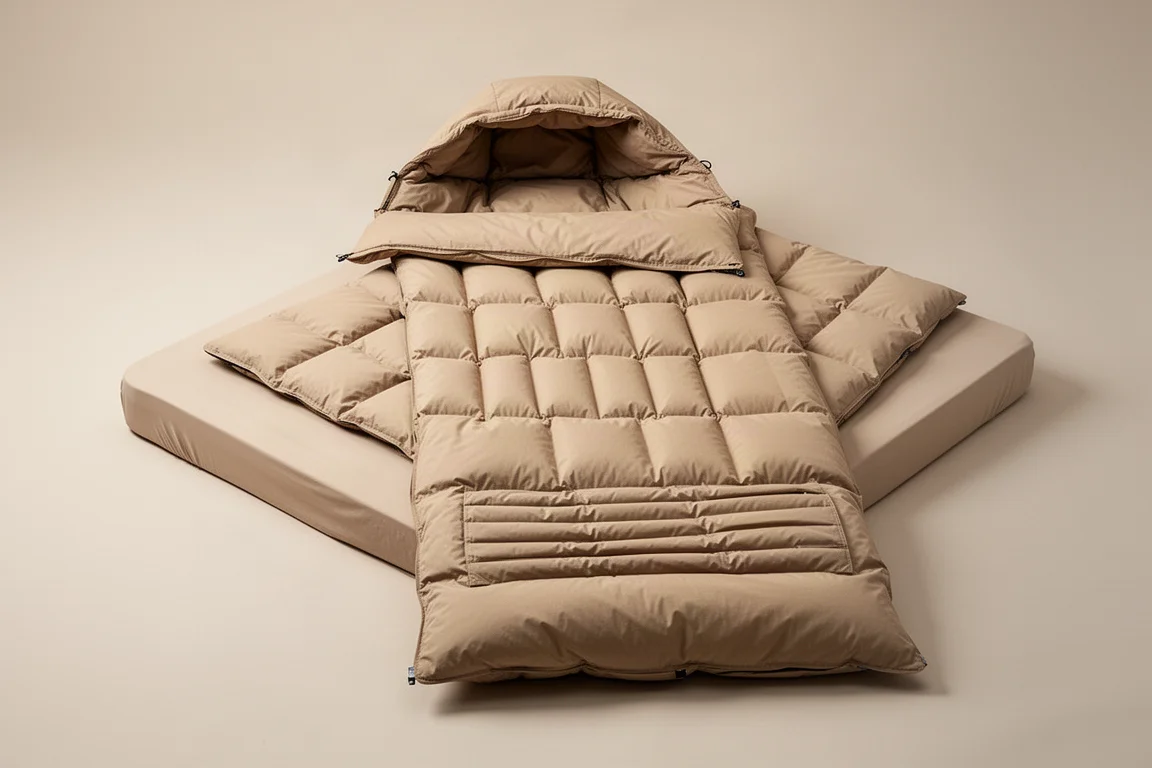
The ZenBivy Core Bed 25 is the newest design of the four and the least conventional. At $289 it is built around a quilt rather than a zippered bag. The top quilt attaches to a sheet with hook and loop closures, so the whole setup stays in place while you move and drafts stay out.
That structure is what makes it feel like a bed. The quilt opens wide like a blanket when you want room, or you can close it down for a tighter, warmer setup, with a single hook near the knees and overlapping panels at the footbox handling the transition. The baffling is zoned to match: vertical baffles through the torso keep the down in place, and horizontal baffles do the same in the footbox. A large hood holds a pillow, and the neckline has a draft collar.
Sleeping position is where this bag separates itself. On your back, your stomach, or your side, with an arm wrapped around a pillow, the Core Bed never wraps your face the way a mummy hood does, and it is far less claustrophobic than the other three. The fabrics are soft against the skin, and the 650 fill power down keeps the weight reasonable. Synthetic insulation in the hood is one of the ways the price stays down, and an uninsulated sheet is available for anyone who wants to save weight. The sheet is worth having either way, since it is what keeps the quilt anchored to the pad.
Buying Advice
All four bags stay under $300, so the decision comes down to which compromise you can live with. If price is the deciding factor, the Kelty Cosmic Ultra Down 20 at $225 delivers 800 fill power down for the least money. If you want the lightest and smallest package and value the ability to specify the fill weight yourself, the Cumulus Lightline 400 is the one to look at.
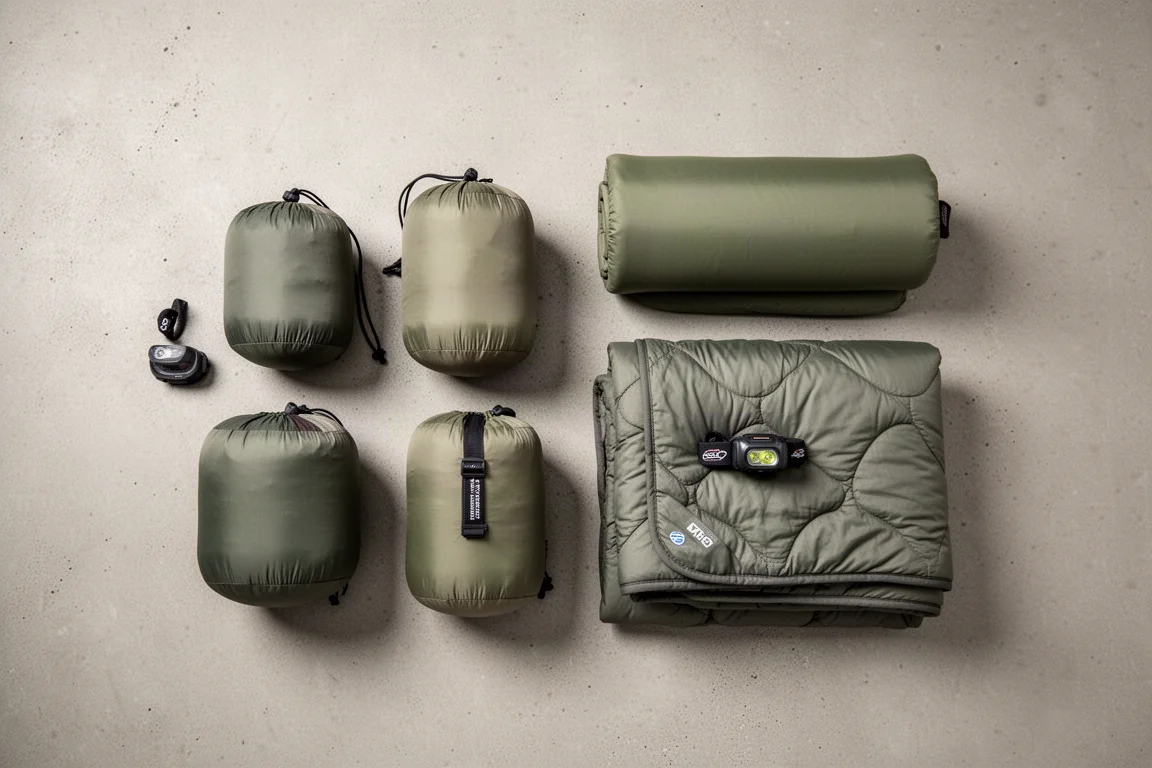
If warmth per dollar matters most, the Mountain Hardwear Bishop Pass 15 brings strong loft and thorough draft protection at $285, as long as you can accept the extra bulk. And if you sleep in a lot of different positions or find mummy hoods confining, the ZenBivy Core Bed 25 is the one that feels least like a sleeping bag. Whichever direction you go, check the size and configuration before ordering, since fill weight and sheet options vary between these models.
Conclusion
These four bags take different routes to the same destination. The Kelty keeps the price as low as possible, the Cumulus trades a fixed specification for customization and a very small packed size, the Bishop Pass leans on loft and draft protection, and the Core Bed rethinks the shape of the bag entirely. Match the bag to how you sleep and how much space you have in your pack, and any of them will serve you well on the trail.
Further reading
Related Reviews
Sleeping Bags
Best Sleeping Bags and Sleep Systems: Five Premium Down Picks Compared
Five premium down sleeping bags and sleep systems compared on warmth, weight, construction, and value.
Sleeping Bags
Big Agnes Lost Ranger UL 3-in-1 Sleeping Bag System Review: One Bag, Three Setups
A practical look at the Big Agnes Lost Ranger UL 3-in-1 Sleeping Bag System, covering how the three configurations work, where it shines, and the details worth weighing before buying.
Sleeping Bags
Big Agnes Torchlight 20: Synthetic vs Down Sleeping Bag Comparison
Two identically built Big Agnes Torchlight 20 sleeping bags, one synthetic and one 850 fill power down, compared on warmth, weight, packability, and price.