EDC & Travel Gear
Urban Travel Emergency Kit Essentials: 9 Compact Items Worth Packing
A compact, lightweight travel kit built around problem solving in urban settings, from multi-tools and a head torch to a power bank and waterproof notepad.
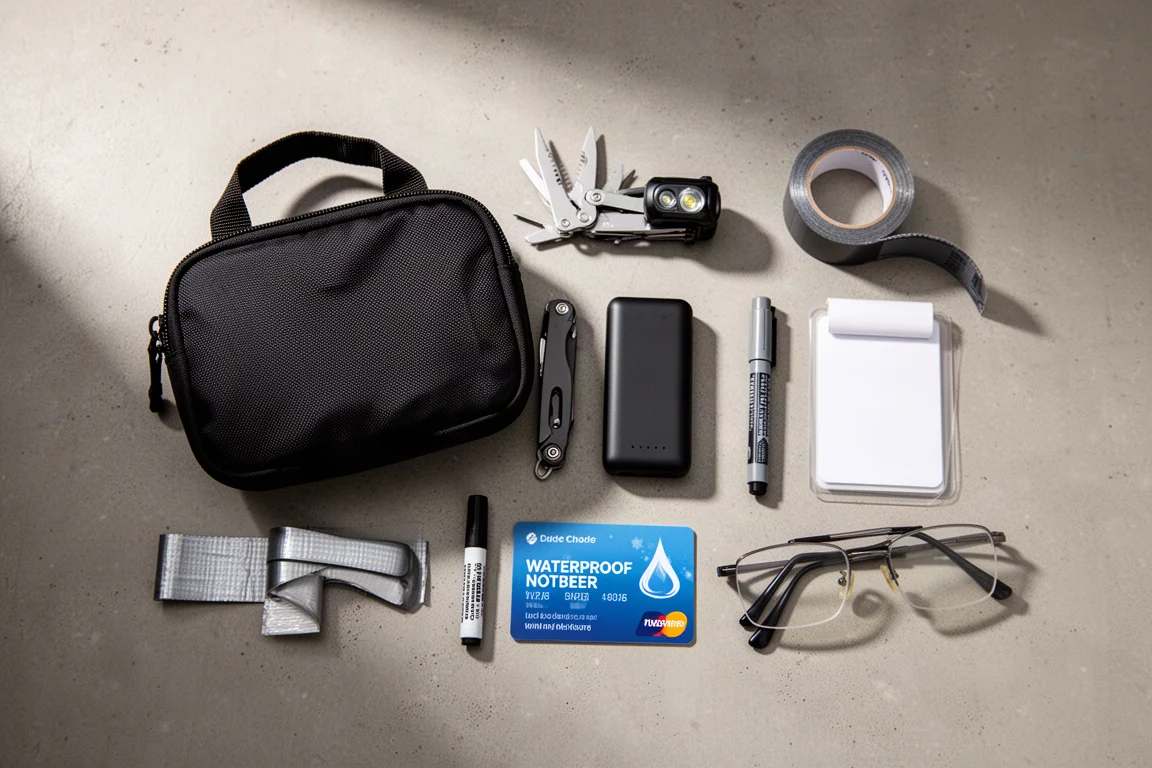
Introduction
A good travel emergency kit has one defining trait: it is small and light enough that you actually carry it. This particular setup weighs about 582 g, roughly 1.3 lb, and is designed for problem solving in urban settings on work trips and holidays rather than hiking or camping. It slots neatly alongside the things you already pack: tech kit, toiletries, clothes, laptop and this get-me-out-of-trouble pouch.
The idea is simple. On a good day you will never open it. On a bad day, one of these items could genuinely save the day.
The Pouch That Holds It All Together
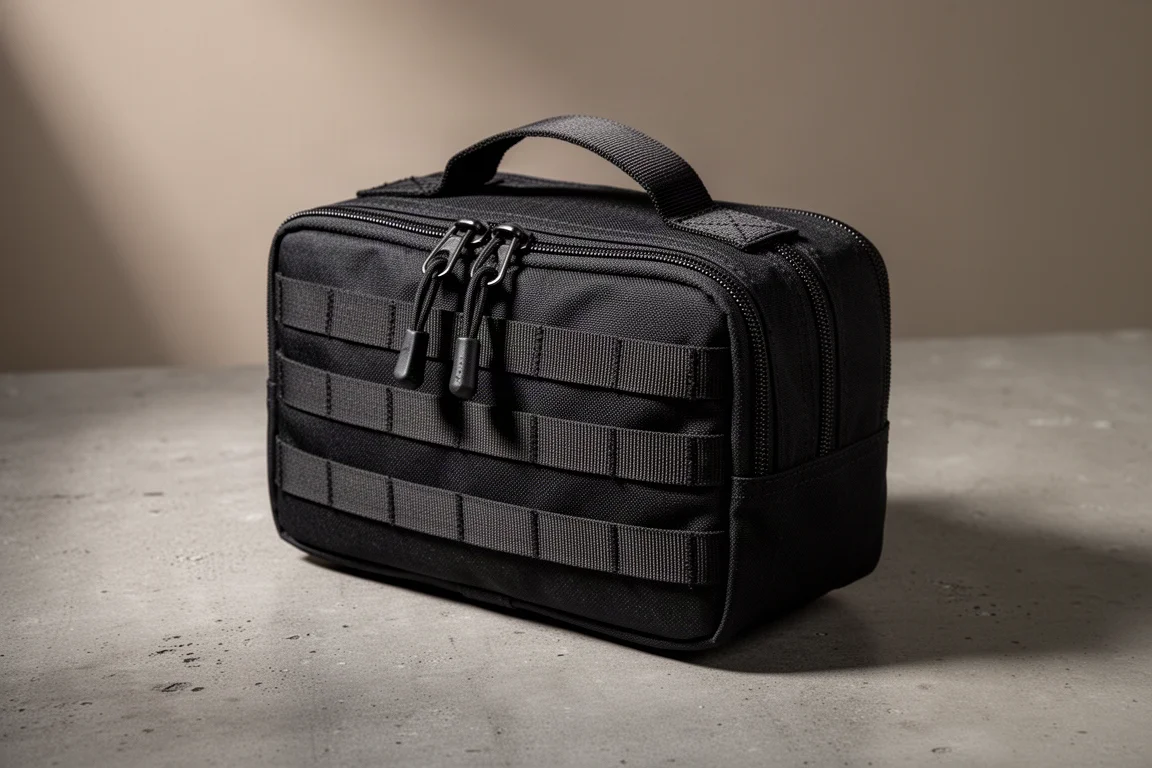
Everything lives in a Maxpedition Mini Pouch, a well-known option in the everyday carry world. It weighs 90 g and measures 10 x 15 x 2.5 cm nominally, though it expands to at least two inches deep when packed out. It is made from ballistic nylon with a Teflon fabric protector, has MOLLE webbing on the back, a substantial top grab handle and two high-strength zippers. It costs around £22 in the UK and about $25 in the US.
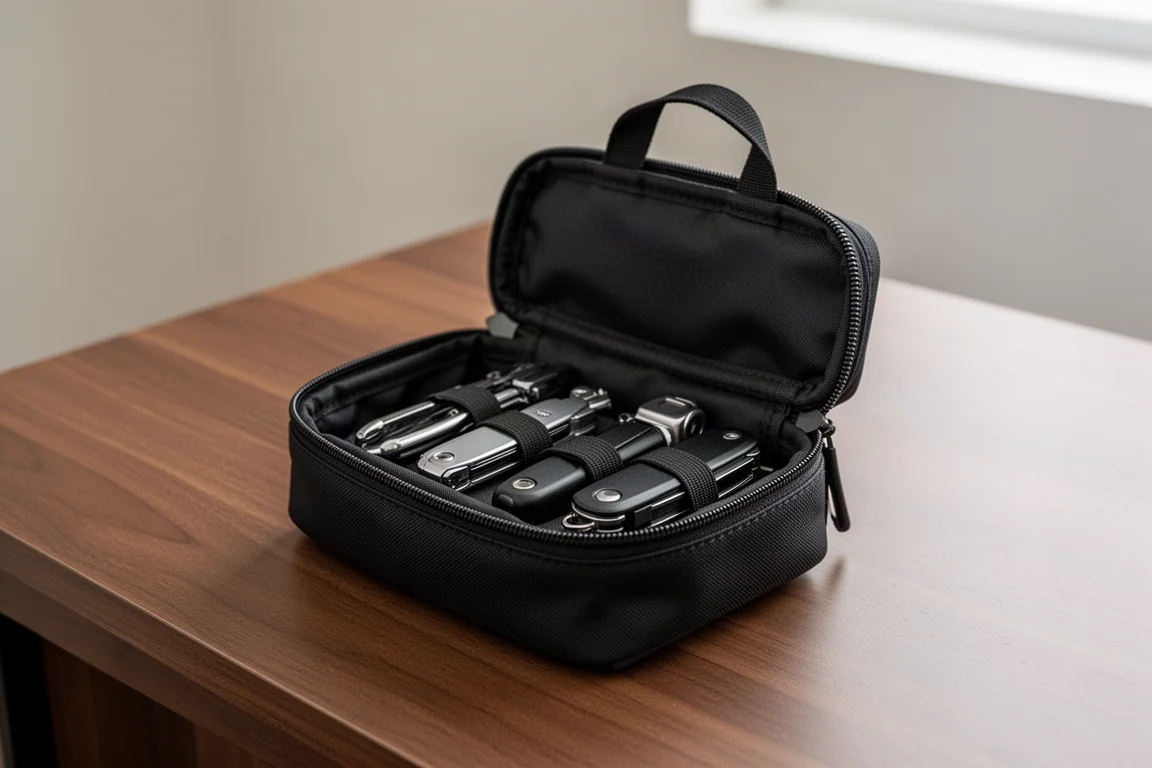
One packing tip worth learning early: if you fill every elastic loop, there is a good chance you will not be able to close the pouch afterwards. Position each item deliberately to get maximum use from the space.
Multi-Tool Options: Leatherman PST2 and Leatherman Bond
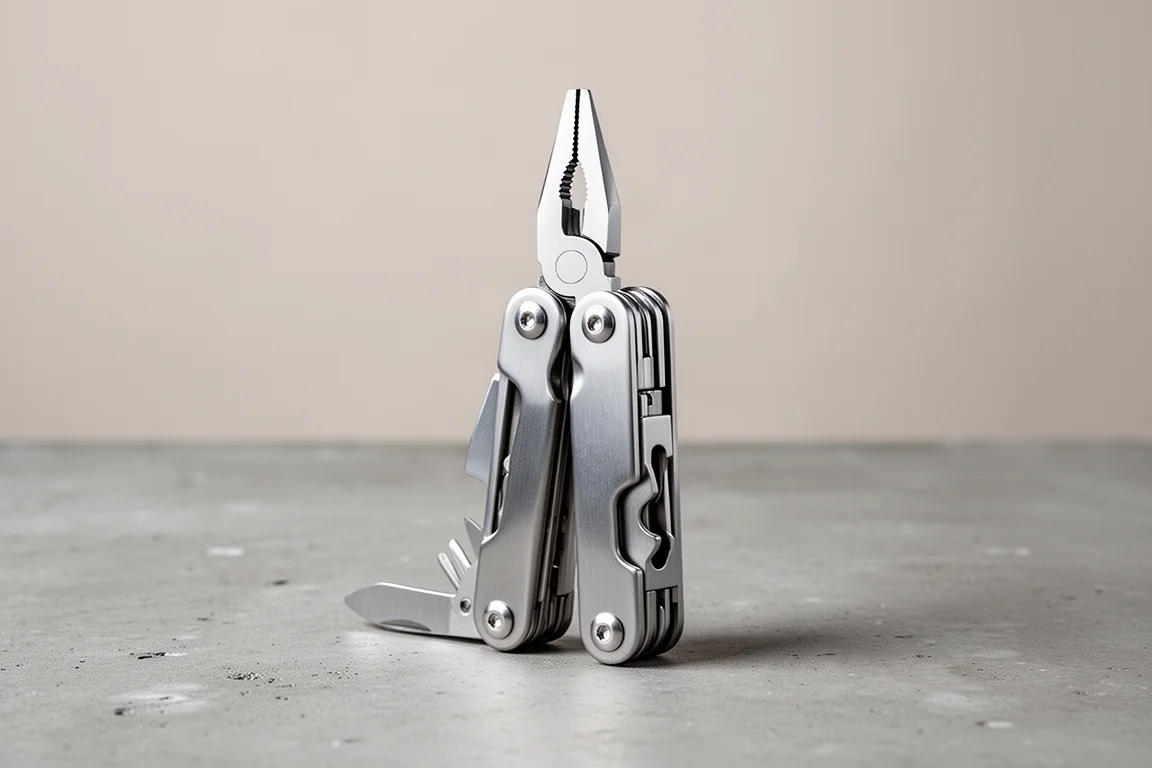
A multi-tool is the most important item here, effectively a toolbox in your pocket. The minimum features that matter are a knife, pliers, flathead and Phillips screwdrivers and, ideally, scissors built in. It should be affordable, compact and lightweight, since this is for emergencies only.
The Leatherman PST2 meets every one of those criteria and even has a non-locking blade, which matters for carry rules in the UK and some other countries. Launched in 1996 as an evolution of Leatherman’s very first multi-tool, it was discontinued in 2004, so surviving examples are over 20 years old. It weighs just 150 g and packs a file, can and bottle opener, a strong three-dimensional Phillips screwdriver, three flathead screwdrivers, scissors and a blade with a serrated edge for fibrous materials. It is a shame it is no longer made.
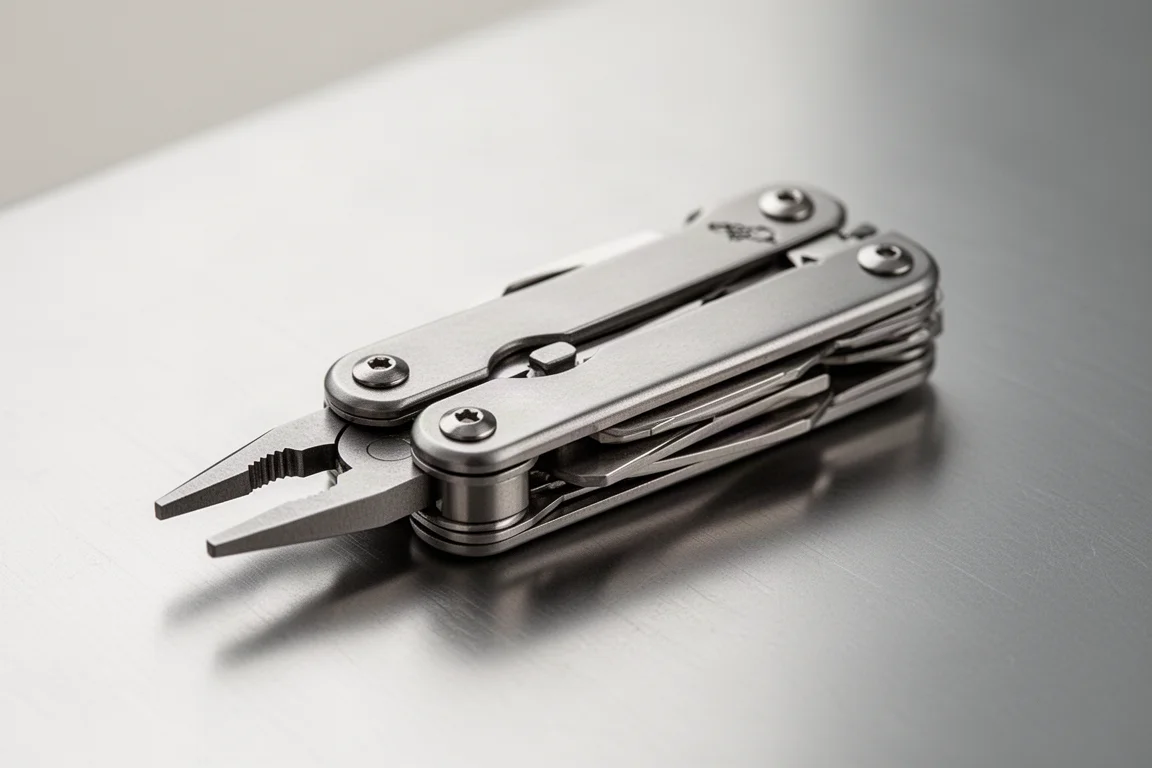
If you cannot find a PST2, the Leatherman Bond is a modern alternative. At 164 g it is still reasonably light and compact, with pliers, screwdrivers and a knife, though it lacks scissors, which may push scissors-first buyers toward another option.
Pliers and a Pocket Knife Pairing
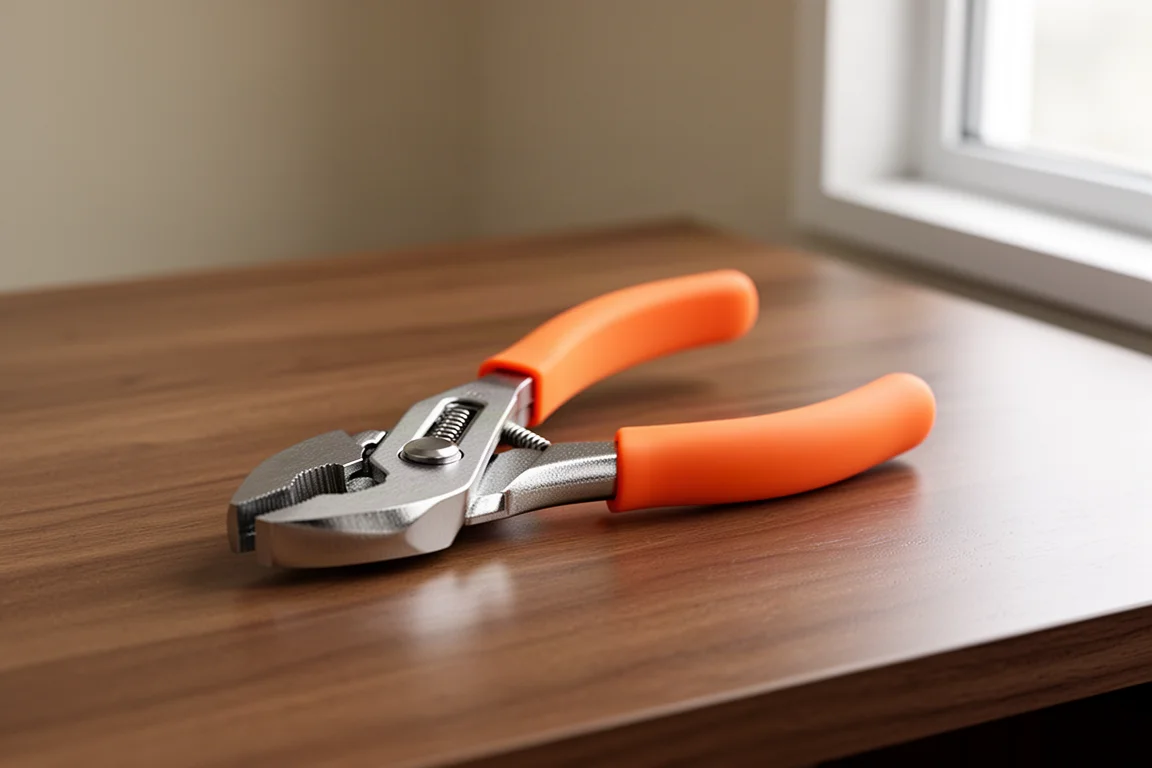
If neither multi-tool is available, a two-item pairing works well. The Knipex Cobra Pliers in the smallest 4-inch size remain hugely capable, with an enormous jaw opening that grips all sorts of objects. They sell for about $20, not cheap for a single tool, but you get what you pay for. Larger sizes exist, though this size wins on weight and space.
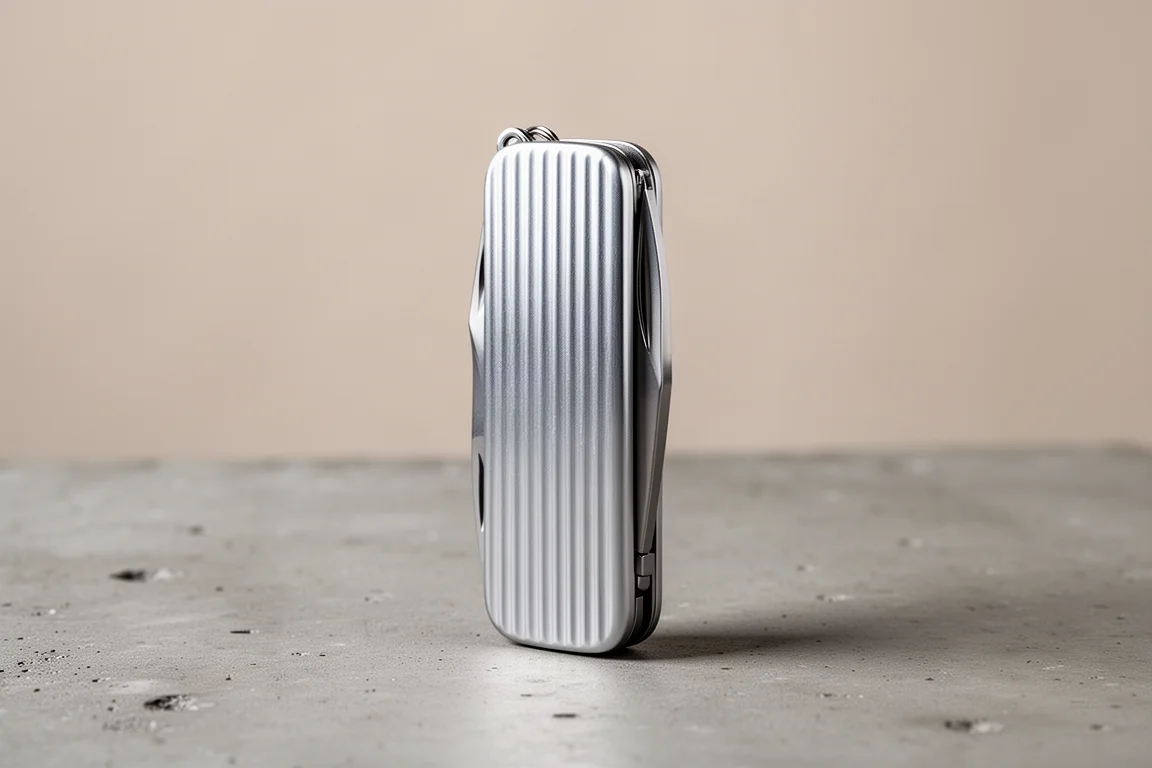
Pair it with the Victorinox Alox Pioneer X, which brings a great pair of scissors plus a knife, screwdriver, bottle opener, can opener and an awl. The build quality is superb and it is genuinely capable for its size.
Light and Power: Nitecore NU25 and NB1000
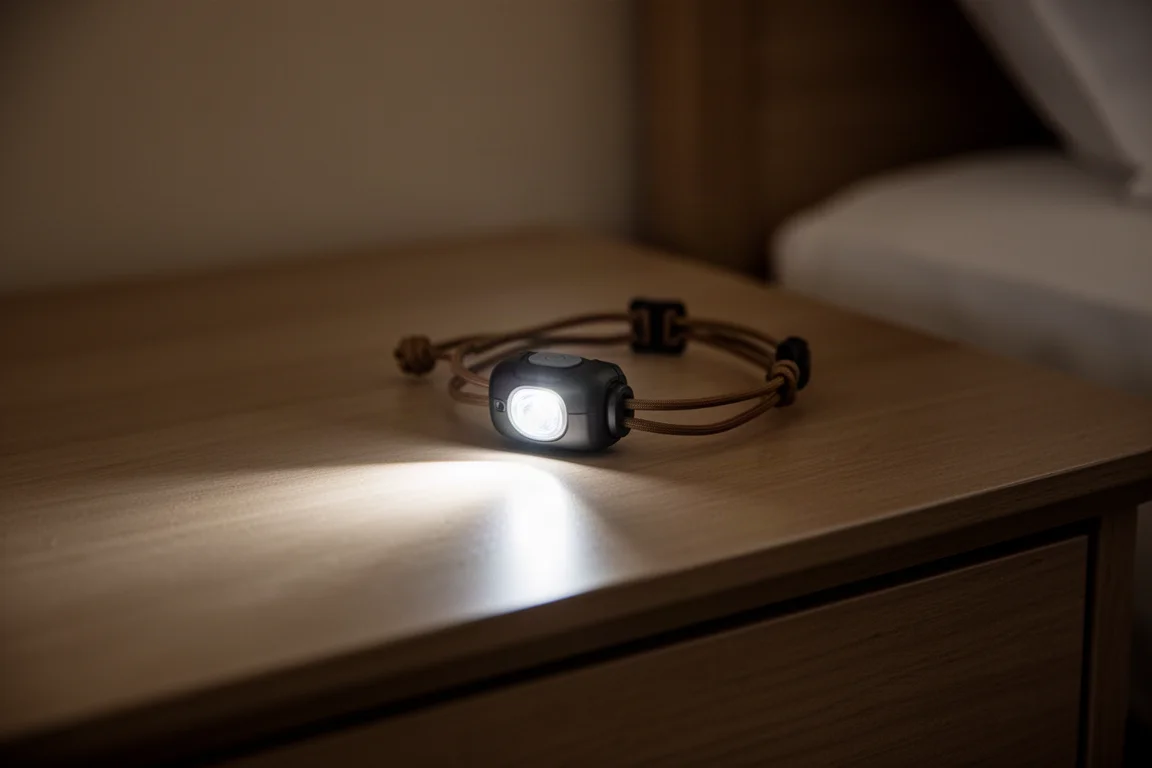
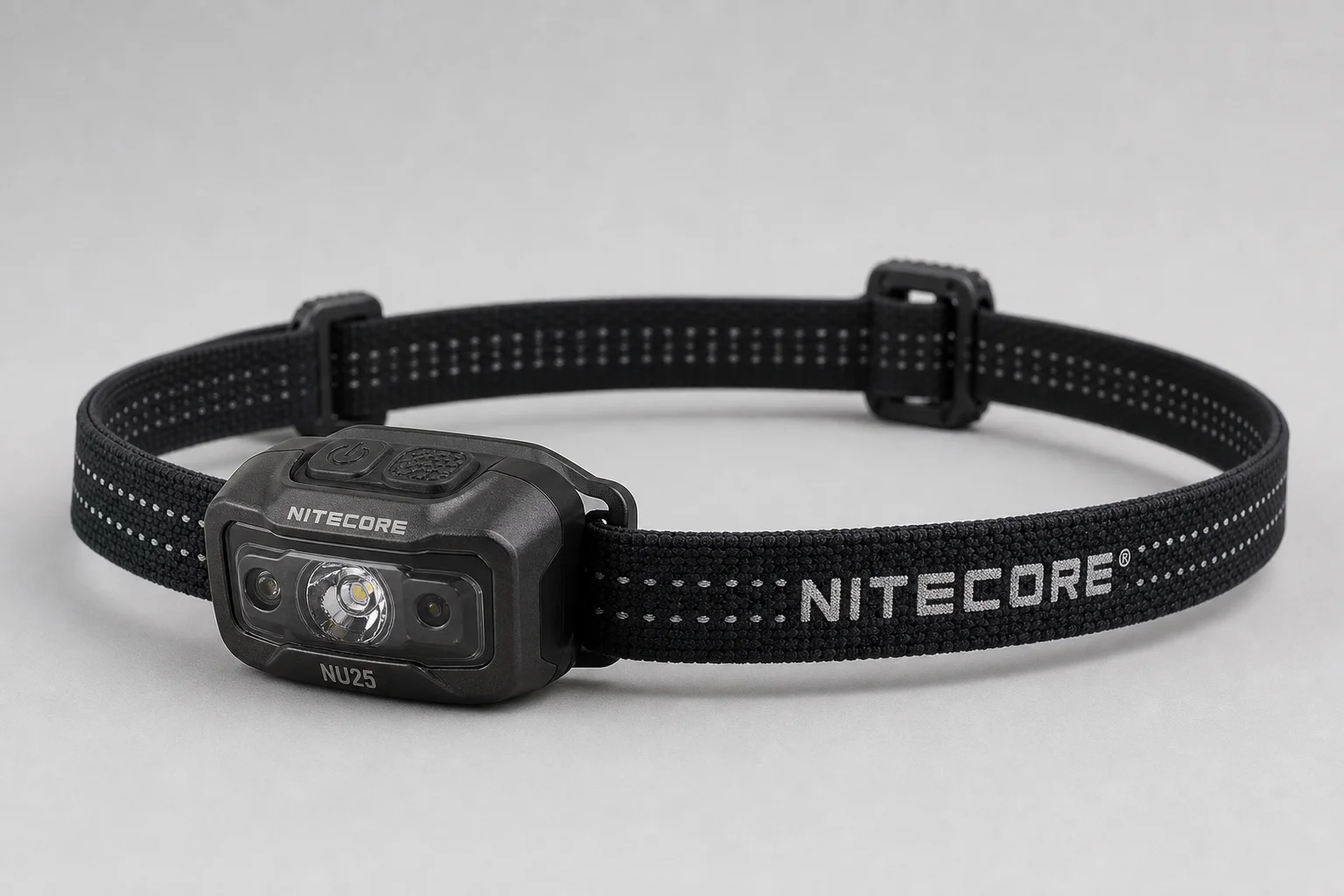
A dedicated flashlight is an essential. A phone light is nowhere near capable enough for finding your way out of an unfamiliar building in a hurry when a fire alarm goes off in the dark, or for a walk that runs long after sunset. The Nitecore NU25 is a head torch borrowed from the ultralight backpacking community, here fitted with a thin elastic shock cord strap and cheap clamps instead of the thicker stock head strap to save weight and space. Total weight: just 35 g.
The feature set is remarkable for the size. A ratchet tilts the angle, and there are both beam and flood outputs. Turbo hits 360 lumens, dropping after 30 seconds as heat builds. High mode runs 190 lumens continuously for 5 hours, mid runs 38 lumens for a full 8 hours, and a 1-lumen low runs 160 hours, low enough to leave on as a nightlight. A high colour rendering index natural white flood runs 20 lumens for 6 hours 15 minutes. There is also a red light at 13 lumens for preserving night vision, a 0.9-lumen red low for 68 hours, a flashing red beacon for dark roads, a high-intensity beacon mode, an SOS mode, a lockout mode to prevent accidental activation and a battery check function. The 610 mAh battery charges in around 2 hours and the light can be used while charging, which pairs beautifully with a power bank.
Keeping the phone charged matters for communication and navigation, so a power bank is always in this kit. The Nitecore NB1000 is a 10,000 mAh unit described as the smallest and lightest in the world, with USB-A and USB-C outputs and LED charge indicators. It will charge a phone a couple of times, plus the head torch and other devices.
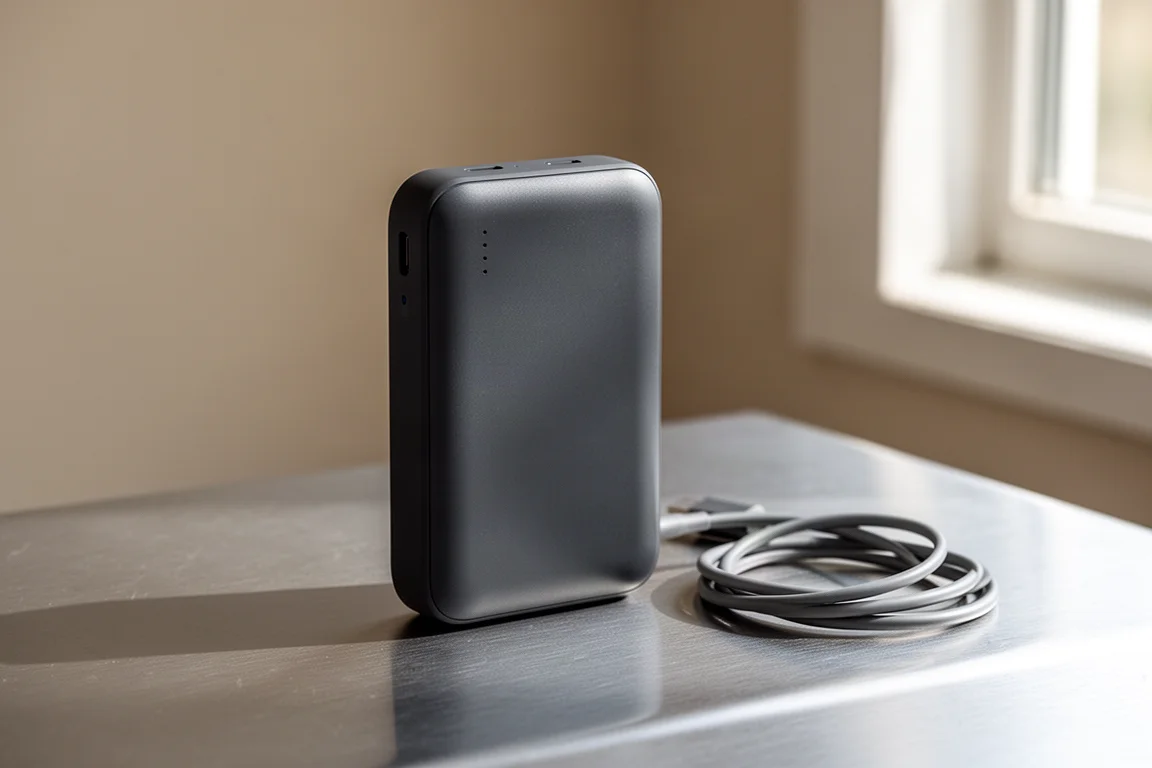
Alongside the power bank go three short 10 cm (about 4 inch) cables, all USB-A: lightning, USB-C and micro USB. The USB-C cable also charges the power bank itself, which is worth keeping topped up at every opportunity. A compact mains charger rounds this out; UK three-pin plugs are notoriously bulky, so pick the flattest option for your region, ideally one with both USB-A and USB-C outputs.
Fixes That Hold: Glue, Tape and Zip Ties
A large, reliable, affordable lighter earns its place for lighting stoves and fires where no matches exist, melting or burning through things, and one clever pairing: melting a short piece of glue stick. The result is hot, viscous glue that sets immediately, grips porous and uneven surfaces far better than super glue, and can fix something like a boot sole hanging off in minutes.
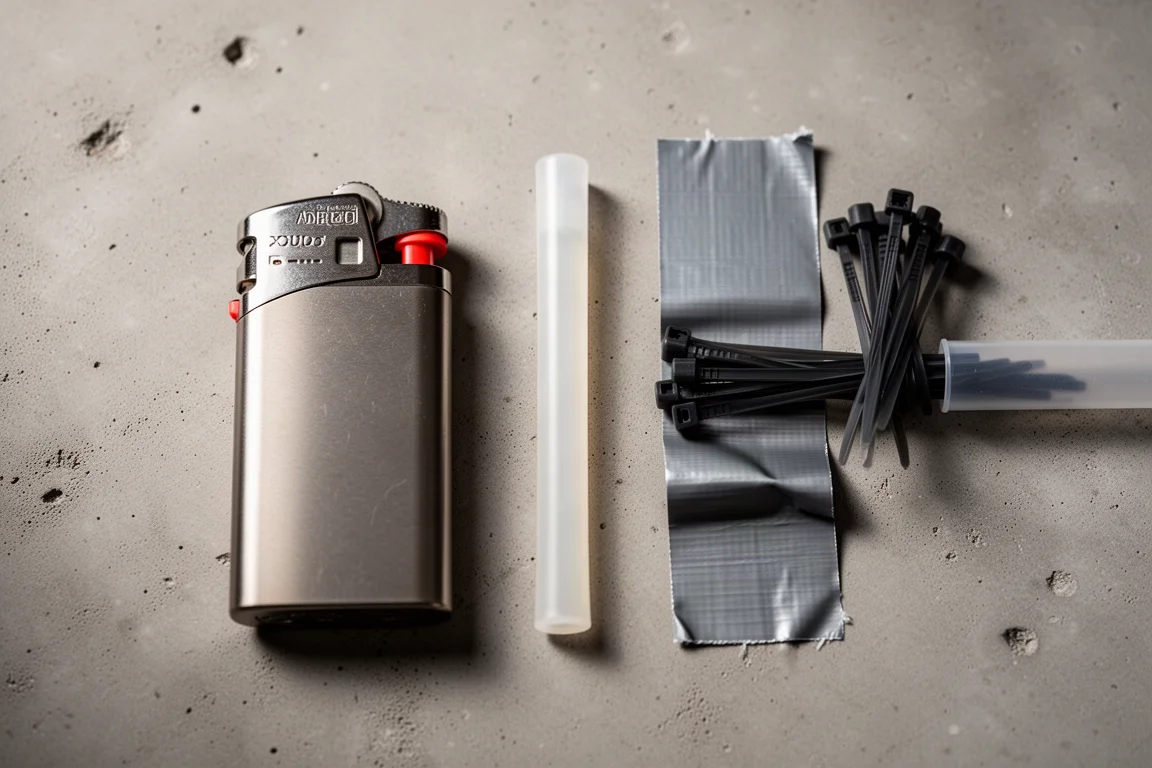
A folded strip of inch-wide duct tape handles strapping, fastening and sealing without carrying a full reel. Zip ties, stored neatly inside a short length of tubing so they stay tidy, cover more fastening jobs, and one can be slipped over the lighter to stop accidental activation in the pouch.
Notes, Vision and Emergency Essentials
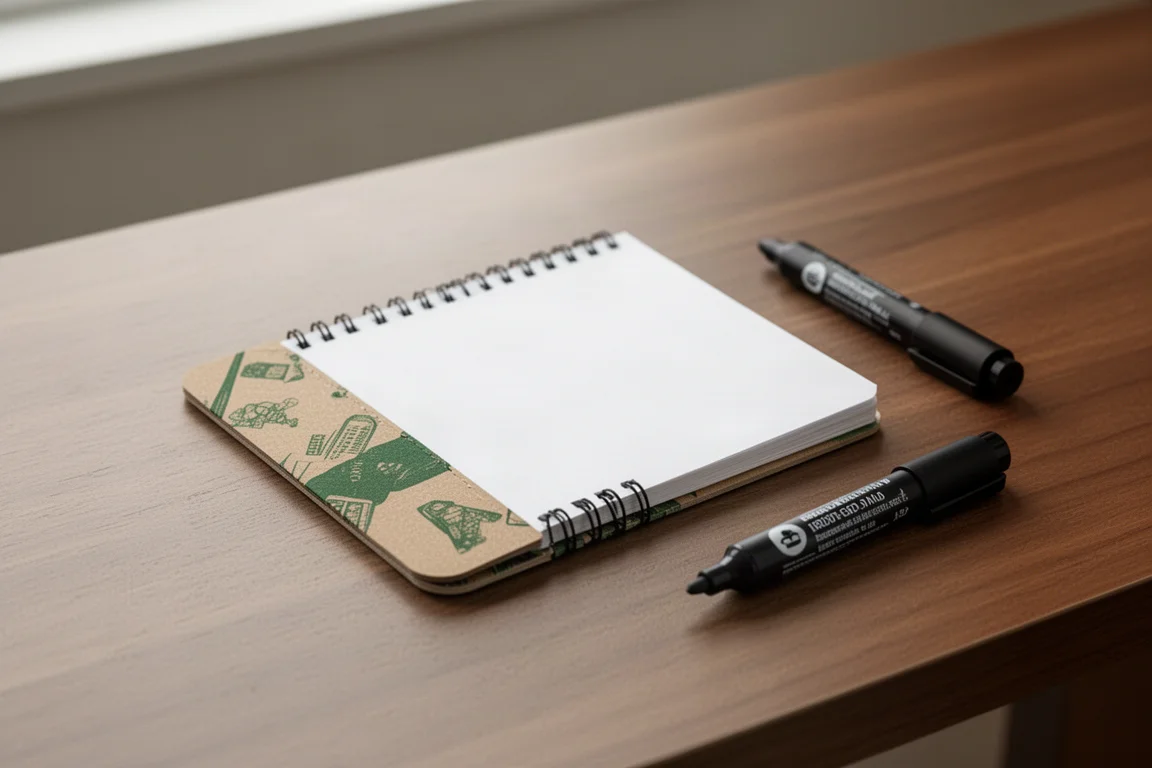
A notepad and pen handle emergency note taking. The Rite in the Rain notepad is credit-card sized with waterproof pages, and a mini Sharpie writes on fabric, glass and more surfaces than a normal pen, though a Fisher Bullet Space Pen is a legitimate alternative for conventional writing. Tucked into the notebook is a fresnel magnifying lens, invaluable for reading tiny print such as medication details, and capable of making a phone screen readable if your glasses are lost.
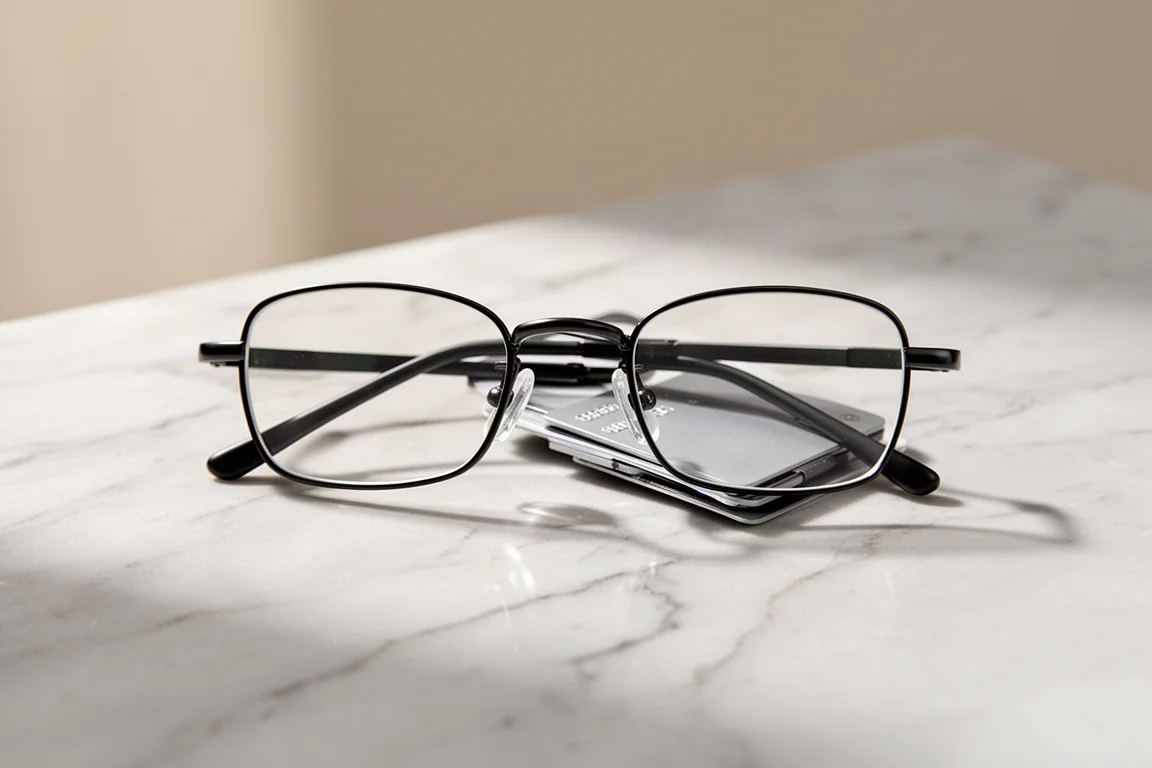
That glasses scenario is exactly why a pair of ThinOptics emergency glasses lives in the kit, in case the everyday pair disappears. They work well and take up almost no space.
Thin cord rounds out the flat items. Full paracord does not fit here, but a micro cord with a 45 kg (110 lb) breaking strain means two lengths support body weight, useful for an emergency shoelace, a makeshift washing line, or tying something down.
First Aid, Water and Small Comforts
A small meds pack holds pain relief, aspirin, loperamide and allergy tablets. Pain can be seriously debilitating and derail whatever you are trying to do, and anyone who has needed to move fast with an upset stomach will understand why the last two matter. A second slim bag carries basic first aid: alcohol wipes that work as both surface cleaner and hand sanitiser, and sticking plasters in different sizes for small cuts.
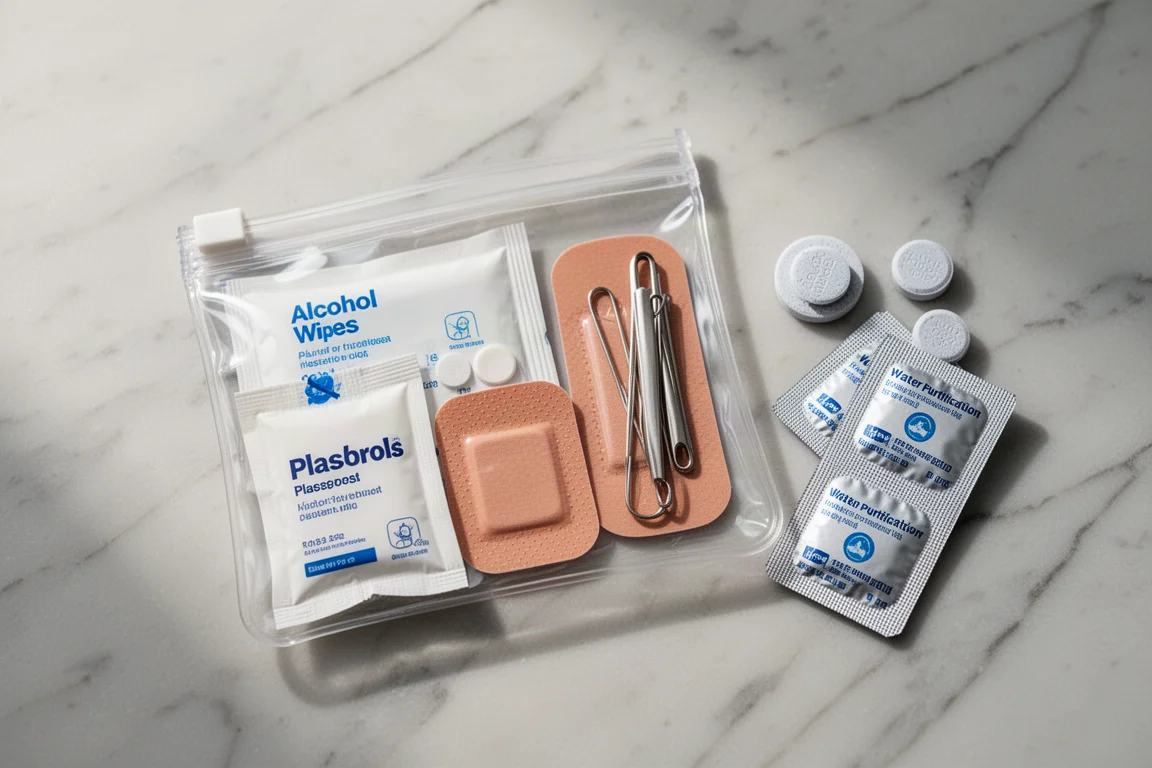
Aquatabs handle water you are unsure about: drop one in, wait 30 minutes, and you have a litre of drinkable water, which may also save you from needing the loperamide later. Flushable moist wipes cover hygiene emergencies where the facilities have run dry, and a little cash in local currency covers the moment your wallet is lost or your card stops working. Most items slot into a stiffer, stronger zip bag that slides in and out of tight spaces more easily than floppy polythene versions.
Buying Advice
Two practical notes before you build your own version. First, if you are flying, move the multi-tool to checked-in luggage or choose a flight-safe alternative. Second, pack the pouch tight and take your time arranging items; you should hopefully never need to open it, so a little extra packing effort costs nothing.
If you are starting from scratch, prioritise in this order: a capable multi-tool, a real flashlight, a power bank, then the repair and first aid items. Each addition should earn its space by weight.
Conclusion
None of these items is dramatic on its own, but together they cover light, power, repairs, first aid, hydration and lost essentials in a package weighing under 600 g. Pack it, take it with you when you leave town, and if you come home without opening it, treat that as a success.
Further reading
Related Reviews

Backpacking Gear
Building a 10 lb Base Weight: An Ultralight Backpacking Gear List
A practical walkthrough of the ultralight pieces behind a 10 lb base weight, from a 765 g pack and a roomy one-person tent to a full camp chair and a dependable water filter.
Road Bikes
10 New Road Bikes Worth Watching: Aero, Titanium, Steel and Endurance Standouts
A practical roundup of 10 new road bikes, from aero flagships chasing single-watt gains to titanium, steel and endurance platforms built for real roads.
Bikepacking Gear
11 Bikepacking Essentials for Long-Distance Cycling
Eleven bikepacking essentials for long-distance cycling, from a steel gravel frame and a two-person tent to helmet lights, packable gloves, and a frame bag that puts weight in the right place.