Sleeping Pads
United States Military Pneumatic Air Mattress Review: A 1960s Surplus Sleeping Pad That Still Delivers
A durable, inexpensive military surplus air mattress with exceptional comfort, a heavy packed weight, and a slow inflation process. Here is who should buy one.
Introduction
A pneumatic air mattress built for the United States military and still circulating through surplus channels decades later is an unusual piece of gear. The design reaches back to 1965 and possibly earlier, and it was issued a NATO stock number during the 1980s. Soldiers knew it simply as “the rubber”, a nickname that captures both the construction and the reputation.
By modern standards it is heavy and bulky, yet it is also remarkably comfortable, inexpensive, and durable. That combination is exactly why it remains worth a careful look for the right buyer.
Who This Product Is For
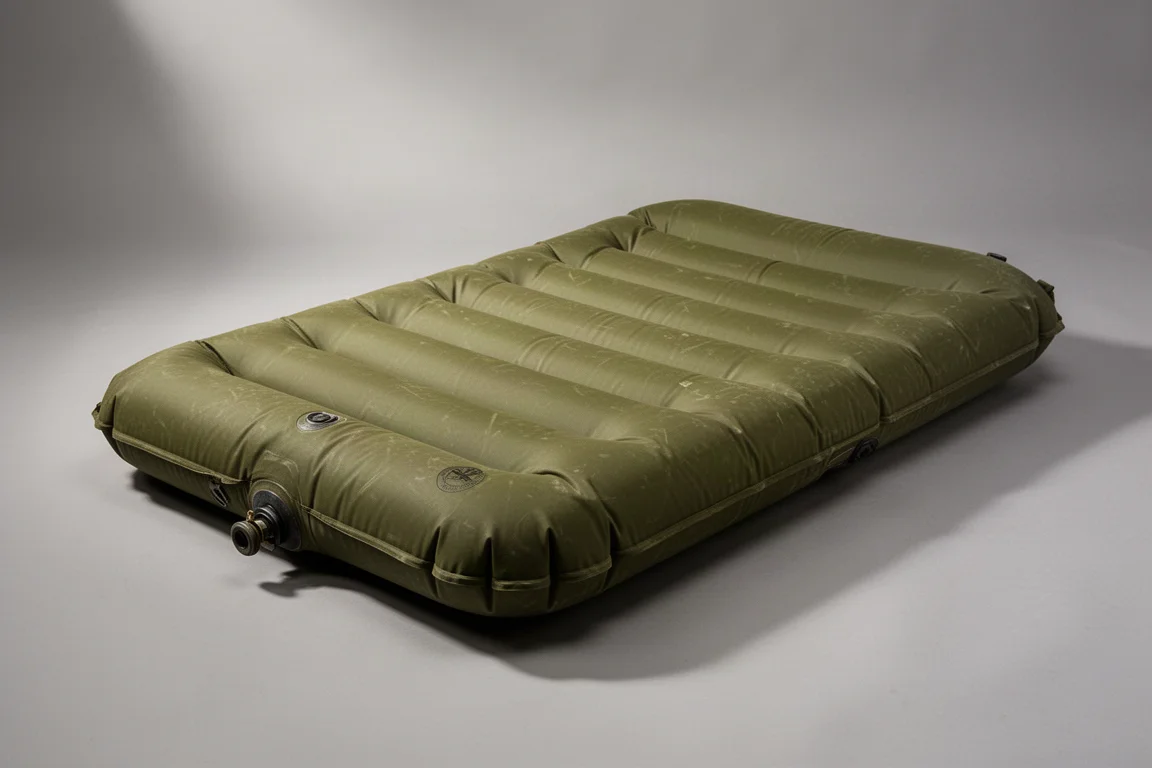
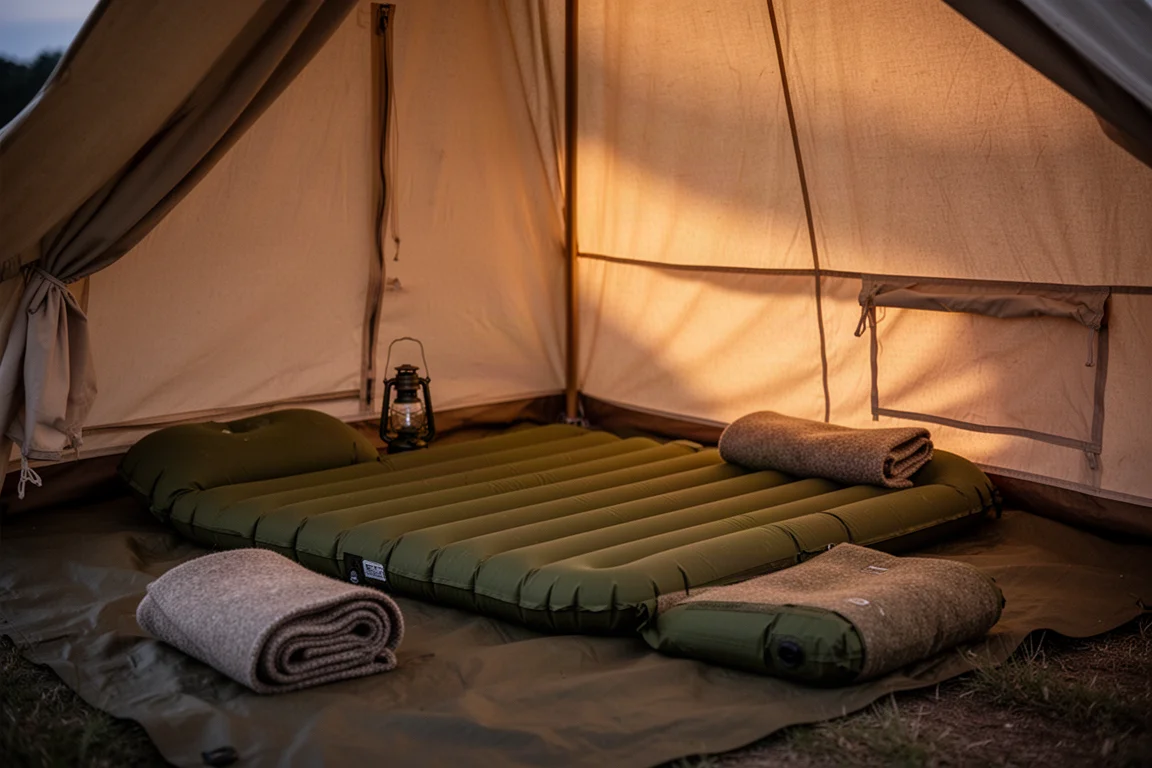
Start with the practical case. Inflated, the mattress measures 26 inches wide, 72 inches long, and 5 inches thick, with six large baffles running across its length. It was sized for people around six feet tall, so shorter sleepers fit comfortably while anyone taller will find their legs hanging off the end.
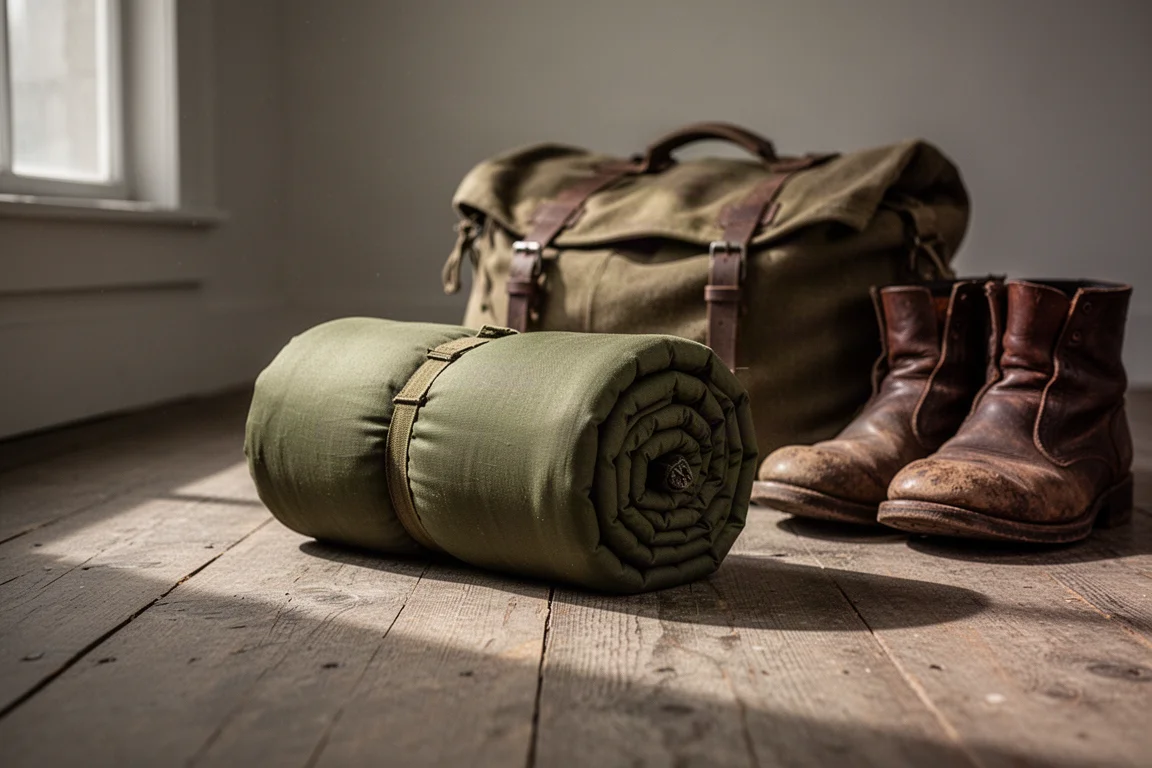
Packed down, it measures roughly 11 inches by 5.5 inches and weighs 3.2 pounds. That is heavy for an air mattress, and it is the main reason this pad does not suit every trip. It fits best with car camping, base camps, and surplus enthusiasts who value comfort and character over pack weight. Backpackers counting grams will find many lighter options. Anyone who wants a genuinely comfortable night’s sleep and does not mind the bulk will get along with it very well.
Main Strengths
Comfort is where this mattress earns its keep. The five inches of cushioning, combined with the materials inside and out, means it sleeps well on the back, the side, and the stomach. Rocks underneath stop being noticeable once the full weight of the body settles onto the pad. The R-value is not documented, but the pad is insulated with polyester in the baffles, and it has performed well in genuinely cold winter conditions. A secondary pad underneath is still a sensible addition, as it is with any air mattress.
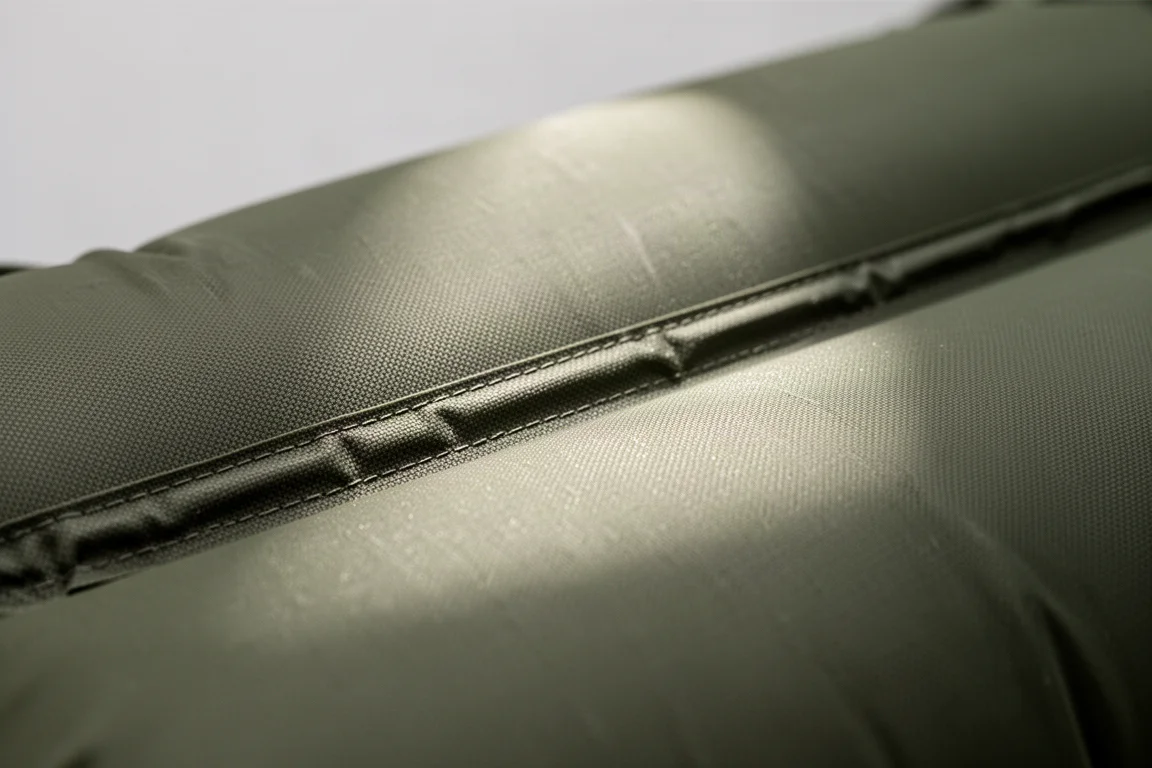
The construction explains the weight. The exterior is nylon with a rubber coating on the inside, and that rubber has proven extraordinarily long lived. Even examples from the 1960s still have their coating intact, which is rare for gear of this age. The pad is made in the United States, and it holds a following precisely because it keeps going season after season.
Inflation runs through a snap lock mouthpiece, and it is worth knowing how that behaves. There is no stopper, so a thumb or the plug has to cover the opening whenever you pause, and a small amount of air escapes as the valve is finally sealed. That is fine, because the pad is not designed to be taut or over inflated. A little give is what makes it comfortable, and over inflating works directly against that.
Things to Consider Before Buying
Inflation is the biggest chore. Bringing this mattress up to pressure takes roughly three minutes and several breaks along the way, so an air pump is a worthwhile companion. Deflating, by contrast, is quick and simple.
The valve is the weakest point of the entire system, which is why the pad is marked with a “top” indicator. No pressure should be placed on it. The surface also carries printed instructions, including a straightforward test: inflate the pad, sit on it, and if your seat is barely touching the ground, it is properly inflated.
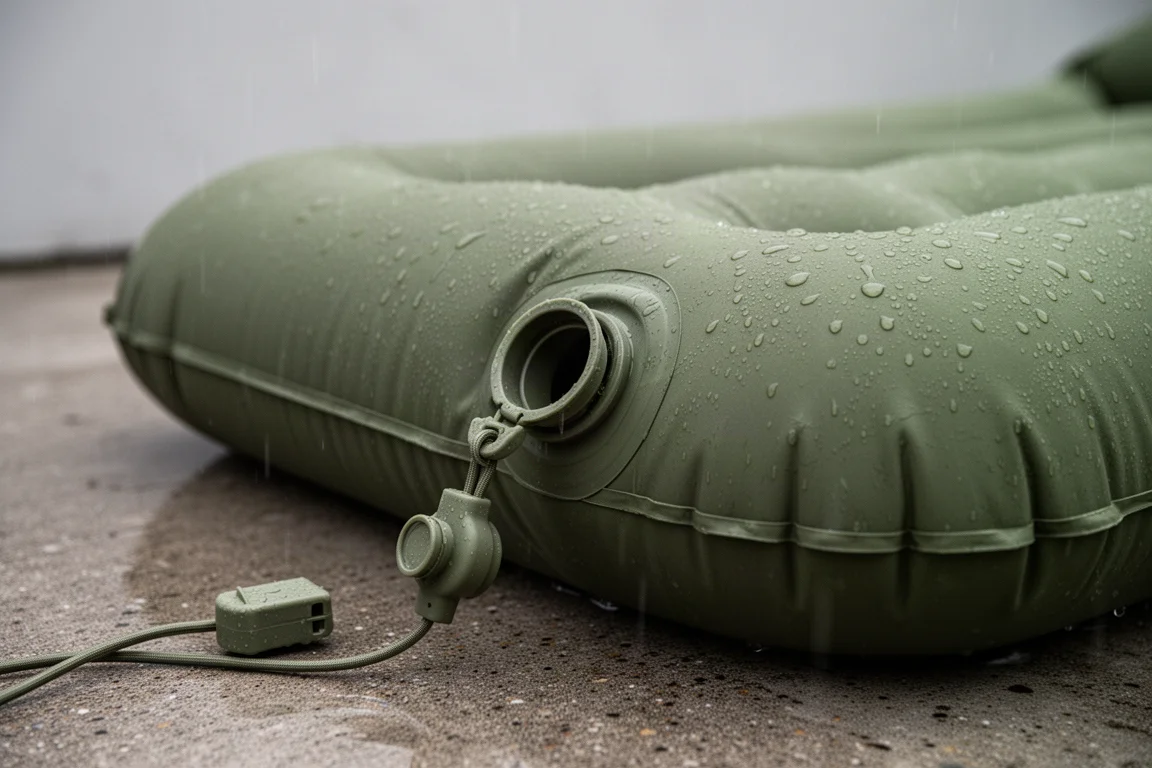
Moisture needs attention. The rubber coating absorbs water, so rain, wet shoes, and even sweat soak into the surface and take a long time to dry out. Keeping the pad dry and stored away from damp conditions matters for long term use.
Condition is the other consideration, because these pads are old and many of them served around the world. Check listings carefully for repairs and leaks, and ask the seller directly when the condition is not stated. Availability is limited to military surplus stores and online marketplaces, and stock will not last forever. The materials will eventually fail, so anyone who wants one should not wait indefinitely. Pricing sits around $40 for a single pad and about $80 for two, which is fair for what this product offers.
Buying Advice
For car camping, this is an easy recommendation, particularly with an air pump to handle inflation. It is comfortable, extremely durable, and inexpensive, and it carries the appeal of genuine military surplus gear with a real history behind it. The dimensions suit sleepers up to around six feet.
For backpacking, the answer depends on how much weight you are willing to carry. This is a large and heavy pad, and lighter alternatives exist for anyone watching pack weight. Buyers who want a mattress for the car, the tent, or a base camp will find far more to like than to dislike.
Conclusion
The United States military pneumatic air mattress is a rare piece of gear: old, heavy, slow to inflate, and still one of the most comfortable and durable pads around. It is inexpensive, built in the United States, and it keeps working in conditions that would finish off lighter mats. Buyers who understand the trade-offs will find it a very satisfying purchase, and the limited supply makes this a case of sooner rather than later.
Product link
View more details for United States Military Pneumatic Air Mattress
This product is mentioned in the review. Check the specifications, options, and compatibility before buying.
View more details for United States Military Pneumatic Air MattressFurther reading
Related Reviews
Sleeping Pads
Best Backpacking Sleeping Pads 2026: Nine Pads Rated on Price, Comfort, Warmth, and Weight
Nine backpacking sleeping pads compared on price, comfort, warmth, and weight, from a $65 summer pad to a year-round option rated at R-7.3.
Sleeping Pads
Best Backpacking Sleeping Pads: Comfort, Warmth, and Weight Compared
A practical comparison of the Nemo Quasar 3D, Therm-a-Rest NeoAir XTherm Max, and Big Agnes Rapide SL for backpackers choosing between comfort, warmth, and packed weight.
Sleeping Pads
Best Backpacking Sleeping Pads: Ultralight, Winter, Comfort and Budget Picks
A practical roundup of the sleeping pads that stand out for ultralight weight, winter warmth, pressure relief and value, plus three popular pads that fell short.