Record Cleaning
Ultrasonic vs Vacuum Record Cleaning: Two Machines Worth Knowing
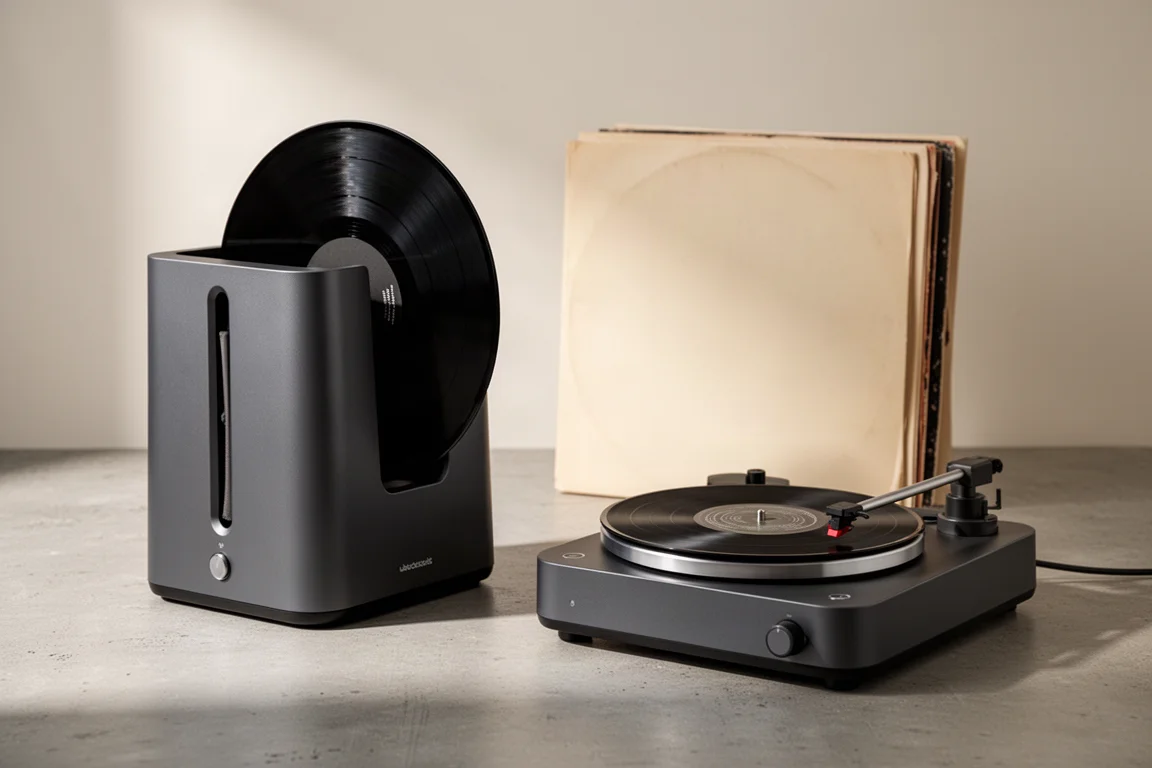
A practical look at two record cleaning approaches: an ultrasonic machine built for deep, gentle groove cleaning, and a vacuum cleaner that has served collectors reliably for years.
Introduction
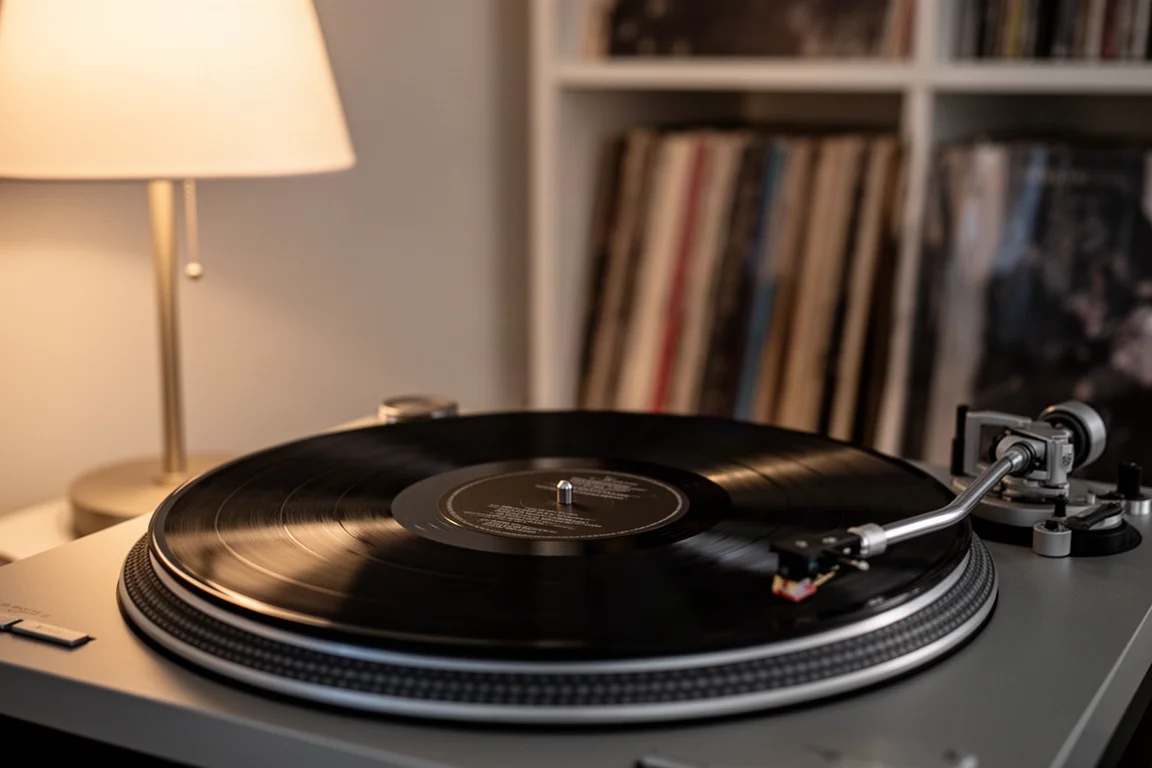
Vinyl records collect everything they touch. Dust, hair, fingerprints and fine grime settle into the grooves, and while a modest setup can hide most of it, a carefully assembled analogue system cannot. Every particle under the stylus shows up as a click, a pop or a softened top end.
Cleaning by hand with a brush and a solution is the traditional first answer, and it does help. It rarely finishes the job. Records that look spotless under normal light can still show fine particles when held up to a bright lamp, and those particles sit exactly where the stylus needs a clear path.
Two machines attack that problem from different directions: an ultrasonic cleaner built for thorough, gentle groove cleaning, and a vacuum cleaner that has served record collectors reliably for years.
The useful question is not whether each machine cleans, but how deeply it cleans, what it costs, and how much noise and upkeep you are prepared to live with.
What Matters in a Record Cleaning Machine
Four things separate a good record cleaner from a frustrating one.
Cleaning depth comes first. A machine has to lift debris out of the groove rather than push it around the surface, and the difference is easy to hear on a quiet passage.
Gentleness matters just as much. Vinyl is soft, and heat or aggressive chemistry can do permanent damage, so temperature control and a mild cleaning medium are essential rather than optional.
Then there is usability. A machine with an unclear menu, awkward loading or a filter you forget to change tends to end up sitting unused. Clear prompts and sensible cycles make far more difference than an extra option buried in a submenu.
Finally, noise. Every powered record cleaner makes a racket, which is worth planning for before the machine arrives.
Degritter Ultrasonic Record Cleaner: The Thorough Option
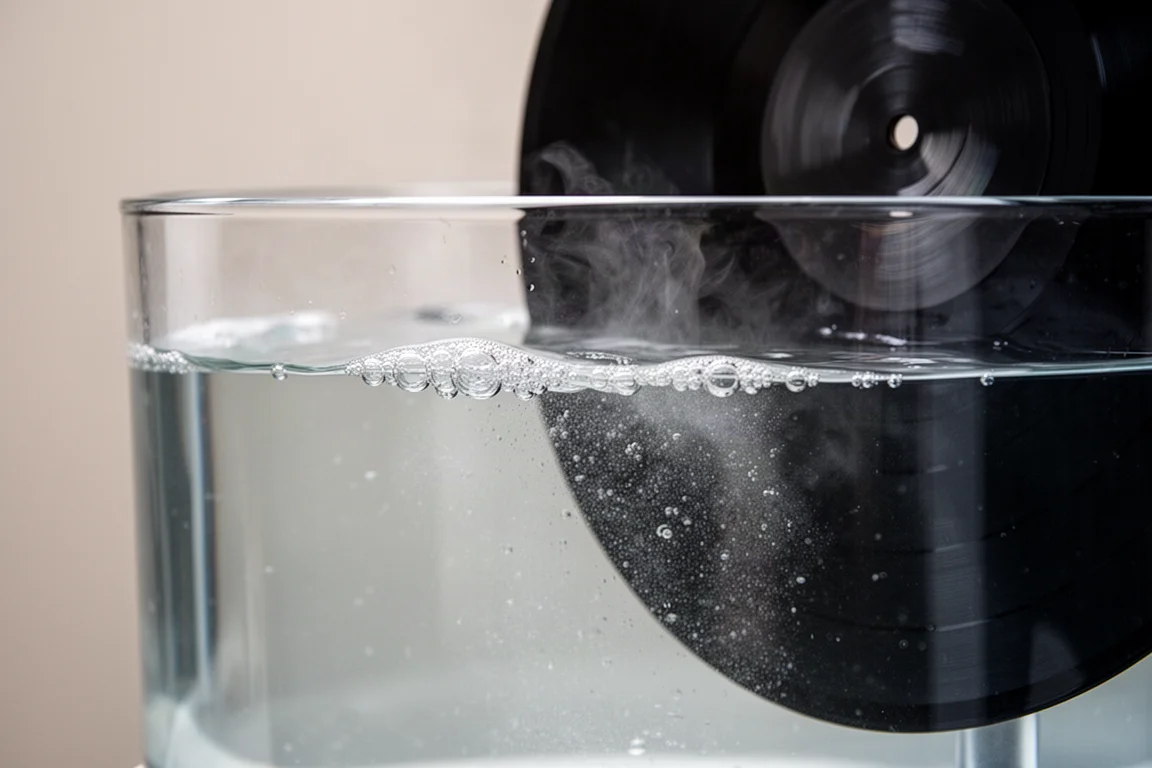
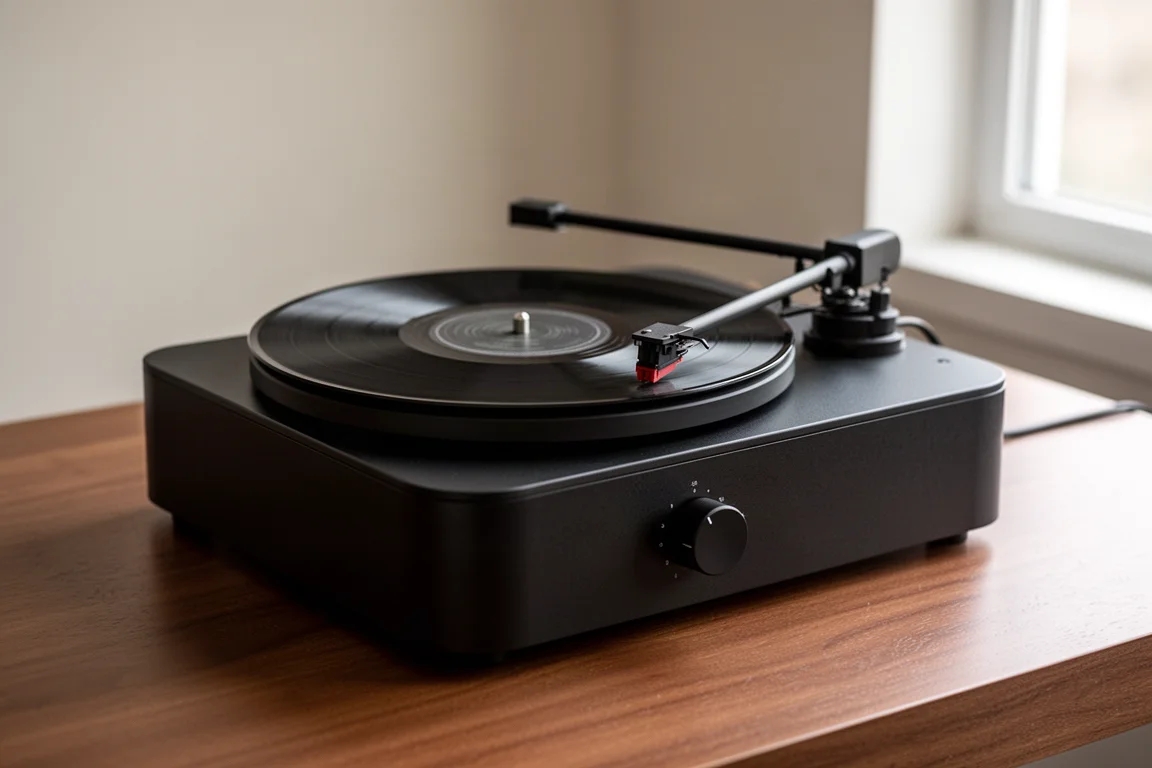
Ultrasonic cleaning fills a water bath with microscopic bubbles that implode against the record surface, lifting debris out of the grooves instead of scrubbing it. General purpose ultrasonic baths sold for jewellery can damage vinyl, which is why a machine designed around records uses a different frequency profile. The Degritter is built specifically for that job, with a slot that accommodates virtually every record size and no harsh chemicals involved.
Water is held in a cartridge at the back. Distilled water is the recommended fill, it costs very little and is easy to find. An optional cleaning additive is supplied for heavily soiled records, though it can leave a faint white residue on the vinyl, so plain distilled water alone is often the simpler choice.
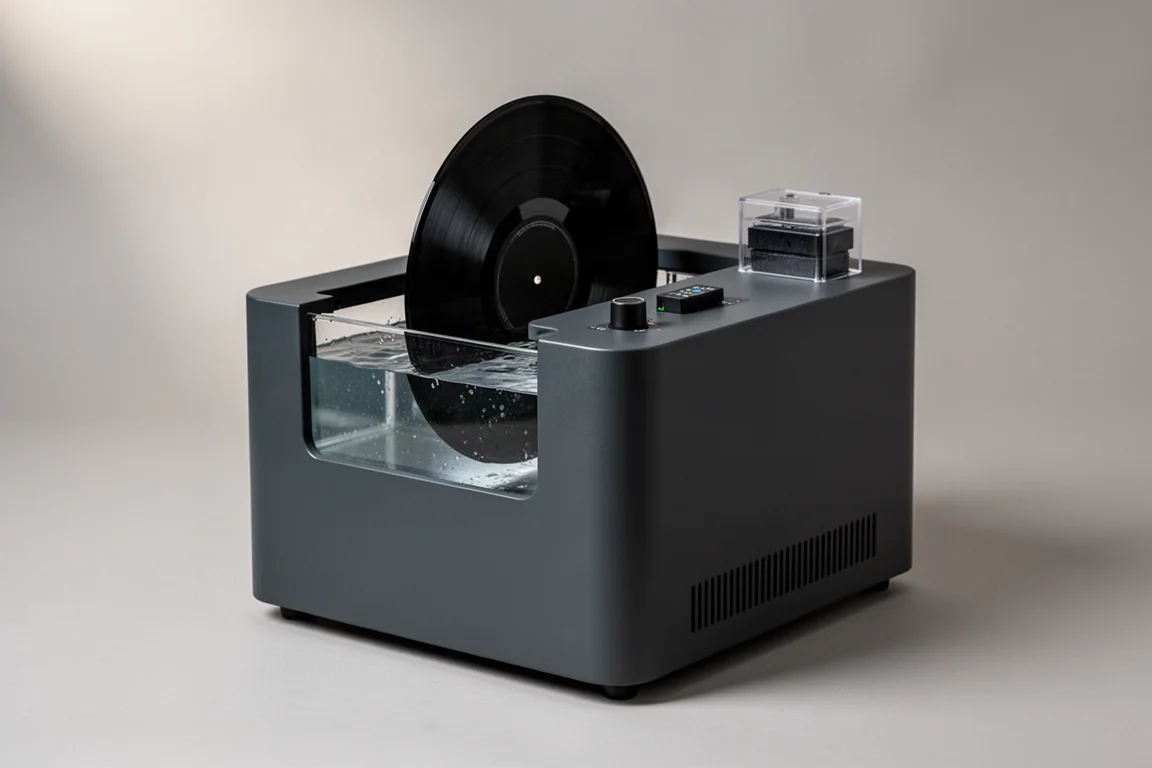
Cleaning runs in cycles that can be set for a lighter or more thorough pass, and a drying cycle follows so records come off ready to play. The machine is made in Estonia and priced around $3,300, which places it at the premium end of record care.
Living With the Degritter: Cycles, Filters, and Heat
Getting started is simple. There is a power switch and a cord at the back, then a short wait of a few minutes while water moves into the cleaning chamber before the first cycle begins.
A filter on the side is swapped whenever the machine prompts for it, and the settings menu covers cycle length and intensity without much guesswork. Temperature is the classic risk in ultrasonic cleaning, because warm water can distort vinyl. This machine tracks its own temperature and shows a reading at the top of the menu, then pushes air out of the side vents once it reaches a set point to bring the heat back down quickly.
It is loud while cleaning and loud again while cooling, so a utility room or a spot away from the listening seat is the practical home for it. Software updates are part of the package, which means the cleaning profiles can be refined over time rather than frozen at purchase.
Record Doctor Vacuum Record Cleaner: The Practical Alternative
Vacuum record cleaners work differently. Cleaning fluid loosens debris in the groove, and a vacuum arm lifts the fluid and the dirt away with it. Record Doctor machines have been a dependable part of that approach for years, and they remain perfectly capable cleaners.
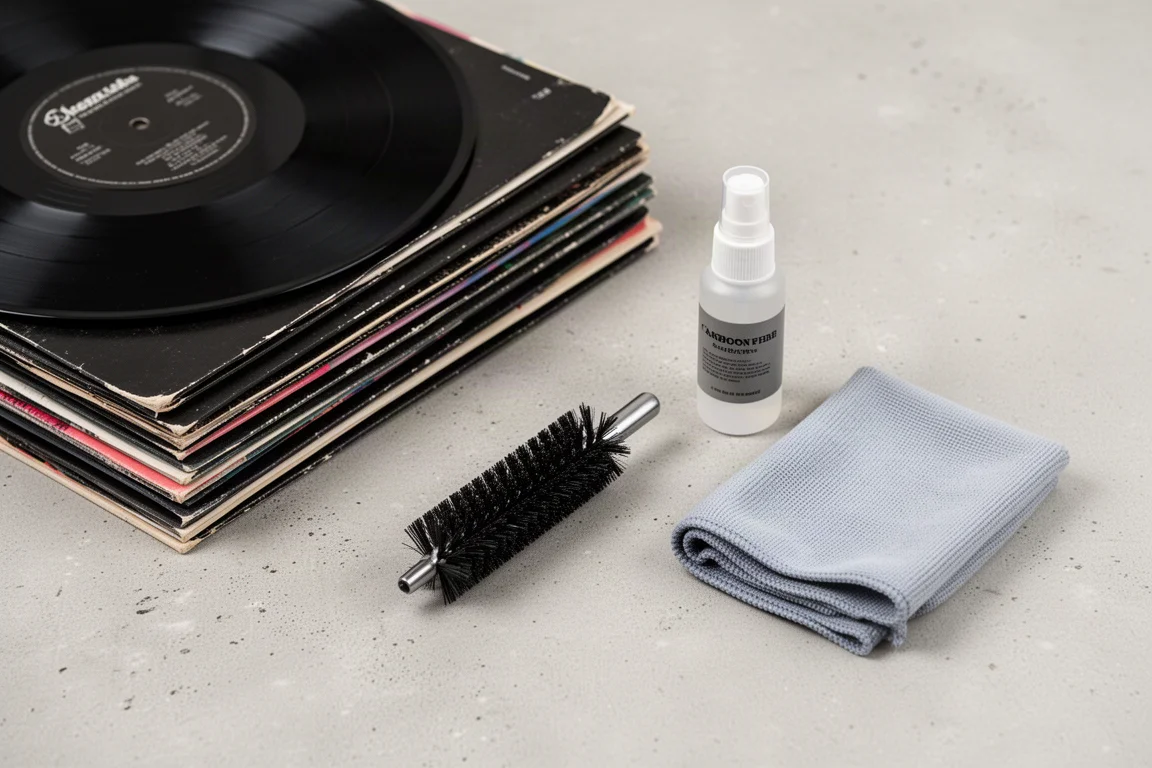
What a vacuum cleaner does not do is reach as deep as an ultrasonic bath. Records come out clean and quiet, but the finest particles can survive, and the gap becomes obvious when a record is inspected under strong light. Vacuum machines are also loud in use, much like their ultrasonic counterparts.
Cleaning Method and Collection Size
The choice often comes down to how much vinyl you own and how particular you are about it. Ultrasonic cleaning suits large collections and listeners who want their records kept in the best possible condition, since it leaves the least behind in the groove.
A vacuum machine covers occasional cleaning for a smaller collection at a lower outlay, and for most listeners that is genuinely enough. Hand cleaning with a solution remains a valid option too, though it is the least thorough of the three.
Buying Advice: Which Record Cleaner Should You Choose?

If the budget allows and groove cleanliness is the priority, the ultrasonic route is the one that leaves nothing behind. Ultrasonic machines have never been cheap, and this one sits around $3,300, so it is a considered purchase rather than an impulse one.
If you are working in a different budget category, vacuum cleaning is the sensible answer. Record Doctor units have proven themselves over years of use, and they handle the everyday job well.
Whichever way you go, plan for two practical details. Both types are loud, so decide where the machine will live before it arrives. Both also need consumables: distilled water and filters for the ultrasonic machine, fluid and pads for a vacuum cleaner.
Conclusion
Record cleaning is one of those upgrades that is easy to dismiss until you hear the result. The Degritter ultrasonic cleaner is the most thorough option here, gentle on vinyl, straightforward to operate, and priced accordingly at around $3,300. The Record Doctor vacuum cleaner is the pragmatic alternative that has quietly done the job for years at a lower cost.
Match the machine to the collection and the budget, and the records will sound the way they should.
Further reading
Related Reviews

Backpacking Gear
Building a 10 lb Base Weight: An Ultralight Backpacking Gear List
A practical walkthrough of the ultralight pieces behind a 10 lb base weight, from a 765 g pack and a roomy one-person tent to a full camp chair and a dependable water filter.

Road Bikes
10 New Road Bikes Worth Watching: Aero, Titanium, Steel and Endurance Standouts
A practical roundup of 10 new road bikes, from aero flagships chasing single-watt gains to titanium, steel and endurance platforms built for real roads.
Bikepacking Gear
11 Bikepacking Essentials for Long-Distance Cycling
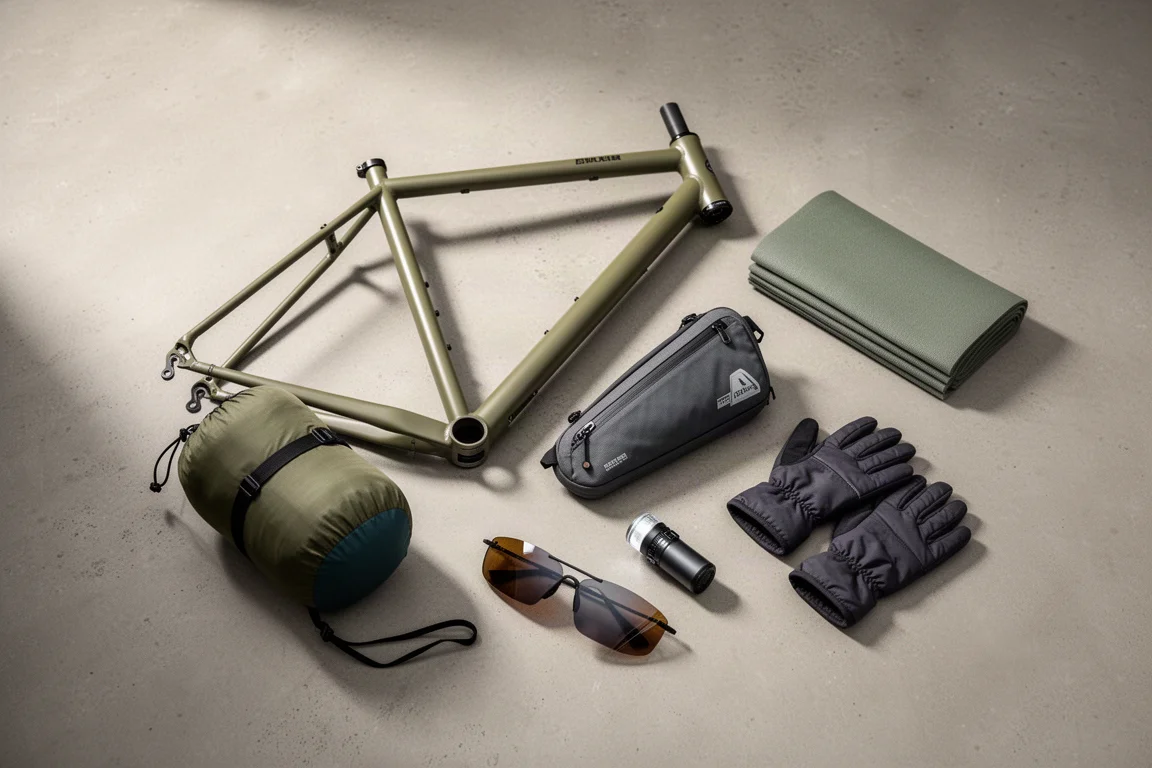
Eleven bikepacking essentials for long-distance cycling, from a steel gravel frame and a two-person tent to helmet lights, packable gloves, and a frame bag that puts weight in the right place.