Backpacking Gear
Ultralight Backpacking Cook System: A Toaks Titanium Alcohol Stove Setup
A four-piece titanium alcohol cook system that weighs under five ounces, with notes on pot size, fuel choice, and when a canister stove makes more sense.
Introduction
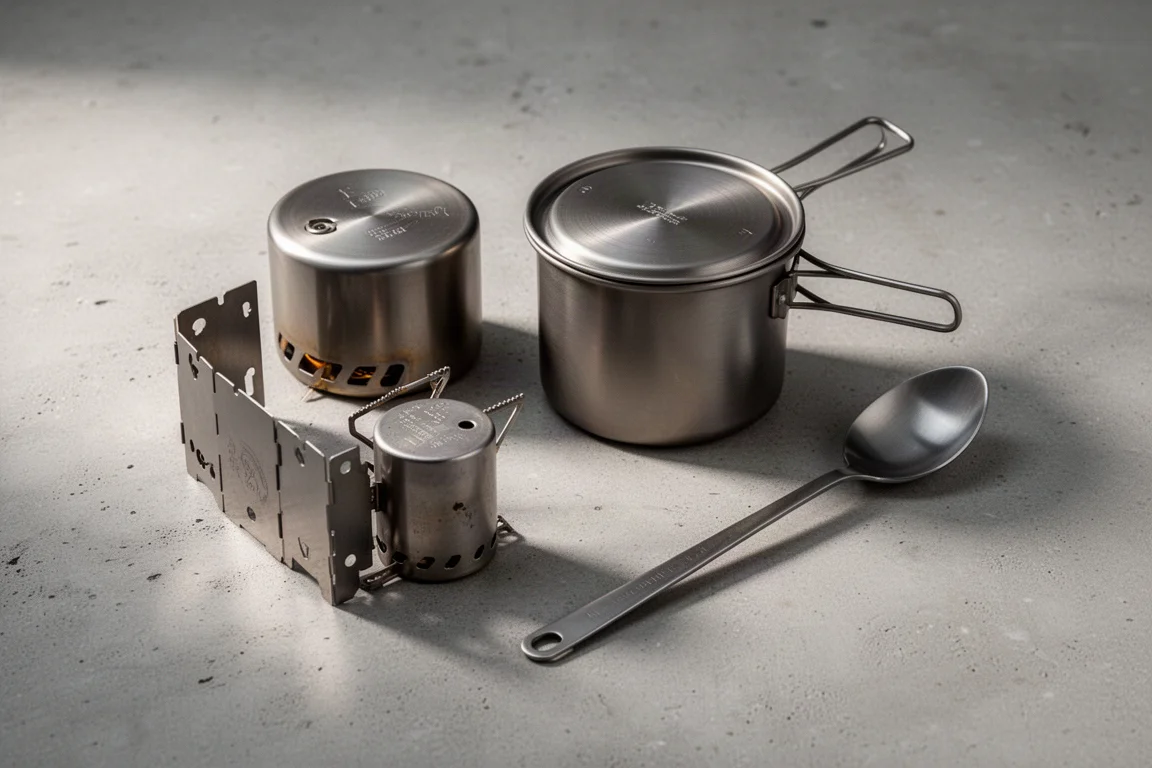
A cook system is one of the few pieces of backpacking gear you use every single day on trail, and it is also one of the easiest places to carry more weight than you need. The setup covered here is built around titanium and alcohol: a 550ml pot, a siphon alcohol stove, a titanium windscreen, and a long-handled titanium spoon. Together, the full kit comes in under five ounces.
That figure is worth pausing on. A common all-in-one canister stove system runs around 13 to 14 ounces before you add a spoon, so the difference here is substantial rather than marginal. This guide walks through each piece, why it earns a place in the kit, and where a different fuel type might make more sense.
What to Look For in an Ultralight Cook System
Start with water capacity, not with features. Most rehydration style meals need two cups of water or less, which means a pot that comfortably holds two cups covers the overwhelming majority of trail cooking. Larger multi-cup sets and bundled cookware kits add weight for capacity you are unlikely to use.
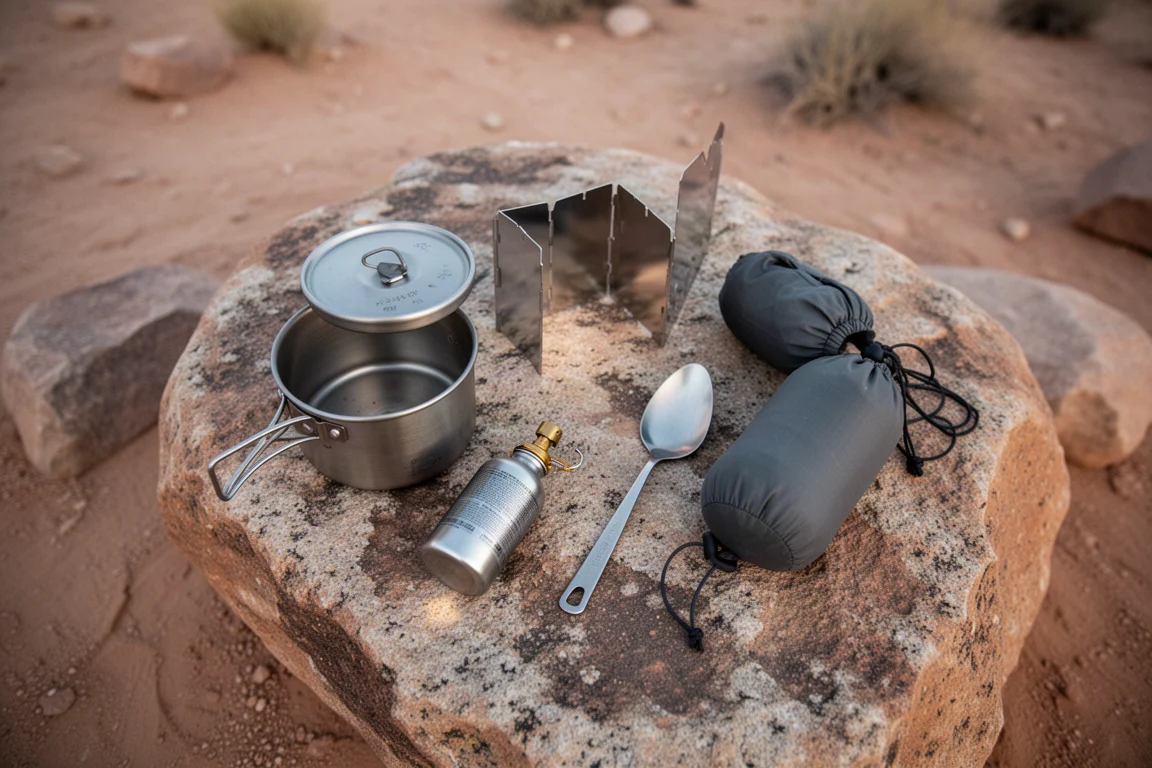
Fuel type is the second decision. Alcohol stoves and canister stoves both work, and the right answer depends on trip length. For shorter trips, alcohol keeps both the stove and the fuel load light. Past a certain trip length, canister fuel starts to make more sense, which is covered further down.
Weight and packed size are the third consideration. Titanium construction and nesting components let a complete kit disappear into a small corner of your pack instead of taking up a whole compartment.
The Pot: Toaks 550ml Titanium Pot
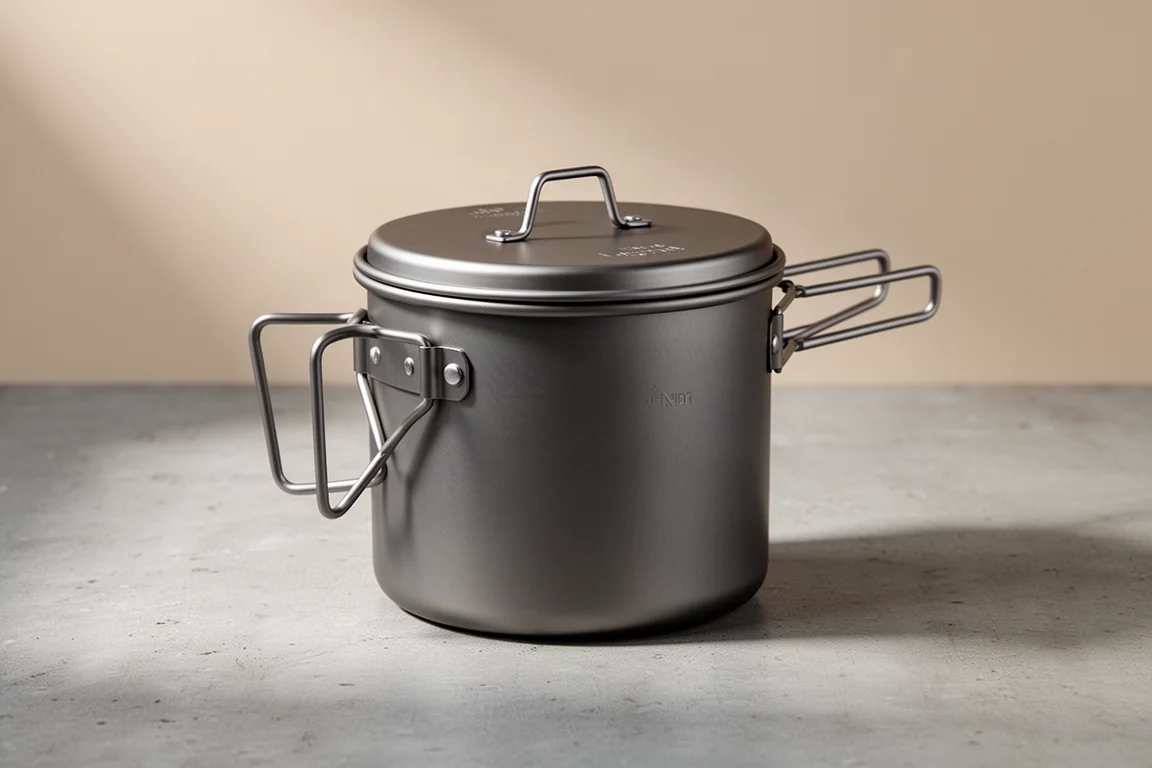
The 550ml titanium pot is the anchor of the system. It holds two cups of water, the practical benchmark for rehydration meals, and it is sized so that the stove and other small items nest inside it when the kit is packed away.
Bigger pots exist, but they are rarely necessary. A pot in this size range handles roughly 95 to 100 percent of what most backpackers actually cook on trail, and anything larger is usually weight spent on capacity that stays empty. Titanium keeps the pot itself light while still standing up to daily use on a stove.
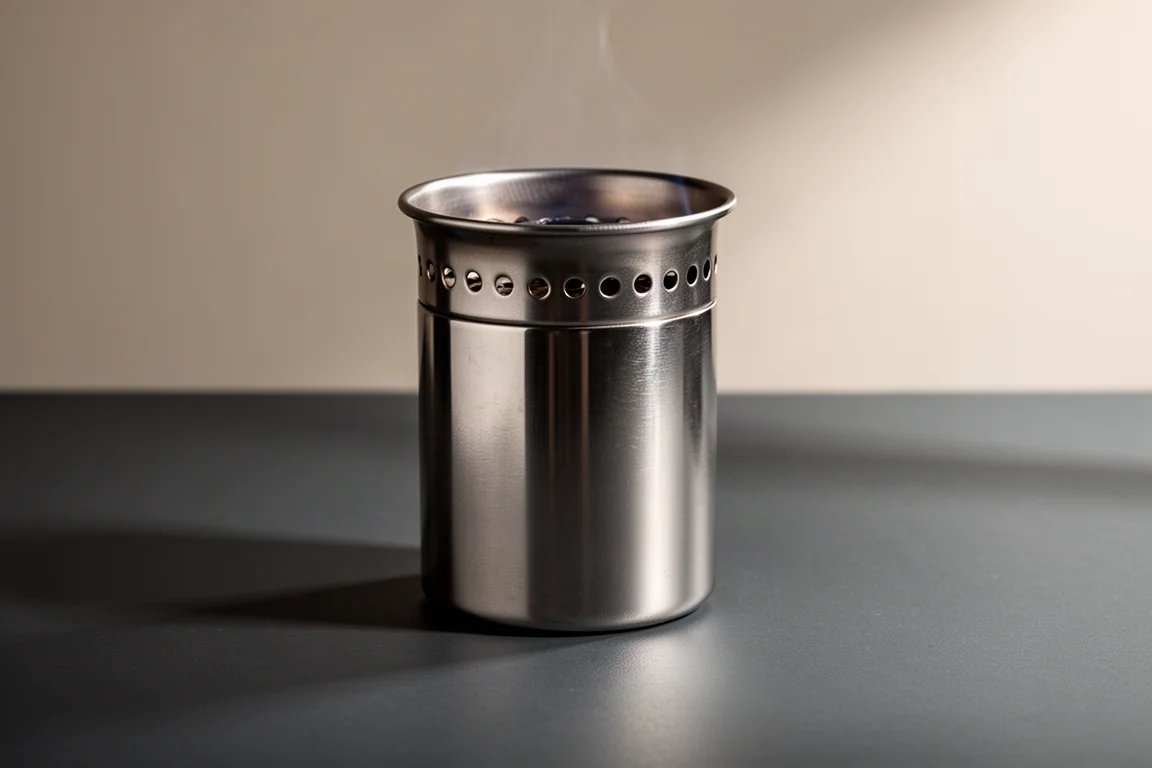
The Stove: Toaks Titanium Siphon Alcohol Stove
The siphon alcohol stove is the part of the kit that most affects how the system feels in use. A siphon design puts out more heat than many other alcohol stoves, and that extra output translates directly into faster boils and shorter waits at the end of a long day.
Alcohol fuel is also light to carry. A small bottle weighing a couple of ounces is enough for a few days of cooking, compared with the bulk and weight of a gas canister. For backpackers heading out for a couple of nights at a time, that difference shows up quickly on the scale.
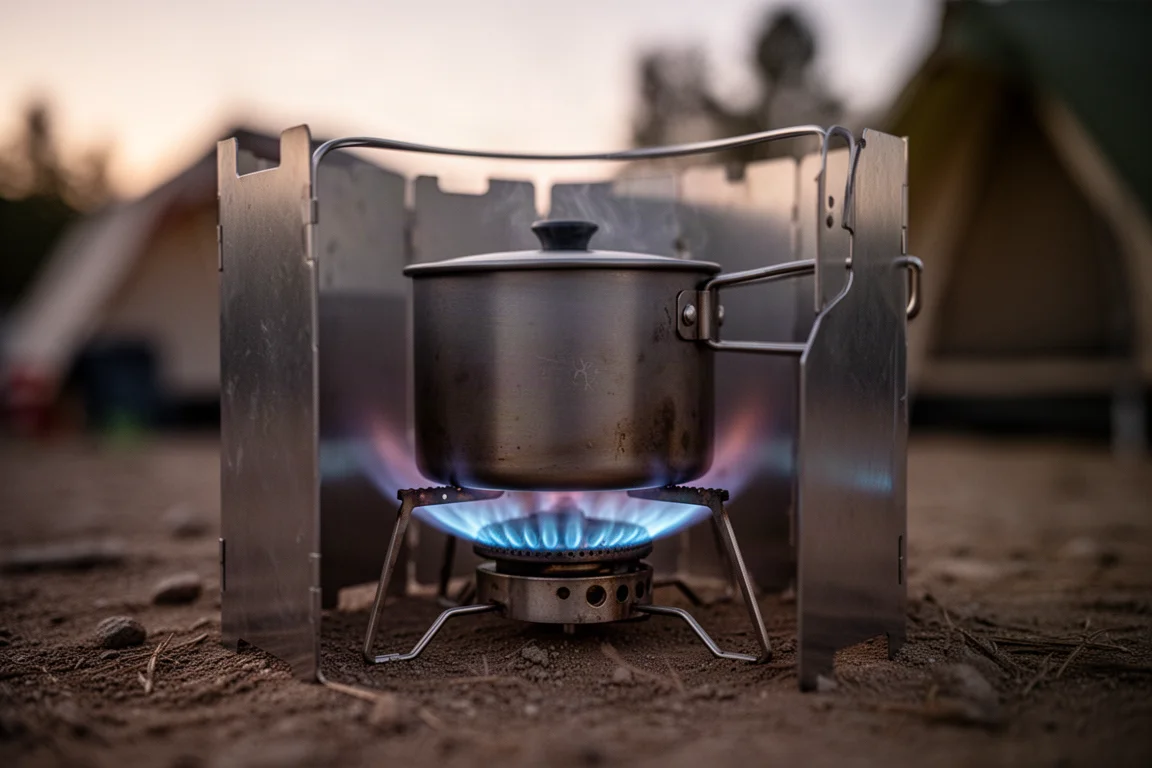
The trade-off is that alcohol stoves reward a little attention to conditions. A sheltered spot and a windscreen make a noticeable difference to both performance and fuel use, and a titanium stove cools down quickly once the flame is out.
The Windscreen: Toaks Titanium Windscreen
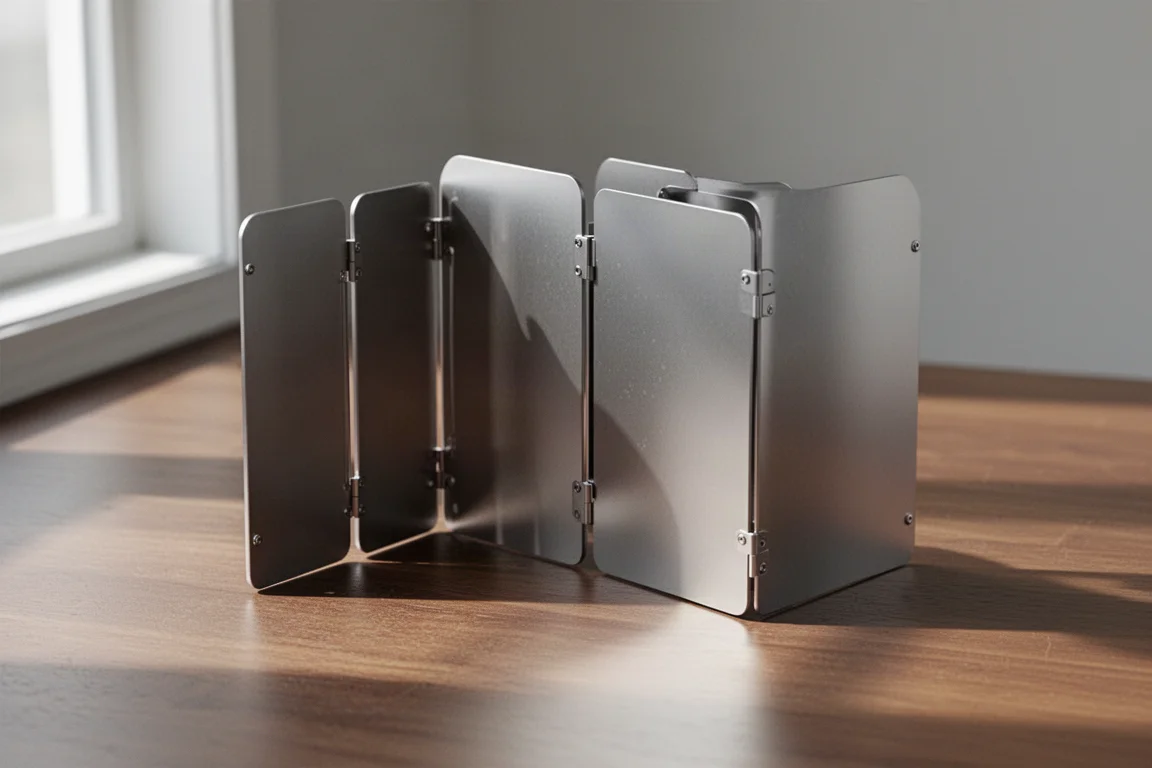
The titanium windscreen arrives with four sections. Carrying three of them instead of four trims a little weight without giving up meaningful wind protection, which is a straightforward way to tune the kit to your own trips.
A windscreen matters more with alcohol than with many other fuels, because a shielded flame burns more efficiently and uses less fuel for the same boil. On exposed campsites, that efficiency is the difference between a quick meal and a long one.
The Spoon: Toaks Titanium Long Handle Spoon
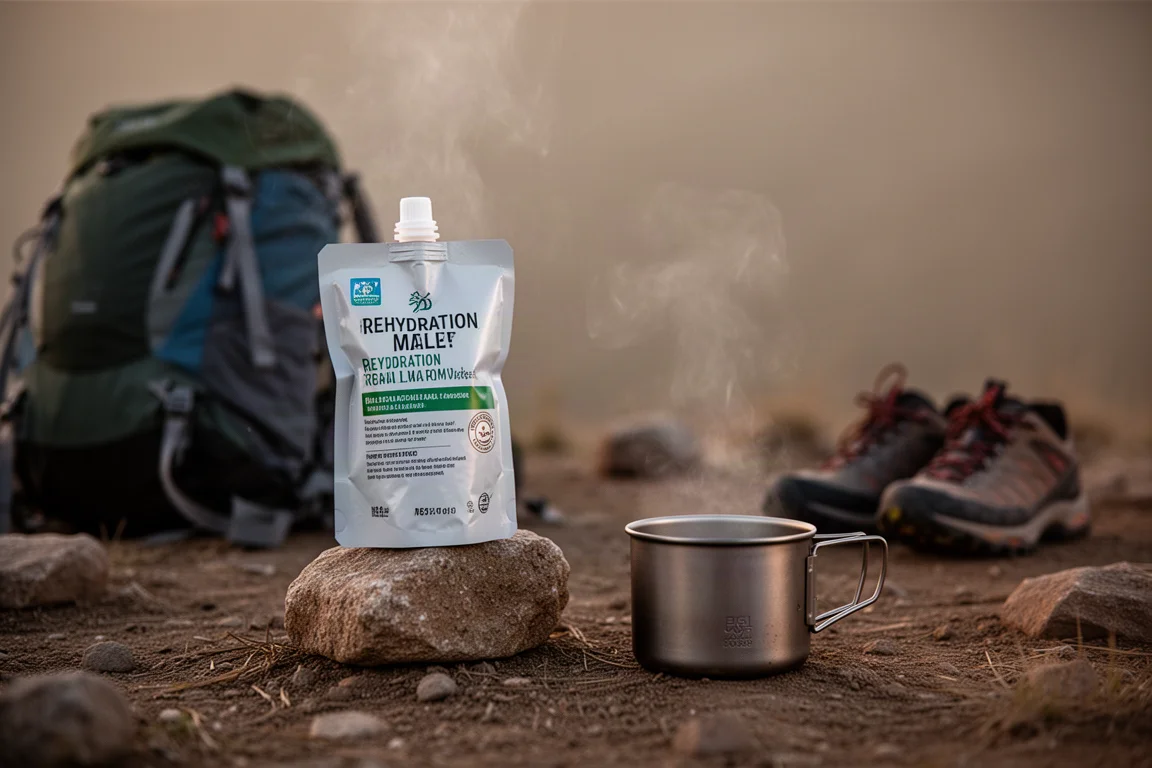
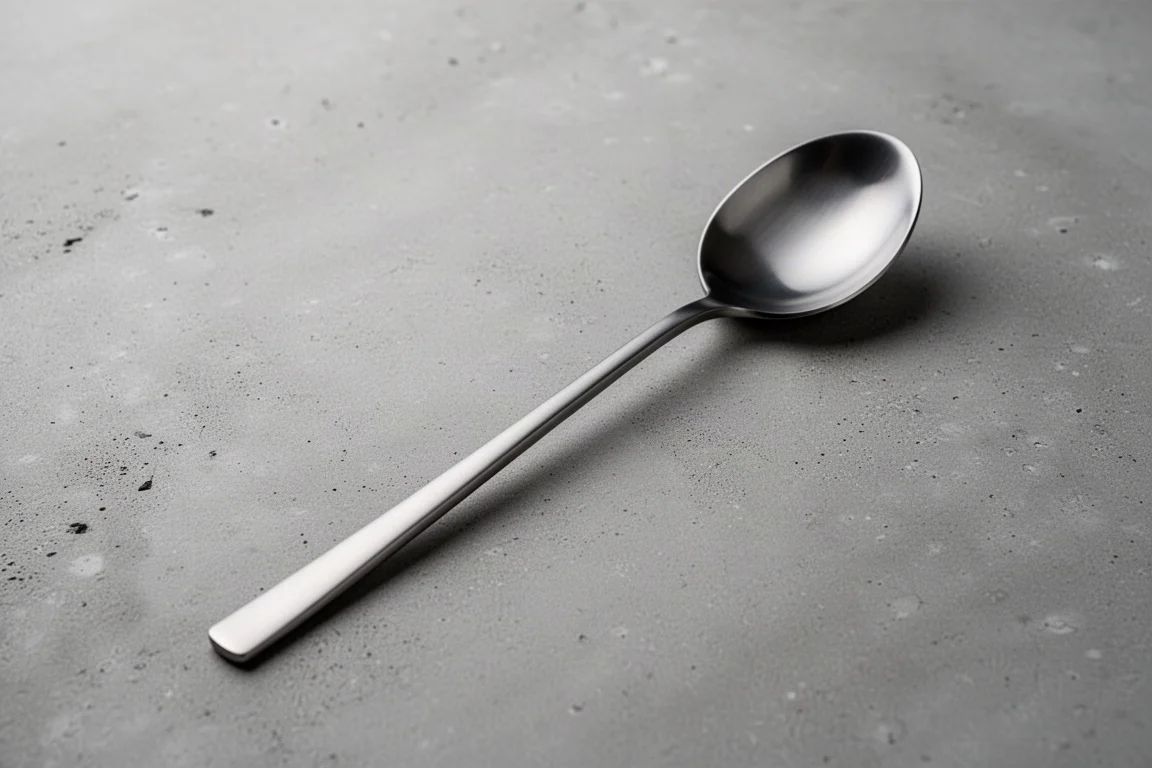
The long handle is the point of this spoon. Rehydration meals are eaten straight from the pouch, and a long handle reaches the bottom of a deep bag without leaving your knuckles messy. The polished bowl is smooth enough that it wipes clean easily, which matters when water for washing up is limited.
It is a small item, but it is part of the reason the complete kit lands under five ounces. Every component in this setup is chosen to be as light as it can reasonably be while still doing its job properly, and a spoon is no exception.
Alcohol vs Canister: Fuel Weight and the Seven-Day Mark
Both fuel types have a place. Canister stoves are simple and predictable, and plenty of backpackers prefer them for exactly that reason. Alcohol stoves win on weight for shorter trips: the stove itself is minimal and the fuel you carry is measured in ounces rather than in a heavy steel canister.
The practical dividing line sits at roughly a seven-day mark. Below it, alcohol tends to make more sense for weight-conscious backpackers. Beyond it, the fuel volume required for alcohol starts to erode that advantage, and a canister setup becomes the more practical choice.
Buying Advice: Matching the Setup to Your Trip
Match the kit to the trips you actually take. If you mostly head out for a couple of nights at a time and rehydrate your meals, this titanium alcohol setup is close to ideal: compact, light, and quick to boil.
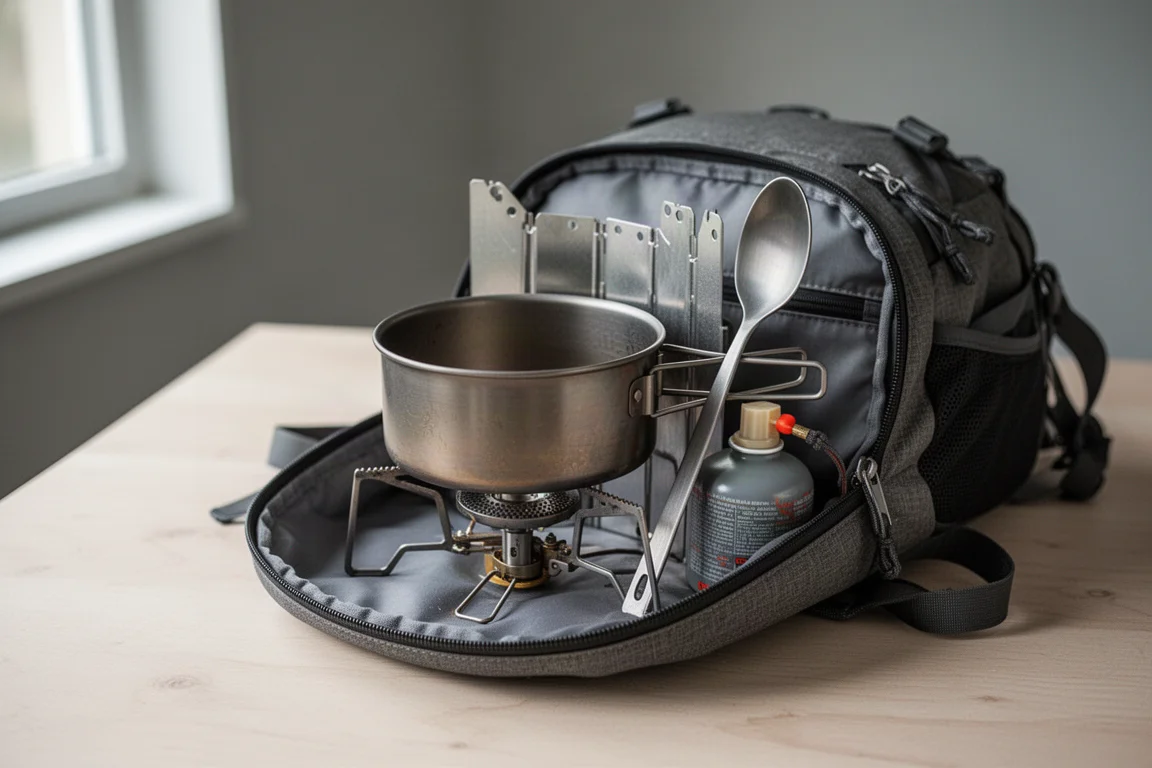
Consider the total kit weight rather than individual items. The pot, stove, windscreen, and spoon together come in under five ounces, and that combined figure is where the real advantage sits compared with a 13 to 14 ounce all-in-one system plus a spoon.
There is no need to over-complicate the decision. A pot that holds two cups, a stove that boils efficiently, a windscreen for exposed sites, and a long-handled spoon cover nearly everything a backpacker cooks on trail.
Conclusion
The case for this setup is simple: it does the job with far less weight. Titanium construction, alcohol fuel, and a pot sized to the two cups most meals require add up to a kit under five ounces that packs small and boils fast. If your trips run a few nights at a time, that combination is hard to argue with. If your trips regularly stretch past a week, a canister stove is worth a look instead.
Further reading
Related Reviews

Backpacking Gear
Building a 10 lb Base Weight: An Ultralight Backpacking Gear List
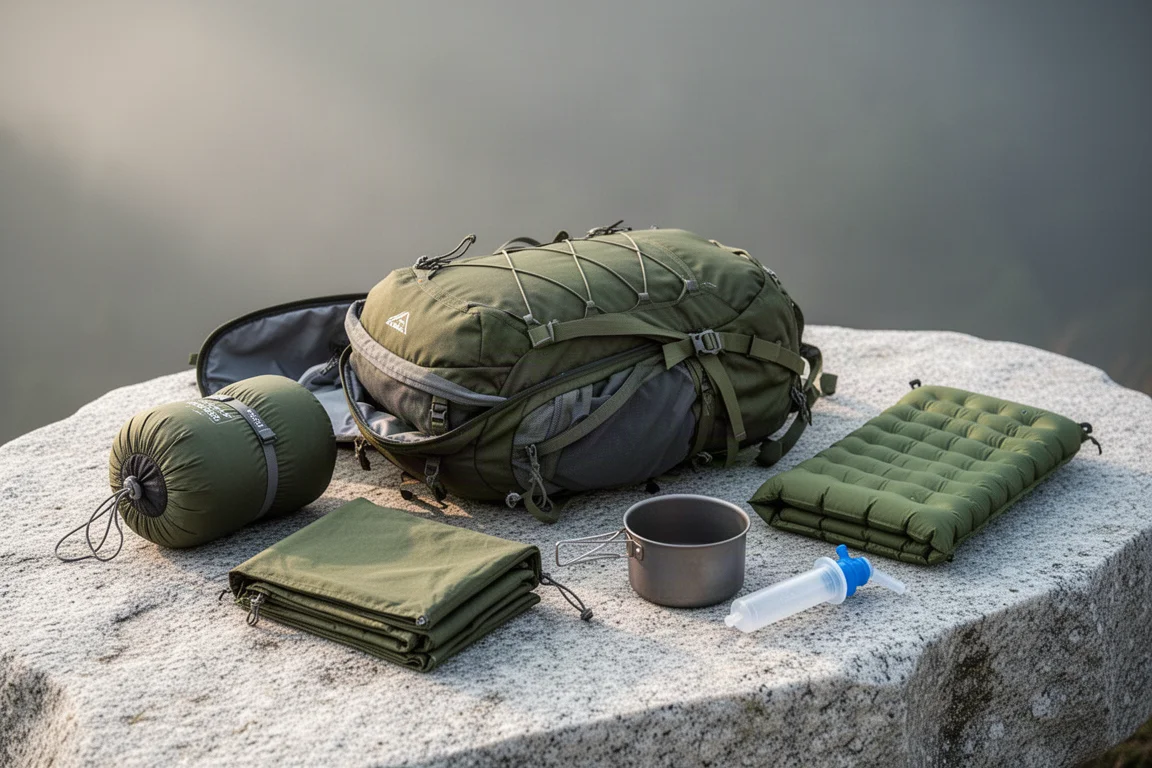
A practical walkthrough of the ultralight pieces behind a 10 lb base weight, from a 765 g pack and a roomy one-person tent to a full camp chair and a dependable water filter.
Backpacking Gear
A 15-Pound Lightweight Backpacking Gear List for Solo Trips
A beginner-friendly 15-pound backpacking setup built from easy-to-find gear, with notes on what each piece does, how it packs, and where to spend your attention.
Backpacking Gear
8 Ultralight Backpacking Gear Upgrades Worth Carrying
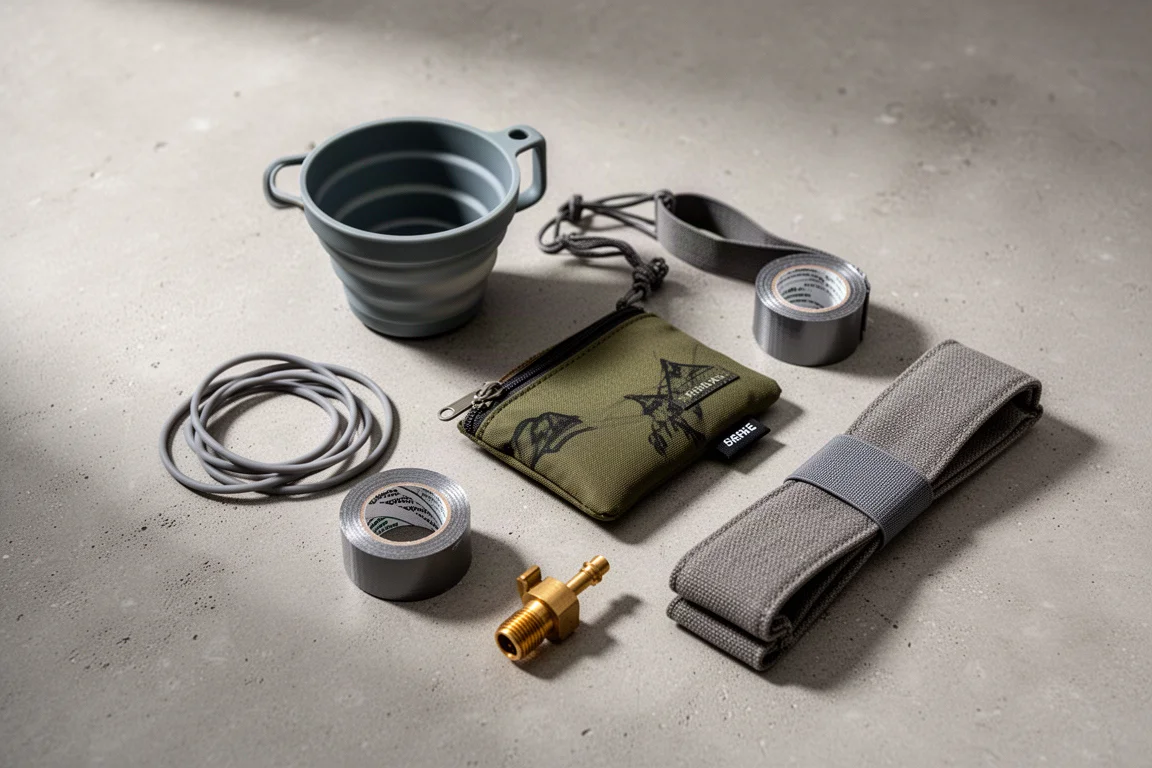
Eight small, affordable backpacking upgrades that solve real trail annoyances, from a pillow that stays put to a fuel valve that rescues leftover canister gas.