Turntables
U-Turn Audio Orbit Theory Review: A $999 Turntable Built for the Long Run
A $999 belt-drive turntable with a solid hardwood plinth, in-house parts, and a built-in phono stage option that can be bypassed.
Introduction
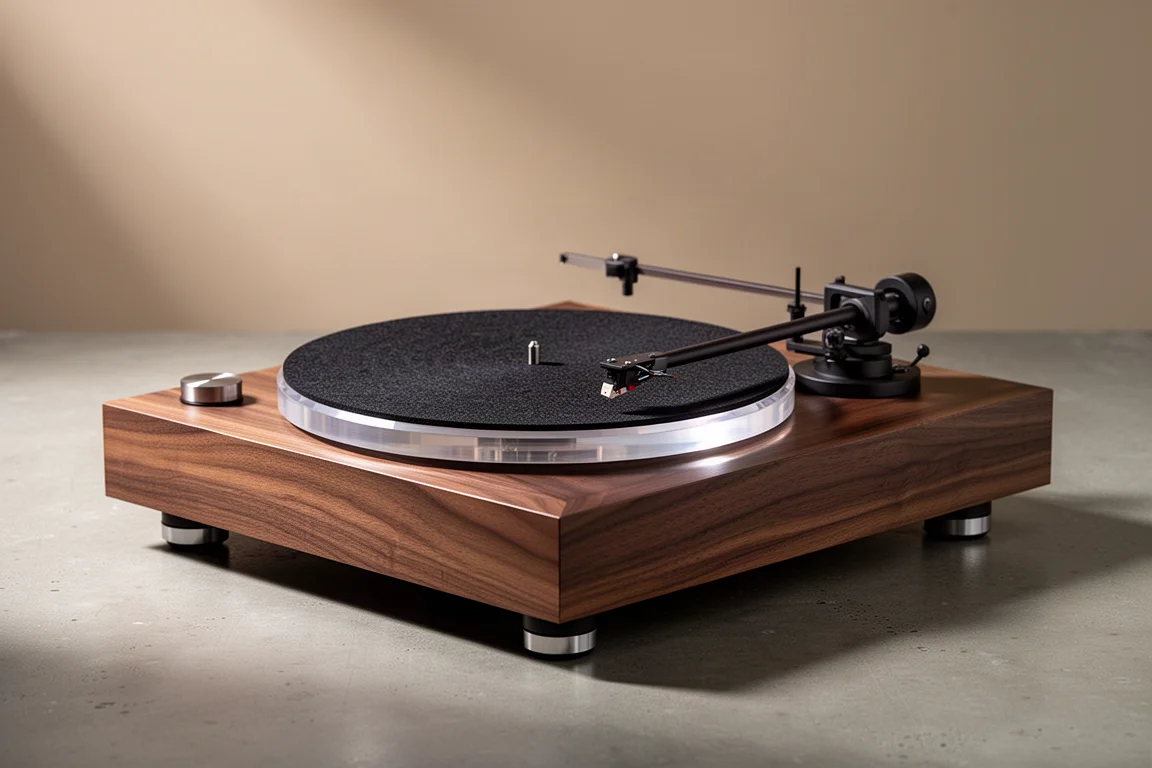
U-Turn Audio has been building turntables in the United States for around a decade, and the Orbit Theory is the most substantial redesign the company has produced. It looks a great deal like the turntables U-Turn has been making for years, but very little carries over. The feet, plinth, platter, motor, motor pulley, and tonearm are all new and designed in house, with no off-the-shelf parts involved.
The price is $999, and it includes an Ortofon 2M Blue moving magnet cartridge. U-Turn Audio also offers the turntable with a built-in phono stage called the Pluto II, designed for moving magnet cartridges, and that stage can be bypassed if you would rather use your own.
Who the U-Turn Audio Orbit Theory Is For
The strongest case for this turntable is a listener who is a year or two into vinyl, has gathered a small collection of 20 or 30 records, and treats analog as something to build on rather than a short experiment. The point of the Orbit Theory is that it takes away the pressure to replace the deck itself as the rest of the system improves. A better cartridge may come later, and that is a normal step, but the turntable underneath it can stay.
It is a less natural fit for a first-time buyer shopping purely on price, since $999 buys a complete package with a cartridge and, in the Pluto II version, a phono stage that a beginner may not yet need.

For anyone who has already decided that records are the format they want to live with, the calculation changes. This is a deck that lets you put money into records and the occasional cartridge upgrade rather than into a new turntable every few years.
Design and Build Quality
The details here are unusually strong for the price. The feet are adjustable, so the turntable can be levelled properly, and they incorporate sorbothane absorbers. The plinth is solid hardwood rather than a veneer over chipboard. The walnut version is a solid piece of walnut, and the black version is solid oak that has been ebonized.
The platter is machined acrylic with a groove cut into its edge to carry the belt, and it comes with a nicely finished black felt mat. The belt itself is silicone and seamless, so there is no joined section to create a bump as it passes around the platter. The motor pulley is machined aluminum, a step up from the delrin and plastic pulleys typical at this price.
A new electronic controller runs the motor. It reduces motor noise and handles speed changes between 33 and 45 electronically, so the belt never has to be moved by hand to switch speeds. The single knob that covers power and speed has a reassuring feel.
The tonearm uses a molded magnesium arm tube, chosen for its internal damping and a clear step up from the usual aluminum. The cueing lever is aluminum rather than plastic, and a hinged dust cover is included. Warranty coverage runs to three years. The turntable is designed and made in the United States, and many parts are sourced domestically, including the magnesium arm tube.
Sound Quality
In use, the Orbit Theory is a very quiet turntable. Listening through headphones, no motor noise was audible, which matters most on quiet acoustic material where any background noise would sit right on top of the music.

What stands out more is how the deck pulls a listening session along. Records that had gone unplayed for years turned into one after another, which is a useful signal in itself. The turntable communicates drive and rhythm, and it does not blunt the energy of a tight, hard-driving band.
Space and atmosphere come through as well. On older recordings captured with a small number of microphones, the sound of the room and the space around the players is easy to hear, and the deck keeps that sense of a live space intact. On closely miked piano recordings, the mechanical detail of the instrument and a large, dense sound stage both survive the trip.
The Built-In Pluto II Phono Stage
The Pluto II is U-Turn Audio’s own moving magnet phono stage, offered built into the turntable. It can be bypassed, so the choice stays with you: use the internal stage, or run the deck into a separate phono preamp.
The built-in approach has one practical advantage. Because the phono stage sits inside the turntable, there is no interconnect cable running from the tonearm output to an external box, which removes a connection and a length of cable from the signal path.
Compared with an original Schiit Mani, the two stages were broadly comparable. The Mani came across as slightly more laid back and sweeter, but it was not as exciting, as vivid, or as transparent. Some of that difference may come down to the cabling that the built-in design avoids.
The practical conclusion is straightforward. If you plan to stay with moving magnet cartridges and you are not prepared to spend $500 or more on a separate phono preamp, the Pluto II is a solid place to begin an analog setup.
Setup and Everyday Use
Setting the deck up is friendlier than the materials and the price might suggest. The adjustable feet let you level the turntable properly, and the sorbothane absorbers inside them deal with the small vibrations that would otherwise reach the platter. That kind of adjustment is not universal at this price.
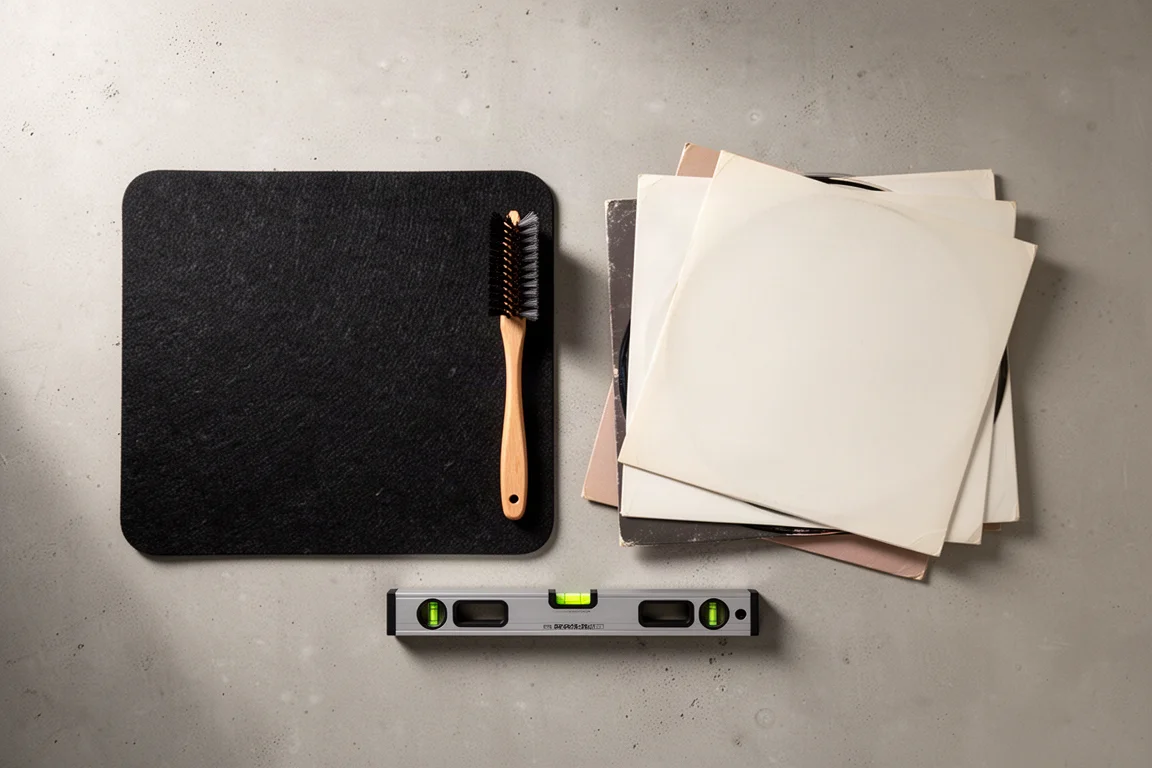
Day to day, the details hold up. The single knob for power and speed has a satisfying feel, speed changes between 33 and 45 happen electronically without touching the belt, the felt mat sits flat on the acrylic platter, and the hinged dust cover keeps dust off between sessions. Warranty coverage runs to three years, which is a reassuring length for a purchase meant to last.
Things to Consider Before Buying
The tonearm height is fixed. There is no vertical tracking angle adjustment, so a cartridge that sits at a different height from the factory-fitted one cannot be dialled in precisely. A number of turntables at this price, and several above it, make the same compromise, but it is a genuine limitation if you enjoy swapping cartridges and fine-tuning alignment.
Isolation from external knocks is the other area that gives ground. Tapping on the shelf beneath the turntable produced a faint but audible thump through the speakers. A solid, well-damped stand or a wall-mounted shelf solves most of it.
It is also worth being precise about what $999 buys. The turntable is designed and made in the United States, and many parts are sourced domestically, but not every part is. If a fully domestic parts list matters to you, that nuance is worth noting.
Finally, plan for a cartridge upgrade at some point. The price includes an Ortofon 2M Blue moving magnet cartridge, and a step up in cartridge is the natural next move rather than a change of turntable.
Buying Advice
The first decision is which version to buy. If you already own a phono preamp you are happy with, the bypass on the built-in stage makes the question simple, because you can ignore the internal stage entirely. If you do not own one, the Pluto II version removes a box and a cable from the chain, and for moving magnet cartridges it is a sensible starting point unless you intend to spend $500 or more on a separate stage.

The second consideration is where the turntable will live. Because the deck depends on being level and reasonably isolated, a solid stand or a wall shelf is worth budgeting for alongside the turntable itself. It is a small expense next to $999, and it protects the performance you paid for.
Finally, think of this as a platform rather than a one-off purchase. The included cartridge, the electronic speed control, the three-year warranty, and the ability to use or bypass the internal phono stage all point to a turntable that is meant to stay in a system for years.
Conclusion
The Orbit Theory is a convincing piece of work. It is built from solid hardwood, machined metal, and in-house designs rather than off-the-shelf parts, and it behaves like equipment that will still be worth owning long after the novelty of a new purchase wears off. It is quiet, it is engaging with rhythm and dynamics, and it does the thing that matters most in analog: it makes you want to keep playing records.
The trade-offs are narrow and specific. The tonearm height is not adjustable, and isolation from shelf knocks is only average. Neither is unusual in this class, and both are manageable with sensible placement.
For a listener who is serious about vinyl and wants a turntable that will not need replacing as the system grows, the Orbit Theory is an easy recommendation to consider.
Product link
View more details for U-Turn Audio Orbit Theory
This product is mentioned in the review. Check the specifications, options, and compatibility before buying.
View more details for U-Turn Audio Orbit TheoryFurther reading
Related Reviews
Turntables
Best Turntables 2026: Seven Standout Picks From Entry Level to Premium
A practical roundup of seven turntables worth considering, from a US-made budget deck to small-batch premium models with a clear upgrade path.
Turntables
Best Turntables Under $1,000: Five Fully Manual Picks Worth Considering
Five fully manual turntables under $1,000, compared on build quality, cartridges, upgrade potential, and the character of sound each one brings to a system.
Turntables
Best Turntables Under $2,000: Six Vinyl Decks Worth Building a System Around
Six turntables under $2,000, from a value-focused belt-drive deck to a fully balanced design, with the strengths and trade-offs that matter before you buy.