Hi-Fi Systems
A Two-Channel System With a Real Dolby Atmos Upgrade Path
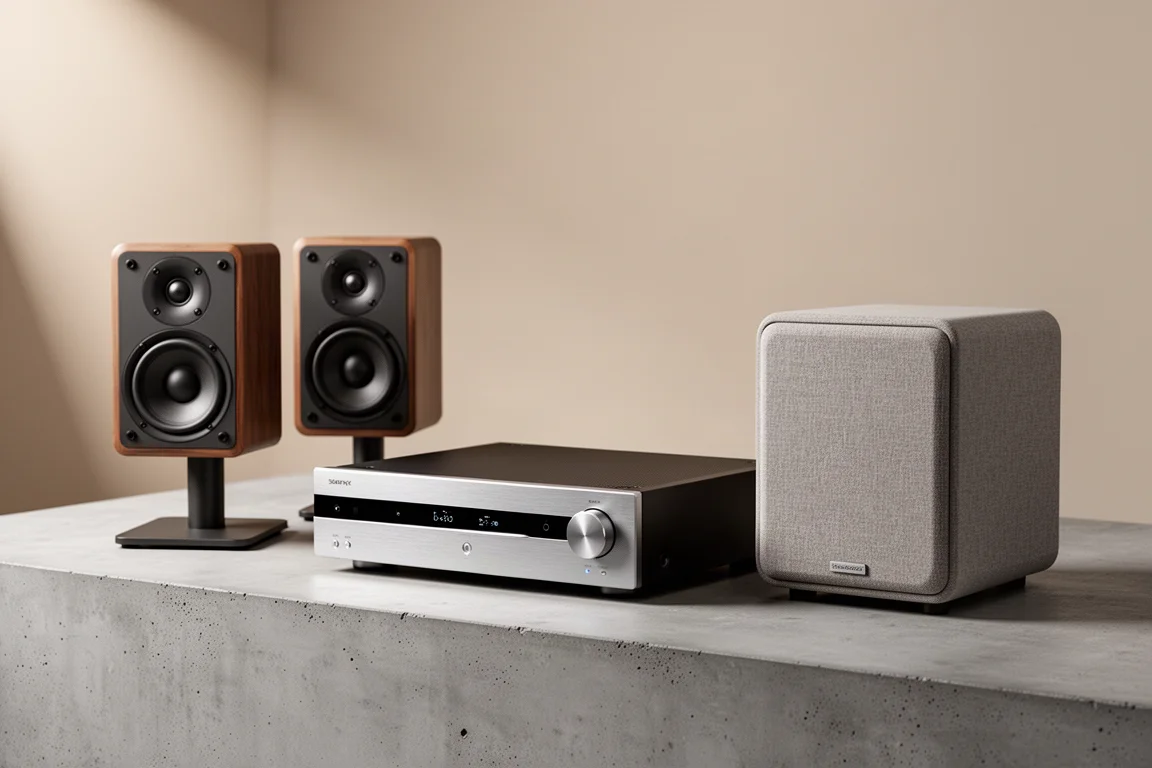
A roughly $3,500 two-channel system built around Focal speakers, a slim Marantz receiver, and an SVS subwoofer, with a clear route to Dolby Atmos later.
Introduction
Building a two-channel system that can grow into a full Dolby Atmos setup does not have to start with a large budget or a large room. The goal here is a compact, well-matched foundation that sounds convincing for music first, and then expands into multichannel when you are ready.
This guide walks through a roughly $3,500 system built around Focal speakers, a slim Marantz AV receiver, an SVS subwoofer, and straightforward cabling. Every component has a specific reason for being here, and each one has a clear role in the upgrade path.
What This System Is Designed For
This is a small to medium room system. Think family room, den, or bedroom rather than a dedicated large theater. Within that context, a pair of bookshelf speakers plus a sealed subwoofer delivers enough output and enough low-frequency extension to make both music and movie soundtracks feel substantial.
The design logic is two-channel first. You get a genuine stereo foundation with real bass management, and if you later decide you want surround sound or spatial audio, the same components carry forward rather than get replaced. A system like this also pulls a lot of detail out of film soundtracks, particularly the music, which is exactly where a typical soundbar tends to flatten things out.
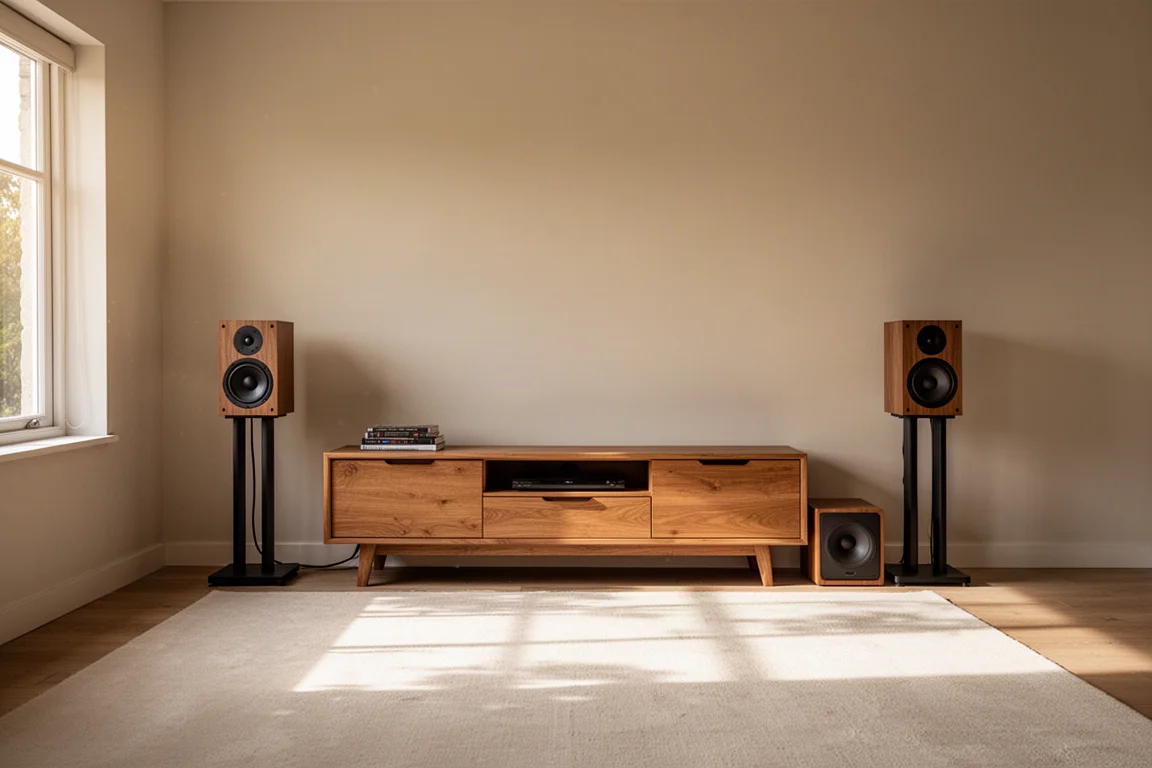
One practical note applies from day one. If you pair these speakers with a subwoofer, bass manage them. Crossing the speakers over somewhere between 50 Hz and 80 Hz, depending on your room and your taste, lets the subwoofer handle the low end while the speakers stay in their comfort zone.
Focal Theva No.1 Bookshelf Speakers
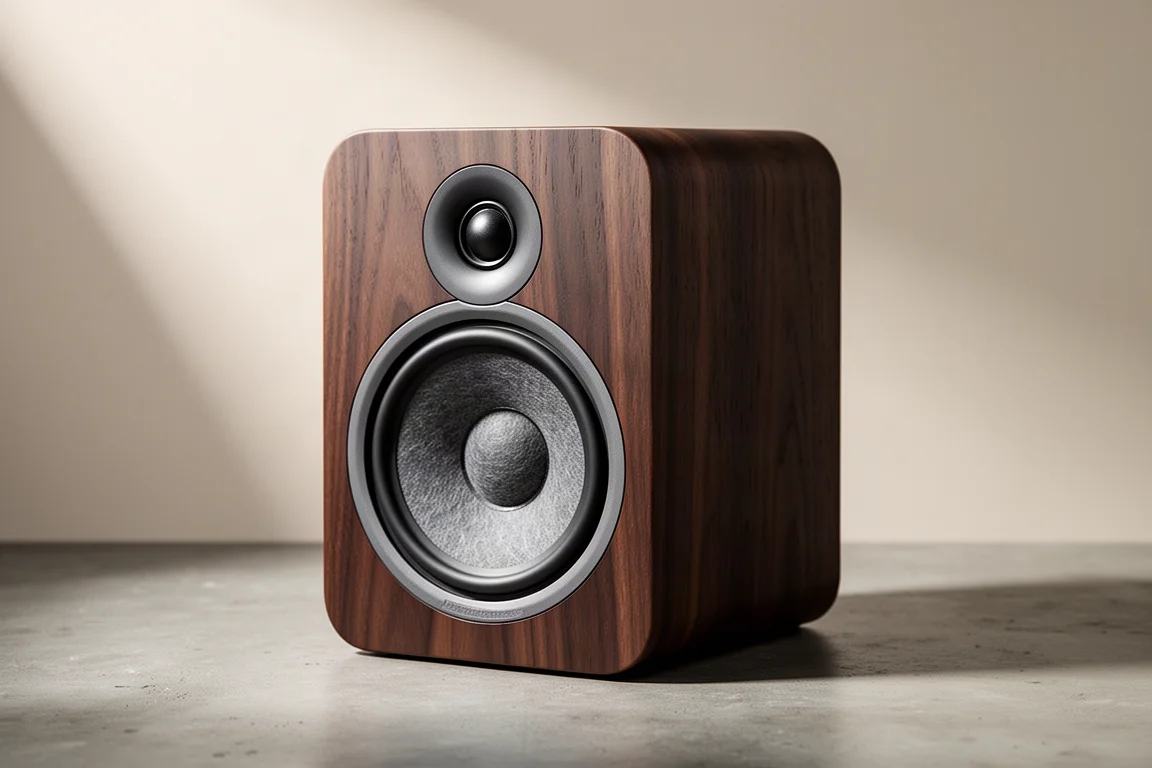
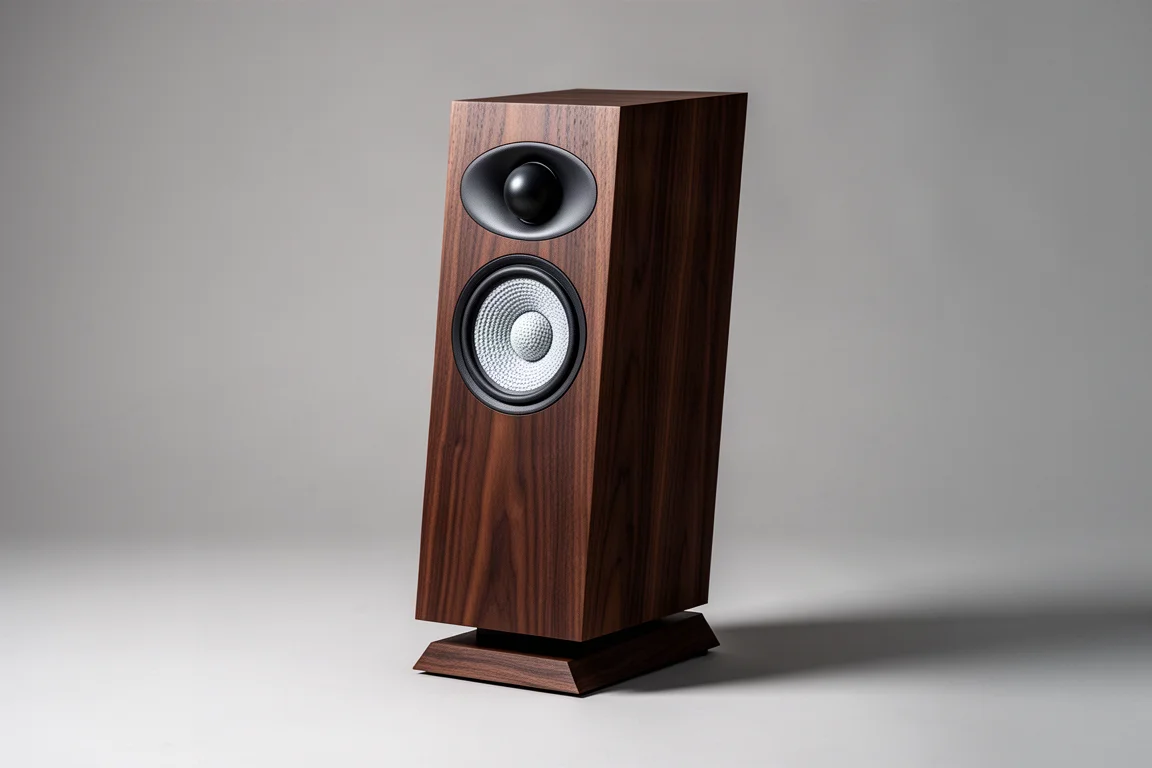
The Focal Theva No.1 is an entry-level to midprice bookshelf design, and at around $1,000 per pair it sits in a genuinely competitive class. What makes it useful here is balance: good tonality, solid dynamic range for its size, and an easy load for an AV receiver to drive.
Measured performance is linear with a good listening window response, which means the speaker behaves consistently from room to room and does not demand heavy room treatment. There is a small rise in the treble at the very top end. Impedance stays benign and never drops below 5 ohms, and usable bass extension reaches down to about 50 Hz, which is precisely why a subwoofer belongs in this system. Sensitivity is above average at roughly 88.5 dB, so it plays reasonably loud on modest power.
Two things are worth planning around. Vertical dispersion is limited, so sitting roughly on the tweeter axis gives the best result. And the cabinet is rear ported, so leave some breathing room behind it, at least a few inches and preferably closer to a couple of feet. Focal offers optional stands for this model, and a mass-loadable stand that couples well to the cabinet is worth considering. If children or pets are part of the household, the tower version of the same line may be the safer route.
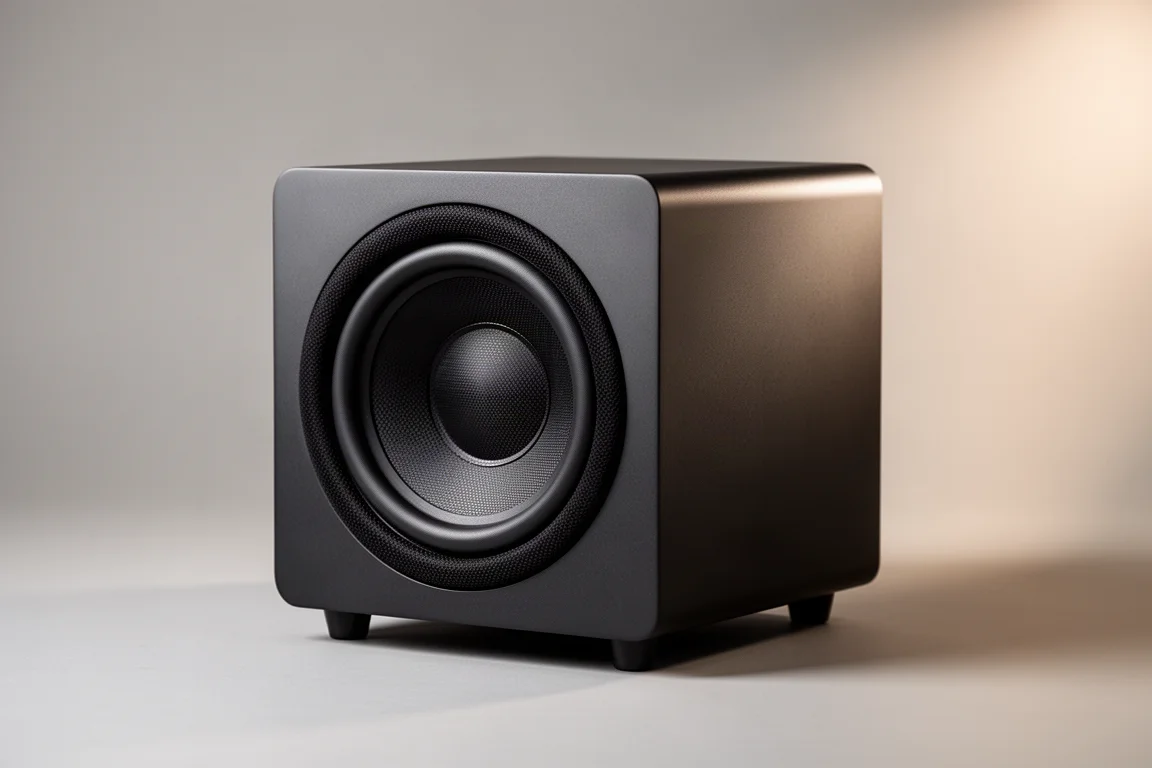
SVS SB-2000 Subwoofer
Adding a subwoofer is what turns a pair of good speakers into a full-range system. The SVS SB-2000 is a sealed design, which is why it sounds tight and musical rather than loose, and it is one of the strongest options available in its size and price class.
It carries a medium room size rating, which matches the intended application here: a small to medium space where the subwoofer and the speakers together provide plenty of output. The two are well matched as a system, and the sealed cabinet keeps the low end articulate for music while still giving movies the weight they need.
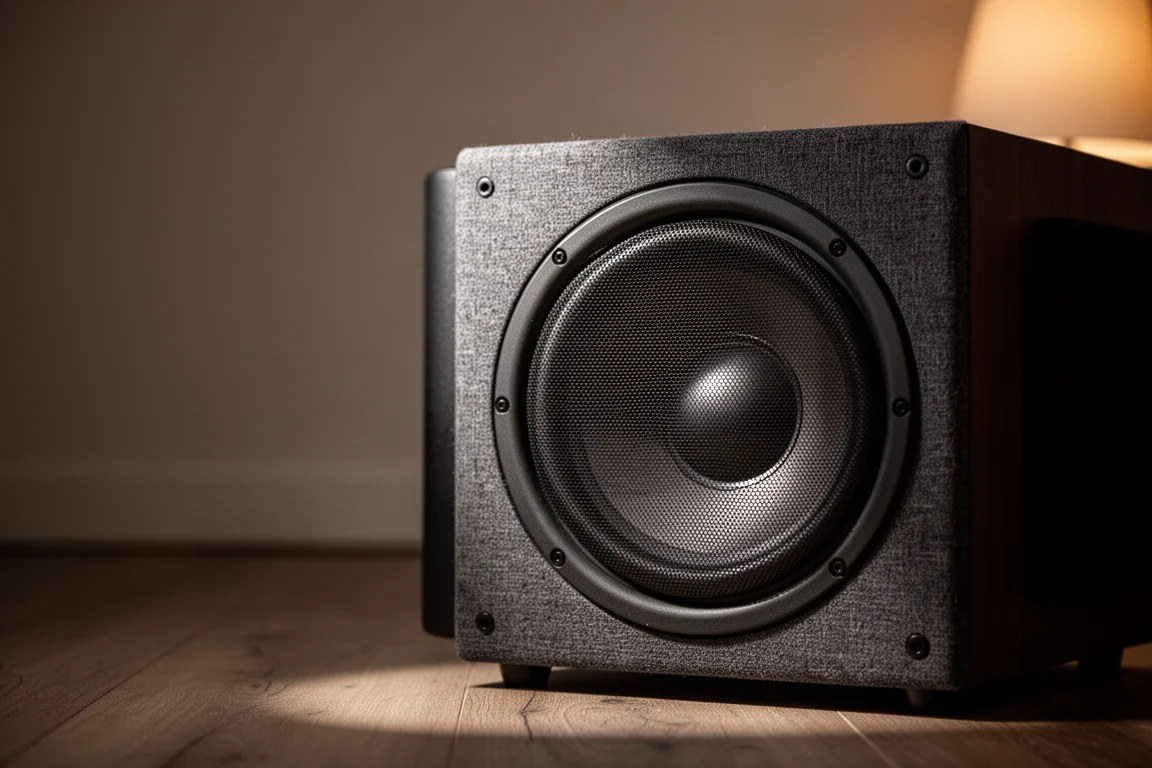
For a bass-forward listener, this is the component that changes the overall experience the most, and it is also the piece that lets the bookshelf speakers stay small without giving up the bottom two octaves.
Marantz Cinema 70S AV Receiver
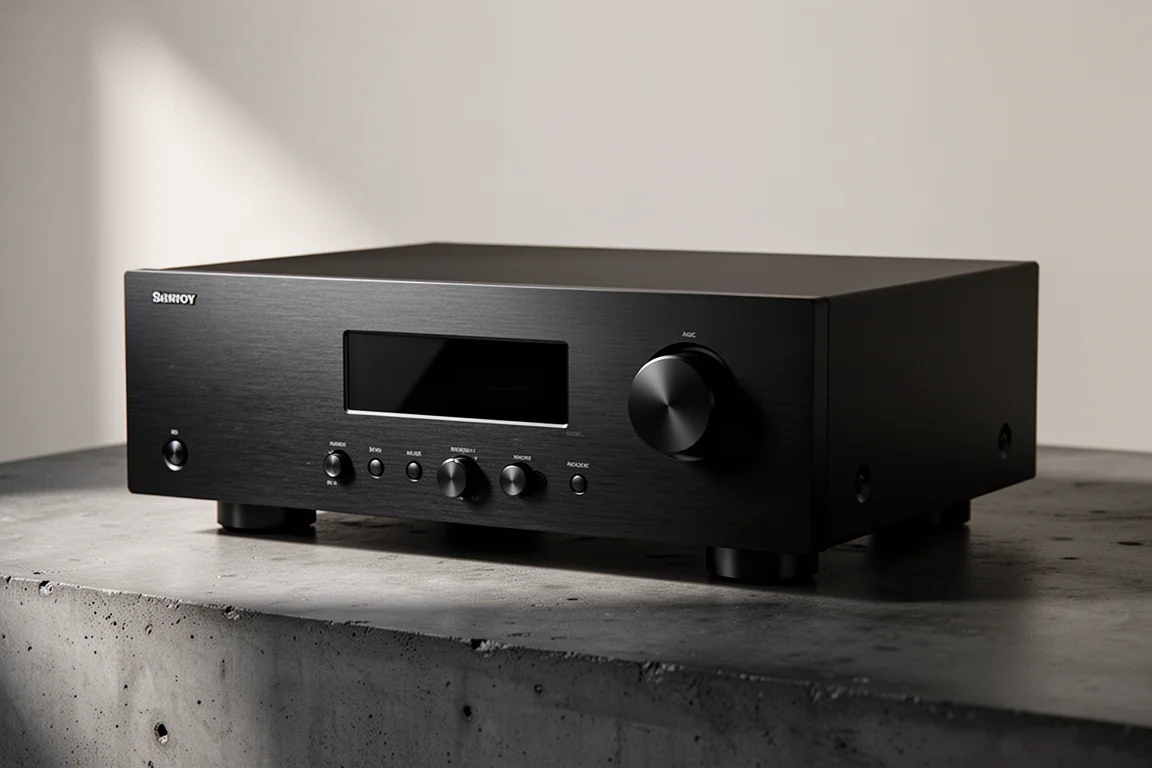
The Marantz Cinema 70S is the component that makes the upgrade path real. It has seven internal amplifiers rated at 50 watts per channel, conservatively specified with two channels driven, and Marantz states that it delivers at least 70 percent of that power with five channels driven. Measured behaviour holds up even with seven channels driven, which works out to an honest 35 watts per channel or so across all channels. In a small to medium room, that is sufficient.
The practical advantage is flexibility. Preamp outputs let you add a separate two-channel amplifier later if you move to tower speakers and want more headroom across the front stage. The slimline chassis is genuinely compact as well, which matters in a room where a full-size AV receiver would otherwise dominate the furniture.
Cables and Connections: SVS SoundPath Ultra Speaker Cable
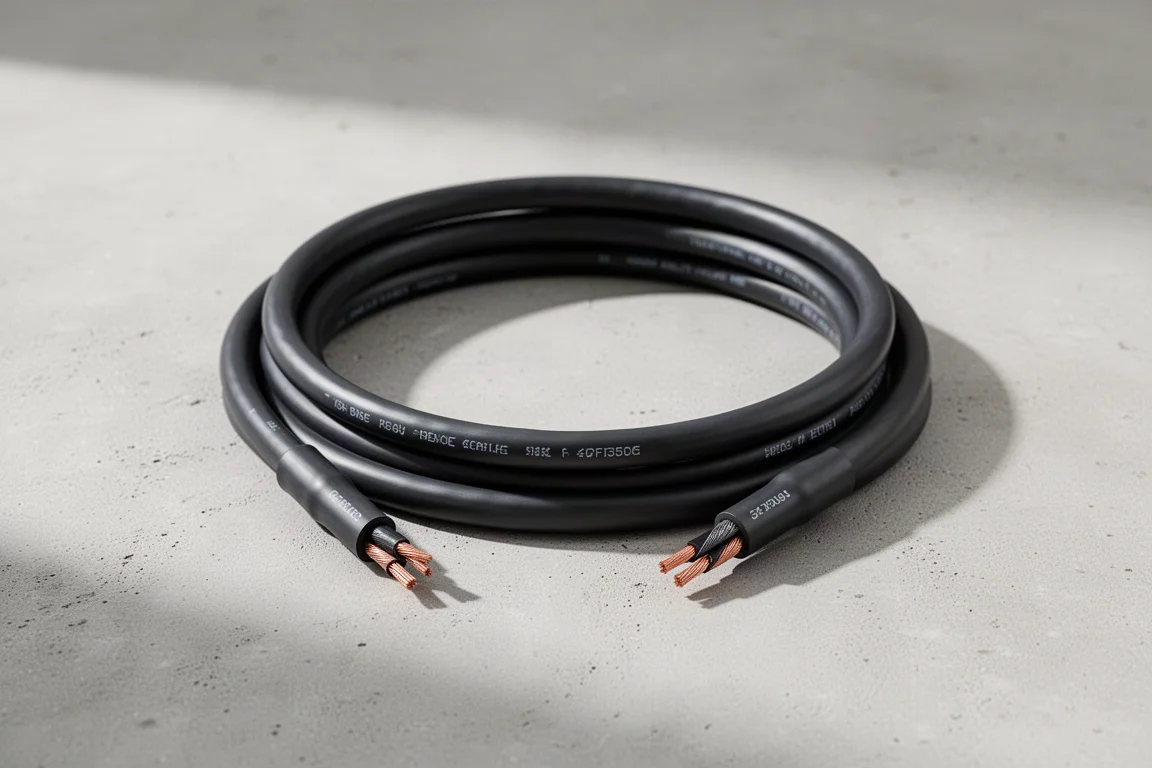
Cabling is where a system guide can easily become silly, and this one deliberately does not. The SVS SoundPath Ultra speaker cable is 12 gauge and costs about $44 each, which is more than enough for the runs involved in a room of this size. Nothing exotic is required.
Beyond speaker cable, the build only needs a couple of HDMI cables and a power receptacle or protection box that lets you switch everything on and off from one place, with USB available for convenience.
The Upgrade Path: Focal Theva No.2 Tower Speakers
The reason the Focal Theva No.1 works so well as a starting point is what happens later. The same line includes the Theva No.2 tower, priced at around $900 each, which brings more output, more bass extension, and higher sensitivity than the bookshelf model.
That makes a natural two-step upgrade. Move the towers into the front of the system, then repurpose the Theva No.1 pair as surround channels. From there, a centre channel and a pair of height channels open the door to spatial audio as well as conventional multichannel movie sound.
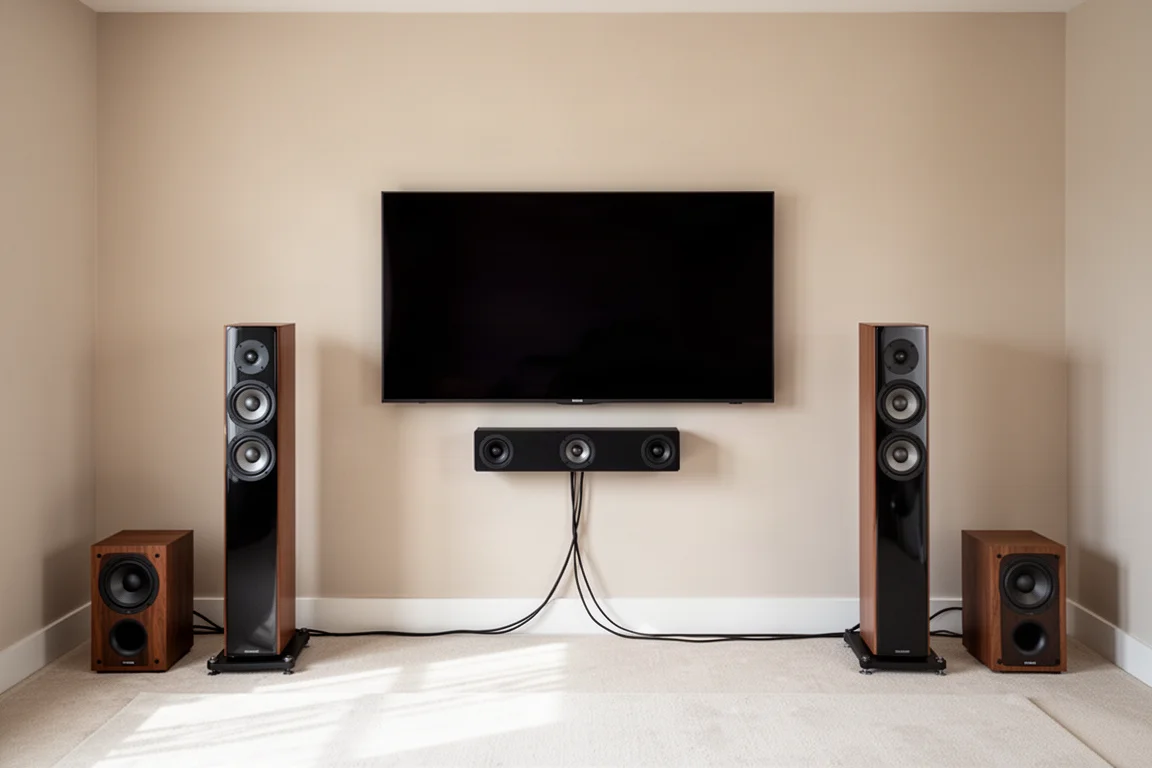
The point of building the system this way is that nothing is wasted. Every purchase either stays in place or moves into a new role as the system grows from 2.1 toward 5.1.2.
Buying Advice
Buy this system if you want a legitimate two-channel setup that also handles television and film well, and you would like the option to expand later without starting over. It suits a small to medium room and a listener who values musical bass over maximum output.
The main thing to decide up front is whether you are buying the destination or the starting point. If you already know you want towers and surround channels, it may be worth planning the full sequence now. If you simply want excellent two-channel sound today with room to grow, this configuration delivers that without overspending on cables or accessories.
Setup quality matters as much as component choice here. Position the speakers with some space behind them, seat yourself near the tweeter axis, and get the crossover between the speakers and the subwoofer dialled in. Those three steps do more for the final result than any cable upgrade.
Conclusion
This roughly $3,500 system is a sensible entry point for two-channel listening with a genuine route into Dolby Atmos. The Focal Theva No.1 gives you a balanced, easy-to-drive speaker that later becomes a surround pair. The SVS SB-2000 fills in the low end. The Marantz Cinema 70S provides seven channels of amplification in a compact chassis with preamp outputs for future expansion. And the cabling stays simple and honest.
Even if you never move beyond 2.1, this combination is a more engaging and more detailed alternative to a soundbar, and it puts music first, which is the right priority.
Further reading
Related Reviews
Hi-Fi Systems
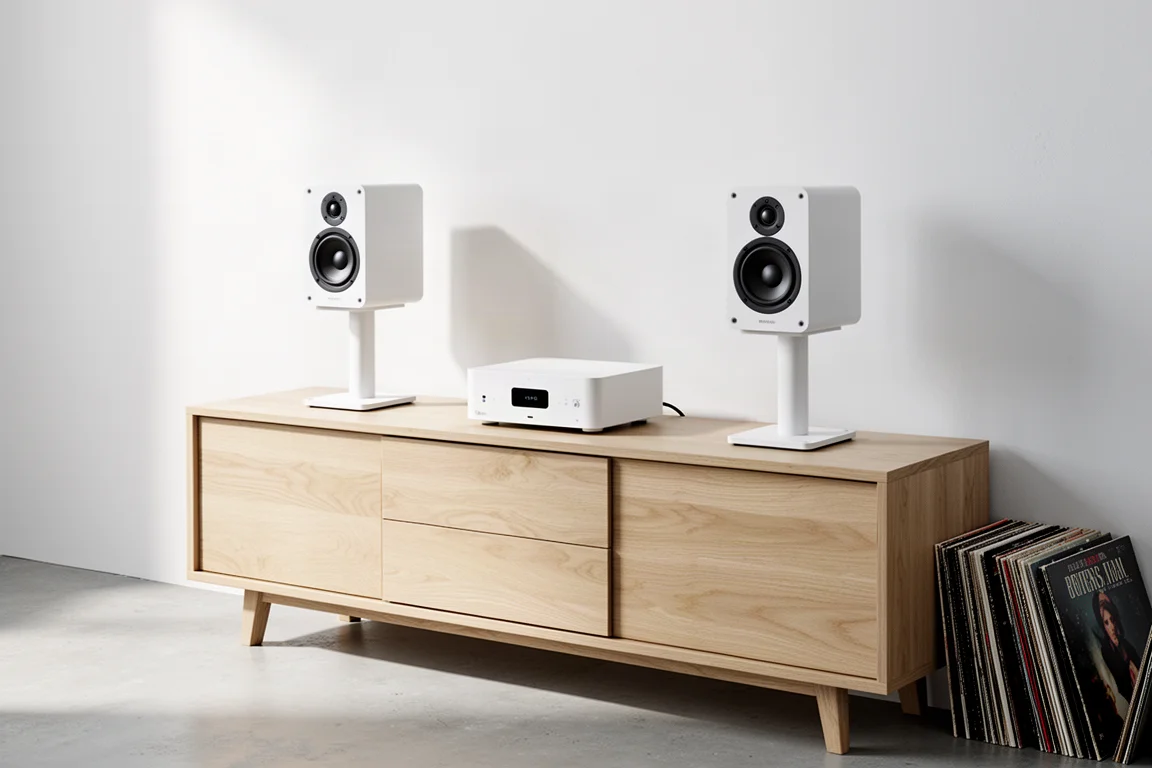
Building an All-White Streaming Hi-Fi System for Around $1,500
A practical two-channel streaming system built around the KEF Q150 and a Bluesound streaming amplifier, with alternative amplifiers, speaker stands, and a subwoofer worth considering.
Hi-Fi Systems
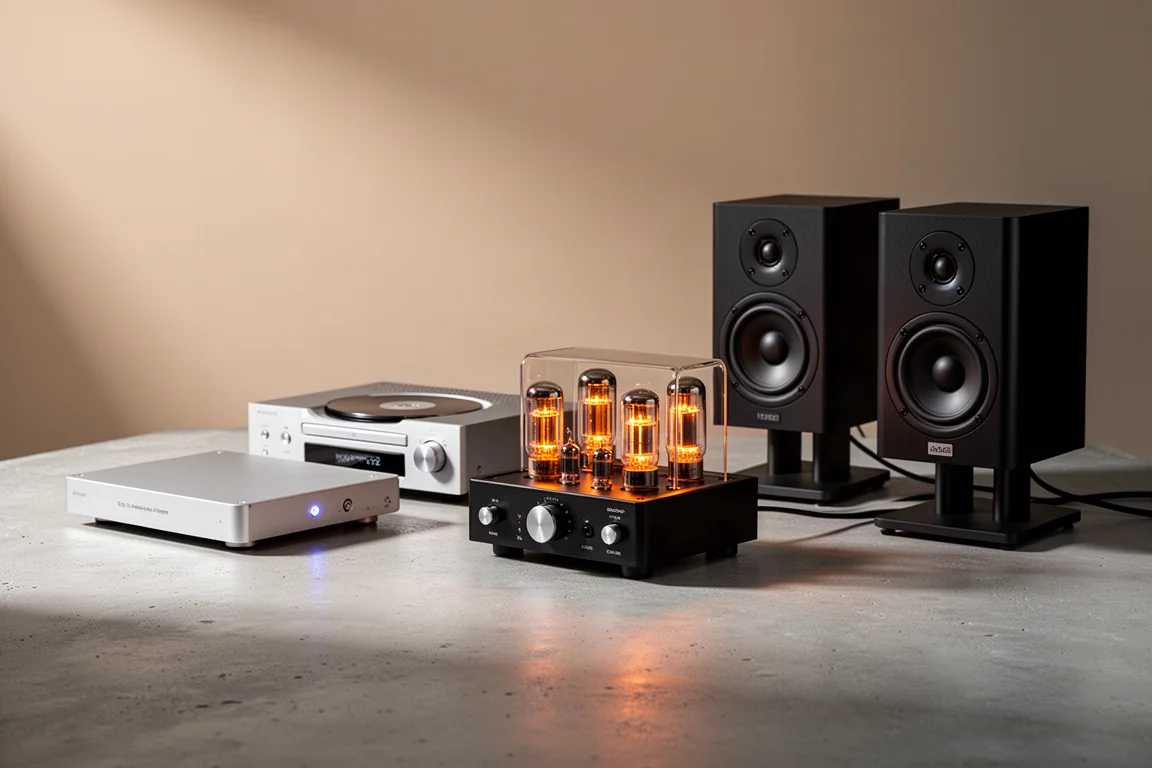
Audio Note Zero System Review: Matching DAC, CD Player, Amplifier and Speakers
A component-by-component look at the Audio Note Zero system, covering the 0.1x DAC, the CD0 player, the IZero amplifier and the AX1-D2 speakers, with pairing notes and buying advice.
Hi-Fi Systems
A Complete Hi-Fi System Under €1,000: Dali Spektor 2, Rotel A11 Tribute and Topping E30
Three brand new components, one modest budget, and a stereo system that is warm, forgiving and genuinely easy to live with.