Hi-Fi Systems
Building an All-White Streaming Hi-Fi System for Around $1,500
A practical two-channel streaming system built around the KEF Q150 and a Bluesound streaming amplifier, with alternative amplifiers, speaker stands, and a subwoofer worth considering.
Introduction
For most people stepping into streaming hi-fi, the sweet spot is a pair of passive standmount speakers paired with a streaming amplifier: one box that combines the DAC, the streamer and the power amplification, and in some cases a phono stage as well. It keeps the box count low, the setup simple, and the upgrade path clear.
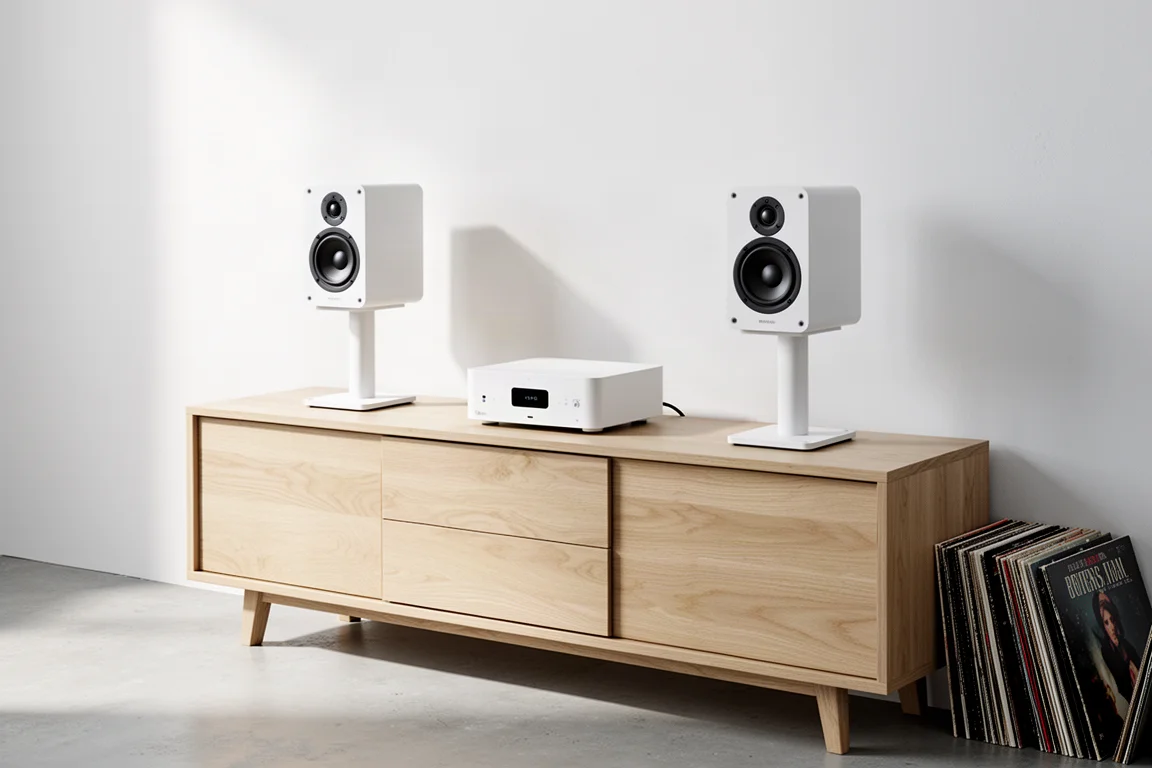
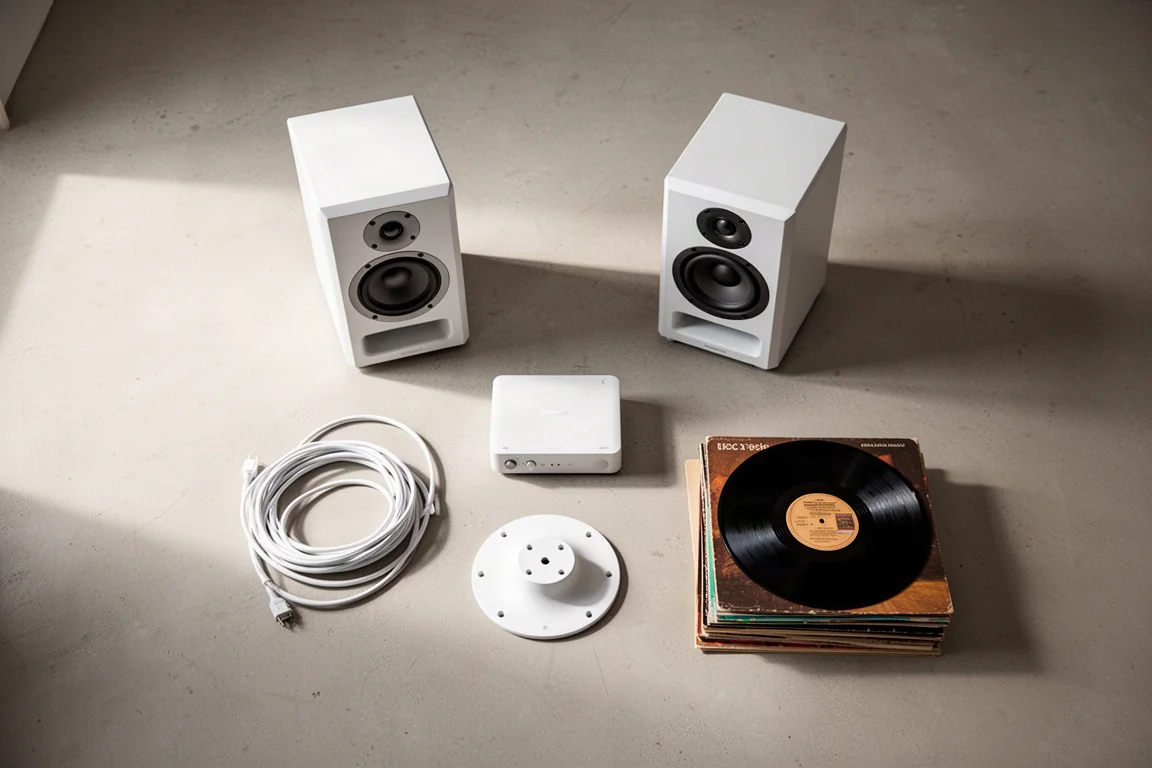
This build starts with the KEF Q150 and a Bluesound Powernode Edge, and lands somewhere around $1,500 depending on how much you decide to spend on stands. The bonus is that the speakers, the amplifier, the stands and even the cables can all be had in white, which makes the finished system far easier to live with in a normal room.
What Makes This Kind of System Work
A streaming amplifier does the job of three or four separate boxes. It pulls music from a network or a streaming service, converts it, and drives a pair of passive speakers directly. Fewer cables, fewer boxes, and a system anyone in the house can operate.
The feature that matters most in daily use is HDMI ARC. Connect one cable from the streaming amplifier to the ARC socket on a television and the TV’s audio runs through the hi-fi, with the TV remote handling volume. On some implementations the power button switches the television and the amplifier off together. There is a bandwidth ceiling on this route, around 48 kHz in a typical TV setup, which is a non-issue for most listeners and only worth flagging for the purists.
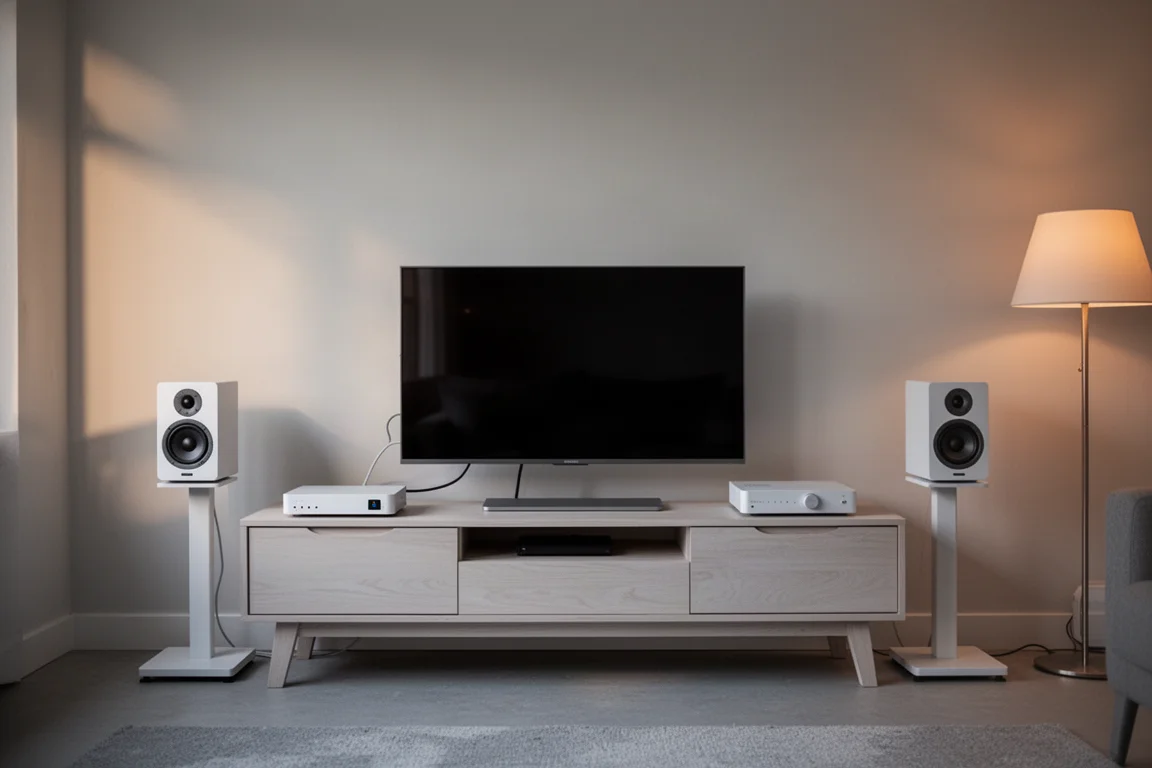
What that buys you is a system that behaves like a soundbar day to day but sounds nothing like one. Television, films and music all arrive through the same pair of speakers, and the amplifier stays in standby until the TV wakes it.
KEF Q150: The Foundation
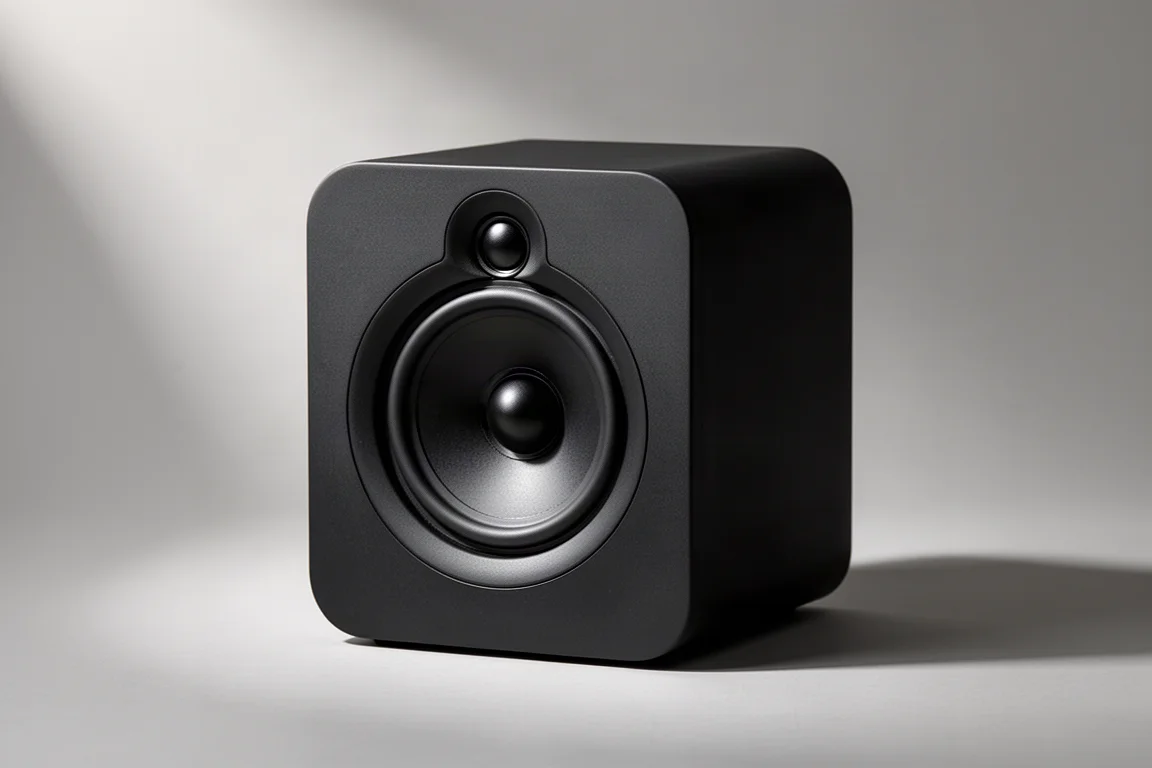
The Q150 is a mid-sized two-way standmount built around KEF’s Uni-Q driver array: a 13 cm aluminium mid-bass driver with a 2.5 cm aluminium tweeter mounted at its acoustic centre. Placing the tweeter inside the mid-bass cone makes the two drivers behave closer to a single point source, which helps imaging and off-axis response. A speaker with well-controlled off-axis behaviour tends to sound more consistent around the room.
It is a bass reflex design with a rear-firing port, and KEF used computational fluid dynamics to shape that port, reducing air noise and improving dynamics. Subjectively, the Q150 throws a big soundstage with above-average depth for the money, and it has enough low-end thrust to carry bass-heavy electronic music properly. The bass is a touch loose, and the cabinet is not as heavily braced or as inert as the one used on KEF’s more expensive standmounts. Tapping the side of the Q150 produces a hollow thonk that you will not hear from the LS50 Meta.
That softer cabinet has an audible consequence. The Q150 is more opaque and less analytical than its pricier sibling, and its presence region is comparatively restrained, so snappy percussion and upper mids are less forward. For listeners running brighter amplifiers or brighter AV receivers, that relative mellowness is a benefit rather than a compromise, and it makes for an easy-going long-term listen.
Pricing is the other half of the story. The Q150 lists at $599, but it has been discounted heavily for much of the year and has been available in the US for around $299. At the full list price the case is much harder to make. At the discounted price it is one of the strongest standmount options at the money.
Bluesound Powernode Edge: The Streaming Amplifier
The Powernode Edge sells for $649 and is the sprightly, energetic half of this pairing. Its slightly forward character counterbalances the Q150’s more relaxed disposition nicely.
Inside is the BluOS platform, which brings Roon Readiness, Tidal Connect, Spotify Connect and Apple AirPlay 2, along with HDMI eARC for the television. Google Chromecast is not supported, which is the one gap worth knowing about before you buy.
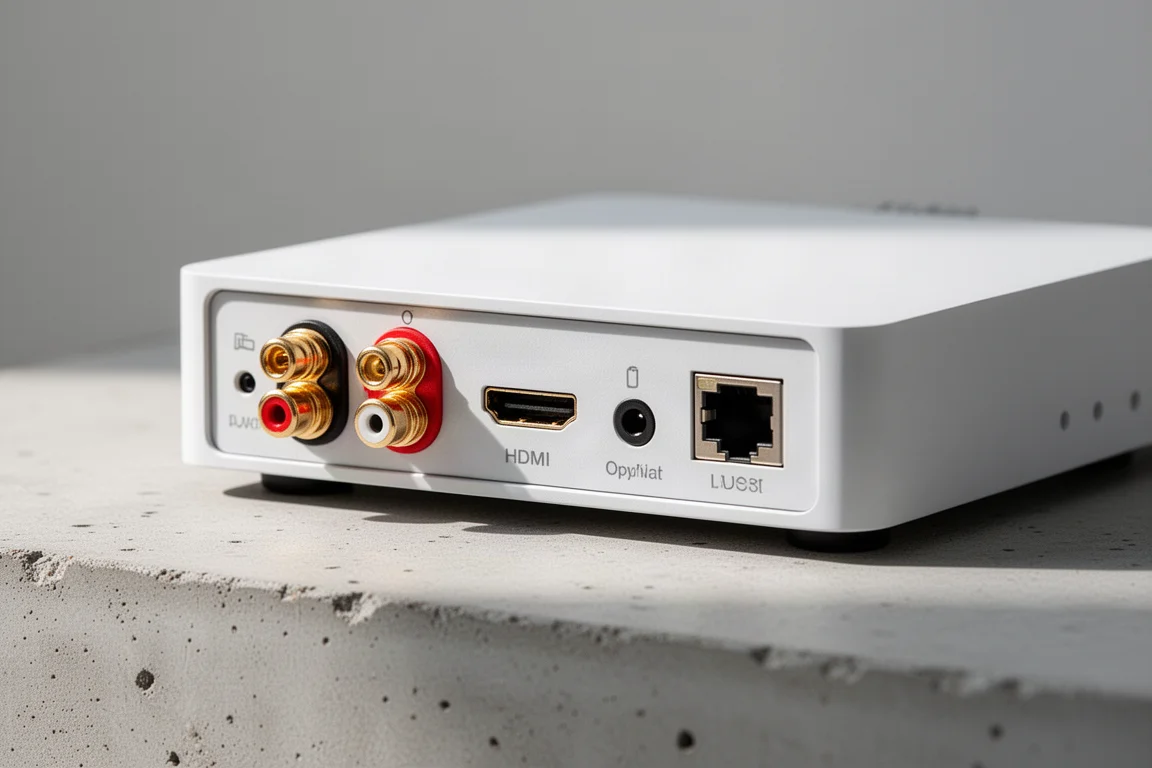
The physical design is compact and, crucially for this build, available in white. With $948 covering the speakers and the amplifier, the Edge leaves room in the budget for decent stands and cables rather than forcing a compromise on either.
Bluesound Powernode: More Low-End Weight
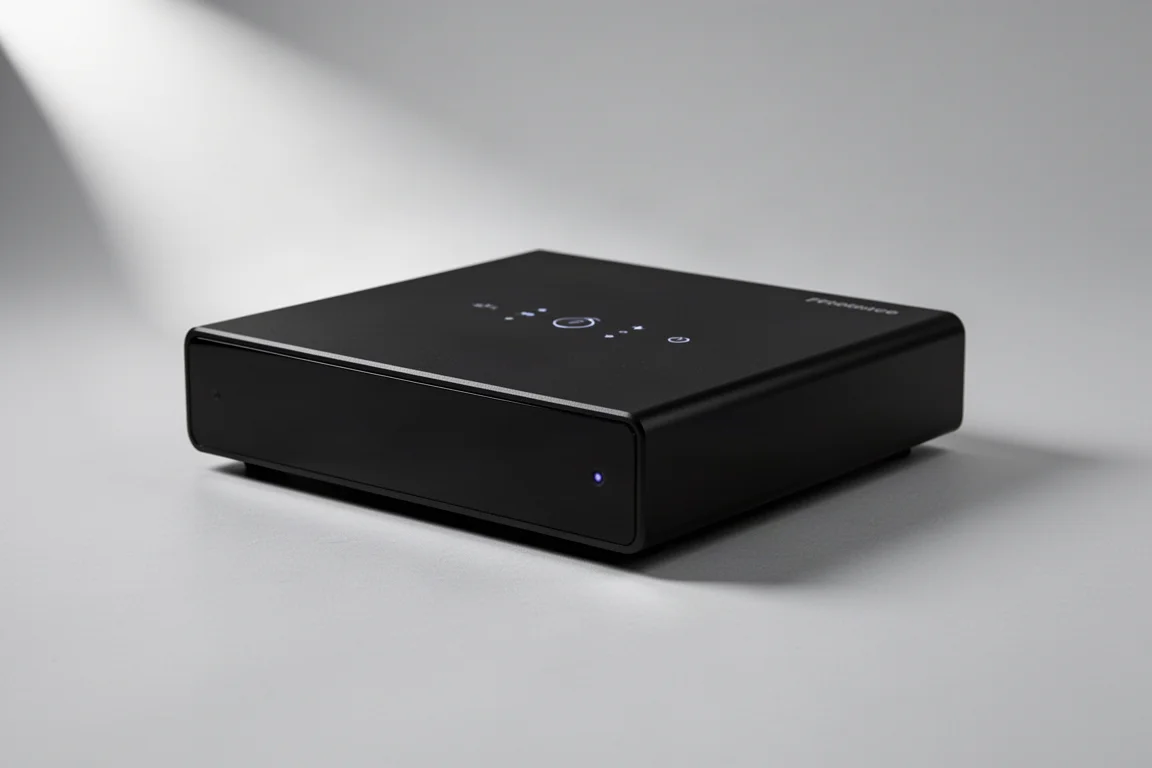
Stepping up to the standard Powernode at $949 buys a fuller presentation rather than more features. The low end is plumper and a little fleshier, and the top end is smoother and less sprightly than the Edge. It runs the same BluOS platform, so Roon Readiness, Tidal Connect, Spotify Connect, AirPlay 2 and HDMI eARC all carry over, and it is available in white as well.
The upgrade makes most sense if you are prepared to save on stands to fund it, since the money has to come from somewhere in a fixed budget.
SVS Prime Wireless Pro SoundBase: Chromecast Support
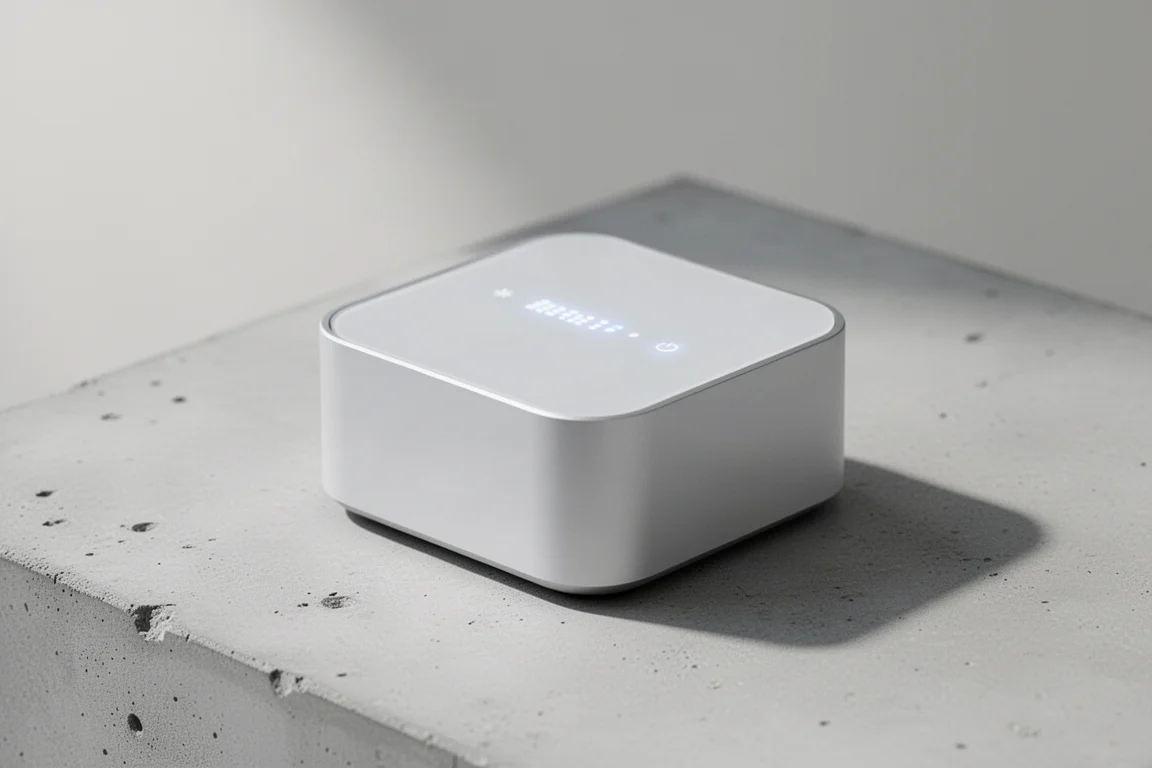
The Prime Wireless Pro SoundBase is a newer streaming amplifier at $699 and covers much of the same ground as the Bluesound units. The trade-offs run in both directions: it does not carry Roon Readiness or Tidal Connect, but it does include Google Chromecast, along with DTS Play-Fi and HDMI eARC.
The catch for this particular build is the finish. The SoundBase is offered in black only, so it will not fit an all-white system. If Chromecast is essential and colour is not, it is a straightforward alternative.
Sonos Amp: The Ecosystem Route
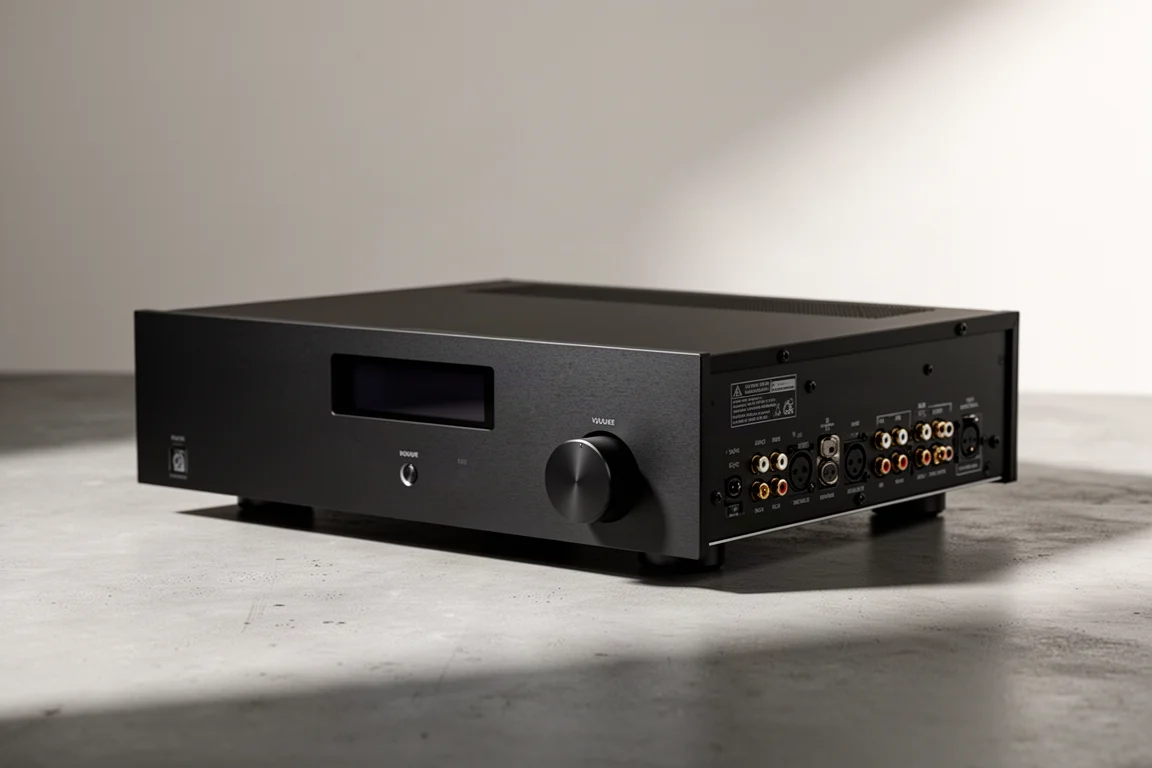
The Sonos Amp at $699 is the option for households already invested in Sonos. It adopts the Sonos ecosystem and adds Spotify Connect, and Roon can stream to Sonos devices even though they are not Roon Ready. There is no Tidal Connect and no Chromecast, and the HDMI connection is standard ARC rather than eARC.
In practice the difference between ARC and eARC matters far less than having HDMI control at all, which all three amplifiers here provide.
KEF LS50 Meta: The Transparency Upgrade
The LS50 Meta is the speaker to consider if the budget stretches. It is another KEF standmount using a Uni-Q array, with a slightly different driver, and its cabinet is far stronger and more inert than the Q150’s. European pricing sits around 1,400 euros, with US pricing in a similar bracket.
What that cabinet and driver work buys is transparency. The LS50 Meta is more analytical, it lets you hear further into a mix, and it does not share the Q150’s slightly loose bass or its restrained presence region. The flip side is that it is a less forgiving, less easy-going listen, and it costs several times as much.
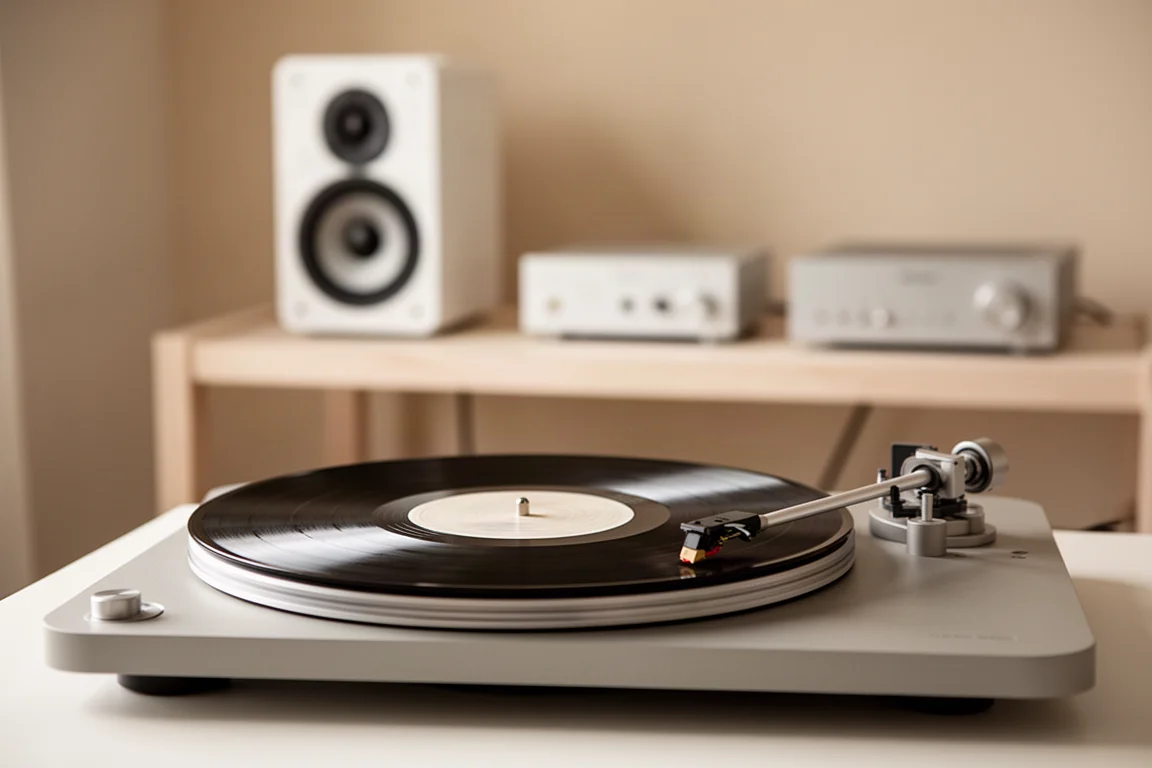
For a system built to a $1,500 target, the LS50 Meta is out of reach on its own. It is worth knowing about because it explains exactly what the Q150 gives up, and because it is the natural next step if this system later moves to a second room.
Dali Spektor 2: The Budget Standmount Alternative
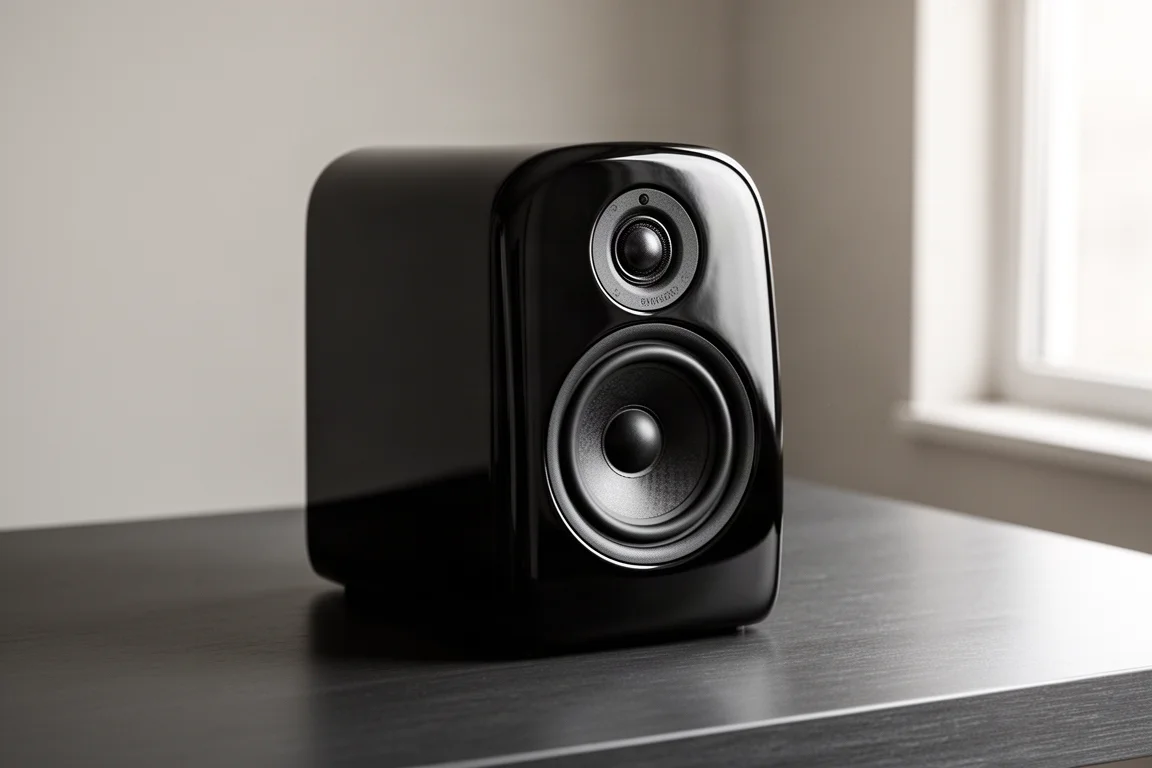
The Spektor 2 has long been the default recommendation at around $300, and it remains a fine speaker. The Q150 is the more direct of the two in the lower and mid treble, which some listeners will prefer and others will not. At a $599 list price the Q150 would not clearly beat it. At $299 it does.
KEF KC62: Adding Low-End Weight
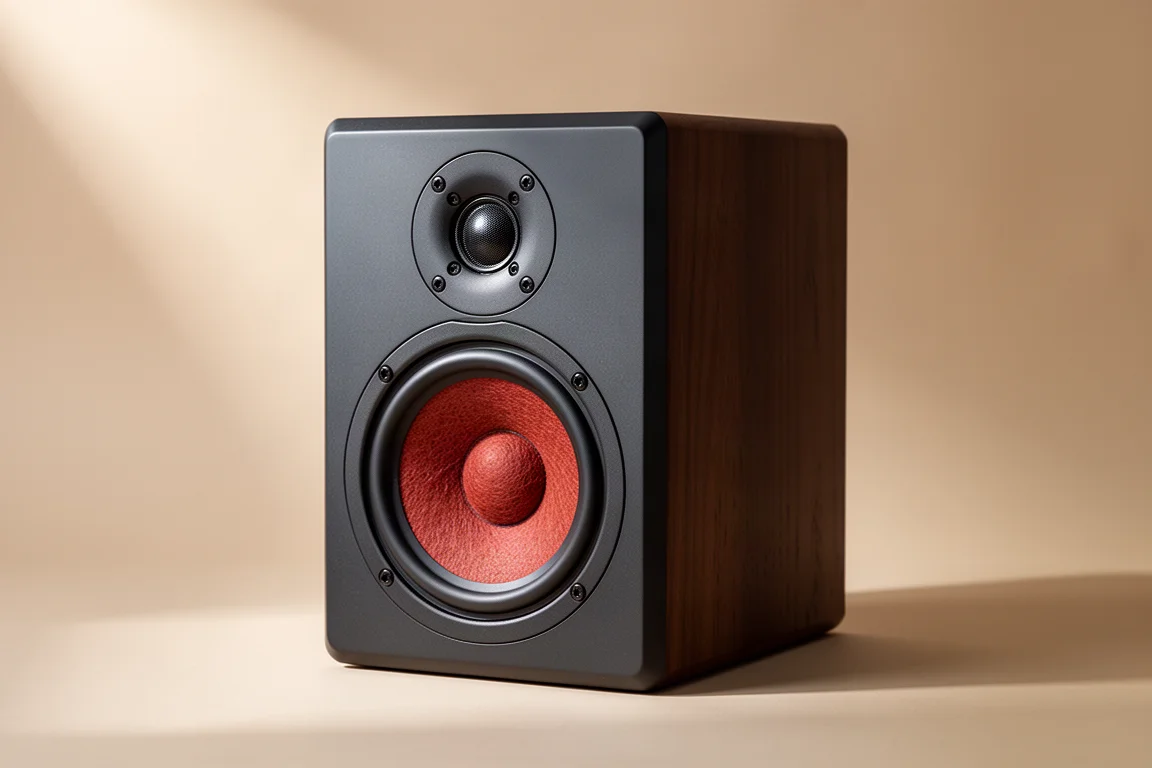
The Q150 will not reach as deep as a soundbar, so a subwoofer is worth considering if films and bass-heavy music are a big part of your listening. Subwoofers that do a decent job start at around $400 to $500.
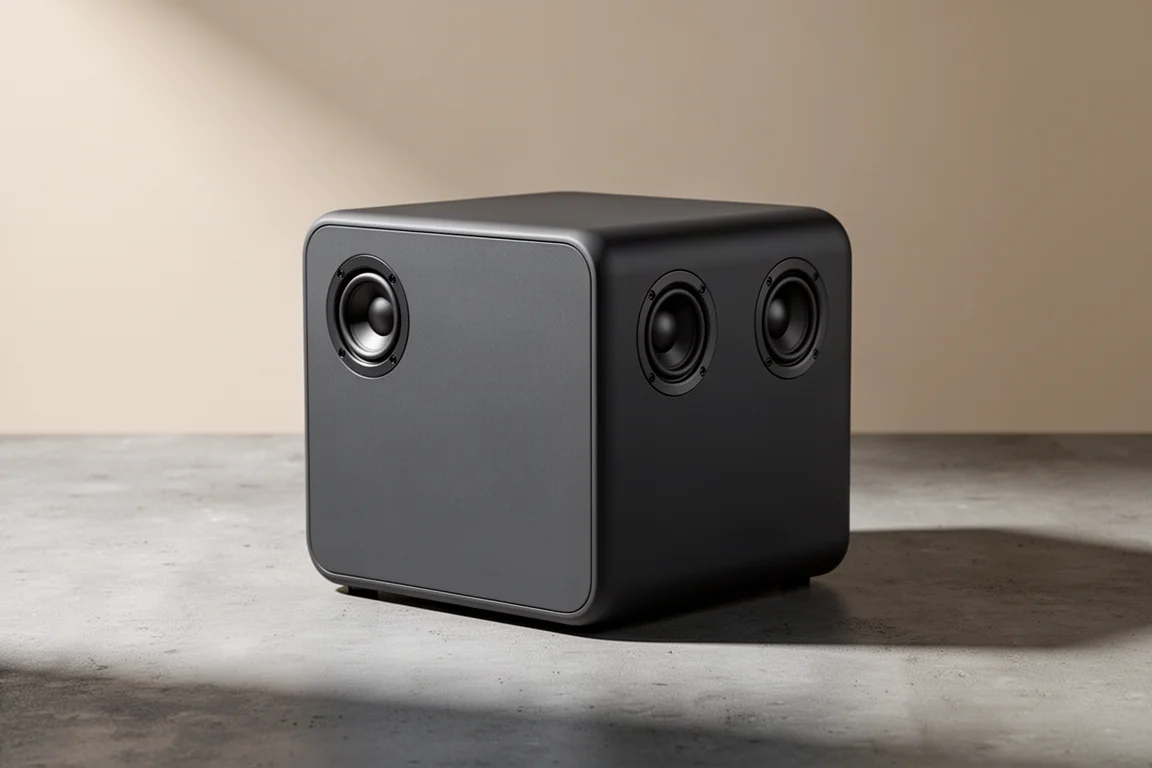
The KC62 is the natural cosmetic match: it is available in white and it fits neatly with the rest of the system. It is also priced far above everything else in this build, so it makes more sense as a later addition than as part of the initial $1,500.
Speaker Stands and Cables
Stands are where this build gets interesting, because the choice has a direct effect on how much amplifier you can afford.
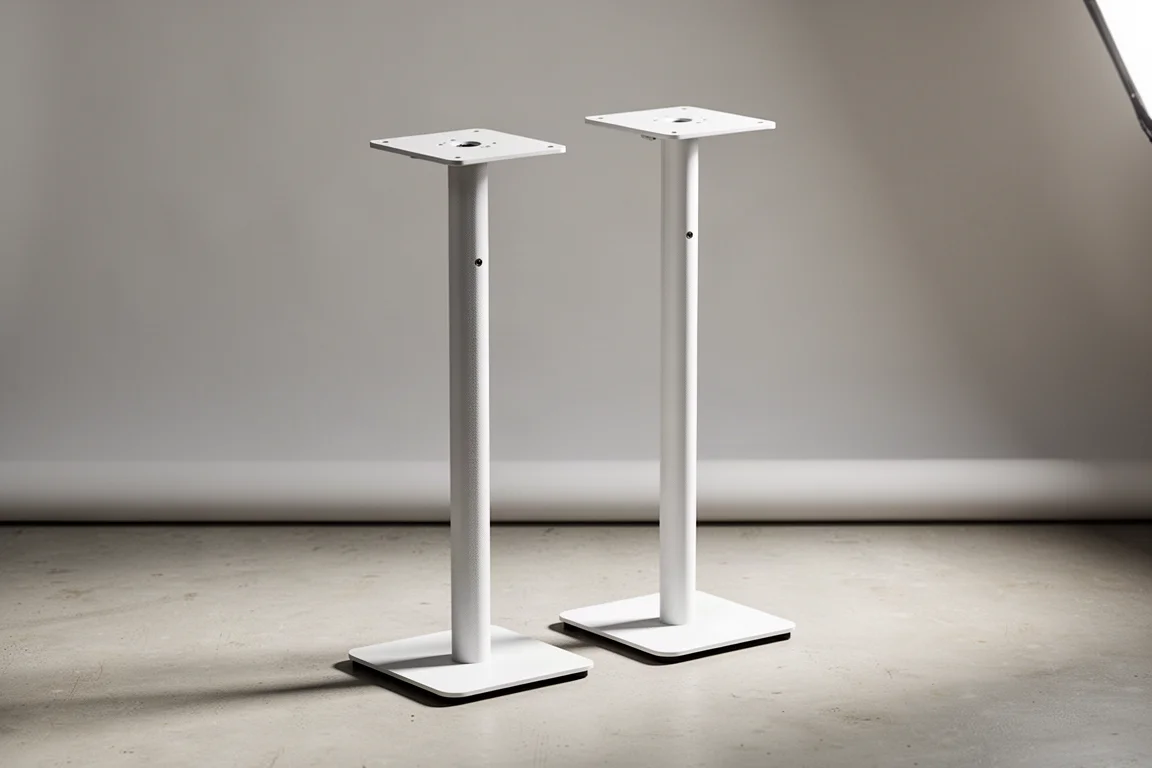
The Solid Steel SS6 is a beautifully finished stand at $600 and it is available in white, which is why it appears in the all-white version of this system. Adding it to the $948 already spent on speakers and amplifier takes the total to roughly $1,550 before cables, a little over the original target.
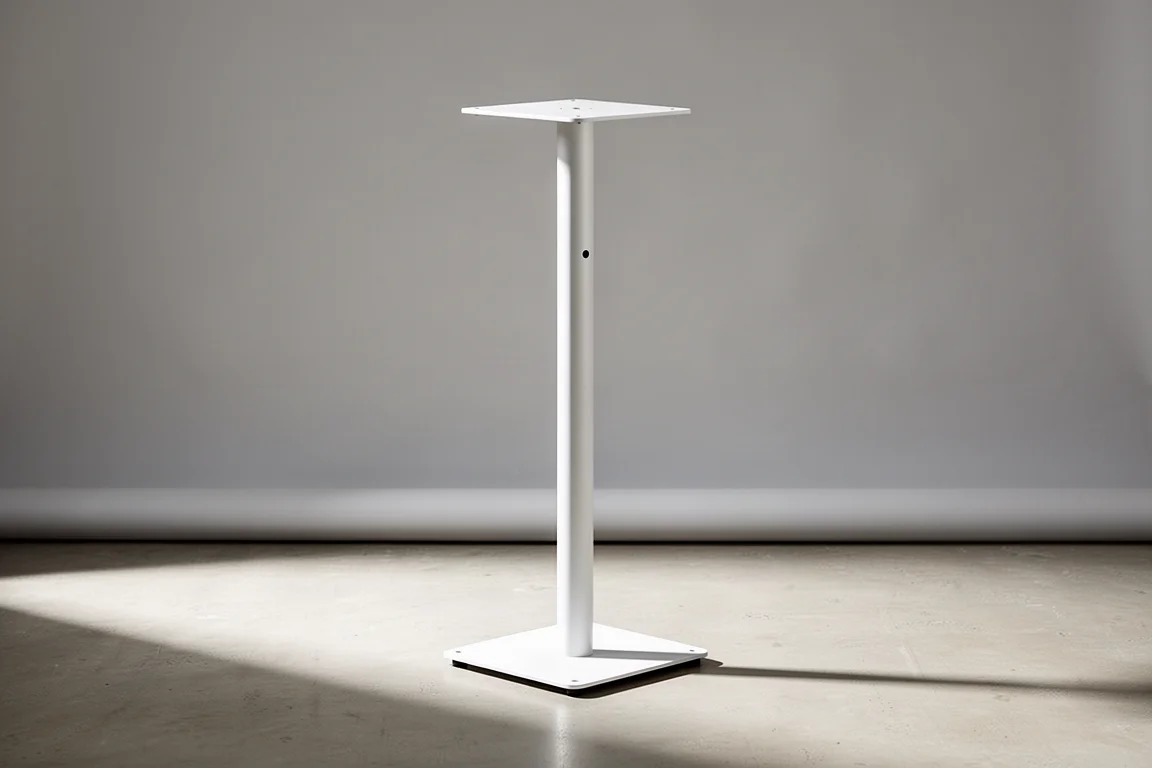
The Atacama Nexus 6i is the pragmatic alternative. It is available in the UK for around $100, it comes in white, and it frees up enough budget to move from the Powernode Edge to the standard Powernode. Add around $50 of off-the-reel speaker cable, also in white, and the system lands nearer $1,200.
Buying Advice: How to Configure This System
There are two sensible configurations. The value version pairs the Q150 at its discounted price with the Powernode Edge and the Atacama Nexus 6i stands, and comes in at roughly $1,200. The premium version pairs the same speakers with the Powernode Edge and the Solid Steel SS6 stands for around $1,550, or swaps to the standard Powernode if you prefer a fuller low end and are willing to economise elsewhere.
The one comparison worth making before you commit is against a soundbar. A soundbar has real advantages: it is discreet, it is easy to place, and its vocal clarity and bass extension are often perfectly respectable. What it cannot do is produce the width and depth of a pair of standmounts on stands, and once you have heard that difference it is very hard to go back. If music makes up more than half of your listening time, audition a pair of standmounts on stands first.
The other thing to weigh is low-frequency reach. The Q150 will not dig as deep as a soundbar, so if films matter as much as music, budget for a subwoofer later rather than expecting the speakers to cover everything.
Conclusion
The Q150 at its discounted price is the anchor of this build, and a streaming amplifier with HDMI ARC is what turns it into a system the whole household can use. White finishes across the speakers, amplifier, stands and cables keep the installation visually quiet, and the choice between the Powernode Edge and the standard Powernode is really a choice between energy and low-end weight. Spend on stands only as much as you need to, and put the difference where you will hear it.
Further reading
Related Reviews
Hi-Fi Systems
Audio Note Zero System Review: Matching DAC, CD Player, Amplifier and Speakers
A component-by-component look at the Audio Note Zero system, covering the 0.1x DAC, the CD0 player, the IZero amplifier and the AX1-D2 speakers, with pairing notes and buying advice.
Hi-Fi Systems
A Complete Hi-Fi System Under €1,000: Dali Spektor 2, Rotel A11 Tribute and Topping E30
Three brand new components, one modest budget, and a stereo system that is warm, forgiving and genuinely easy to live with.
Hi-Fi Systems
Five Hi-Fi Systems Under $1,000: Complete Setups for Every Listener
Five complete hi-fi systems under $1,000, each built around a different priority: generalist, tube, power, digital, and bass.