Hi-Fi Systems
A Complete Hi-Fi System Under €1,000: Dali Spektor 2, Rotel A11 Tribute and Topping E30
Three brand new components, one modest budget, and a stereo system that is warm, forgiving and genuinely easy to live with.
Introduction
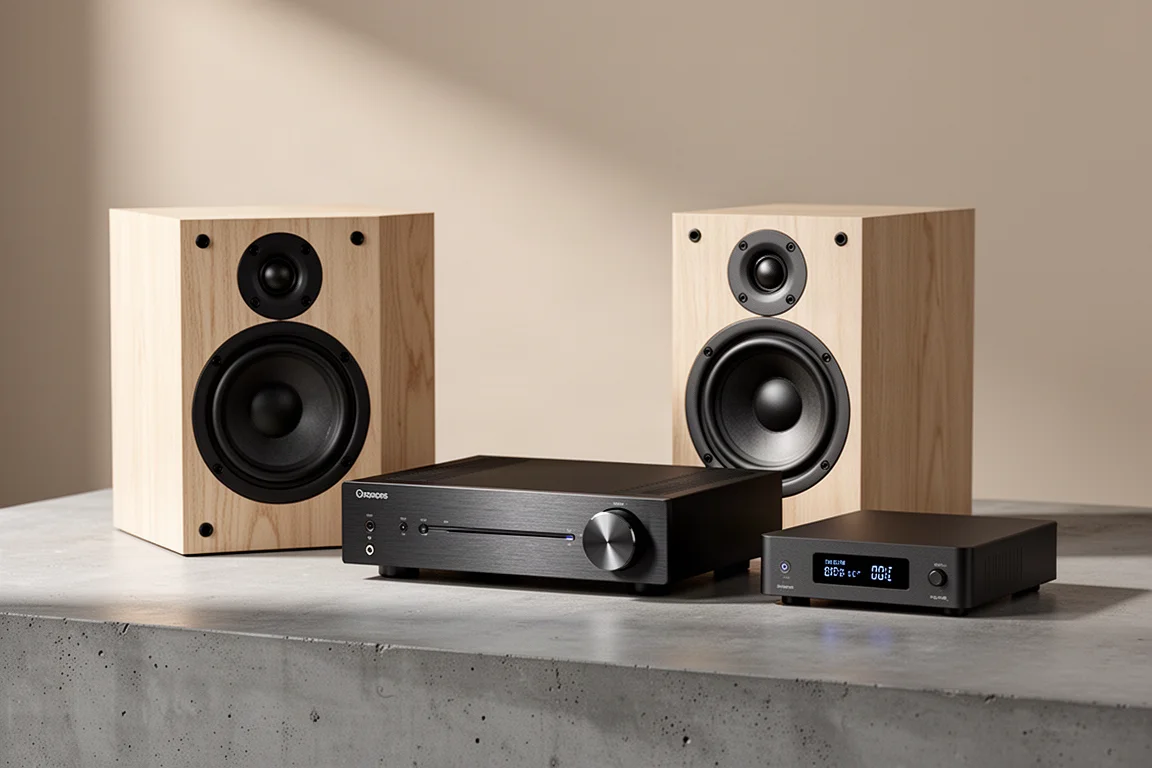
Putting together a complete stereo system for around €1,000 usually means accepting a compromise somewhere in the chain. This one takes a different route: three brand new components, bought without hearing any of them first, chosen so that each part covers for the others.
The total came to €938 for the speakers, the amplifier and the DAC. That figure buys a system that is genuinely enjoyable rather than merely adequate, and it still leaves room to grow later.
Why a Three-Component System Makes Sense at This Price
At this budget, the split between components matters more than any single specification. Very good affordable loudspeakers are easy to find, so the speakers can comfortably be the least expensive part of the build. Amplifiers are the opposite case: established brands rarely sell a serious integrated amplifier below roughly €400, and that is where the money needs to go.
That leaves the DAC as the flexible third piece. A compact, well-featured converter costs very little and can add the digital inputs the amplifier does not have on its own.
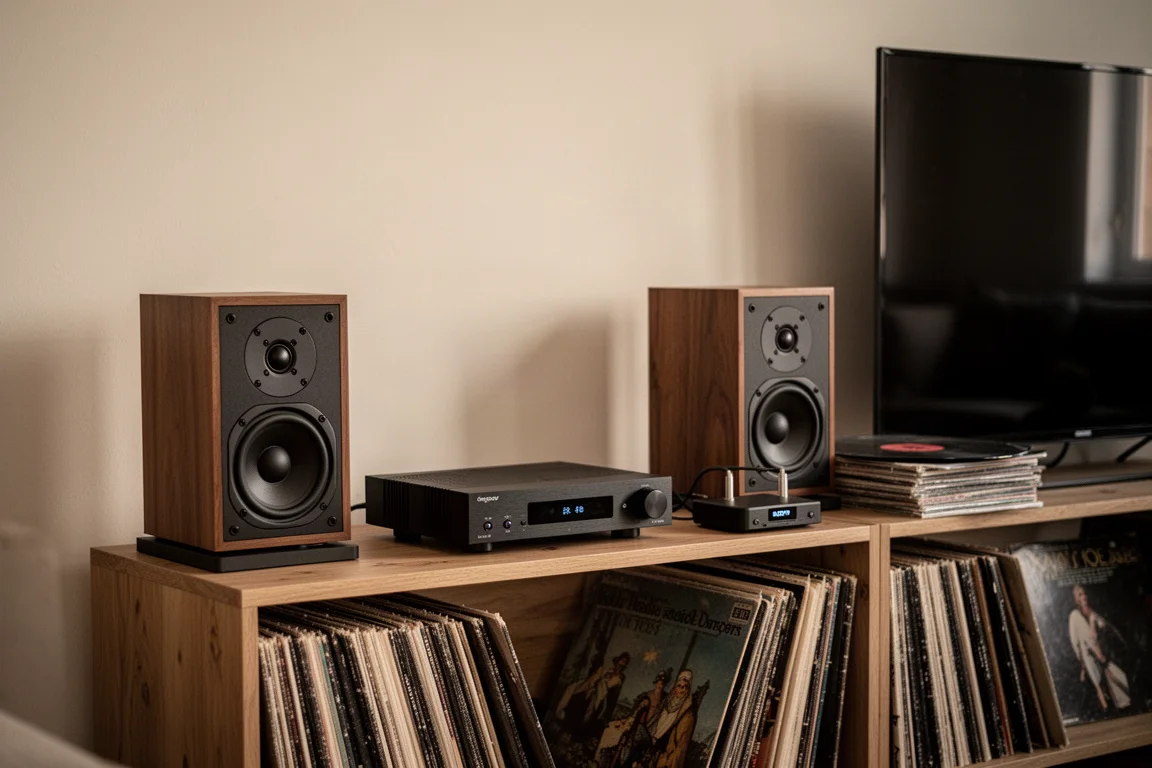
The practical result is a system built around a modest pair of standmount speakers, a proper amplifier with power in reserve, and a small converter handling everything digital. Each part stands on its own, which keeps the upgrade path open.
Speakers: Dali Spektor 2
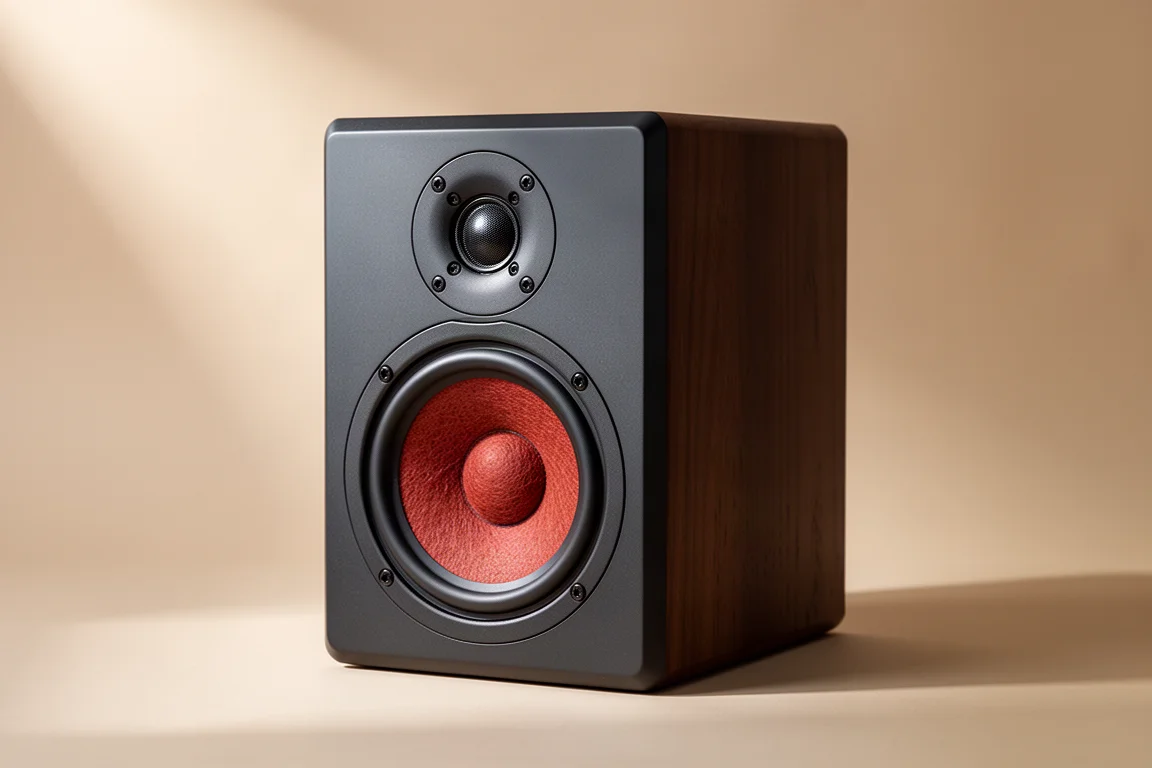
Dali is a Danish loudspeaker company that builds its own drivers in house at its facility near Aarhus, and it favours wood and paper fibre for its cone materials. The Spektor 2 is one step up from the smallest model in the range and sells for around €200.
Inside the cabinet there is a 5.25-inch mid-bass driver and a 1-inch soft dome tweeter. Nominal impedance is rated at 6 ohms and sensitivity at 84.5 dB, which sits below average, so the speaker rewards an amplifier with real power in reserve rather than a minimal one. Low-frequency output falls away below roughly 54 to 55 Hz.
The speakers ship with small rubber feet for shelf or lowboard placement, though a stand that brings the tweeter close to ear level will get considerably more out of them.
Amplifier: Rotel A11 Tribute
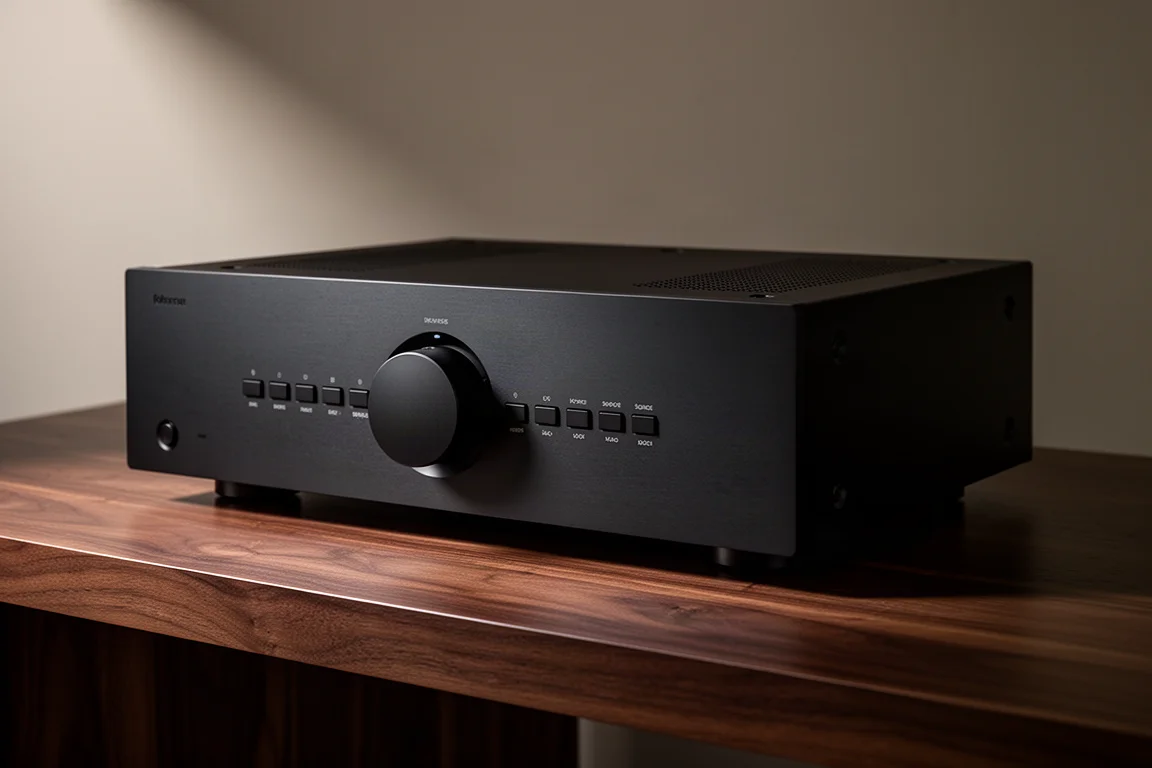
The Rotel A11 Tribute is a Class AB integrated amplifier rated at 50 watts per channel into 8 ohms. It provides five analogue inputs, one of which is a moving magnet phono stage for a turntable. Rotel winds its own transformers in house, which is part of what has built the brand’s reputation for sturdy, long-lived electronics.
The Tribute version of the A11 carries component changes to capacitors and resistors along with additional damping material on the chassis. That tuning work came from Ken Ishiwata, long associated with Marantz, who passed away at the end of 2019, and the project was completed by Karl-Heinz Fink.
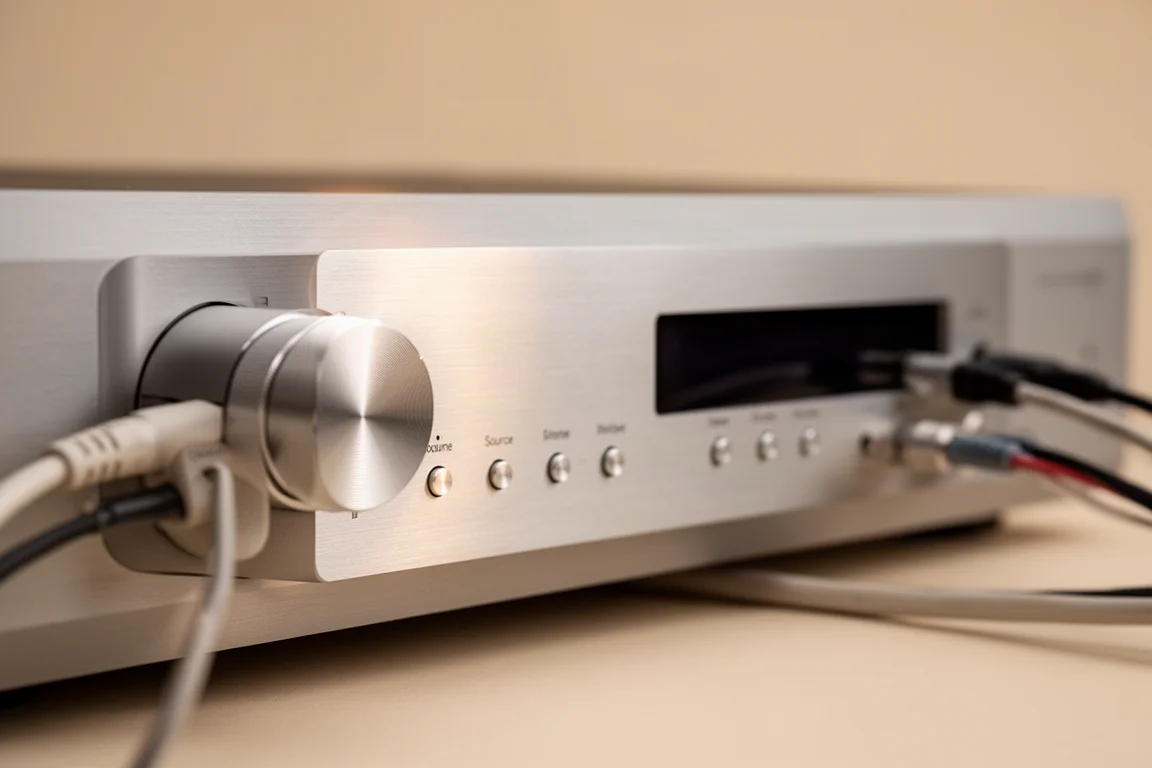
There is a DAC inside the amplifier, but it is only reachable over Bluetooth, and that input supports AAC and aptX rather than lossless formats. For lossless streaming, an external converter is the answer.
Two features matter for the future. Preamp outputs make it straightforward to add a subwoofer later, and tone controls plus a loudness setting for low-volume listening are available from the front panel menu or the supplied remote.
DAC: Topping E30
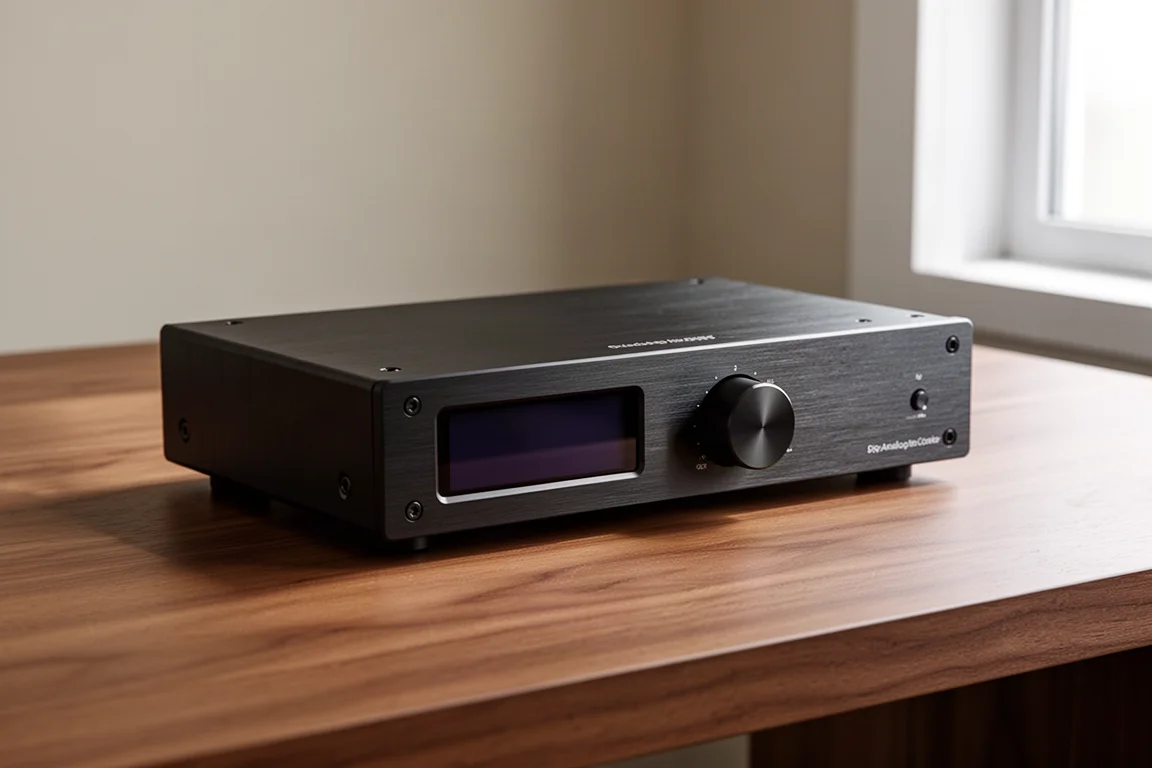
The Topping E30 is a compact DAC with USB, toslink and coaxial inputs and analogue outputs. It has a display on the front showing the incoming sample rate as well as the volume level, and it comes with a remote for power and volume.
Those two details, the toslink input and the sample rate readout, are what make it a good fit here. A toslink connection takes the digital audio output from a television, and the display confirms exactly what the television is sending.
It is a modest outlay next to the amplifier, and it does not need to handle volume duty. The converter can be left at full output while the amplifier takes care of level changes.
How the System Sounds Together
The result leans slightly warm rather than bright. It is not etched or forward, and it stays forgiving across a wide range of recordings, which makes it an easy listen over long sessions rather than something that demands perfect material.
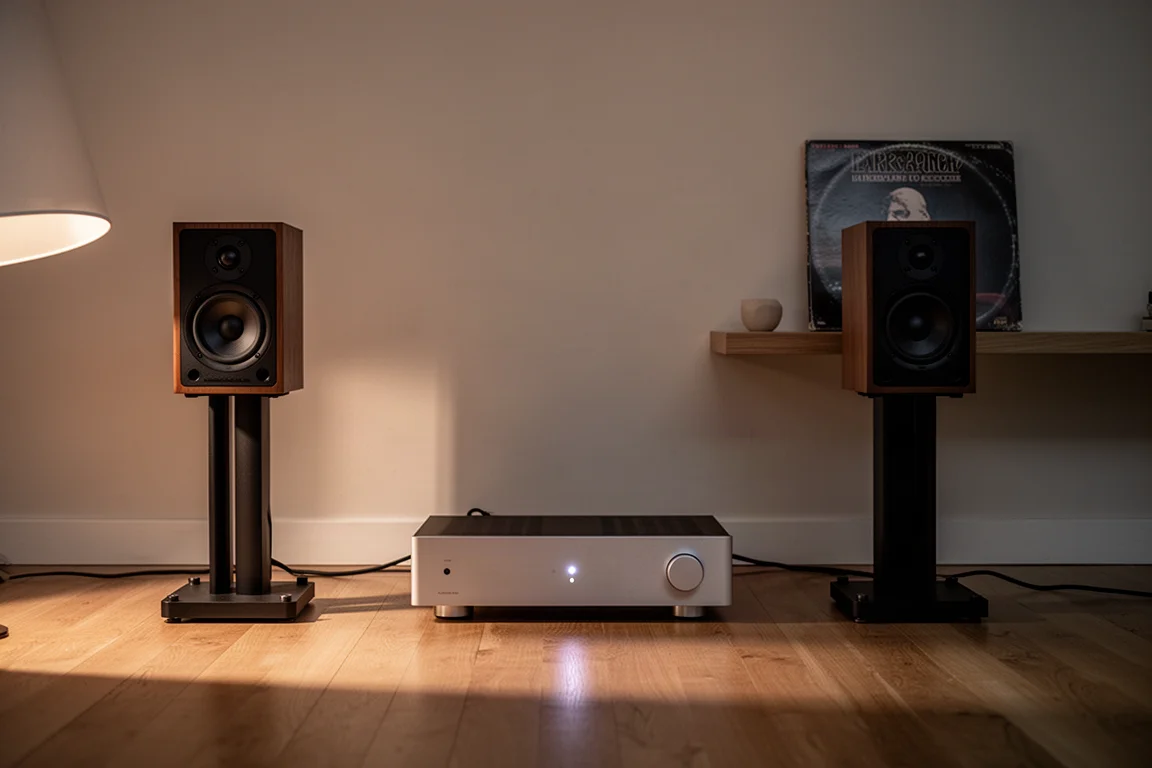
The character comes largely from the pairing. The Dali speakers are undemanding in tonal terms, and the Rotel’s power reserves keep them composed when the music asks for more. Where the system gives ground is at the very bottom of the frequency range, which is the natural consequence of a €200 pair of standmounts.
Five Rules for Buying Hi-Fi Without an Audition
-
Buy where you can return it. A retailer offering a money-back window, or at least store credit, turns a blind purchase into an extended audition. If you buy from a dealer, ask what happens if the sound is not for you.
-
Never max out your budget. Gear you cannot afford to walk away from removes your flexibility. Leaving headroom makes any resale loss easier to absorb and keeps money available for the next step.
-
Stick to brands with a long track record. Companies that have been building the same category of product for decades have earned their reputations. A newer brand can still be a good bet when its feature set matches exactly what you need and you have had a good experience with it before.
-
Ignore the old 50 percent rule. The advice to spend half your budget on speakers is outdated at this price. Very good affordable speakers are plentiful, while amplifiers from established brands rarely come in below roughly €400.
-
Only buy blind if you have to. Nothing replaces listening, so work with a local dealer if one is within reach, and make a trip of it if the nearest one sits in another city. Trial and error is part of the process, and it is how you build the experience to buy better next time.
Budgeting for the Right Balance
With €938 spent, the budget still had headroom, and that headroom is the whole point. The single most effective upgrade would be a subwoofer: Dali offers a matching model at around €500, and the Rotel’s preamp outputs make it easy to add one later. That change would alter the system more than swapping any of the three existing components.
Cables deserve far less attention. Reasonably well made off-the-shelf speaker cables, at around $50 for a set, are entirely adequate at this level and there is no need to go further.
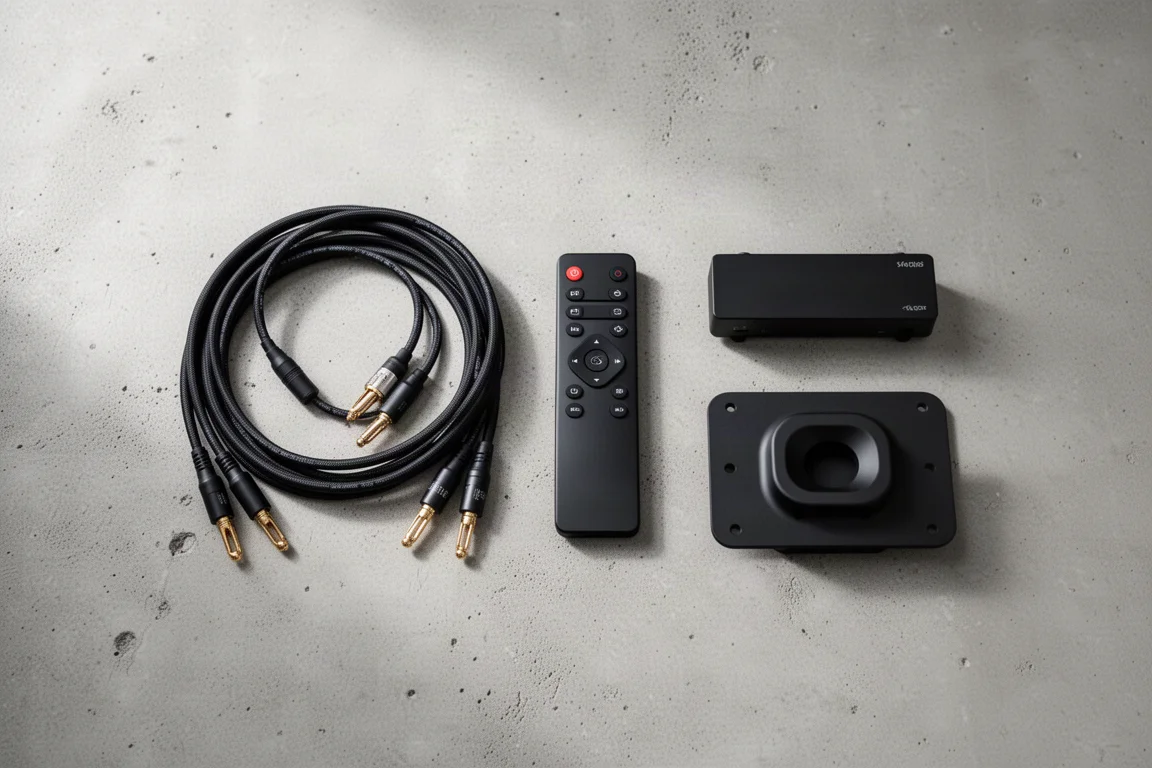
Speaker stands are worth a small budget if the speakers are not going on furniture. Atacama makes affordable stands in the UK, and buying locally is the sensible move anywhere else, because shipping stands internationally is an expensive business. The speakers do include small rubber feet for lowboard placement, though a stand that puts the tweeter near ear level will get more from them.
Conclusion
Three carefully chosen components can carry a stereo system a long way. The Dali Spektor 2 keeps the speaker spend low without sounding cheap, the Rotel A11 Tribute provides the power, inputs and expansion options that hold the system together, and the Topping E30 adds the digital connectivity the amplifier lacks for very little money.
The most useful lesson is about proportions rather than products. Spend modestly on the speakers, spend properly on the amplifier, and leave part of the budget unspent so the system can grow. That approach is what makes a sub-€1,000 build feel like a real system rather than a stopgap.
Further reading
Related Reviews
Hi-Fi Systems
Building an All-White Streaming Hi-Fi System for Around $1,500
A practical two-channel streaming system built around the KEF Q150 and a Bluesound streaming amplifier, with alternative amplifiers, speaker stands, and a subwoofer worth considering.
Hi-Fi Systems
Audio Note Zero System Review: Matching DAC, CD Player, Amplifier and Speakers
A component-by-component look at the Audio Note Zero system, covering the 0.1x DAC, the CD0 player, the IZero amplifier and the AX1-D2 speakers, with pairing notes and buying advice.
Hi-Fi Systems
Five Hi-Fi Systems Under $1,000: Complete Setups for Every Listener
Five complete hi-fi systems under $1,000, each built around a different priority: generalist, tube, power, digital, and bass.