Turntables
Turntable Buying Guide for Beginners: Fluance RT Series and Ortofon 2M Cartridges
A plain-language walkthrough of how a turntable works, plus two sensible starting points for a first vinyl setup: the Fluance RT series and Ortofon 2M cartridges.
Introduction
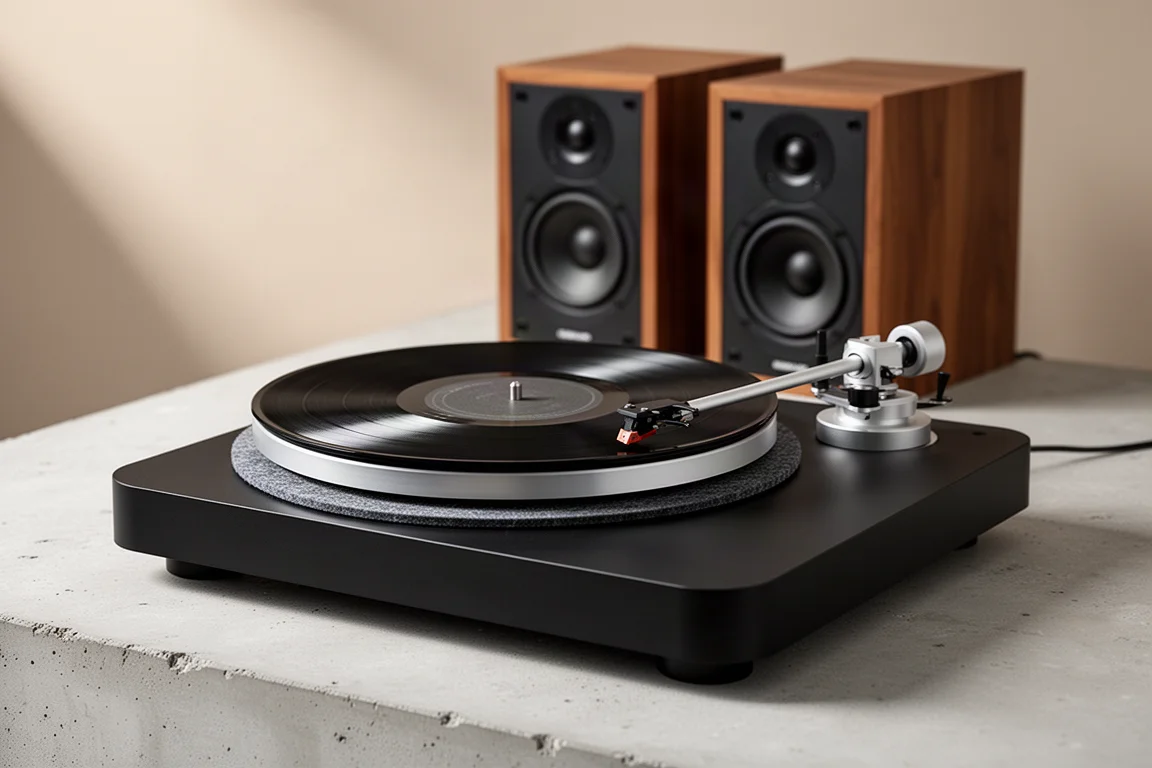
Vinyl has made a real comeback. You can walk into a large retailer and walk out with a turntable and a stack of records, which is more than you can say for cassettes these days, and CDs are often tucked into a corner if they are stocked at all. Listening to records is cool again.
The catch is that a turntable is less a single object than a system of parts that have to work together. Buy a very cheap one and the enjoyment simply will not be there. This guide walks through the anatomy of a turntable in plain language, then looks at two sensible starting points for a first setup: the Fluance RT series of turntables and the Ortofon 2M cartridge family.
Why Setup Choices Shape the Sound
The largest influence on what you actually hear from a turntable is the cartridge and its stylus. The second largest is the phono preamp that boosts the cartridge’s tiny signal before it reaches your amplifier. Those two pieces are usually where a first upgrade delivers the most audible change.
Everything else in the deck exists to hold the record steady, spin it at a constant speed, and keep unwanted vibration out of the chain. That is why a heavy, well-damped plinth and a rigid tonearm matter more than a long list of features.
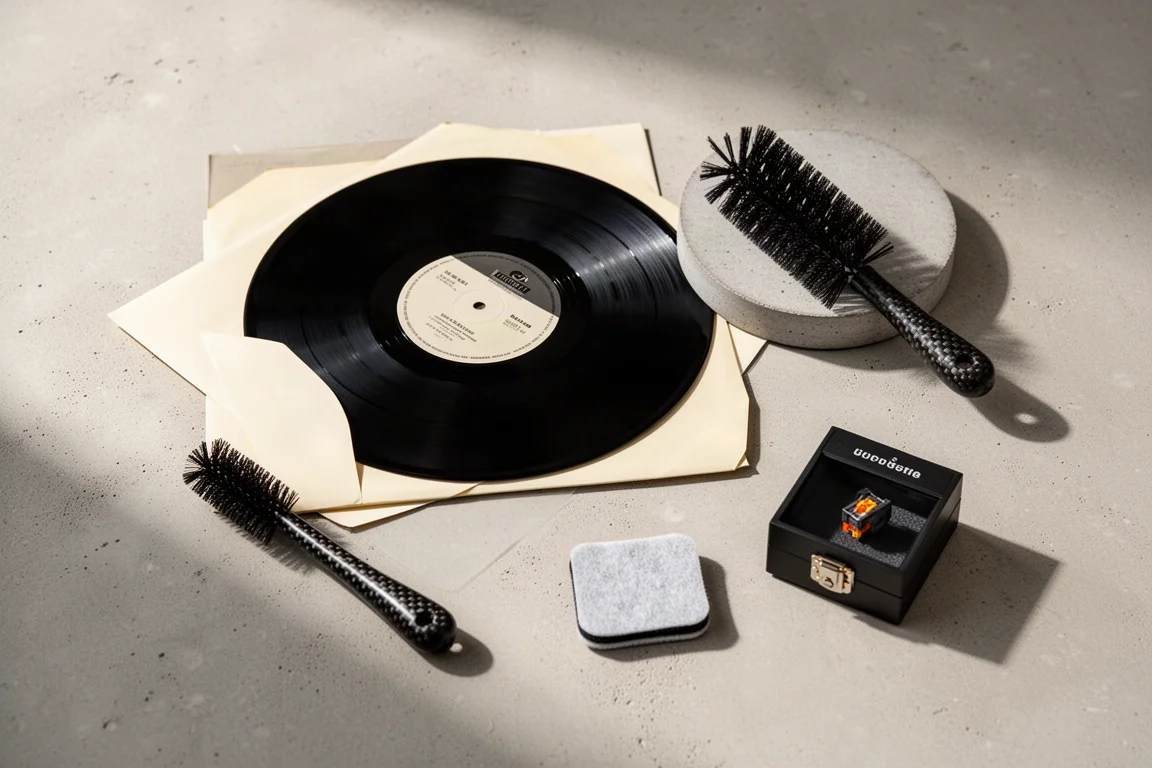
A useful habit before buying is to read the product description the way a specification sheet should read. Does it name the plinth material? Does it say what the platter is made of? Does it publish a wow and flutter figure for the motor? Does it name the cartridge? If a listing stays silent on all of those points, treat that silence as information.
The Parts of a Turntable Worth Understanding
Feet and Leveling
The feet are what the turntable sits on. There may be three or four, and they may be fixed or adjustable. Their job is to isolate the deck from the surface underneath it and to help you get the turntable level. Adjustable feet make leveling easier. If the feet are fixed, you can still level the deck with small foam pads or thin shims under one corner, and on a decent turntable fixed feet still provide the isolation you need.
Plinth and Platter
The plinth is the base that everything else mounts to, and it often houses the motor. A heavy, solid plinth reduces resonance, which is the goal of the whole design. Plinths are commonly made from MDF or hardwood. Some decks control resonance in other ways instead of relying on a solid plinth, but for affordable turntables you want a description that talks about the plinth at all. If the listing says nothing about it, that is a warning sign.
The platter is what the record sits on, usually with a mat in between. Platters are typically metal, acrylic, or sometimes glass, and mass helps. A metal platter can ring when you tap it, which is not ideal, while glass and acrylic platters usually do not. Acrylic and glass often cost more, and on some models you can start with the base platter and upgrade later.
Drive, Speed Control, and Wow and Flutter
In the affordable category, most turntables are belt driven: a motor spins and a rubber belt turns the platter. The specification to look for is wow and flutter, which describes how much the speed drifts. If a listing does not state it, assume the worst. Direct drive turntables also exist and can deliver plenty of listening enjoyment, though a first setup is more likely to be belt driven.
Speed control varies. Some decks have electronic speed control, often a knob or switch, so moving between 33 and 45 rpm is easy. Others run at a constant speed, and playing a 45 means moving the belt to a different position on the pulley. Either way, most turntables in this range play both LP speeds. Just check how much work the 45s in your collection will involve.
Bearings fall into the same category as the feet: on turntables from reputable brands, they are usually fine. If the platter will not spin freely once you have assembled the deck, something is wrong.
Tonearm, Counterweight, and Anti-Skate
A tonearm can be straight or curved, but what matters is that it is stiff and rigid while staying light, with no flex. It needs to be a stable foundation for the cartridge. Aluminium is the common choice and it is proven, and carbon is also used. Aftermarket tonearms exist that can cost more than an entire starter system, which tells you how much this part matters.
At the back of the tonearm sits the counterweight. Turning it moves the weight inward or outward, which sets the tracking force pushing down on the cartridge. Without enough tracking force, the stylus will bounce along the record instead of tracking it. Turntables worth buying include an adjustable counterweight, which also means you can change cartridges later without hunting for extra parts.
Anti-skate compensates for the tonearm and cartridge wanting to drift sideways across the record. On some decks it is a small dial, on others it is a weight hanging from a length of line. Your setup instructions will explain how to set it for the cartridge you are using.
Cartridge, Stylus, and Headshell
The cartridge sits at the end of the tonearm, and the stylus, often called the needle, is what actually rides the groove. The stylus is usually diamond tipped and can be elliptical or conical in profile. It is the point where the physical shape of the record groove becomes an electrical signal.
Some turntables have a removable headshell, which is the part the cartridge bolts to. A removable headshell makes cartridge swaps much easier, because you can mount and align a cartridge on a spare headshell and then clip it into place. Cartridges can be changed without a removable headshell too, but it takes more patience.
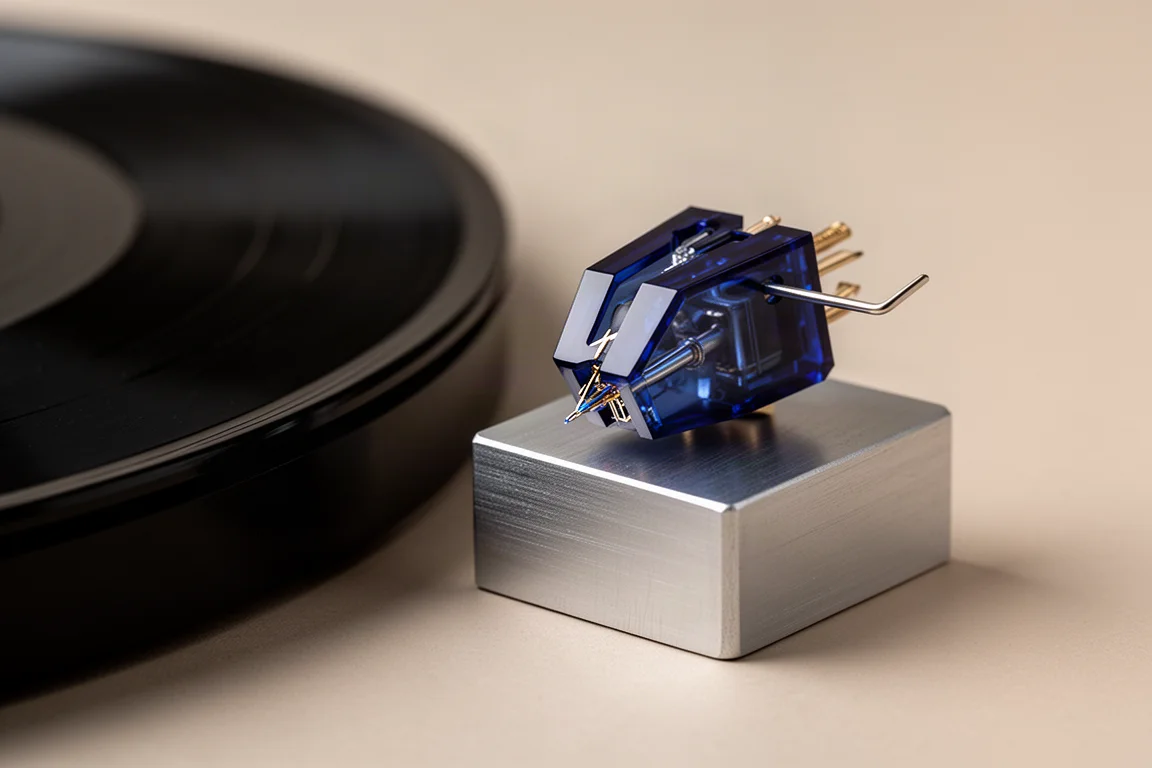
There are two cartridge types worth knowing. Moving magnet cartridges are the practical choice for a first setup, because the stylus can be replaced when it wears out, and some can be upgraded to a better stylus later. Moving coil cartridges cost more, their styli are not user replaceable, and they need more gain from the phono stage. That is not a route most beginners need to take.
If you do change a cartridge, it has to be aligned properly: correct height, and correct position laterally and front to back. A protractor makes this possible at home, and a local hi-fi shop can usually handle it quickly if you would rather not do it yourself. It takes steady hands and a little patience, nothing more.
Phono Preamp, Gain, and Rumble
The signal coming out of a cartridge is very low, so it needs extra amplification before it ever reaches your amplifier. Some integrated amplifiers include a phono input, which you can identify by the input label and by a small grounding post on the back. A turntable typically connects with a left and right cable plus a separate ground wire fitted with a spade connector.
If your amplifier has no phono section, you need an outboard phono preamp. Prices range from very cheap to extremely expensive, and the basic job is the same: boost the signal. Some turntables include a phono preamp, and some powered speakers do as well.
The important rule is to use only one. If a turntable with a built-in preamp is connected to an amplifier or a speaker that also has one, the sound will be noticeably wrong. It is the most common setup mistake in vinyl.
Two more details are worth knowing. A subsonic filter cuts the very low frequencies you cannot hear but which still make your woofer pump in and out, a phenomenon known as rumble. If you ever see a woofer moving with no audible sound coming out of it, that is rumble, and a subsonic filter is a genuinely useful feature. Gain levels also differ between preamps: a fixed, low-gain phono stage can leave records sounding quiet and force you to turn the volume up, while an outboard preamp with adjustable gain gives you more control.
Best Overall Starter Turntable: Fluance RT Series
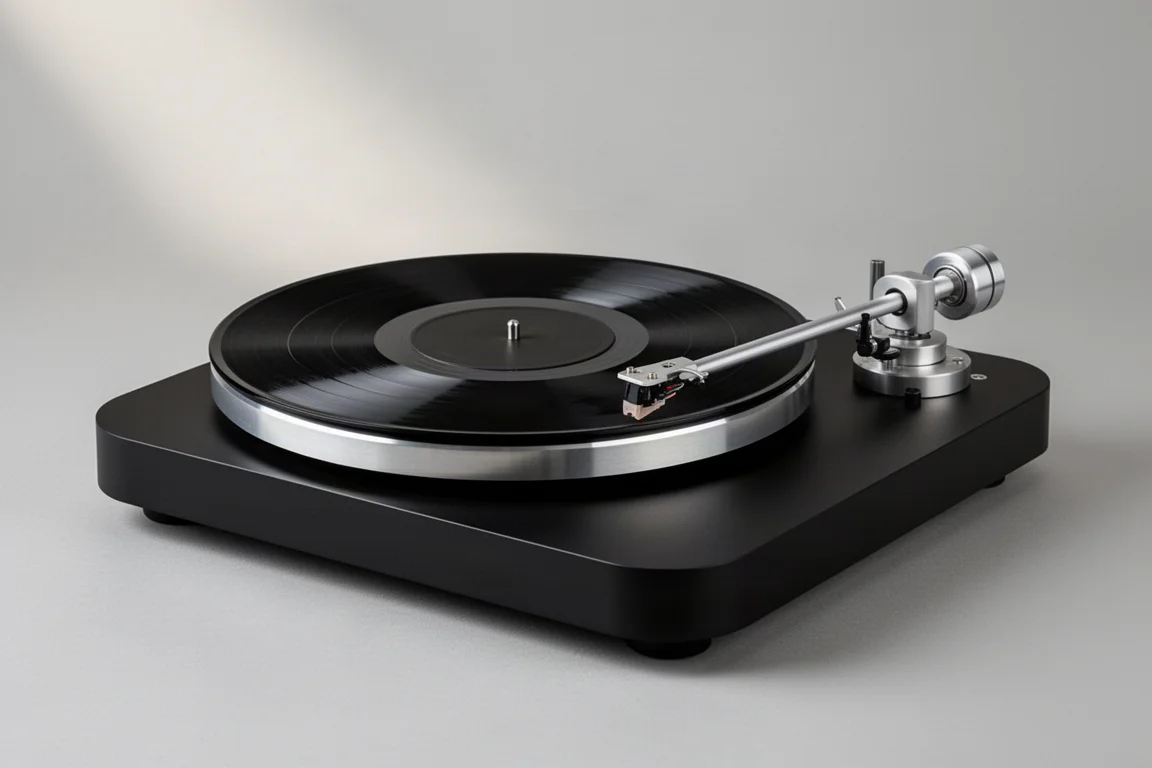
The Fluance RT series runs from the RT80 up through the RT85, and it is one of the more straightforward ways to start listening to vinyl. Two things make the line practical. First, these turntables use removable headshells, so mounting a cartridge to a spare headshell and swapping it in is quick. Second, most of the price difference between models comes down to the included cartridge, so stepping up the range generally buys you a better cartridge rather than a longer feature list.
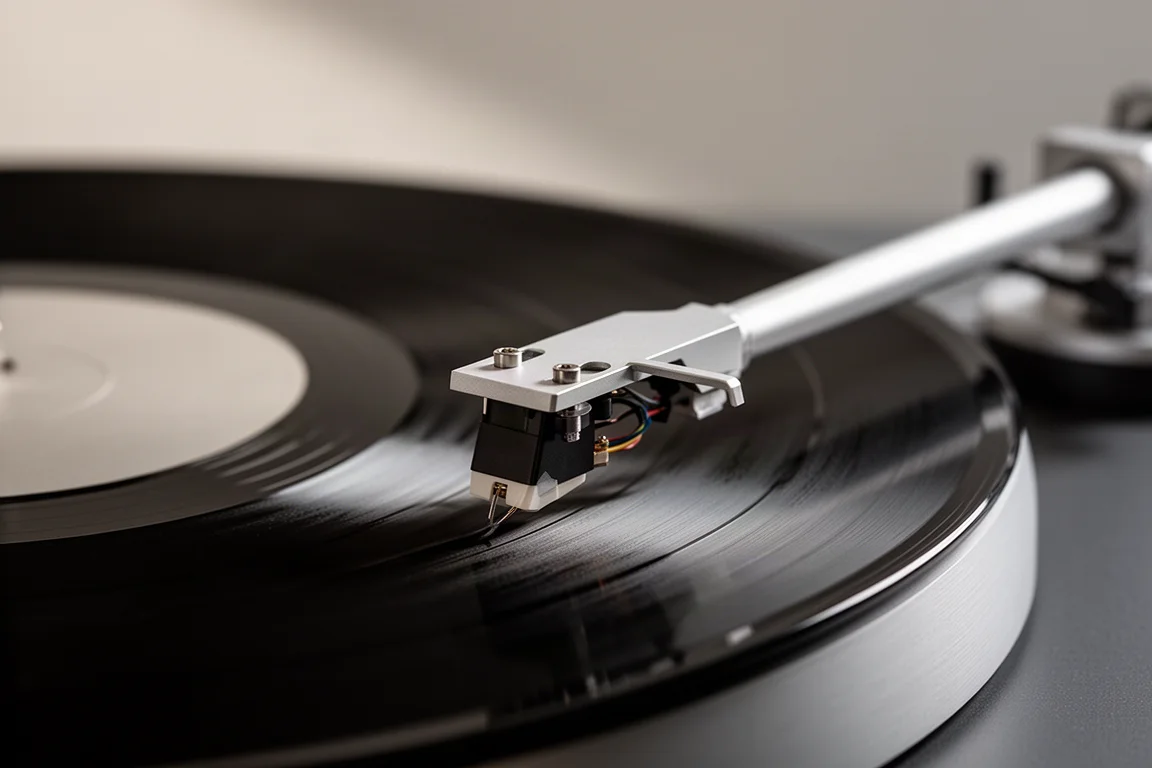
That structure suits a first-time buyer. You can start where your budget sits, learn what you like, and move up the line later. Fluance has also been around long enough that you can reasonably expect decent customer service, either from the brand or from the retailer.
Before ordering any turntable, including one from this series, check that the listing names the cartridge, describes the plinth, says what the platter is made of, and publishes a wow and flutter figure. A listing that names none of those things is a listing to skip.
What the Cartridge Does for Your Sound
Cartridges come in two main types, and the difference matters more for a beginner than it might sound. A moving magnet cartridge lets you replace the stylus when it wears out, and some models can be upgraded to a better stylus later without replacing the whole cartridge. A moving coil cartridge is more expensive, its stylus cannot simply be swapped when it wears, and it needs a phono preamp capable of supplying more gain.
For a first setup, moving magnet is the sensible choice. It keeps the running cost of ownership low, it gives you an upgrade path, and it works with the phono inputs most amplifiers and speakers provide.
Best First Cartridge: Ortofon 2M Red
The Ortofon 2M Red is a moving magnet cartridge, which means the stylus can be replaced when it wears out while the body stays in service. That combination of low running cost and an upgrade path is exactly what makes it a reasonable first cartridge to build a system around.
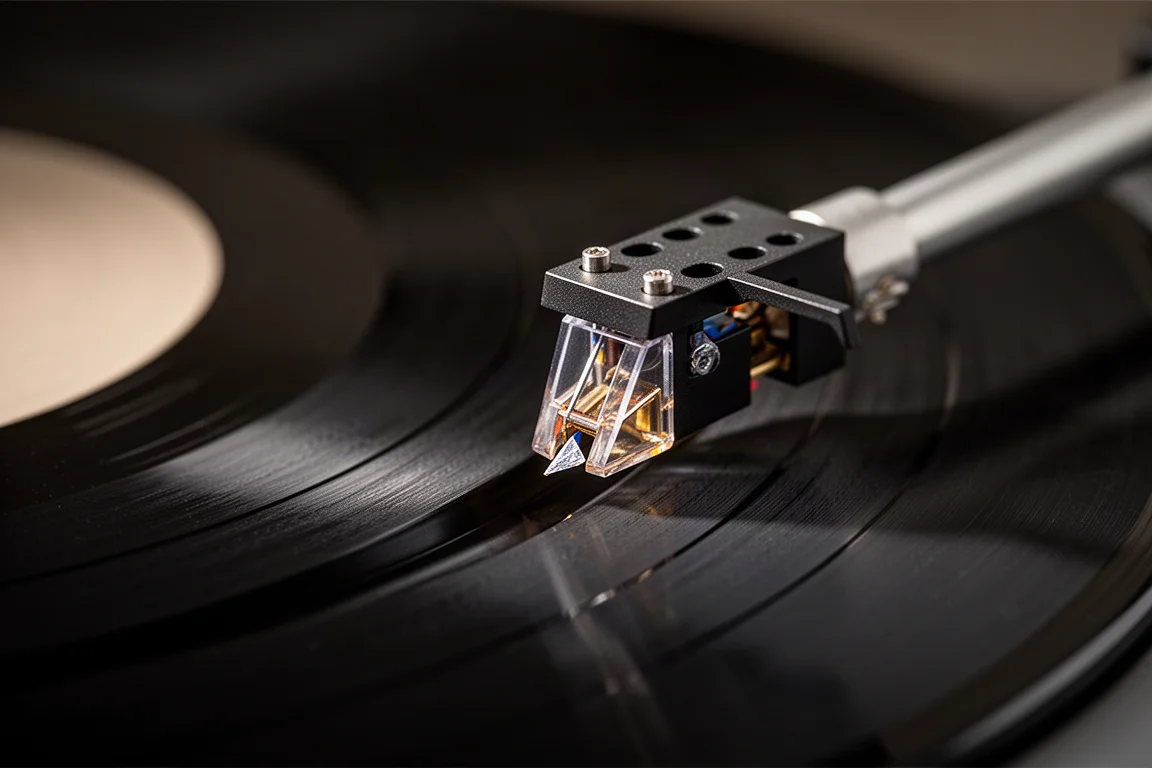
If you fit a cartridge yourself, remember that alignment covers height as well as lateral and front to back positioning. A protractor lets you do this at home, and most hi-fi shops can complete the job quickly if you would prefer an expert to handle it. Once aligned, an adjustable counterweight is what sets the tracking force correctly.
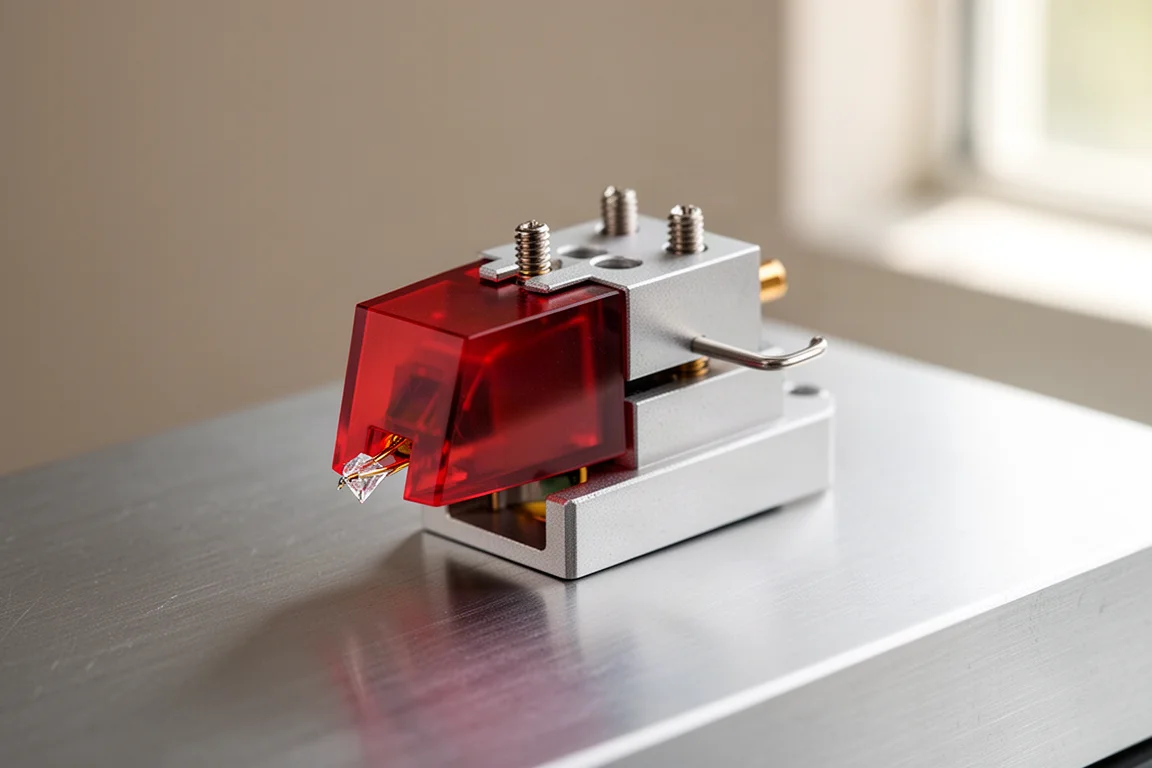
The Easy Upgrade Path: Ortofon 2M Blue
The Ortofon 2M Blue is reached by fitting a better stylus to the same cartridge body. A 2M Red can become a 2M Blue simply by changing the stylus, which makes this one of the least disruptive upgrades in vinyl. Different styli and cartridges do have different sonic characteristics, so the change is audible rather than cosmetic.
Because the change is limited to the stylus, it is a simpler step than fitting a completely different cartridge, and it is a good example of why buying into a cartridge family with a clear upgrade path pays off over time.
Buying Advice for First-Time Vinyl Listeners
Start with the description, not the price. A turntable listing should tell you what the plinth is made of, what the platter is made of, what the wow and flutter figure is, and which cartridge is included. If it stays quiet on those points, keep looking. If it does name a cartridge, that is usually where a large part of the cost sits, so a higher price within a range generally means a better cartridge.
Brand reputation is a reasonable shortcut here. Fluance, U-Turn, Audio-Technica, Rega, and Pro-Ject all put a decent cartridge on their turntables, and as you move up any of their ranges the cartridge quality generally improves as well.
Then think about the rest of your chain. You need exactly one phono preamp, whether it lives inside the turntable, inside an integrated amplifier or receiver, or in an outboard box. Use two by mistake and the sound will be obviously wrong. A subsonic filter is worth having, because it stops inaudible low-frequency rumble from working your woofer for no reason.
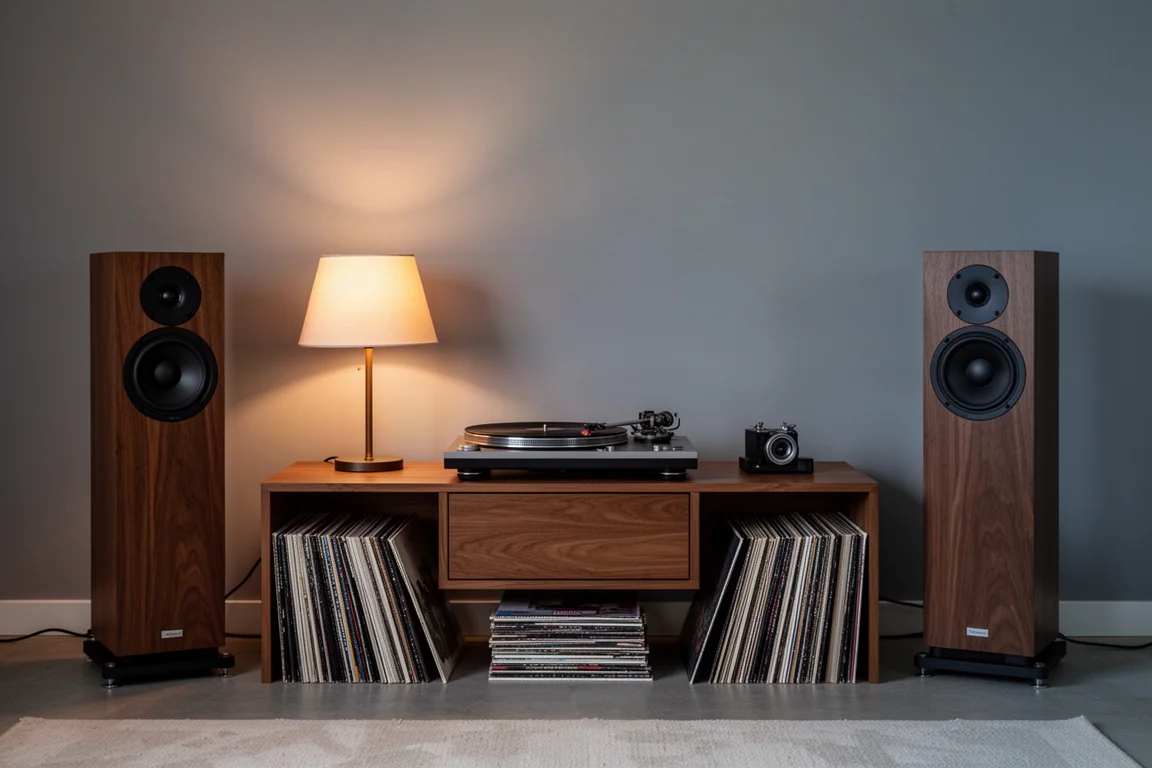
Setup details are worth a little care. Get the turntable level, using adjustable feet if the deck has them and thin shims if it does not. Set the tracking force with the counterweight, then set the anti-skate as the instructions describe. Most affordable turntables have little or no automation, so decide whether you want the motor to stop at the end of a side, whether you want the tonearm lifted, or whether you want it lifted and returned to its cradle. Belt drive and direct drive turntables can both deliver a great deal of enjoyment, so this is not a decision to agonize over.
Conclusion
A turntable is easier to buy well once you understand what the parts do. The cartridge and stylus shape the sound most, the phono preamp shapes it next, and everything else exists to keep the record stable and quiet. The Fluance RT series offers a clear step-up path with removable headshells, and the Ortofon 2M family gives you a replaceable, upgradeable stylus that can grow with your system. Get those fundamentals right, put a record on, and enjoy it.
Further reading
Related Reviews
Turntables
Best Turntables 2026: Seven Standout Picks From Entry Level to Premium
A practical roundup of seven turntables worth considering, from a US-made budget deck to small-batch premium models with a clear upgrade path.
Turntables
Best Turntables Under $1,000: Five Fully Manual Picks Worth Considering
Five fully manual turntables under $1,000, compared on build quality, cartridges, upgrade potential, and the character of sound each one brings to a system.
Turntables
Best Turntables Under $2,000: Six Vinyl Decks Worth Building a System Around
Six turntables under $2,000, from a value-focused belt-drive deck to a fully balanced design, with the strengths and trade-offs that matter before you buy.